When Anya Vedantambe visited Sodexo’s Commissary, a Union City facility that prepares over 10,000 meals for Kaiser Permanente patients every day, she was pleasantly surprised by what she found.
Vedantambe, a sophomore studying symbolic systems, was expecting standard hospital fare – an animal-based protein, a starch, a small serving of veggies. But on the menu that day was poha, a traditional Indian breakfast dish of flattened rice with curry leaves and chili peppers that reminded her of her childhood. “It wasn’t as spicy as it was at home, but the texture was pretty good,” she said.
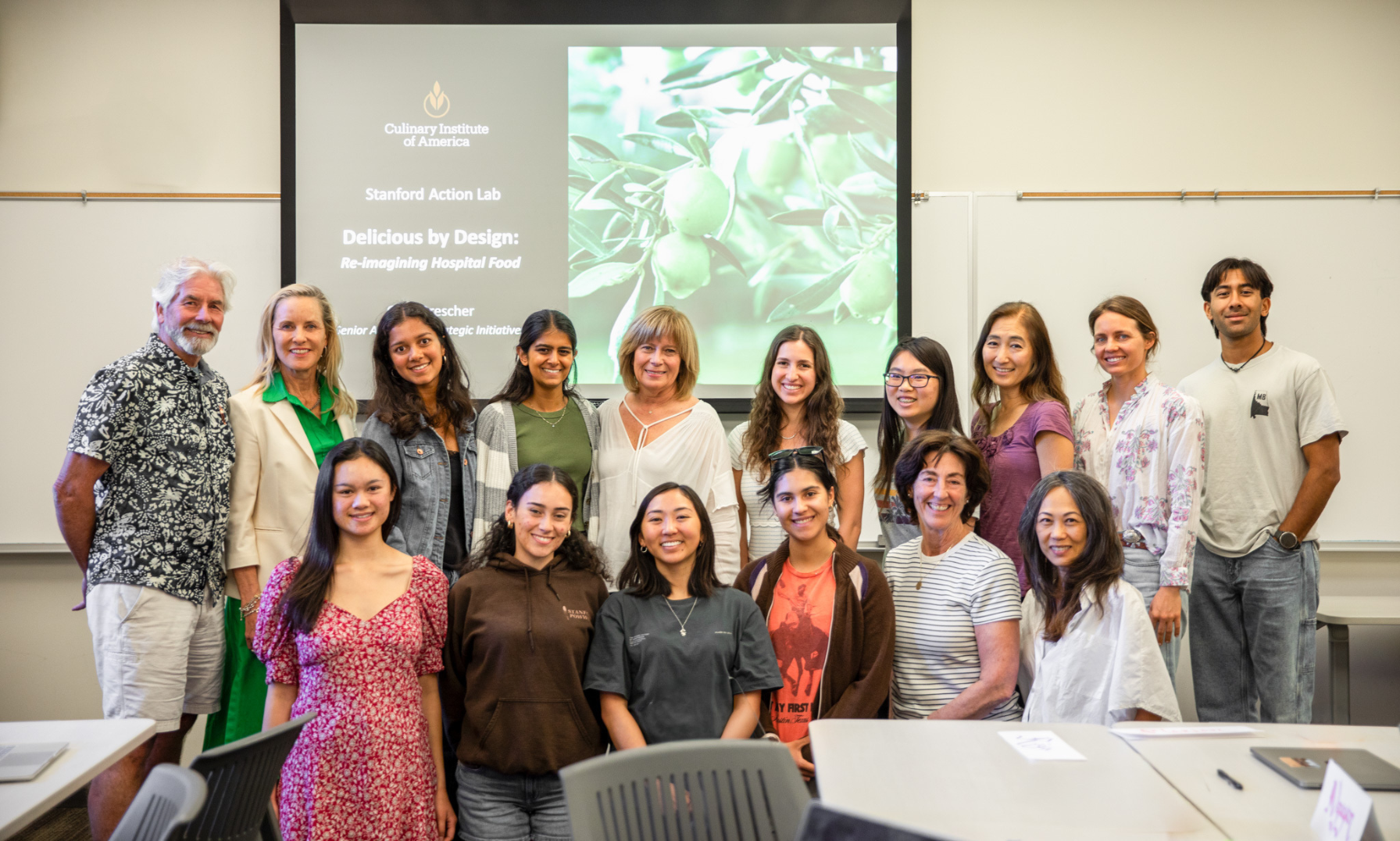
Vedantambe and her teammates toured the facility as part of Delicious by Design (SUSTAIN 123), a course focused on nutrition and sustainability in institutional food service. The visit underscored for the students that plant-based meals at scale can be delicious – a key tenet of their approach.
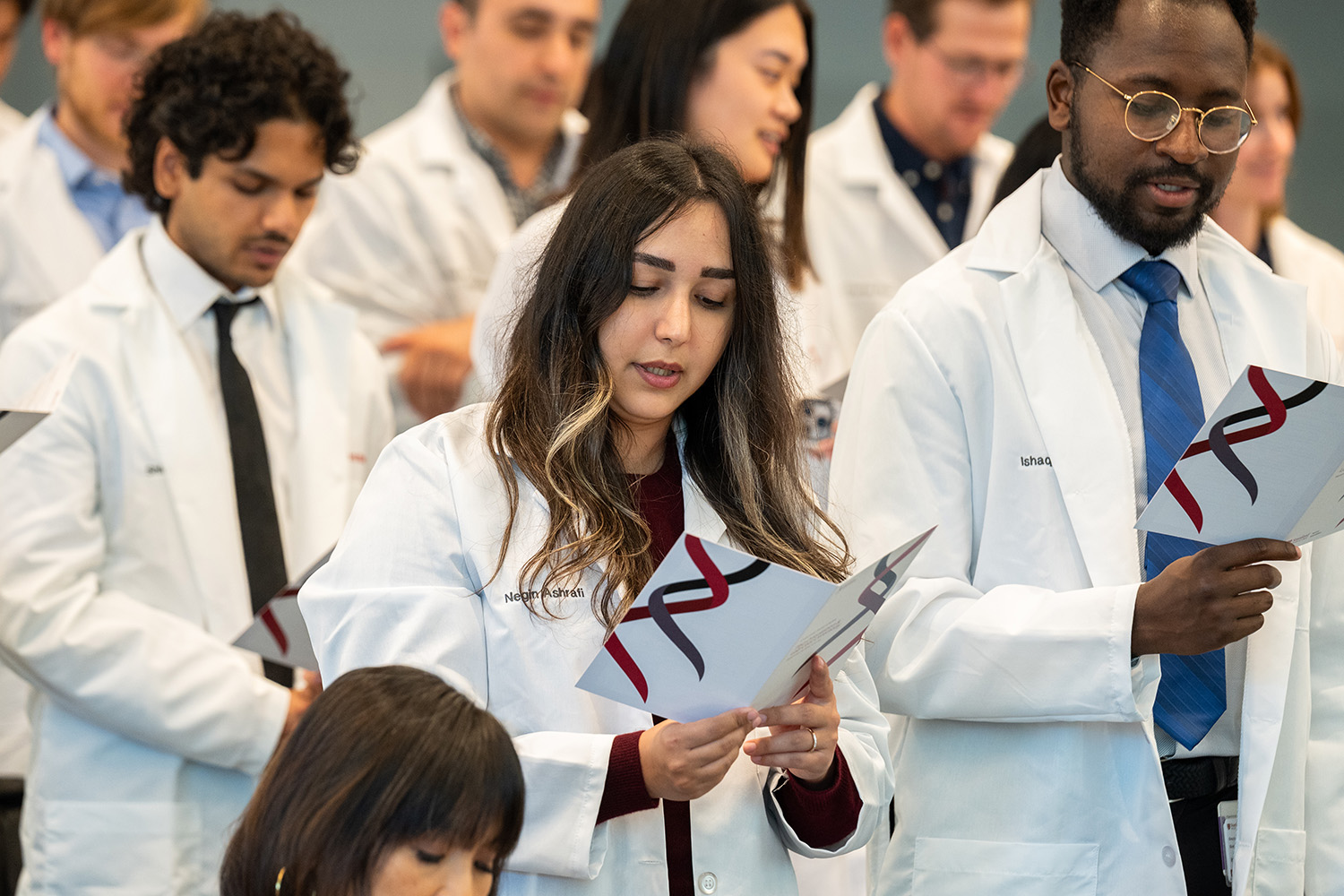
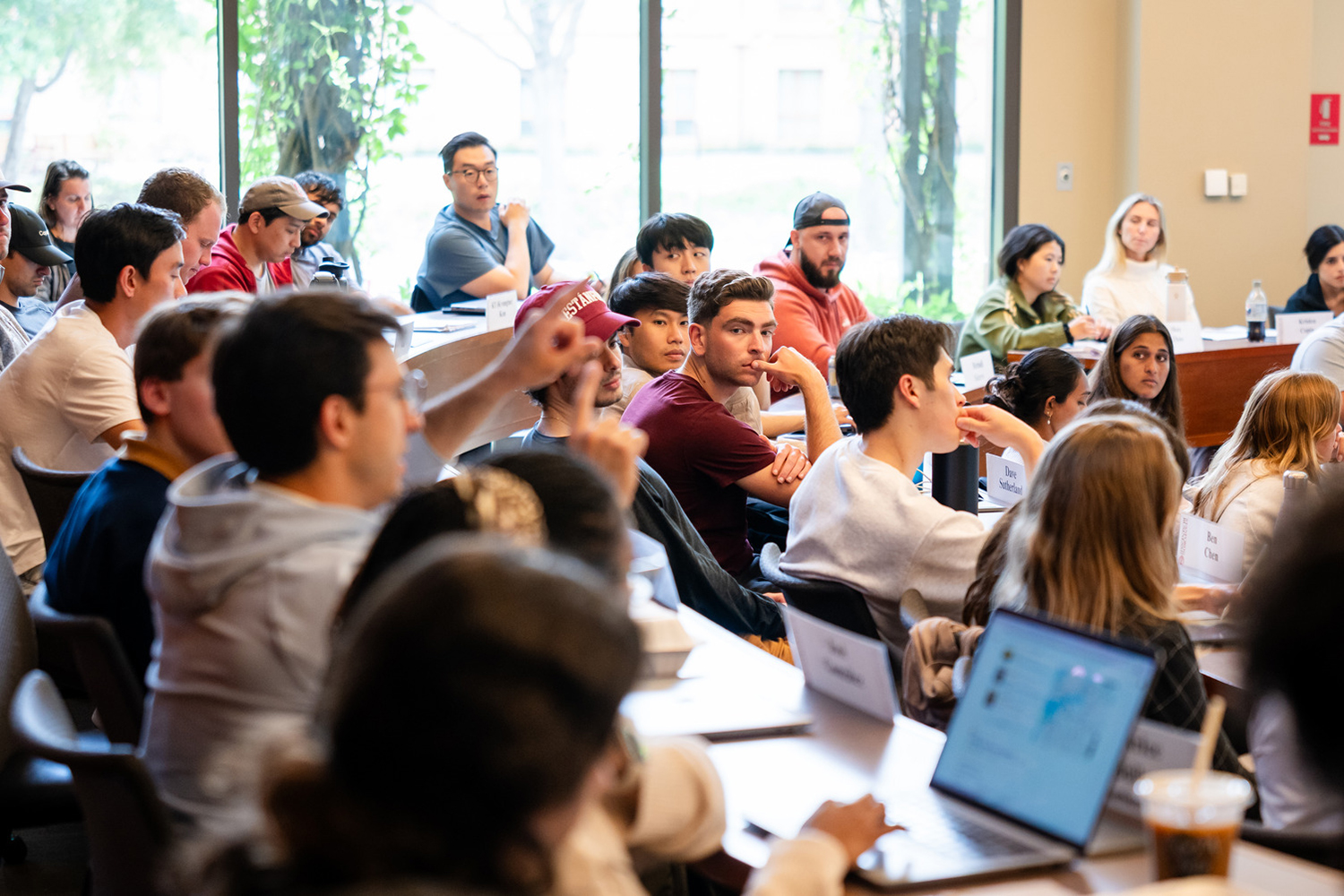
Delicious by Design is one of a series of HPH Action Labs, project-based courses offered through the Stanford Center for Human and Planetary Health, a joint effort of the Woods Institute for the Environment and the Center for Innovation in Global Health. Each lab pairs a multidisciplinary student team with a partner organization – a nonprofit, a government agency, or a mission-driven company – and assigns them a real-world problem the partner is trying to solve.
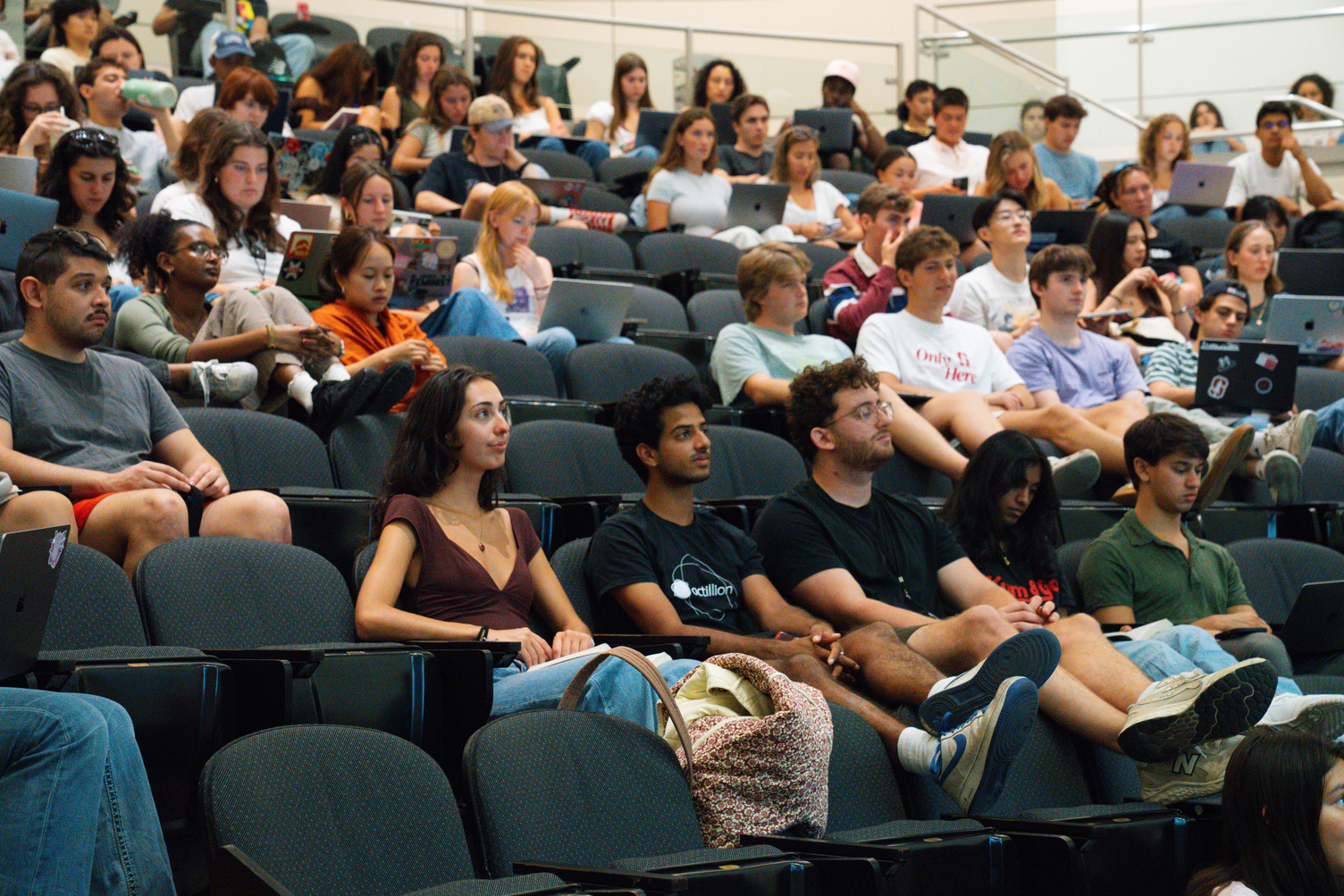
The classes emphasize a multidisciplinary approach to solving systemic problems: Action Lab students have come from more than 10 programs, including Earth systems, public health, engineering, design, international policy, and the Graduate School of Business, according to Katie Vogelheim, education advisor at the Center for Human and Planetary Health.
“While I’ve taken other courses that task students with tackling sustainability challenges, most of the projects I’ve done have been theoretical, ending in a research paper or poster,” said Riya Bhatia, a junior studying Earth systems and a student in the Delicious by Design Action Lab. “I was drawn to this class because of the opportunity to collaborate with a real-world partner to create recommendations that might meaningfully improve their work.”
Different problems, same approach
Class topics have varied widely. In spring 2024, students worked directly with Indonesian government officials to develop policy strategies for integrating seafood into diets. In fall 2024, students worked with rural clean energy advocates in Missouri and Wisconsin to build health impact assessments of fossil fuel dependence in rural communities – finding that fossil fuel plants in Missouri alone generate an estimated $1.6 billion in annual health-related costs. In winter 2026, an Action Lab course partnered with the nonprofit Conservation International to explore how biochar, a coffee farming waste product, could be used to improve soil health, capture carbon, and support farmers in Colombia.
I was drawn to this class because of the opportunity to collaborate with a real-world partner to create recommendations that might meaningfully improve their work.Riya BhatiaJunior, Earth Systems
For Ava Mae Bakhshandehpour, a freshman studying economics and a former biochar Action Lab student, the experience didn’t end when the quarter did. She went on to pursue independent research with Kate Maher, a professor of Earth system science in the Doerr School of Sustainability and one of the course’s instructors, analyzing sustainability frameworks across nine major coffee companies.
“After this class, I realized I wasn’t done working on this problem,” she said.
Taking on hospital food
This spring, the Delicious by Design Action Lab course turned its attention to hospital food. Working with Greener By Default, a behavioral science consulting firm, the two student teams spent the quarter interviewing more than 35 stakeholders – from hospital CEOs to food service workers – to understand why plant-based foods are lacking in institutional foodservice, despite clear evidence for nutritional and cost-saving benefits.
They presented various recommendations to Greener By Default: One student team identified “non-select” meals, which are chosen for the patients, as an opportunity for switching to plant-based meals. The other team built an interactive tool – “the CustYUMizer” – to help hospital executives visualize the cost, emissions, and patient satisfaction impacts of shifting their menus toward more plant-forward options.
“The students did an excellent job absorbing the nuances and complexities of this work in a very short time period,” said Heidi Fritz, healthcare director at Greener by Default. Fritz said she hopes to incorporate several of the student recommendations into Greener by Default’s future work and anticipates continued opportunities to partner with the course’s faculty team.
For students who are used to the theoretical, Action Labs offer something most courses don’t: a chance to bring the real world into the classroom and test theory against reality.
“I began to understand how to zoom out, look at and across systems, and identify those impact-maximizing, constraint-minimizing places for change,” said Bhatia.

For more information
Human and Planetary Health Action Labs are offered through the Center for Human and Planetary Health, a joint initiative of the Woods Institute for the Environment at the Stanford Doerr School of Sustainability and the Center for Innovation in Global Health at the School of Medicine. Delicious by Design (SUSTAIN 123) was taught by Christopher Gardner, Tamiko Katsumoto, Sara Damore, and Katie Vogelheim.
This story was originally published by Stanford Woods Institute for the Environment.
Writer
Belle Long