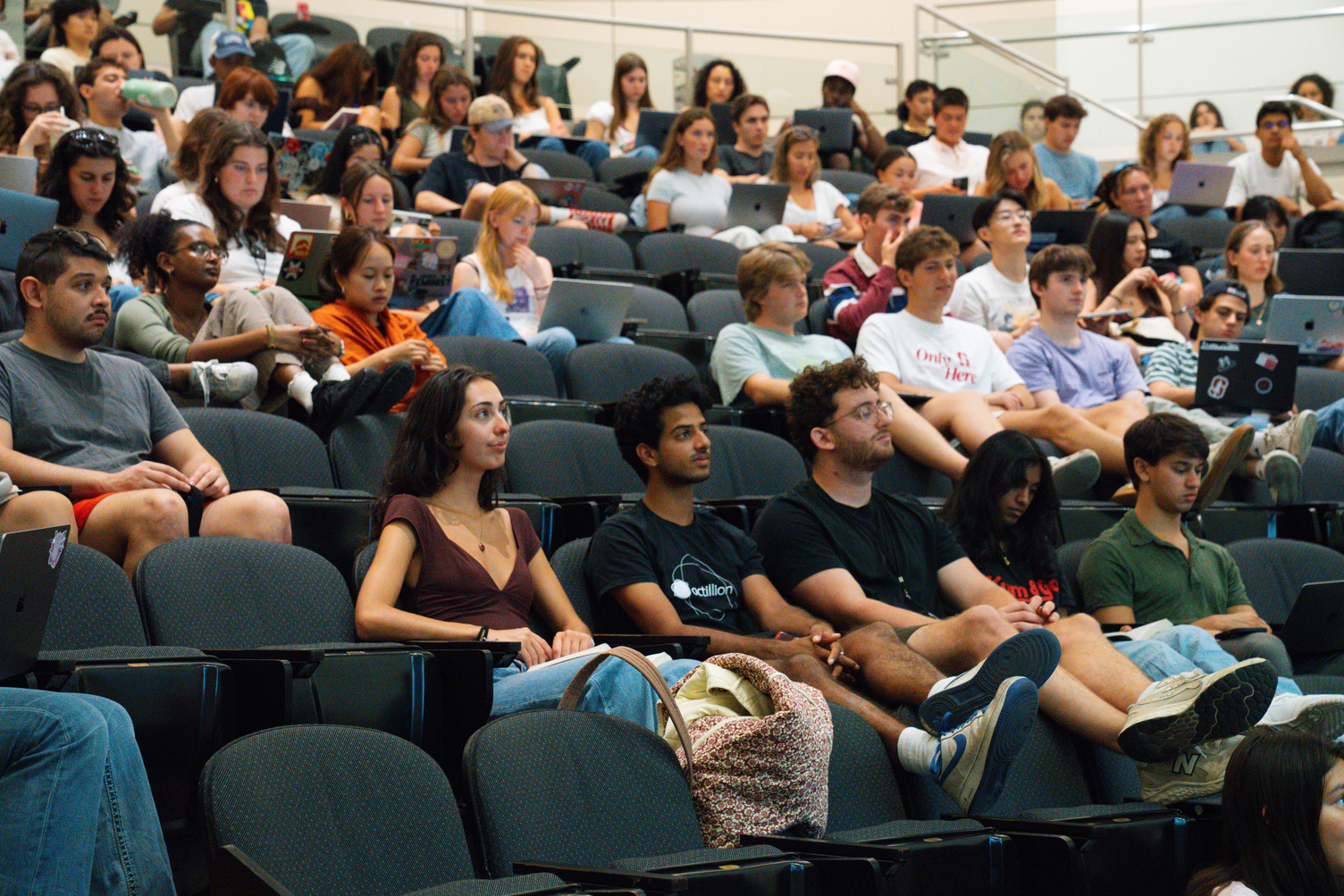
In a productivity-obsessed culture where the demands on one’s time and attention can feel urgent and unrelenting, Stanford students were encouraged to try something radically different: to slow down.
To put their phones away for an evening. To periodically delete a social media application. To go outside, to go for a walk, and to meet friends.
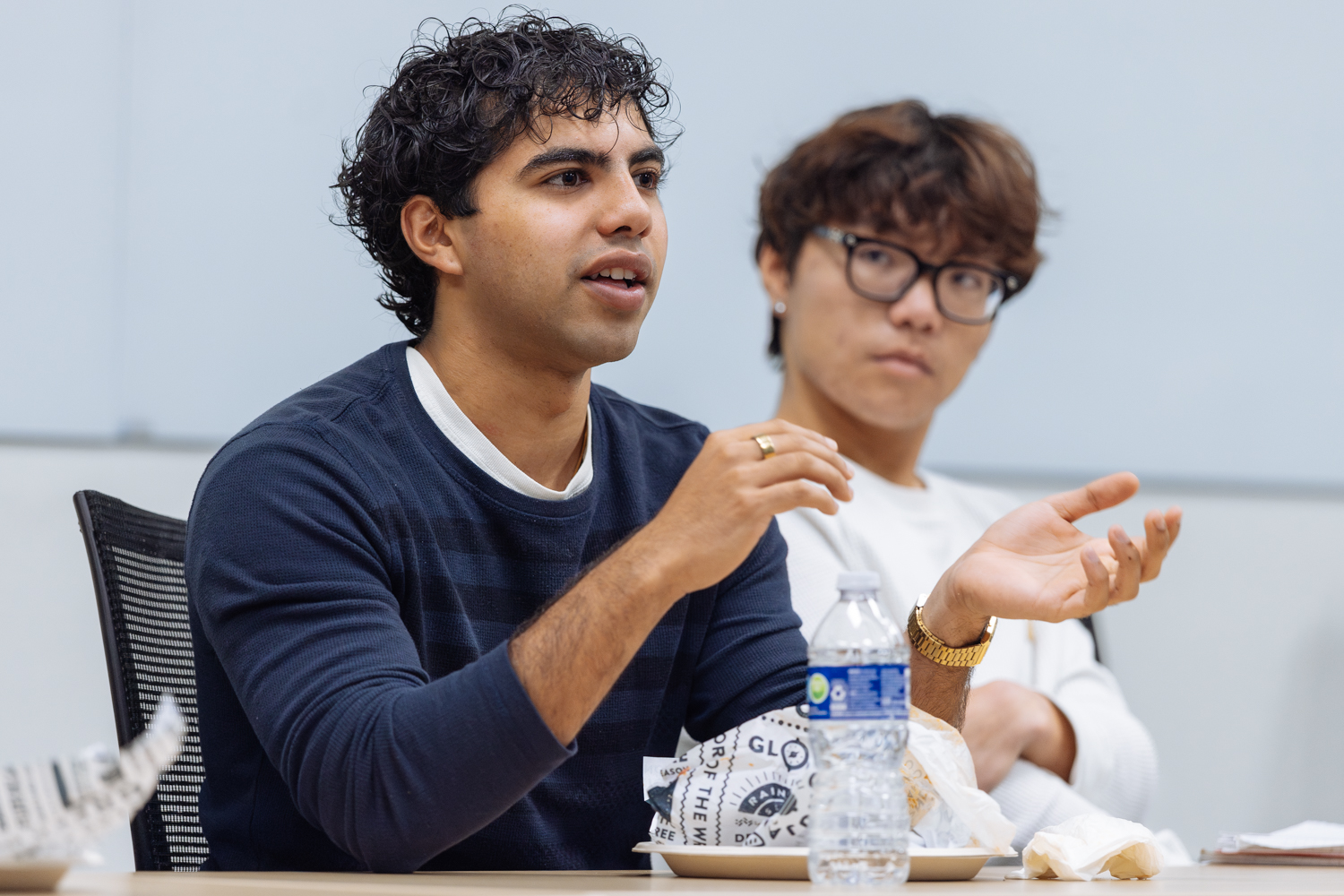
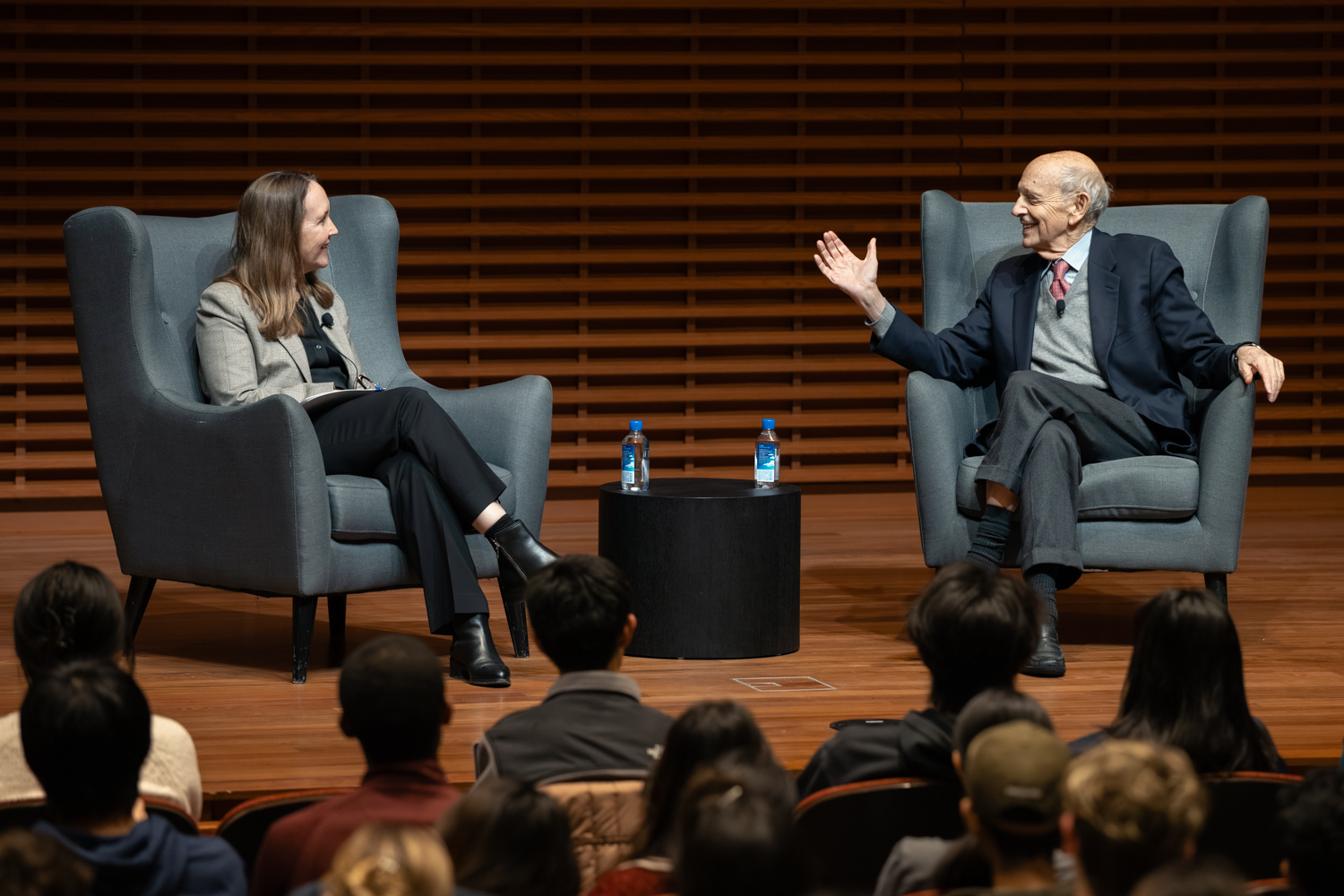
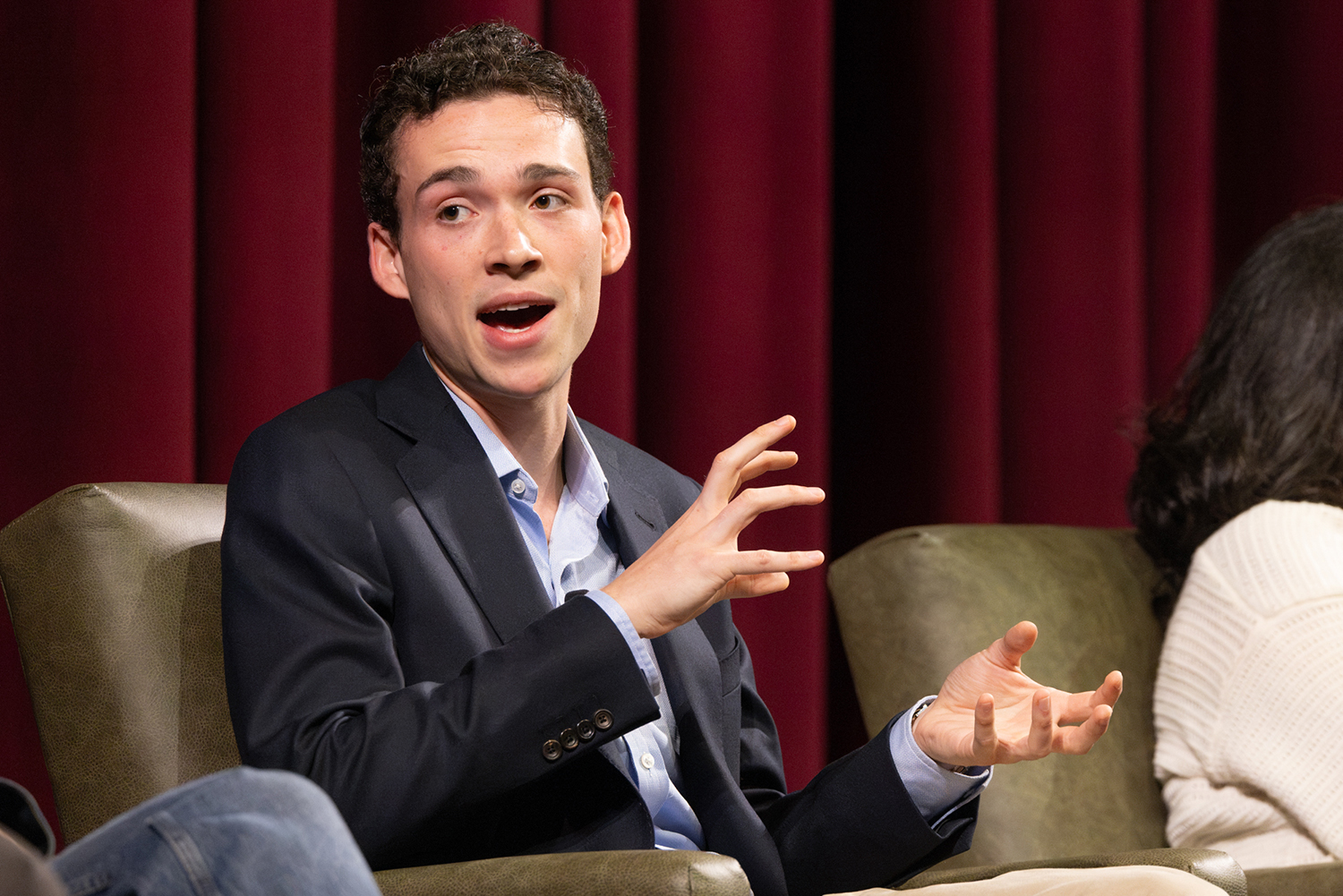
“There is a constant, almost 24-7 flow of things I could be working on, and emails I could be responding to,” said George Porteous, a Stanford senior and editor-in-chief at the Stanford Daily, at an Oct. 13 panel moderated by Stanford President Jonathan Levin. “What I am coming to find is that you need to step away from a laptop for an hour and have lunch with your friends in order to respond to a situation on your desk with humanity, with a level head, with clarity.”
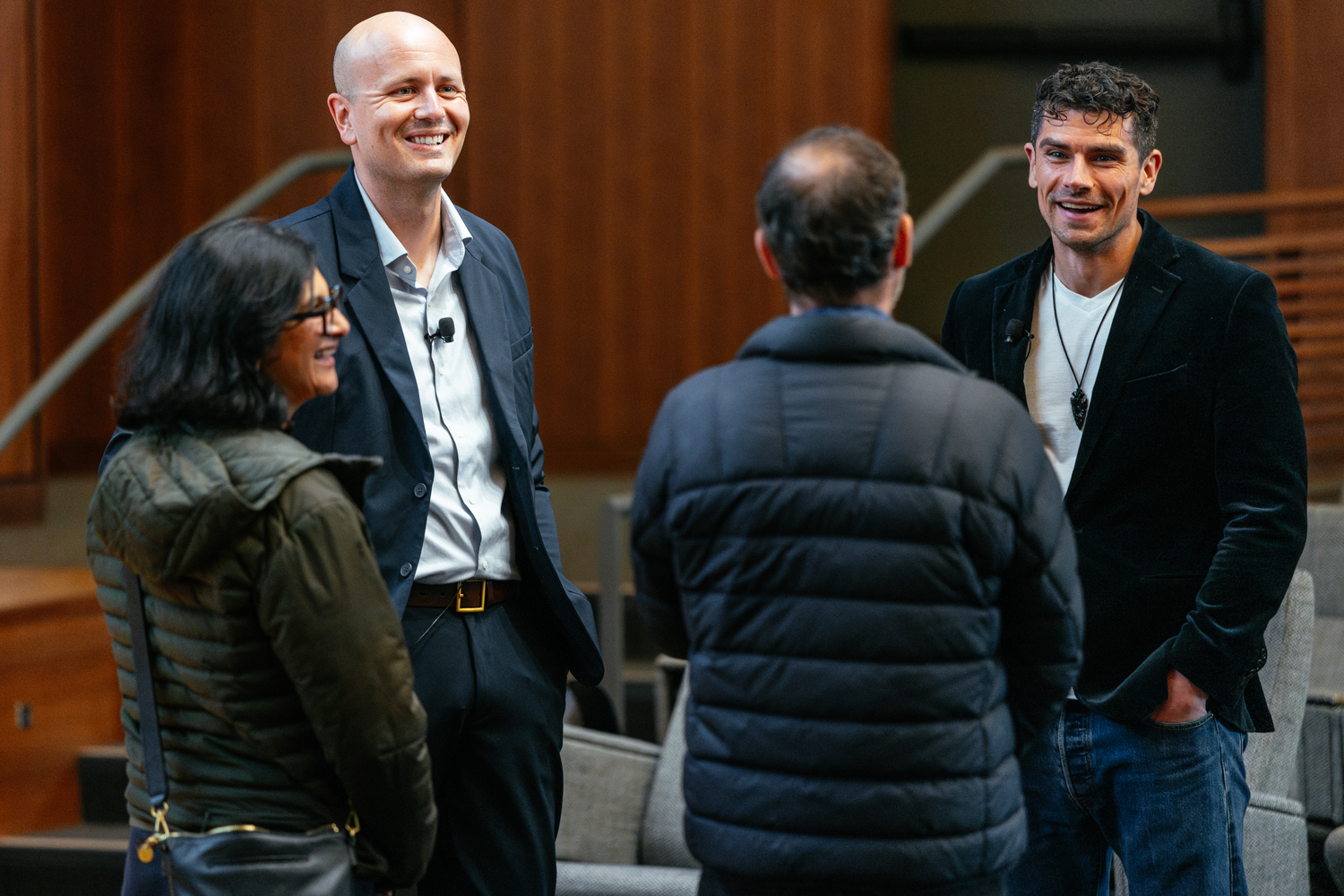
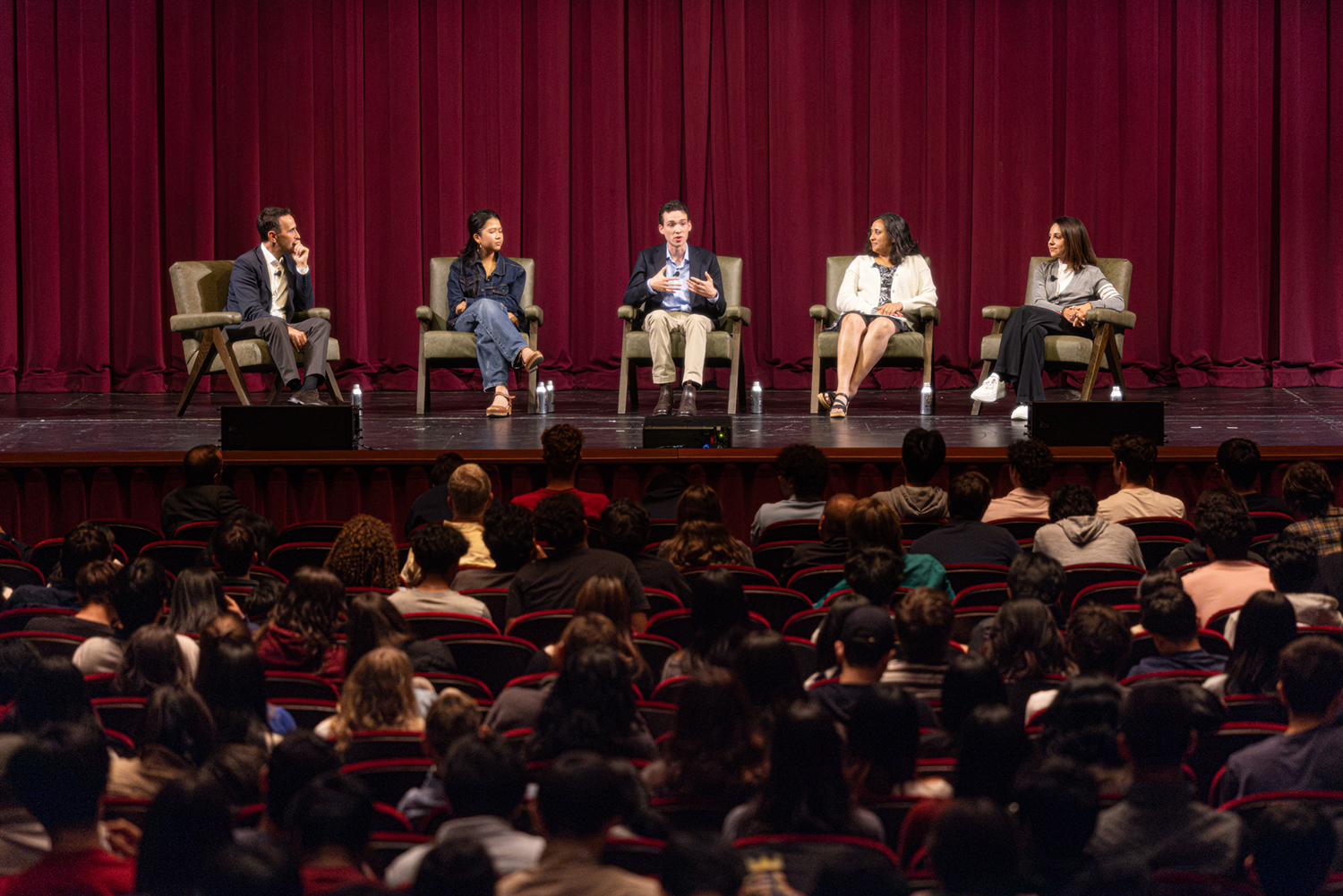
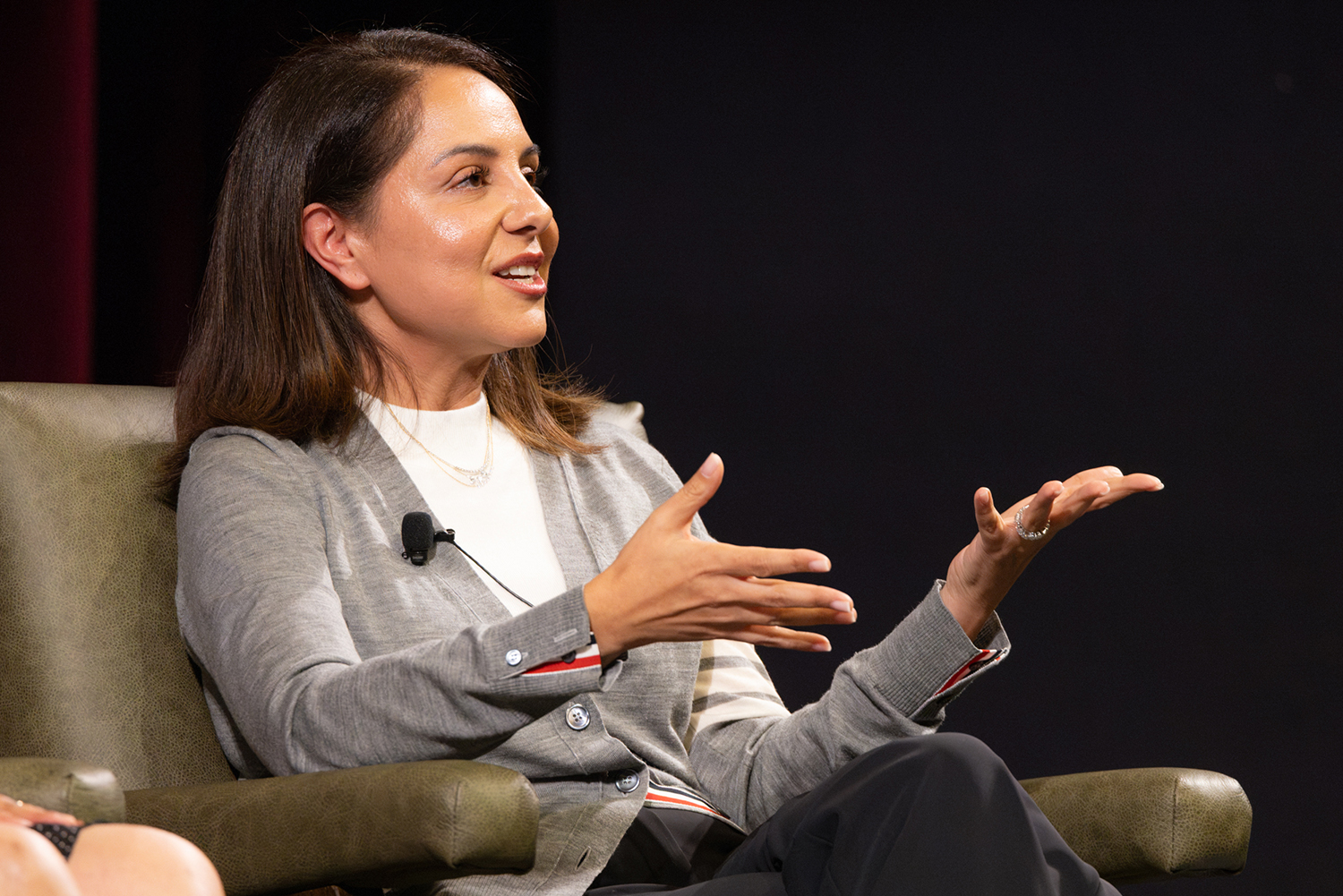
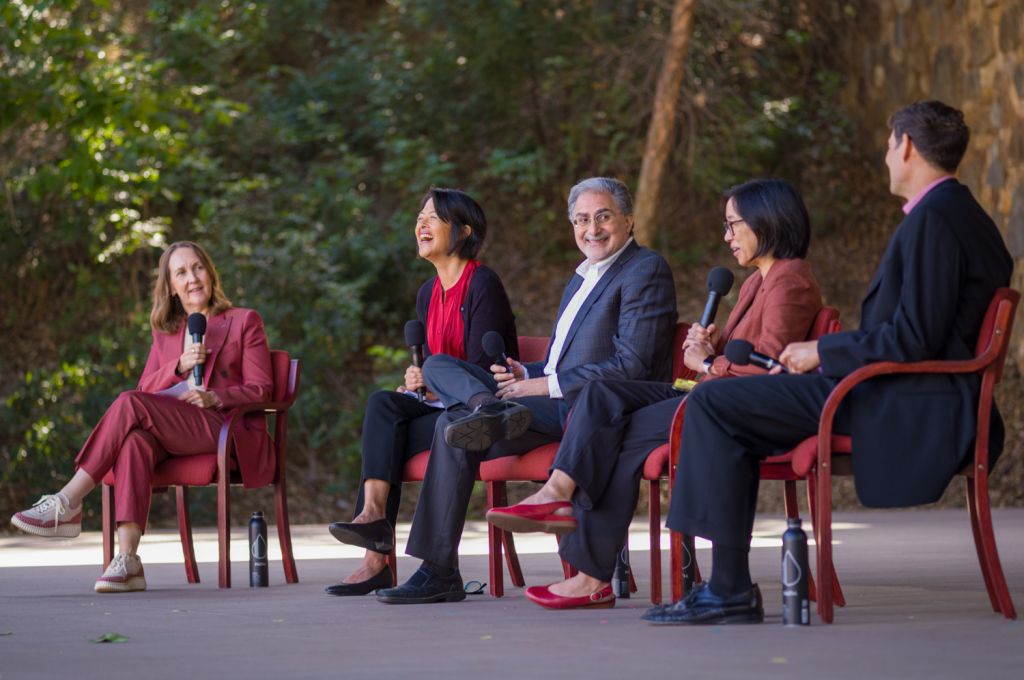
Porteous was speaking at a plenary event for frosh taking COLLEGE 101: Why College? Your Education and the Good Life, the fall quarter course in the first-year undergraduate requirement program, Civic, Liberal, and Global Education (COLLEGE). The event, titled “You are at Stanford. Now what?” featured Lily Sarafan, chair of Stanford’s Board of Trustees, who took Back to COLLEGE, the alumni version of the program; Ami Bhatt, a professor of medicine and a COLLEGE 101 instructor; and Emi Sakamoto, ’28, who took COLLEGE as a frosh. Levin is co-teaching Why College? Your Education and the Good Life with Sara Mrsny, the associate director of the COLLEGE program.
The wide-ranging discussion explored how to make the most of their education, including pursuing new interests, deepening friendships, and devoting time to reading and human connection.
Some advice for students
The power of pausing
Why College? Your Education and the Good Life asks students to take time out of their busy lives to reflect on what education means to them.
“I remember thinking that Stanford would be fast, and it was,” recalled Sakamoto about her first year at Stanford. “What I couldn’t have anticipated was the stillness, and the moments you can find in classes like COLLEGE 101 to really investigate the interior of your mind, to be curious about what’s going on, and to wonder.”
Sakamoto shared one COLLEGE 101 class that stayed with her.
For their course readings that week, Sakamoto and her classmates read Jenny Odell’s manifesto, How to Do Nothing: Resisting the Attention Economy (Melville House, 2019), which urges readers to step away from the algorithmic world and spend time in the analog one.
Odell’s book inspired an assignment for the course: For 10 minutes, students are asked to go somewhere without any electronic devices or distractions and fully immerse themselves in a place. The idea is that the more attuned a person is to the outside, the more aware they become of their inner lives as well.
For Sakamoto, it was the “hardest” day of her fall quarter.
“I did not know what to do with those 10 minutes. I ended up sitting outside, really uncomfortable with that stillness,” she said. “From that point on, I realized that that was something I had to work on.”
Sakamoto has since written a series of articles for the Stanford Daily on the human condition and how slowing down has helped her find meaning when the future feels ambiguous. “Uncertainty is not fun,” Sakamoto said before sharing one of her favorite quotes: “When nothing is certain, everything is possible.” “You are all at a point in your lives right now where everything is certainly possible,” she added.
Finding agency in an AI era and elsewhere
For students today, the rise of AI has altered their academic experience. While it can be used to augment research and learning in powerful and innovative ways, it can sometimes be a tempting shortcut.
Levin asked Porteous about an experience he wrote about in the Oxford Review of Books.
Porteous recalled a moment from his time studying abroad last fall at Oxford University. Stressed out and sleep-deprived, he felt an urge to use AI to help him with an essay.
But sitting there, in one of the university’s oldest libraries, something stopped him. “I felt like if I did that, I would feel like a fraud,” Porteous said. “Also, I wouldn’t actually learn anything. When you go abroad to study at a place like Oxford, there’s basically no better place in the world to learn things. It just felt like, ‘What am I doing here if I use this?’”
Instead, he put his laptop away and went for a walk.
“I think this is a dilemma we all face because there are so many demands on our time,” Porteous said. “Sitting down and reading 100 pages of a history or philosophy text can feel like a luxury we don’t have, but I think we do have it, and I think we have to claim it.”
Sarafan also urged students to recognize their personal agency and the power they hold when they are aware of the choices available to them.
“Really lean into the agency that you have. Over time, that will develop a natural and abundant curiosity and confidence that will allow you to make those leaps and those hypotheses that put humans at the edge of every exciting frontier in the world,” Sarafan said. “As I think about what my own definition of a good life is, it’s doing things with people that I respect and trust, even if we don’t agree at all, and leaning into the agency that I have to make change because it’s that human creativity that fundamentally distinguishes us from everything else on our planet, artificial or living.”
What makes for ‘the good life’
Defining “the good life” is a topic that students return to throughout the COLLEGE curricula. Together, students reflect on some of life’s biggest questions: What kind of person do you want to be, and what kind of life will you live?
As a physician caring for patients with some of the most serious types of cancer and blood disorders, Bhatt confronts questions of mortality every day. “My husband and I have a saying, which is ‘tomorrow is not a guarantee,’” Bhatt shared. It is a reminder to live fully and with purpose.
“It’s not an easy thing to deal with,” Bhatt said, adding that she has found solace and comfort from the texts she teaches in the COLLEGE curricula, old and ancient.
For centuries, philosophers have contemplated the conditions that make life meaningful.
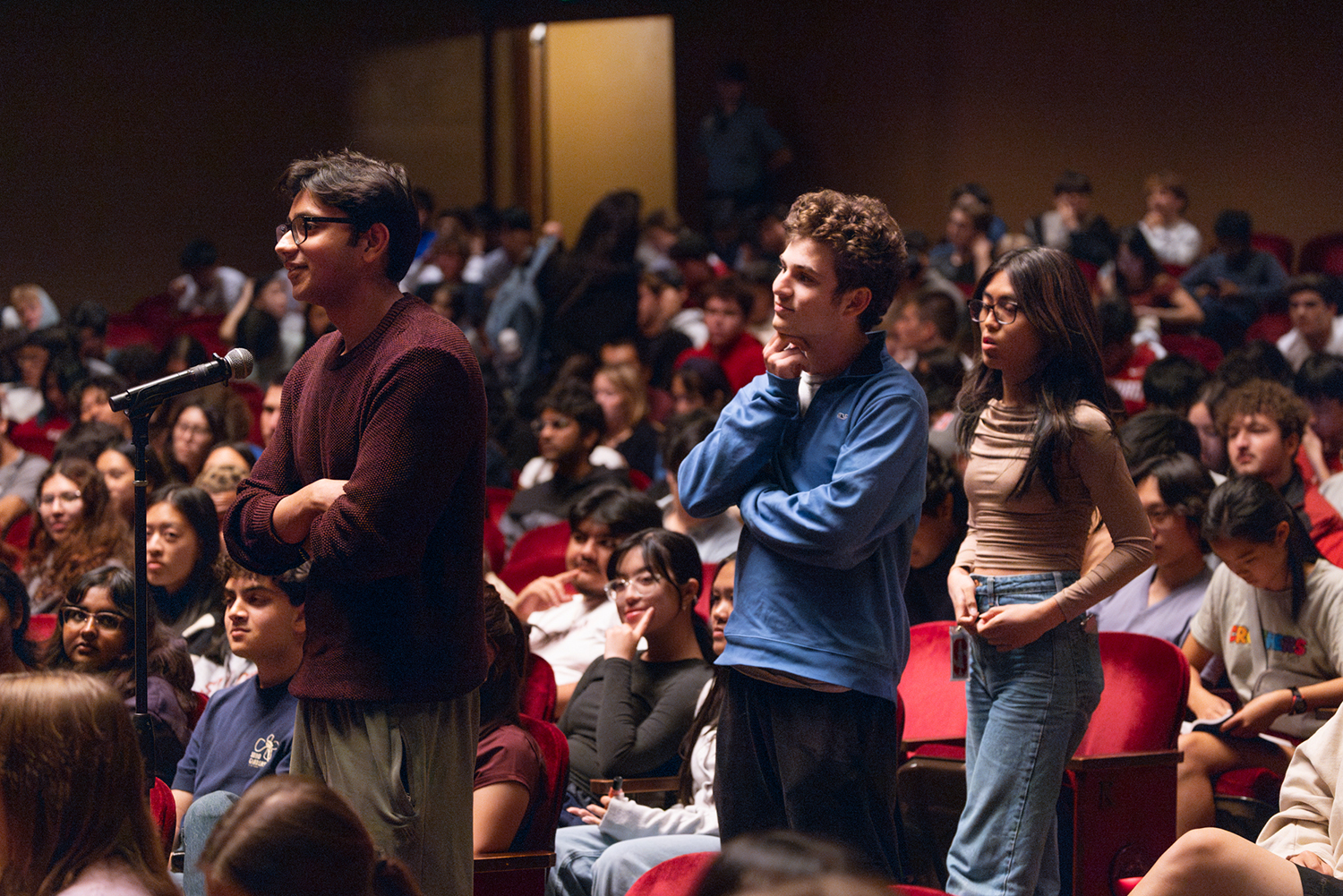
During the question-and-answer portion of the event, one student asked if there was a particular reading that Levin enjoyed.
Levin shared that he has appreciated revisiting canonical thinkers such as Plato, Seneca, and Epicurus. “I read them a long time ago, and I understood them differently,” he said. But what he liked the most was hearing how his students relate to texts written millennia ago. In Week 2, students read Plato’s “Apology of Socrates.”
“The class was so vibrant,” Levin said. “Everybody in our section was projecting their own experiences onto this 2,000-year-old text. I think it’s amazing that people have written texts that, for 2,000 years, you could reread them and they’re as fresh today as they were millennia ago. What an extraordinary human accomplishment to have done that.”
Extra credit
During the Q&A, one student asked panelists what book or text they would always keep with them, more broadly and not necessarily featured in the COLLEGE syllabus. Here are their responses:
From Ami Bhatt:
- Orphan Master Son by Adam Johnson (Random House, 2012)
From Jon Levin:
- A River Runs through It by Norman Maclean (1989, University of Chicago Press)
From George Porteous:
- The Neapolitan Novels by Elena Ferrante (Europa Editions, 2018)
From Emi Sakamoto:
- The Art of Gathering: How We Meet and Why It Matters by Priya Parker (Riverhead Books, 2020)
From Lily Sarafan:
- Humankind: A Hopeful History by Rutger Bregman (Little, Brown and Company, 2020)
For more information
The event was co-sponsored by the ePluribus Stanford Builders Forum, a quarterly event series that emphasizes the values of curiosity and critical inquiry.
Writer
Melissa De Witte