In brief
- The civic thought and practice minor comprises seminar-based courses to promote productive conversations and debates over democratic principles.
- The minor’s five tracks – Civic History; Civic Thought; Constitution and Law; Political Economy; and Classical Traditions – allow students flexibility to pursue breadth across topics or depth in one area.
- This new offering is part of Stanford’s ongoing commitment to foster open and respectful communication across divides, a skill essential for democratic participation.
Stanford students are encouraged to disagree – with each other, with their professors, and with any of the powers that be. That’s the heart of the new undergraduate minor in civic thought and practice and, its proponents argue, the heart of a functioning democracy.
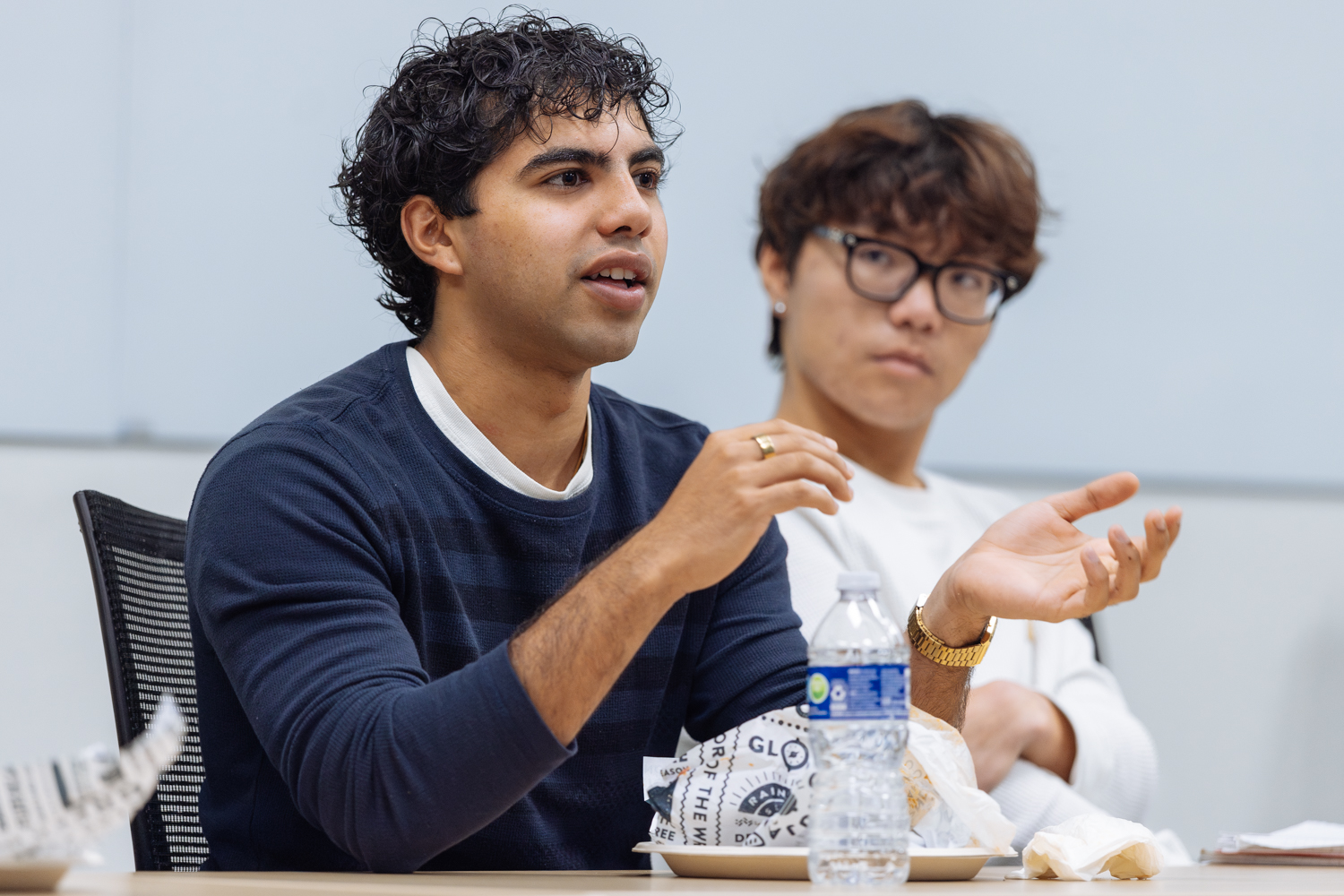
Students can begin pursuing the minor this fall, and many will find they have already taken one of the required courses: Citizenship in the 21st Century, which is part of the core Civic, Liberal, and Global Education (COLLEGE) curriculum for all first-year students. True to its name, the minor will give students the chance to go beyond simply studying the theories around democratic principles. Most of the courses in the new offering are small, discussion-based seminars, so students have the opportunity to listen to other perspectives and express their own.
“Students will not be just absorbing information – they will put it into practice by discussing it with others, forming their own opinions as they engage with the material,” said Dan Edelstein, the Nehal and Jenny Fan Raj Director of COLLEGE.
Edelstein helped develop the minor as a co-director of the Stanford Civics Initiative but sees it as belonging to a bigger movement at Stanford.
“This is very much part of the broader university effort to really help all students and members of our community to develop their own thoughts in an autonomous, authentic way and to do that through interactions with others with whom they may have very profound disagreements,” he said.
The minor is designed to appeal to students who become genuinely engaged by the first-year citizenship course and want to pursue civics more fully without having to commit to a major, said Josiah Ober, who is also a co-director of the Stanford Civics Initiative.
He also hopes the minor will attract students across all schools and majors.
“If democracy is really going to work, it needs people from all types of endeavors: We need engineering and science majors as well as those who might be pursuing philosophy or history majors,” said Ober, a professor of political science and of classics in the School of Humanities and Sciences (H&S).
Tracks, breadth, and depth
Along with the COLLEGE course, the only other required class is the new Designing Democracy: Constitutional Crises, Change, and Continuity, which combines elements of history, political theory, and law. Designing Democracy asks students to contemplate questions such as how societies should balance freedom and stability, how and why constitutions are created, and how well those laws help defend against threats to a democratic society.
After this course, students can then choose four classes from five tracks – taking a breadth approach that spreads classes among the tracks or going deep by taking several classes within one track.
One of these tracks is Civic History, which traces democratic forms from the ancient Greeks to modern day. A second track, Civic Thought, focuses on the conservative, liberal, and critical political traditions in the United States, their basis in moral philosophy, and how they deal with fundamental questions of justice, legitimacy, and power. Another track, called Constitution and Law, centers on the relationship between the “will of the people” and the establishment of laws and formal institutions such as the presidency. The fourth track, Political Economy, addresses the relationship between different governmental systems and how wealth and goods are produced and distributed. The final track, Classical Traditions, allows students to explore a broad humanistic tradition of thought.
Stanford’s civic leadership
The minor was created as part of the Stanford Civics Initiative, but it ties into a host of activities underway on campus. These include ePluribus Stanford, which aims to create an environment on campus where the exchange of ideas can flourish, and the Democracy Hub, which brings together many of the courses, programs, clubs, and other opportunities on campus for students to learn about and actively participate in democracy.
With the new civics minor, Stanford is emerging as a leader among its peer institutions, and it marks a recommitment to the university’s mission to advance democratic citizenship, said Debra Satz, the Vernon R. and Lysbeth Warren Anderson Dean of H&S.
“Stanford is making a strong investment in civic education because it benefits students and everyone – it’s a public good,” said Satz, who is also the Marta Sutton Weeks Professor of Ethics in Society in H&S. “Students will learn about the Constitution and history of democracy as well as practice active listening, communicating their perspectives, and respecting differences – invaluable skills for their careers, relationships, communities, and society at large.”
For more information
Edelstein is also the William H. Bonsall Professor of French in H&S.
Ober is also the Markos & Eleni Kounalakis Chair in Honor of Constantine Mitsotakis in H&S and a senior fellow at the Hoover Institution.
Satz is also a professor of philosophy in H&S.
This story was originally published by Stanford School of Humanities and Sciences.
Media contact:
Sara Zaske, School of Humanities and Sciences:
510-872-0340, szaske@stanford.edu
Writer
Sara Zaske