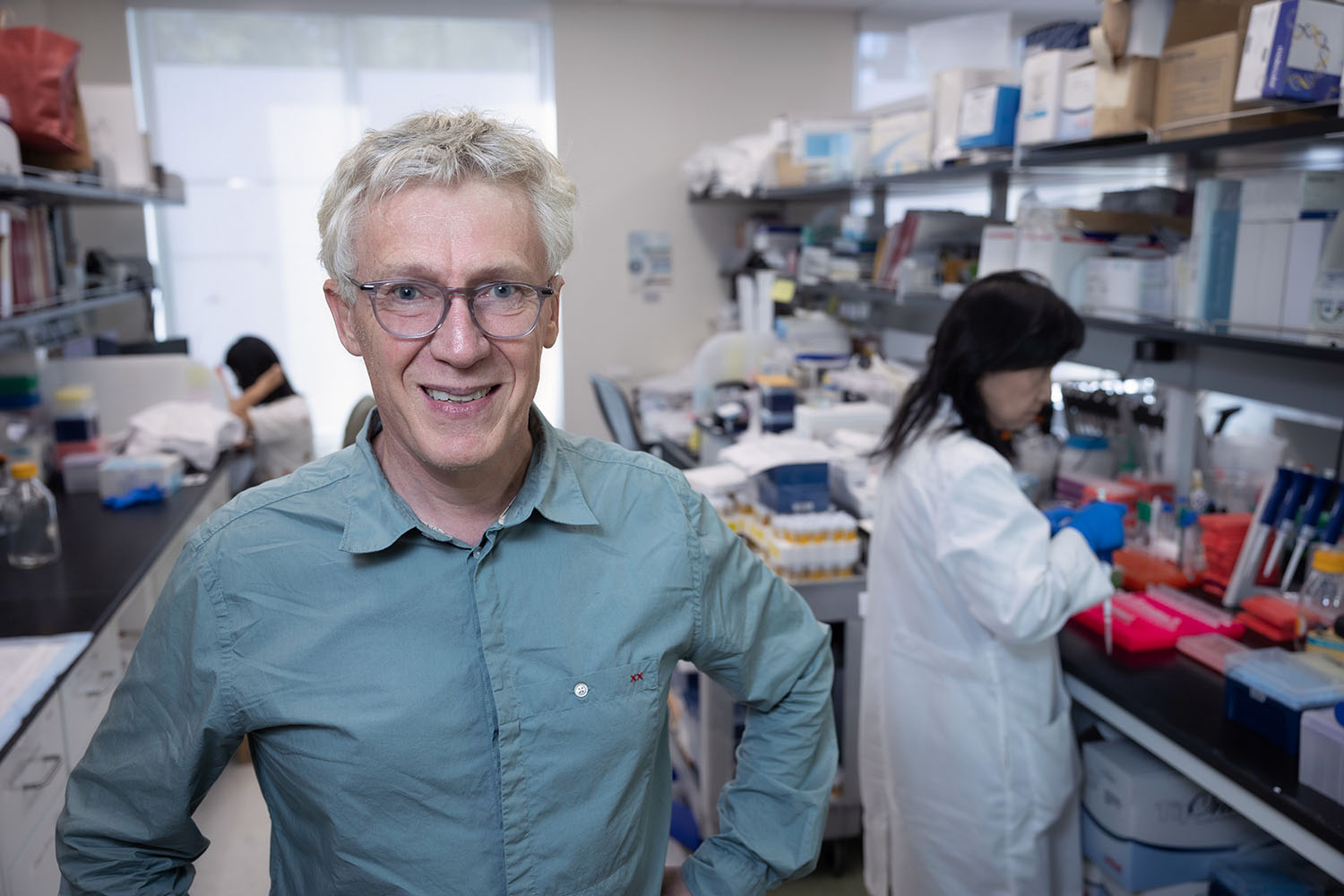
Karl Deisseroth, MD, PhD, a Stanford University professor of bioengineering and of psychiatry and behavioral sciences, has been awarded the 2026 Nobel Prize in physiology or medicine “for discoveries leading to optogenetics, which makes it possible to switch on, or off, the activity of individual nerve cells in a living brain.” He shares the award with Peter Hegemann from the Humboldt University of Berlin and Georg Nagel from the University of Würzburg in Germany.
“I couldn’t be happier because the trio that the committee picked spans the progression from the early algal explorations all the way to advanced neuroscience experiments, so this prize really captures the full journey of discovery,” said Deisseroth, who is the D. H. Chen Professor and a professor in the schools of medicine and of engineering.
Deisseroth established his preeminence as a leader in neuroscience by developing a process to insert light-sensitive microbial proteins called opsins into mammalian brain cells, allowing selected cells to be controlled by light.
“Karl Deisseroth is a defining figure in modern neuroscience, and I am delighted that his groundbreaking work in optogenetics has been honored with the Nobel Prize,” said Stanford University President Jonathan Levin, PhD. “In pioneering the field, Karl and his fellow laureates have unlocked new understanding of how the brain works and created new possibilities for treating neurological and psychiatric disorders. Stanford is proud to call him one of our own.”
When the call from the Nobel committee came in at 12:27 a.m. Pacific Time, Deisseroth missed it. Seconds later, the phone of his wife, Michelle Monje-Deisseroth, MD, PhD, rang, with one simple question on the other end: “May we speak with Karl?”

Karl Deisseroth takes the call from Stockholm telling him he’d won the Nobel Prize. The first and only call he made afterward was to his mom. | Michelle Monje-Deisseroth
“I’m just so delighted. I know I’m biased, but he’s really transformed the field of neuroscience – and actually several other fields,” said Monje-Deisseroth, the Milan Gambhir Professor in Pediatric Neuro-Oncology at Stanford Medicine. “I’m so proud of him.”
“I was quite surprised,” Deisseroth said of the recognition. “I found I had a hard time speaking – I lost the ability to form words for about 30 seconds or so. It was very surprising and overwhelming. But Michelle was quite… unsurprised.”
In a living room lined with shelves of books and family photos of the couple and their five still sleeping children, Deisseroth fielded call after call from reporters, discussing the announcement that honored the monumental discoveries of his career. He sipped from a mug that read, “That’s what I do. I drink and I know things.” (A quote from the television series Game of Thrones, of which the couple are big fans.) Monje-Deisseroth was quick to clarify that what he drinks is coffee, and that he does, in fact, know things.
“Karl Deisseroth’s extraordinary creativity and ability to bridge disciplines have given scientists powerful new tools to unravel the complexities of the human brain, bringing answers to questions once beyond reach and hope to patients and families worldwide,” said Lloyd Minor, MD, the Carl and Elizabeth Naumann Dean of the School of Medicine and vice president for medical affairs at Stanford University. “His work embodies Stanford Medicine’s mission to advance fundamental discovery and translate that knowledge into a better future for all. We are delighted to congratulate Karl on this richly deserved recognition.”
Jennifer Widom, PhD, the Frederick Emmons Terman Dean of the School of Engineering, said, “This Nobel Prize for Karl Deisseroth is a testament to his visionary approach, combining engineering precision with boundless curiosity and compassion. His development of optogenetics has revolutionized neuroscience, offering unprecedented tools to explore the complexities of the brain. Here at Stanford Engineering, we are incredibly proud of Karl’s relentless pursuit of knowledge and his dedication to improving lives.”
Although his parents were both trained as scientists (his father in oncology, his mother in chemistry), Deisseroth told The New York Times in 2014 that his “first love was writing.” He said he originally planned to pursue neurosurgery yet was won over by the power of encountering patients who experience a different reality during his psychiatry rotation at Stanford Medicine.
A new field
“Optogenetics is an engine for discovery,” Deisseroth said. “It’s for probing complex systems at the fundamental level of cells. We want to understand how the brain works as an intact system to carry out complex cognitions, behaviors, and perceptions while being anchored and grounded in the elemental cellular level. We are already taking steps to understand healthy brain function and understand how things go wrong. This is the key principle of optogenetics: precise causal perturbation. Then you can search for ways to perhaps correct the anomalies. Once you know the cells that are important in a symptom or in correcting a symptom, then you can design any method you like to target their activity.”
Before the advent of optogenetics, there were two main experimental workhorses for studying the brain: electrical stimulation and drugs. Exciting neurons, or nerve cells, by stimulating them electrically elicits an immediate response – but also trips off responses in neighboring brain cells and circuits other than the one being studied. And while electrical stimulation can activate neurons, it can’t precisely inhibit them, which is critical to studying brain function.
Drugs, too, are imprecise. They can selectively activate or inhibit neurons – but not necessarily only those in the circuit of interest. Plus, they diffuse widely and can’t be mopped up quickly, making them poor on/off switches.
What if you could install traffic lights in the neurons threading through a living brain, so that you could start or stop traffic on them and observe the effect? The new technology mixes optics, genetic engineering and a mix of other disciplines. It literally uses light to control the messages zinging along our nerves. The go signal can be blue, while the stop signal may be yellow. Both are photosensitive proteins called opsins, originally discovered in microbes.
In 2004, Deisseroth and a pair of graduate students began work on the project.
The team genetically engineered the opsin so it could be expressed on the surface of specified rodent nerve cells and would fire when zapped with blue light – a technique published in Nature Neuroscience in 2005 and now used regularly. They rendered the method more practical by designing a method of inserting an ultrathin, flexible optical fiber into live rodents’ brains so researchers could shoot light directly into specific nerve cells or circuits from a distance, allowing them to control the rodents’ behavior. The team also successfully devised an opsin, triggered by yellow light, that inhibited the activity of nerve cells.
Now, neuroscientists use many colors of light and can manipulate cell behavior without direct genetic engineering. Deisseroth has likened subsequent advances in the field to the addition of instruments to the “optogenetic orchestra.”
“Optogenetics has revolutionized neuroscience,” said Rob Malenka, MD, PhD, the Nancy Friend Pritzker Professor in Psychiatry and Behavioral Sciences, who was Deisseroth’s postdoctoral advisor. “It has allowed neuroscientists to manipulate neural activity in a rigorous and sophisticated way and in a manner that was unimaginable 15 to 20 years ago.”
After establishing the technique, Deisseroth and his team used it to examine several brain disorders, including depression and Parkinson’s disease. Working with University of California, San Francisco, researcher Anatol Kreitzer, PhD, Deisseroth discovered two nerve-cell circuits that play a key role in Parkinson’s disease, a progressive disorder that affects the nervous system.
Using optogenetics, Deisseroth and Kreitzer were able to reverse Parkinson’s symptoms in mice. Deisseroth also discovered a brain circuit that controls mammals’ desire to interact socially. He and his team then used optogenetic techniques to trigger or inhibit social interactions between female mice. Previously, he induced and relieved symptoms of depression in mice.
At Stanford University, Deisseroth instituted an optogenetics training program that has taught thousands of scientists how to use the technology and has distributed copies of the engineered opsin gene to labs worldwide. Optogenetics can be adapted to many types of cells, including the heart and pancreas, and may be used eventually in humans in conjunction with gene therapy; for example, to restore function to people with paraplegia.
“One thing that is remarkable about Stanford is the openness to truly disruptive innovation,” Deisseroth said. “Stanford is a place without a strong hierarchy. That allows ideas to bubble up and to spread and to be captured. The free flow of people and ideas here is very special.”
“The natural world was always fascinating to Karl,” Deisseroth’s mother, Louise Deisseroth, recalled. “As a child, he was very interested in everything: watching ants walk along the ground or the waves rolling in at the beach. He was curious about the world and had amazing concentration skills. I was always struck by how much he respected not only learning but also the effort and energy needed to accomplish his goals. I’m just so proud and happy for him.”
“Even before I had any scientific training, I was interested in the brain,” Deisseroth said in a 2021 article in Neurophotonics. “As a little kid, I was kind of introspective and thought about what was going on in my head, and then I really developed a love of writing and literature. I was curious about how words and sentences could make me feel, and I was interested in the communication between words and the brain and feelings, and probably that’s where I first wondered about the brain – could it be studied, could we understand feelings? But I didn’t have a clear path forward.”
That path forward was paved by the discovery by Hegemann and Nagel of a cell-surface protein called channelrhodopsin in a single-celled algae that allowed the organism to sense and swim toward a light source. In the presence of blue light, they found, the protein formed a channel through which charged ions would flow, creating an electrical impulse. When channelrhodopsin was introduced to other cells, those cells also became light-sensitive.
“I remember Karl talking about ways to control neurons to causally test the role of neural circuits in various brain functions,” Monje-Deisseroth said. “He had this very, very clever idea, and he was reading all these journals about algae. He even went to an algae meeting! And I remember how excited he was when he did the very first experiment – himself. It was early July of 2004 and he had just started his lab. It was so exciting, the idea that you could use light to control neuronal activity.”
“The key moment occurred when I put the algal gene into neurons,” Deisseroth said. “I was looking for a number of different ways of using genes to modulate neural activity, and this was one of them. It was the approach with the highest risk but it turned out to be the one that worked best, and that was a valuable lesson. There were many additional steps in development, each one critical. It took years to really build into a whole technology.”
“I got a big smile on my face when I heard the news,” Malenka said. “It is so obvious to me that he deserves it. While Nagel and Hegemann discovered channelrhodopsin, Karl, in my view, essentially singlehandedly understood its importance and figured out how to use it for scientific discovery. Obviously their discovery was important – but it would have stayed on the shelf as some obscure, interesting finding that had almost no impact if Karl hadn’t figured out how to package it into viruses, get it into cells – do the engineering to figure out how to get light into tissues, especially deep into brain – and showed the field how to use it.”
Optogenetics has proven useful in fields other than neuropsychiatry. Monje-Deisseroth has used the tool in her own laboratory to show that some brain cancers rely on neural activity to grow. “It has been an absolute mainstay of my lab’s technical arsenal,” she said. “It’s been key for the discoveries we’ve made.”
“In addition to being a really brilliant scientist, Karl is an incredible mentor,” said Feng Zhang, PhD, professor of brain and cognitive sciences and biological engineering at the Massachusetts Institute of Technology and one of Deisseroth’s first graduate students. “When I joined the lab, there were maybe four or five people but Karl gave us the freedom and support we needed to develop optogenetics into an incredible tool for the neuroscience community. We were a team with phenomenal energy, a goal, and the will to make it happen. He also cares deeply about his patients with neuropsychiatric diseases and finding some way to help them. He is incredibly inspirational.”
When the power of optogenetics became clear, Deisseroth freely shared his reagents, protocols, and knowledge with as many scientists as possible to help the field progress. He also encouraged dialogue between his lab members. “Karl was – and still is – very approachable,” said Zhang. “He was someone I could talk to very comfortably and frequently. In the early days of the lab, we would drive to In-N-Out Burger together and get dinner.”
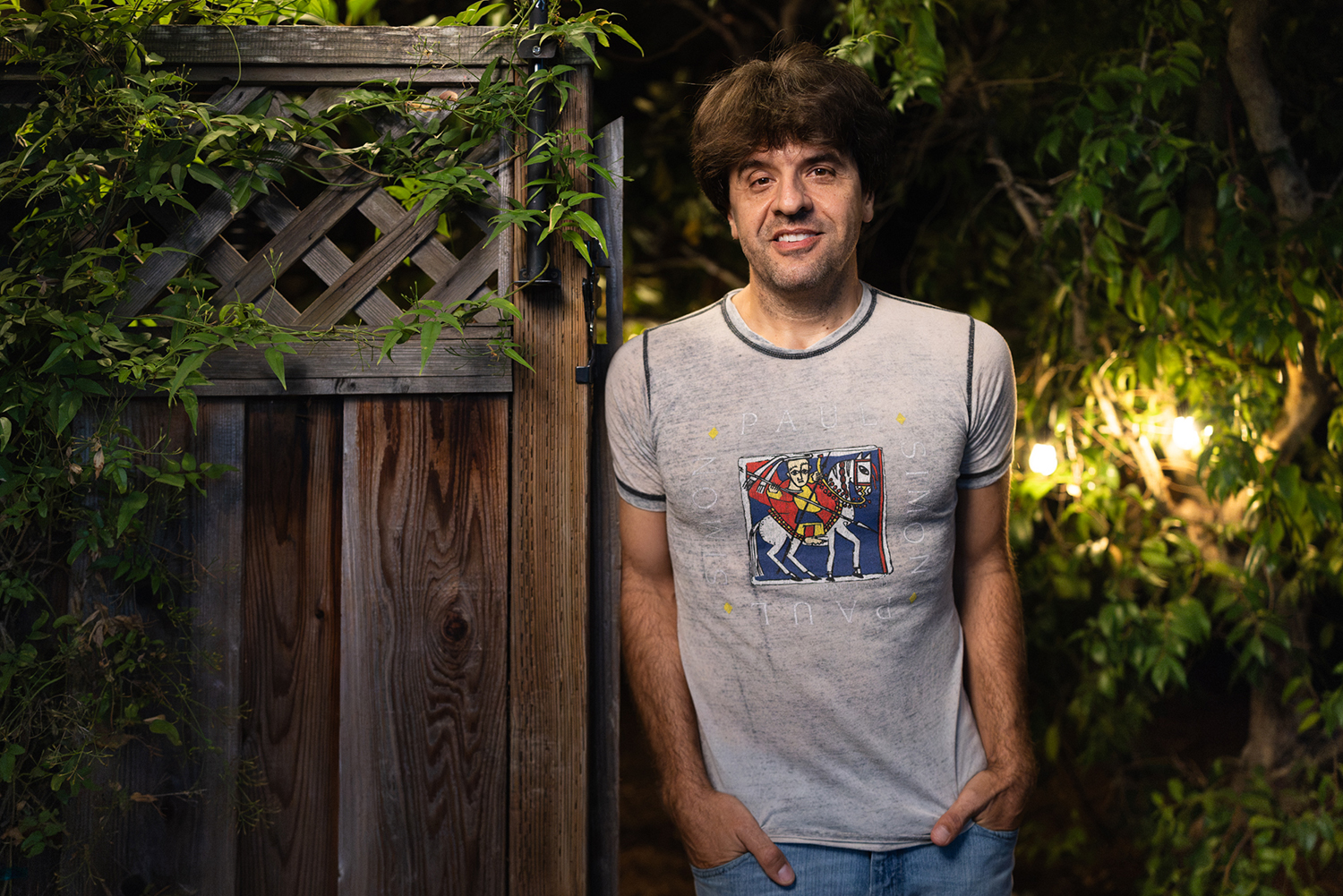
“At first, Karl comes across like a surfer dude, casual, very humble,” Malenka said. “He shows up in T-shirts and blue jeans, with tousled hair. But underneath burns an intellectual passion and fire for discovery and accomplishment that is unlike almost anybody I’ve ever seen.”
Deisseroth stood out even early in his scientific career. “Karl was amazing,” said Chris Kroeger, who met Deisseroth as a fellow class of 1992 medical student at the Stanford School of Medicine. “I had known a ton of smart people before meeting him, but I was so impressed with how intelligent he was, what a deep thinker he is. He is incredibly smart and insightful, and had all sorts of interesting ideas. I was convinced immediately that he was brilliant.”
“As a postdoc with me, I knew he was going places, I knew he was special,” Malenka said. “He is really smart, worked his ass off, was highly creative. But I didn’t quite appreciate how visionary he is.”
Transparent brain tissue
Deisseroth has since developed a technique, called CLARITY, to render brain tissue transparent in the lab and enable high-resolution imaging. In 2013, Deisseroth and colleague Kwanghun Chung, PhD, a professor in brain sciences and human behavior at MIT, created a transparent mouse brain using hydrogel. Lipids in the brain block light, so Deisseroth and his team invented a method to replace the lipids with a transparent hydrogel while preserving structural and molecular information. The process does not affect chemical interactions. Now, he is striving to create a transparent human brain.
In recent years, Deisseroth and his team have perfected methods of controlling the behavior of whole batteries, or ensembles, of specified individual neurons. Combined with advanced techniques for monitoring and recording activity in sets of neurons responding to experimentally provided stimuli, ensemble-based optogenetics permits researchers to “record” and “play back” firing patterns characteristic of particular perceptions or motor routines and, with training of their animal subjects, even to induce perceptions, or hallucinations, in test animals. They have used these techniques to pinpoint the brain circuits involved in dissociation (a feeling of disconnection from reality and from one’s body) and to understand how the brain interprets physiological signals, like a fast heart rate, to generate emotions, like anxiety.
Most recently, Deisseroth led a team that compared how the brains of humans and mice respond to an adverse stimulus, finding evolutionarily conserved patterns of brain activity that seem to give rise to negative emotions in both species.
Ultimately, Deisseroth hopes to tease apart the functions of the working brain to treat severe disorders such as Parkinson’s, schizophrenia, autism, addiction, depression, and anxiety.
He hopes to use the recognition that comes with the prize to advance people’s understanding of science and the brain.
“I hope this will help me to communicate science clearly,” Deisseroth said. “I’ve done my best so far with the voice I’ve had, and I’ve tried to reach out to everybody, everybody who can listen and who wants to listen about science, about psychiatry, and about health. It’s a very timely thing right now to be able to communicate with the public.”
Taking care of the kids
When asked to describe his work as if he was explaining it to a 10-year-old, Deisseroth said, “We can use light to turn on or off cells in the brain. We do that using small molecules that we get from single-cell organisms. Isn’t that cool, that we can take a molecule from algae and it lets me turn cells on or off, to stimulate them, or to turn them on or off, with the flip of a switch – a laser? That’s how any 10-year-old would understand a system: by poking it. That’s what we're doing with optogenetics. We’re poking the brain.”
Deisseroth’s own 10-year-old, Sophie, was enthusiastic when she awoke to the turmoil. “Dad, you’ve won all the prizes!” she said.
Sixteen-year-old Hudson was more measured. “The word I’d use to describe my dad is relentless,” he said. “Dad is one of the hardest working people I know – every waking hour he’s giving it all to do everything he needs to. And he had a lot of waking hours. More than most people. He’s always working toward something.”
One thing Deisseroth works toward each school morning is sandwich prep, and Nobel morning is no different. He makes six sandwiches for the three kids still at home – four for his son Hudson (ranch dressing, cheddar cheese, salami and turkey) and two for his daughters Sophie (also ranch, cheddar, and meat) and Emma (almond butter, honey, and cinnamon). Raisin bread for Emma is non-negotiable.
When asked how he plans to celebrate his award, Deisseroth said simply, “Get back to work. We have a lot of things still to discover, and a lot of people to help.”
A host of prizes
Deisseroth serves as the director of undergraduate education in bioengineering and is a member of the Wu Tsai Neurosciences Institute and the interdisciplinary Stanford Bio-X institute. He is also a practicing psychiatrist seeing patients with treatment-resistant depression and autism spectrum disorders.
Deisseroth was born Nov. 18, 1971, in Boston. He graduated summa cum laude with a bachelor’s degree in biochemical sciences from Harvard University in 1992. He received his PhD in neuroscience in 1998 from Stanford Medicine and his MD in 2000 from the Stanford School of Medicine. He started his lab at Stanford in 2004.
He became an investigator at the Howard Hughes Medical Institute in 2014. Prestigious awards Deisseroth has won include the Asan Award in Basic Medicine in 2025, the Japan Prize in 2023, the Louisa Gross Horwitz Prize in 2022, the Lasker Basic Medical Research Award in 2021, the Heineken Prize for Medicine in 2020, the Kyoto Prize in 2018, the Harvey Prize and Fresenius Research Prize in 2017, the Dickson Prize in Medicine, the Lurie Prize in Biomedical Sciences, and the Breakthrough Prize in Life Sciences in 2015. He has also received the Brilliant 10 Award from Popular Science, the William M. Keck Foundation Medical Research Award, the Dickson Prize in Science, the Richard Lounsbery Prize from the National Academy of Sciences, the European Brain Prize, the Keio Medical Science Prize, and the Zülch Prize from the Max Planck Society.
He was elected to the National Academy of Medicine in 2010, the National Academy of Sciences in 2011, the National Academy of Engineering in 2019, and the German National Academy of Sciences in 2014. In 2013, he was named a member of President Barack Obama’s NIH BRAIN Initiative Working Group, an initiative he and other leading scientists had proposed in the journal Science. The group called for enhanced development of innovative tools to examine the brain.
In 2023, Deisseroth founded the Human Neural Circuitry program at Stanford, an interdisciplinary collaboration that uses high-powered data gathering to process and study human brain activity in real time.
In 2021, he published Projections: A Story of Human Emotions, a work of literary nonfiction in which his poignant encounters with psychiatric patients in the emergency room serve as entry points into the science and origins of human emotions. The book has been translated into over 15 languages.
He calls the brain “the most complicated object in the universe.”
For more information
Deisseroth is a member of Bio-X, the Wu Tsai Neurosciences Institute, and the Wu Tsai Human Performance Alliance.
Writer
Krista Conger