Each October, a series of phone calls from Stockholm change lives as the Nobel Prizes are awarded.
In 2012, Stanford physiologist Brian Kobilka won the Nobel Prize in chemistry alongside Robert Lefkowitz of Duke University. And in 2020, Stanford economist Paul Milgrom won the Nobel Prize in economic sciences with Robert Wilson, the Adams Distinguished Professor of Management, Emeritus.
Here, Milgrom, the first Nobel economics laureate to also win an Emmy Award (he won a 2024 Technology Emmy for creating a system that helped TV stations sell their extra airwave space to wireless networks), and Kobilka, whose work on G-protein-coupled receptors has paved the way for drug discoveries, reflect on the prize.
How did it feel to get the call?
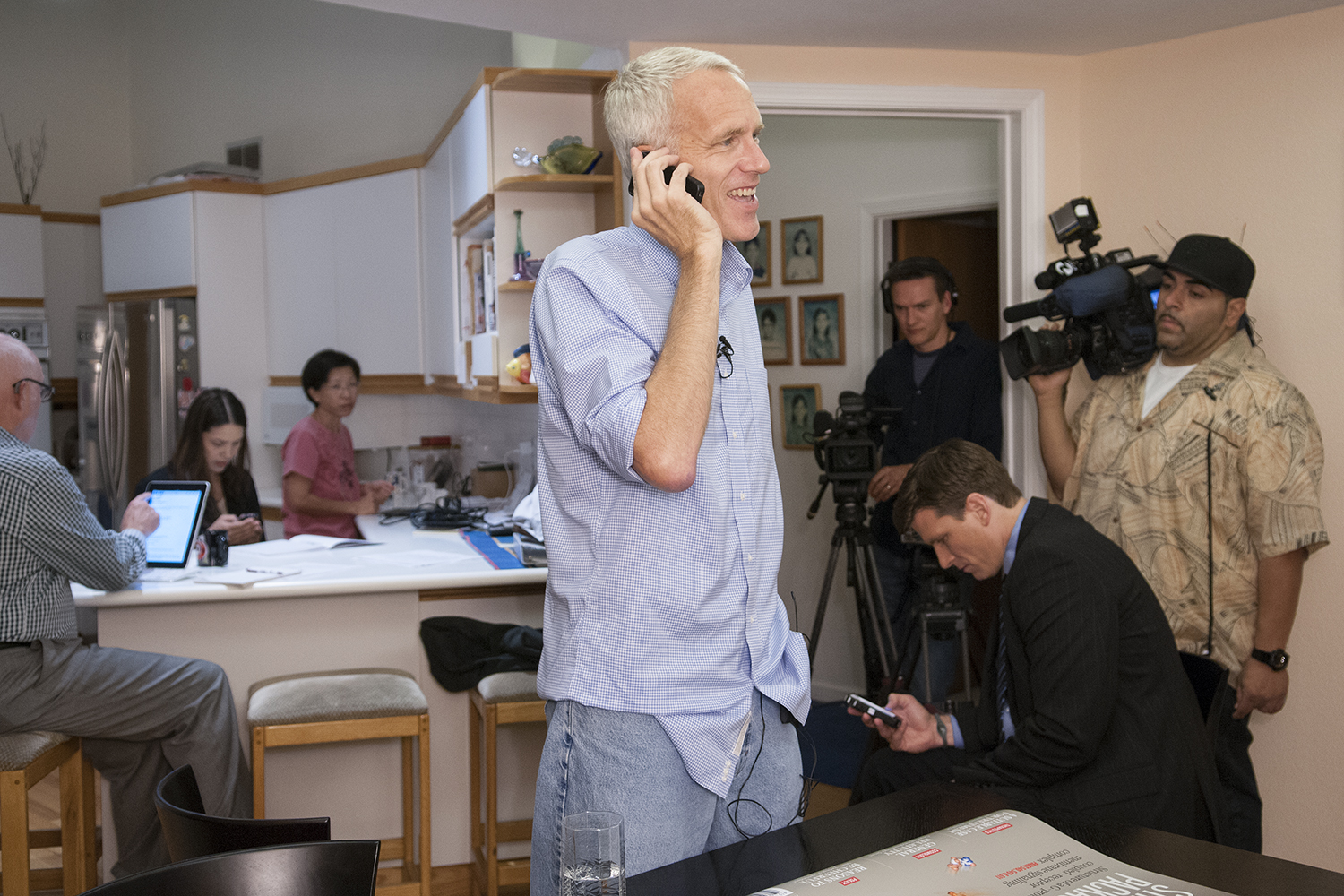
Kobilka: The phone was ringing early in the morning and we just let it ring. We figured it was a wrong number, and a few minutes later, they called again. I answered it, and it was someone from Sweden who told me I had just won a Nobel Prize. I didn’t believe it at first, but then they passed the phone to a few other people, including somebody I knew.
The phone then just kept ringing all night, and a news agency actually came to the house with a van with a satellite dish on top. My elderly neighbor came over and was concerned that I was having a heart attack. It was just sort of a blur and very exciting. My wife, Tong Sun, was incredibly excited. She’s been a large part of my career. She has a master’s degree in microbiology, and we worked together in the Lefkowitz lab to clone the beta 2 receptor. She started medical school when we moved here, and she’s been very supportive of my research.
Milgrom: A Nobel Foundation representative tried to call to notify me that I had won, but I was asleep and my phone was off, so the call didn’t come through. The co-winner was my dissertation advisor, Robert Wilson, who is also my neighbor across the street, so Bob and his wife, Mary, came over and rang my doorbell. There’s a video of them saying, “Paul, wake up! You’ve won the Nobel Prize.” My wife was in Stockholm at the time, and when the doorbell rings, she got a notice on her phone, so she knew what was going on the moment it happened. Also, I was a little disoriented when I woke up and heard Bob say, “You have won the Nobel Prize,” which I thought was really odd. I wondered if he meant, “We have won the Nobel Prize.” (He did!)
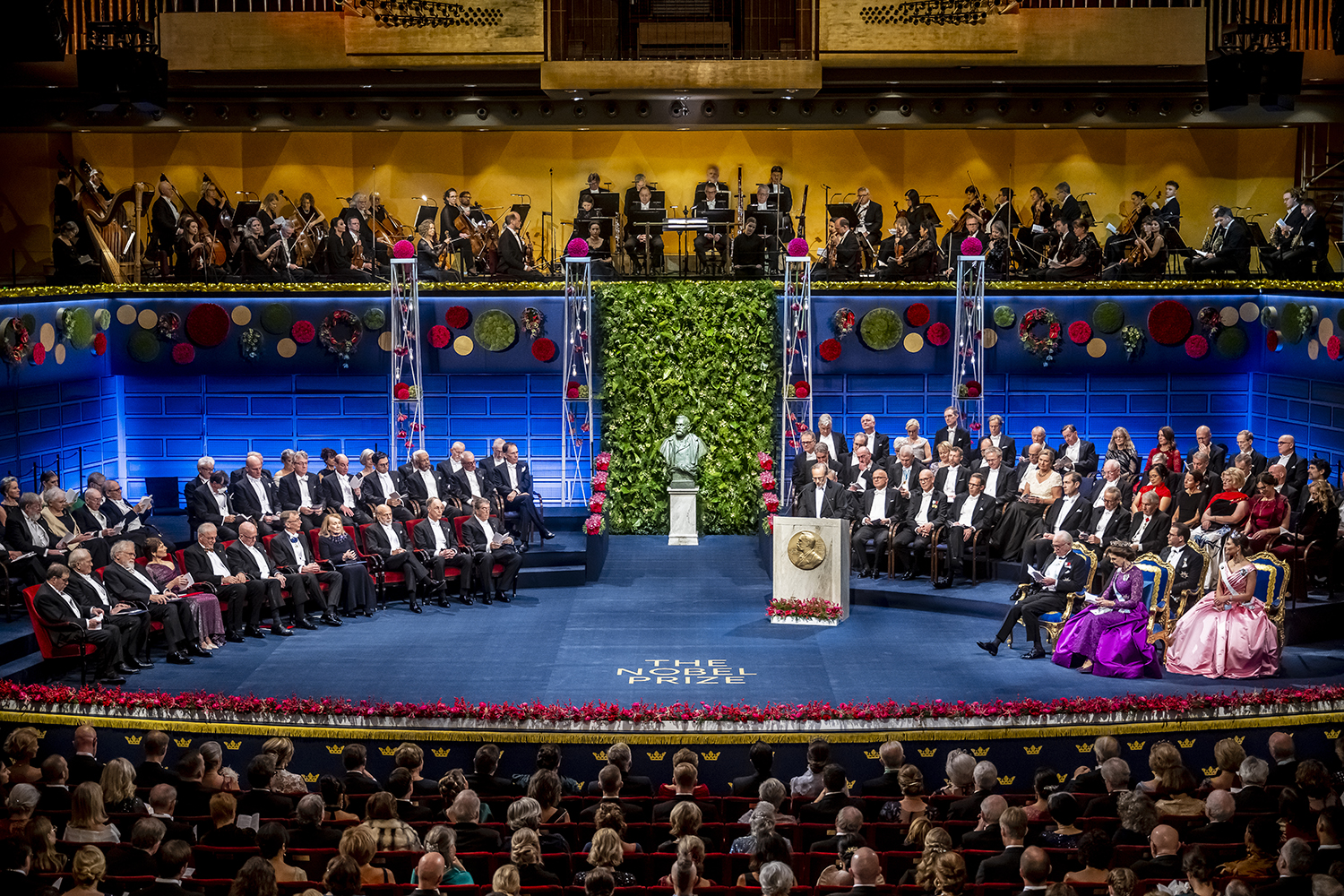
Paul Milgrom was honored for his 2020 Nobel Prize during the 2022 Nobel Prize award ceremony in Konserthuset Stockholm. | © Nobel Prize Outreach / Nanaka Adachi
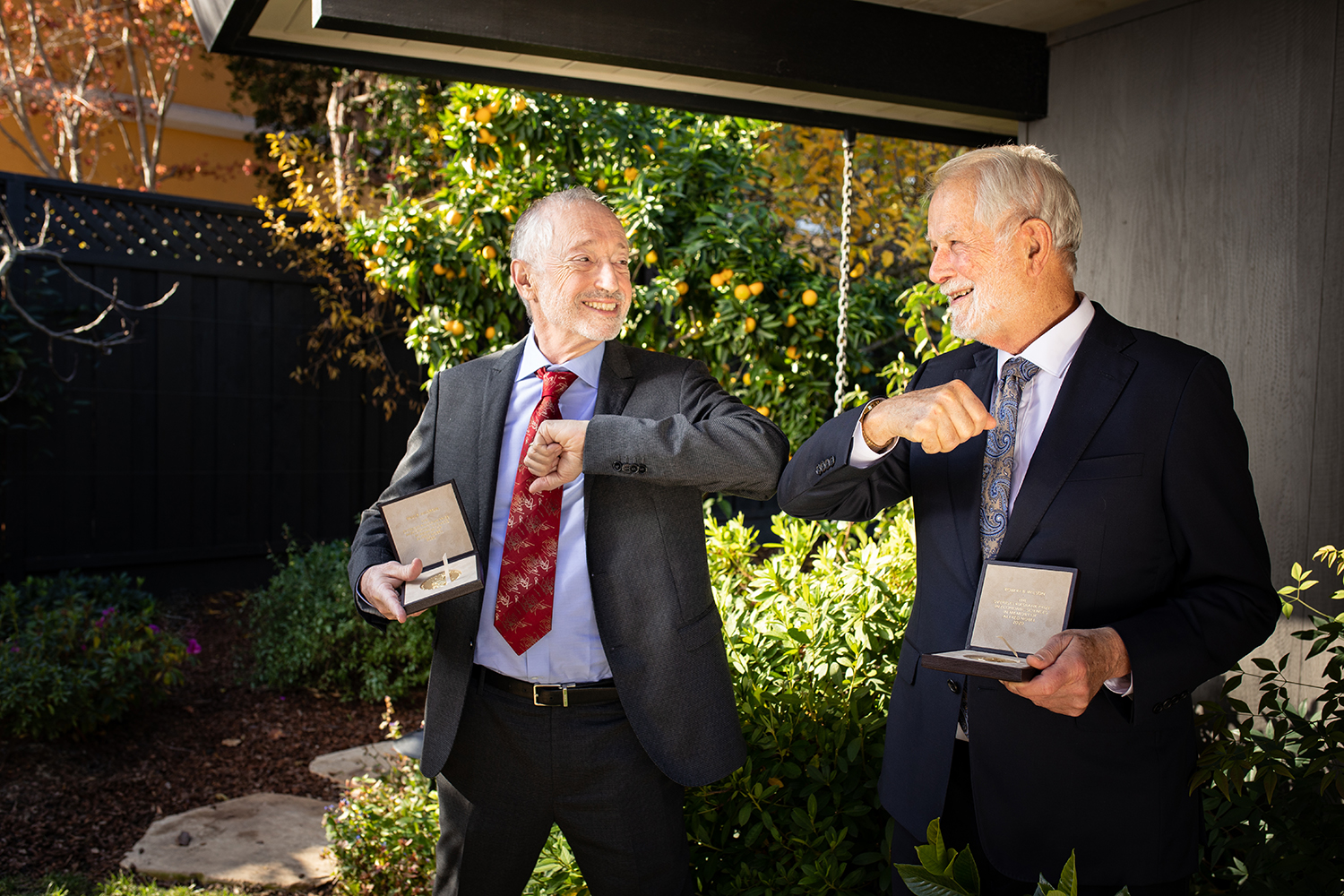
The medal and diploma for the Sveriges Riksbank Prize in Economic Sciences in Memory of Alfred Nobel were presented to laureates Paul R. Milgrom and Robert B. Wilson in Palo Alto. | © Nobel Prize Outreach / Elena Zhukova
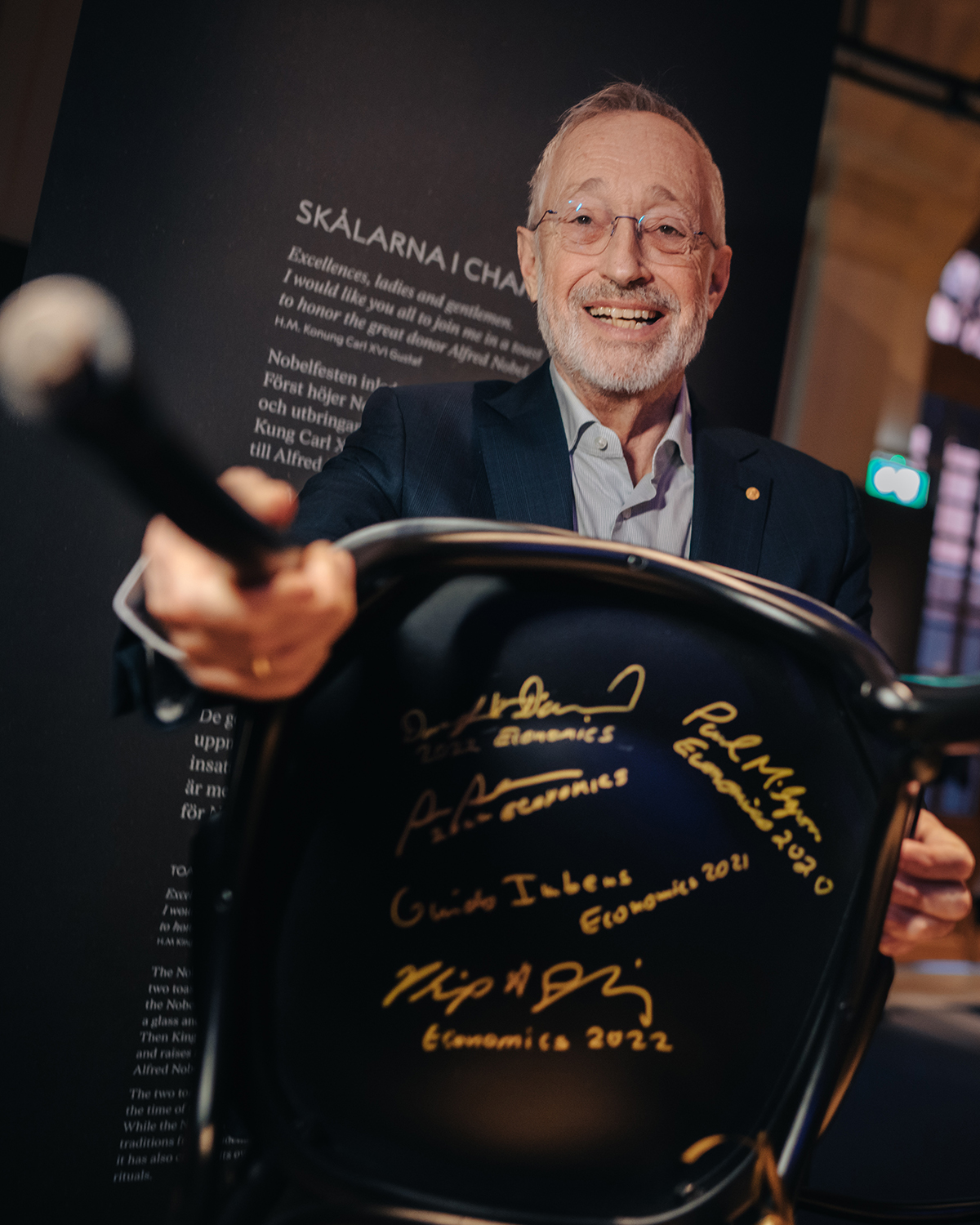
Paul Milgrom signing a chair at the Nobel Prize Museum. | © Nobel Prize Outreach / Clément Morin
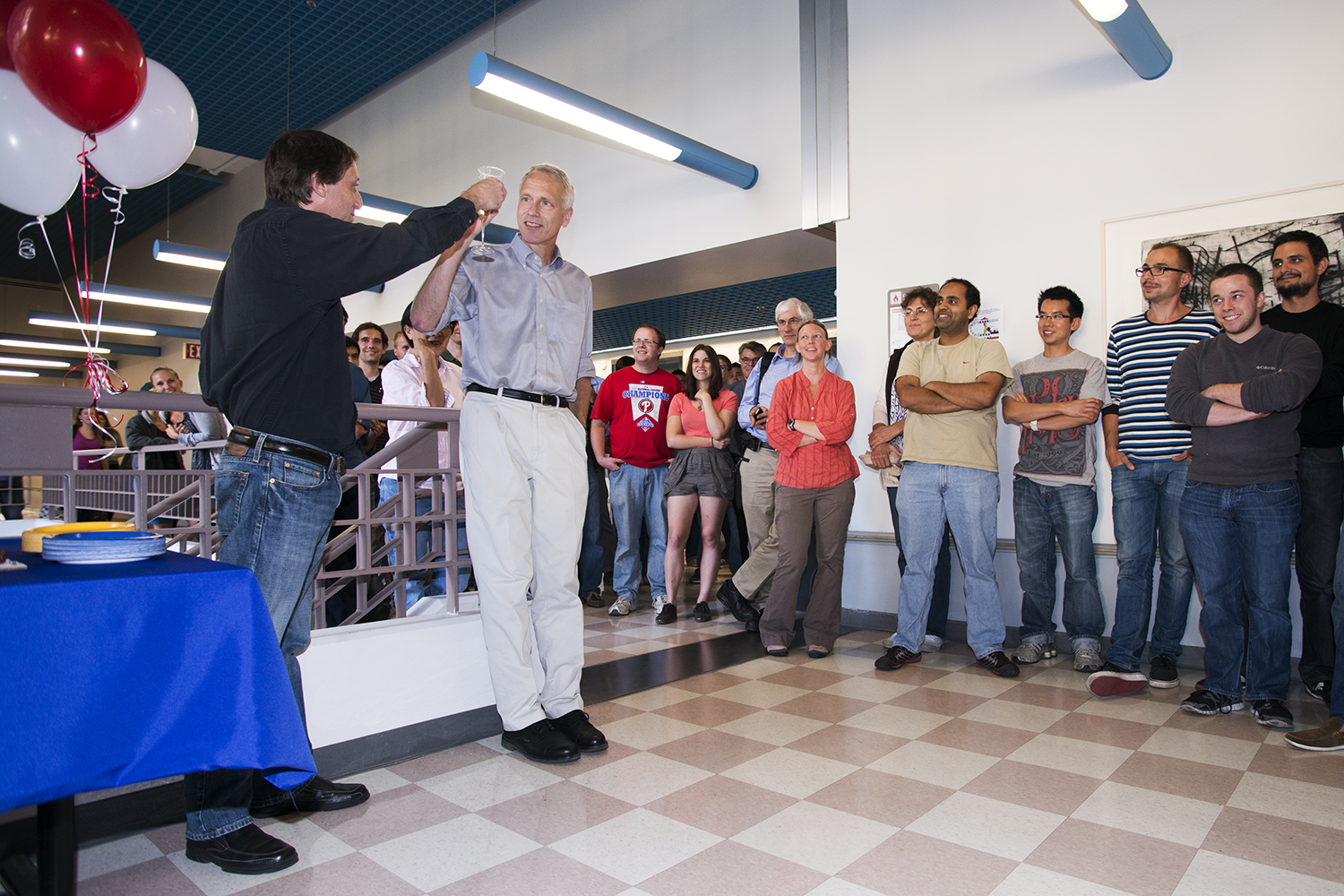
Bill Weis, former chair of structural biology at Stanford Medicine, gave the champagne toast at a celebration for laureate Brian Kobilka. | Linda A. Cicero
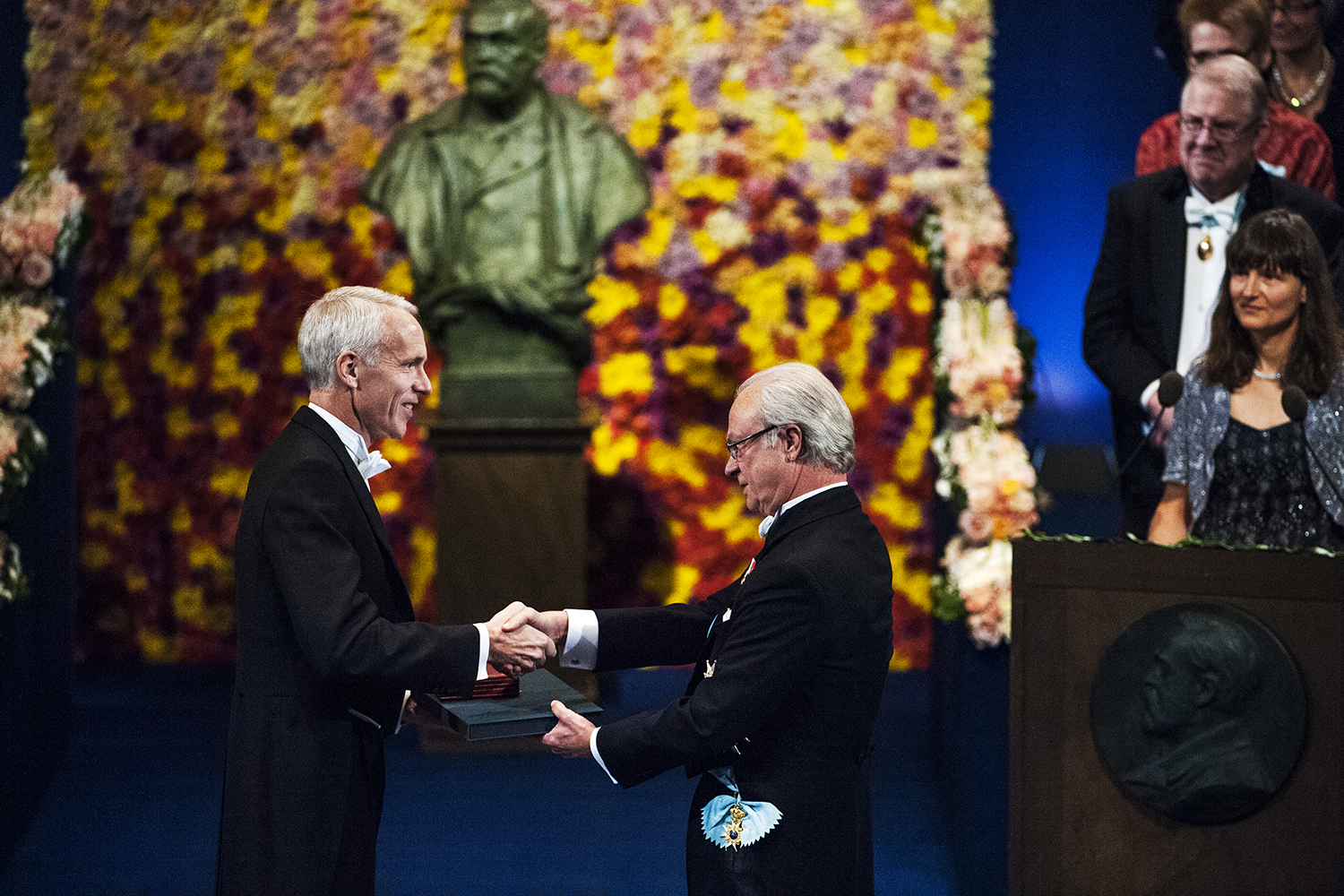
Brian Kobilka receives his Nobel Prize from H.M. King Carl XVI Gustaf of Sweden at the Stockholm Concert Hall on Dec. 10, 2012. | © Nobel Media / Alexander Ljungdahl
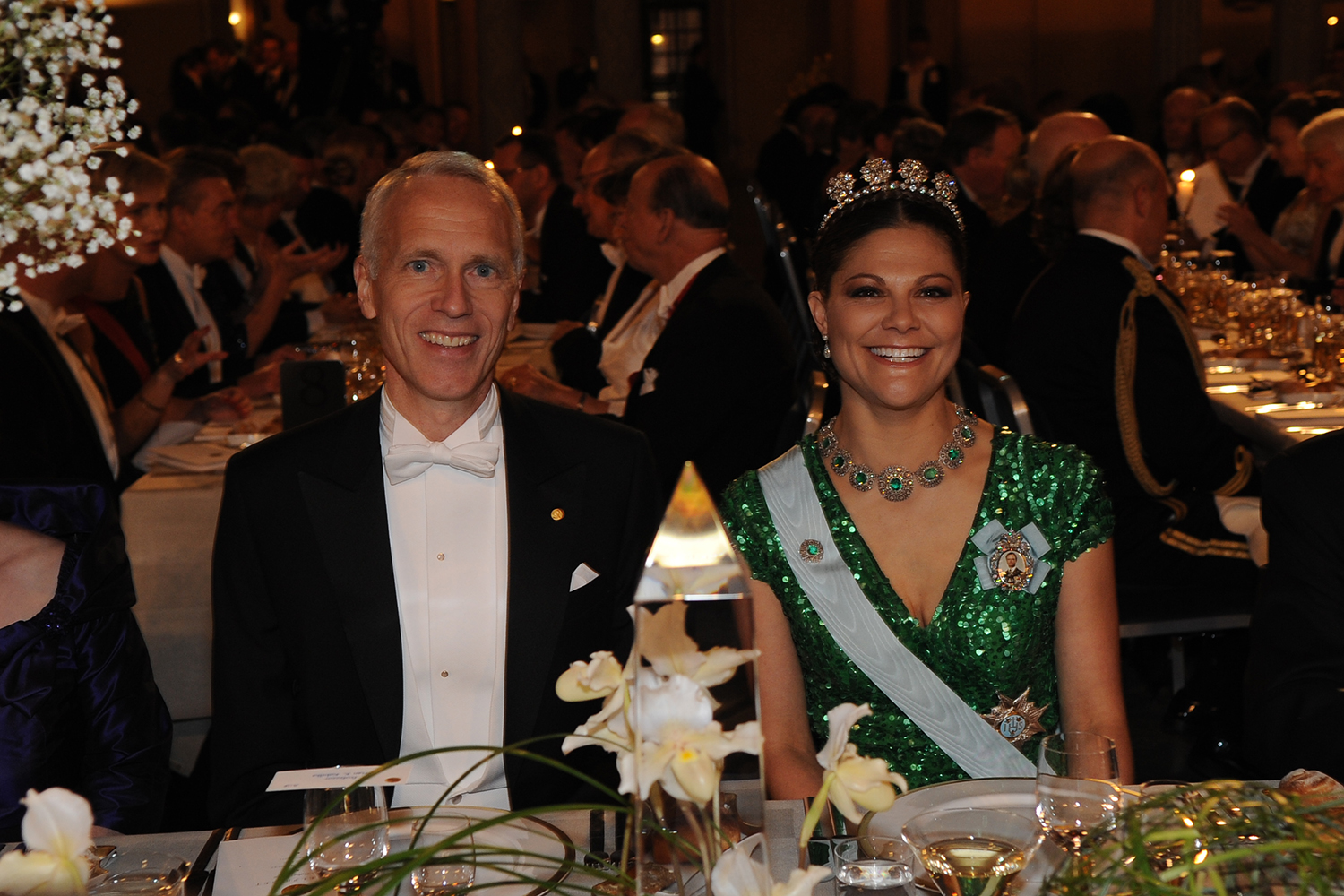
Brian Kobilka and Crown Princess Victoria of Sweden at the Nobel banquet on Dec. 10, 2012. | © The Nobel Foundation 2012 / Orasisfoto
How did winning the prize impact your life?
Milgrom: I had always told myself that the BBVA Foundation Prize would be the most important prize I ever won because the chairman of that committee, Ken Arrow, was the person I looked up to most in economic theory. He was a great man, and the prize was a sign that he liked my research. So my immediate reaction was this is nice and something to celebrate, but it’s not the most important prize to me. However, it turns out that the Nobel Prize is so much more famous than other prizes. The first sign of the difference between prizes came days later when my grandson, who was 9 years old at the time, came home from school and told me, “Even my teacher has heard of that prize!” All of a sudden, my grandson was impressed.
“My grandson, who was 9 years old at the time, came home from school and told me, ‘Even my teacher has heard of that prize!’”
It changes the quality of interactions, too. Because this prize is so famous, some people just start with the assumption that I know what I’m talking about, and that affects interactions and access deeply. It’s pretty amazing.
Kobilka: It’s a good thing and a great opportunity, but on the other hand, it’s a disruptive experience. You get many invitations to go virtually everywhere, and a lot of times you don’t feel like you can say no. My wife and I traveled more than we had ever traveled before, and I was still working and trying to focus on my research. Prior to the Nobel, I would still do bench work. I would help postdocs or students and be their technician if it was a really challenging project or high risk. However, after the Nobel, I no longer had time for bench work.
What was it like in Stockholm?
Kobilka: It was very nice and over the top. As you exit the plane, they take you to a waiting limousine so you don’t go through customs. They take your passport, you have coffee, and they get your luggage. You have a driver and assistant assigned to you for the whole Nobel week. You’re treated very well. The excitement for me was somewhat muted by the fact that I was really nervous about giving my talk, because I wanted to make sure I gave everyone due credit. After my talk, I started to relax, and then there was the banquet, which was fantastic. The most enjoyable experience was the afterparty, which is a celebration students put on. There were no photos allowed. It goes on until 2 or 3 a.m., and I had time to visit with the people who contributed to my getting the Nobel Prize. It was really nice.
Milgrom: That year they combined three years of prizes. The winners from 2020 and 2021 were also on the stage, but we didn’t go through the full ceremony. It was a nice ceremony nonetheless, but it wasn’t – as I like to say – the year I won the big prize. That was in 1996, the first time I met my future wife. I had come to give a lecture in Stockholm to celebrate laureate William Vickrey, who died suddenly after the prize announcement, and I was seated next to her.
In 2006, the Nobel Foundation invited my wife and me to come to Nobel Prize events to celebrate the 10-year anniversary of when we met. It was 14 years before I won my prize, and I was being interviewed on national Swedish television. One of the last questions was, How did I feel about the fact that I didn’t win the prize? I answered, “Well, I’m the one who went home with the biggest prize!” Best line of my life.
How has your research evolved since receiving the prize?
Milgrom: One of the things I’m doing right now is trying to help solve the problem of the Great Salt Lake, which is drying up, with huge consequences for health, economics, and wildlife. Fundamentally, it is an economic problem: Water is being allocated to the wrong uses. We need to buy water rights to restore flow into the lake. Lots of economists have had similar ideas, but they mostly get ignored. I am hoping that the Nobel Prize will be the difference. I also have an Emmy Award for my applied work on radio spectrum allocations, and these two prizes combined help these ideas get taken seriously. People are willing to listen to my ideas in ways that they weren’t 10 years ago, and other awards just don’t have that same kind of impact.
Kobilka: We’re still working on these proteins and there are a lot of things we don’t know about them, particularly, for example, why a particular receptor will prefer a particular G protein. Our structures suggest they’re sort of solid and not moving, but they’re actually very dynamic, and those protein dynamics play an important role in how they work. The other thing we started to do is try to actually develop some special kind of drugs called allosteric modulators for opioid receptors and cannabinoid receptors for the treatment of chronic pain.
Anything else you wish people knew?
Milgrom: I’ve had a great time at Stanford. I’m very proud of the students I’ve trained and the work they have done. Many of the world’s top economic theorists are former students. My students are doing such great work at this point, more innovative than what I was doing five years ago, and I’m delighted to be able to support and help them do that.
Kobilka: Young people sometimes ask, “How do I win a Nobel Prize?” I don’t think it should be anybody’s goal to win a Nobel Prize. There are so many people who deserve one and there are not enough to go around. Even if you do the most brilliant work, you may not get it. I tell young scientists to pursue topics that they are really passionate about, not what might get a Nobel.

For more information
Kobilka is the Hélène Irwin Fagan Chair in Cardiology at Stanford Medicine, where he is a professor of molecular and cellular physiology. Milgrom is the Shirley R. and Leonard W. Ely, Jr. Professor in the School of Humanities and Sciences, where he is a professor of economics. He is also a senior fellow at the Stanford Institute for Economic Policy Research and a professor, by courtesy, of management science and engineering at the School of Engineering and of economics at the Graduate School of Business.
Writer
Chelcey Adami