Six Stanford scientists have been awarded High-Risk, High-Reward Research program grants from the National Institutes of Health (NIH). These grants support “exceptionally creative scientists pursuing highly innovative research with the potential for broad impact in biomedical, behavioral, or social sciences within the NIH mission.”
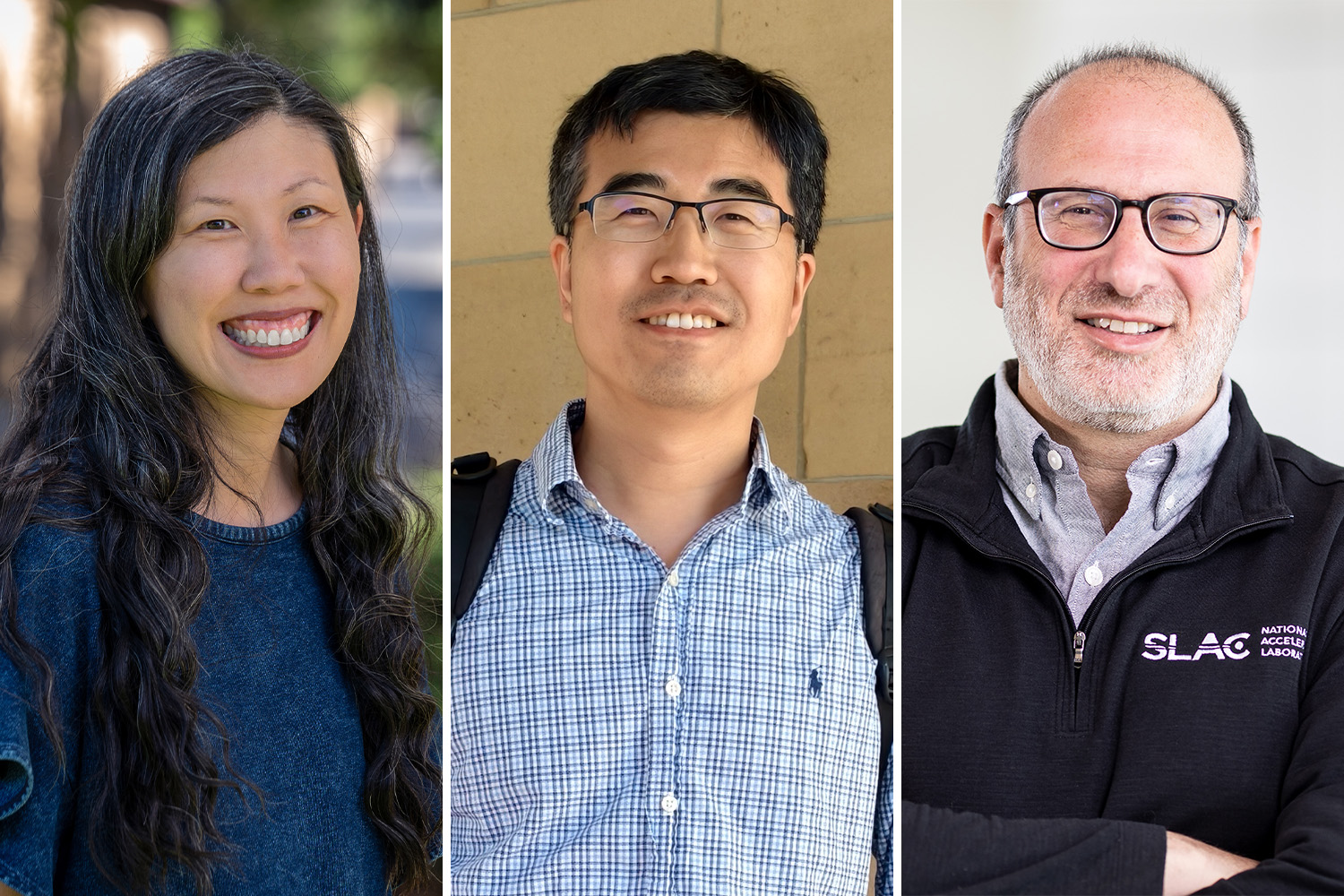
The awardees this year are: Sarah Bowling, assistant professor of developmental biology in the School of Medicine (Stanford Medicine); Meg Cychosz, assistant professor of linguistics in the School of Humanities and Sciences (H&S); Sergios Gatidis, associate professor of radiology (pediatric radiology) at Stanford Medicine; Brian Hie, assistant professor of chemical engineering in the School of Engineering (Stanford Engineering); Jennifer Dionne, professor of materials science and engineering at Stanford Engineering; and Alice Ting, professor of genetics at Stanford Medicine and of biology in H&S.
The High-Risk, High-Reward Research program is part of the NIH Common Fund. The goal of these grants is to encourage investigators to work on research that may otherwise face difficulties getting funded in more traditional ways.
Pioneer Award
The NIH Director’s Pioneer Award challenges investigators at all career levels to pursue new research directions and develop groundbreaking, high-impact approaches to a broad area of biomedical, behavioral, or social science.
In Jennifer Dionne’s lab, this grant will support the development of methods to sequence glycans, the complex sugars that decorate proteins, lipids, and RNA. Glycans help cells communicate with one another and with the immune system. Today, scientists can sequence genomes (DNA) at enormous scale and measure the transcriptome (RNA) across millions of cells, but still lack a general method to determine which glycans are present, where they are attached, and how their structures change with biological state. The lab will combine nanophotonics, biochemistry, and machine learning to develop a high-resolution approach for sequencing glycans directly.
“What motivates me is the possibility that a new measurement technology can reveal biology we do not yet even know to look for,” said Dionne. “If we can make previously inaccessible molecular information readable, we can give both scientists and computational models, including AI models, a much richer view of how cells communicate, respond to infection, and transition between health and disease.”
New Innovator Award
The NIH Director’s New Innovator Award supports unusually innovative research from early career investigators who are within 10 years of their final degree or clinical residency and have not yet received an NIH R01 or equivalent grant.
Sarah Bowling’s lab studies how mammalian embryos build diverse cell types and tissues, and how development stays on course, or adapts, when it is disrupted. Her team builds on lineage tracing mouse models that Bowling co-developed, which use unique, transcribed cellular barcodes to follow thousands of cells at once in a living animal. The broader goal is to understand how lineages form in normal development and what drives resilience when development is perturbed, in effect asking how many ways there are of generating an organism.
“I am fascinated by the remarkable ability of the mammalian embryo to withstand diverse perturbations and still form a healthy organism,” Bowling said. “My lab will apply new tools to better understand the process of heart development, which is extremely complex but also highly resilient to disruption. By uncovering mechanisms of embryonic plasticity, we hope to shed light on the origins of birth defects and identify new ways to support healthy development.”
With this award, Meg Cychosz will study how young children learn language, focusing on children with hearing loss. Two children born with the same level of hearing loss can develop very different spoken language skills, even with the same interventions, and Cychosz and her team want to understand why. They will follow a large group of children from infancy to kindergarten, combining brain imaging with recordings of everyday communication captured by small wearables on the children. The researchers will develop machine learning models to transform these recordings into fine-grained measures of each child’s language development. This will allow them to identify which children need additional support much earlier than is possible today.
“Our goal is to move intervention earlier, from age 4 or 5, when problems become obvious in the clinic, to infancy, when the brain is most responsive,” Cychosz said. “This approach could also help researchers study everyday behavior in other groups for which a brief clinic visit offers only a snapshot of daily life, from older adults to people with mental health conditions.”
The award will help radiologist Sergios Gatidis build better artificial intelligence-based tools for interpreting medical images such as X-rays and CT scans. These tools now fall short in many real-world uses, especially in complex clinical situations that require causal reasoning and in which it is impossible to provide AI models with large sets of training data.
“Humans can learn from far less data than AI models, partly because we understand the underlying anatomy and physiology,” Gatidis said. “My goal is to develop the next generation of medical AI systems that do not just detect patterns but understand the physical principles that give rise to them. This will produce AI tools that can not only interpret medical images but also simulate them – for example, to plan a procedure before it happens.”
Brian Hie’s lab aims to advance the state-of-the-art in generative modeling and to apply these advances toward developing more capable biotechnologies. This grant will help Hie’s team develop AI tools that create next-generation antibody therapeutics that are robust to evolution, including cancer drugs that are harder to develop resistance to.
“We are motivated by the technical challenges involved, the excitement of doing cutting-edge interdisciplinary research, and the long-term goal of improving patients’ lives,” said Hie.
Transformative Research Award
The NIH Director’s Transformative Research Award promotes cross-cutting, interdisciplinary approaches and supports individuals and teams of investigators who propose research that could potentially establish new or challenge existing paradigms.
With this grant Alice Ting aims to invent, optimize, and deploy a next-generation, universally applicable synthetic receptor platform based on G protein-coupled receptors (GPCRs). GCPRs are critical regulators of cellular communication found in every human cell and are one of the most valuable therapeutic targets for addressing human diseases. If successful, this research will deliver a powerful and accessible platform for controlling cellular behavior, and offer unprecedented insights into the spatial signaling logic of GPCRs. This work could pave the way for a new generation of smarter, safer, and more effective cell-based therapies and GPCR-targeting drugs for a host of chronic diseases, including cancer, autoimmune disorders, and neurological conditions.
For more information
Bowling is also a member of Stanford Bio-X and the Maternal & Child Health Research Institute (MCHRI). Cychosz is also a member of Bio-X, the Wu Tsai Human Performance Alliance, MCHRI, and the Wu Tsai Neurosciences Institute. Gatidis is also a member of MCHRI and the Wu Tsai Neurosciences Institute, and an affiliate of the Stanford Center for Artificial Intelligence in Medicine and Imaging and the Institute for Human-Centered Artificial Intelligence (HAI). Hie is also a member of Bio-X, an affiliate of HAI, a faculty fellow at Sarafan ChEM-H, and the Dieter Schwarz Foundation Stanford Data Science Faculty Fellow. Dionne is also a senior fellow at the Precourt Institute for Energy and a member of Bio-X, the Cardiovascular Institute, and the Wu Tsai Neurosciences Institute. Ting is also a member of Bio-X, MCHRI, the Stanford Cancer Institute, and the Wu Tsai Neurosciences Institute, and a faculty fellow at Sarafan ChEM-H.