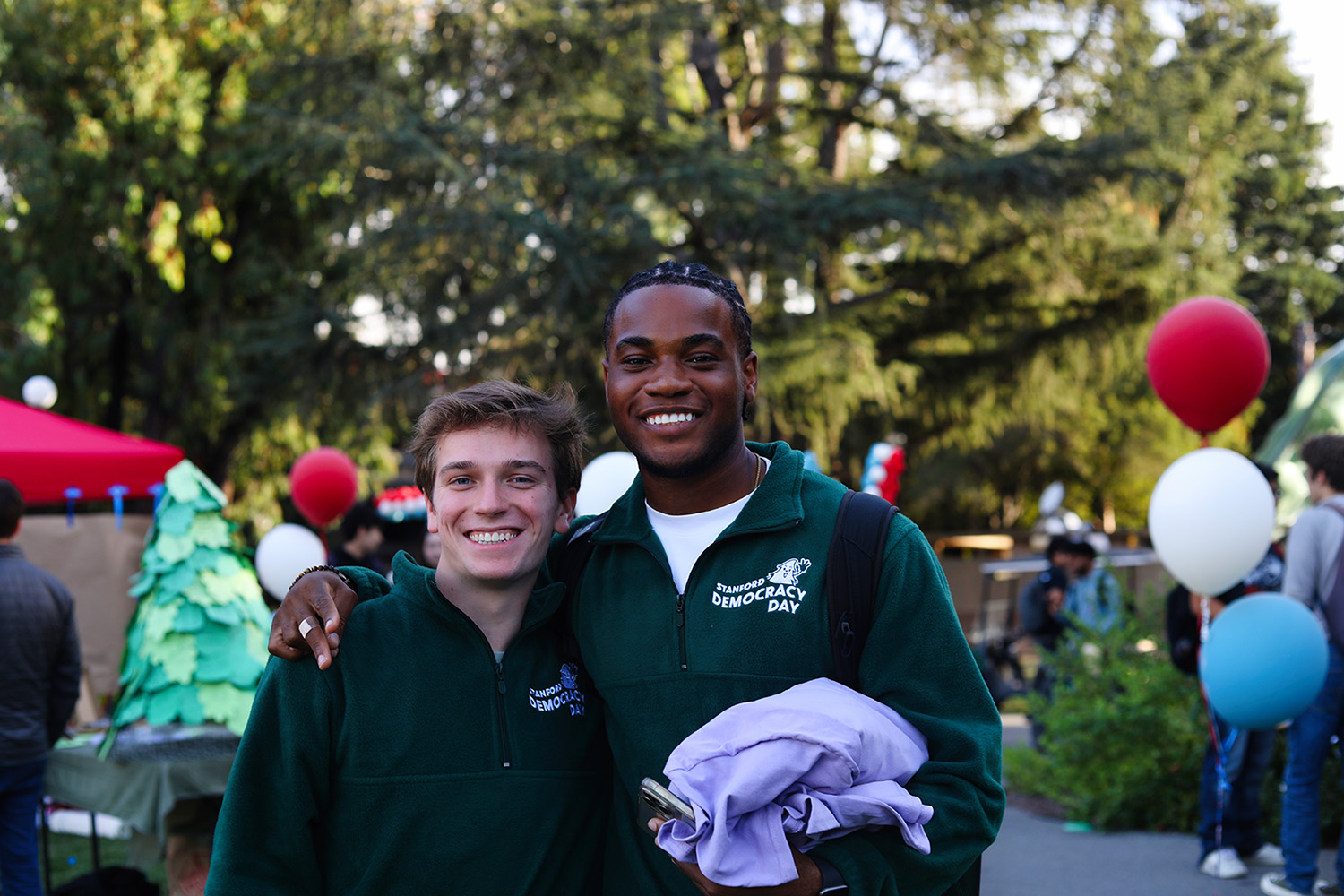
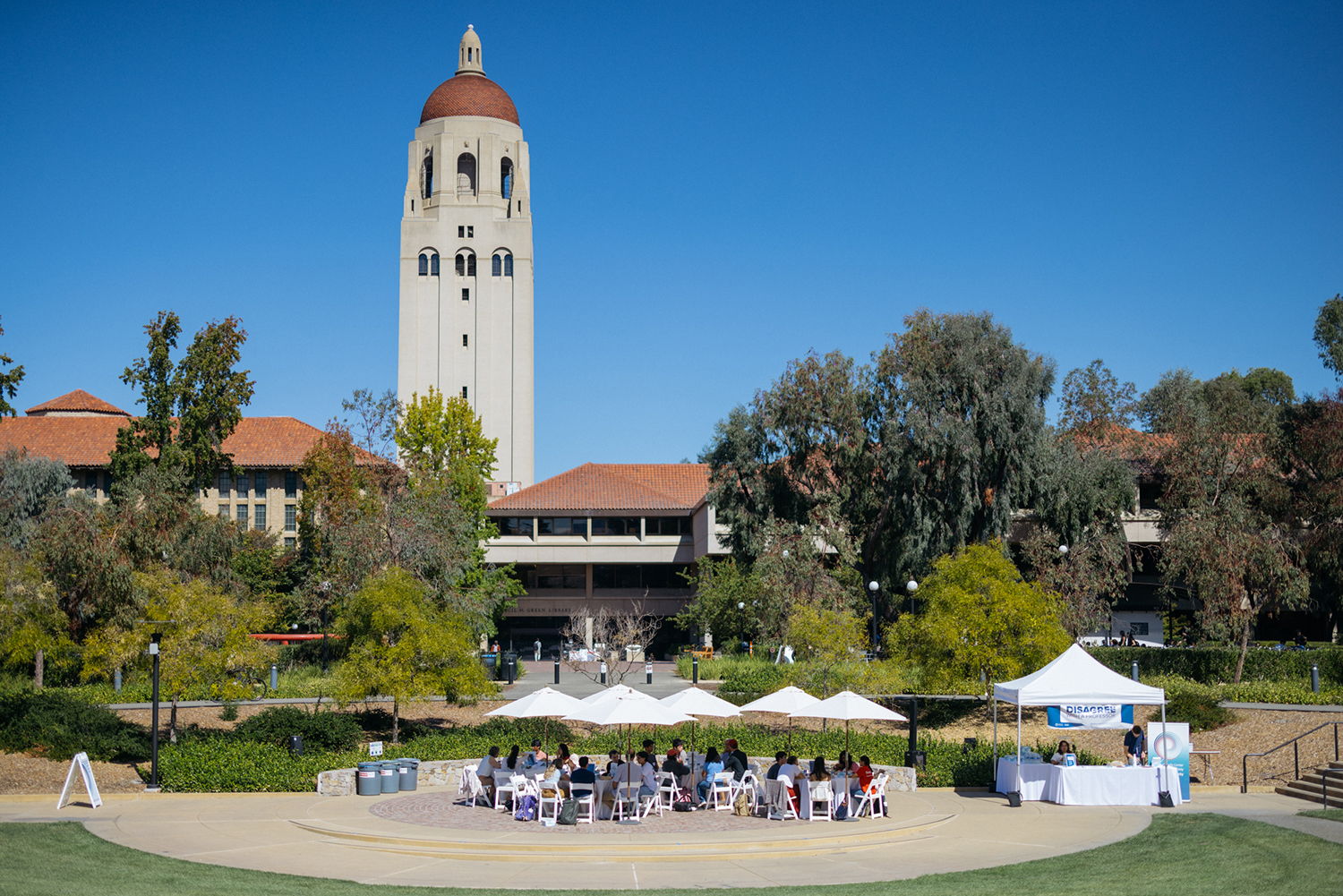
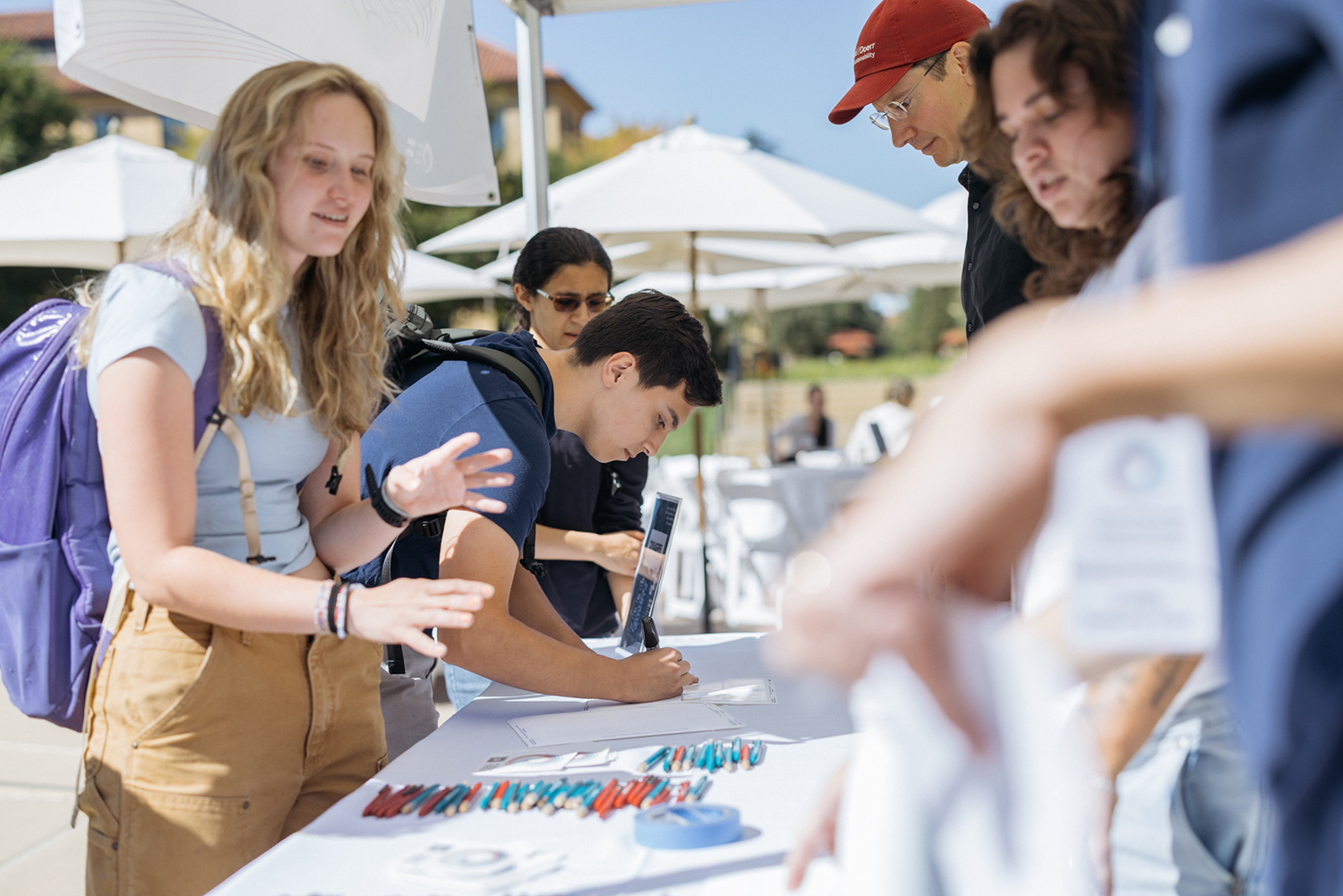
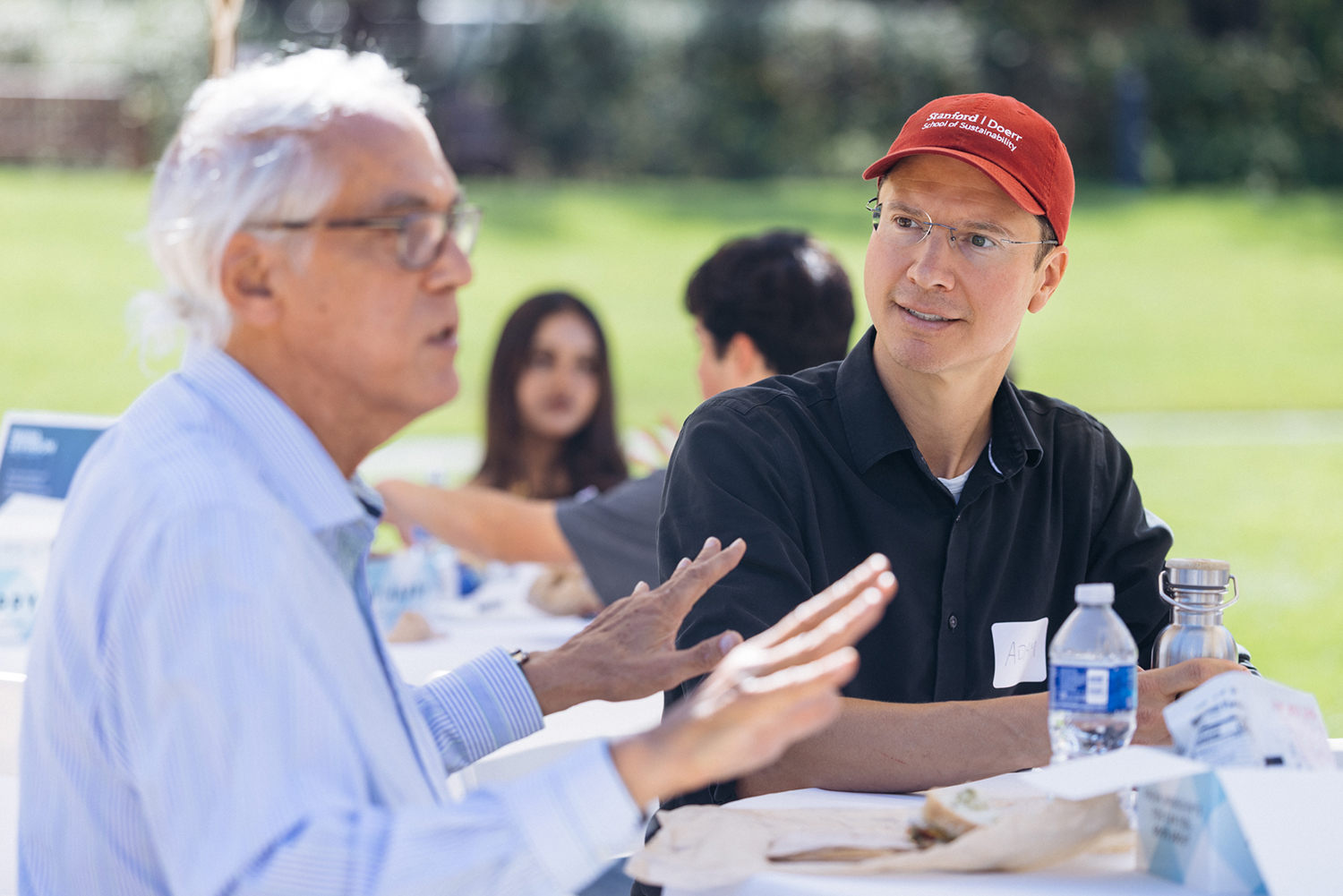
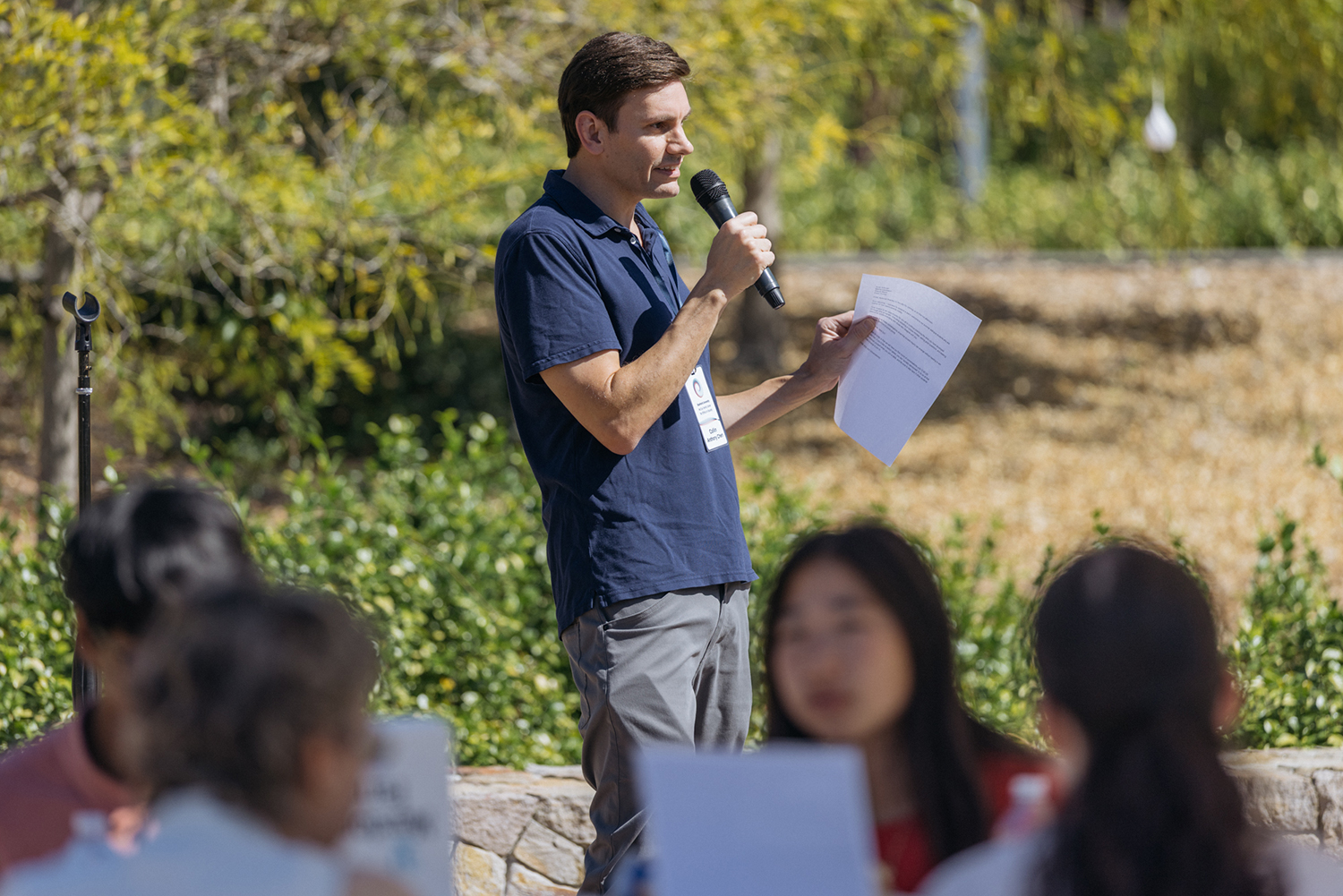
On an October afternoon on Meyer Green, Stanford students met with faculty to deliberate a range of provocative claims:
“Digital technologies are inherently antidemocratic.”
“Stanford will hire its first robot professor within the next 10 years.”
“Supreme Court appointments should be limited to 15-20 years.”
The statements were not necessarily positions faculty members personally hold. Rather, they were intended to spark lively conversation at Disagree with a Professor, a quarterly event series where students practice discussing controversial topics that may be outside their comfort zones.
For some students, pushing back can feel intimidating. Disagree with a Professor is one of several efforts across campus designed to change that.
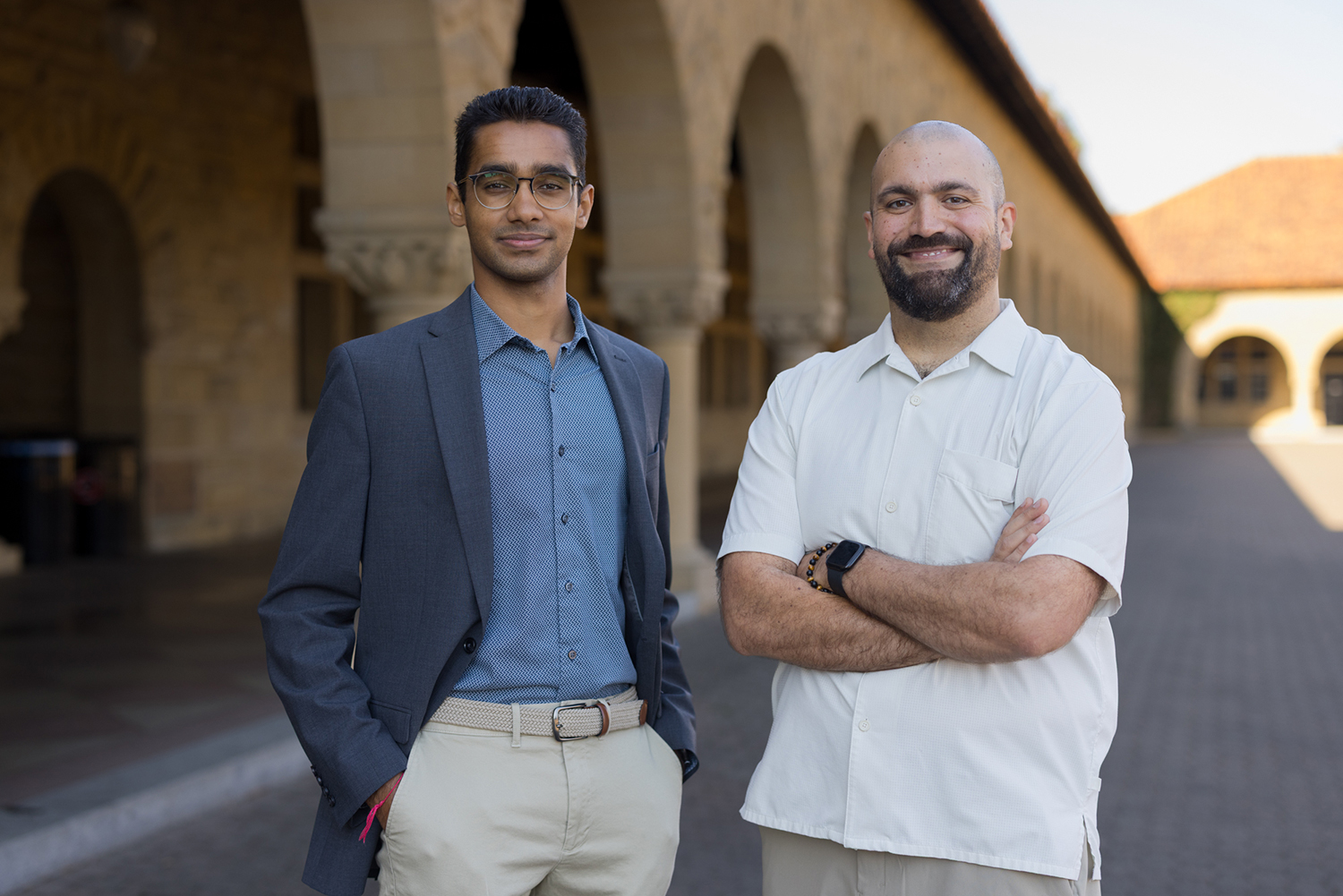
“The goal is to make disagreement less scary,” explained Emilee Chapman, an associate professor of political science who participated in a Disagree with a Professor event earlier this year. Chapman is also the interim director of the McCoy Family Center for Ethics in Society and co-hosted the event series with the Stanford chapter of the Heterodox Academy, a nonpartisan organization that cultivates a culture of open inquiry on college campuses nationwide.
Disagree with a Professor is modeled after the popular event series at the University of Virginia and has since been replicated on other college campuses, including Stanford, where there have been two events thus far: one in spring and, most recently, on Oct. 8, with more discussions planned for 2027 during winter and spring quarters.
Disagree with a Professor is one of many places across campus where students can build and practice skills of constructive dialogue. Other efforts, such as the COLLEGE program, the Stanford Civics Initiative, and ePluribus Stanford, also support programming that helps students strengthen their ability to engage with and embrace multiple perspectives that are vital to a thriving intellectual community.
Taking intellectual risks in a low-stakes setting
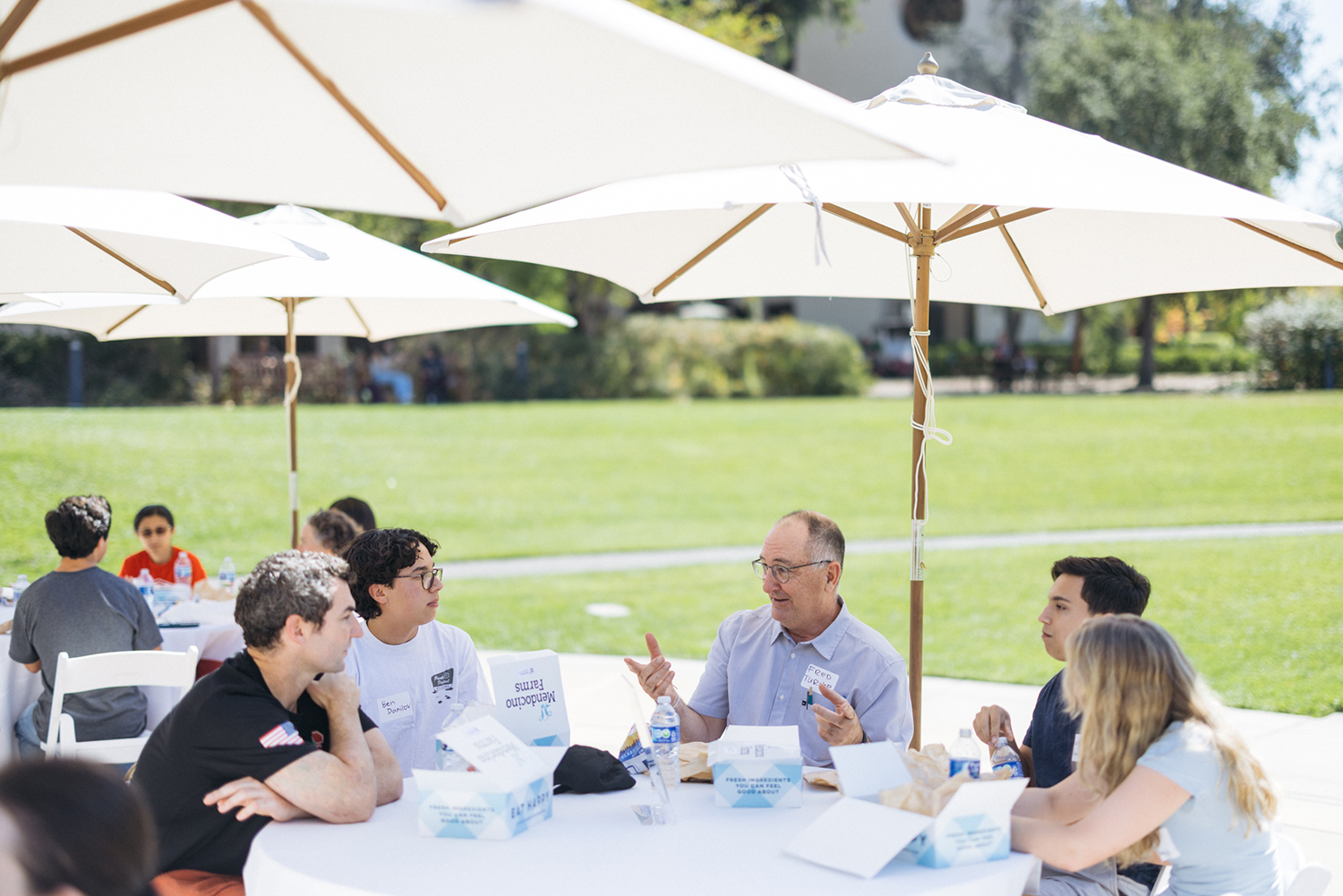
Small groups of about five students sit at a round table with a faculty member, and over sandwiches, they pick a statement from a short list of positions to discuss among themselves.
While scholars can put forward claims related to their area of expertise – Chapman, for example, brought a prompt related to her research on in-person voting – she also included a statement not tied to her scholarly work: “Capitalism is good, actually.”
“I wanted to put something out there that was going to be a little spicy, and that was going to invite pushback,” Chapman said. “I got it, and it was great.”
The goal of these discussions is not to score points or “win” an argument. Instead, it’s about keeping the conversation productive: Hearing what another person has to say, asking probing questions, and working through ideas and claims in a setting where the stakes are low.
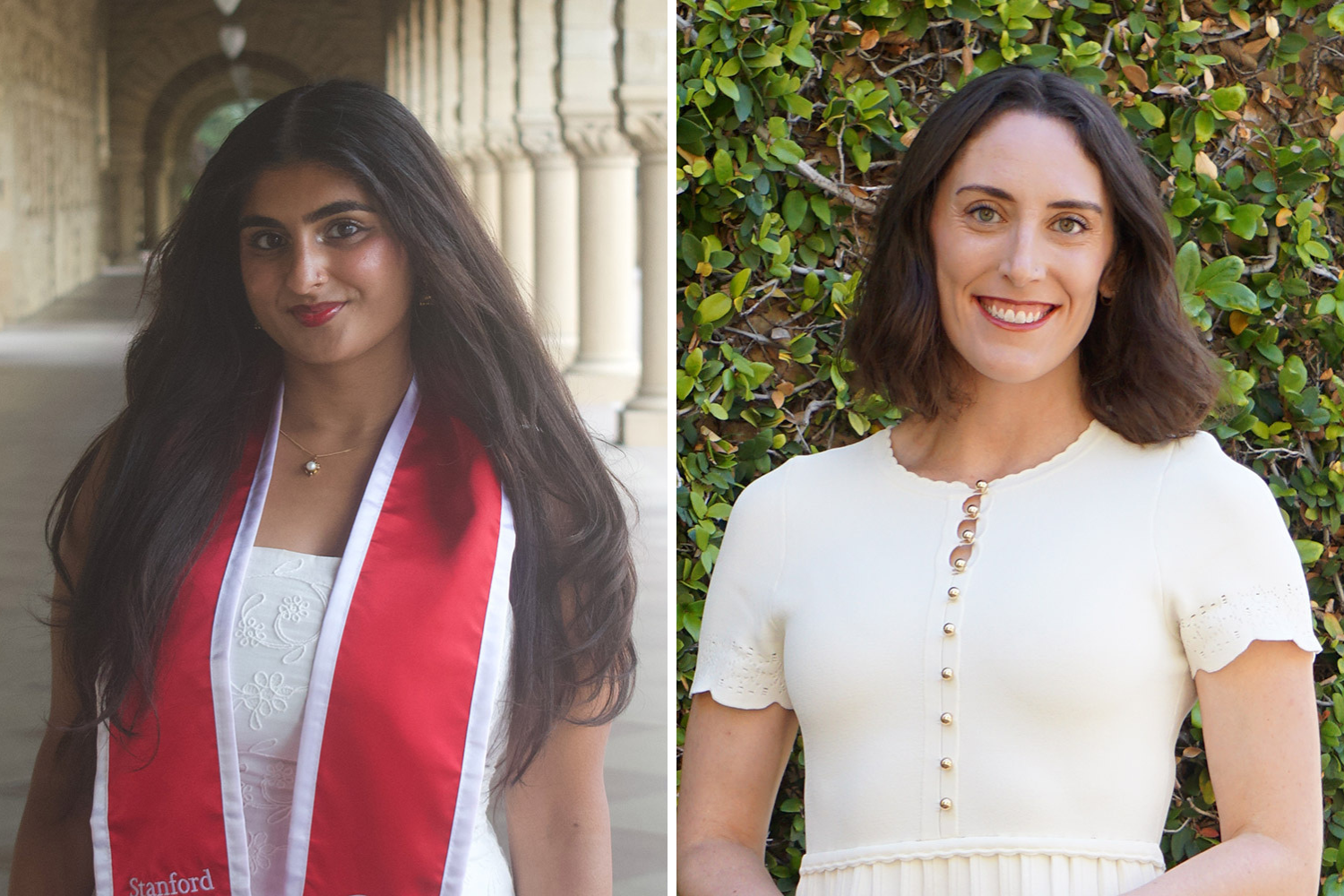
There are no grades or homework assignments, though Diya Mankotia, a first-year undergraduate student who attended the Oct. 8 event, walked away with several book suggestions from faculty members.
“I’m definitely going to read them because my conversation with the professors wasn’t enough to solidify my stance,” Mankotia said, as she pulled up on her phone one of the books recommended to her: Determined: A Science of Life Without Free Will (Penguin Books, 2024) by Stanford Professor Robert Sapolsky.
“I’m still in the gray area of what I think about free will,” Mankotia added.
Across the Stanford curriculum, students are encouraged to reflect deeply on what shapes their own and others’ worldviews.
The goal is to make disagreement less scary.Emilee ChapmanAssociate Professor of Political Science
For Mankotia, that exploration began when she participated in the Summer Frosh and Transfers Civil Dialogues Program, an opportunity for incoming students to learn how to have conversations across a wide range of perspectives before classes start. She has continued to critically explore what she believes and why in her COLLEGE 101: Why College? Your Education and the Good Life, the fall quarter course in the first-year undergraduate requirement program, Civic, Liberal, and Global Education (COLLEGE).
But she found it’s one thing to think about her views and another to express them, which led her to the Disagree with a Professor event. “I need to practice the art of actually saying my stance out loud,” she said.
“If we genuinely take time to think about what we believe and why, that allows us to be more confident in the things we say,” Mankotia said.
Turning a disagreement inside out
In Disagree with a Professor, participants are encouraged to ask probing questions that delve deeper into the merits of a case by examining the premises of an argument and evaluating the grounds on which a claim stands.
“A lot depends on how we interpret the weight of the evidence,” Chapman explained. “What are we comparing it with? How should we think about alternatives that haven’t been tried yet? And what role does imagination play?”
At the most recent Disagree with a Professor event, a faculty member stated that they didn’t believe a policy was particularly beneficial to the community it was designed to serve. A student replied: “What would be a better approach?”
The question surfaced alternative ideas, which participants considered.
“It’s useful to learn new kinds of questions that open up a more productive exchange beyond ‘What do you think?’” Chapman said. Some questions she suggests that can help unpack arguments further include: What would convince you that you’re wrong? What are your biggest reservations? What keeps you up at night?
Amasha Samaraweera, a first-year student at Stanford, sees that the skills she practiced at Disagree with a Professor will be helpful beyond navigating disagreement on controversial topics. “The views, backgrounds, and subtle points people bring up in daily conversation are informed by all these factors, like their parents, their culture, and the place where they’re from,” Samaraweera said. “I think it’s really important when you come to a campus like Stanford to take a step back and ask: ‘Why do they think that? Where are our similarities, and where are our differences?’ I think it’s really interesting and it opens your mind.”
Students are not the only ones who have left these conversations energized. “What I like most about these discussions is hearing an idea or getting a perspective that had never occurred to me,” said Fred Turner, the Harry and Norman Chandler Professor of Communication, who participated in the Oct. 8 event. “It’s always a nice reminder that we each see things from quite different places, which means we often see different parts of the same problem. It’s also really fun to work with students informally in small groups. It gives me a chance to get to know them in a way that can be hard in a big class.”
For more information
The Stanford chapter of the Heterodox Academy was launched in 2025 by Paul Brest, former dean of Stanford Law School and professor emeritus (active), and Adam Spitzig, a PhD candidate in environment and resources at the Stanford Doerr School of Sustainability.
The McCoy Family Center for Ethics in Society is in the School of Humanities and Sciences (H&S).
The Department of Communication is also in H&S.
Writer
Melissa De Witte