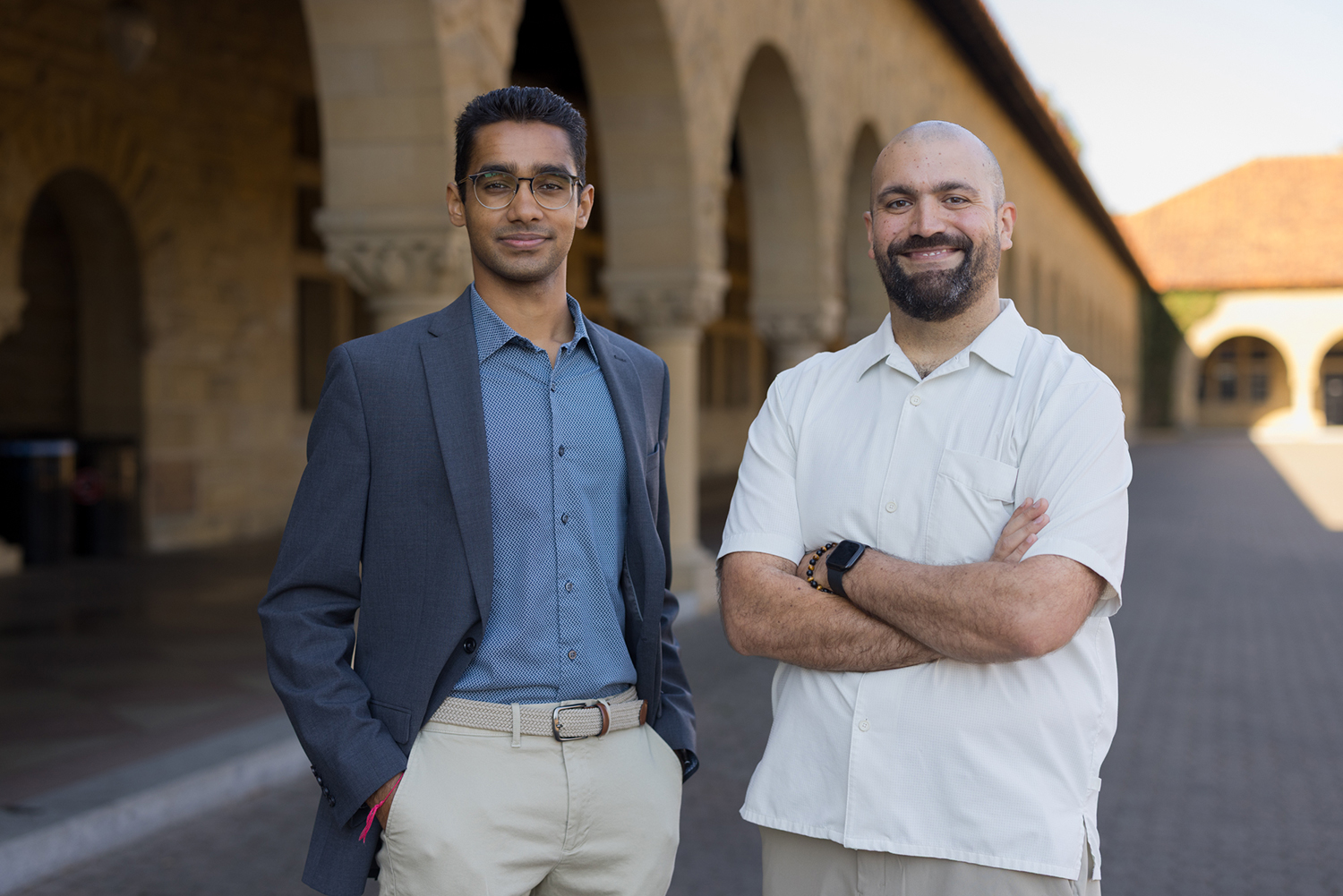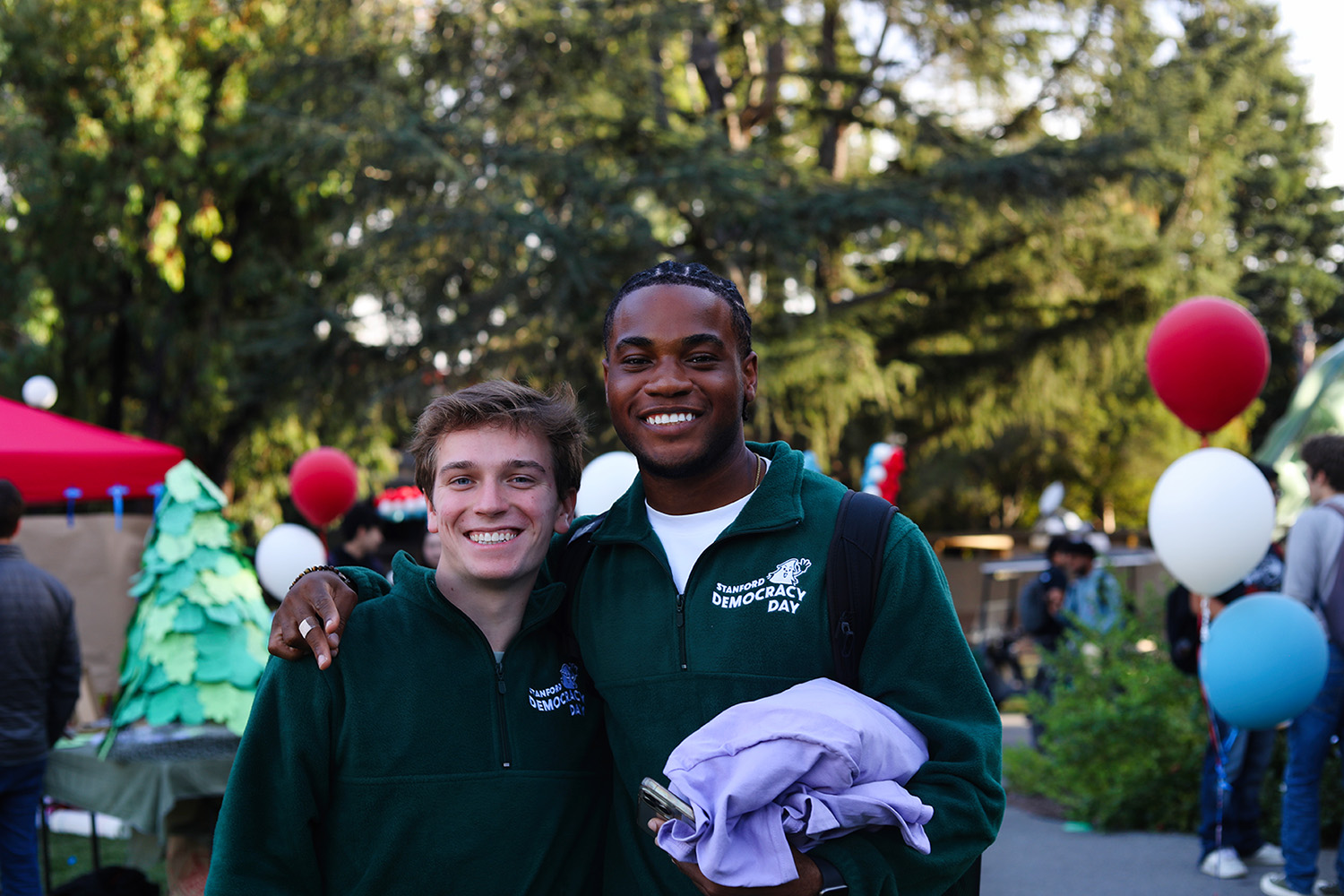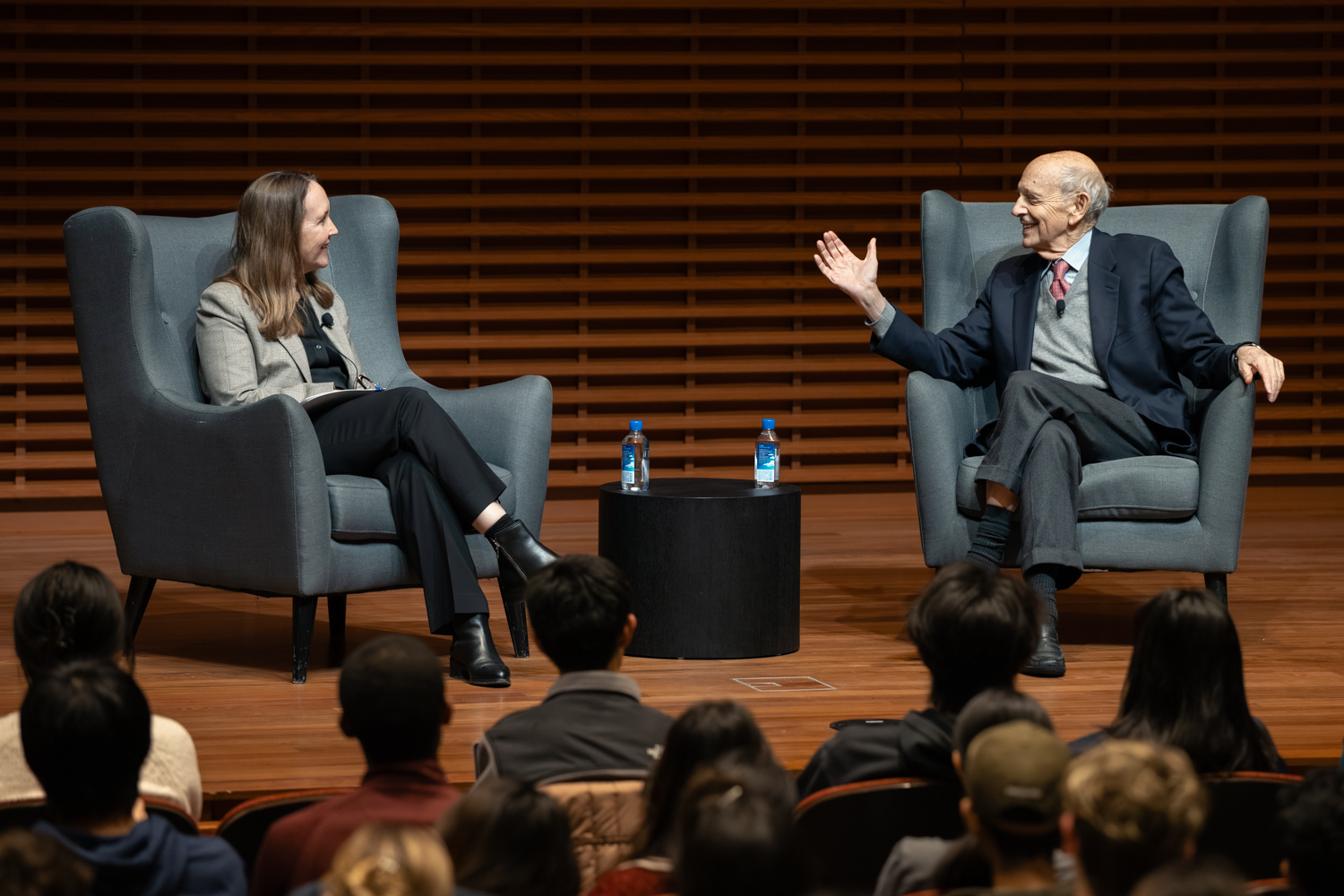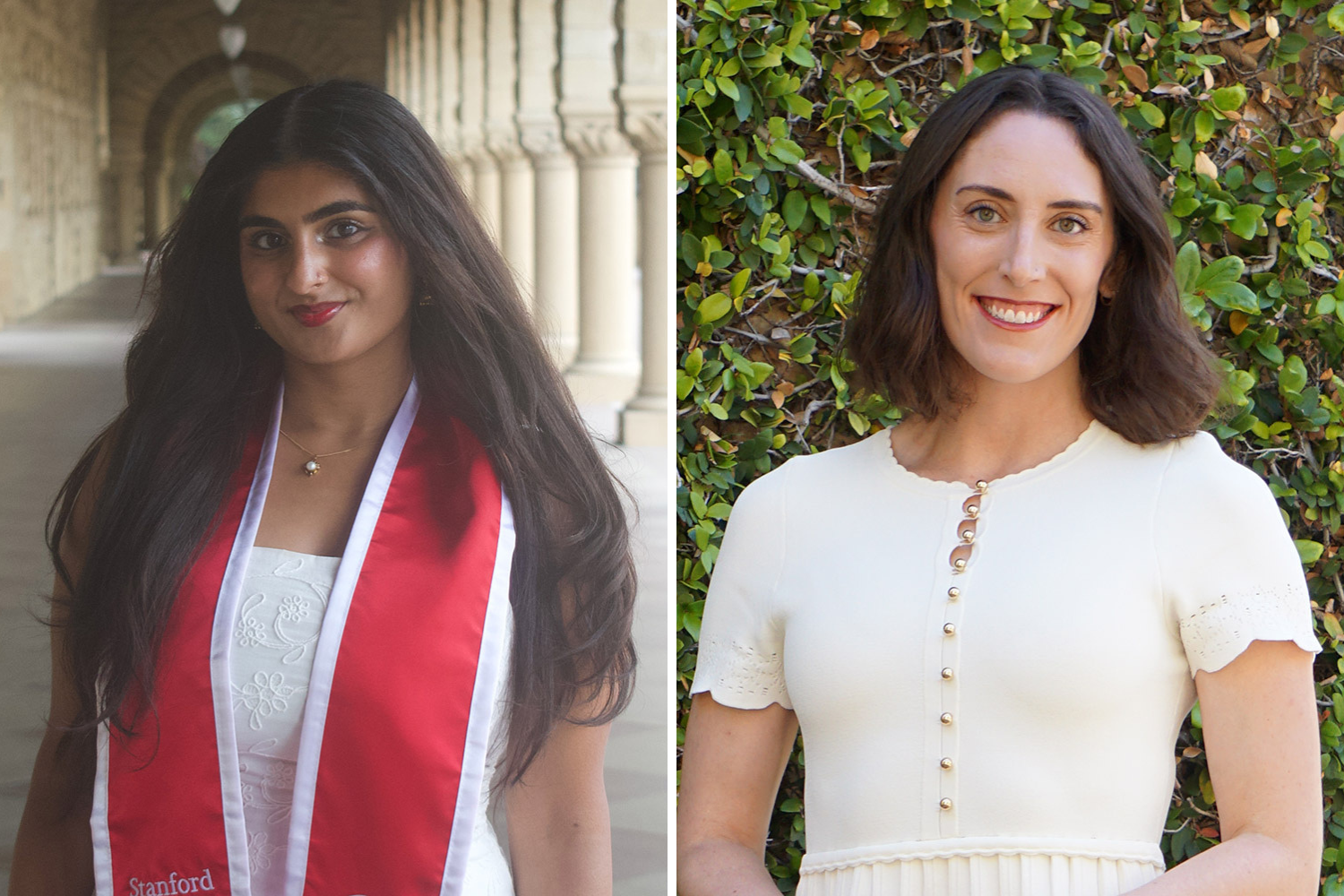
Graduating senior Shreya Mehta and graduating Stanford Law School student Kaisa Goodman share a passion that has driven much of their experience at Stanford: bringing people with different perspectives together for meaningful conversation to help them participate more thoughtfully in civic life.
Now, they are being recognized for their efforts with the annual award from ePluribus Stanford, the university initiative that supports critical inquiry, constructive dialogue, and civic engagement.
Ensuring everyone can be heard
For Mehta, ’26, a data science and social systems major, this work is deeply personal, shaped by her teenage experiences during the COVID-19 pandemic, a period she calls “a culture war moment in this country.” Her public high school was a battleground over how to manage the virus, and there was anger around social issues. There were heated school board meetings, as well as persistent calls for book bans – which Mehta found herself in the midst of, even testifying before Congress about the impact of such policy.
Mehta saw firsthand what happens when the loudest voices take over the room and when views get pushed to partisan extremes. She came to Stanford determined to create an environment where she could discuss political issues with her peers respectfully, where they could examine the complexity of a political issue or policy with curiosity, rather than put others down or even pull back themselves.
During her junior year, she joined the Intercollegiate Civil Disagreement Partnership (ICDP). As an ICDP fellow, she also served as a course assistant for the popular course Democracy and Disagreement taught by Debra Satz, the Vernon R. and Lysbeth Warren Anderson Dean of the School of Humanities and Sciences (H&S), and Paul Brest, professor emeritus at Stanford Law School (SLS).
“The most important part of dialogue work, I’ve realized, is creating a space where everyone can let their guard down enough to truly listen to each other’s stories,” Mehta said. She emphasized the importance of building trust and the transformation that can follow when they lower their defenses. “As soon as people really listen to each other without jumping to bad‑faith conclusions, that’s where the magic happens.”
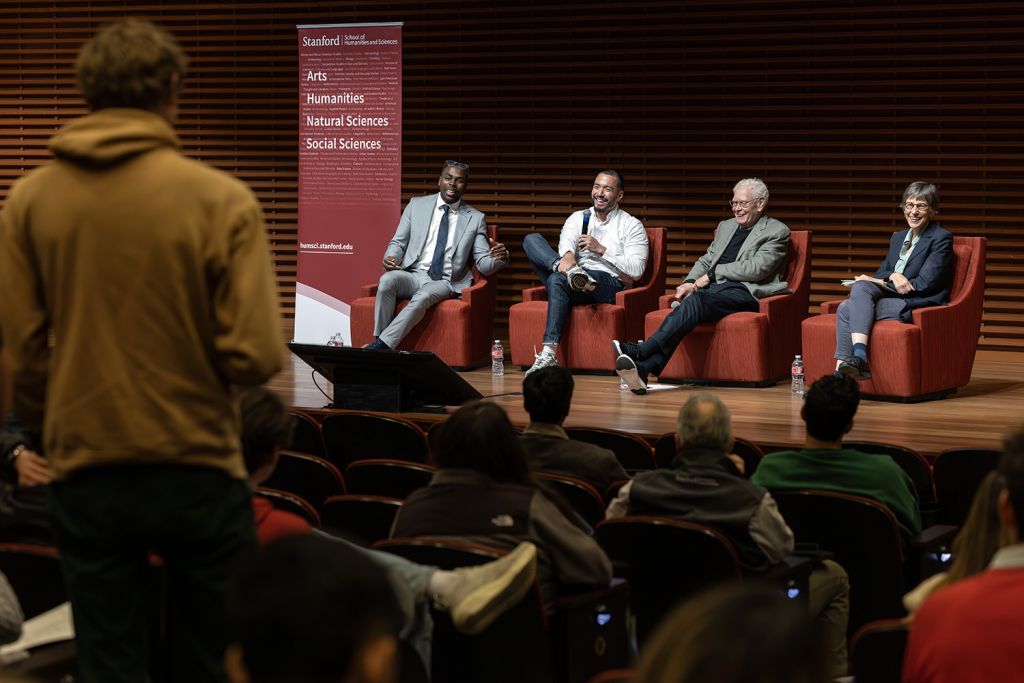
Mehta also ran the Civic Coffee Club at the On Call Café, where students could discuss politics, current events, and broader topics in their lives in an inviting, informal setting.
Mehta sees constructive dialogue as a crucial step toward being an engaged citizen. “Constructive dialogue is essential to democracy because we have to find a way to work with each other on society’s toughest problems, and it is one of the most important skills students can leave Stanford with,” Mehta said.
The selection committee also acknowledged Mehta’s efforts as co-president of the Stanford chapter of Students for Abundance, a nonpartisan space for students to discuss institutional reform that can expand opportunity and make life more affordable.
“The selection committee was particularly impressed by the breadth and depth of Shreya’s work – the wide range of partnerships and programs to which she has contributed and initiated – and how sustained her efforts have been across her time at Stanford,” said the ePluribus Stanford leadership team, which included faculty co-directors Norman Spaulding and Dan Edelstein and executive director Karina Kloos.
Mehta is planning to move to Washington, D.C., to work in policy.
Helping local civic leaders disagree better
Kaisa Goodman, who is graduating from Stanford Law School (SLS), first experienced the power of respectful, open-minded dialogue while living in Bloomington, Indiana. At the time, she was working at a grocery co-op, where she got involved in organizing a union. Their initial contract was negotiated using a problem-solving approach known as “interest-based bargaining,” which focuses on collaborating with the other side to identify shared interests and values.
It was a transformative experience that took her into local politics, including serving as the chief of staff to Bloomington’s mayor, and eventually led her to study law at Stanford.
Goodman served as a research assistant at the Martin Daniel Gould Center for Conflict Resolution in SLS, where she was involved in the 2024 Community Academy, a national program that brings together community leaders – mayors, police chiefs, city staff, community organizers, and others – to practice innovative ways to resolve disputes they encounter in their communities.
Working with people engaged in local politics and governance felt especially meaningful to Goodman, since she’d been in their position just a few years earlier and knew what it was like negotiating among a diverse group of stakeholders. This time, she helped them become more effective at navigating disagreement.
“Within those groups, there were real differences in perspective, priorities, and opinions, and it was invaluable to have national experts in community dispute resolution working with them,” Goodman shared. “But it was just as powerful to watch the communities learn from one another.”
Goodman helped with the Clearinghouse on Constructive and Civil Discourse, a free, searchable database of teaching materials focused on dialogue across differences being built in collaboration with the American Bar Association.
She served as legal assistant to the Gould Center policy practicum, Enhancing Dispute Resolution, and at this year’s Community Academy in Chicago, she and Gould Center director Grande Lum shared students’ findings from the policy lab with national leaders in community conflict resolution.
Goodman was also a teaching assistant for Democracy and Disagreement for two years. She said she found it inspiring to see what is possible when students are given both structure and the skills for hard conversations. “In such a polarizing time, we can’t always bring that level of structure to our hardest conversations – but when we can, it’s really beneficial,” Goodman reflected.
“The leadership, empathy, and pluralistic outlook Kaisa displayed illustrate the breadth and depth of her efforts to advance open, engaged, and intellectually rigorous discourse at Stanford, and civic engagement within and beyond the university,” the ePluribus Stanford leadership said.
After graduation, Goodman will clerk for the Minnesota Supreme Court.
Writer
Melissa De Witte