In brief
- Bacteriophages kill bacteria, and scientists hope engineered phages could work as new antibiotics.
- Stanford researchers applied a generative AI model, called Evo 2, to this challenge. Given a starting place – in this case bacteriophage ΦX174 – Evo 2 suggested new DNA sequences.
- Based on genomes written by Evo 2, the researchers synthesized and tested nearly 300 phages for effectiveness against E. coli. They ended up with 16 that proved exceptional.
- Given its potential, the researchers have made Evo 2 openly and freely available. Acknowledging safety concerns, they point to the importance of having tools like Evo 2 to address existing natural pathogens and the ability to build safety checks into AI tools – something that doesn’t happen when pathogens evolve naturally.
In science, the suffix “phage” means to devour. Thus, the name bacteriophage might conjure images of tiny creatures that “eat” bacteria. While that conception isn’t 100 percent scientifically accurate, bacteriophages are lethal bacteria killers nonetheless, and scientists are excited about engineering phage DNA as a path to new antibiotics.
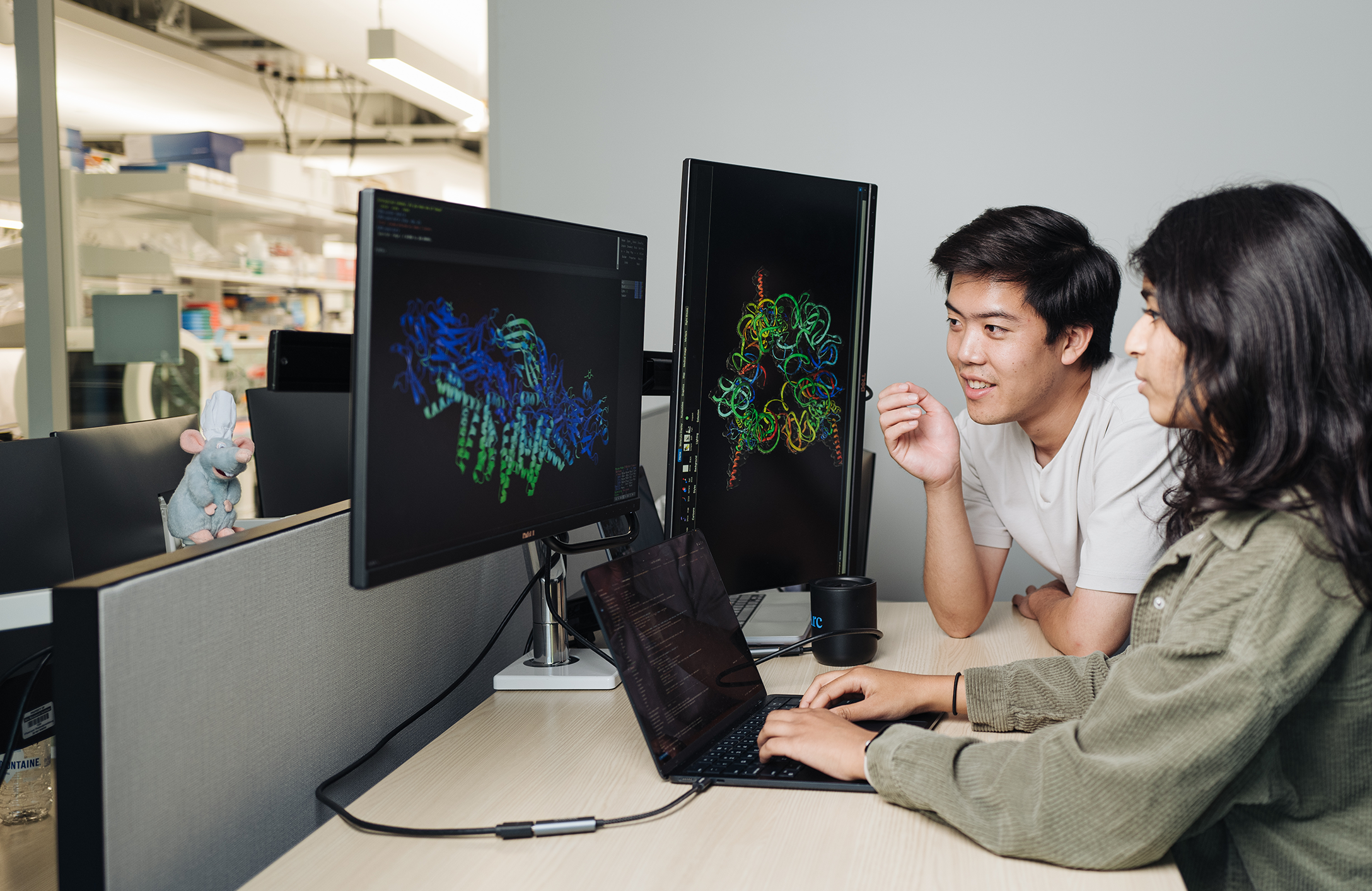
And so it is that chemical engineer Brian Hie and bioengineering graduate student Samuel King came to study bacteriophage ΦX174 (pronounced “FYE-ex-1-7-4”). Hie, assistant professor of chemical engineering and the Dieter Schwarz Foundation Stanford Data Science Faculty Fellow, created Evo 2, a generative AI model that solves complex biological challenges by suggesting new DNA sequences. Given just the barest snippet of ΦX174 DNA, Evo 2 will go to work writing novel genomes of new phages that kill bacteria – in this case, the microbe E. coli, which can be deadly when infections turn serious.
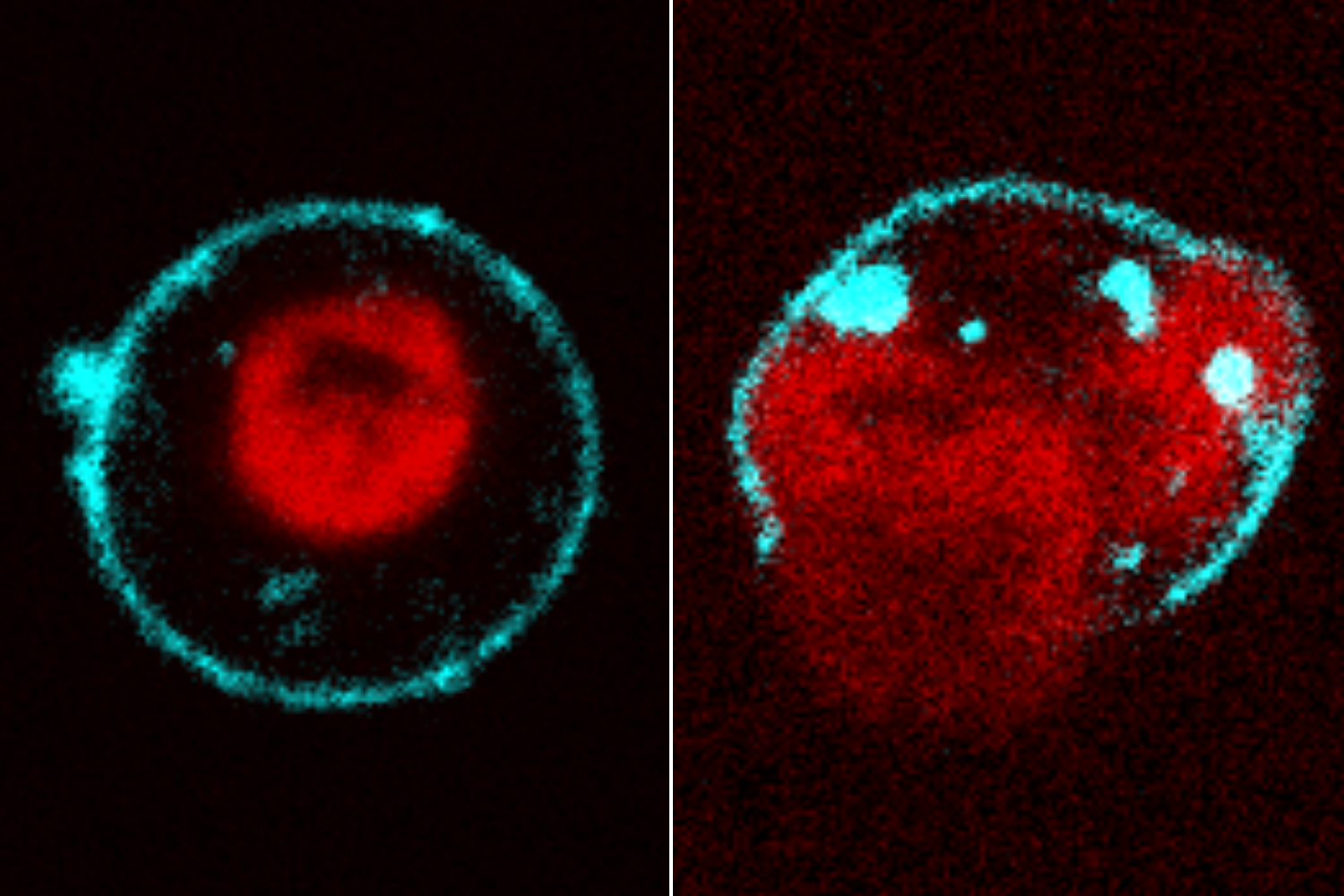
Until recently, Evo 2 was mostly confined to the computer, but in a new paper, Hie and King have transitioned it to a real-world lab. Based on genomes written by Evo 2, they have synthesized nearly 300 novel phages and tested them for effectiveness against E. coli. They later narrowed that list to a relative handful of 16 exceptionally good E. coli-killing phages.
“In this case, we wanted the model to generate the entire genome end-to-end in a single left-to-right pass. We didn’t add anything,” Hie explains of the process that produced thousands of options for his team. “In lab tests, a few of Evo’s suggestions had higher fitness than the native ΦX174.”
Resistance-resistant antibiotics
Hie and King chose ΦX174 because its entire genome is less than 6,000 base pairs long. Compared to the 3 billion base pairs of the human genome, the ΦX174 genome is relatively simple. But its ability to kill bacteria nonetheless makes it an attractive test case for Evo 2’s design powers.
Why Hie would want or need more than one E. coli-targeting phage comes down to bacterial resistance, a common weakness of modern antibiotics. Eventually, after years of heavy use, bacteria evolve immunity to the medications that kill them. The antibiotics lose effectiveness.
“If the bacteria gain resistance to a single phage, it’s game over for the medication,” Hie said. “But if you have multiple genetically distinct phages in a mixture, it would be harder for the bacteria to develop resistance to the entire cocktail.”
Thus, this work might lead to a resistance-resistant antibiotic. Scientists imagine cocktails of genetically diverse bacteriophages working in tandem to counter microbial immunity. Similar approaches might be used to develop phages that target other harmful bacteria, such as tuberculosis, methicillin-resistant Staphylococcus aureus (MRSA), and Pseudomonas aeruginosa, a bacterium that is a leading cause of medically resistant infections acquired in hospitals, among others.
“We have a proof of concept in the paper, where we show that this cocktail of 16 phages rapidly overcomes resistance in E. coli that is immune to native ΦX174,” Hie said.
New tools
The technical challenges of designing entire genomes – creating them nucleotide by nucleotide and then transferring them into bacteria – are neither easy nor inexpensive. King, first author on the paper, led the project.
As short as the ΦX174 genome is, Hie explains, it is extraordinarily difficult to stare at a 5,400-character string and make sense of it gene-by-gene. King developed a computational framework to help the researchers evaluate the genomes and to narrow down the list of candidates from thousands to only those the team deemed most interesting for further exploration.
“One of the main parts of the design framework was figuring out what traits the genomes should have based on ΦX174 and related phages,” King explains. “The framework involved several key steps: generating genomes using Evo 2, evaluating options based on the design criteria, selecting optimal candidates, synthesizing them chemically, and then testing them in the lab to see which genomes worked best.”
“With the cost of DNA synthesis still quite high,” Hie explains, “Samuel’s framework helped us focus only on the most viable alternatives.”
Open source, open doors
As a proof of concept, Evo 2 has exceeded expectations. Sensing its potential in medical and biological sciences, Hie offers Evo 2 open source and free of charge. Anyone can download Evo 2 and design new genomes themselves.
The free availability of the tool has naturally raised discussions about safety and security. Hie is motivated by the tool’s vast potential benefits to health and humanity, and said that open availability is essential to expediting research and real-world results. While he acknowledges that modified versions of the tool could be used by bad actors, he notes that existing pathogens present a greater risk than potential AI designs because they are easier to access and produce and, unlike with AI, safety checks can’t be built into the process of natural evolution. In fact, he adds, AI-enabled tools like Evo 2 provide humans a powerful advantage against naturally occurring pandemics and improved defense options against man-made biological threats.
Next up, Hie is working with other researchers at Stanford and beyond to extend Evo 2’s reach while pursuing his own research to create other new bacteriophages. He is also looking at longer and more complex DNA, possibly even of small bacterial genomes that might lead to beneficial engineered microbes that produce useful chemicals, medicines, fuels, and more.
“The biggest open questions for me,” Hie said, anticipating future research, “are how do we get greater genetic novelty and how do we get greater controllability of the outcomes?”
“One of the most rewarding parts of this project is the creativity Evo 2 allows,” King said. “New doors in science are now open because of what we can do with these models.”
For more information
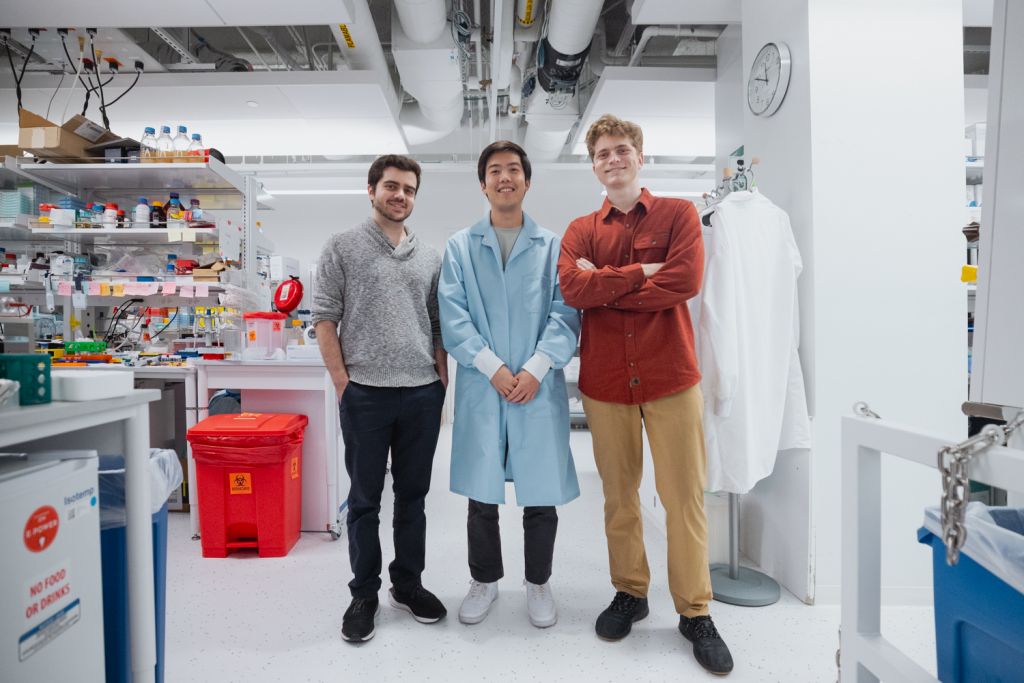
Contributing authors include Stanford graduate students Claudia L. Driscoll, David B. Li, Daniel Guo, Aditi T. Merchant, and Garyk Brixi; and Max E. Wilkinson of the Broad Institute of MIT and Harvard and Memorial Sloan Kettering Cancer Center.
This research received funding from the Arc Institute, the National Science Foundation, the Knight-Hennessy Graduate Scholarship Fund, the Fannie and John Hertz Foundation, and the Stanford Institute for Human-Centered AI.
Media contact
Jill Wu, School of Engineering: jillwu@stanford.edu
Writer
Andrew Myers