This summer, the Stanford Solar Car Project drove its car, Azimuth, across eight states to a fifth-place finish at this year’s American Solar Challenge, a biennial competition for college teams that design, build, and race solar vehicles.
“The team hadn’t finished a road race since 2017, so completing this one meant a lot,” said Akhil Marri, ’28, an electrical engineering major and president of the Stanford Solar Car Project.
The event marked the final race for Azimuth, named for an angle that points toward a fixed spot on the horizon. It will soon be replaced by a new vehicle that the students expect to unveil next year.
The American Solar Challenge attracts collegiate teams worldwide, testing their engineering and energy efficiency, as well as strategy, teamwork, and endurance. Sixteen teams qualified for this year’s event, which began in Minnesota and ended in Texas. The route took them across much of the Midwest, where, over eight memorable days, the students put their engineering prowess to work on the American open road.
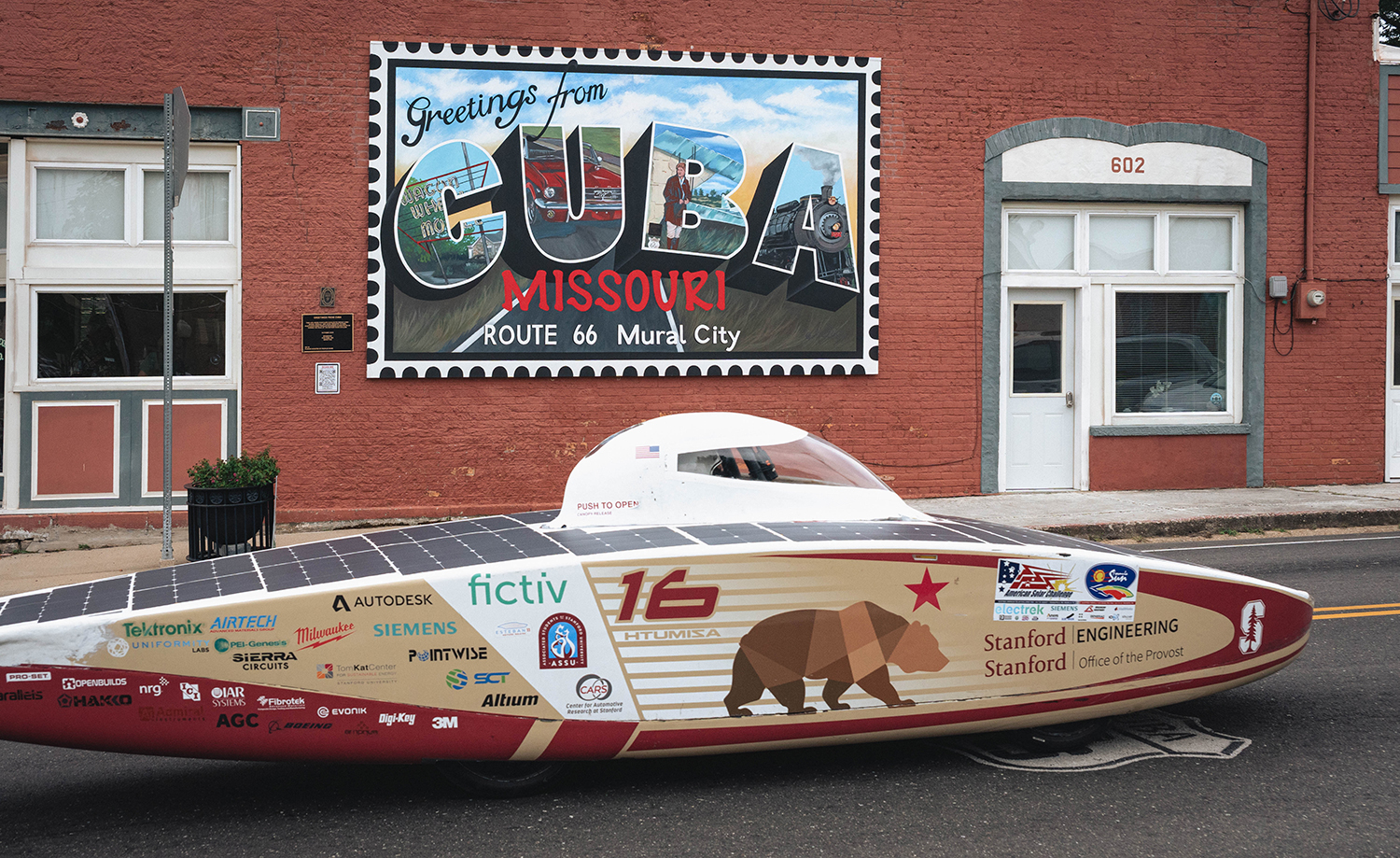
The team raced through eight states, including Missouri, and down the famed Route 66. | Stanford Solar Car Project
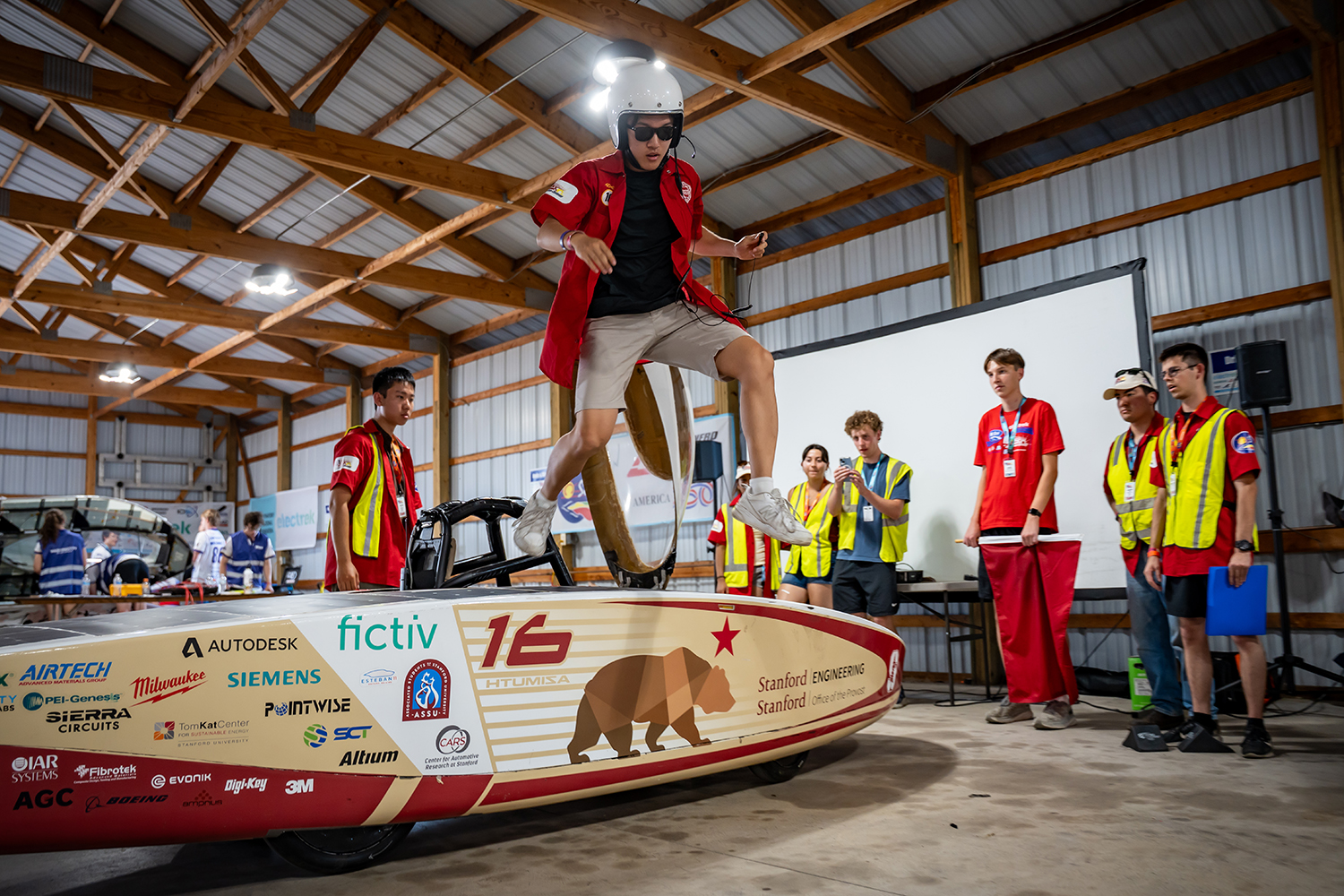
Nineteen Stanford students attended the race and competed against 15 other collegiate teams. | Stanford Solar Car Project
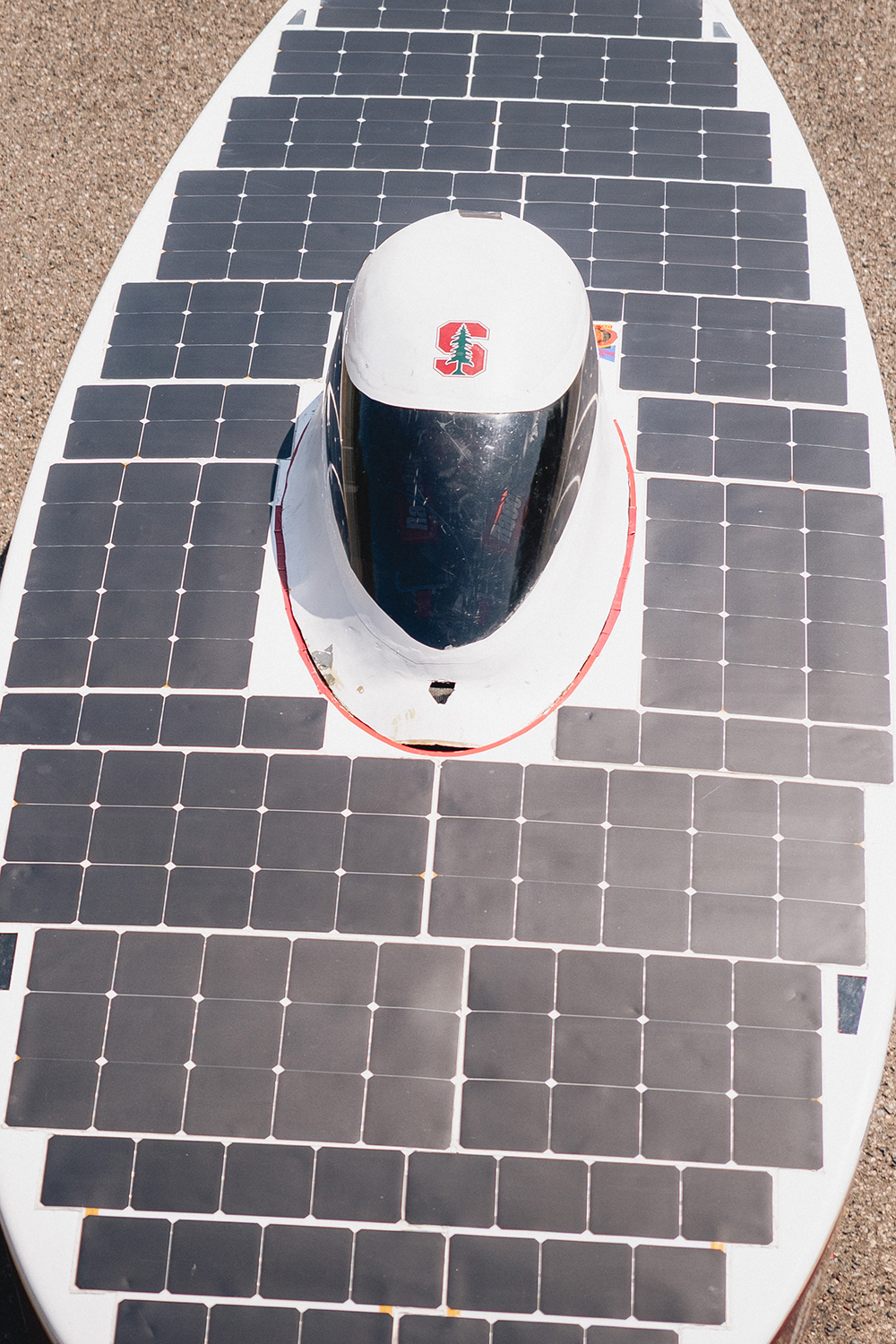
Azimuth, a single-occupancy vehicle, was optimized for solar energy collection, battery storage, and aerodynamics to improve efficiency, extend range, and boost performance. | Stanford Solar Car Project
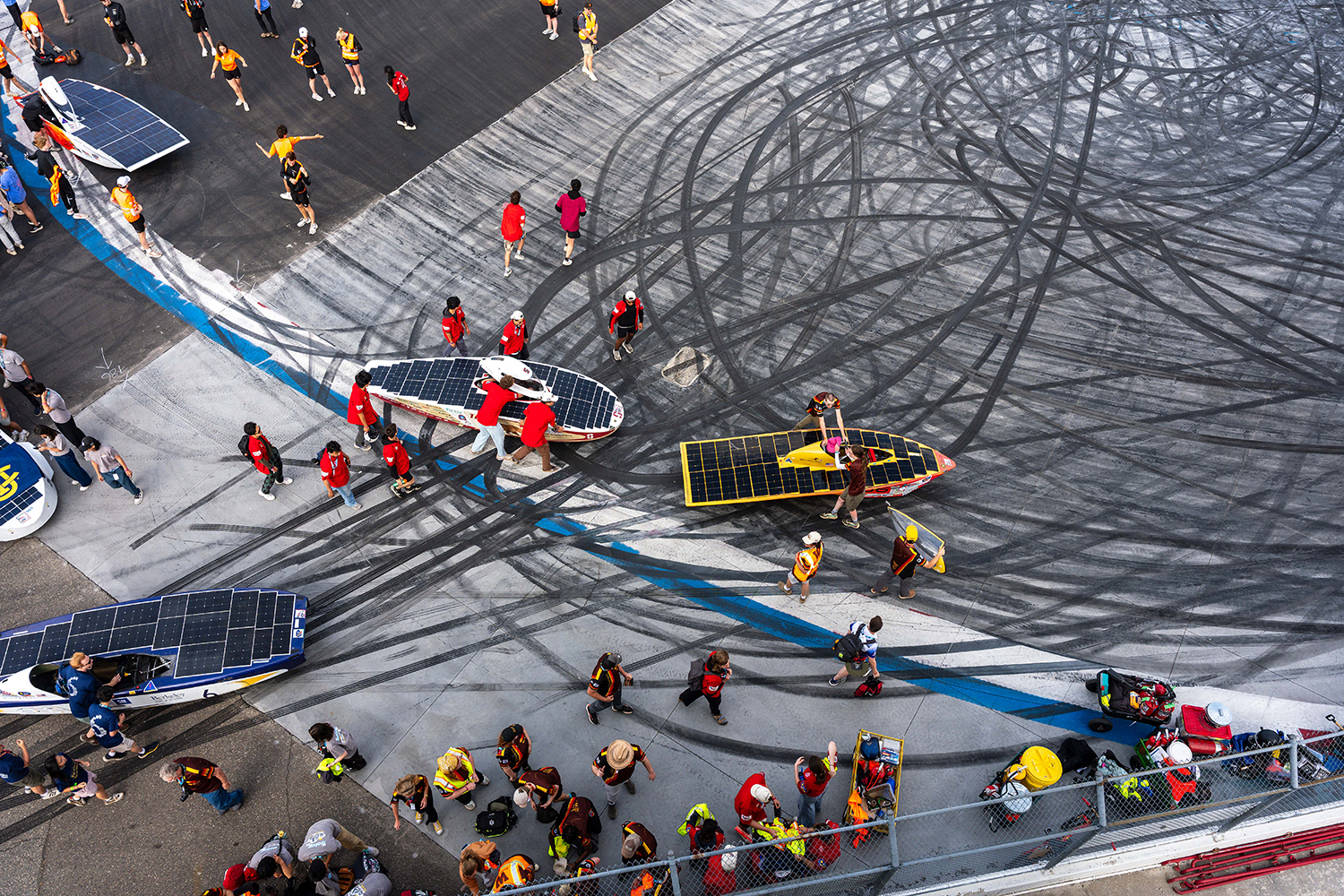
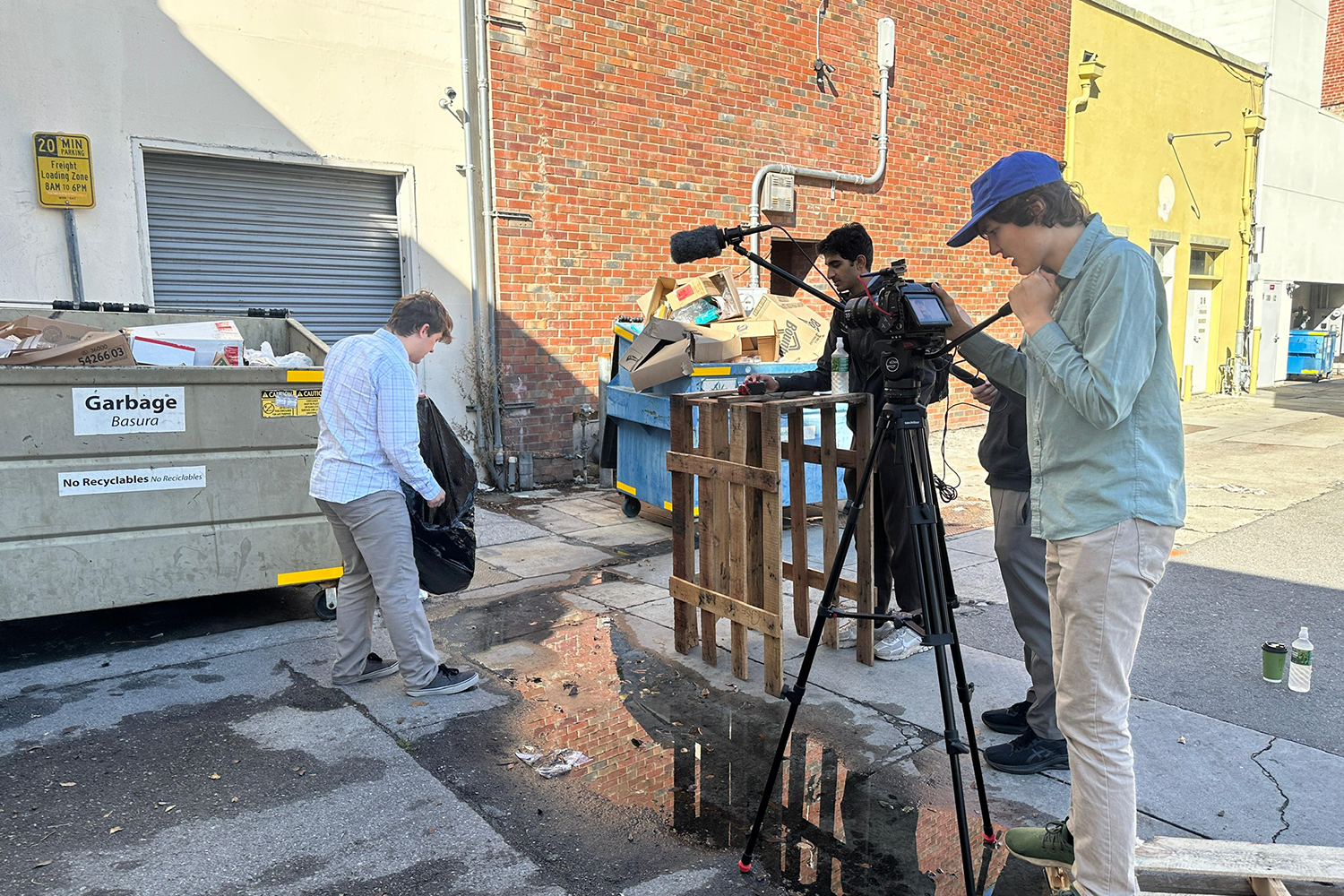
Students paint the pavement with skid marks from their solar cars. | Stanford Solar Car Project
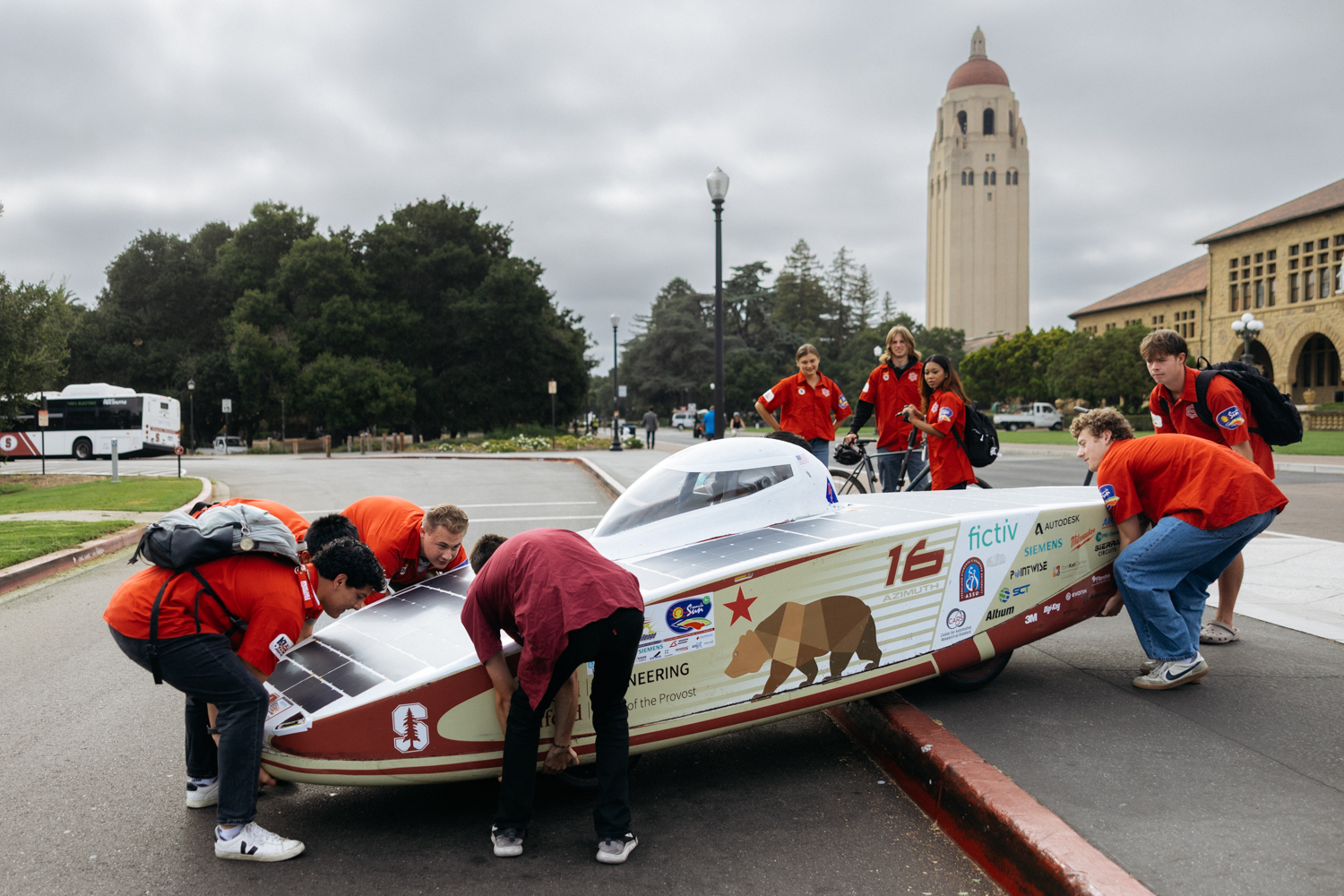
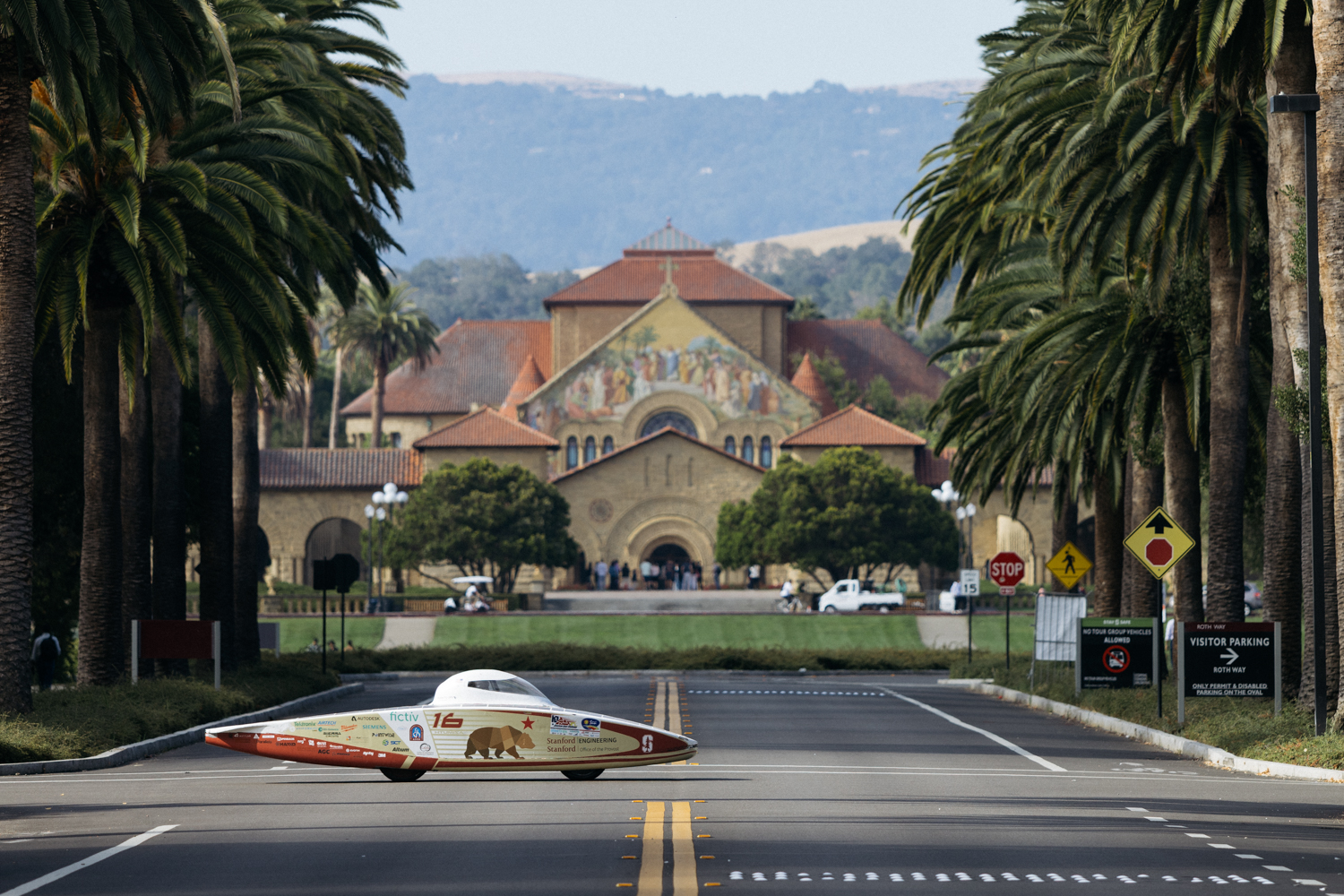
The competition marked the final race for Azimuth, which the team will soon replace with a new solar car. | Andrew Brodhead
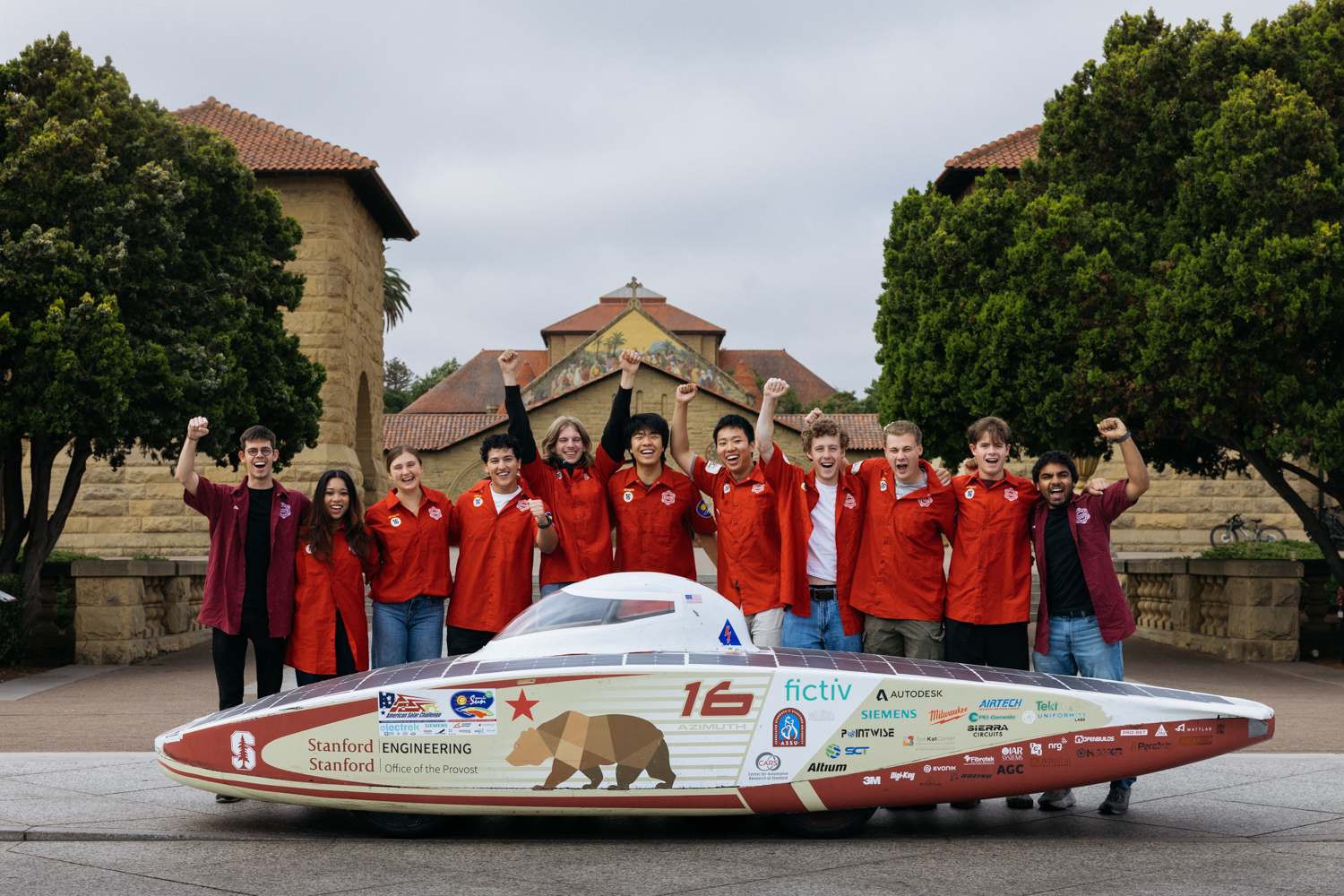
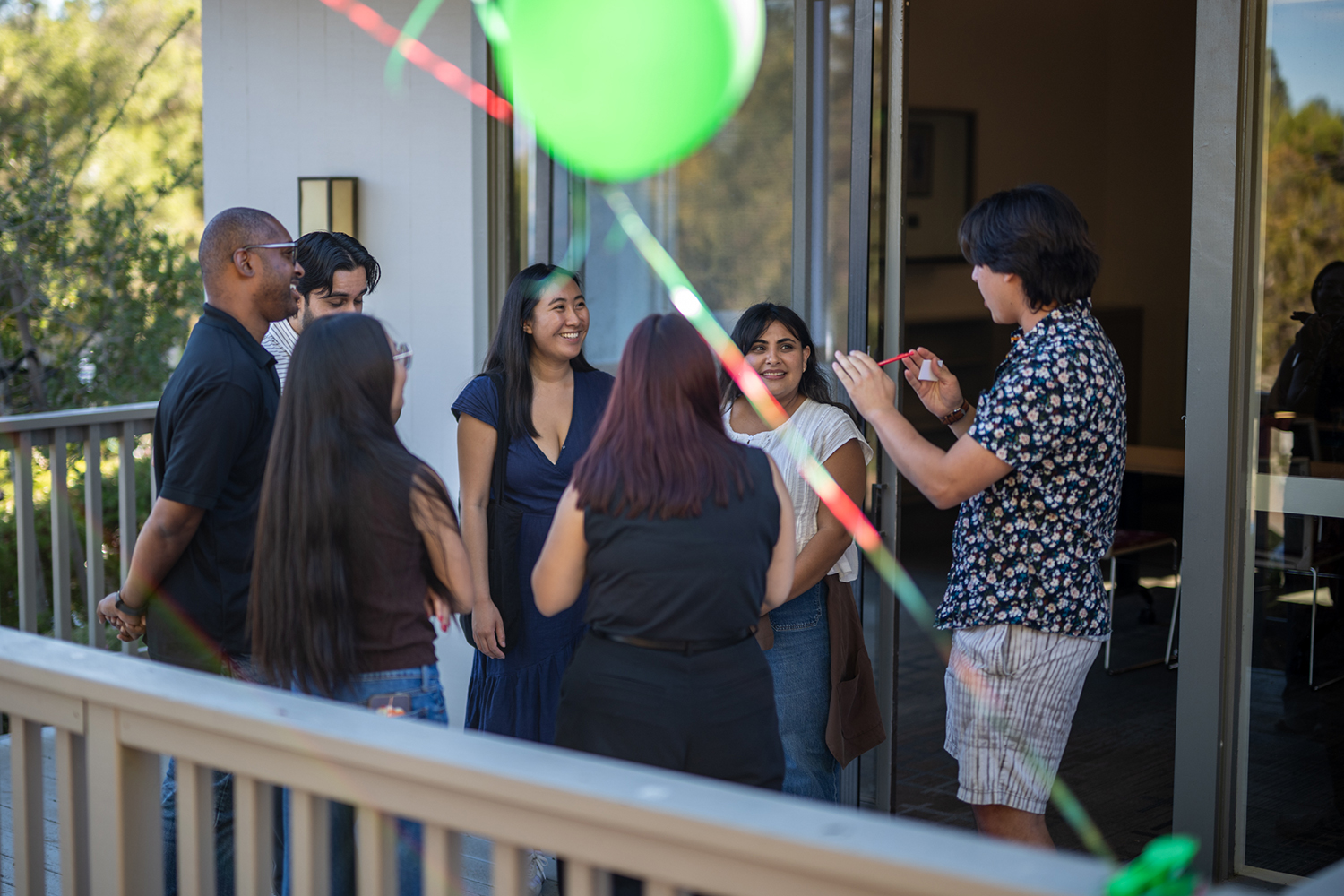
After eight days of racing across the American Midwest, the students returned to Stanford to celebrate. | Andrew Brodhead
Built to compete
The Stanford Solar Car Project was established in 1989 and is currently housed at the Clubhouse for Hardware Innovation Projects (CHIP). Membership typically fluctuates between 30 and 40 undergrads and graduate students; 19 attended this year’s American Solar Challenge. While the club is open to students from all academic disciplines, most members are engineering majors. Azimuth is the project’s 15th car; the team has constructed a new vehicle roughly every two years.
At the American Solar Challenge, teams compete in one of two vehicle classes: single-occupant vehicles like Azimuth that aim for pure efficiency, or multi-occupant vehicles that aim for a balance of performance and practicality. To succeed, teams must optimize every aspect of their car, including solar energy collection, battery storage, and aerodynamics, to improve efficiency, extend range, and boost overall performance.
Incorporating lessons learned from their last vehicle, Black Mamba, whose battery caught on fire during a 2019 competition, the Stanford team built Azimuth to be more reliable and competitive.
Going the distance
After leaving the starting line at the University of Minnesota in Minneapolis on July 25, teams embarked on a 1,500-mile base route. They traveled in caravans that included their solar vehicle and several supporting cars that carried the team.
“The goal is to finish the route while driving as many miles as you can by taking optional loops, or paths,” Marri explained. “Whoever completes the most miles by the finish line, wins.”
Along the way, teams had limited windows for reaching checkpoints where they could rest and swap drivers. They faced varied terrain, real-world driving conditions, and inclement weather. Due to cloudy skies through most of the race, Azimuth averaged 30 mph, topping out at 63 mph during the final stretch. Marri noted that the car’s array, or solar panels, generates only 750 watts. “We were driving highway speeds with the power of a toaster, so it was important to optimize the vehicle’s overall performance,” he said.
Before and during the race, the students conducted tests and collected data on factors such as weather patterns, rolling resistance on tires, road elevations, and the force at which air hit the car – all to determine how it might operate under certain conditions. Marri noted that constructing a reliable vehicle was crucial because “a lot can go wrong.”
“One team’s suspension broke and they couldn’t fix it,” he recalled. “So anything could happen that would cause a team to not complete the race.”
We were driving highway speeds with the power of a toaster, so it was important to optimize the vehicle’s overall performance.Akhil Marri, ’28
Teams had to abide by local speed limits and navigate normal traffic, including curious onlookers. “Other drivers would slow down and pull their phones out to take pictures of our car,” Marri said.
The race paused every evening, and the Stanford team brought tents and camped wherever they were allowed, including a golf course, a church parking lot, and a horse auction site.
The race took the students through Minnesota, Wisconsin, Iowa, Illinois, Missouri, Kansas, Oklahoma, and Texas, allowing them to see parts of the country many had never experienced, like the Great River Road, which follows part of the Mississippi River, and the famed Route 66. They also drove past iconic roadside attractions.
“There was the Route 66 Man, which is a giant superhero statue. There was a giant cola bottle. A giant chicken. A lot of giant things along the route!” Marri said.
The race ended Aug. 1 in Amarillo, Texas. The Stanford team covered nearly 2,000 miles and was one of only seven teams to complete the route. The team from KU Leuven in Belgium placed first.
Azimuth will retire from competition, and its performance will inform the design of the team’s next vehicle, which is well underway. Marri said the new car (which does not yet have a name) will have greater solar storage capacity, a similar bullet shape, and three wheels instead of four. It will debut next year in time to compete at the 2027 World Solar Challenge in Australia.

For more information
See highlights from the Stanford Solar Car Project’s performance at the American Solar Challenge and follow the club’s next adventure on Instagram.
Writer
Alex Kekauoha