In 1872, Leland Stanford commissioned photographer Eadweard Muybridge to capture the locomotion of a horse in successive photographs to settle a bet: Do all four legs of a horse leave the ground in a gallop? Muybridge’s now-famous work laid the groundwork for the first films decades later. And today, that image of a horse mid-gallop, every leg off the ground, serves as the emblem for the next generation of Stanford film pioneers.
This is “Flying Horse Films,” one of Stanford’s film production clubs.
“We’re kind of unicorns here,” said film and media studies student Michael Carbonaro, ’26. “There’s not many [students who are] film and media studies majors here at Stanford. It’s kind of hard to find [a community] unless you’re taking courses.”
Getting the chance to bounce ideas off of peers is how all his best ideas originate, said Carbonaro, who became co-director of the club in 2025, so building a space for student filmmakers to explore their ideas together was a top priority.
‘Go out and make things’
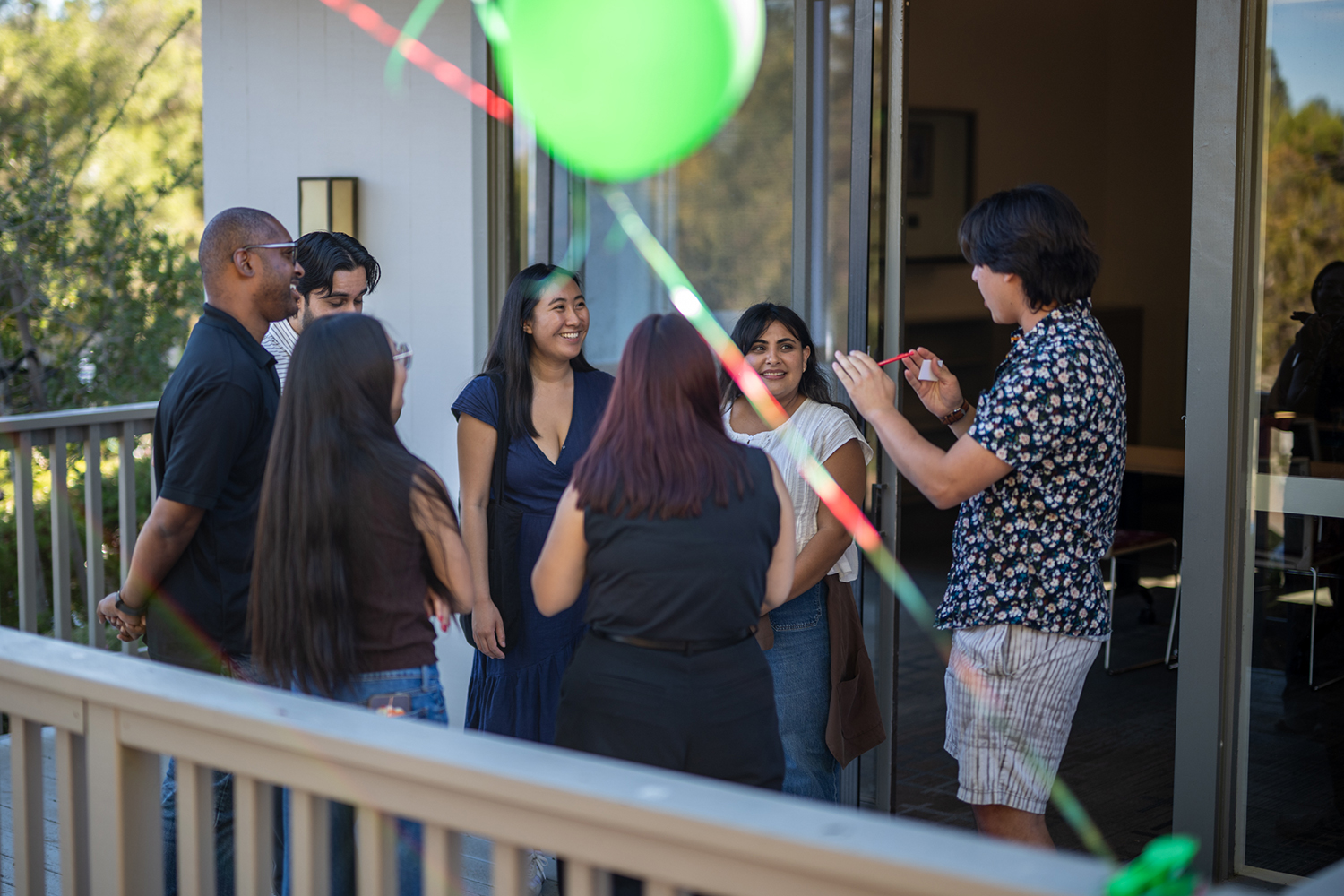
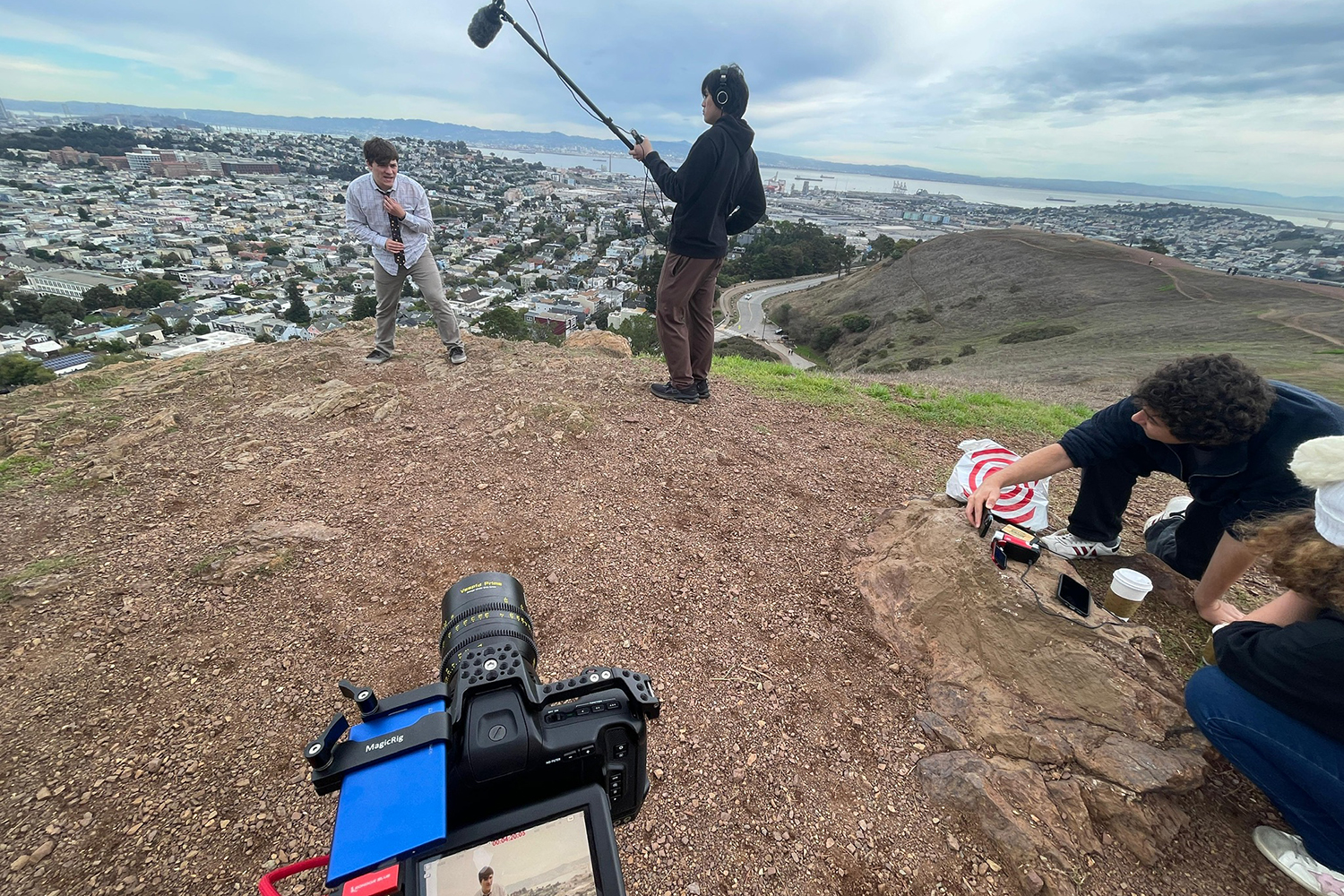
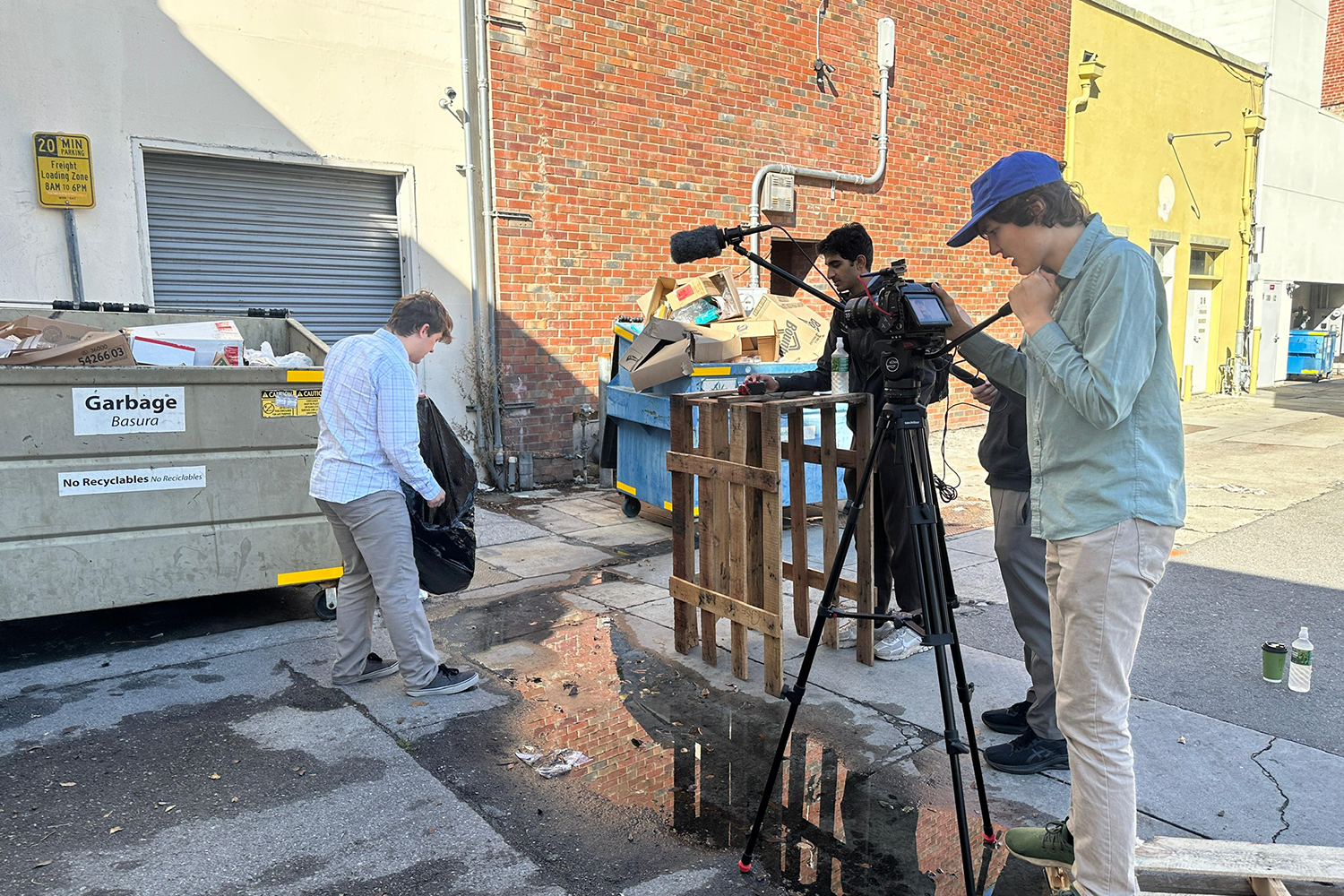
At a recent meeting, club members used their phone cameras to shoot short films. The catch? They had only one hour to write, shoot, and edit their creations.
In a flurry of excitement, the students formed small groups and dashed off to various corners of campus. The activity served the club’s ultimate goal, to “go out and make things,” Carbonaro said.
Casting aside the pressure to create something polished and profound, students practiced the basics: working together towards a goal and having fun while doing it. The resulting films, each just a few minutes long and representing genres from comedy to drama, were screened at the end of the meeting to laughter and applause.
Turning ideas into films
In addition to offering community with other film enthusiasts, Flying Horse Films produces between one and three films each quarter, chosen from scripts submitted by fellow students regardless of previous involvement in the club. The students who penned selected scripts then have the chance to bring their ideas to life, often moving into a director role with support from the club.
A budget from the Associated Students of Stanford University (ASSU) funds filmmaking equipment and catering for long days of shooting. Club members recruit actors, producers, and technicians for the project. And critically, they provide coaching every step of the way to help new directors bring their ideas to life.
Looking forward
This year, Carbonaro and co-director Jamie Kurtzig, ’26, who is studying bioengineering, are taking the club one step further and want to find more opportunities for connection among movie buffs.
“When I’m in film classes, several of us [are always] huddled outside of the classroom and talking about the movie [afterwards]. And so I think that making a more formal, but still casual, space for discussing different movies, filmmaking techniques, all things movies is a big help,” said Kurtzig.
Kurtzig first became involved with filmmaking when she volunteered as a production assistant for Lilli, a short film created by Stanford students in only four days in 2024, which went on to win Best Score at the LA International Film Festival.
“It gives me a great sense of pride that people enjoy something that I’ve made,” she said. “So I’m joining Flying Horse to hopefully give other people that sense of pride and wonder for movies.”
To learn more about upcoming Flying Horse Films events, follow them on Instagram @stanfordflyinghorse.
Writer
Allie Skalnik