Stanford student clubs are getting a new space on campus to call home. The Clubhouse for Hardware Innovation Projects (CHIP) is currently under development on the west side of campus and will house clubs engaged in physical hardware design, arts, and engineering projects.
The Clubhouse will reside in what is currently the Automotive Innovation Facility. In the coming months, the space will be transformed into a hub for student clubs to meet, host events, collaborate, and work on projects using industrial fabrication equipment with support and mentorship from the staff.
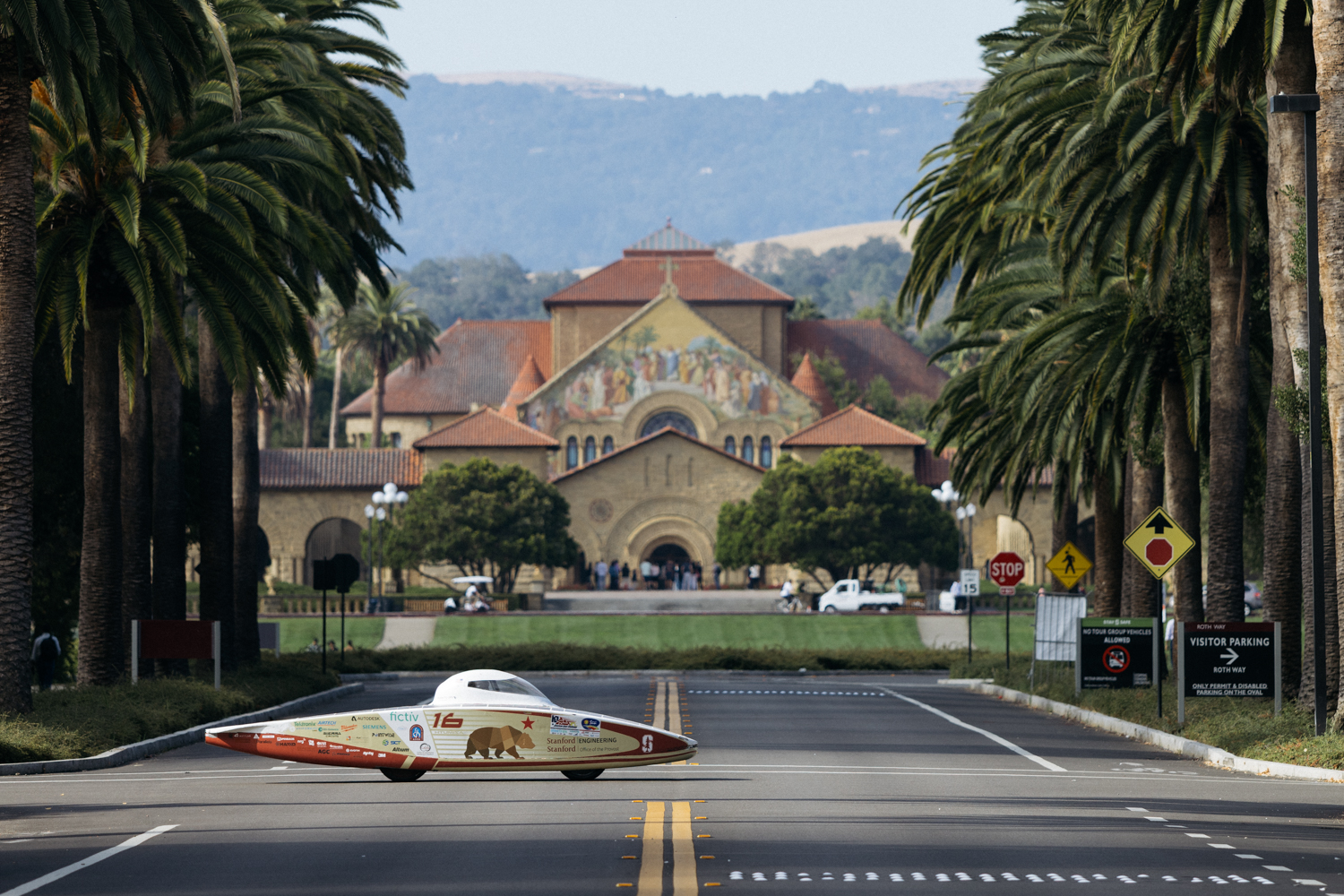
Clubs expected to occupy the Clubhouse include the Stanford Flight Club, the Moonshot Club, FashionX, the Student Space Initiative, Stanford Student Robotics, and the Stanford Solar Car Project.

The Stanford Solar Car Project, which builds solar-powered vehicles, will be one of the student clubs to occupy the Clubhouse for Hardware Innovation Projects. | Courtesy Connor Hoffman
Steve Collins, a professor of mechanical engineering and the CHIP faculty director, said the space will elevate the level of work that student clubs produce and encourage collaboration. “When these groups are in one facility together, it can lead to some awesome cross-pollination,” he said. “Students will learn from each other, get excited and inspired by what other teams are doing, and that will make them all more effective in their projects.”
The School of Engineering, including its students and clubs, has played a critical role in creating the Clubhouse. Jennifer Widom, the Frederick Emmons Terman Dean of the School of Engineering, in which the Clubhouse sits, noted the vibrant culture of hands-on making that exists in the School of Engineering and elsewhere on campus.
“As more and more of life happens in front of a screen, it’s wonderful to see students across campus drawn to in-person, hands-on collaborative activities,” she said. “And these activities are more important than ever. Student enthusiasm has been the catalyst for developing the Clubhouse, and its clubs and spaces are engaging and enriching, no matter what you study.”
Meeting demand
The idea for the Clubhouse was born out of making@stanford, an initiative designed to provide students with opportunities to learn through physical design and making. “We’d been looking for opportunities to support student-led organizations that do hardware projects, and after consulting with clubs, it was clear they needed two things: mentorship and reliable access to space,” said Collins.
For some Stanford student clubs, finding a designated place to work on campus can be challenging and competitive, particularly for those that require space and equipment to build. As a result, many clubs have become nomadic, temporarily occupying spaces before having to relocate. While Stanford has several makerspaces for students to design and build projects that relate to their coursework and research, the Clubhouse will be used exclusively by clubs.
As more and more of life happens in front of a screen, it’s wonderful to see students across campus drawn to in-person, hands-on collaborative activities.Jennifer WidomFrederick Emmons Terman Dean of the School of Engineering
The Clubhouse is in its early stages of development. Executive Director J.D. Sassaman, lab manager Isabella Carrera-Newport, and other center leaders are currently creating policies, schedules, and identifying the necessary equipment. They’re working closely with leaders from the student clubs to ensure the center directly addresses the goals and aspirations of the club’s projects, from equipment to group meeting spaces.
“There’s a lot of momentum behind the Clubhouse right now, and as we’re planning and determining what this space needs, it’s really key that we have student input,” said Sassaman, adding that students are encouraged to connect with organizers and respond to surveys about how they’d like to utilize the space.
New digs
The Clubhouse will occupy the Automotive Innovation Facility at the corner of Oak Road and Stock Farm Road. The 12,000 square-foot facility became available over the summer. As the space gets set up, it will have dedicated machining and metal workspace, a digital fabrication lab, textiles equipment, electronics benches, hand tools, and portable tools, all of which will be accessible to clubs that are members.
Notably, once renovations are completed next year, the center will have an industry-standard composites lab that meets Environmental Health and Safety guidelines. This will be the first composites lab on campus that will be available for student clubs, allowing them to explore the use of these lightweight materials in driving results for their projects.
Sassaman noted that while the Clubhouse will be designed for clubs to develop their hardware projects, it will also be an environment “where students can microwave a pizza, put on some music, meet new friends, and then go into the machine shop and turn their part on a lathe.”
Clubs will have the opportunity to host events, sponsors, demonstrations, learning sessions, or movie nights in their own “clubhouse,” alongside their workspace and with the support of the Clubhouse team.
Stanford’s club culture
Lawton Skaling, a coterminal master’s student in mechanical engineering and co-founder of the Stanford Moonshot Club, has been active in nearly all of Stanford’s engineering clubs and is closely involved in the development of the Clubhouse. He hopes the center will allow more students to develop real-world engineering experience by working on project groups.
“The additional space it brings to campus and the support it will bring to clubs will allow students to take on more ambitious projects, support new project groups, and ultimately lead to more students getting involved,” said Skaling.
Clubhouse leaders expect to begin filling the center and creating community this quarter with clubs, workbenches, tools, and equipment. Next summer, they hope to complete interior renovations in preparation for an official opening and ribbon-cutting ceremony in the fall of 2026.
Writer
Alex Kekauoha