


In a speech Sunday morning at Stanford’s 135th commencement ceremony, Sundar Pichai discussed the many moments in life that shape a person’s trajectory.
“If you are able to filter the signal through the noise, you can nudge your life in these moments into having the impact you want,” said Pichai, who is the CEO of Google and of Alphabet.
Pichai grew up in the vibrant coastal city of Chennai, India, before arriving at Stanford to earn a master’s degree in materials science and engineering. In his address, Pichai shared three simple filters that have helped him get more life moments right than wrong and take some of the pressure off.
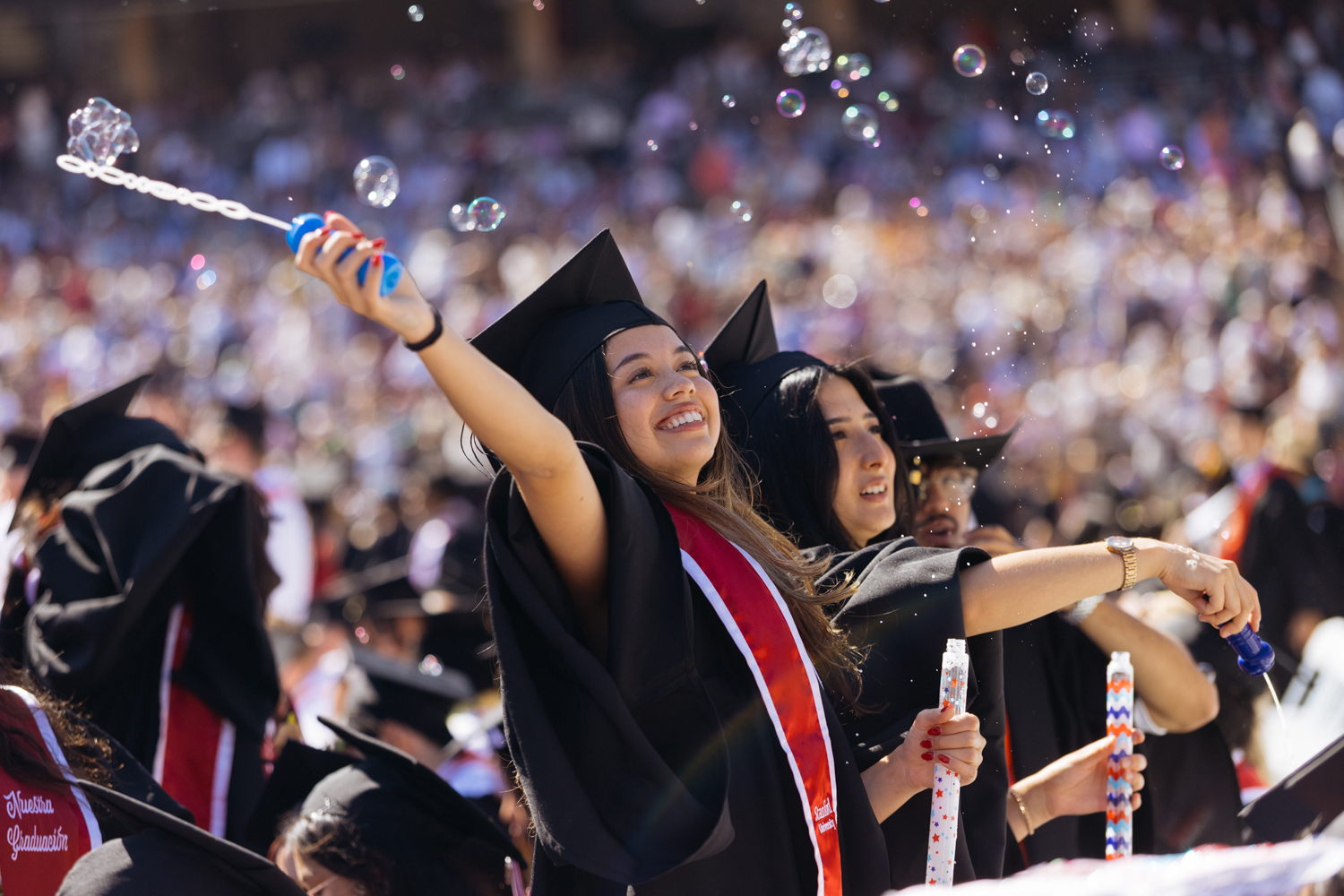
Smiling graduates took to the field at Stanford Stadium to celebrate with bubbles.
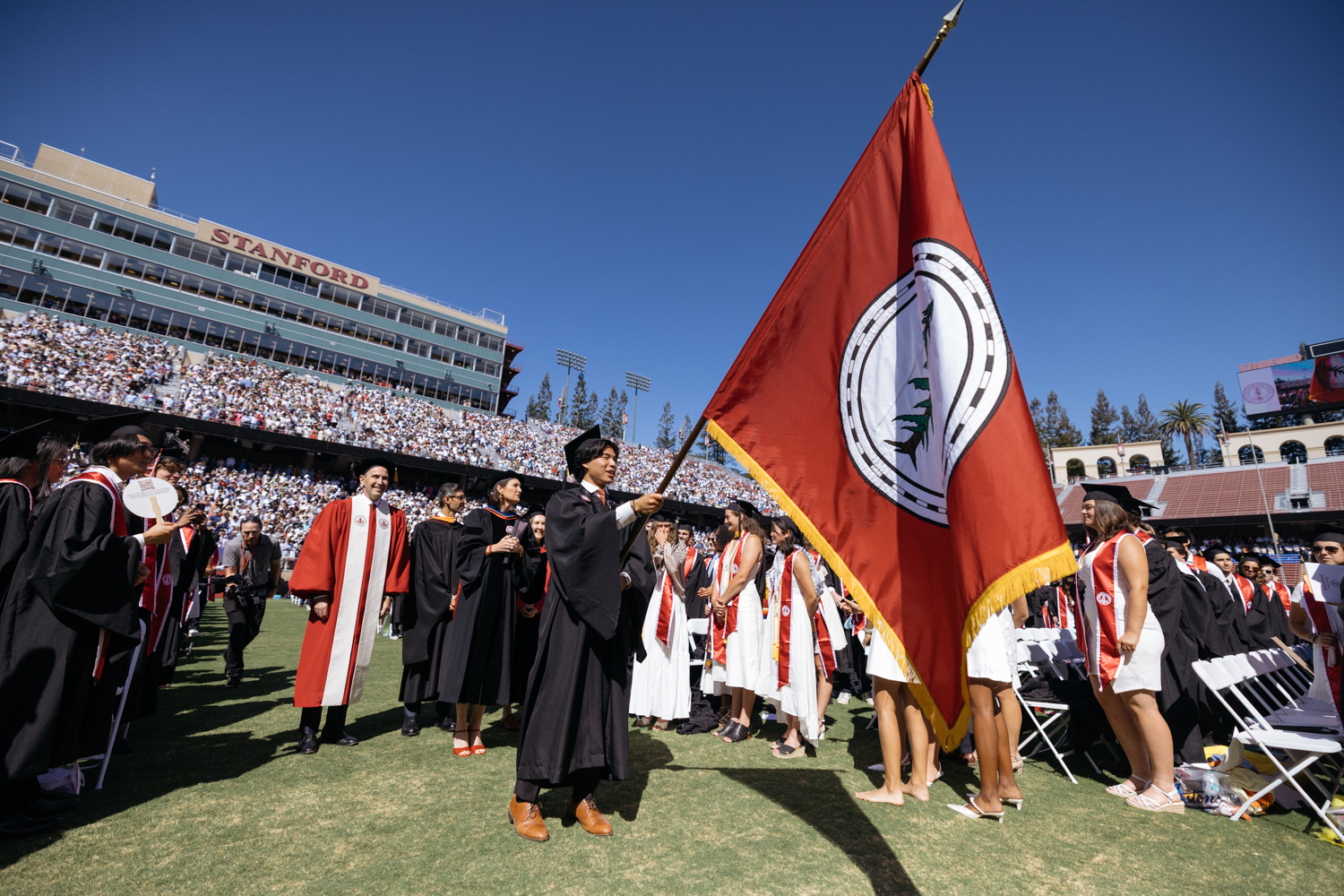
The academic procession ends as President Jonathan Levin, Alphabet and Google CEO Sundar Pichai, Provost Jenny Martinez, and the Rev. Dr. Tiffany Steinwert arrive at the dais.
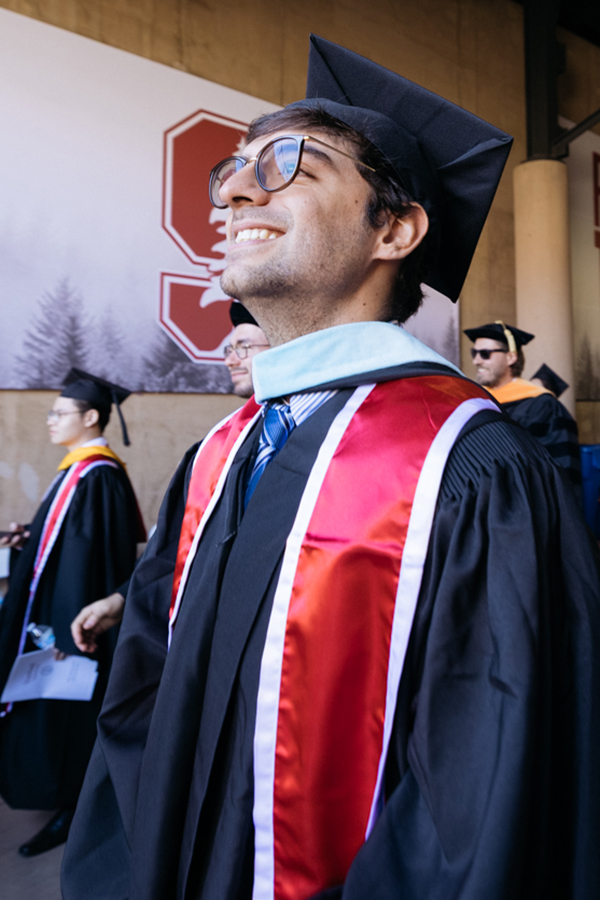
Graduates proceed through the Stanford Stadium tunnel in preparation for the Wacky Walk.
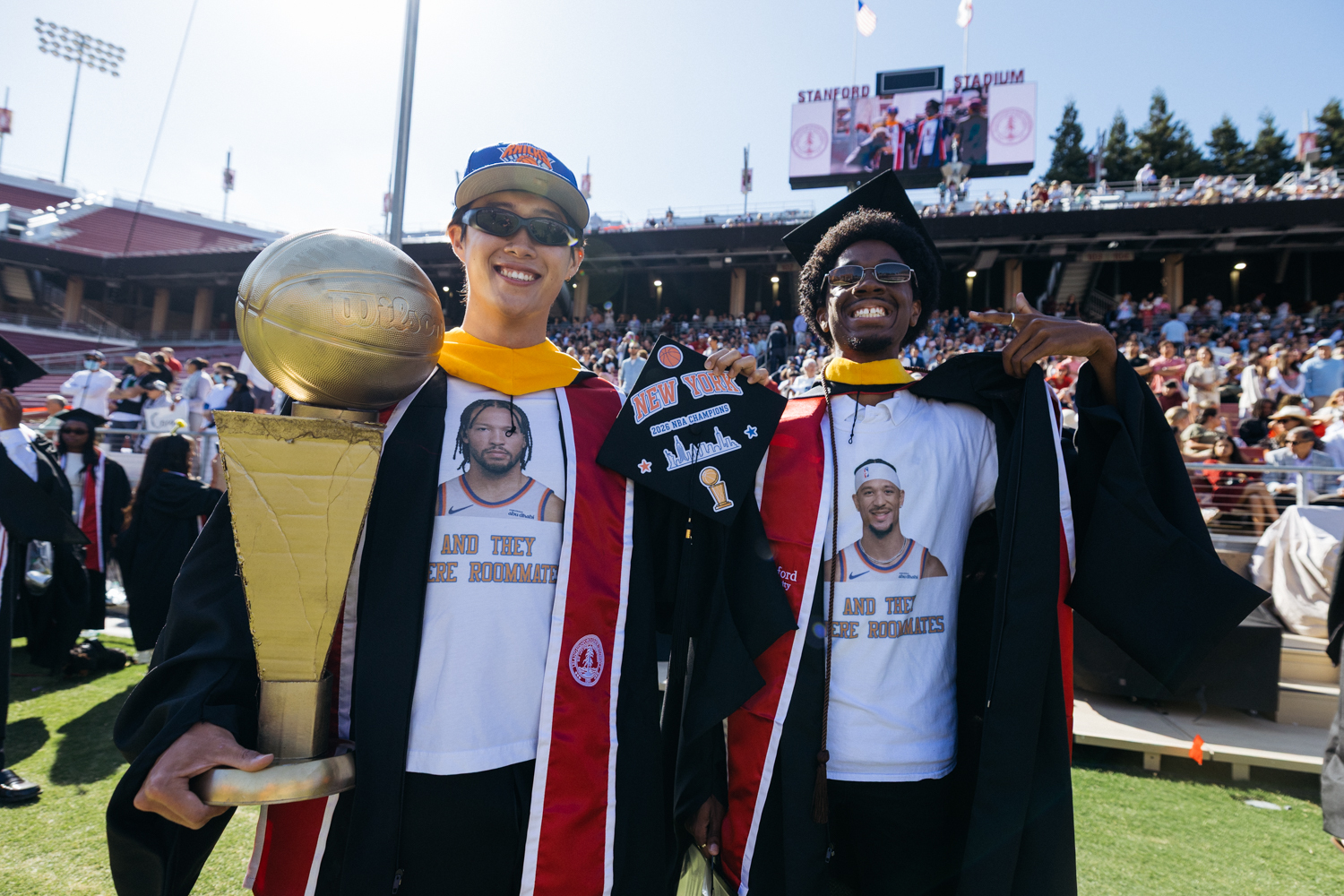
Graduates celebrate college roommates and the Knicks’ recent NBA Finals victory at Wacky Walk.
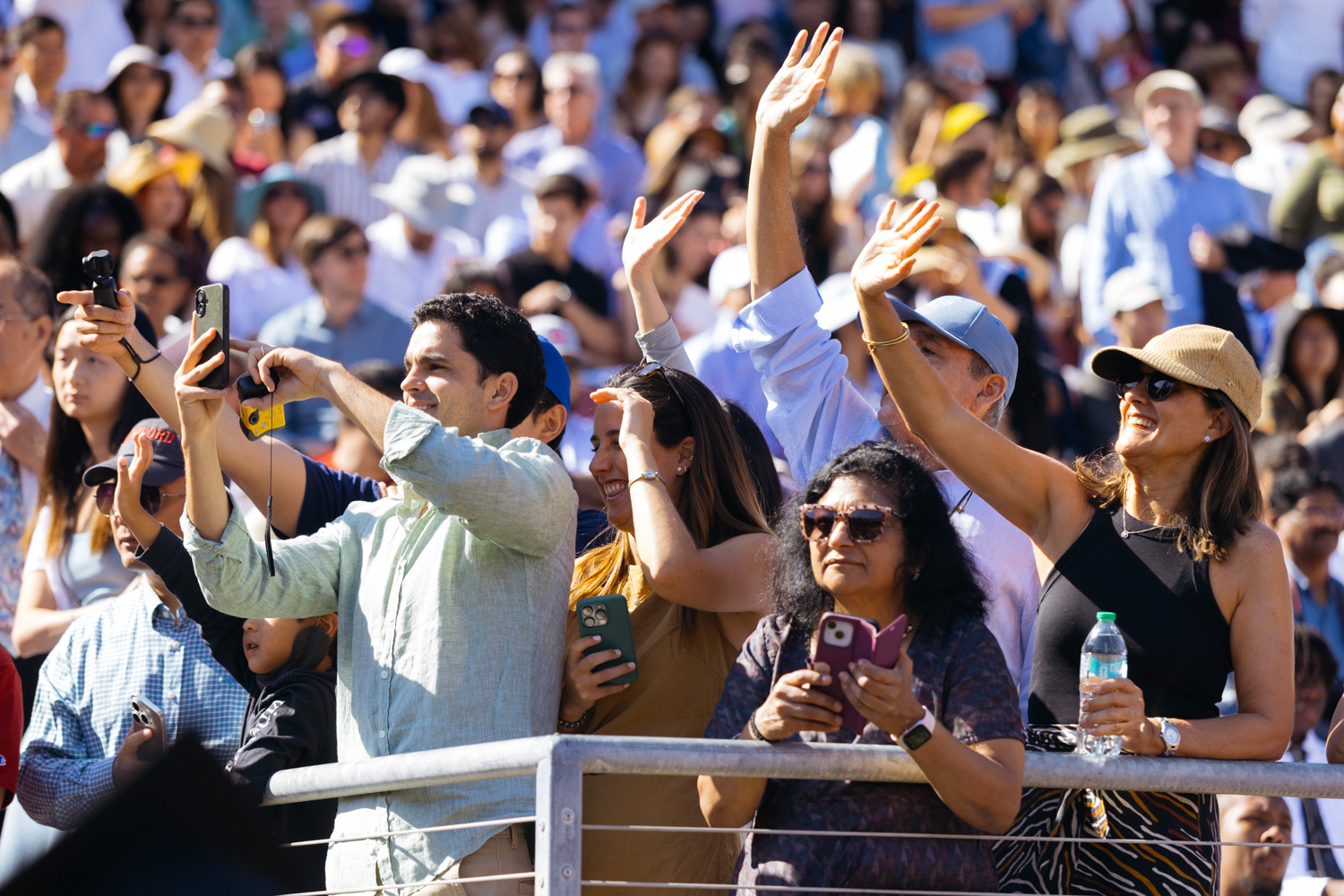
Proud parents and relatives – many from across the country and around the world – wave to their graduates.
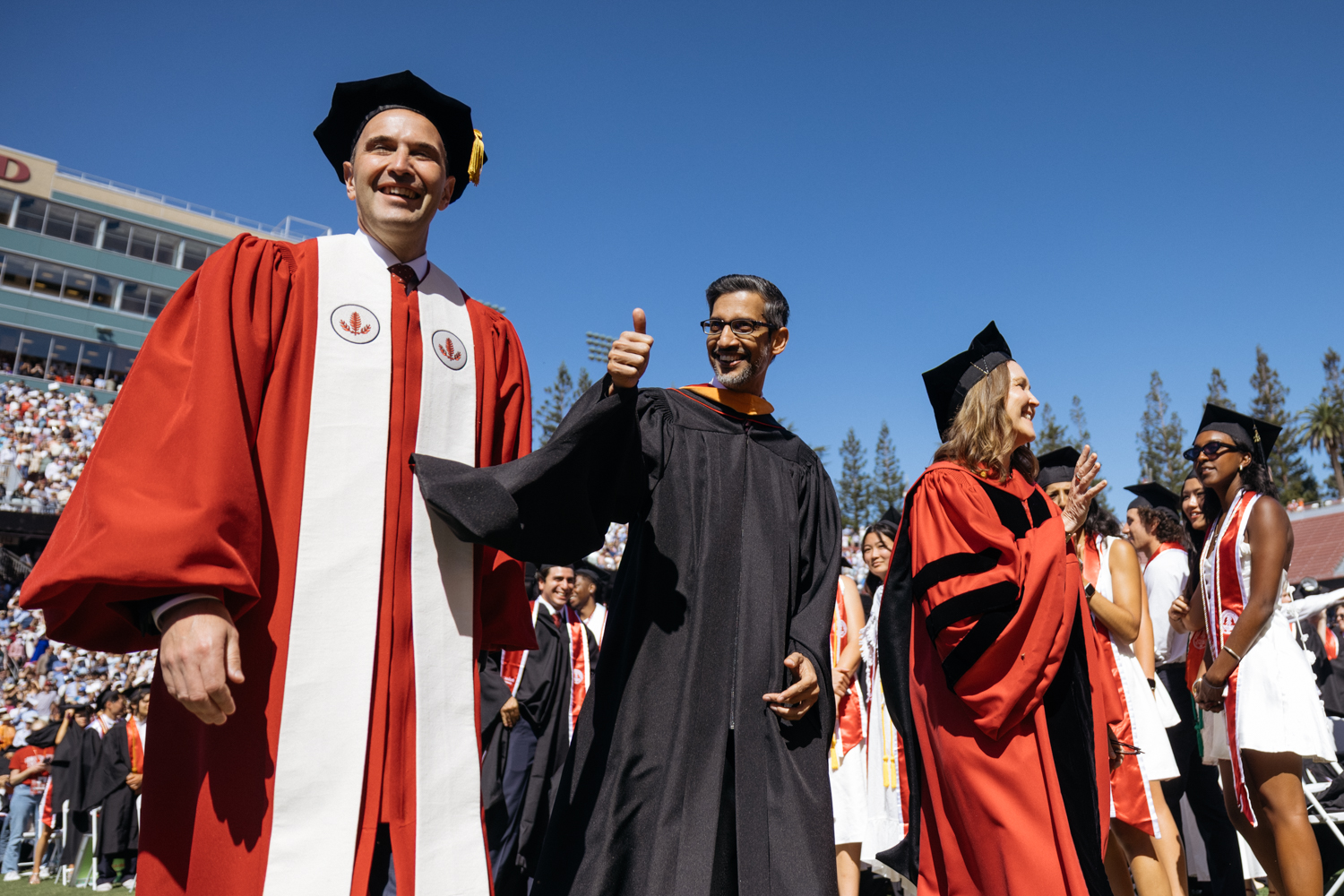
Sundar Pichai gives a thumbs-up to graduates as he arrives with President Levin and Provost Martinez.
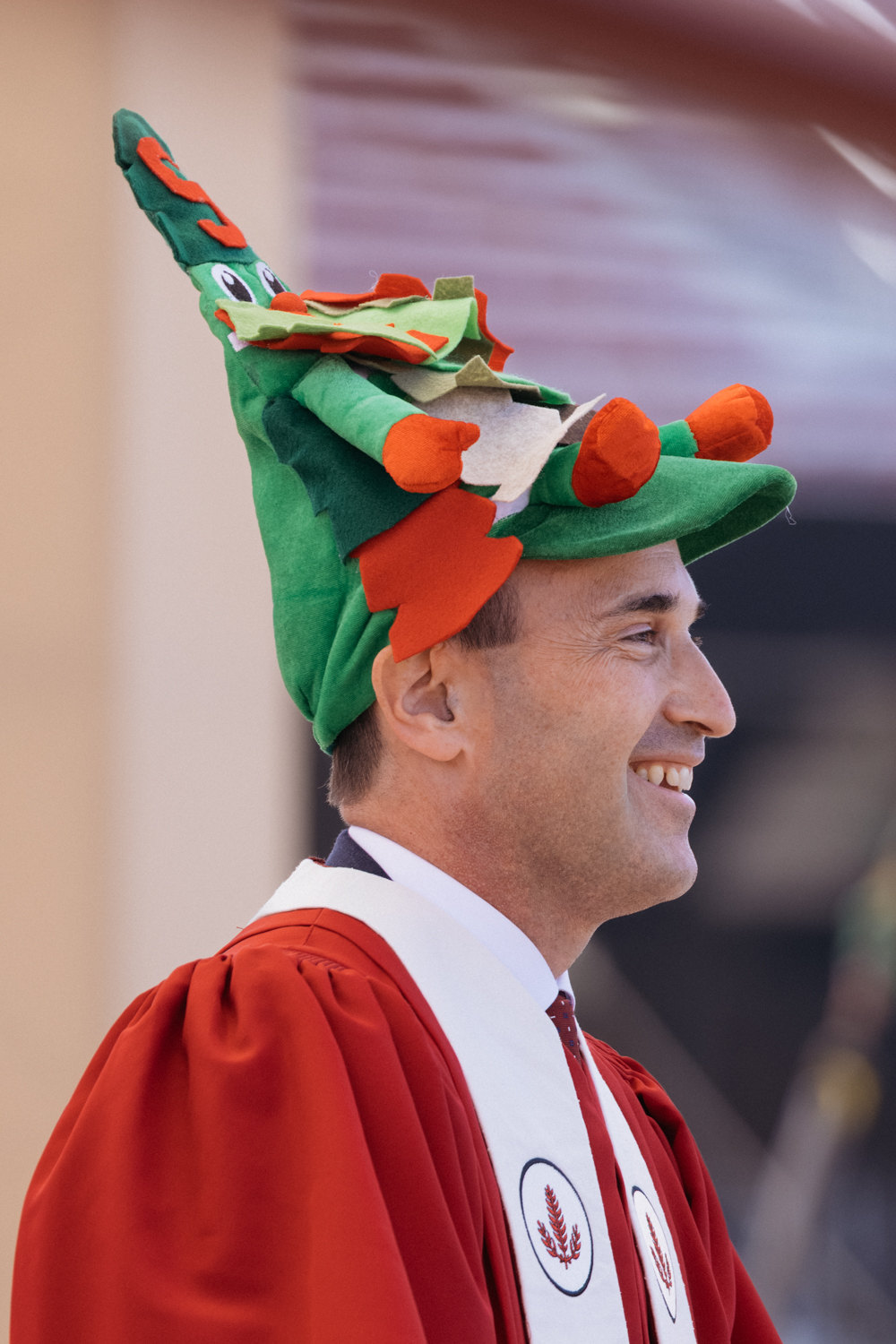
President Levin dons a Stanford Tree hat gifted to him by the artistic swimming team’s parents group.
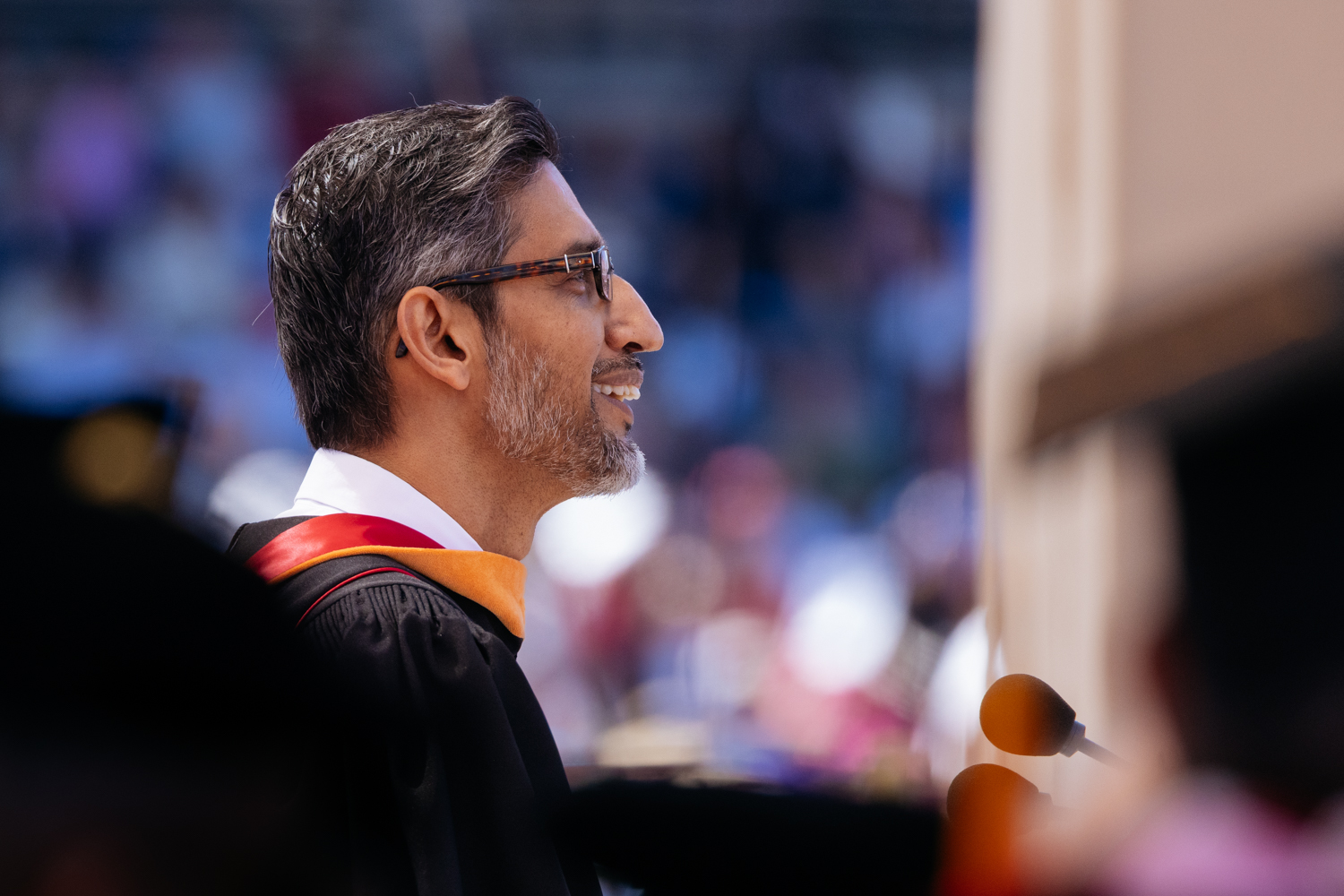
In his keynote address, Sundar Pichai urged graduates to take on challenges and to follow what excites them.
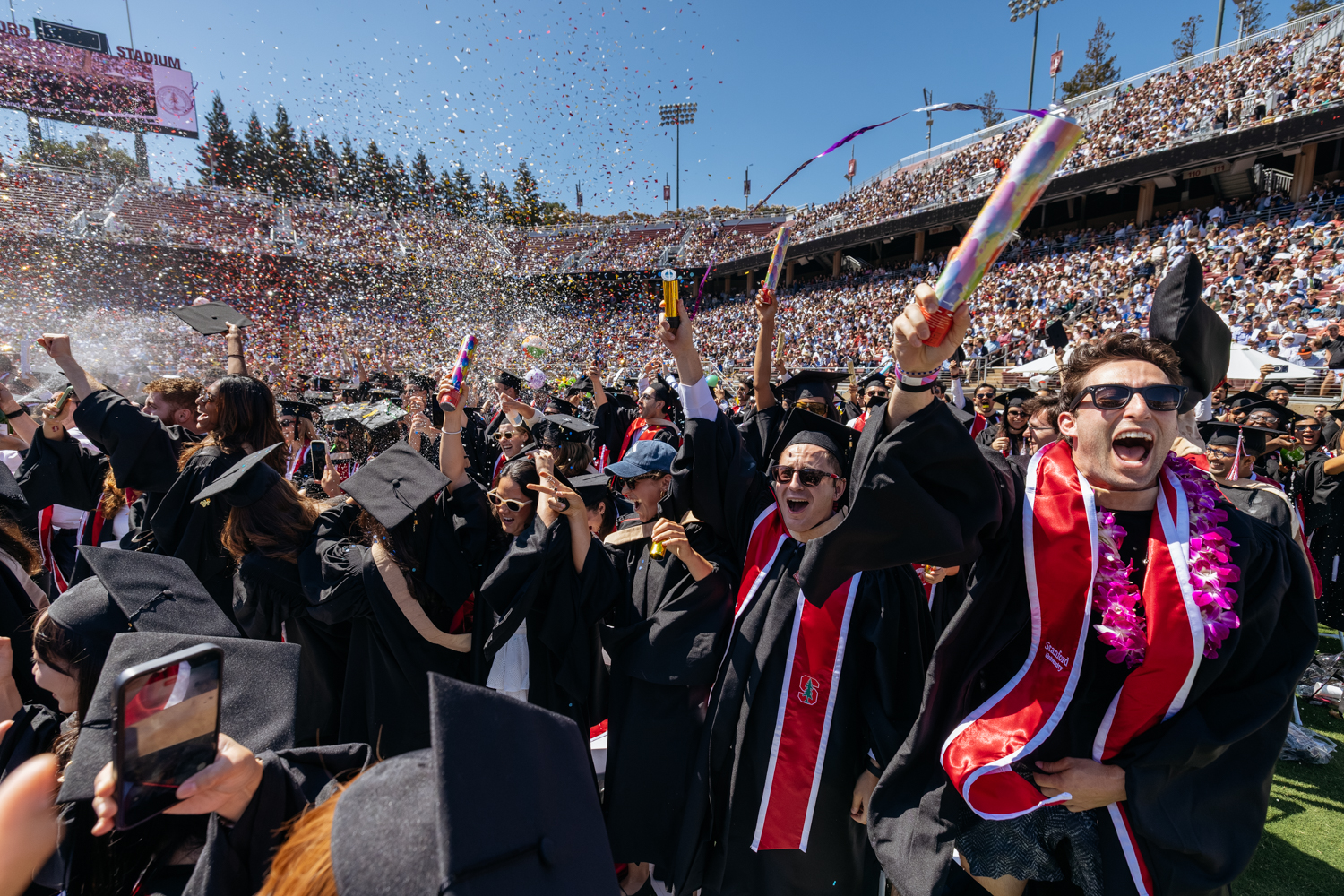
No Commencement celebration is complete without confetti.
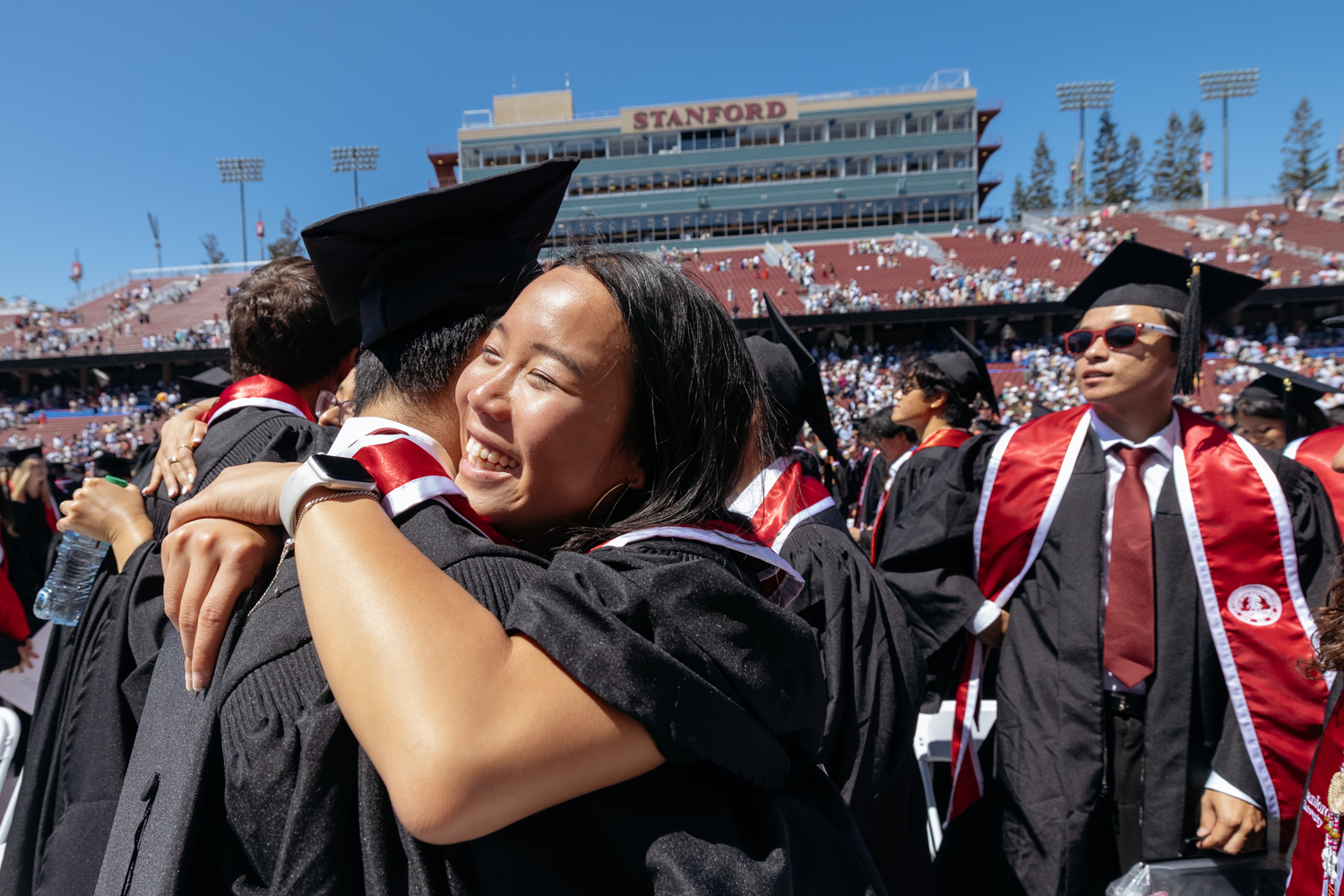
Nothing compares to the friends you make in college.
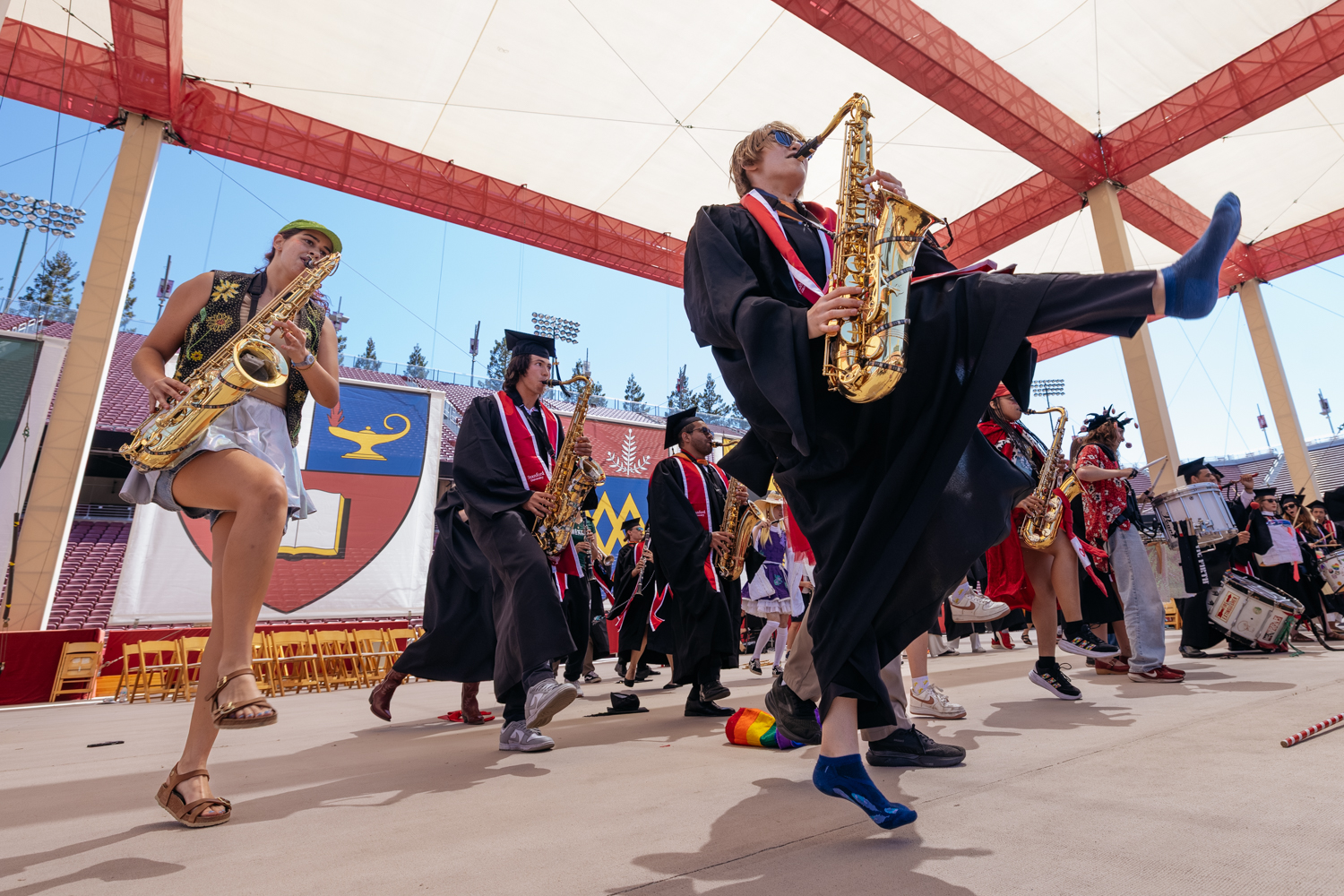
The Leland Stanford Junior University Marching Band puts on a show for the graduates.
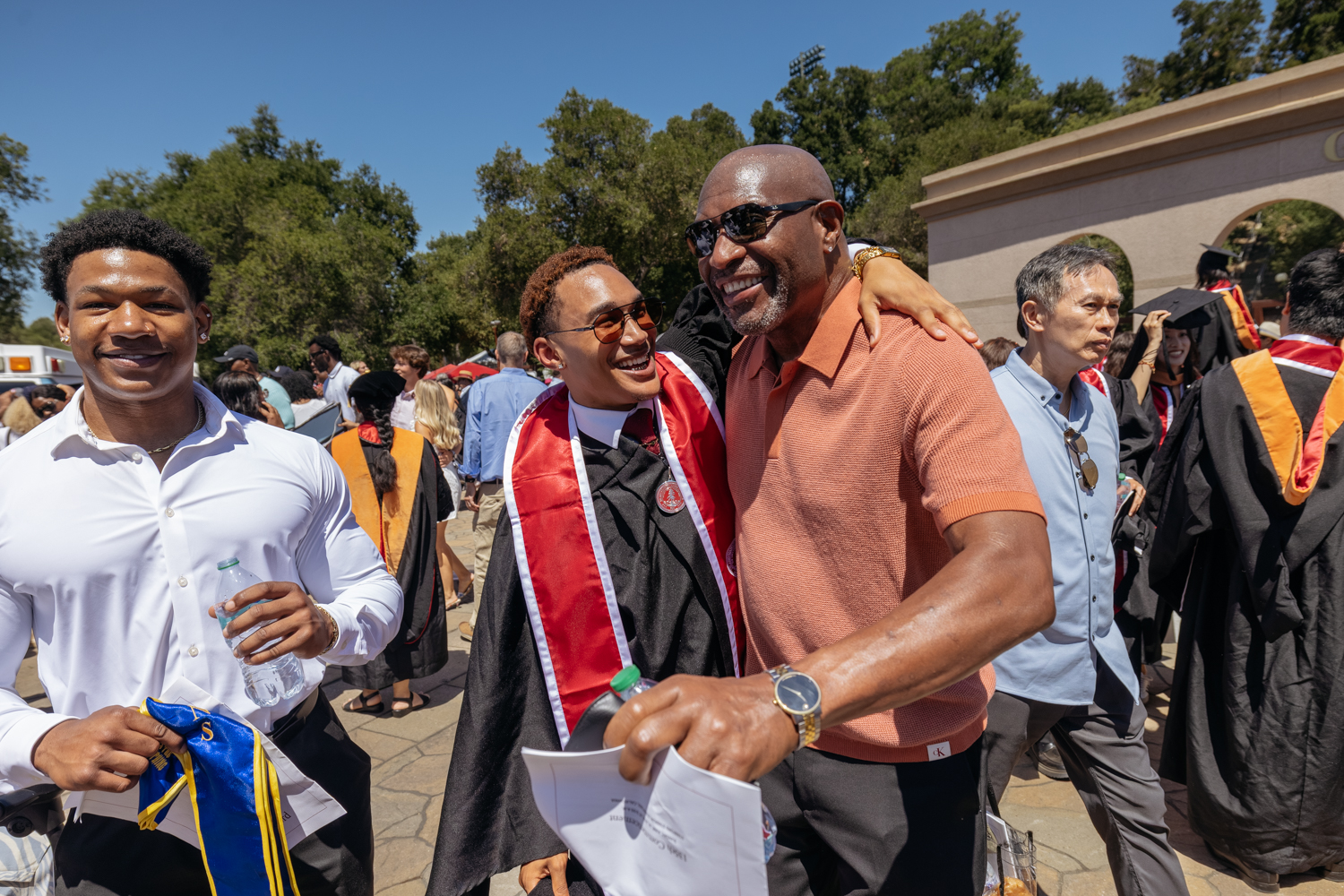
New graduate Emilio Farrell celebrates with his family after Commencement.
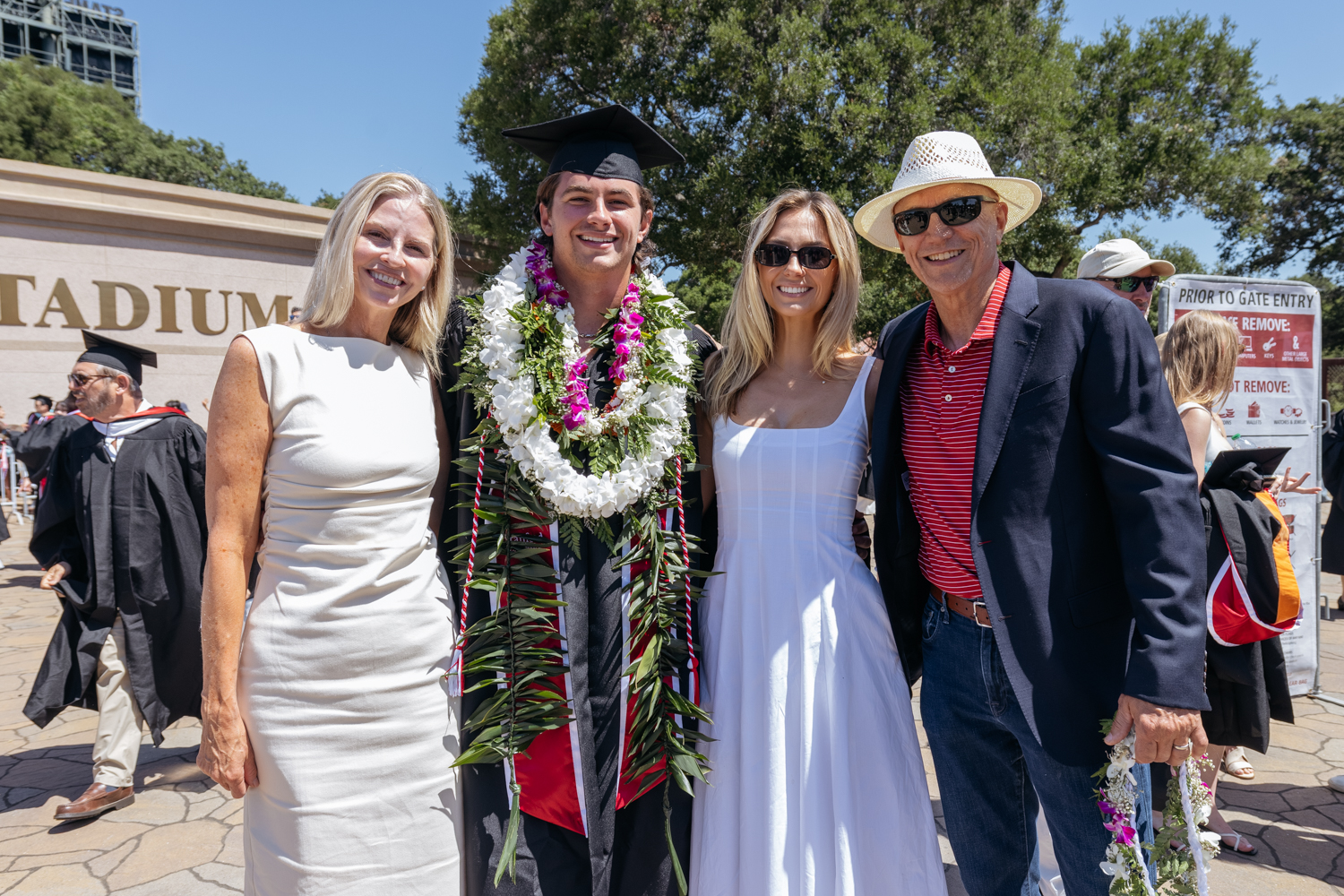
Stanford football long snapper Peyton Warford celebrates with his family.
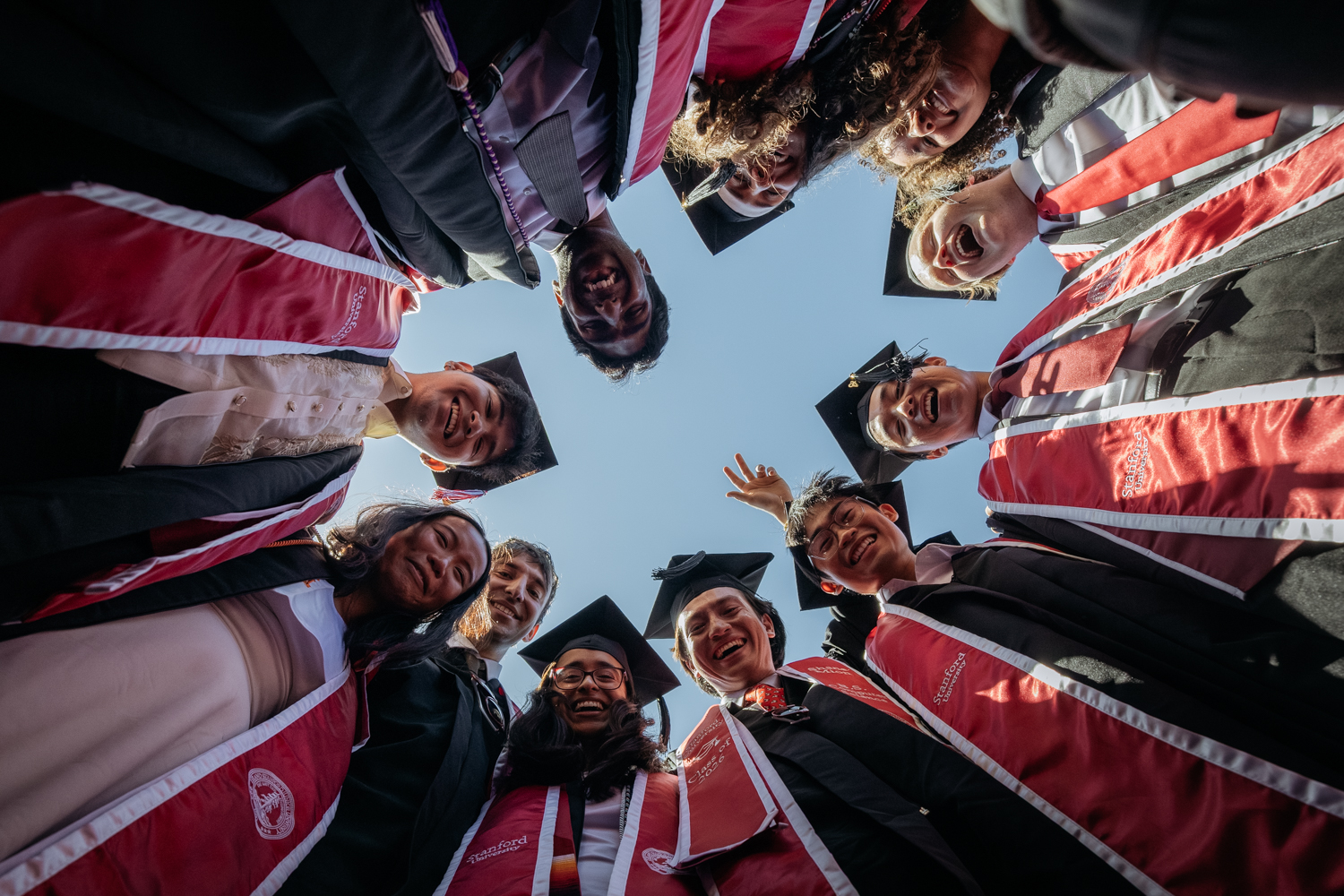
Members of the Class of 2026 show off their academic regalia.
More than 20,000 people, including 3,600 students, gathered at Stanford Stadium to celebrate one of the university’s largest graduating classes ever. The ceremony opened with a formal procession, the Wacky Walk student tradition, and musical performances by the Stanford Jazz Workshop, the Stanford Chamber Chorale, and the Leland Stanford Junior University Marching Band.
Provost Jenny Martinez presented the Cuthbertson, Dinkelspiel, and Gores awards.
Filtering through the noise
Pichai, acknowledging the challenges the Class of 2026 faces, urged them to consider his first filter: Choose optimism. “We don’t get to choose the world we graduate into, but we do get to choose how we frame our circumstances.”
Pichai recalled that when he first arrived in California to attend Stanford, his first impression was very different from what had been advertised. The ocean was cold, rather than warm, and California’s lush green landscape was actually brown. His host gently corrected him. “We prefer to call it golden,” she had said.
“And that’s exactly what I mean by choosing optimism. It’s about reframing for the positive: Where I saw brown, she saw golden,” Pichai said. “This slight change of perspective had a huge ripple effect on how I thought about the world around me.”
Pichai’s second filter: Gravitate toward working on hard things. Early in his career at Google, he worked on a small team charged with building a new web browser. Internally, there was consensus that building a browser would be incredibly difficult and require hundreds of engineers. “We had a group of about ten,” he recalled.
In 2008, 24 hours after launch, their browser, Chrome, had 8 million users and received positive reviews. But user growth quickly stagnated, and Google’s competitors mocked the effort. Undaunted, the team kept going, rapidly iterating. Success eventually followed.
“Working on hard things has taught me a lot. It typically attracts other great and optimistic people. And even if you miss meeting the high goals you set, you’ll still achieve something great,” he said. “So, when you have the choice to work on something hard, say yes.”
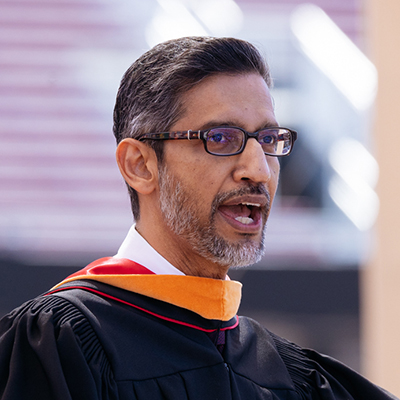
We don’t get to choose the world we graduate into, but we do get to choose how we frame our circumstances.Sundar Pichai
Lastly, Pichai encouraged graduates to “do the things that excite you.” For him, that has always been technology. “Seeing computing change people’s lives as it had changed mine was the most exciting thing in the world to me,” he added.
As graduates look at their own path, he urged them not to focus on “the thing your parents want you to do, or the thing all your friends are doing, or that society expects of you. Instead, think about the things that keep you chatting excitedly with your roommates late into the night and go do those things.”
“You have thousands of moments ahead of you,” he added. “The important thing isn’t to get them all right; it’s to find a way to keep moving forward.”
The great power of a university
In his address, President Jonathan Levin reflected on the many changes to the Stanford campus since he was an undergraduate, while noting the enduring aspects of the university.
“Stanford is a place full of people who are deeply serious about what they are pursuing … where people don’t take themselves too seriously, where we are curious to learn from our peers and colleagues, and sometimes in awe of them,” he said. “That is why Stanford’s campus, for all the years I have walked across it, has felt open and expansive – an environment of discovery and collisions and new perspectives.”
Levin also acknowledged the many ways in which graduates have influenced the university during their time on campus.
“Class of 2026, you helped to rebuild Stanford traditions – Full Moon on the Quad, the Band Run, Flicks, Midnight Breakfast – and invent new ones: the On Call Café and line dancing. Many of you got to see Lake Lag – with water! This year, you even won back the Axe,” he said. “Bravo!”
He then turned to the Vera Rubin Observatory, whose Stanford-built camera surveys the southern sky each night. “The discoveries that are coming from the Rubin project are possible because it looks at the sky in a different way,” Levin said. “Most telescopes capture a narrow slice of the sky. Rubin surveys a vast swath.”
The telescopes that improved on Galileo’s, he noted, sharpened our view of the cosmos but turned its images upside-down and reversed. “Sometimes – perhaps often – disorientation comes before things resolve into greater understanding,” he said. “I expect that, too, is an experience that you’ve had here at Stanford.”
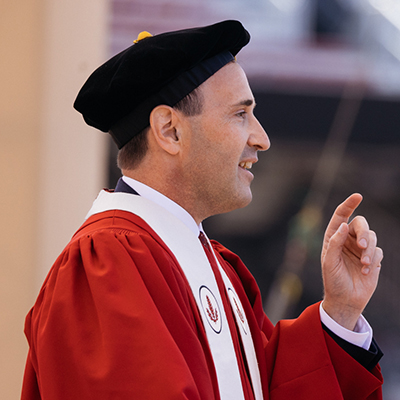
When the university is at its best, the friction is illuminating. It generates light rather than heat. That is what we try to accomplish at Stanford.President Jonathan Levin
Universities, Levin said, are designed to bring together people with a vast array of expertise and different ways of looking at and thinking about the world. “This is a great power of the university.”
But he conceded that a campus with a broad range of views comes with challenges. “There is friction in bringing together people who think about the world in different ways, have different aspirations, perhaps value different things. But when the university is at its best, the friction is illuminating. It generates light rather than heat. That is what we try to accomplish at Stanford.”
“So, as you graduate,” he continued, “I encourage you to explore, to be ready to shift perspectives, and to not shy away from friction, but in doing so, to seek to bring light – to the people around you and to the world.”
‘I worked really hard to get to this moment’
The celebration kicked off with the annual Wacky Walk student tradition – a procession of graduates dressed in fun, and sometimes irreverent, costumes.
Jake McIntyre, who graduated with a master’s degree in mechanical engineering, was all smiles as he reflected on his Stanford experience. “The mentorship that you get from the professors that you meet and the friends you make – some who will be leaders of their industry – I think that’s an experience that is unique to Stanford,” he said.
“I worked really hard to get to this moment, and I’m excited that my family can be here to celebrate with me,” said Alana Okonkwo, who graduated with a bachelor’s degree in archeology and in African and African American studies. “It’s a momentous occasion too, because my grandparents on both sides of my family will be meeting each other here for the first time, so I’m really excited to celebrate and show them around campus.”
Families, friends, and loved ones traveled from across the country and around the world to see their graduates receive their Stanford degrees. Chad Burden of Tulsa, Oklahoma, came to see his son Nate graduate with a bachelor’s degree in economics.
“Being here surrounded by all of these smart, inspirational people, not just students, but parents and families that really care about education – to be a part of something like that means a lot to our family and our son,” he said. “Stanford really planted the seeds for his future, so he’s ready to hit the ground running.”
By the numbers
On Sunday, Stanford awarded 2,006 bachelor’s degrees, 2,870 master’s degrees, and 1,090 doctoral degrees. In the undergraduate class, 242 are international students from 94 countries. For advanced degree students, 1,431 are international students representing 133 countries.
Among students who received bachelor’s degrees, 331 graduated with departmental honors, 335 graduated with university distinction, 108 satisfied the requirements of more than one major, 26 graduated with dual bachelor’s degrees, 563 completed minors, and 493 graduated with both a bachelor’s degree and a master’s degree.
According to Stanford’s Office of Military-Affiliated Communities, among students who graduated with bachelor’s degrees, six are military veterans and two are ROTC members. Among those who received graduate degrees, 45 are veterans and reservists, including four who are active duty.
For more information
Chelcey Adami contributed reporting to this story.
Writer
Alex Kekauoha
Photographer
Andrew Brodhead
Videographers
Kurt Hickman
Harry Gregory