


Standing before the Class of 2026, Lerone A. Martin, the keynote speaker at Stanford’s Baccalaureate ceremony, told graduates that their diplomas are not just credentials, but a testament to all they have built and proof that they have what they need to meet what comes next.
“This is what your diploma means,” said Martin to an audience of nearly 1,000 undergraduates and 3,500 attendees. “Something you can look to, that will testify and speak back to you, that whatever the next stage throws at you, you can handle it.”
The student-led commemoration, which took place Saturday at Frost Amphitheater, acknowledges the spiritual rewards of education and is organized by the Office for Religious and Spiritual Life.
Andrew Brodhead
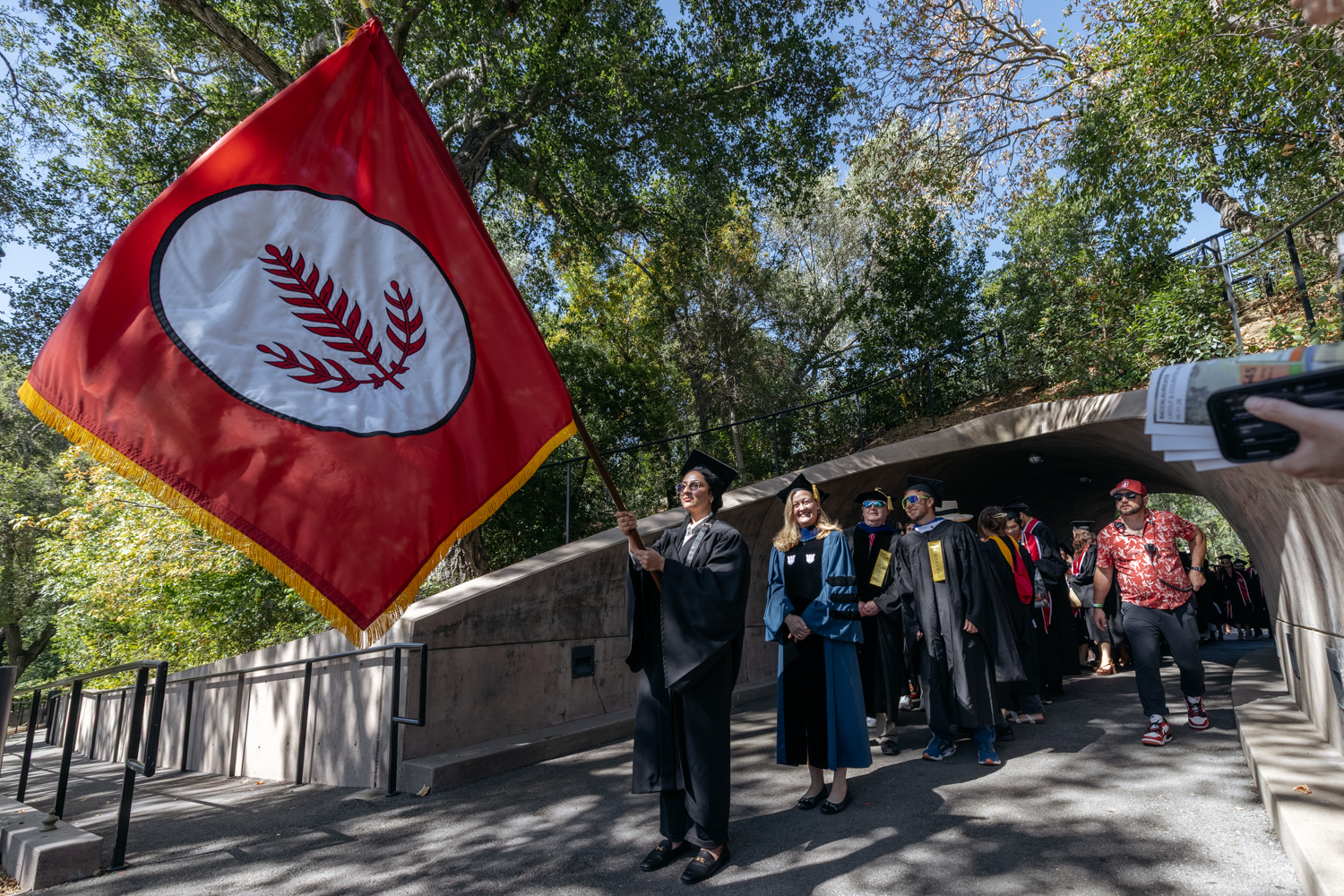
The flag bearer leads the Baccalaureate procession into Frost Amphitheater as part of Stanford’s 135th Commencement celebrations.
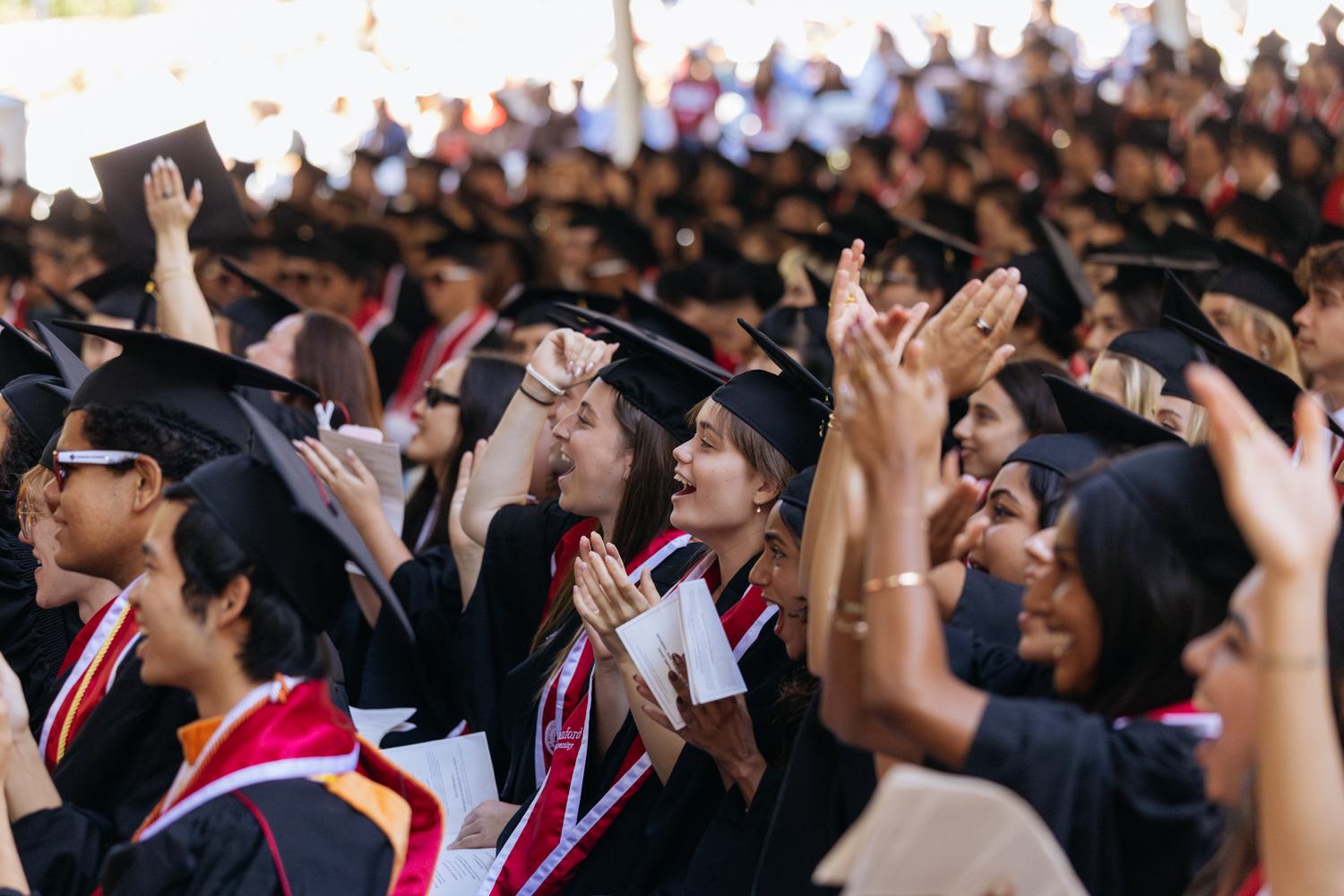
A full house fills Frost Amphitheater for the celebration.
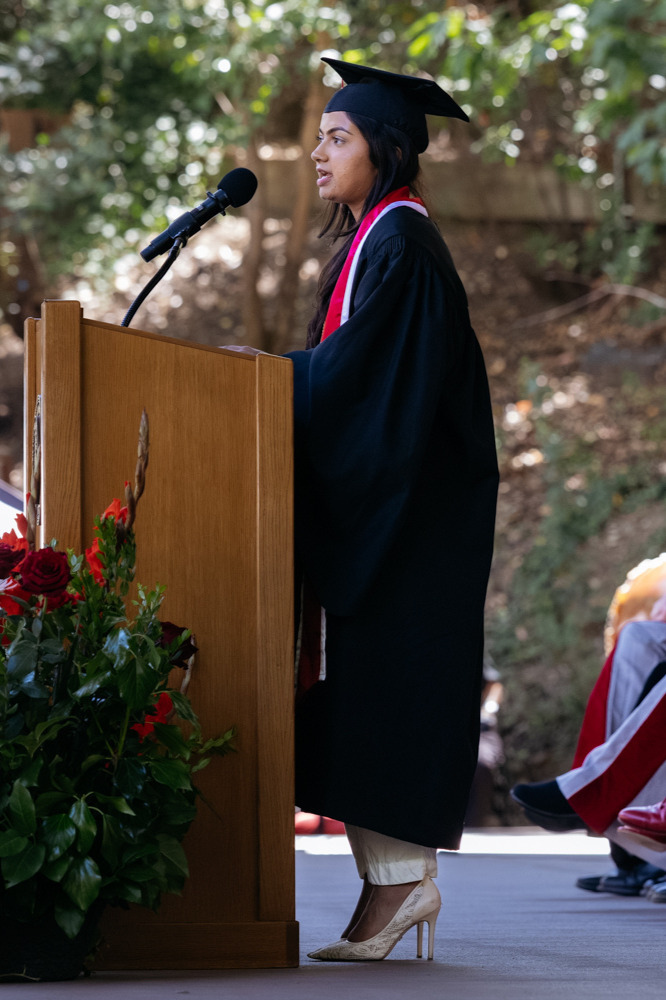
Student speaker Lamya Butt tells graduates, “When the worries feel too heavy, we know there is something we can always turn to: the people around us.”
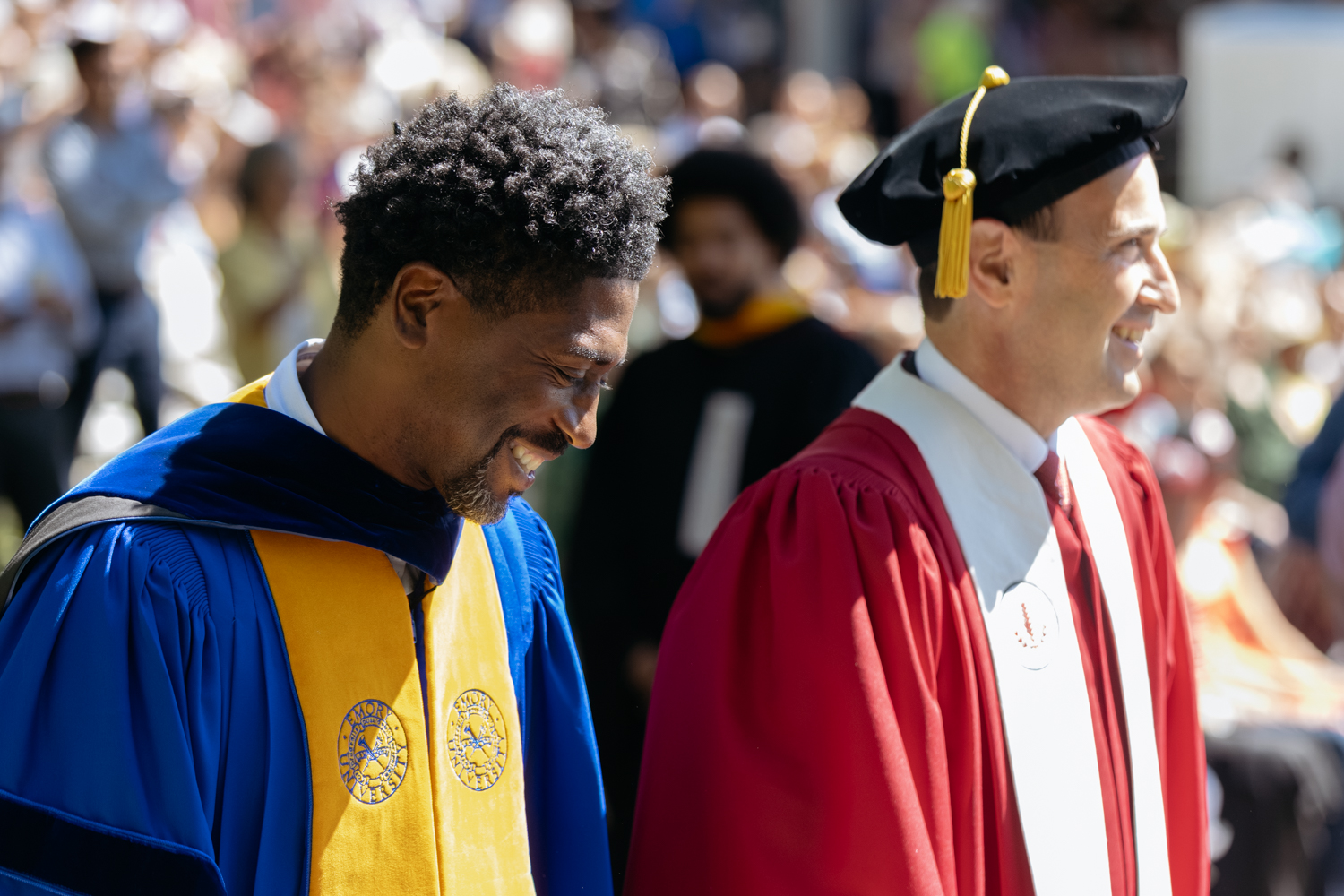
Lerone A. Martin and Stanford President Jonathan Levin at the ceremony.
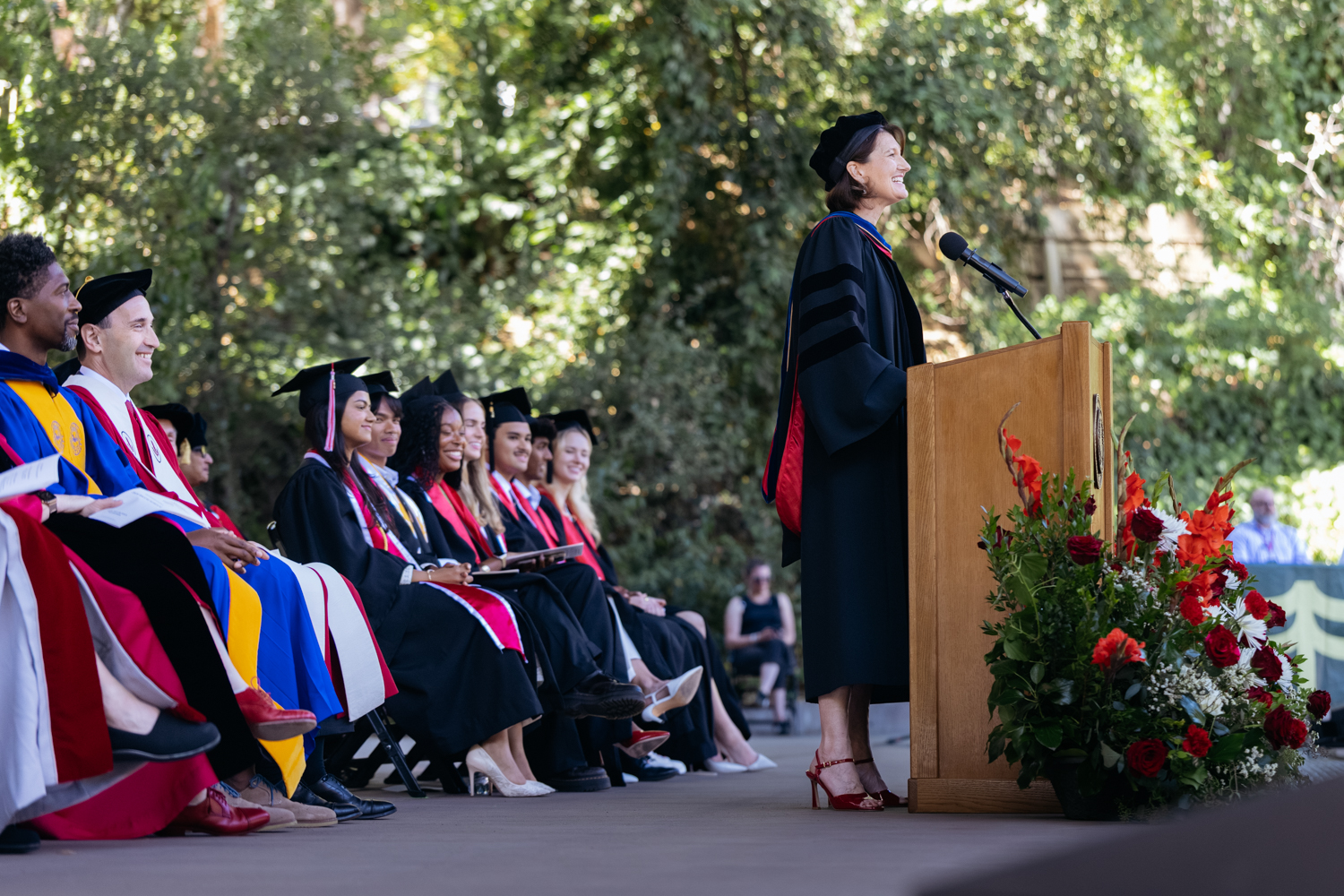
Tiffany Steinwert, the university’s dean for religious and spiritual life, reflected on the Baccalaureate ceremony as marking the end of one journey and the beginning of another.
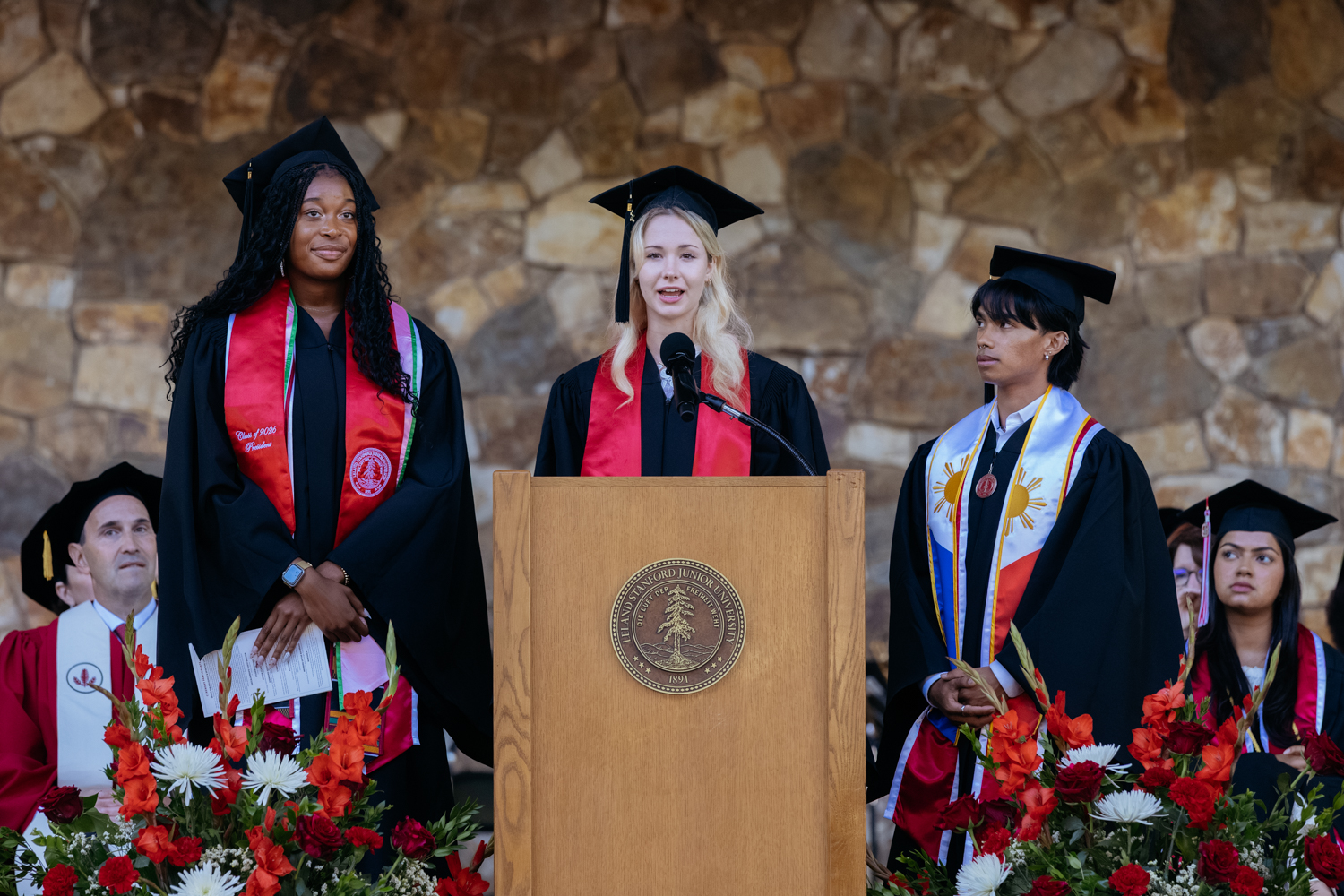
Graduating seniors Gabrielle Edelin (left), Aili McGregor (middle), and Pierre Dagsi recite an excerpt of Walt Whitman’s poem, “Song of the Open Road.”
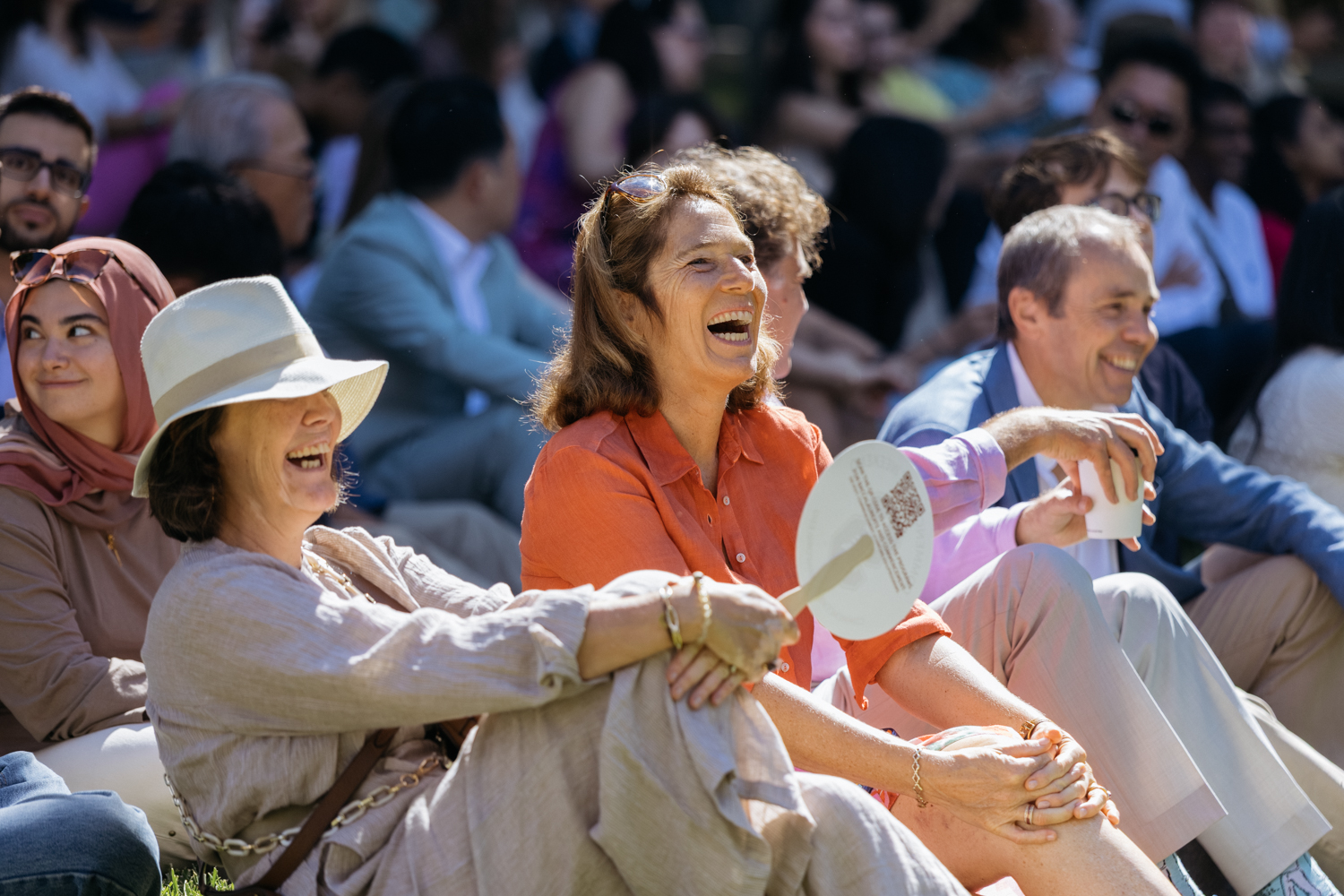
Stanford families cheer on their graduates in the Class of 2026.

Stanford Taiko performs for the crowd.
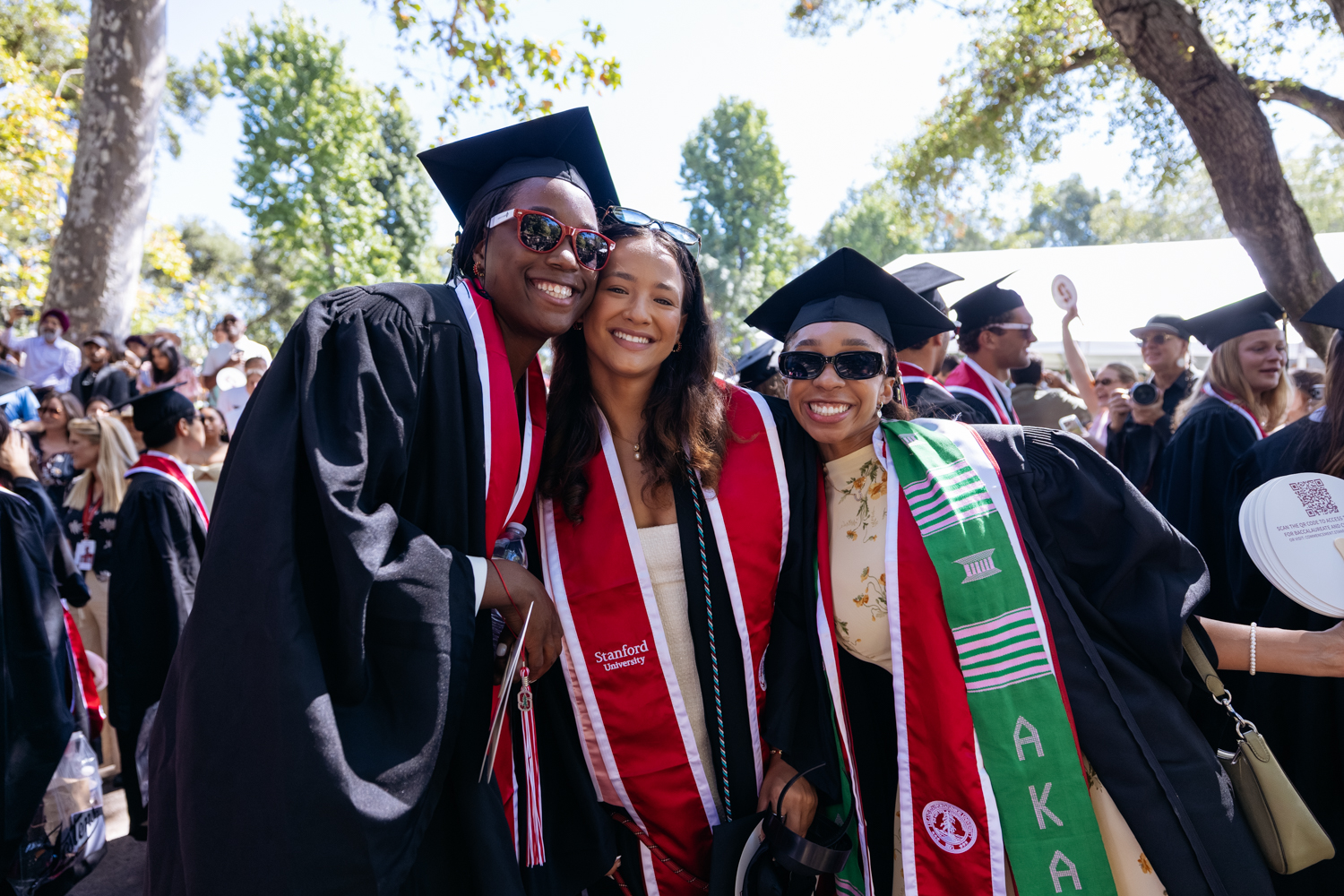
Graduating seniors smile for a quick portrait.

A proud family celebrates another graduation with their daughter.
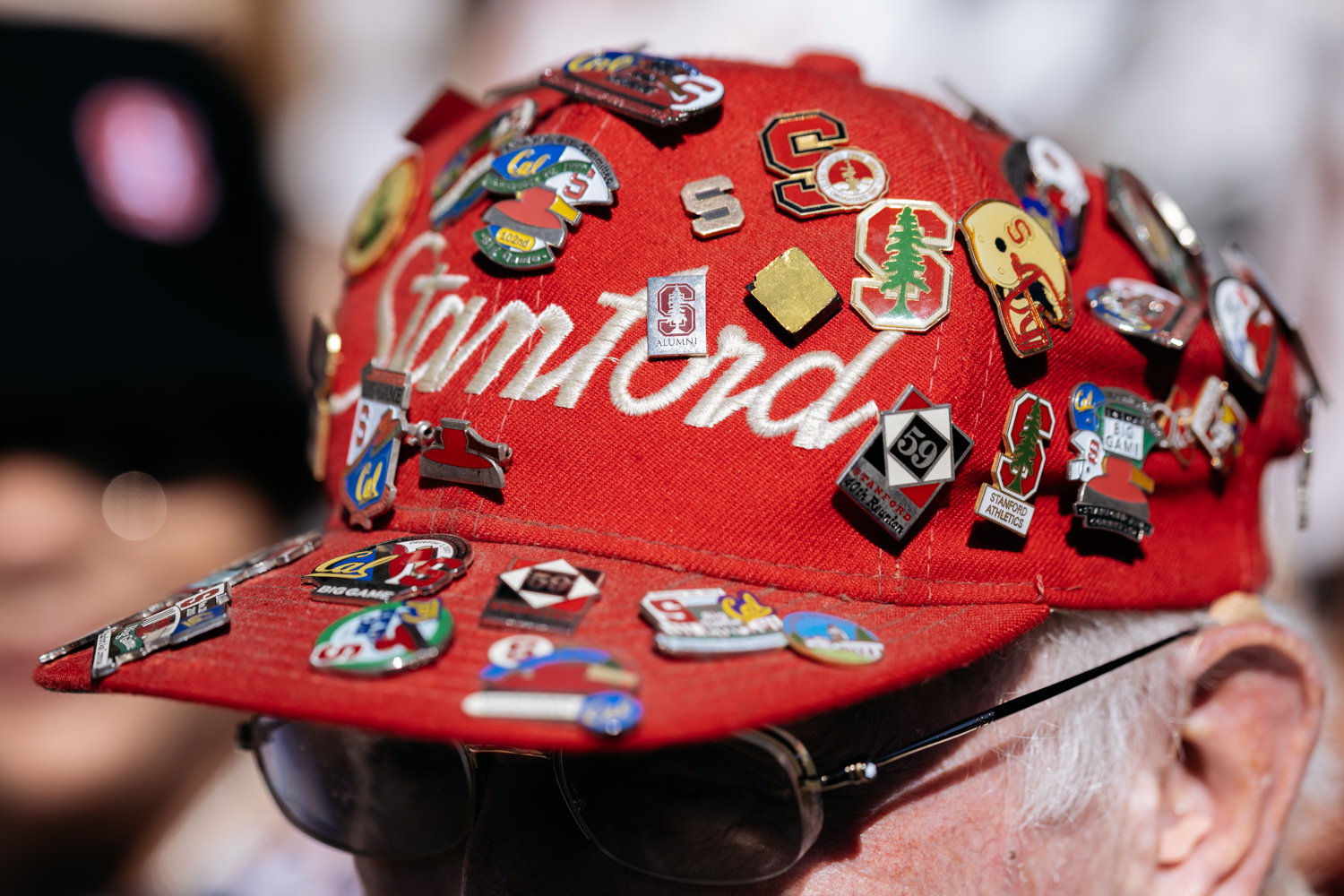
An attendee shows off his Cardinal cred with an extensive pin collection.
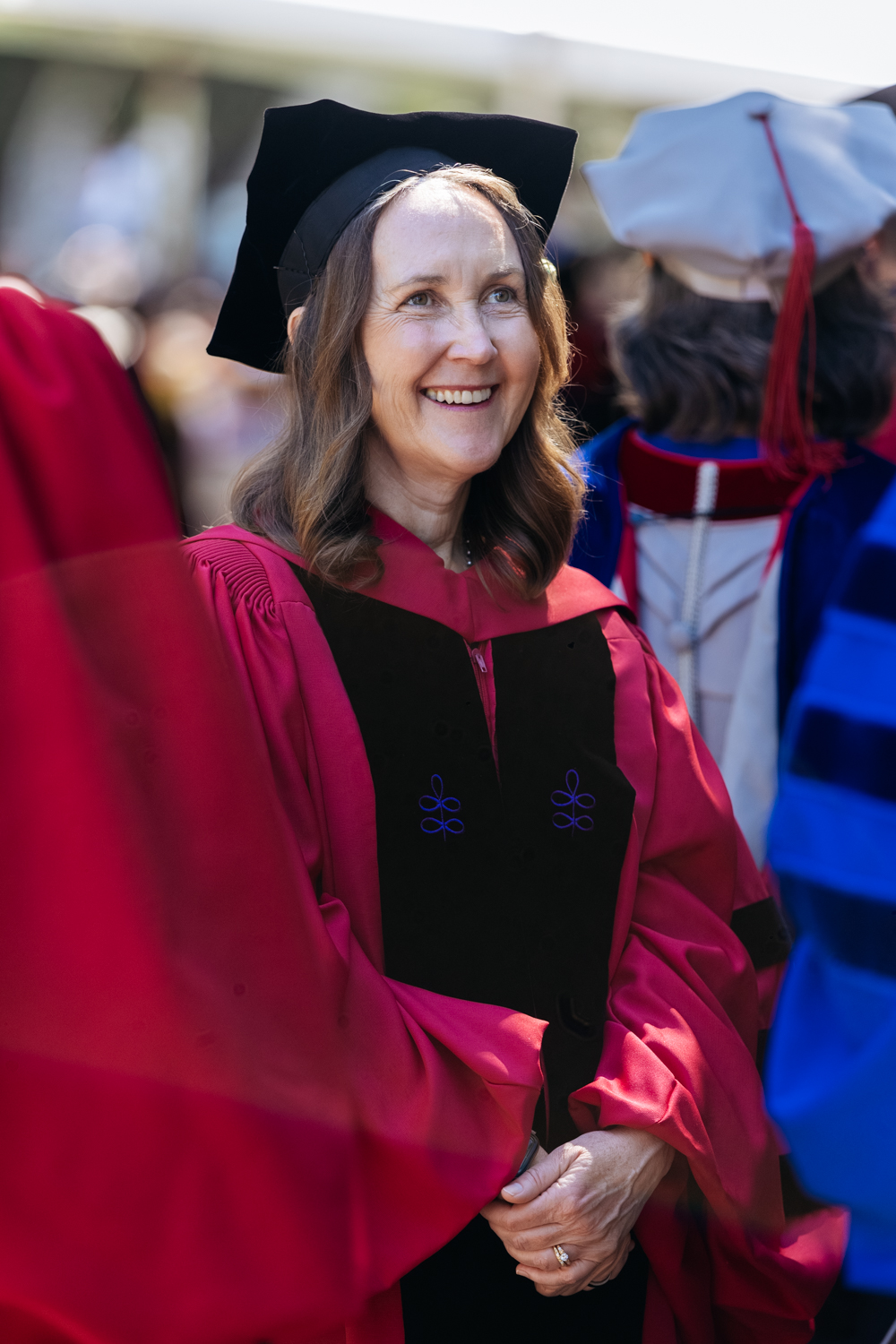
Stanford Provost Jenny Martinez celebrates the Class of 2026.
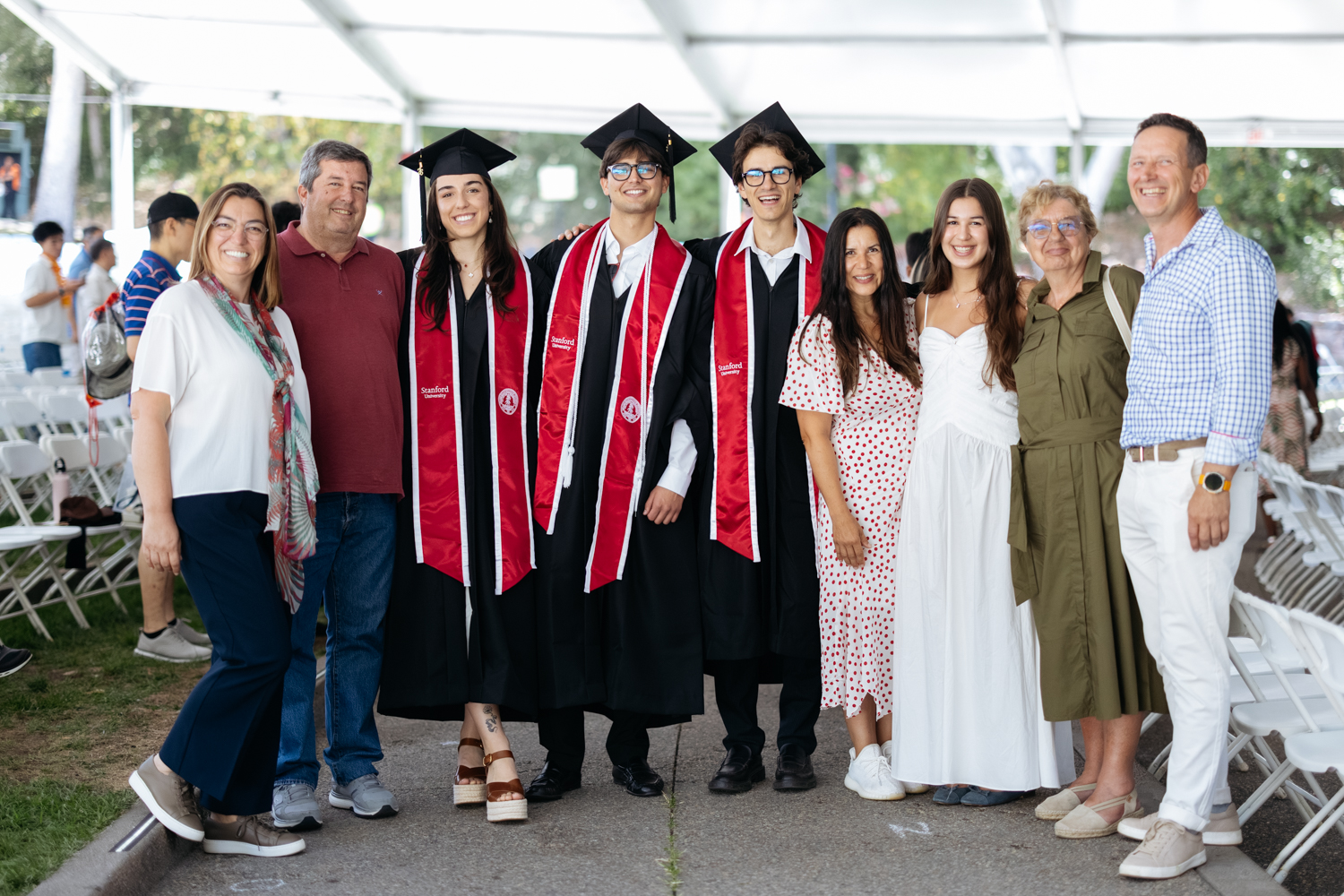
Families of graduates filled Frost Amphitheater for the ceremony.
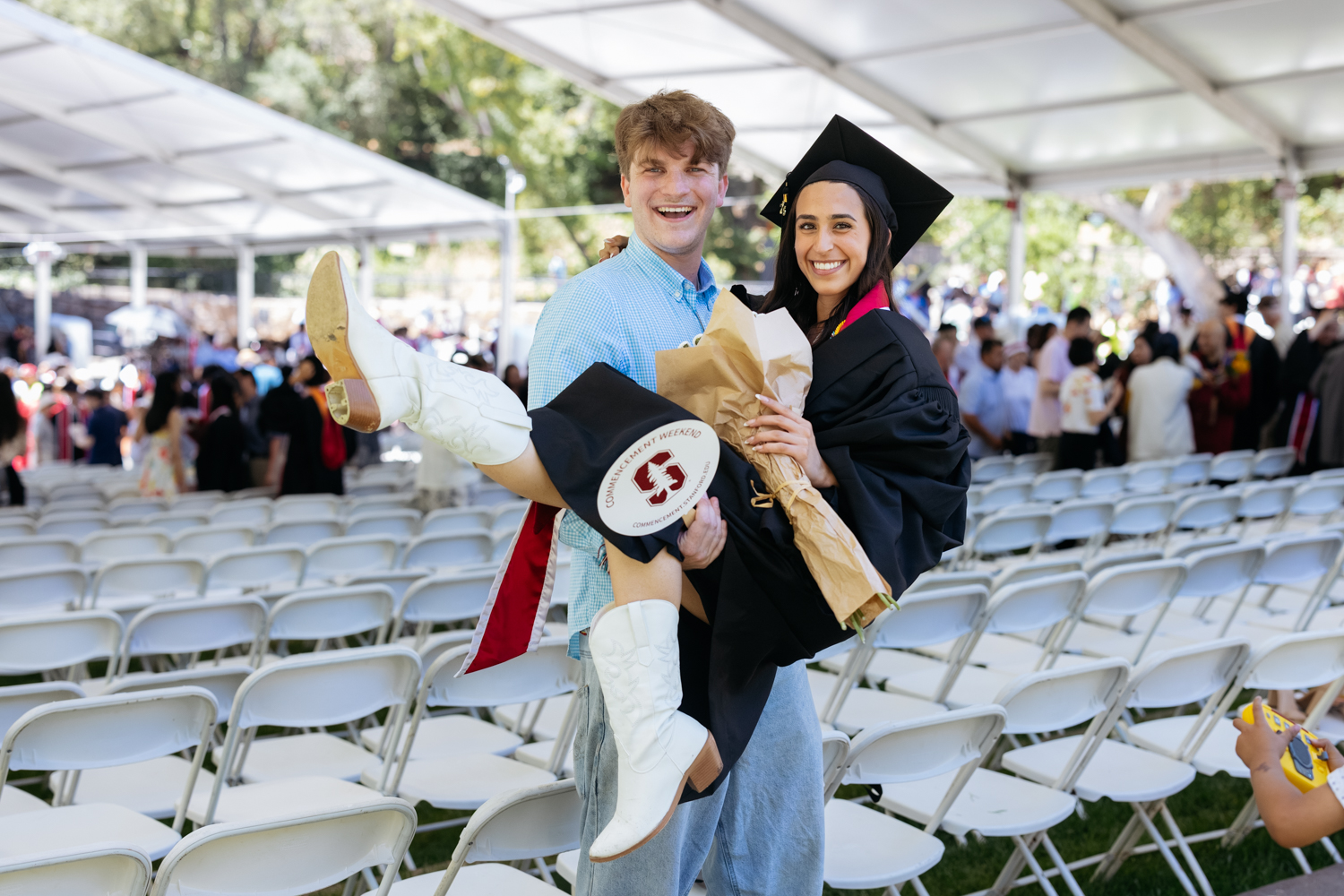
Celebrating graduating from the Farm – cowboy boots and all!
Martin, who is the Martin Luther King, Jr. Centennial Professor and director of Stanford’s Martin Luther King, Jr. Research and Education Institute and a prominent scholar in religious studies, opened his remarks by noting that, like many members of the Class of 2026, he arrived at Stanford in 2022.
“If you’re anything like me, when you arrived four years ago, you were in the midst of a whirlwind,” he said. After settling in as a new faculty member, he said, doubt and uncertainty crept in. He recalled thinking one night: “‘I’m here by myself. I don’t know anyone. What in the world was I thinking? Did I make the right choice? Did Stanford make the right choice?’ And now look at us.”
Building a complete life
Martin acknowledged all that students have accomplished since arriving at the Farm some four years ago.
He drew on Martin Luther King Jr.’s concept of a “complete life,” which he described as having three dimensions: length, breadth, and height.
The length of life, Martin explained, refers not just to longevity, but to the effort and ambition a person puts toward reaching their life goals. “All of you here, by virtue of the stoles you have on, made progress on the length of life,” Martin said, pointing to accomplishments like founding companies, earning fellowships, and securing jobs.
The second dimension, the breadth of life, is about engaging with the broader community.
Martin praised students in their pursuit to take care of one another.
“What I love so much about what we’ve done together in these four years is that we’ve also refused to adjust ourselves to being simply selfish,” Martin said. “You engaged in the breath of life by making community.”
Martin highlighted the efforts made during their time together to strengthen civic participation and community, ranging from the On Call Café, which was founded in 2023 to foster belonging, to “Constructive Conversations,” a graduate student-run dinner series, to ePluribus Stanford, a university-wide initiative launched in 2024 to deepen civic engagement and constructive dialogue across the student experience.
The third dimension Martin described was “the height of life” or “the reach toward transcendence.” In Martin’s retelling of King’s conception, this means going beyond oneself toward the spiritual, the artistic, and the pursuit of justice – all of which, Martin said, he has witnessed in the graduating class throughout their four years.
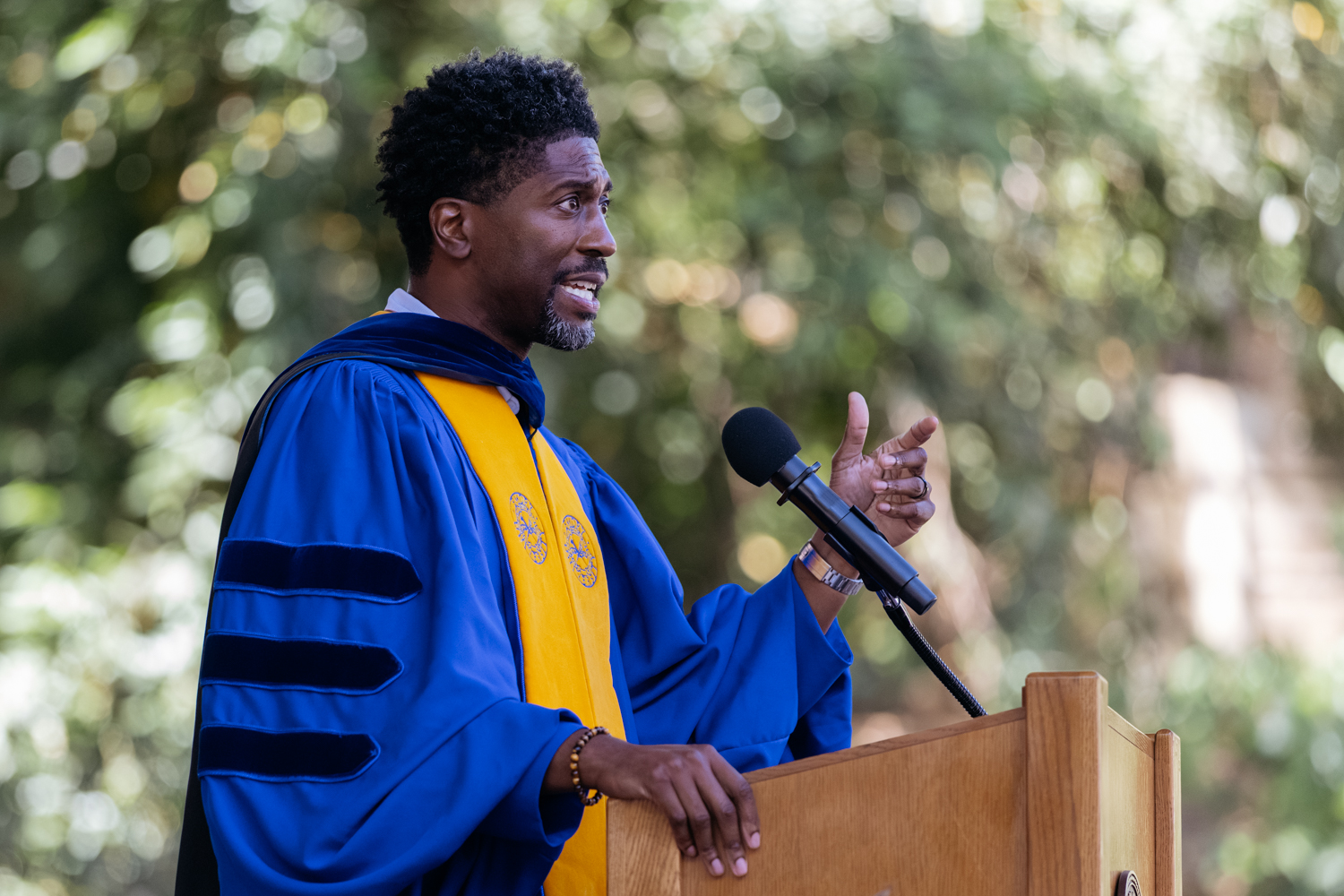
You engaged in the breath of life by making community.Lerone Martin
Martin closed by sharing three parables to emphasize the point that graduates are leaving Stanford with what they need to face future challenges.
He invoked God’s question to Moses, “What is that in your hand?” – and Moses’ realization that a staff could become an instrument of liberation. He recalled David felling Goliath with a few smooth stones. And he cited the Gospel account of Jesus feeding a multitude from one child’s offering of bread.
“That’s what I want you to think about when you receive your diploma,” Martin said. “What’s in your hand? What are you going to do when time comes to face the Goliaths, to face the social ills, to face all of them? There is no need for you to be afraid, because you know what’s in your hand.”
Wherever you go, Stanford goes with you
Following Martin was Lamya Butt, who was selected to deliver the Baccalaureate student reflection.
Butt, an economics major minoring in South Asian studies who is from Toronto and Dubai, opened by remembering how nervous she was when she first arrived at Stanford four years ago. For Butt, a first-generation, low-income international student, everything was new: coming to the United States, being on her own, going to college – all things no woman in her family had done before.
Her mother was worried about what lay ahead for her daughter. Butt recalled trying to reassure her, even as she worried about the same things herself.
“I know for a fact that we all have a version of ‘Don’t worry, I’ll be okay,’ that we have told our loved ones while we internally have questioned every part of our time at Stanford,” Butt said. And there was always something to worry about, whether it was her academics, internships, money, relationships, or finding a seat at Coupa on a sunny day.
“But when the worries feel too heavy, we know there is something we can always turn to: the people around us,” Butt said.
She urged her classmates to look around. As they did, Butt named the people in the crowd who had shown up for her: the roommate who got ready for class in the dark while she slept after all-nighters, the friend who attended every Ramadan iftar with her so she wouldn’t be alone.
Butt shared that she still worries about what comes next, but now she does not feel alone. “We will be okay,” she said. “Not because we are smart or driven, but because we have each other.”
She added, “As we leave Stanford tomorrow, Stanford will never leave us. It will be with us wherever we go.”
For more information
Martin is also a professor of religious studies and of African and African American studies in the School of Humanities and Sciences, and the Nina C. Crocker Faculty Scholar.
Writer
Melissa De Witte