


Stanford held an Open Minds: Staff Edition on March 25, bringing to campus an alumni speaker series that has toured the country over the past year. As with the events in Chicago, New York City, Los Angeles, San Francisco, and Washington, D.C., the afternoon focused on what makes Stanford extraordinary, but this time, the audience was the people who make the university run.
The event drew nearly 3,500 attendees and online viewers and featured remarks by President Jonathan Levin, a wide-ranging conversation with business executive and Stanford trustee Nadia Rawlinson, an improv icebreaker, and mini-lectures by three faculty members on topics ranging from a free global coding program to cultural norms to a pioneering heart transplant technique.
Levin set the tone early. “You really do make everything that happens here possible,” he told the staff audience.
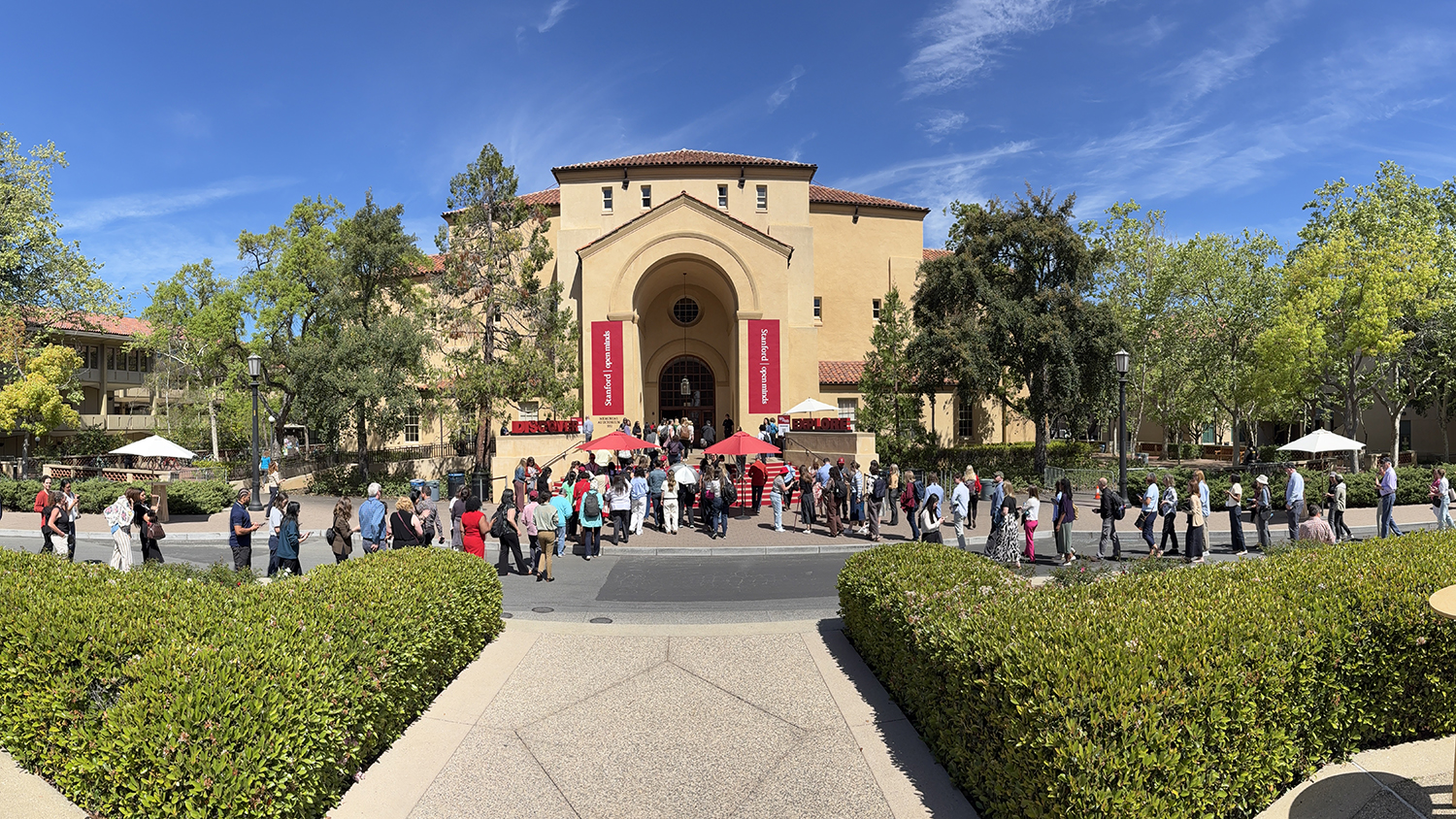
Staff line up to attend the first Stanford Open Minds: Staff Edition at Memorial Auditorium. | Erin Sonnenschein
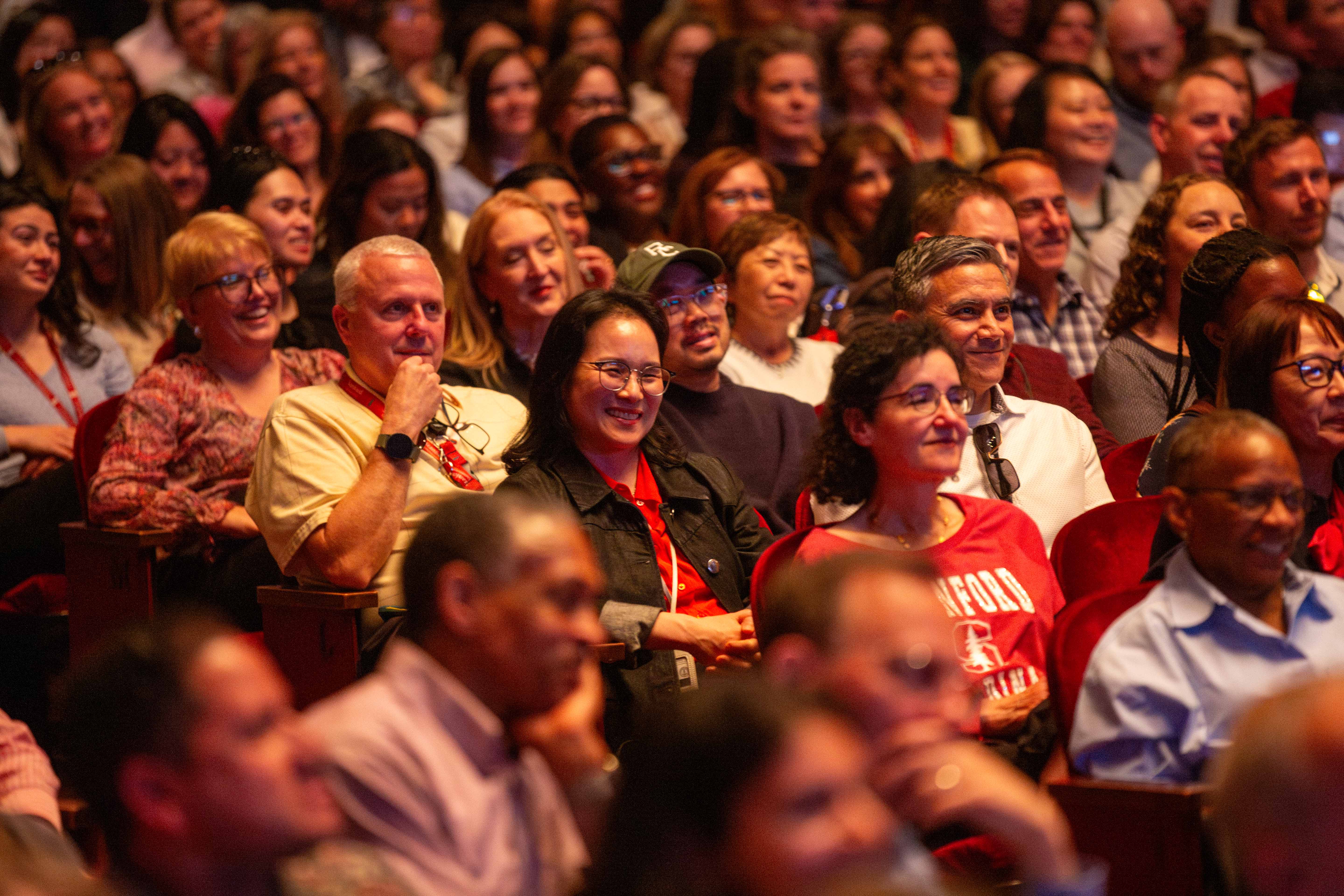
Nearly 3,500 staff attended in person or online. | Herschell Taghap
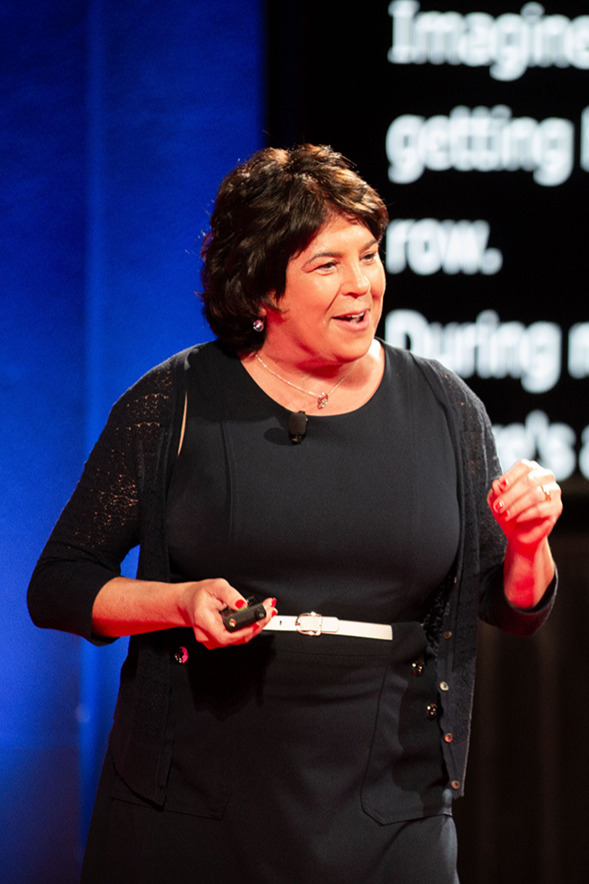
Professor Michele Gelfand delivers a mini-lecture about social norms. | Herschell Taghap
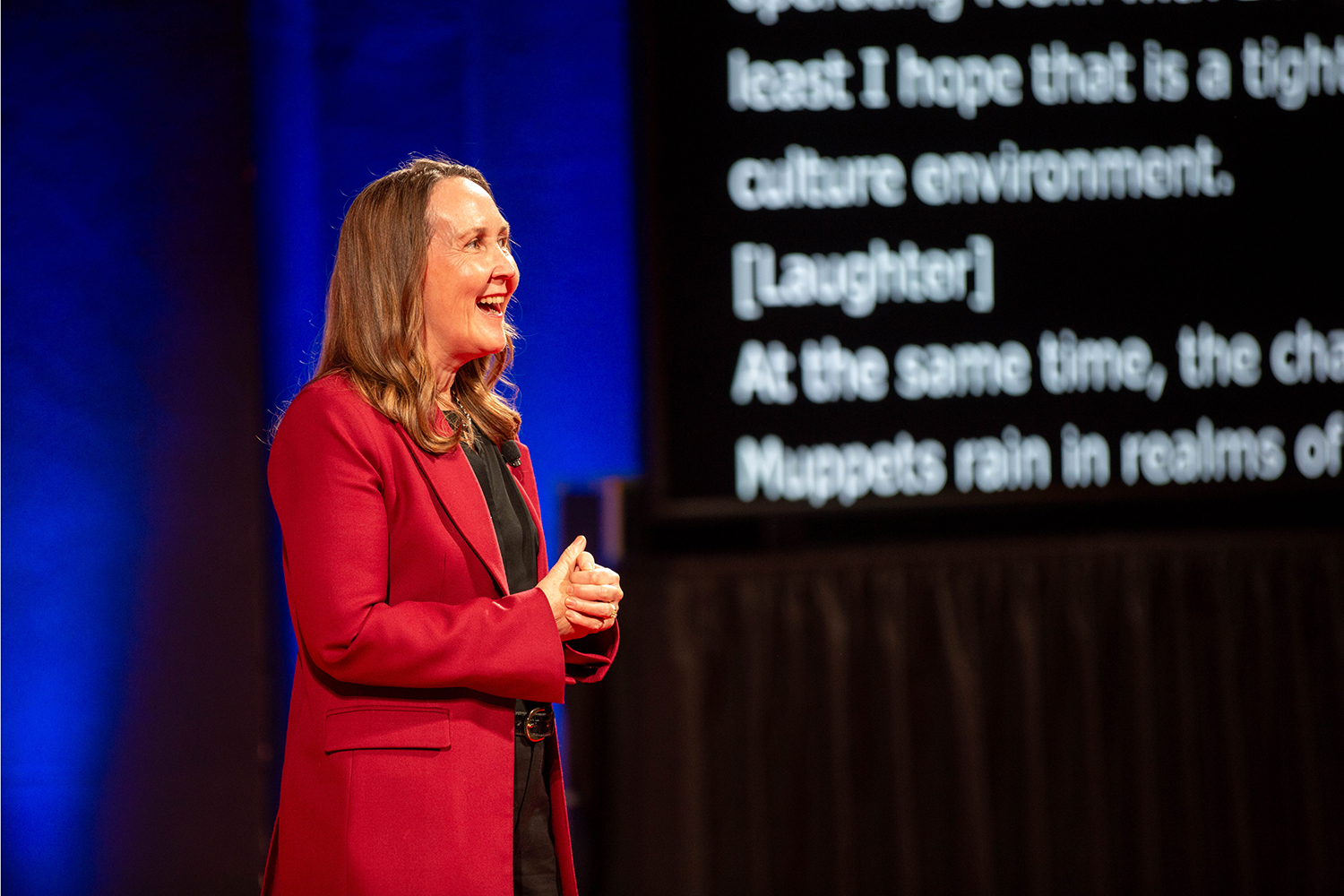
Provost Jenny Martinez welcomes Stanford employees: “You really are, as staff, the glue that keeps this university together.” | Herschell Taghap
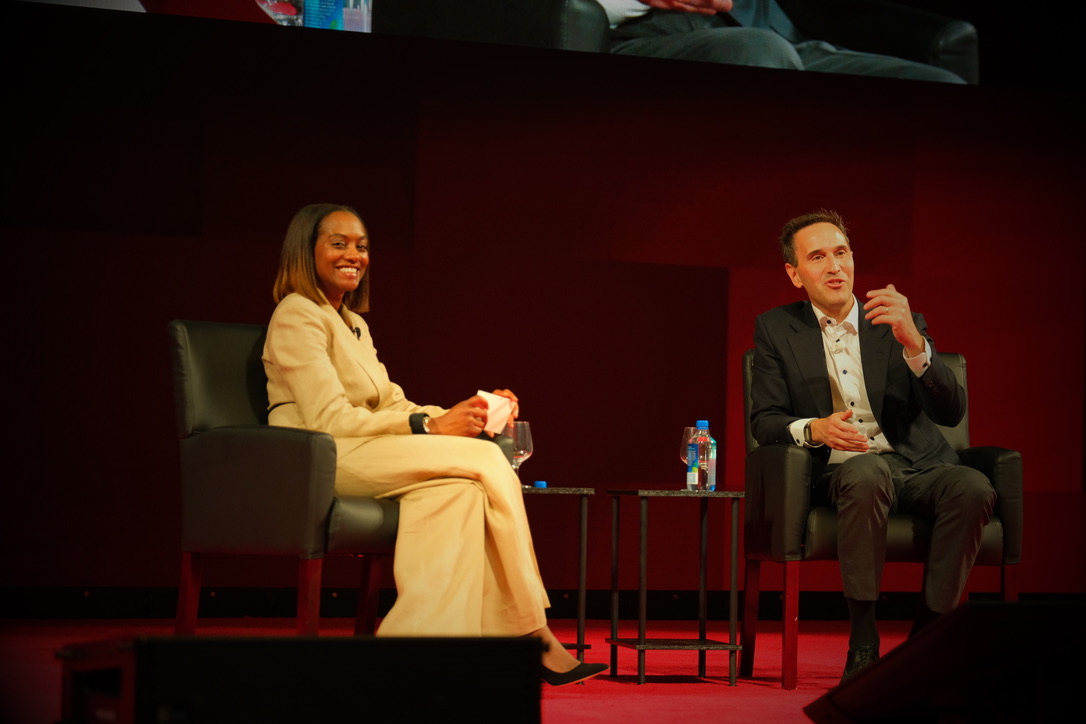
President Jonathan Levin and Stanford trustee Nadia Rawlinson share a laugh on stage. | Erin Sonnenschein
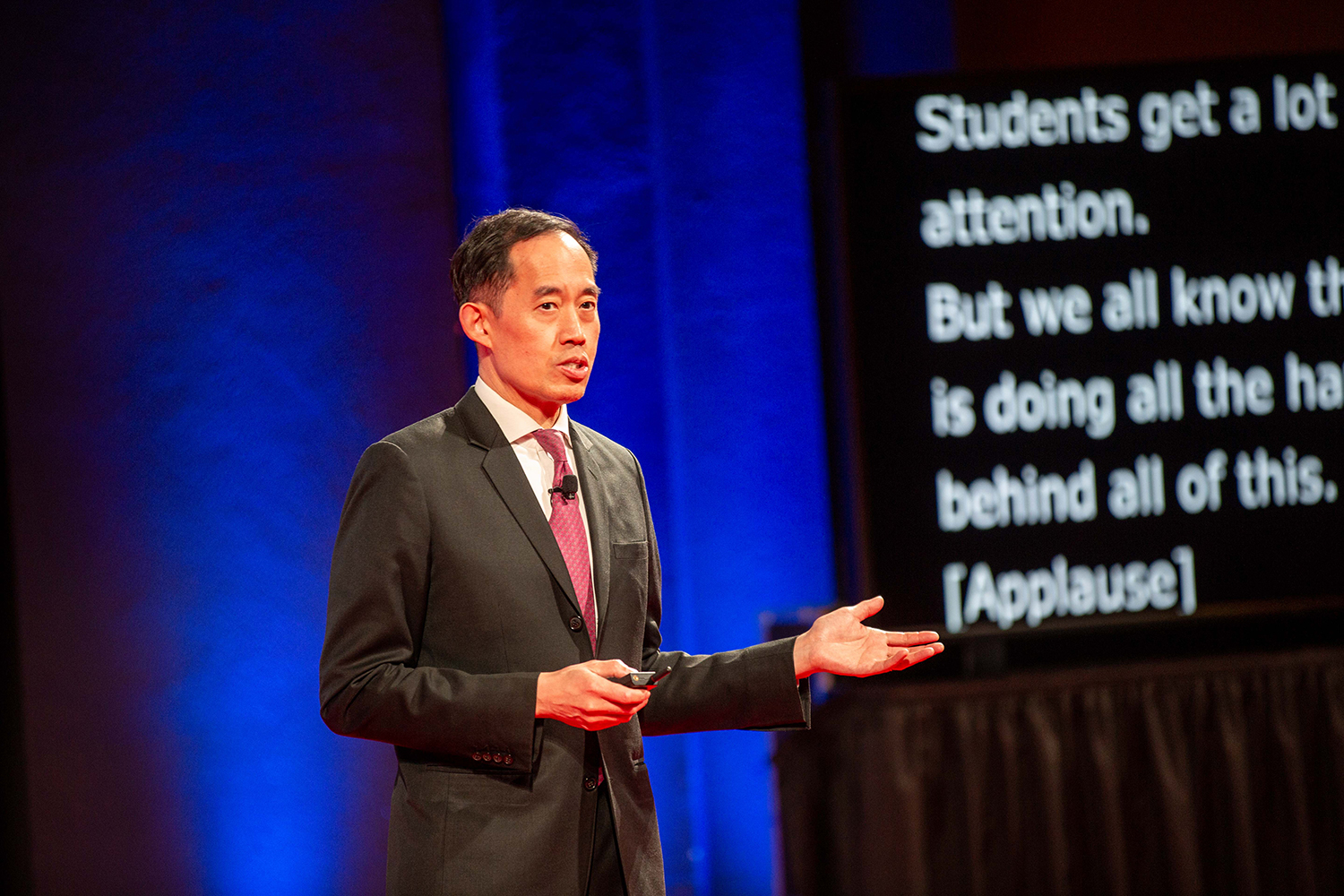
Dr. Joseph Woo, a cardiac surgeon and Stanford professor, delivers a mini-lecture about a new technique for transplanting a human heart while it continues to beat. | Herschell Taghap
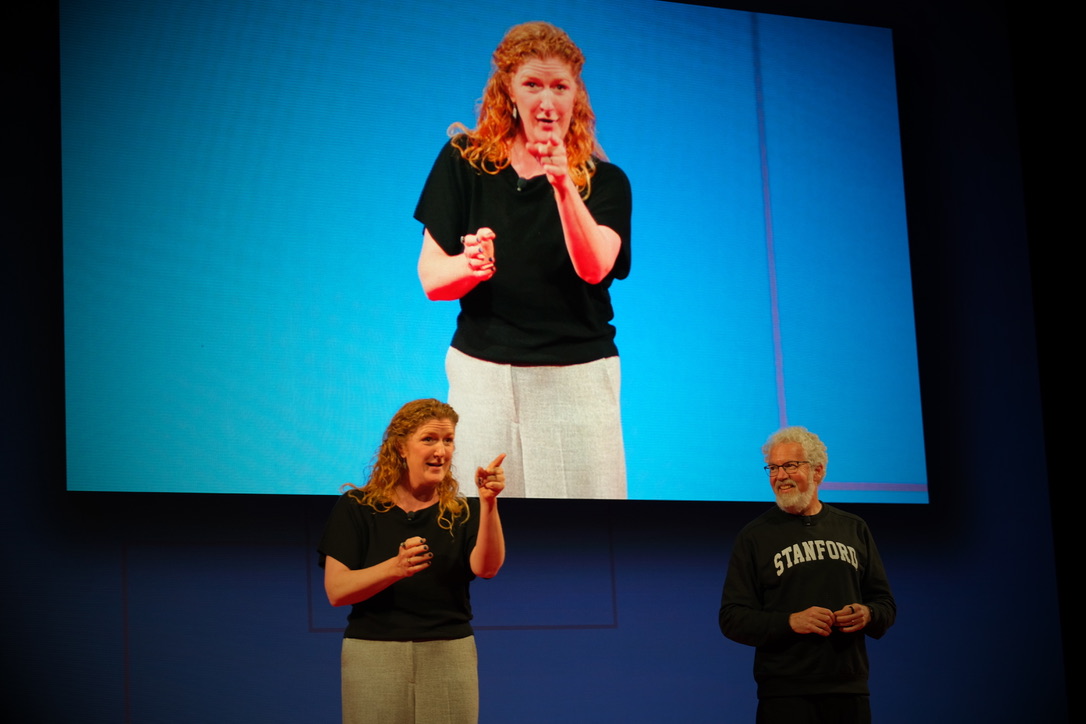
Dan Klein, ’91, and Lisa Rowland, ’05, both lecturers in the Department of Theater and Performance Studies, lead an icebreaker exercise. | Erin Sonnenschein
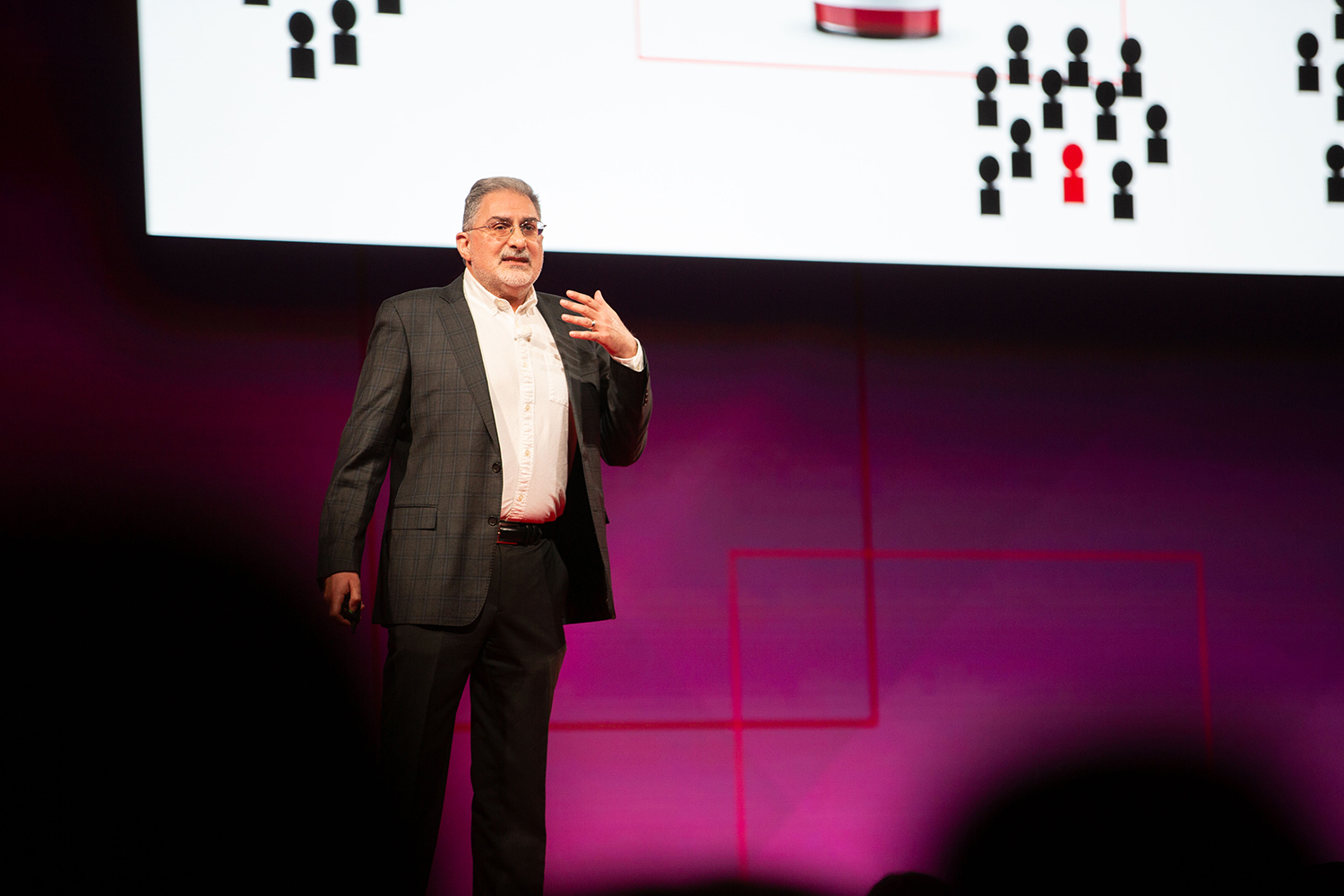
In a mini-lecture, Mehran Sahami, a professor of computer science, discusses Code in Place – a free, global coding course built on Stanford’s introductory CS curriculum. | Herschell Taghap
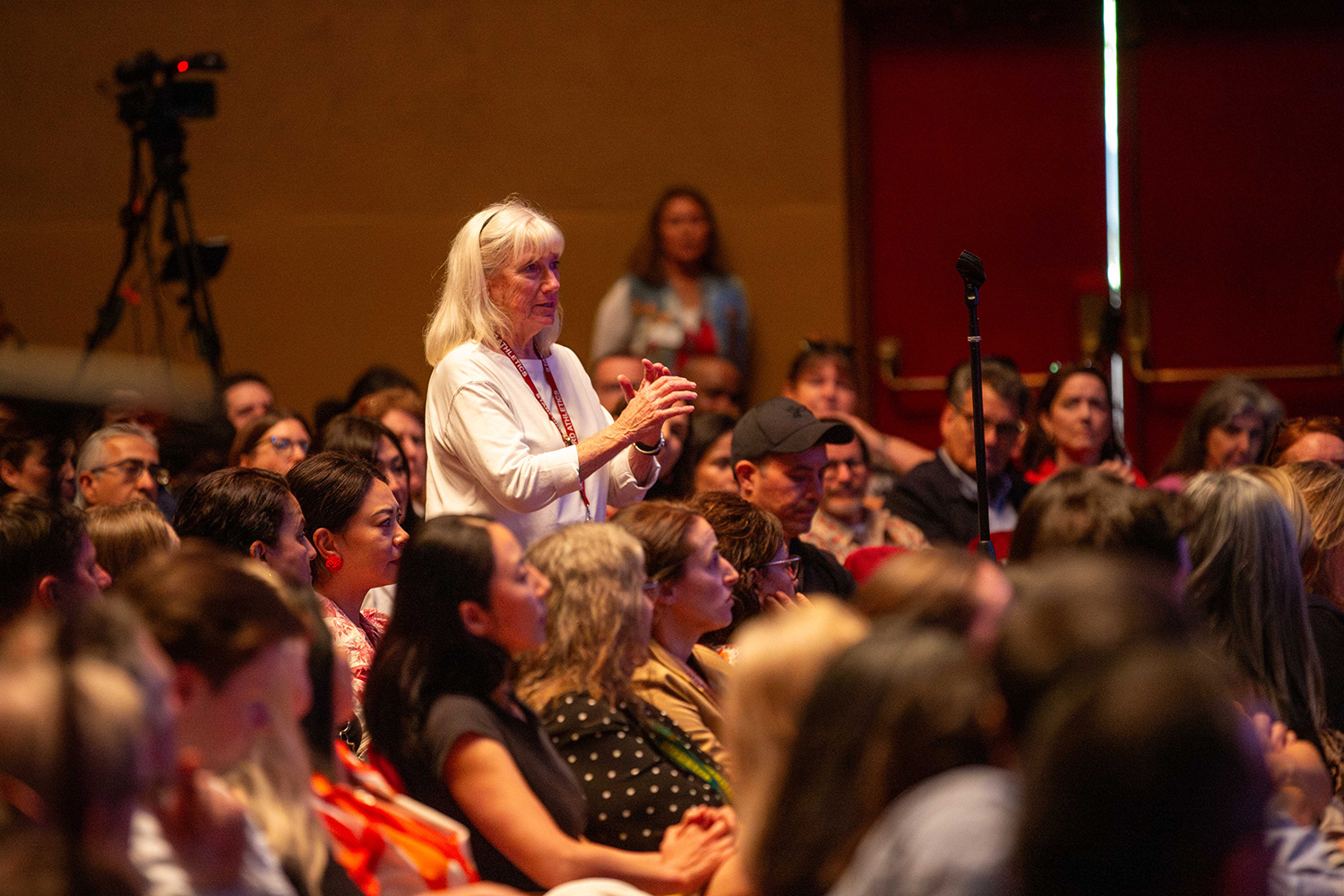
Cathy Haas, a lecturer at the Stanford Language Center, asks about AI and sign language during the audience Q&A with President Levin. | Herschell Taghap
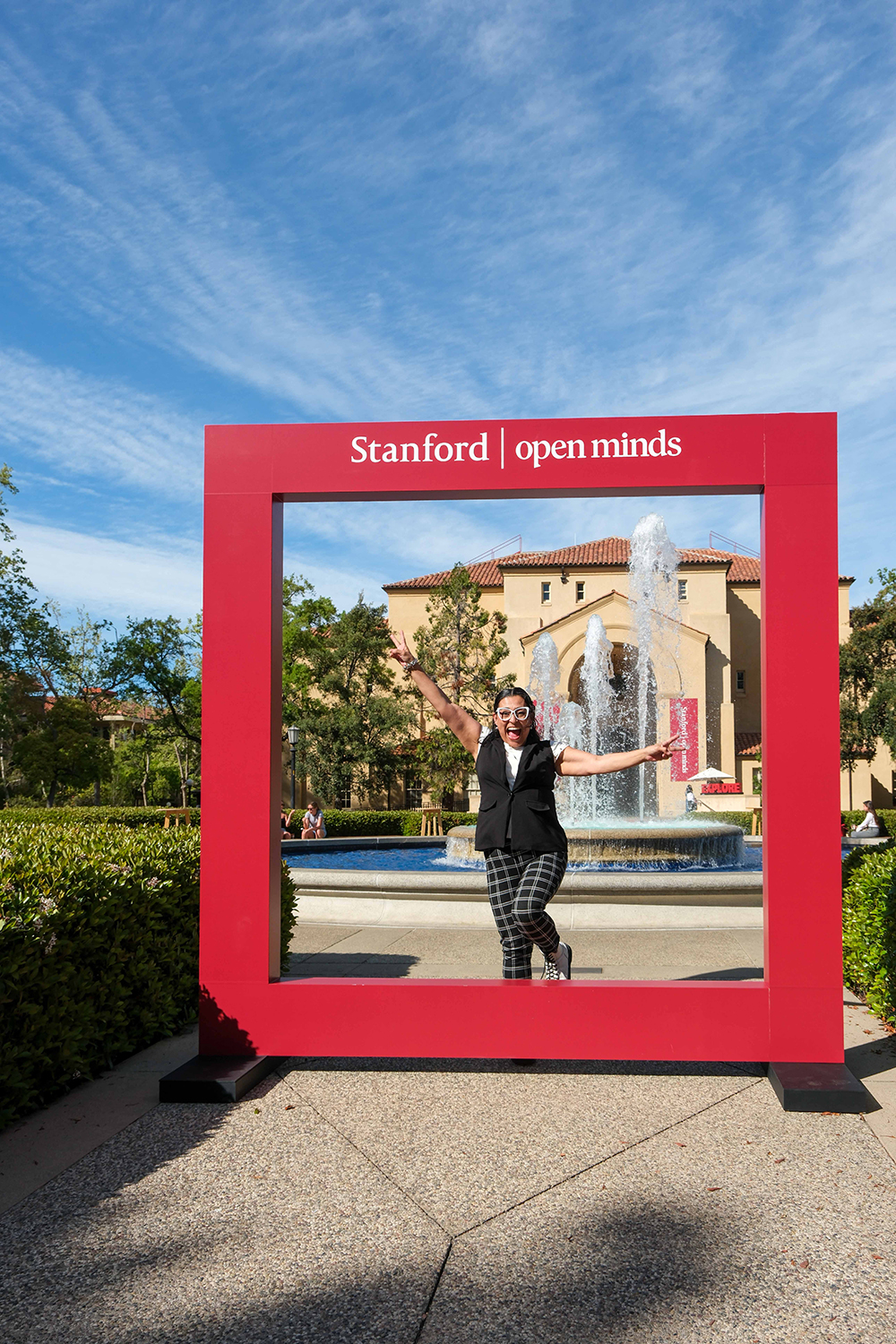
A staffer shows her love for Stanford. | Monica Chua
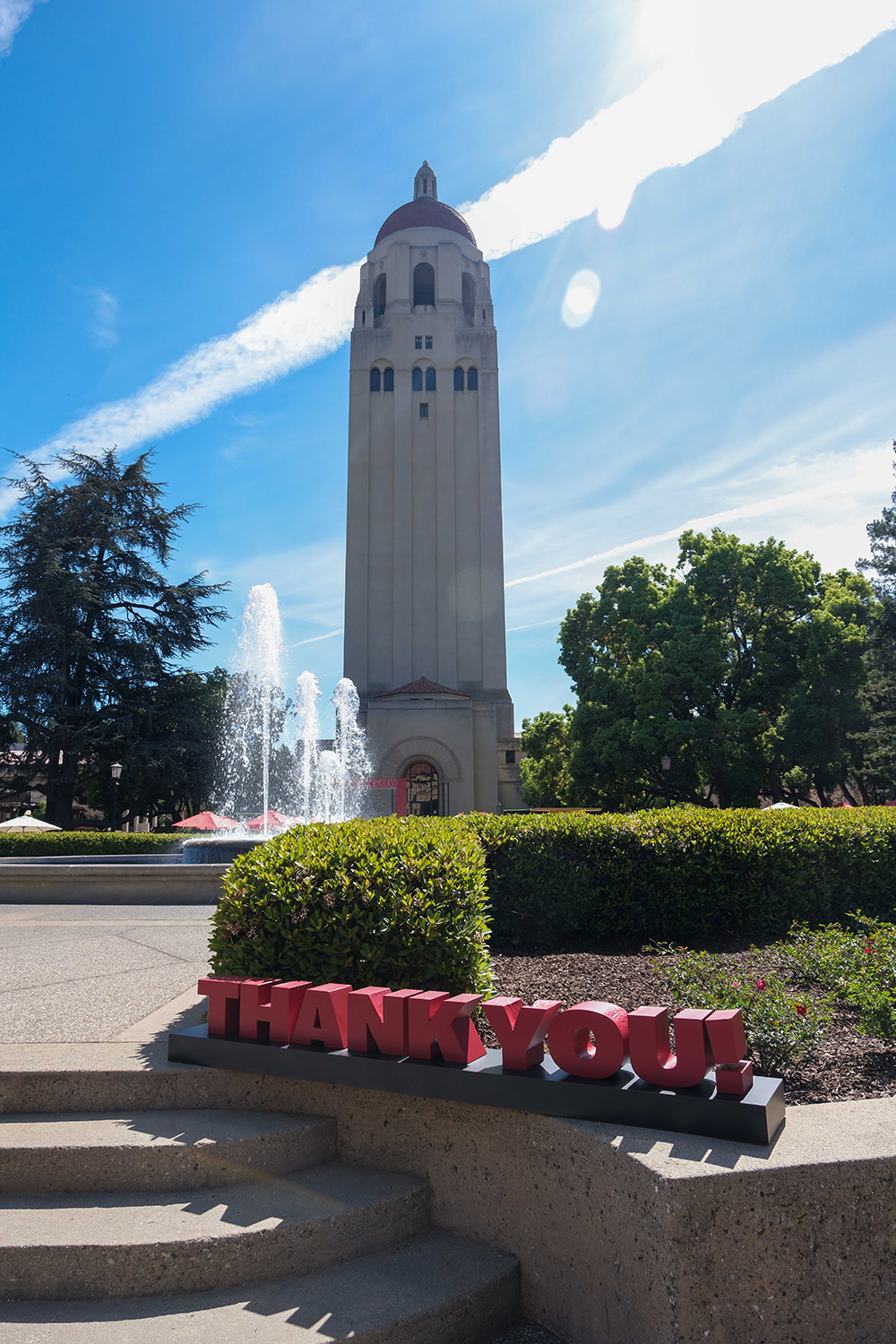
Stanford hosts a block party below Hoover Tower to celebrate staff. | Monica Chua
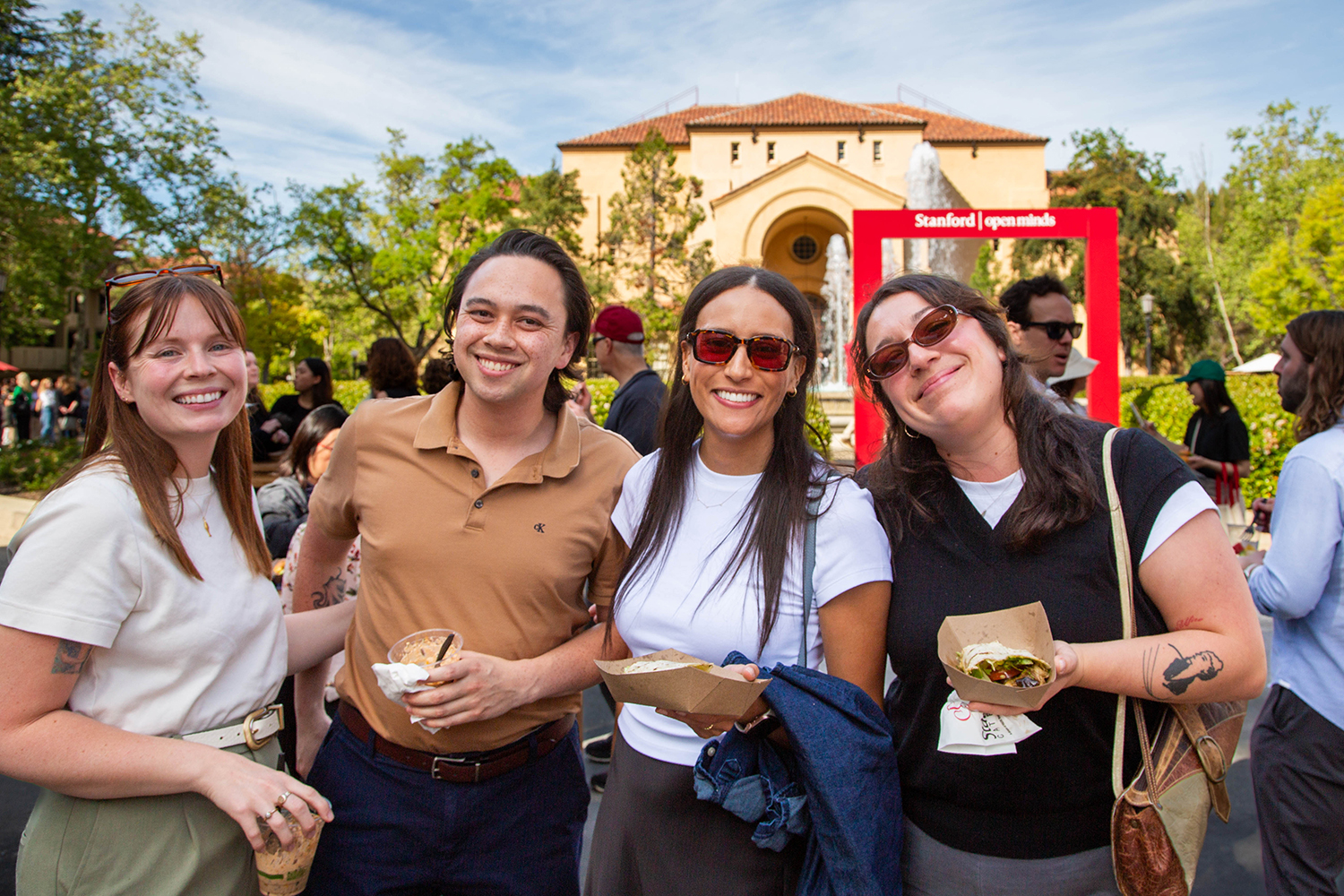
Staffers gather for the block party. | Herschell Taghap
Asked about his vision for the university, Levin said that during this period of challenge for higher education, it’s important to return to first principles and ask, “What are we about here? What is the purpose of a place like Stanford?”
Research universities like Stanford have a very distinctive role in the world, he continued. “We’re the source of ideas and innovation in this country. We’re one of the reasons people want to come to the United States from all over the world.”
That mission depends on an outstanding staff who hail from across the Bay Area and the country. “We want [staff] to feel valued and respected and have a sense of dignity in their jobs and have a sense that people are curious about their experiences and want to learn from them,” he said. “To me, that’s the foundation of having a successful, diverse workforce.”
Budgets, AI, and athletics
For decades, American universities have benefited from a productive relationship with the federal government, one rooted in the decision after World War II to invest in basic research and house that work inside universities. Levin said that although events of the past year “rocked the foundations” of that arrangement, the outlook is improving, thanks to constructive efforts in Washington that have involved many Stanford faculty and staff, including the Office of Government Affairs.
“What we’ve seen in the last couple of months is that Congress has, in a bipartisan way, affirmed its support for university research and science,” he said, noting that federal bills signed this winter by the president will support university research at a level similar to prior budgets.
Levin said that while last year’s budget cuts and layoffs were painful, they made the university more financially stable. “This year we are happily in a position where … we’ll be able to have a normal salary program, we’ll be able to have staff bonuses.”
When asked about Stanford’s approach to AI, Levin acknowledged that it will have a profound impact on research and hopefully empower education, rather than serving as a crutch for thinking. AI will also change the nature of work, Levin said, though at Stanford, “So much of what we do is about interacting with other people and that’s not really something that we automate with computers.”
Levin said he hoped that working at Stanford, the frontier of the field, will give staff a natural advantage. “Everyone who works here will have a chance to learn about these tools and how to use them and get proficient,” he said. “That’s going to be a powerful skill, particularly if you couple that with a human part of interaction.”
Rawlinson noted that the landscape of college athletics has been upended by conference realignment, revenue sharing, and NIL (name, image, likeness) rights. To manage the volatility, Levin said the university has set three goals: preserving the student-athlete model, developing a financially sustainable model for all sports, and winning. To that end, Stanford has hired new staff, including Andrew Luck as general manager of Stanford football and John Donahoe as director and chair of Stanford Athletics.
Levin said sports are special because they bring people together and invited all staff to experience it for themselves: On Sept. 4, Stanford plays its first ACC game of the season against the University of Miami, and Stanford will host an all-staff tailgate beforehand.
Excellence, openness, and optimism
The conversation ended with an audience Q&A. Kirsti Copeland, associate dean for student affairs in the School of Engineering, asked how Stanford is leading the ethical deployment of AI. Levin pointed to the Institute for Human-Centered Artificial Intelligence, launched in 2019 to advance AI research, education, and policy in ways that improve lives.
We’re the source of ideas and innovation in this country. We’re one of the reasons people want to come to the United States from all over the world.Jonathan LevinStanford President
“We need to remember to keep [humanity] at the center of the way we approach technological questions,” Levin said, “even as we push the frontier out on the technology, we connect it back with the humanities, with ethics, with other ways of thinking about the world.”
Jack Reidy, a chemical hygiene officer with Stanford Environmental Health & Safety, asked if diversity initiatives, like IDEAL, which was sunset last year, would return. Levin said that while IDEAL had real successes over the years, it was never designed to be permanent, but rather to catalyze activity across the university. He also noted that the legal landscape had shifted, changing what universities could do not only in admissions but across student programs more broadly.
Still, two lessons from IDEAL are worth carrying forward, he said. The first is outreach: Stanford has redesigned its approach to use alumni to visit schools around the country and talk to students long before they’re applying to college – not just to grow Stanford’s own applicant pool, but for all universities. “I think that will be something that will be good, not just for us, but for the country generally,” he said.
The second lesson was closer to home. IDEAL, he said, gave people across campus the chance to take initiative and help build community. “I think that was really valuable,” he said. “I think we can find ways to do that going forward that will be equally empowering and be a source of pride and community among the staff.”
Joseph Flynn, who works in development in the School of Humanities and Sciences, asked about institutional neutrality. Levin said that, for a period, campus leaders often rushed to publish statements responding to world events, but such actions, he argued, set a bad example for students.
“Part of what we want students to do is to recognize that most issues in the world are more complicated than they might first appear, that [there are] different ways to look at things, that they should think slowly and listen to a bunch of people to get different perspectives before forming an opinion,” he said.
A university, Levin reflected, is by nature a little frictional. Stanford brings together young people with strong convictions, faculty with strong opinions, and staff committed to supporting work across campus. “What makes the university run well,” he said, “is when that friction doesn’t generate heat. It generates light.”
Faculty mini-lectures
Before the faculty talks, the audience was given an unusual assignment: Stand up, introduce yourself to a stranger, and invent a secret handshake in 30 seconds.
As pairs and trios got to work – bumping fists, snapping fingers, adding flourishes – Memorial Auditorium erupted into laughter and flailing elbows as employees from across the university reveled in a rare moment of shared silliness.
The icebreaker exercise was co-led by Dan Klein, ’91, and Lisa Rowland, ’05, both lecturers in the Department of Theater and Performance Studies. It was followed by a second one in which audience members paired up and invented shared memories out of thin air, building on each other's fictions without correction or hesitation.
In the first faculty mini-lecture, Mehran Sahami, a professor of computer science, described how Code in Place – a free, global coding course built on Stanford’s introductory CS curriculum – grew from a pandemic experiment into a program that has now reached more than 50,000 learners worldwide. None of it, he was quick to say, happened without help. “It really takes a village, and that village is you,” Sahami told the crowd, rattling off the names of staff who built the platform, handled compliance, managed alumni outreach, and secured funding. “We could not have done it without you.”
Michele Gelfand, a professor of organizational behavior, explained the science of “tight” and “loose” cultures – the former characterized by strict social norms and reliable punishments for breaking them, the latter by openness and a wider range of acceptable behaviors. Her research suggests that the most functional groups find a dynamic balance between the two. Stanford, she argued, does exactly that – and the staff deserves much of the credit. “All the amazing Stanford staff,” she said simply as her final slide appeared, “make our lives so much easier.”
Joseph Woo, a cardiac surgeon and professor, shared the story of how his team pioneered a technique for transplanting a human heart while it continues to beat, reducing the need for mechanical support after surgery from roughly 35% of patients to zero. The innovation, now spreading to centers in Taiwan, Vienna, and Italy, required contributions from nurses, researchers, operating room staff, the Office of Technology Licensing, communications, and development. “The faculty receive all the accolades,” Woo said, but “we all know that the staff is doing all the hard work behind all of this.”
Provost Jenny Martinez, who closed the program, put it simply: “You really are, as staff, the glue that keeps this university together.”
She then invited the room to stand – first those who had worked at Stanford for 30 years or more, then 20, then 10, then five, then anyone who had joined in the last five years – until the entire hall was on its feet.
Staff share what they do in a video celebrating the diverse professionals who work behind the scenes to support students, faculty, alumni, and the Stanford community.
For more information
Staff with ideas for building community on campus can also apply for a Staff Campus Engagement Mini-Grant through the Office of Community Engagement.
Mehran Sahami is the Tencent Chair of the Computer Science Department and the James and Ellenor Chesebrough Professor in the School of Engineering.
Michele J. Gelfand is the John H. Scully Professor in Cross-Cultural Management and professor of organizational behavior at Stanford Graduate School of Business, and professor of psychology, by courtesy, in the School of Humanities and Sciences.
Joseph Woo is a professor and chair of the Stanford Medicine Department of Cardiothoracic Surgery and associate director of the Stanford Cardiovascular Institute. He is also the Norman E. Shumway Professor of Cardiothoracic Surgery and professor, by courtesy, in the Department of Bioengineering.
Writers
Alex Kekauoha
Ker Than