In brief
- Stanford researchers linked a newly paved Peruvian Amazon highway to a sharp rise in nearby dengue cases, with transmission risk falling off the farther a community sat from the road.
- Mosquitoes may have hitched rides on vehicles along the highway, with their first detection in nearby healthcare facilities closely mirroring the road’s paving.
- The findings offer governments a critical framework for weighing public health costs before approving road construction in remote areas.
New roads bring changes to the regions they traverse. They can enable job opportunities, access to medicine and healthcare, and electricity. But they also disrupt local ecosystems and can have surprising consequences for human health, including increased disease risk.
A Stanford-led study, published July 2 in Nature Sustainability, found that, in the 14 years after a new road was paved through a previously isolated portion of the Peruvian Amazon, cases of dengue fever skyrocketed in nearby communities. The findings could have implications for many pristine or remote areas of the world where roads are being built or planned, especially as the global threat of dengue fever increases. (Access the publication as a PDF.)
Dengue, the world’s most rapidly expanding mosquito-borne disease, causes high fever and flu-like symptoms. Severe cases can lead to serious bleeding, a sudden drop in blood pressure, hemorrhage, and death. Warming temperatures, changing rainfall patterns, and human development all create ideal conditions for the mosquitoes that spread the virus to humans, and another recent Stanford study found that climate change is expanding dengue in the Americas and Asia.
The new study, in collaboration with the Universidad Peruana Cayetano Heredia (UPCH) in Lima and CDC Peru, compared dengue incidence rates in a portion of the Peruvian Amazon before and after the paving of the Interoceanic Highway, which spans the South American continent from western Peru to eastern Brazil.
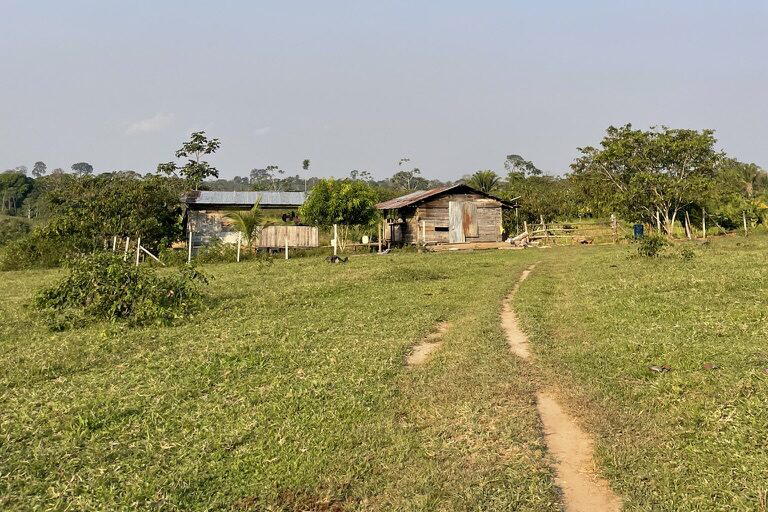
A home in the remote Madre de Dios region of Peru | Courtesy Aly Singleton
Researchers found that after the highway was paved through Peru’s previously hard-to-access Madre de Dios region in 2009, healthcare facilities within 5 kilometers of the road experienced a 400 percent increase in dengue transmission, compared with rates prior to paving. In a region of 200,000 people, they reported nearly 11,000 additional dengue cases in communities near the highway between 2009 and 2022. Healthcare facilities farther from the road (more than 10 kilometers) experienced a much smaller rise in cases.
“Road-related transmission accounts for more than half of all dengue cases recorded in the region since the road was paved,” said Aly Singleton, a recent PhD graduate from the Emmett Interdisciplinary Program in Environment & Resources in the Stanford Doerr School of Sustainability and the study’s lead author.
Dengue and highways: A collision course
The research comes at a time when many new roads are planned throughout the Amazon and other relatively undisturbed tropical regions like those in New Guinea and Africa’s Congo Basin. Researchers not affiliated with this study previously estimated that the world’s total road mileage could increase by as much as 23% by 2050, with many new roads stretching into previously undisturbed portions of the planet’s remaining rainforests. This could have significant impacts for both the environment and human health, researchers say.
“Development projects can carry a heavy health toll,” said Erin Mordecai, PhD. Mordecai is a faculty fellow at the Stanford Center for Innovation in Global Health (CIGH), a Stanford associate professor of biology in the School of Humanities and Sciences, a senior fellow at the Woods Institute for the Environment, and the publication’s senior author. She co-leads the Disease Ecology in a Changing World Program based at the Stanford Center for Human and Planetary Health. “Infrastructure plans need to account for potential costs to human health and the environment, which can disproportionately harm the most vulnerable,” she added.
Attributing dengue’s rise to highway-driven changes
The researchers explored the connection between the rise in dengue rates and several changes brought by the highway, including through infected people traveling to and within the region, land-use change along the highway, and mosquitoes hitching a ride between communities on vehicles passing through. The Madre de Dios region was relatively secluded before the highway’s paving; many of its Indigenous communities live in voluntary isolation. The highway’s completion through many forested areas and near Indigenous territories created unprecedented human movement.
Increasing numbers of tourists, migrants, traders, and gold miners pass through or settle in Madre de Dios every day, according to Andres G. “Willy” Lescano, PhD, a Peruvian epidemiologist at UPCH and a study co-author. Researchers hypothesized that the increase in human movement along the highway corridor circulated the virus from nearby dengue hotspots.
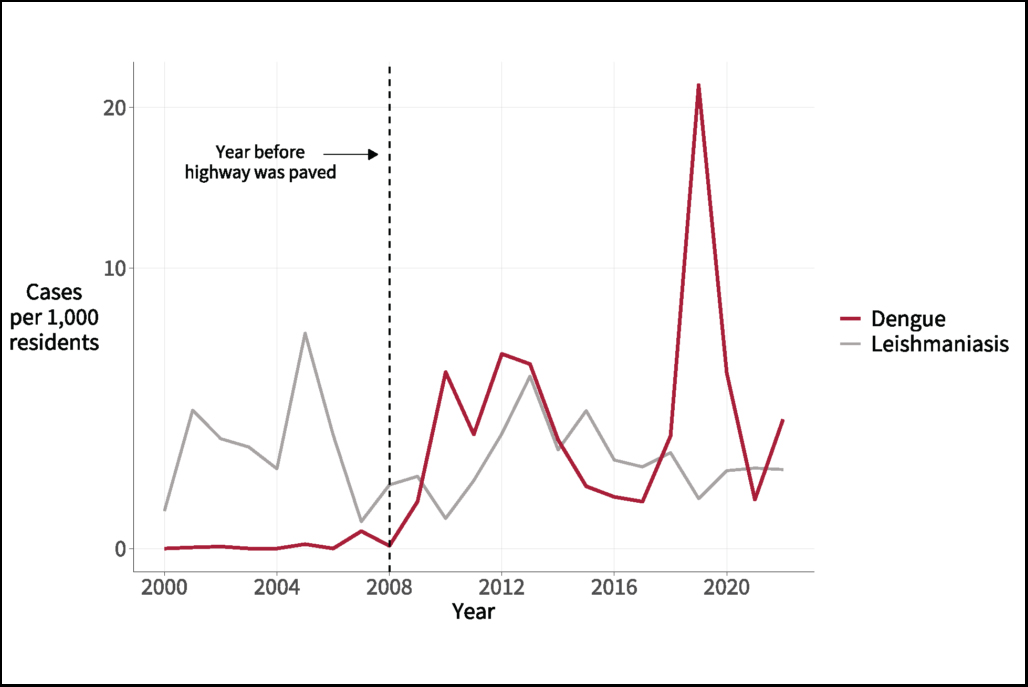
Cases of dengue per 1,000 residents in Peru’s Madre de Dios region rose dramatically in the years following the paving of the Interoceanic Highway. Cases of leishmaniasis per 1,000 residents, another disease not expected to be impacted by highway paving, remained relatively flat in contrast. | Aly Singleton
To test this, they compared dengue rates before and after the highway’s paving with another disease, leishmaniasis, which is not easily spread by human movement. They found that the number of reported leishmaniasis cases remained essentially unchanged before and after highway paving. This allowed researchers to rule out factors other than an actual rise in dengue burden that might influence the number of cases reported. Such factors include roads increasing access to healthcare and diagnosis, which could lead to more reported cases, but not actually more infections.
Researchers also documented increases in traffic volumes and found that unintended transportation of mosquitoes along the highway may have contributed to the rise in dengue cases, as the timing of the highway’s paving closely mirrored the first detection of dengue-spreading mosquitoes in nearby facilities.
Weighing the costs and benefits of connectivity
Researchers hope their findings will provide useful information and context for governments when weighing future road construction. New roads bring nuanced economic, environmental, and health impacts, including benefits from expanded economic activity, they note.
By carefully considering the costs and benefits of paving roads before construction begins, governments can make more informed decisions about whether a road is in the best interest of a community or country. They can also plan to mitigate negative impacts, such as deforestation and disease spread.
Development projects can carry a heavy toll. Infrastructure plans need to account for potential costs to human health and the environment, which can disproportionately harm the most vulnerable.Erin MordecaiAssociate Professor of Biology
“In many parts of the world, we’re at a huge hingepoint in terms of development decisions and how we’re managing our natural resources,” said Singleton, who will continue her research next year as a Planetary Health Fellow based at the Stanford Centers for Innovation in Global Health and Human and Planetary Health. “This research helps us further understand the tradeoffs – that new developments in these tropical forests have enormous consequences for the balance of carbon in the atmosphere and also for the health of local communities.”
Sharing the findings with local decision-makers
Singleton collaborated with Kunal Arora, BS ’26, to share the team’s findings with key Peruvian stakeholders, including directors of CDC Peru, the regional general manager of the Madre de Dios government, and regional health authorities. They developed and shared Spanish-language fact sheets, slideshows, a commentary, and in-person presentations.
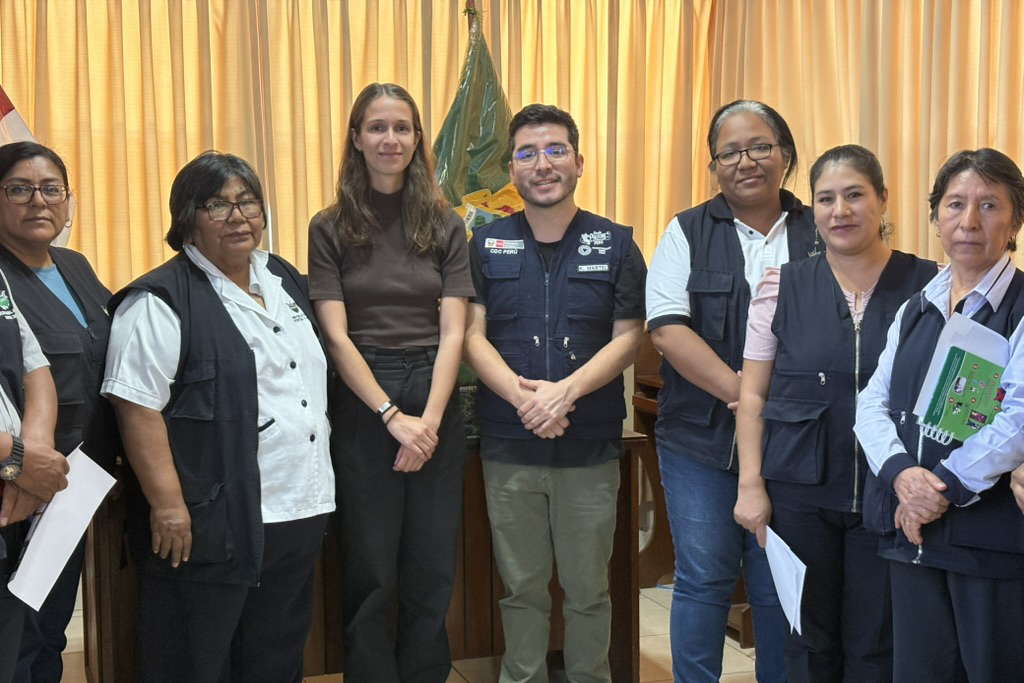
Singleton, third from left, and CDC Peru’s Kevin Martel, fourth from right and study co-author, meet with representatives of the regional health directorate of Madre de Dios to share their team’s findings. | Courtesy Aly Singleton
Lescano said the in-person presentation of these findings was well received, meeting local demand for information about the health and environmental impacts of development and prompting ongoing conversations among key decision-makers.
Their collaboration was part of the Science Writing Advancing Global and Planetary Health course, co-hosted by the Stanford Centers for Innovation in Global Health and Human and Planetary Health, which pairs students interested in science communication with Stanford researchers to help them translate their findings to impacted communities.
For more information
The research was conducted in close collaboration with health personnel of the Madre de Dios region, who provided the data, as well as the Peruvian National Epidemiology Network (RENACE).
Additional co-authors include Stanford’s Lisa Mandle and Stephen P. Luby as well as Andrew J. MacDonald, Terrell J. Sipin, Kevin S. Martel, César V. Munayco, Esteban D. R. Carrera, Gustavo A. Choque, and Ana S. M. Bautista.
Singleton was supported by a Jim and Gaye Pigott Fellowship through the Stanford Interdisciplinary Graduate Fellowship program at Stanford University. Lescano was sponsored through an Emerging Diseases Epidemiology Research Training grant awarded by the Fogarty International Center of the U.S. National Institutes of Health. Mordecai received support from the National Science Foundation, Fogarty International Center, and the National Institutes of Health. Mandle was supported by the National Science Foundation with Fogarty International Center.
Mordecai is also a faculty fellow at the Stanford King Center on Global Development and the Stanford Center for Human and Planetary Health. She is a member of Stanford Bio-X and a faculty affiliate at the Institute for Human-Centered Artificial Intelligence (HAI).
This story was written with contributions from Kunal Arora, BS ’26, and originally published by Stanford Center for Innovation in Global Health.
Writer
Jamie Hansen