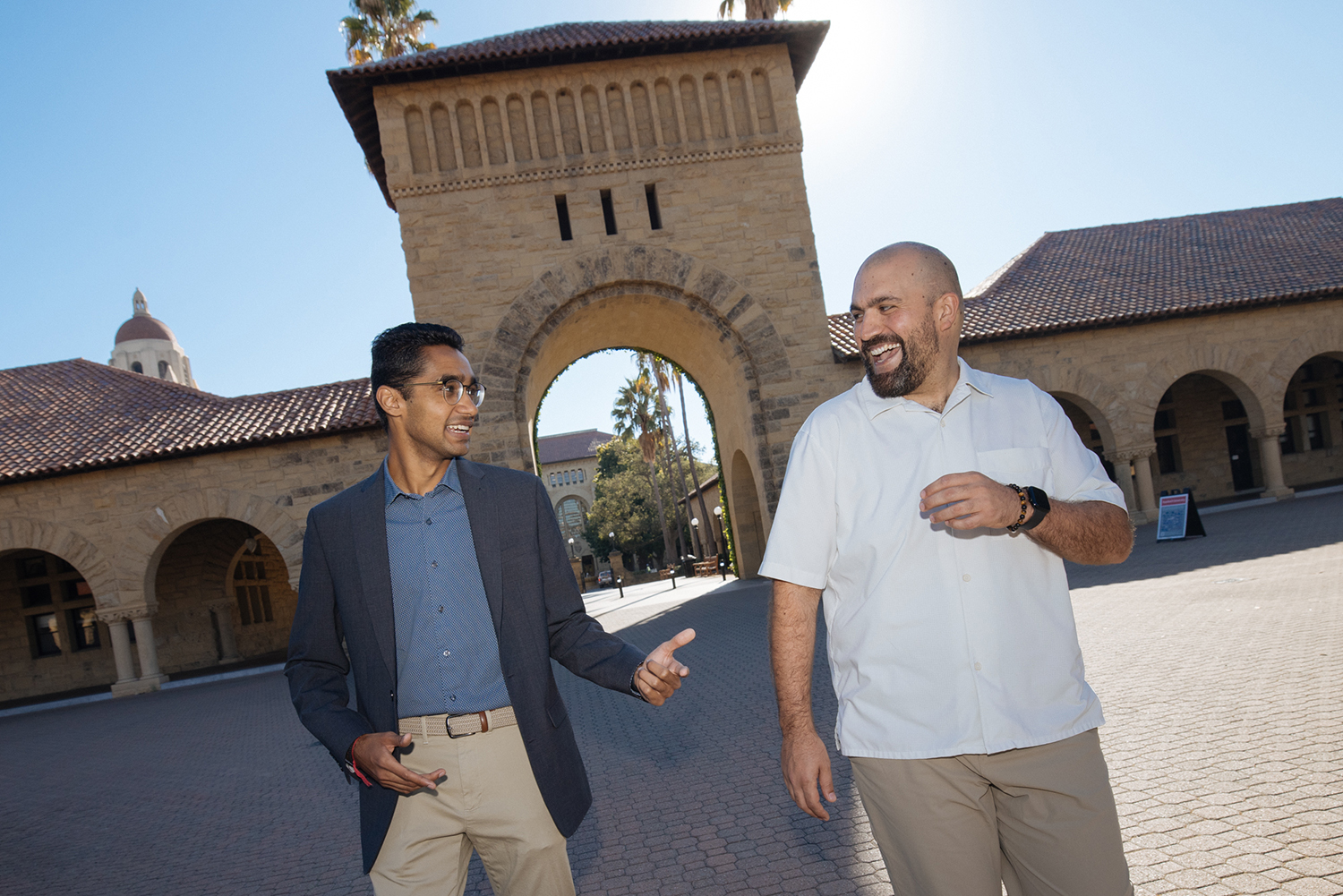
“Tell me your story.”
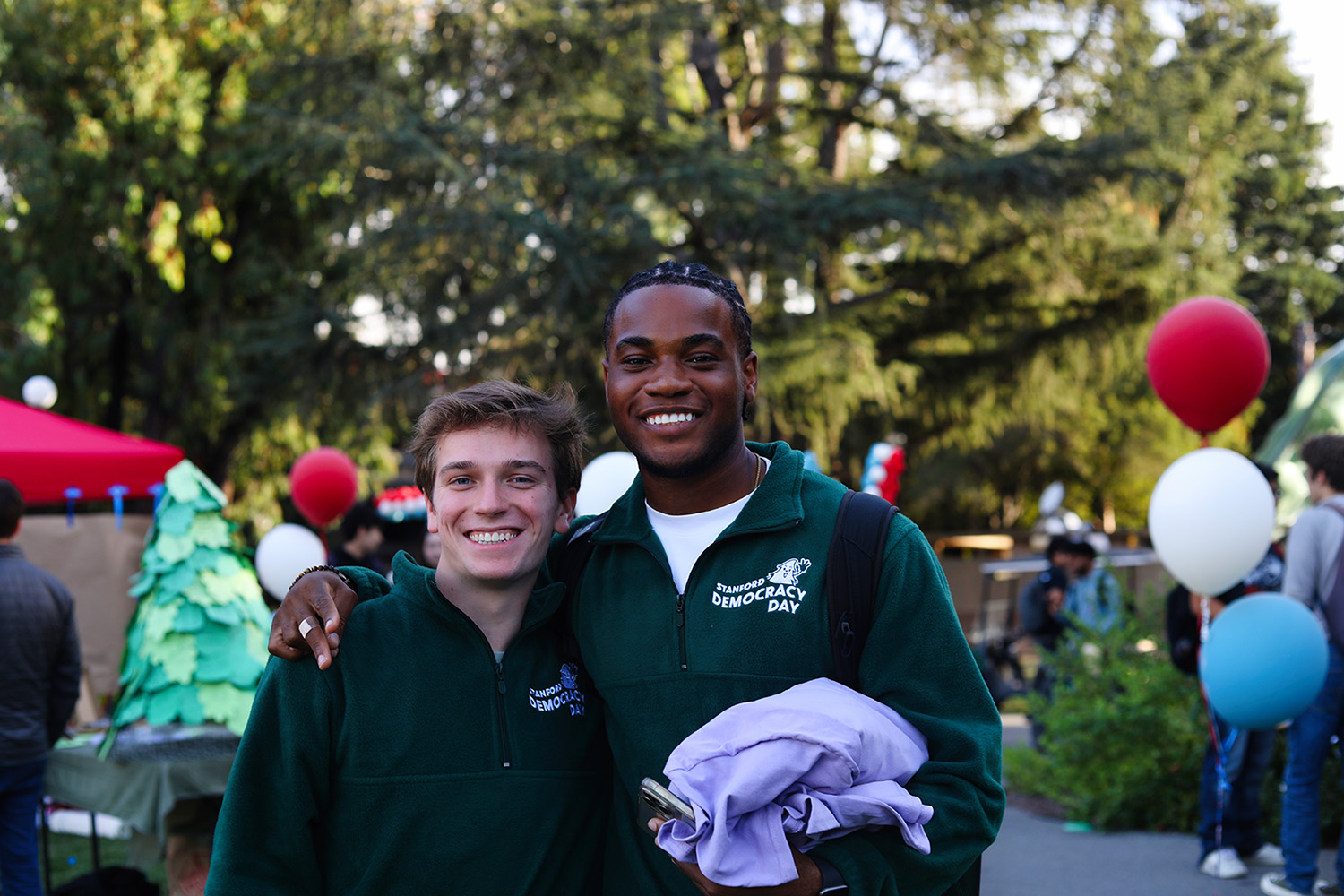
That was one of the first things Stanford undergraduate Ronak Vyas asked his Stanford classmate Micky Chahcoi when they met last fall at an introductory session for the Frosh Civic Challenge Fellowship, a yearlong program that brings curious students together to participate in civic engagement and constructive dialogue efforts across campus.
Chahcoi readily opened up. It was Chahcoi’s unconventional journey to Stanford that inspired him to join the fellowship program. Before transferring to Stanford, he lived in Oklahoma City and then Los Angeles, where he worked in construction and property management for over a decade before attending community college. He felt he had a unique perspective to share in a program that empowers students to engage across different ideas and perspectives and the life backgrounds and experiences that shape those views.
“It was a very honest and authentic conversation,” Chahcoi recalled.
That candor became the foundation of his friendship with Vyas and the other fellows in the inaugural cohort of the Frosh Civic Challenge Fellowship, an opportunity for students to develop civic and dialogic skills in a small group. The program includes biweekly gatherings, workshops, and a curated set of extracurricular activities to get civicly involved.
“The fellowship is designed to deepen students’ skills and confidence to engage in open and constructive discussions, positioning them to positively shape those conversations as they emerge in the classroom, the residences, and late-night student group meetings,” explained Karina Kloos, the executive director of ePluribus Stanford.
The fellowship is an extension of the Summer Frosh and Transfers Dialogue Program, which helps incoming students practice engaging with different viewpoints and discussing ideas with curiosity and openness before arriving on campus. Participants who want to build on that experience are invited to join the Frosh Civic Challenge Fellowship, launched last year by ePluribus Stanford and the McCoy Family Center for Ethics in Society.

Taking the ‘civic challenge’
Fellows are given a list of opportunities for exploring civic engagement and constructive dialogue on campus and are urged to pursue six of them, hence the “challenge” element of the fellowship.
“It’s like offering a roadmap for them to continue to make the most of their Stanford experience,” Kloos added. “It sets the stage for how they can get involved, contribute, and expand upon what’s offered.”
For example, students can take any Stanford Civics Initiative class, participate in a Stanford Political Union community discussion, or attend an Associated Students of Stanford University (ASSU) meeting. There are also essay prompts, such as writing a paper that critiques a perspective they endorse or responding to a perspective they disagree with by presenting the strongest argument supporting it. It’s the opposite of a “straw man,” in which a person misrepresents or weakens a view to make it easier to attack. This other argument style shows goodwill.
Vyas has found the technique helps keep discussions productive.
“People are more willing to engage in conversation with you when they feel they’re being respected, rather than when you take one small aspect of something they said and hinge your whole argument on that,” explained Vyas.
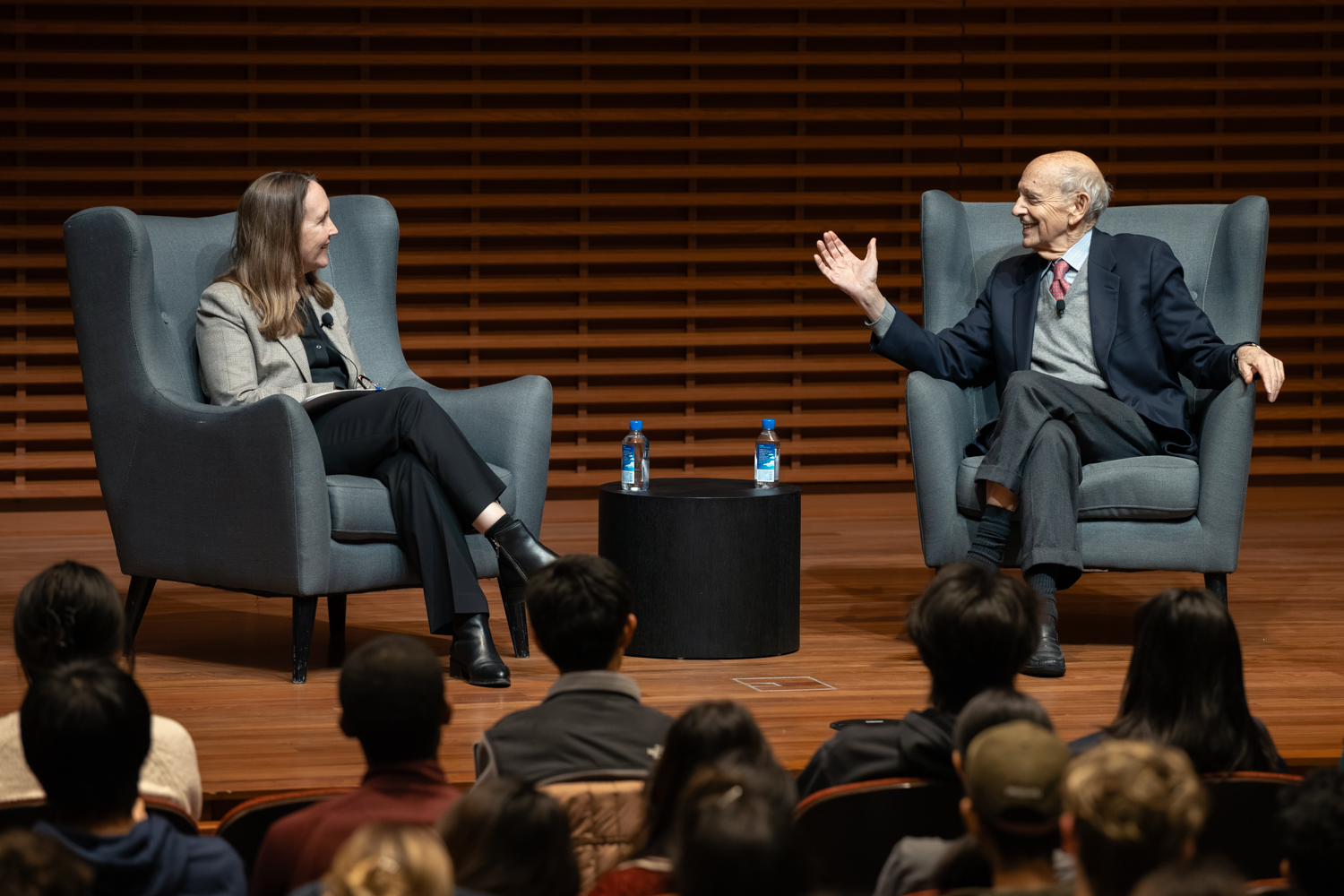
In pursuing the challenge, Vyas sat in on several sessions of Democracy and Disagreement, the popular winter quarter course that encourages students to explore differing viewpoints with curiosity. Chahcoi attended several events, including a talk with retired Supreme Court Justice Stephen Breyer and a conversation with Sen. Bernie Sanders and Rep. Ro Khanna.
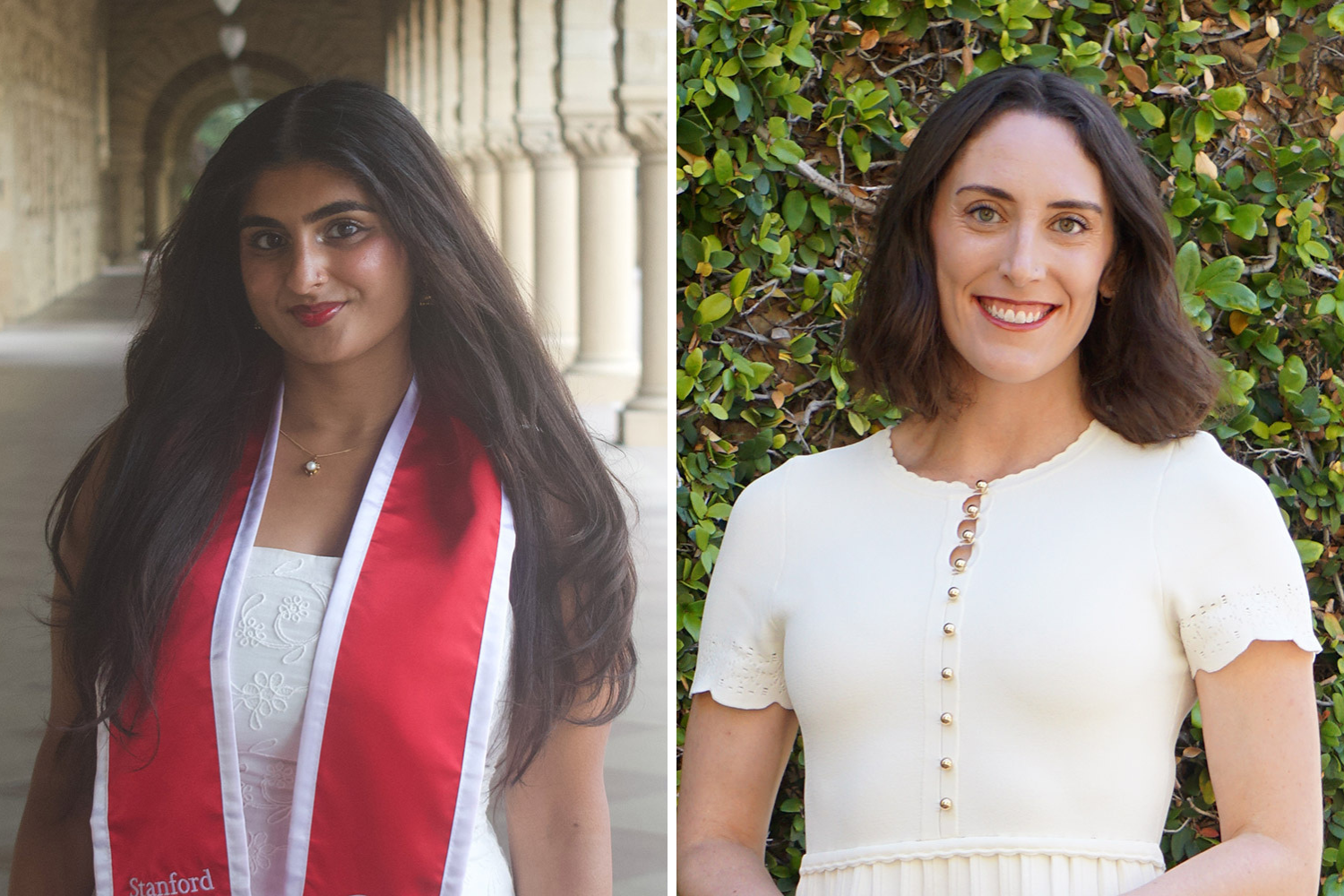
Civic Challenge fellows also take a series of workshops that teach skills such as active listening to be thoughtful discussion partners and leaders. These are led by Collin Anthony Chen, the director of graduate and undergraduate programs at the McCoy Family Center for Ethics in Society, and by the ePluribus Stanford postgraduate fellow, a position held last year by YuQing Jiang, ’25, and this year by Lavi Sundar, ’26. The ePluribus Stanford postgraduate fellow also mentors the Civic Challenge fellows throughout the year.
Fellows practice these newly acquired skills at biweekly meetings where they discuss different perspectives on topical social and political issues such as technology and bioethics, institutional neutrality and political diversity at universities, and DEI and meritocracy.
“First you learn, then you apply,” Vyas explained.
These gatherings, held over dinner, in many ways the heart of the program, were where the fellows’ relationships with one another deepened and bonds formed.
“I learned so much from Collin and YuQing, and from having these discussions, about how to communicate, how to share your opinion, and how to listen to others’ opinions without acting in a reactionary manner. I’m so much more open now,” Chahcoi said.
Connecting across cohorts
When it came time for their fellowship capstone project in the spring, Chahcoi kept thinking about the strong bond he, as a transfer student, had forged with the five other fellows, who were all first-year undergraduates.
“It was a huge part of my first-year experience in helping me adjust and feel comfortable,” Chahcoi said.
Together, Chahcoi and Vyas launched “Cardinal Unite,” an effort to bring frosh and transfer students together for conversation in a social setting, similar to the gatherings they had experienced as fellows.
Students met on the Oval, where the discussion opened with reflections from short readings Chahcoi and Vyas selected, including a chapter from Moving Up Without Losing Your Way (Princeton University Press, 2019) by philosopher and Stanford alum Jennifer Morton, PhD ’08, about the adjustment of first-generation and low-income students to college and campus life. Chahcoi and Vyas hoped these pieces would spark conversation about some of the challenges that arise when transitioning to university that sometimes go unspoken.
“Everyone has different journeys and perspectives on college,” Vyas said. “But by sharing, we can learn from each other the strategies that work best for both the academic and social parts of integrating into college. When you have lots of data points, you can compare and contrast and ask, ‘Am I taking the best course of action here?’”
Students could also be matched with other participants for a one-on-one coffee to further deepen their friendships. Through the Stanford ePluribus Community Grants Program, Chahcoi and Vyas will continue Cardinal Unite in the 2026-27 academic year. Students who want to get involved can express interest here.
“There’s true value in getting to know people who have a different experience or perspective than yours,” Chahcoi said.
Writer
Melissa De Witte