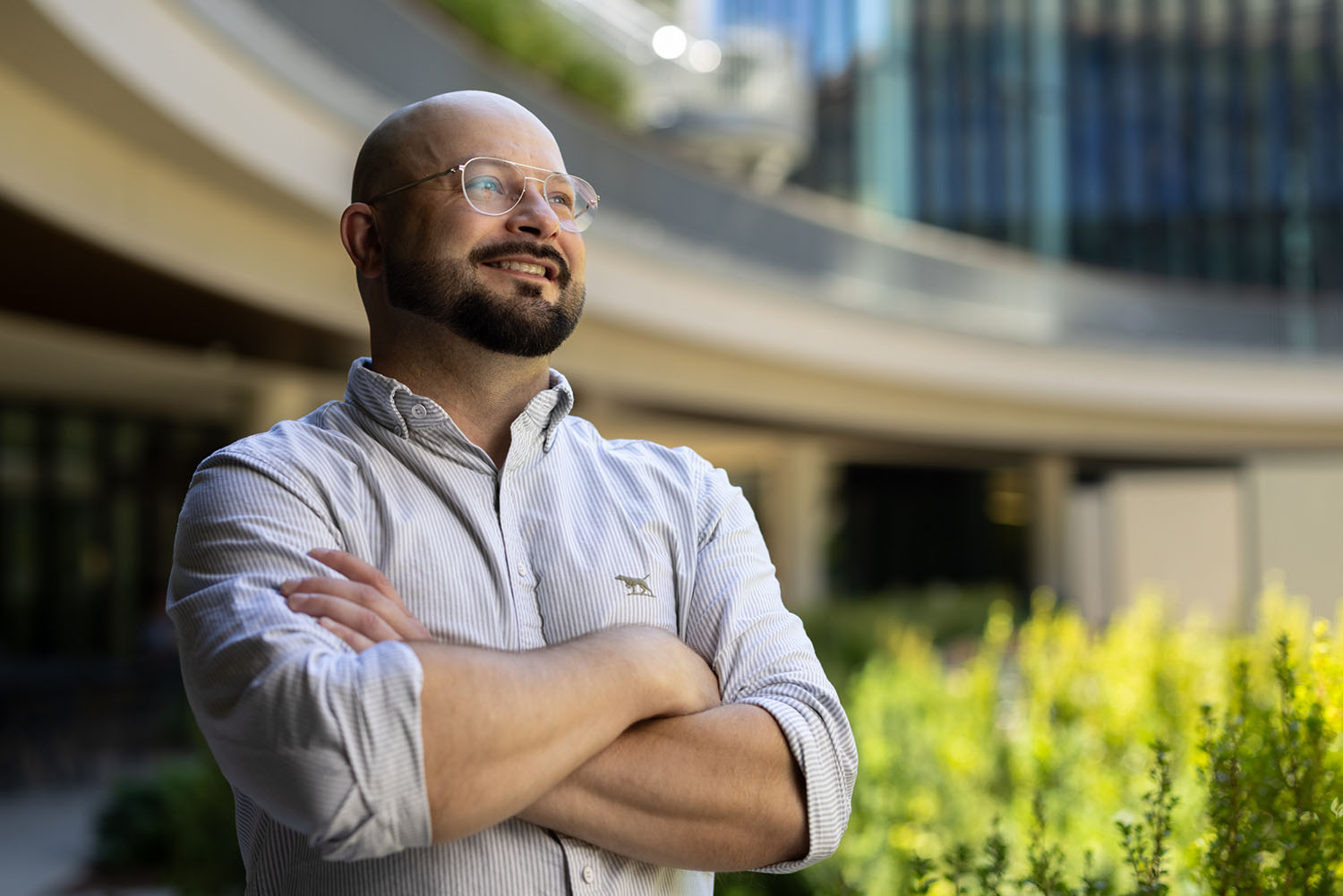
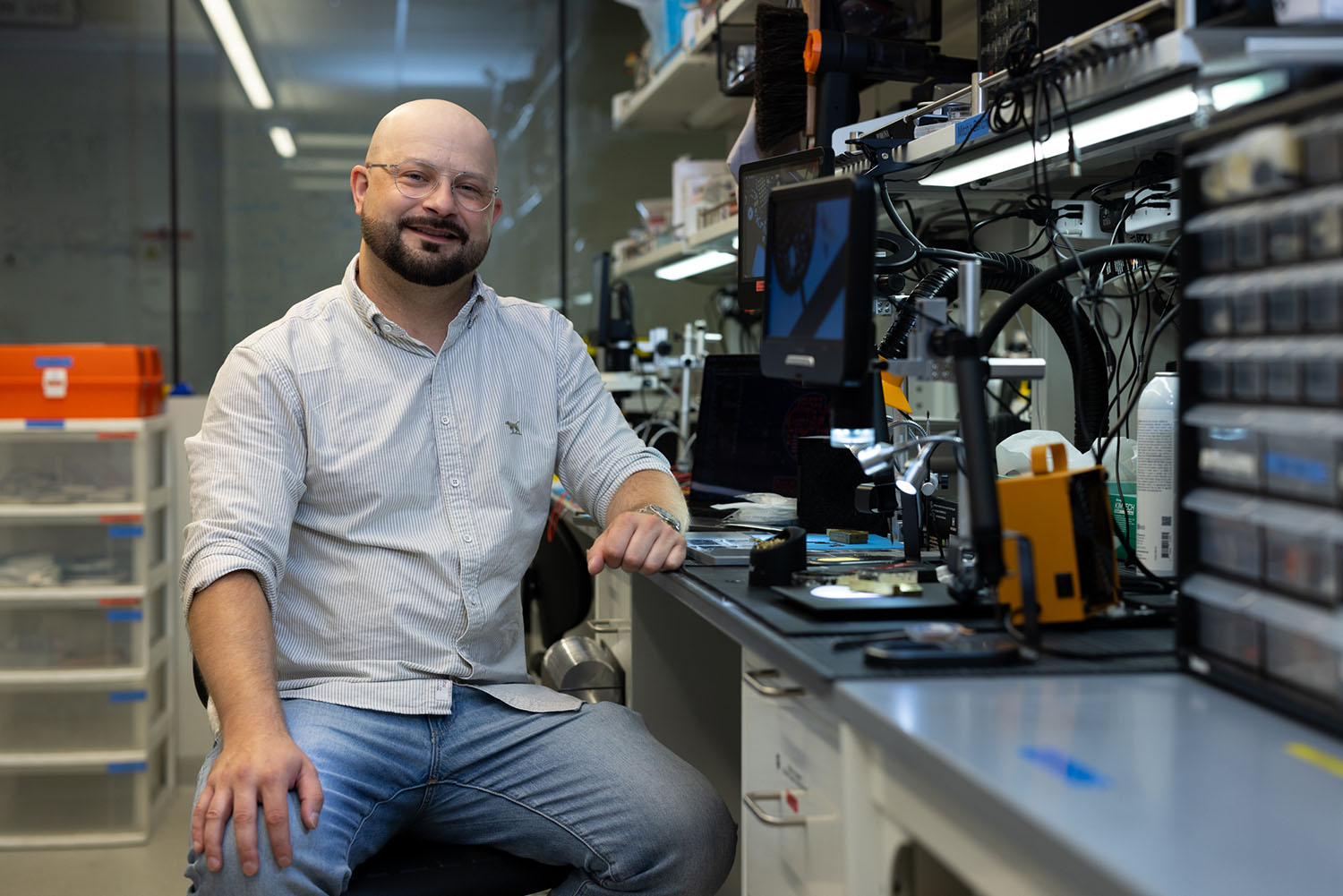
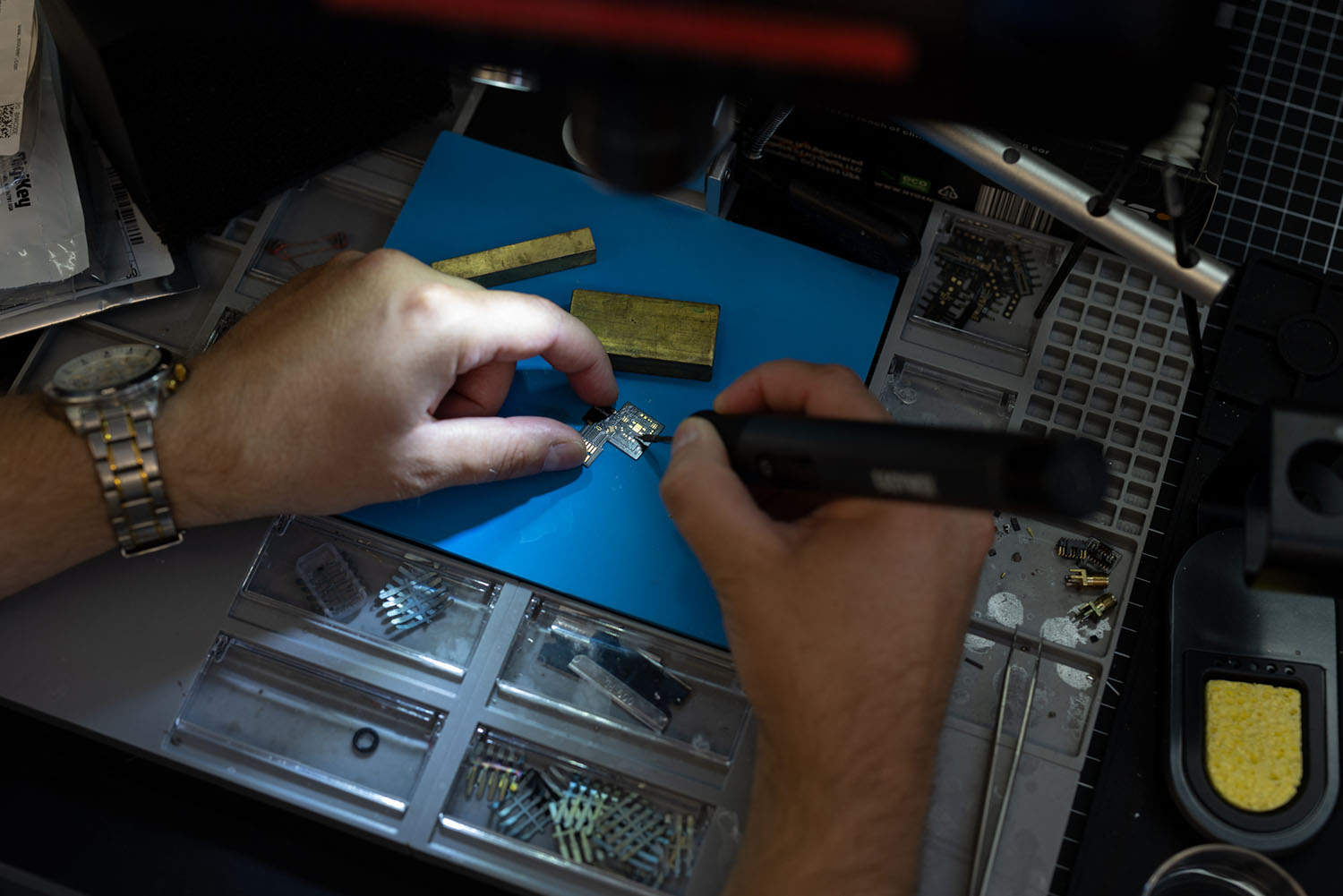
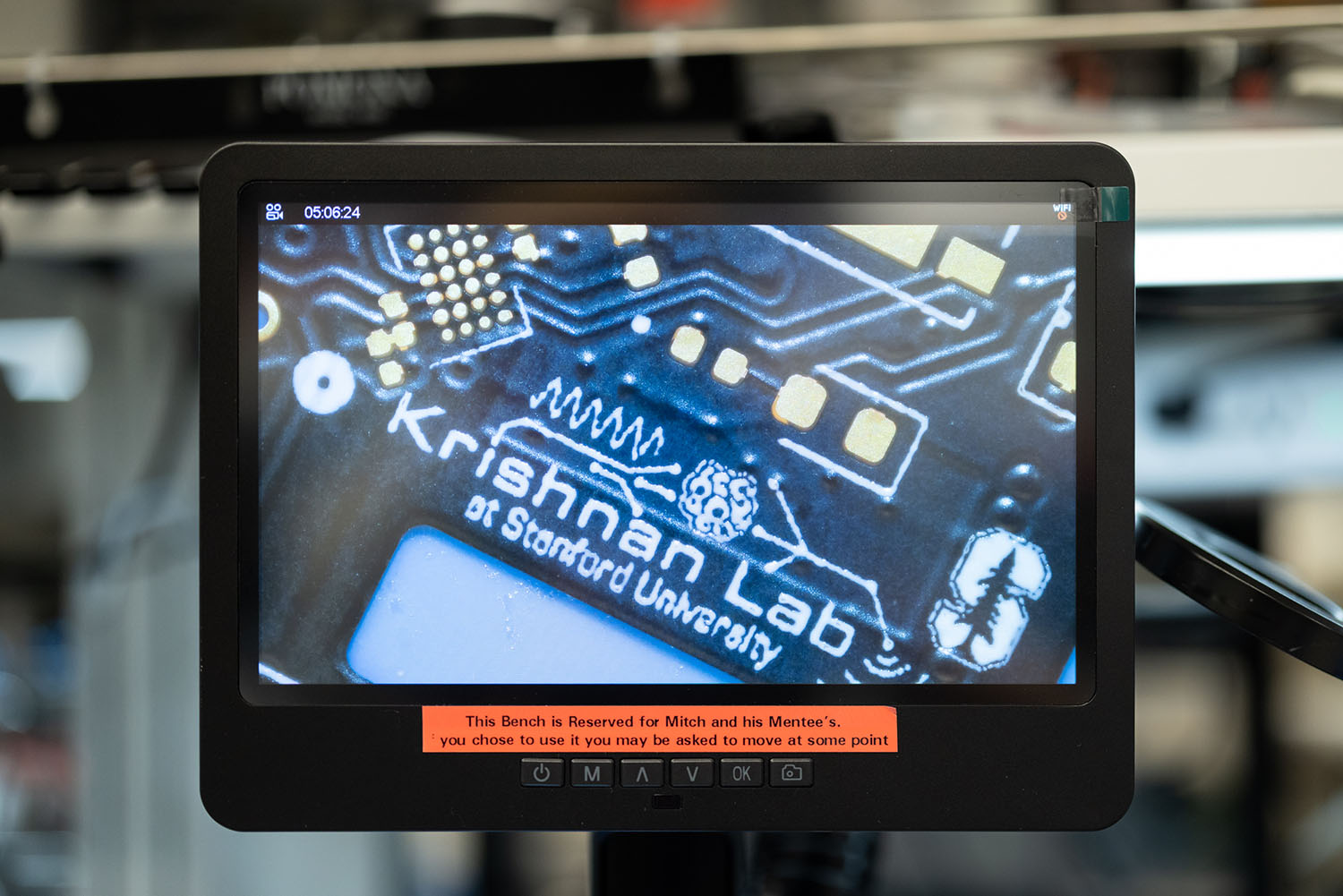
Inside Stanford’s Krishnan Lab, researchers are developing bioelectronics with the potential to transform daily life for people with chronic conditions. An implantable subcutaneous device, for instance, could improve how people with diabetes manage dangerously low blood sugar levels.
Mitch Peterson, that project’s lead, hopes the technology will someday make it to market for the roughly 40 million Americans, and many more people globally, who live with diabetes.
“I’m diabetic, so I understand the importance of this research and the need to make quality medical technology that helps people,” he said.
Peterson, who graduated in 2025 with a bachelor’s degree in electrical engineering and is pursuing a PhD in the same field, said that medical technology has improved or saved his life countless times. He’s spent years – including much of his childhood – overcoming significant health crises that altered his academic trajectory and led him to Stanford, where he researches implantable or wearable devices.
“I want those who are hindered by medical hurdles, like I’ve been, to see a boost in their quality of life because of something that I’ve helped make,” he said.
The wonders of medical science
At age 13, Peterson discovered a lump on his right leg on the inside of the tibia bone just below the knee. A biopsy confirmed it was osteosarcoma, a bone cancer that most frequently affects children, teenagers, and young adults during rapid growth spurts. Surgery and months of chemotherapy saved his life. Since then, technology has helped him manage the long-term side effects.
“The chemotherapy damaged my hearing, so I rely on hearing aids every day. They’re another example of how medical technology has made a meaningful difference in my life,” he said.
Years after beating cancer, Peterson learned that his heart had been severely damaged by the chemotherapy and was no longer capable of pumping enough blood to support his body. Diagnosed with end-stage heart failure, he underwent heart transplant surgery at California Pacific Medical Center in San Francisco. He learned that the process – which he called “remarkable” – required rapid transfer of the organ on ice from the donor in a matter of hours.
Following the successful surgery, he was able to see his old heart. Holding it in his hands to inspect the damaged left ventricle was a surreal experience. “I like to say that I left my heart in San Francisco,” he said. “Literally.”
Peterson had previously studied graphic design at the Academy of Art University, but his experiences with cancer, diabetes, and heart transplant surgery deepened his appreciation for medical science and inspired him to make a career change.
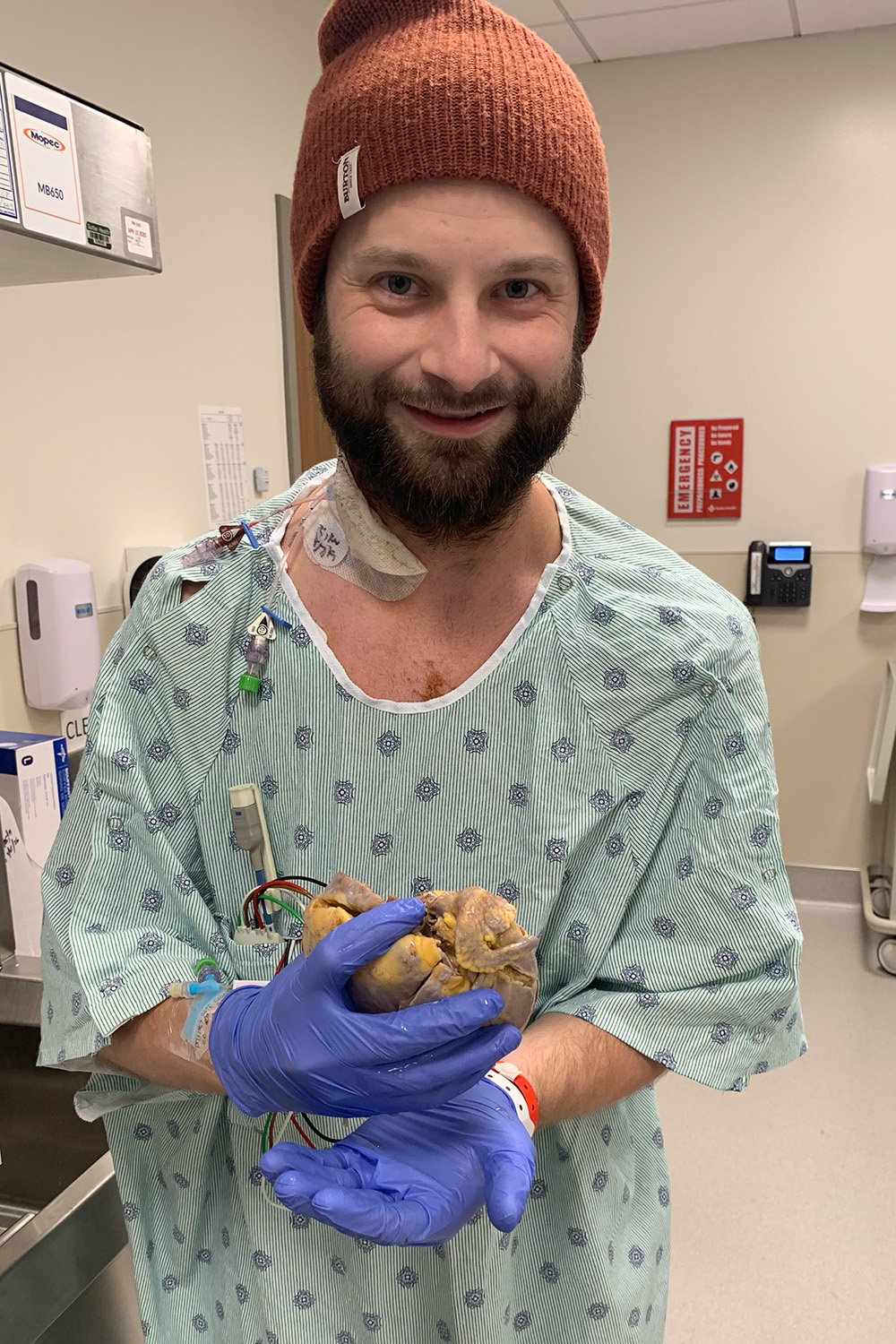
Following a successful heart transplant surgery, Peterson holds his old heart. | Courtesy Mitch Peterson
Engineering in earnest
After transferring to Stanford as an undergraduate, Peterson studied electrical engineering, learning about circuit boards, sensors, imaging, neural interfaces, and more. He also took courses in sketching and the foundations of two-dimensional art – subjects conducive to designing devices and circuit schematics.
During the first year of his graduate studies, Peterson interned with the Krishnan Lab, where he learned more about bioelectronic systems and began imagining the possibilities for entirely new devices. “I was hooked,” he said.
Today, he spends much of his time in the lab developing the device for treating diabetes. The core problem that Peterson and his fellow researchers are working to solve relates to how glucagon (a natural hormone of the pancreas that raises blood sugar levels) is stored and delivered in the body, which is 60% water. Many soluble drugs are unstable and have short lives in aqueous environments. Storing it in powdered particulate forms extends glucagon’s shelf life. But there are currently no technologies that reliably inject powder drugs subcutaneously on demand.
The device they are developing is a wireless system inserted beneath the skin. It’s outfitted with a Bluetooth chip, which communicates with a phone app that Peterson created. When activated, the app reads continuous glucose monitoring data from the patient’s body. When their glucose levels become too low, the device will automatically release a powdered form of glucagon into the bloodstream. The device could be particularly useful in an emergency, such as during severe hypoglycemia.
Peterson is currently refining various elements of the device, such as the method for containing the powdered glucagon. Survey data from doctors and diabetic patients will help determine the optimal placement site for the device. With funding support from the Leona M. and Harry B. Helmsley Charitable Trust, the team aims to advance a new prototype into clinical trials within the next few years.
I want those who are hindered by medical hurdles, like I’ve been, to see a boost in their quality of life because of something that I’ve helped make.
Moving forward
After completing his doctoral studies, Peterson plans to continue developing medical devices in industry – a career path his experiences have uniquely prepared him for. “My health history allows me to see this work from the perspective of both an engineer and a patient,” he said.
He noted that his heart failure forced him to confront the possibility of a short life. But since the transplant, Peterson wears a watch that belonged to his heart donor, given to him by the family.
“It’s a subtle reminder of the extra time my heart donor gave me through the power of medical science, why I do this work, and why I want to use that time to help create technologies that can give others more of it,” Peterson said.
Writer
Alex Kekauoha