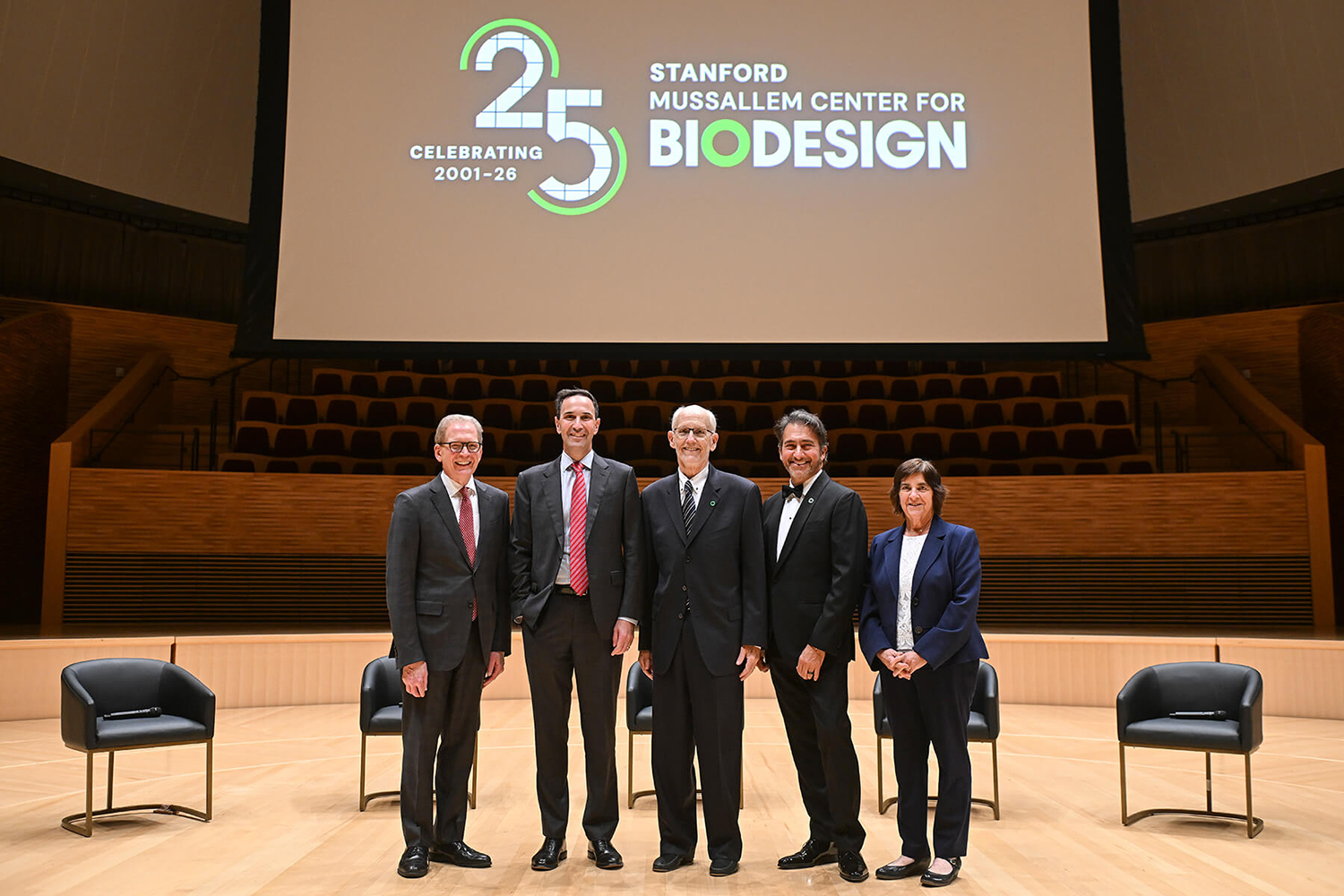
In the last 25 years, the Stanford Mussallem Center for Biodesign has trained clinicians, engineers, scientists, and other business experts to create new solutions to health-related problems. Technologies invented during Stanford Biodesign training have helped improve the lives of more than 22 million people worldwide. Millions more have been helped by technologies invented by alumni after their training. To mark its 25th anniversary, nearly 500 people from around the world converged on the Stanford campus on Oct. 23 to celebrate the center’s success, exchange insights, and lay the foundation for a promising future in health technology innovation.
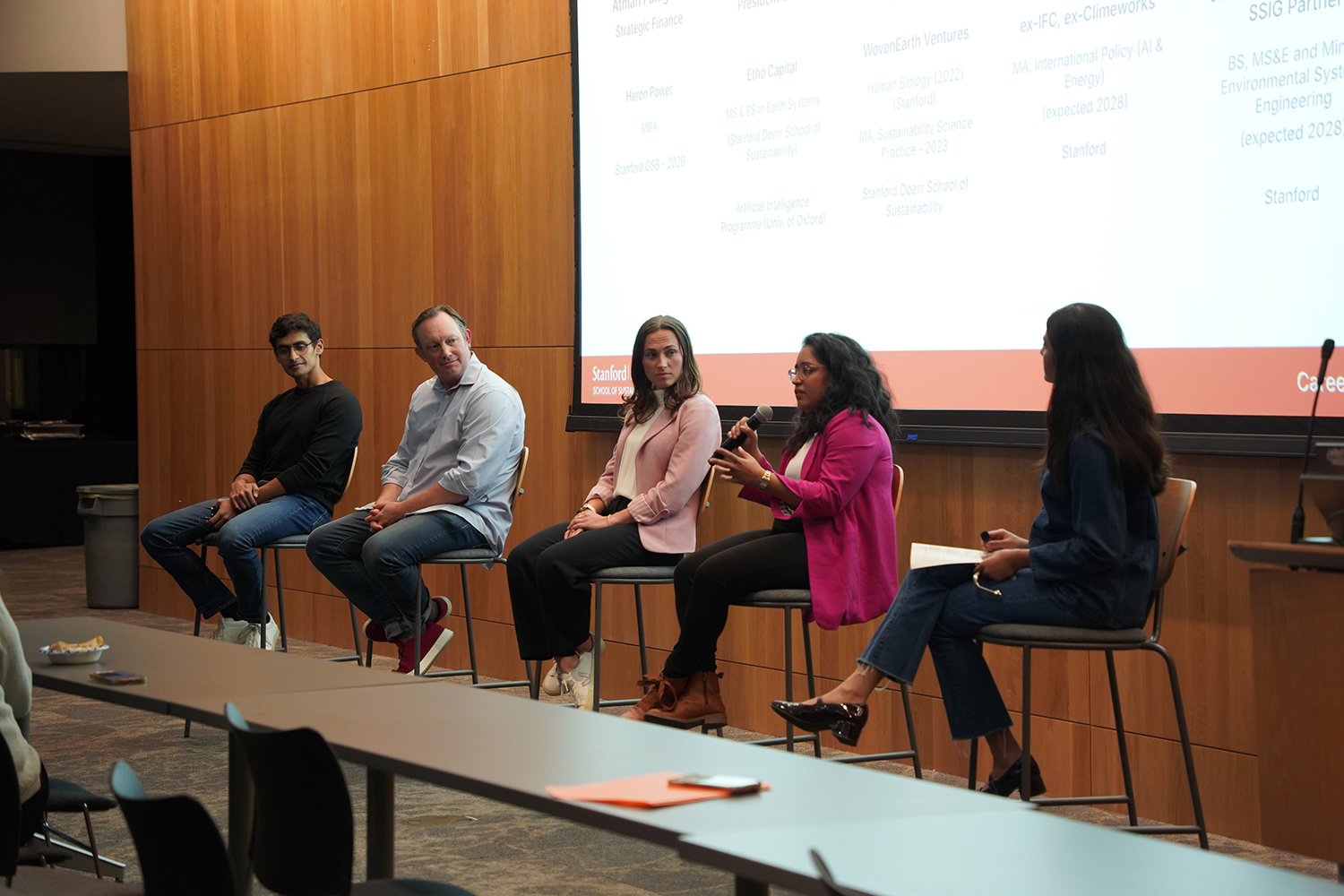
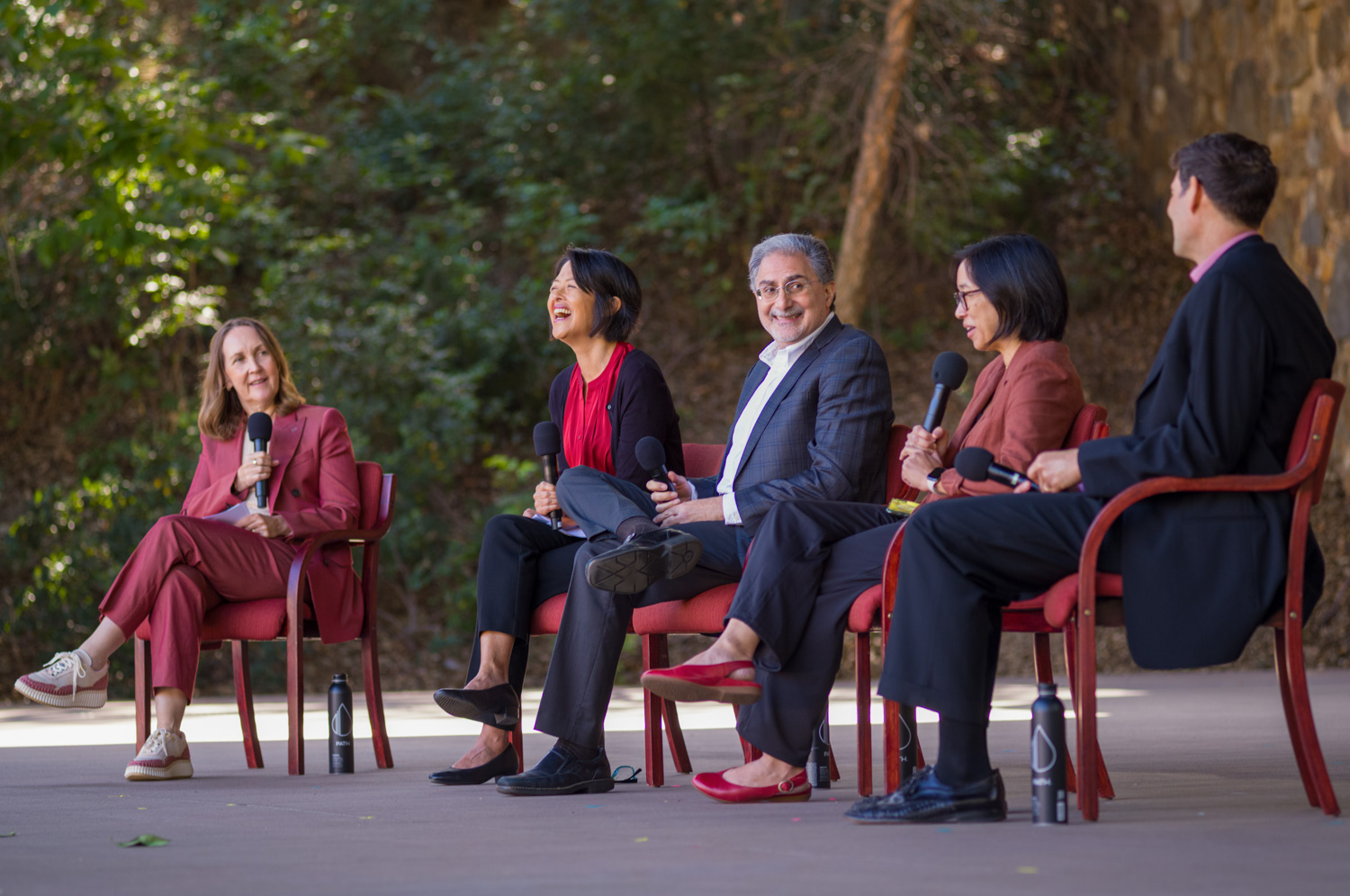
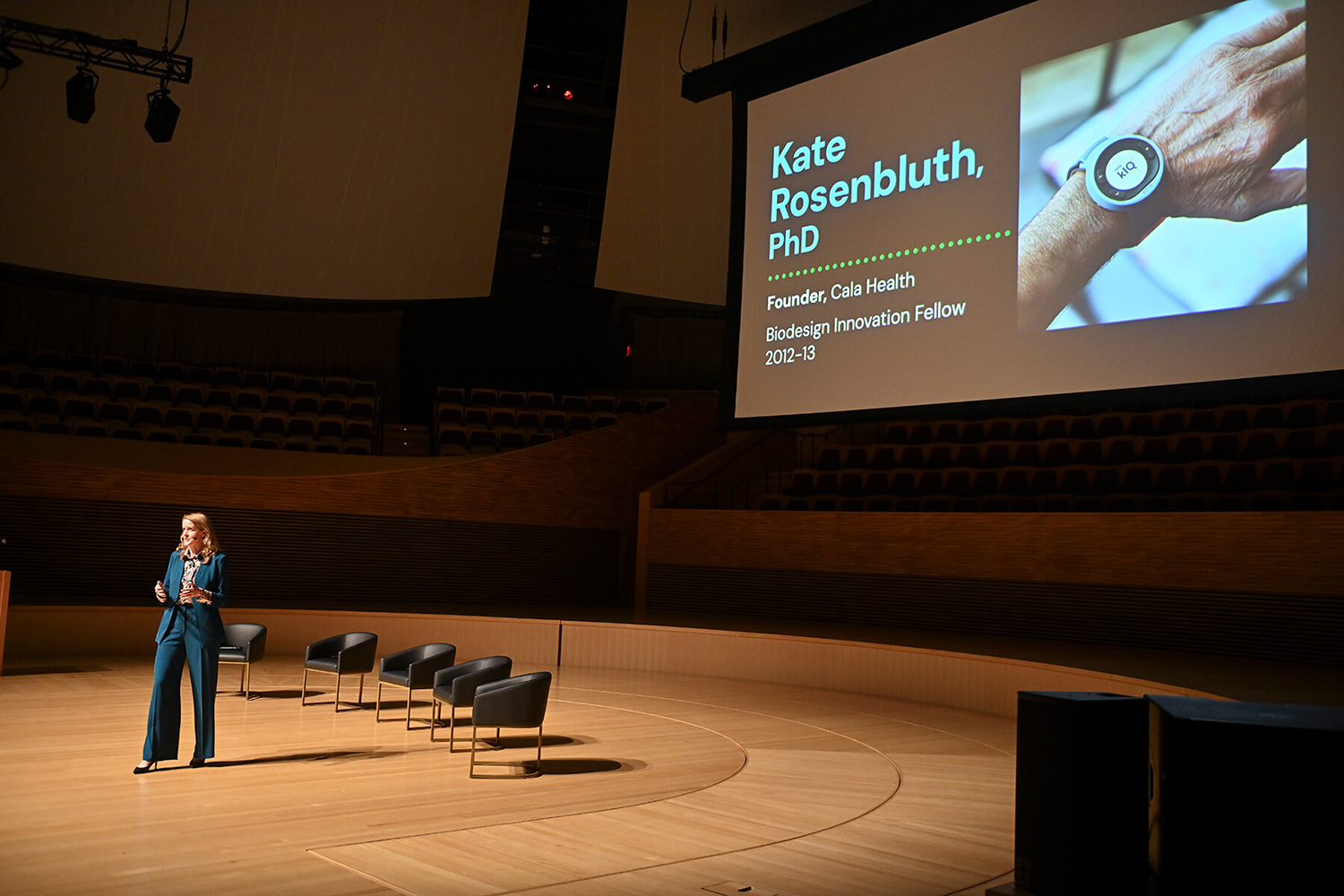
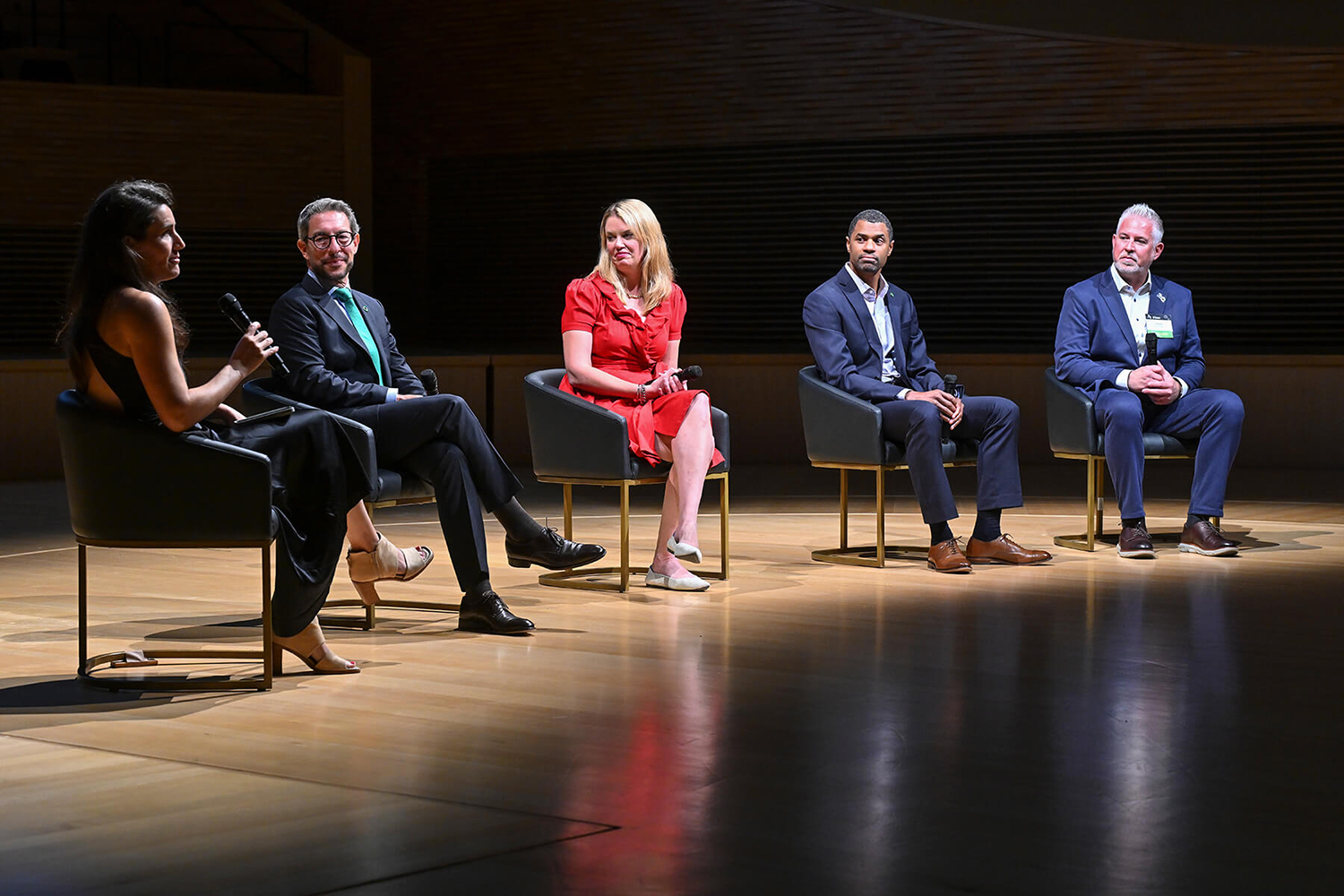
It was a day infused with a sense of community and collaboration, beginning with a series of morning workshops with close to 120 participants, including ~70 from other U.S. and global Biodesign programs, who came from as far away as Australia and Kenya. They shared their experiences and challenges in developing their local innovation ecosystems, and also explored the potential promise and perils of artificial intelligence for innovation education. In the evening, they joined hundreds of program alumni, faculty, students, fellows, and donors at a gala at the Bing Concert Hall, where Stanford University President Jonathan Levin praised the center as a “huge point of pride for the university.”
“Biodesign was in many ways one of the early models at Stanford of interdisciplinary collaboration and translation,” Levin said. “It was on the forefront of two things – cross-fertilization of ideas across the campus and the movement of ideas out into the world – that in many ways have defined the last 25 years of the university, as well as the last 25 years of Biodesign.”
A global movement that started at Stanford
Stanford Biodesign was forged from a partnership between two highly successful innovators – Paul Yock, MD, the Martha Meier Weiland Professor in the School of Medicine, and professor of bioengineering, emeritus, and Josh Makower, MD, the Yock Family Professor of Medicine and of Bioengineering – who believed the key to impactful health technology innovation was to focus on unmet needs, rather than starting with a technology in search of a problem. They began in 2001 with a cohort of five Innovation Fellows who spent weeks in the hospital identifying critical areas of need, comparatively evaluating those needs to focus on the most promising innovation opportunities, and then inventing solutions that could address the most compelling problems.
Over time, trainees would create solutions across a broad spectrum of clinical areas, including devices to help babies with congenital heart disease, to clear out calcified coronary arteries, and to stimulate nerve pathways to calm hand tremors. They would develop new methods to treat prostate disease, childhood asthma, heart arrhythmias, and infections following surgery, among other debilitating conditions.
Lloyd B. Minor, MD, dean of the School of Medicine, said that among all the impressive numbers for Biodesign, one stood out: 22 million.
“That’s the number of people helped in some way by the technologies born here. It reinforces Stanford Medicine’s well-known refrain: Discovered here, deployed everywhere,” Minor said at the gala, going on to note that, with the center’s focus on enabling other innovation education programs, “Biodesign has changed that refrain to ‘discovered here so others can discover everywhere.’”
“When I think about reasons to be optimistic about the future, the Stanford Mussallem Center for Biodesign always comes to mind,” he added. “The center never stands still. Biodesign is run by innovators, and that means it is constantly evolving and improving its processes to meet the moment.”
School of Engineering Dean Jennifer Widom, PhD, also shared that “Biodesign’s approach, its reputation, its reach, and the success of its alumni are truly legendary. They help bring the very best students and faculty to Stanford, and we are all incredibly grateful for that.”
Biodesign was in many ways one of the early models at Stanford of interdisciplinary collaboration and translation.Jonathan LevinStanford President
As one of the first university training programs for health technology innovation, Stanford Biodesign has vastly expanded over the years, broadening the approach to innovate across life science domains and growing into an innovation education powerhouse with a global reach. More than 60 institutions across the globe have adopted the Biodesign methodology, with Biodesign-like programs now in countries as diverse as Ireland, Singapore, Finland, Brazil, and Rwanda. Many use the Biodesign textbook, which is now approaching its third edition.
“One of the most fulfilling and inspiring aspects of this journey is how Biodesign has been embraced across the world. The impacts are far greater than Paul and I could ever have imagined,” said Makower, now the Byers Family Director of the center. “It’s all about focusing on patients. That is one belief that ties us together.”
A new era of accelerating impact
In recent years, the center has added cost and affordability as important factors to consider in the invention process, while also emphasizing health equity and access so that patients everywhere can benefit. In 2023, it launched a program in East Africa, in collaboration with local universities, where entrepreneurs have already produced a simple, inexpensive device to save mothers from bleeding to death after giving birth, the leading cause of maternal mortality. “This type of innovation addresses a major problem and, in that geography, it will have a huge impact,” Makower said.
At the gala, results from the first-ever Global Biodesign Outcomes Survey were shared with the audience, demonstrating that more than 20,000 individuals have been trained in the biodesign innovation process globally; 350+ companies have been founded addressing unmet needs across 20+ clinical areas; and an astounding 100 million people have been helped by technologies invented by the trainees of Biodesign programs around the world and through the Founder’s Forum, an ecosystem development effort initiated by Stanford Biodesign in India.
Stanford Biodesign also recently expanded its offerings to incorporate health policy, as innovators continue to encounter regulatory, reimbursement, and other obstacles in making products available to patients. It launched a “bootcamp” to educate Congressional policymakers, inviting senior-level staff to Stanford to learn about the health technology ecosystem and the realities of getting novel technologies to patient care. The policy program already has had an impact in terms of influencing national policy changes, Makower said.
“Someone has to stand up for innovators, and that is why we created the policy program,” he said during the morning workshop. “We want to be a trusted resource and help inform policies that are more innovation-friendly and help needed products get to patients.”
Another pressing issue for innovators is the explosion of artificial intelligence and its role in product development and healthcare at large. There was much buzz in the workshops about AI, which has raised a host of questions: How should innovators use it in identifying medical needs or in training people? Can an AI-created product be patented? What are the ethical and policy issues to consider?
“Personally, I have never been more optimistic about healthcare, particularly with the advent of AI,” Michael Ackermann, PhD, director of biotechnology at Biodesign, said during the workshop. “AI is unlocking tools at every stage of the process. It’s helping doctors manage care and it’s going to help us develop better medications faster. There’s never been a better time to be an innovator.”
Makower said he’s enthusiastic but cautious when it comes to AI. “I think it’s an amazing tool that has incredible potential and obviously scary risks,” he said. “I want us to be careful stewards of it, in the same way that we are careful with nuclear energy.”
The day’s celebrations concluded on a very poignant note, as Paul Yock, founder and director emeritus of the center, gingerly took the stage at the close of the gala and the crowd rose to its feet. Yock was diagnosed with advanced pancreatic cancer in the spring of 2025 and did not expect to reach this day, he said.
“It really is a miracle that I am here, and I am continually grateful to be back with this group,” he said to sustained applause. “I don’t know of a tech community that comes anywhere close to this one for camaraderie, generosity, willingness to pay it forward. You are collectively the reason for our success. It’s been an enormous pleasure to work with you all.”
For more information
This story was originally published by Stanford Mussallem Center for Biodesign.
Writer
Ruthann Richter