There’s no shortage of emotionally fraught conflicts over resource management and environmental policy on the California coast, from how to mitigate stormwater pollution in the Pacific Ocean to who is responsible for protecting infrastructure from sea-level rise, storm surge, and large waves.
It’s fertile ground for Stanford students in the course California Coast: Science, Policy, and Law to collaborate across disciplines to understand complex legal, political, and environmental concerns.
“The kind of dialogue and controversy that we discuss in class is a learning vehicle – it’s designed to expose students to how these types of topics play out, not just in California and not just on the coast,” said Deborah Sivas, a professor of environmental law at Stanford Law School who co-founded the course over 20 years ago.
That was the experience of Jake Gold, BS ’18, MS ’19. When Gold took California Coast about 10 years ago, he was a civil engineering student with an interest in the law and a strong desire to make a positive difference in the world. During the course, the class visited an apartment building whose seawall was causing erosion that threatened neighboring structures, and debated how to address the problem.
“Growing up in California, I heard so much talk about environmental justice and climate change. This course really expanded on those ideas, and offered a cross-disciplinary understanding that you can only get from professors who have devoted their whole careers to these issues,” said Gold, who is now a deputy attorney general with the Natural Resources Law Section of the California Attorney General’s Office. “It gives you a chance to explore the various applications of science, law, and policy, and provides a gateway to learning more.”
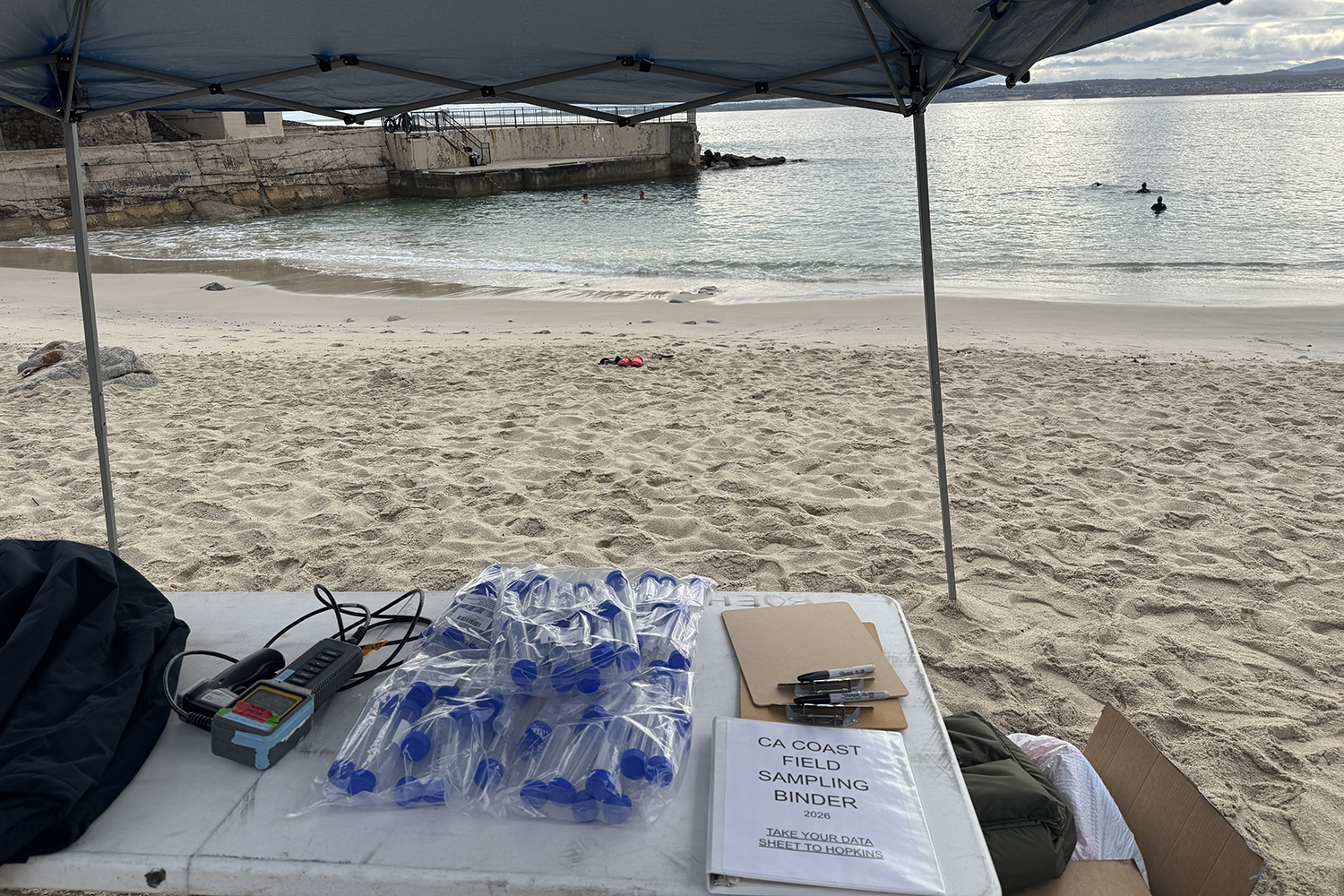
A water sampling kit for the California Coast course, where students collect and analyze beach water samples to explore how water quality data inform coastal policy. For many law and policy students, these field trips mark their first experience using scientific instruments. | Laura Kubiatko
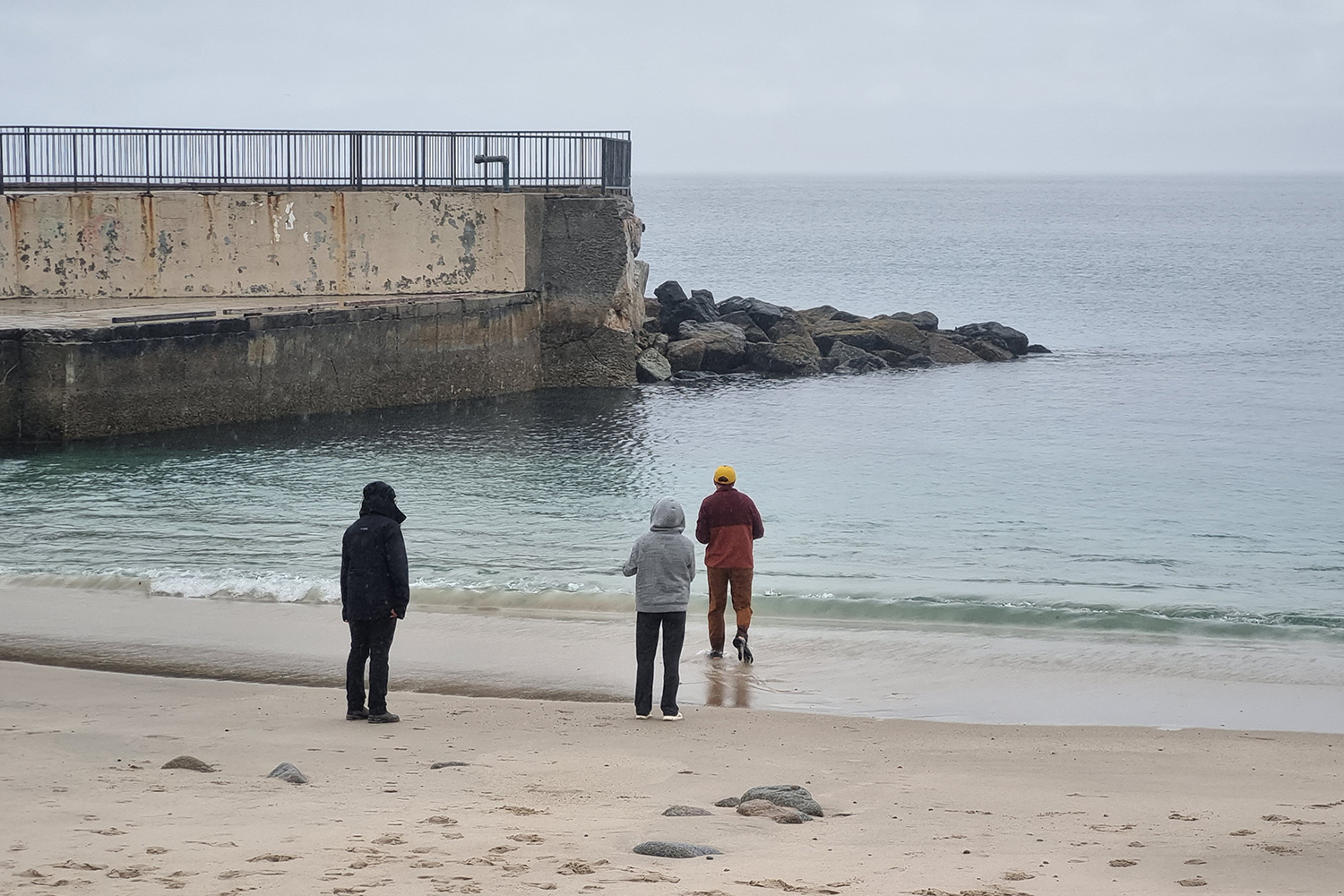
Students collect water samples from Monterey Bay for analysis. | Laura Kubiatko
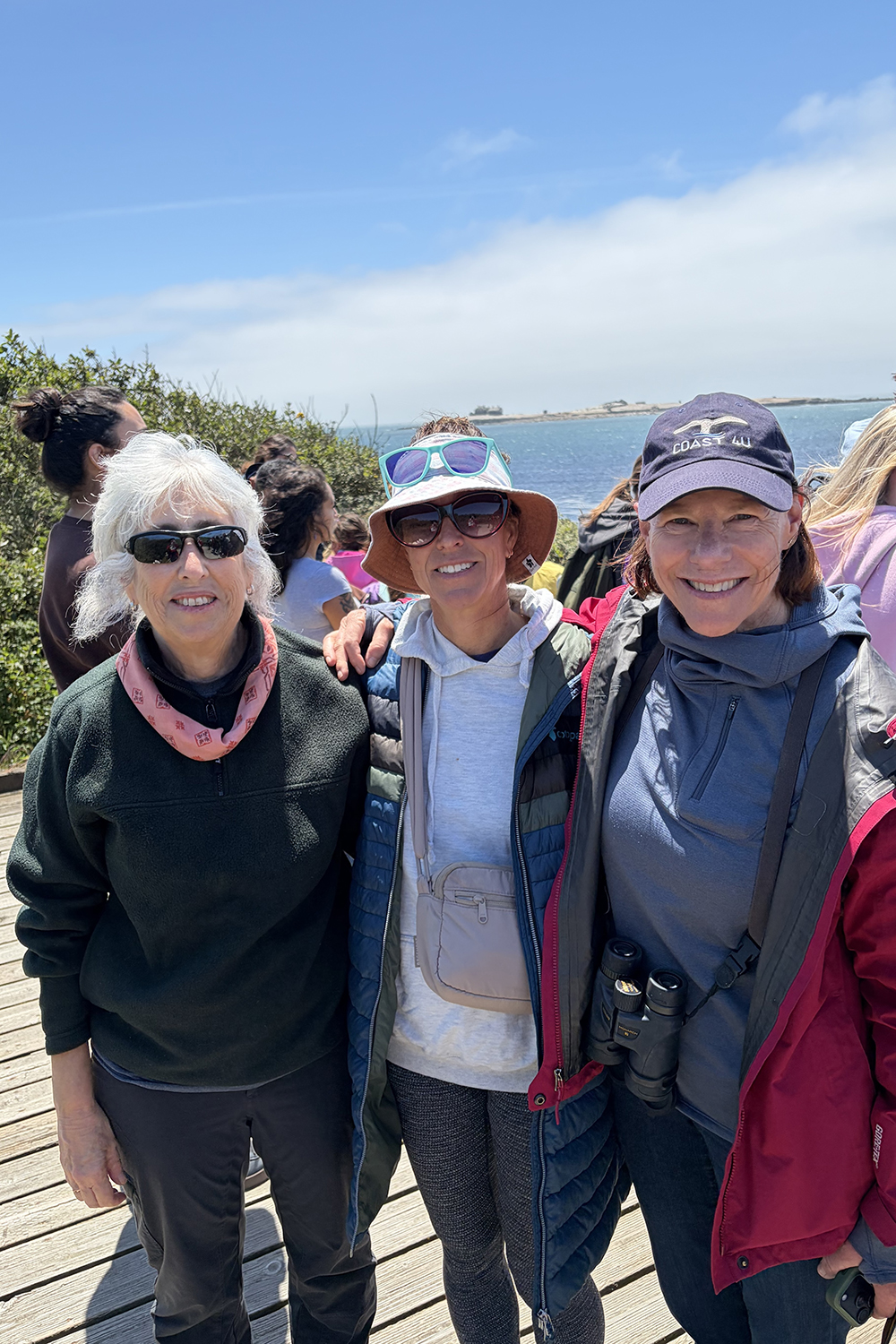
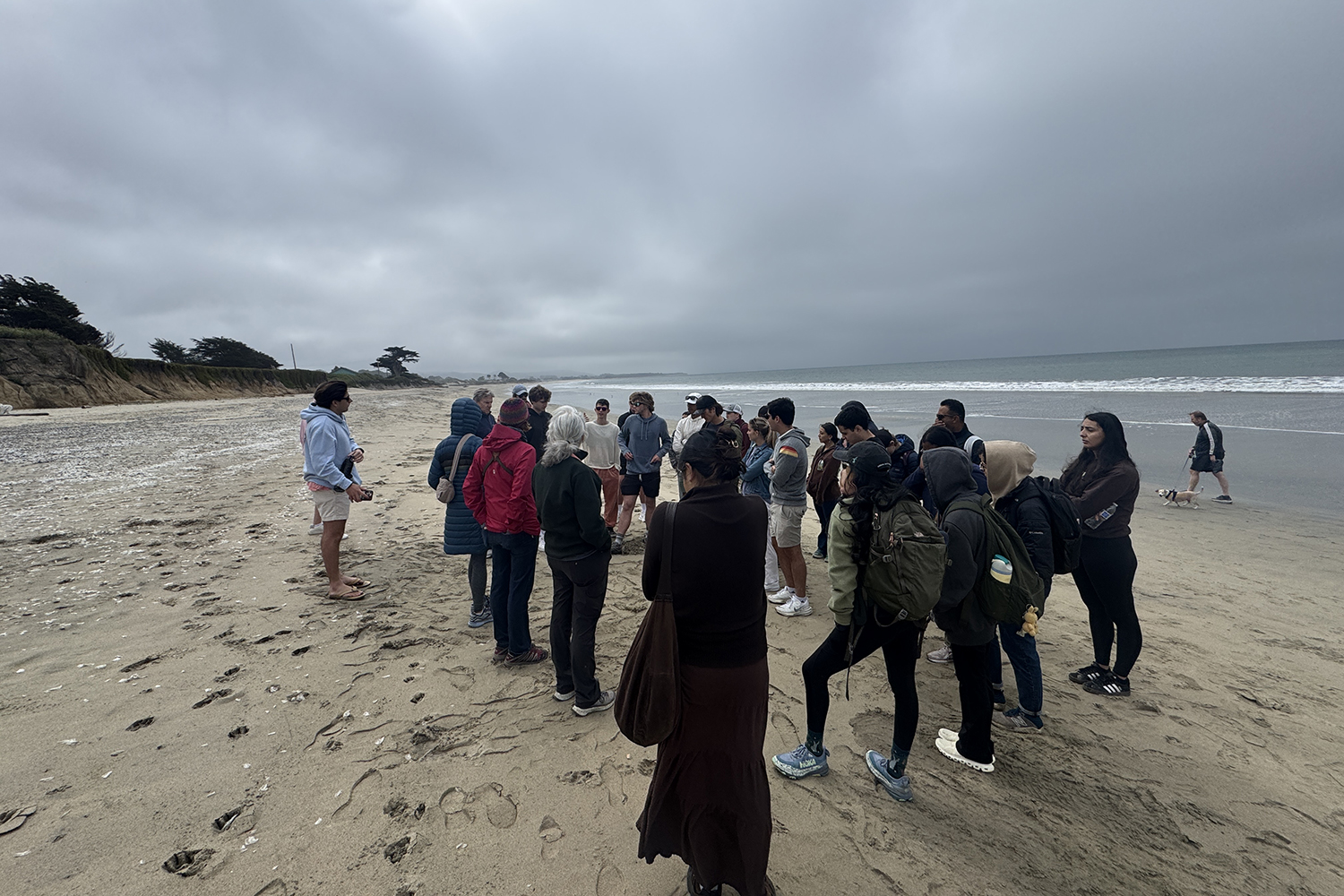
(From left to right) Deborah Sivas, Alexandria Boehm, and Meg Caldwell on a field trip for the course. | Courtesy Stanford Doerr School of Sustainability
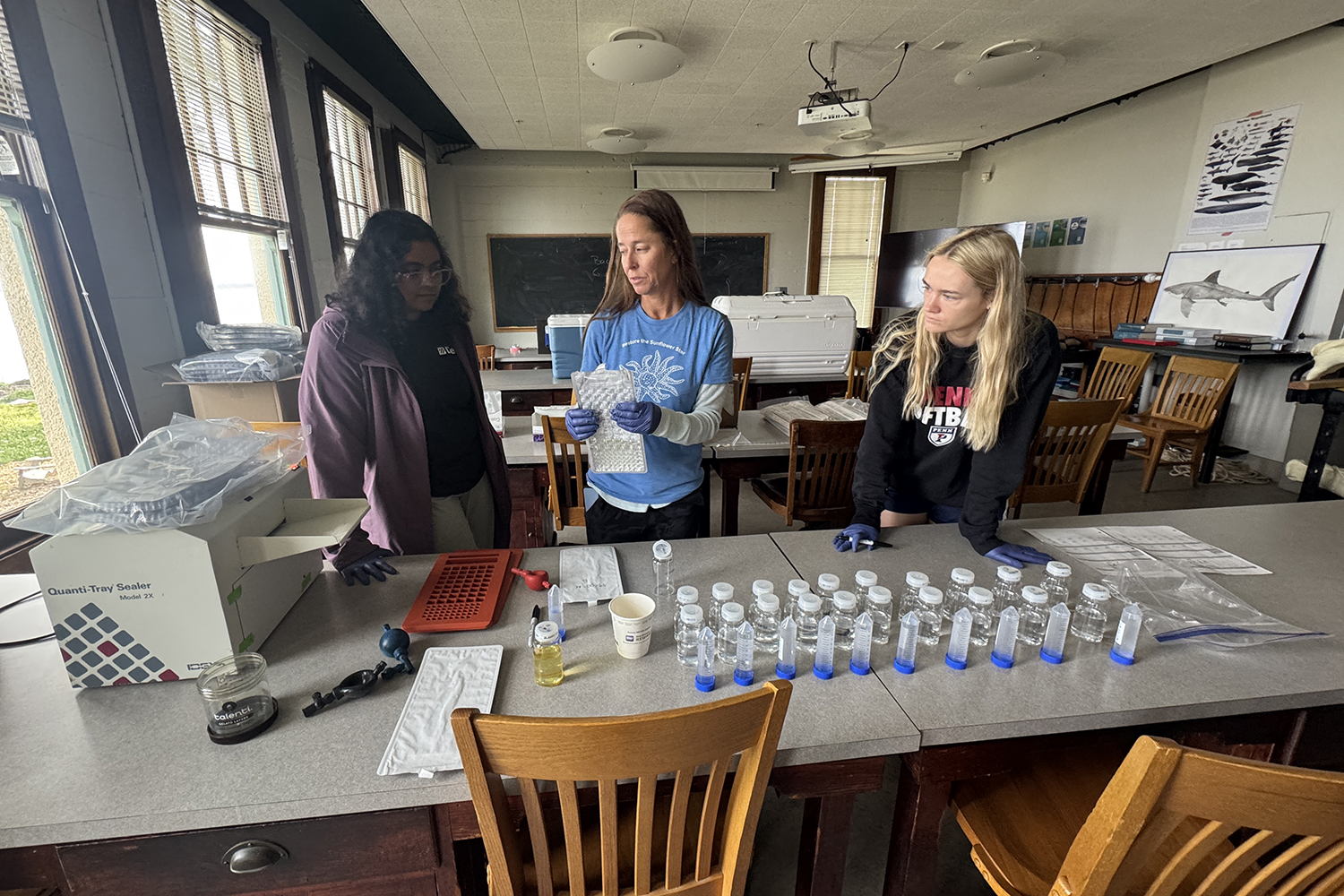
Boehm and students analyze the samples for E. coli and enterococci bacteria at Hopkins Marine Station.| Laura Kubiatko
That was precisely the goal when Sivas, the Luke W. Cole Professor of Environmental Law and director of the Environmental and Natural Resources Law and Policy Program at Stanford Law School, co-created California Coast in 2005 with Alexandria Boehm, the Richard and Rhoda Goldman Professor in Environmental Studies, and Meg Caldwell, former executive director of Stanford’s Center for Ocean Solutions. Drawing from their shared passions and distinct expertise, the instructors worked together to create a unique experience for their students – who include undergraduate, graduate, and law students from disciplines as varied as engineering and political science.
“Everyone was talking about interdisciplinary education at the time, but nobody was really doing it. So we said, ’Let’s do something different,’” Sivas recalled.
Today, Sivas and Boehm co-teach the course every other spring, updating the curriculum to reflect current cases and mixing lively classroom discussions with field trips that offer real-world perspectives on the challenges facing coastal communities.
Learning by doing
On one of their trips, the students visit Stanford’s Hopkins Marine Station on the edge of Monterey Bay and test the water at a nearby beach.
“The students collect the samples, then analyze them for E. coli and enterococci bacteria. We use the data to explain variability in water quality and how that affects coastal water policy interpretation and application,” said Boehm, a professor of oceans and of civil and environmental engineering.
Other excursions ask the students to dig into controversies they’re studying that quarter. Past classes have assessed the impact of human beach use on seabirds, studied how seawalls affect the steepness of and amount of sand on the beach, and measured the quantities of microplastics and trash on beaches.
Each component of the course is intended to push the students outside their academic comfort zones. These trips often mark the first time the law and policy students have handled scientific instruments. Meanwhile, the course challenges science and engineering students to think in more nuanced ways about problems that have many potential solutions.
The professors intentionally group students from different backgrounds together to ensure that they have the opportunity to learn from one another. “The class is designed to encourage everyone to engage, and we try to honor the expertise and experiences that everyone brings to it,” said Boehm.
The design often leads to new ideas, opportunities, and connections – and sometimes to new career paths for its students.
Changing trajectories
Amanda Zerbe took the course as a sophomore in 2013 alongside graduate and law students. At the time, she was studying Earth systems and was interested in a career as a marine biologist. But that changed when she enrolled in California Coast.
“The class helped me see that translating between law and science could have a real impact,” she said. “I enjoyed learning at the intersection of the fields, where the science wasn’t fully informing legal decisions and the law wasn’t fully aligned with the science.”
The experience inspired her to pursue a law degree, which she earned from Stanford in 2021. Today, she is a clinical supervising attorney at Stanford Law School’s Environmental Law Clinic, working closely with Sivas and law students on environmental issues.
Before taking the course, “I didn’t know if there was a place for me in the sustainability field,” Zerbe said. “But the class helped me find something I cared about and showed me that developing that skill set of translation was worth doing.”
“It’s a taste of real life,” Sivas said of California Coast. “Being in the world is a cross-disciplinary thing. There are no good answers. Everything is hard and there are often politics involved. But that’s the real world. These students are all going to go out there in the world, and if you’re someone who cares and wants what you are doing in your career to have an impact, you have to see the larger picture.”
CEE 175A: California Coast: Science, Policy, and Law (CEE 275A, EBS 175, EBS 275) is an interdisciplinary course offered through the Stanford Doerr School of Sustainability, the School of Engineering, and Stanford Law School. It will next be held in Spring 2028. To learn more and enroll, visit the Stanford Bulletin website.
For more information
This story was originally published by Stanford Doerr School of Sustainability.
Writer
Savannah Tranchell