For members of Stanford Emergency Medical Services (StEMS), the BTS concerts at Stanford Stadium earlier this year began long before the music. Across 12 days of operations, members staffed upwards of 1,600 hours and provided hundreds of treatments, covering everything from stage construction to merchandise lines to the concerts themselves.
It was the largest operation in StEMS history – and one example of the work behind the navy blue uniforms, tactical belts, and steel-toed black boots you might’ve seen at football games, out on the Row, or at the stadium.
StEMS is a student-led group of Stanford-affiliated, California-certified EMTs providing basic life support standby medical services in the Stanford community. Since its founding in 2007, the organization has grown from a few founding members to more than 70 students providing medical standby for upwards of 150 events per year.
“At StEMS, we engage in a culture of continuous improvement,” said senior John Corso, president of StEMS. “Everyone constantly works to be the best clinician they can be. Many of our members also serve as officers to keep our student-run organization going, consistently rising to the occasion to set an ever higher standard for ourselves and what we can be.”
Opportunities for learning and leadership
For the concerts, the work extended beyond staffing crews. StEMS was heavily integrated into the planning process, partnering closely with the Department of Public Safety, WestMed Ambulance, the Palo Alto Fire Department, and Stanford emergency medicine physicians, who were available as additional support in the medical tent.
Although StEMS works in tandem with other providers and organizations, its members lead patient assessments and provide care under the leadership of crew chiefs. As a student-run organization, the work of making that care possible falls to its student leadership. A campus event requires operations to coordinate staffing, logistics to ensure gear readiness, finances to cover equipment purchases – the list goes on.
This past year, StEMS transitioned from operating under the oversight of the Department of Public Safety to the Department of Emergency Medicine. Alongside that transition, members have taken on projects ranging from updating hundreds of pages of medical and operational protocols to introducing new equipment systems and more rigorous clinical training processes.
This culture of continuous learning is essential for StEMS’ two roles: a prehospital care provider for the broader Stanford population and a clinical education organization for its members.
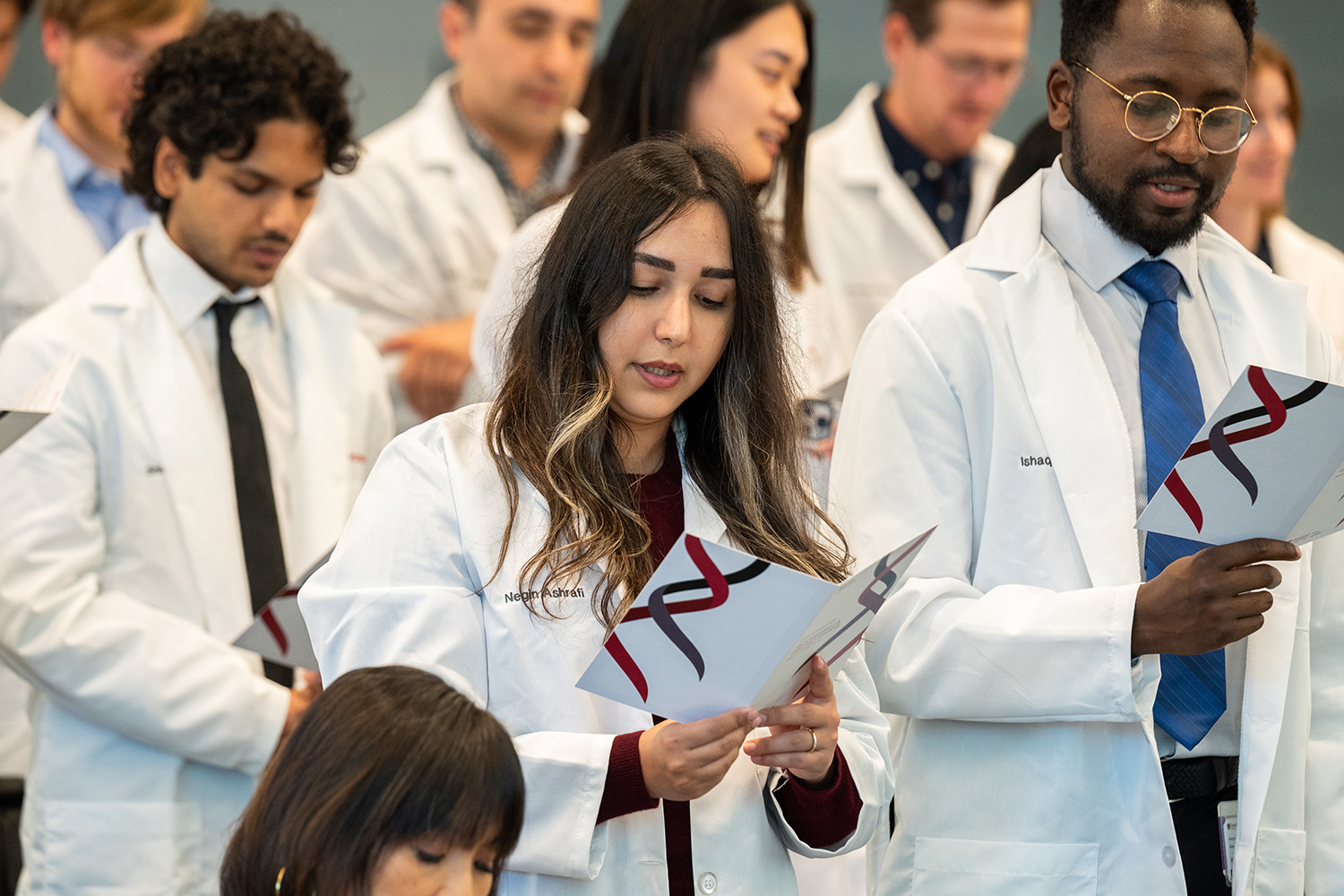
On the education side, StEMS integrates with the EMT training program on campus, which equips students with the skills and knowledge necessary to take the national EMT certifying exam (NREMT) and become an EMT. Students have the opportunity to join StEMS upon completion of this two-quarter sequence, composed of EMED 111A and EMED 111B, which are five units each. Historically, this relationship has also allowed StEMS to maintain its membership levels, as freshly certified EMTs gain field experience while replacing those who graduate.
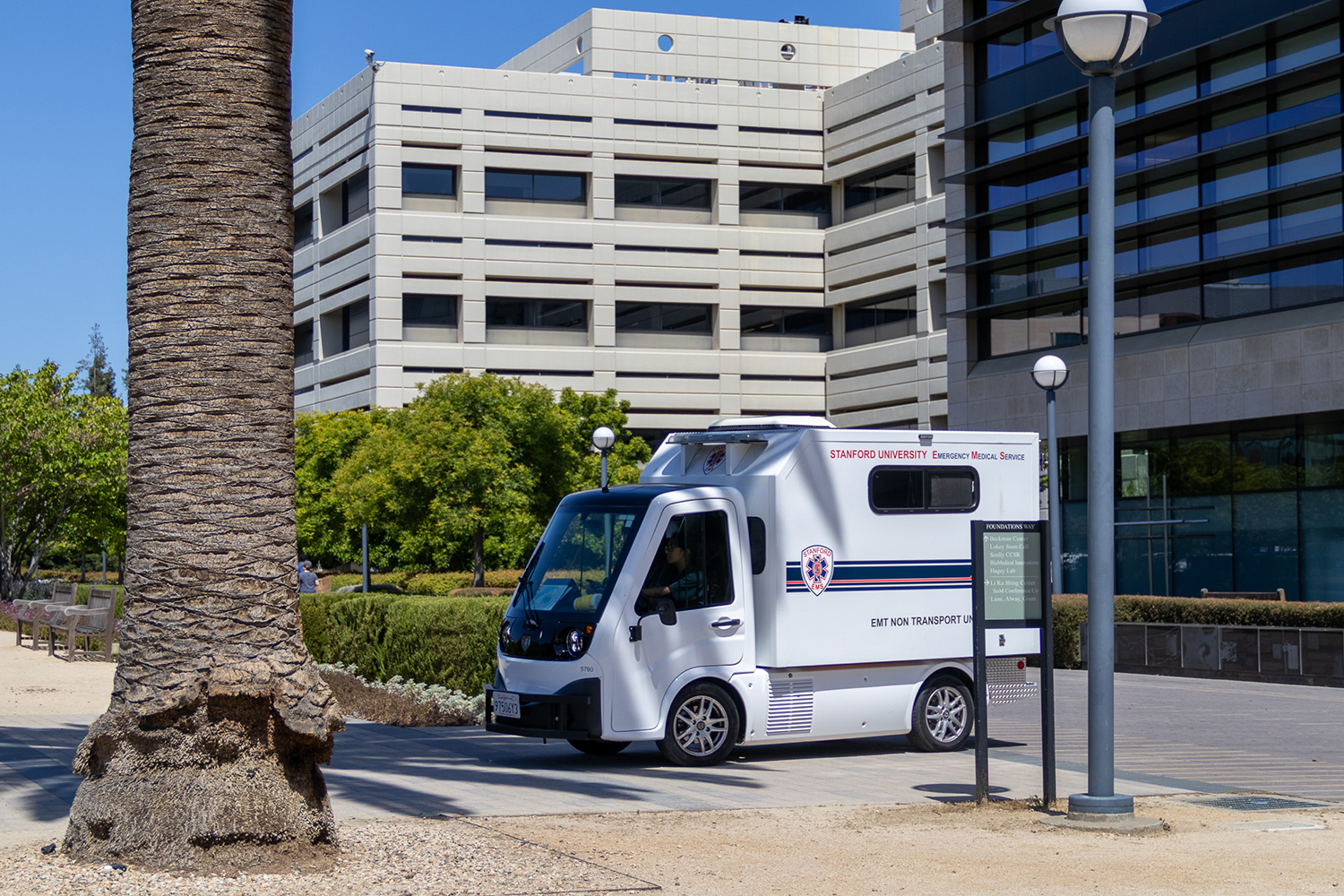
Inside a Stanford StEM-bulance
“There are different priorities amongst the two programs, but I think the top priorities for both are to expand people’s knowledge in prehospital care and education, and also help people at the end of the day,” said Eric Marxmiller, director of the StEMS Program and advanced lecturer in the EMT Program. “That could be helping people as EMTs, or could be helping people get medical education.”
For members, that education continues on shift.
“Everyone is really, really supportive of each other. It doesn’t seem like anyone is competing, and it seems like on shift, there's a whole culture of wanting to learn more from each other,” said junior Nivedita Kripalani, assistant logistics director of StEMS. “When we do get to work with paramedics and physicians, they are so willing to teach, and we are so willing to learn.”
StEMS’ recent transition to the Department of Emergency Medicine opens additional clinical opportunities for its members, including a more rigorous member-to-crew-chief promotion process that now includes mandatory observation shifts in Stanford Hospital’s emergency room.
“From being the mentee to now mentoring and leading orientations for our new members is really a full-circle moment,” said Eva Matentsian, vice president of StEMS. “StEMS gives that opportunity for people to climb up a little ladder and there’s always space for improvement and growth.”
A dedicated community
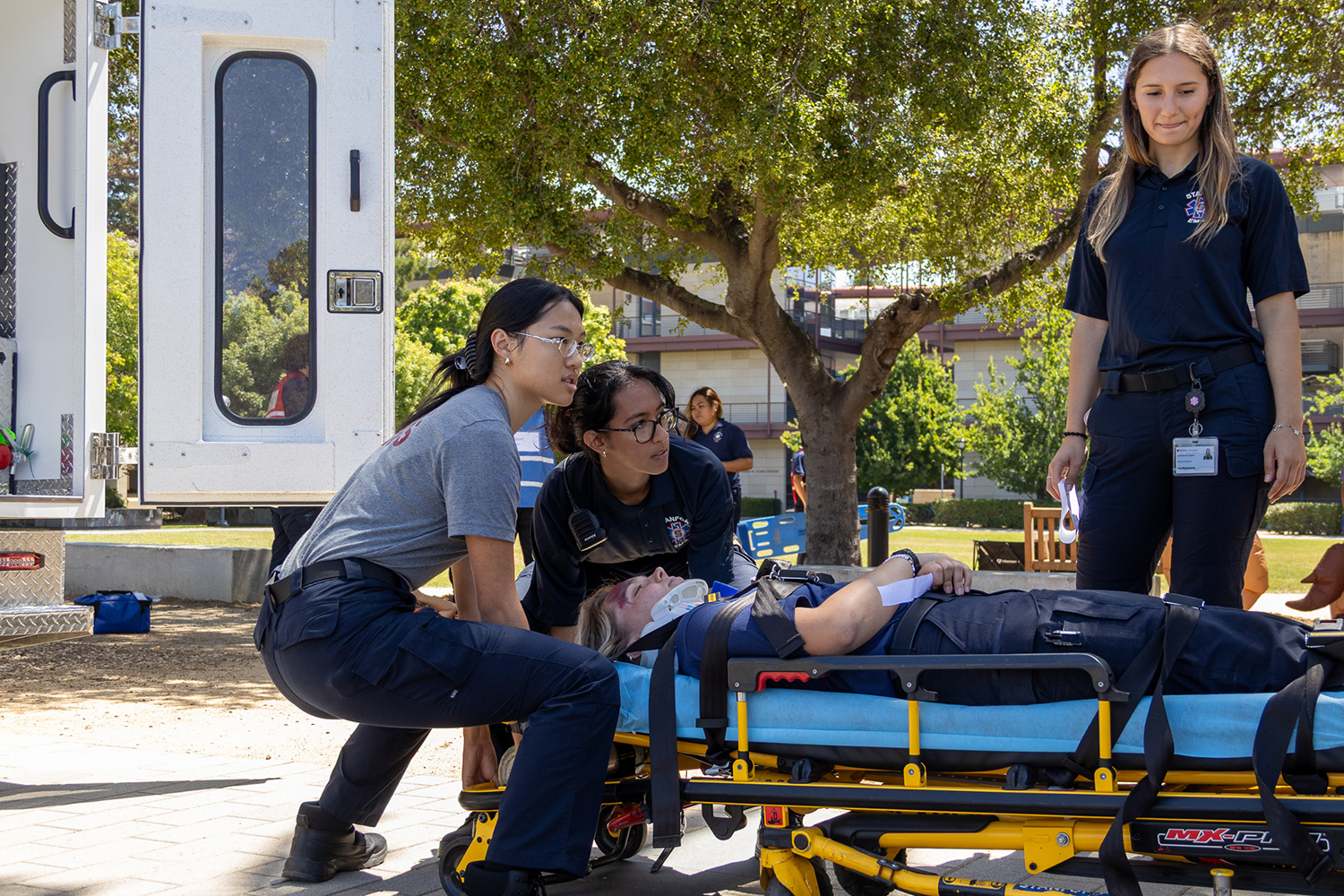
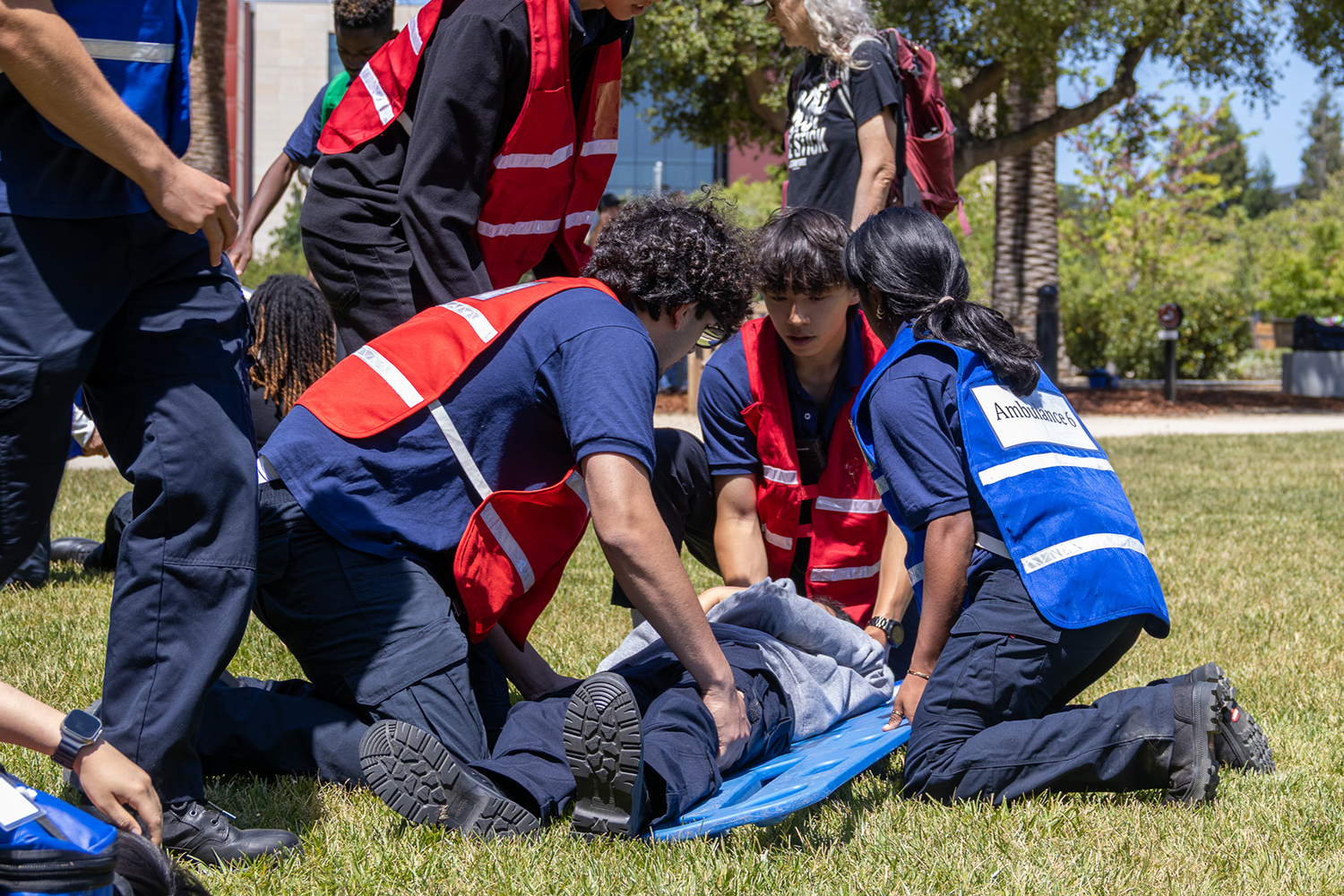
Many StEMS members return to the EMT training program as teaching assistants, teaching hands-on skills like airway management and splinting, and leading patient simulations that cover everything from childbirth to motor vehicle accidents – often by acting as the patient so students experience what it’s like to run their own call.
In the midst of busy schedules, the community within StEMS is a significant motivator.
“Even though you’re technically working, it is a great bonding experience as well,” said Kripalani. “I feel like I’ve gotten to know a lot more people, which I absolutely love, and everyone is very dedicated to their work.”
And the StEMS experience stretches beyond strictly the work, too.
“After long shifts that oftentimes go into midnight, the only place open is The Melt, and we all go get a meal together,” said Matentsian. “Those are some of my favorite memories, because after leading some serious calls, we get to end the night laughing and talking about things in our personal lives, and that community is so awesome.”
This academic year, StEMS is looking to build on these opportunities for its members while strengthening relationships with the community it serves through exploring ways to expand its operations on campus.
“We’d like to continue to build our partnerships, not only with our university partners but with the students,” Corso said. “We want to take care of our patients, we want to advocate for our patients, and we want to make sure that we’re there to serve the students and be that bridge and be that voice.”
Writer
Grace Gao