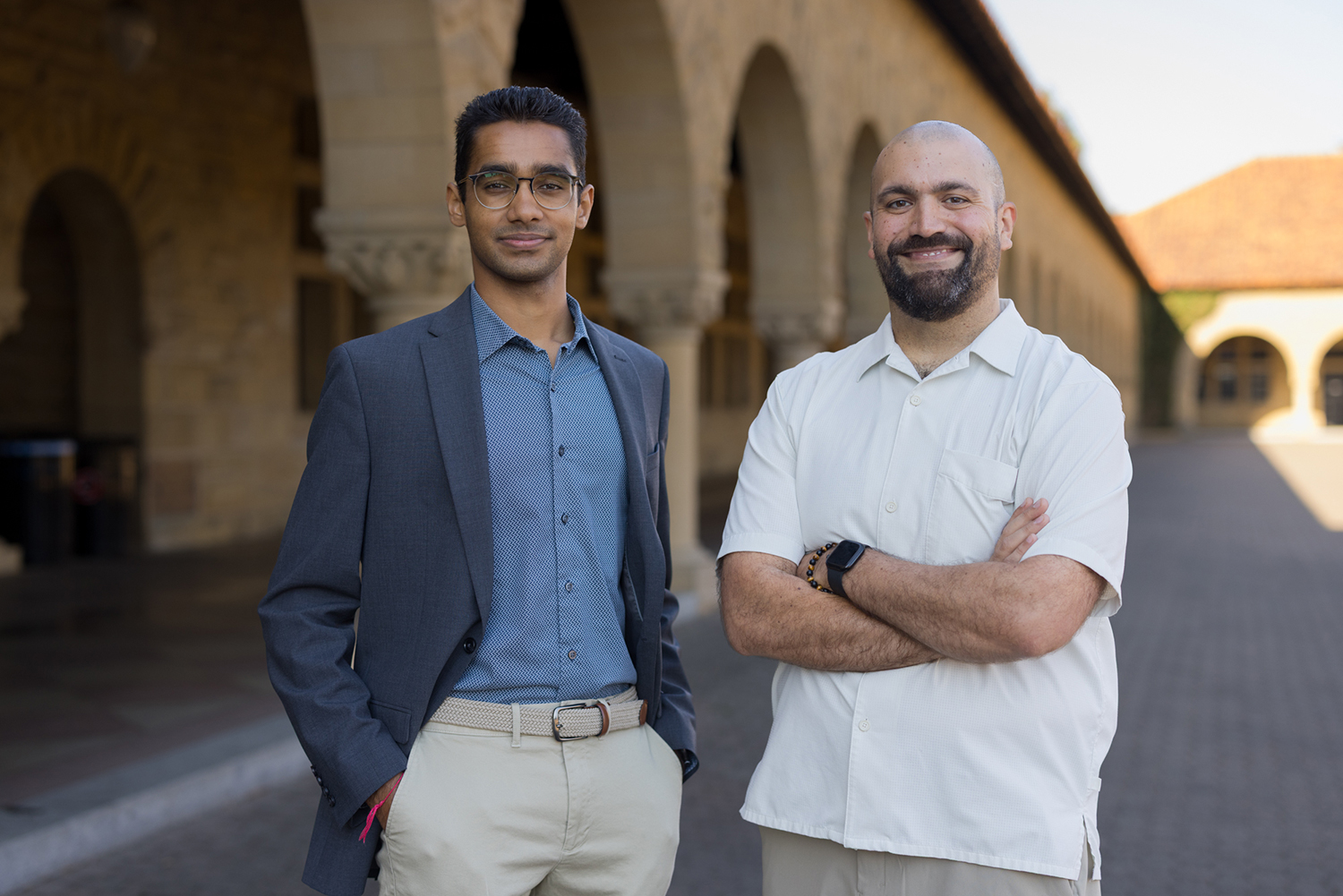
Sophomore Yolanie Cuevas’ sociology homework included finding a way to get inside a Los Angeles apartment building to knock on doors of potential voters. For her classmate Caleb Polster, also a sophomore, the barrier to completing his assignment was even greater. He had to figure out how to canvass for a candidate in rural Northern California who had no volunteer infrastructure at all.
These challenges were part of the fall quarter course The 2026 U.S. Election: How to Understand and Participate, taught by Michael Rosenfeld, professor of sociology in the School of Humanities and Sciences. To deliver on both parts of its title, the course meets for lecture and in discussion sections where students talk about the results of their required fieldwork volunteering for a campaign. Cross-listed in American studies, political science, and public policy, the course attracted 42 undergraduate and graduate students spanning those interests.
“There’s a tremendous amount to be learned about the world through simple engagement with it,” Rosenfeld said. “You can’t just read the theory. You have to actually put it into action, and engaging with other people will teach you all the things you didn’t know about how politics works.”
On the theory side, the students read and discuss texts about the history and ideas of American democracy as well as issues of voter rights, political polarization, political lies, voter fraud, and disenfranchisement. They also keep up with news about gerrymandering, election law, and election interference.
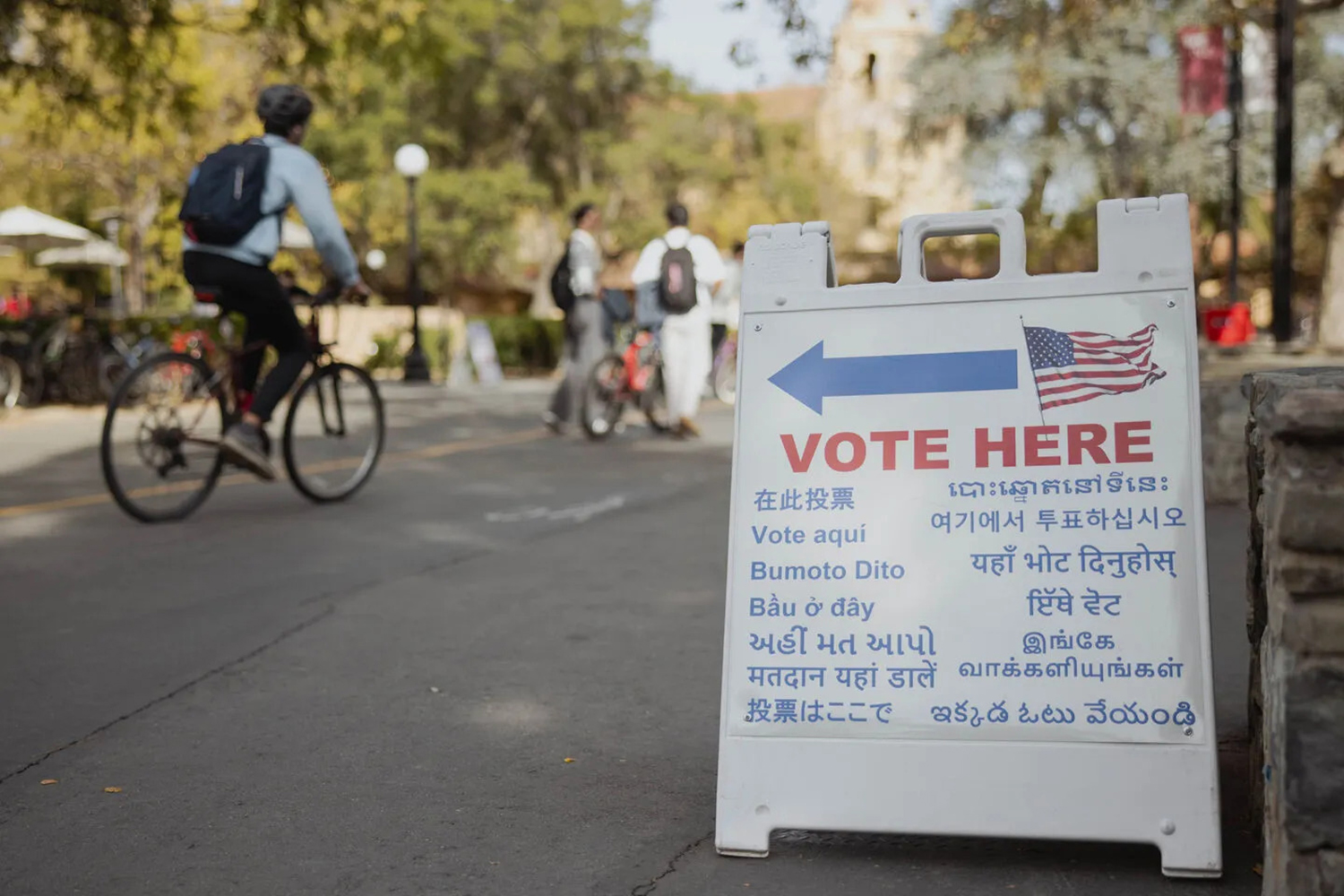
But it is the fieldwork component that is perhaps the most unique. In addition to registering to vote and voting – a requirement for every eligible student – they also chose a candidate or issue that they wanted to promote. The students then volunteered to make phone calls, canvass, or otherwise persuade people to vote for their cause. In the discussion sections, they made presentations about their campaign and discussed their work with their peers and instructors. Now that the election is over, they will conduct a “postmortem” report on the results.
Finding a good volunteer opportunity can be the most difficult part, Rosenfeld said. One thing the students quickly learned is that there’s no real contest for many races. For instance, of the 435 members of Congress, less than 10% are in competitive districts. Also, some campaigns may not use volunteers at all, relying solely on advertising and paid canvassers. Rosenfeld calls these “astroturf” campaigns, since they only have the appearance of grassroots support.
All politics is local
Cuevas, who grew up in Los Angeles, wanted to focus on her hometown and had a few competitive races to choose from. She ambitiously chose to volunteer for two, a congressional and a mayoral candidate. A first-generation college student who grew up in a low-income community, Cuevas describes herself as very political.
“I’m very interested in why people don’t vote and what contributes to that,” said Cuevas, who plans to major in public policy. “Everything about my life was super political: the air I breathed, the area where I lived, how people were pushed out of our neighborhood – my very existence is political. I couldn’t fathom why others in my community wouldn’t say the same.”
She was excited about the potential of Angela Gonzales-Torres, a democratic socialist challenger who won the 34th U.S. Congressional District seat. Cuevas was perhaps even more motivated by what the incumbent, Democrat Jimmy Gomez, hadn’t done for her community.
On a trip home, she was able to knock on doors for Gonzales-Torres. In her pitch to voters, she first asked: “Do you know who your congressional member is?” If they said “no,” she replied: “That’s my point. I think you deserve someone who’s going to be there for you.” She then told them how much more her candidate could do and answered their questions.
You can’t just read the theory. You have to actually put it into action, and engaging with other people will teach you all the things you didn’t know about how politics works.Michael RosenfeldProfessor of Sociology
Redrawn allegiances
Polster was also drawn to a campaign connected to where he grew up, in the small town of Red Bluff, California. Though he doesn’t consider himself a conservative, Polster campaigned for Republican Jim Gallagher, the incumbent congressman for District 1 in Northern California.
With the passage of the California redistricting measure Proposition 50, the predominantly rural district that includes Red Bluff was redrawn to include more urban areas – and now leans heavily Democratic.
“I campaigned for Gallagher because ultimately the other candidate had been representing Sonoma and Napa for his whole career, and I couldn’t back someone who didn’t have the interests of my hometown at heart,” Polster said.
The only problem was that Gallagher, who was seen as unlikely to win and ultimately lost, was not working with many volunteers. So Polster was a largely independent canvasser, taking it upon himself to reach out to friends and people he knew in the community.
“I think at best I convinced people to vote,” Polster said. “I know a lot of people who are really apathetic about voting, and if there’s anything I did well, it was illustrating the consequential nature of the election.”
Both Polster and Cuevas feel they have learned a lot from the course, especially by putting their values into action.
“When you vote, you’re exercising one of your most powerful rights, and as part of this class, you’re getting other people to vote as well,” Cuevas said. “I know people are hesitant to become patriotic because of a lot that has happened in the United States that is so disappointing, but you have the ability to try and make the change you want to see – and you can’t do it alone.”
For more information
This story was originally published by Stanford School of Humanities and Sciences.
Media contact
Sara Zaske, School of Humanities and Sciences, 510-872-0340, szaske@stanford.edu
Writer
Sara Zaske