At a university where students aspire to create life-changing technologies, Luke Kemp delivered a sobering message: Without stronger checks in place, innovations like AI are more likely to accelerate problems than solve them. The Cambridge University researcher offered a way to change course: Give ordinary people more power.
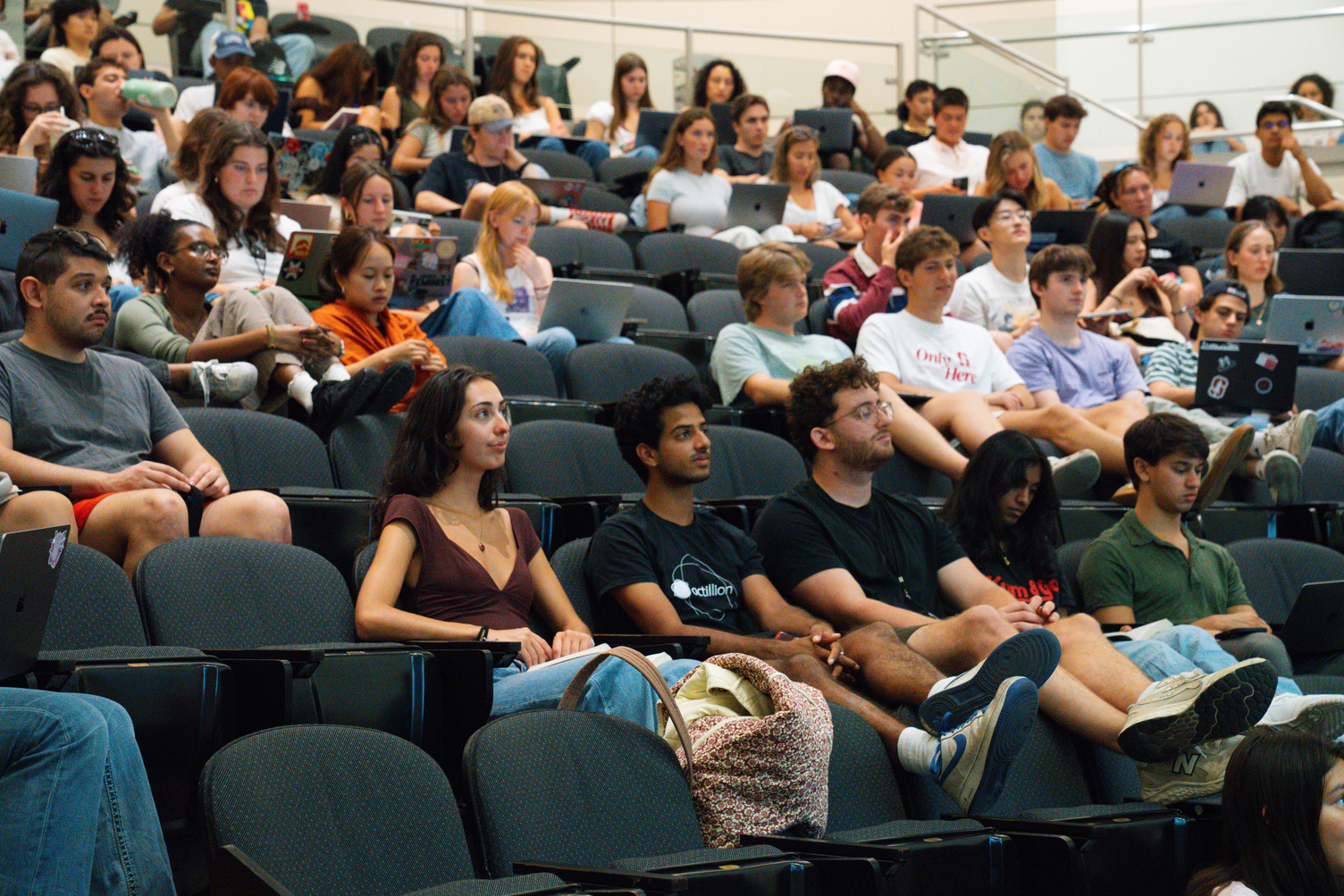
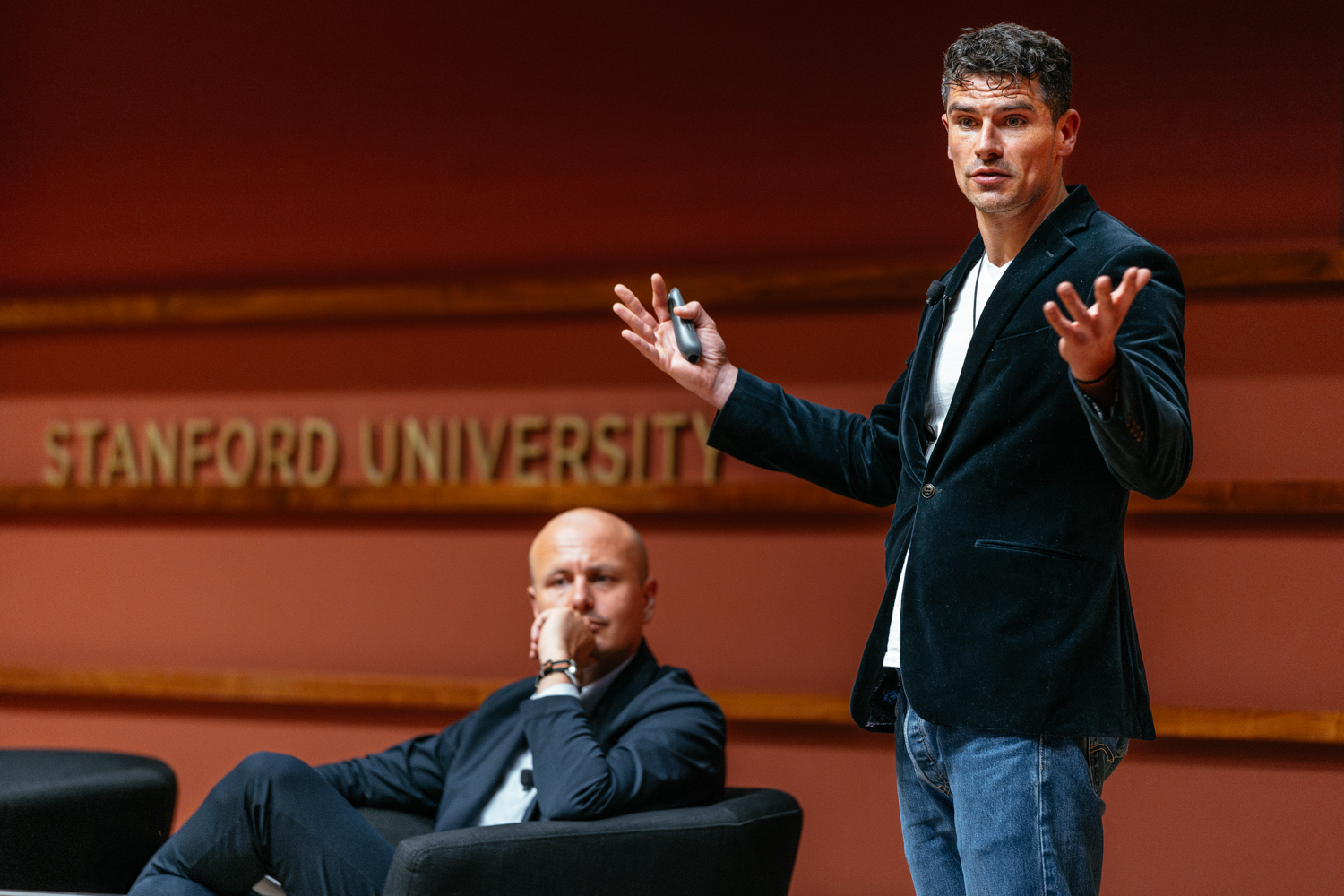
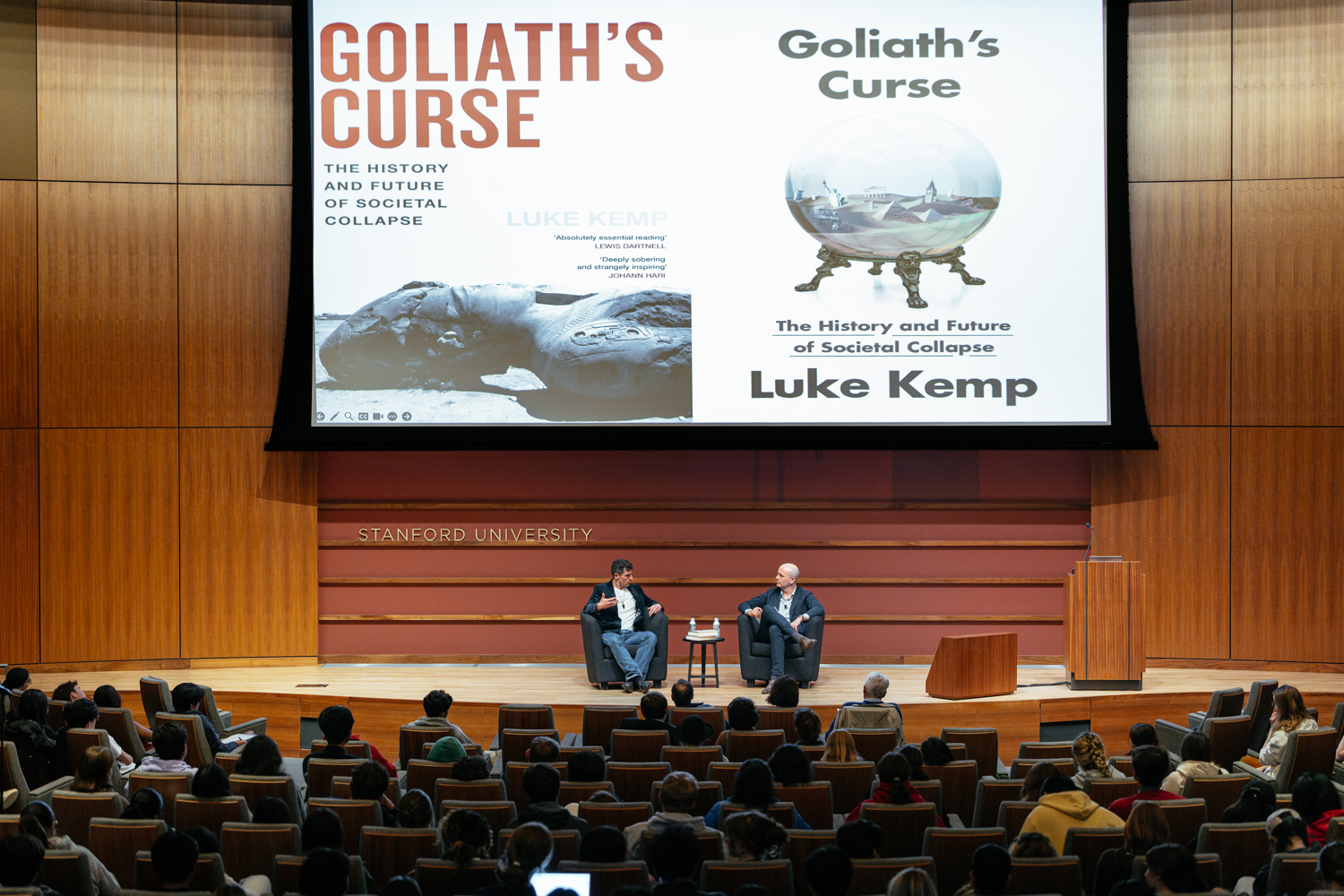
“I think one of the best ways forward is pretty simple – democracy,” said Kemp at an April 21 event for Stanford frosh at Hauck Auditorium. Kemp was the spring quarter plenary speaker for Civic, Liberal, and Global Education (COLLEGE), Stanford’s first-year undergraduate requirement program. His book, Goliath’s Curse: The History and Future of Societal Collapse (Knopf, 2025), was selected for this year’s Three Books, Stanford’s reading program for incoming frosh, which was integrated into COLLEGE in 2023.
Kemp opened with takeaways from studying the collapse of seemingly invincible civilizations – “Goliaths,” as he calls them – by drawing on 300,000 years of human evolution and behavior.
These Goliaths share one common feature before collapse: entrenched inequality. As wealth concentrates, it hardens into political power, creating top-down hierarchies that extract resources and enforce rule through violence or coercion. Over time, the system becomes so “hollowed out” it falls apart. “Across history, I call it popular evisceration; today we call it a cost‑of‑living crisis,” Kemp said.
What makes societies more durable, Kemp argued, is democracy. More equal societies are more likely to survive crises.
Connecting Goliath’s Curse to COLLEGE
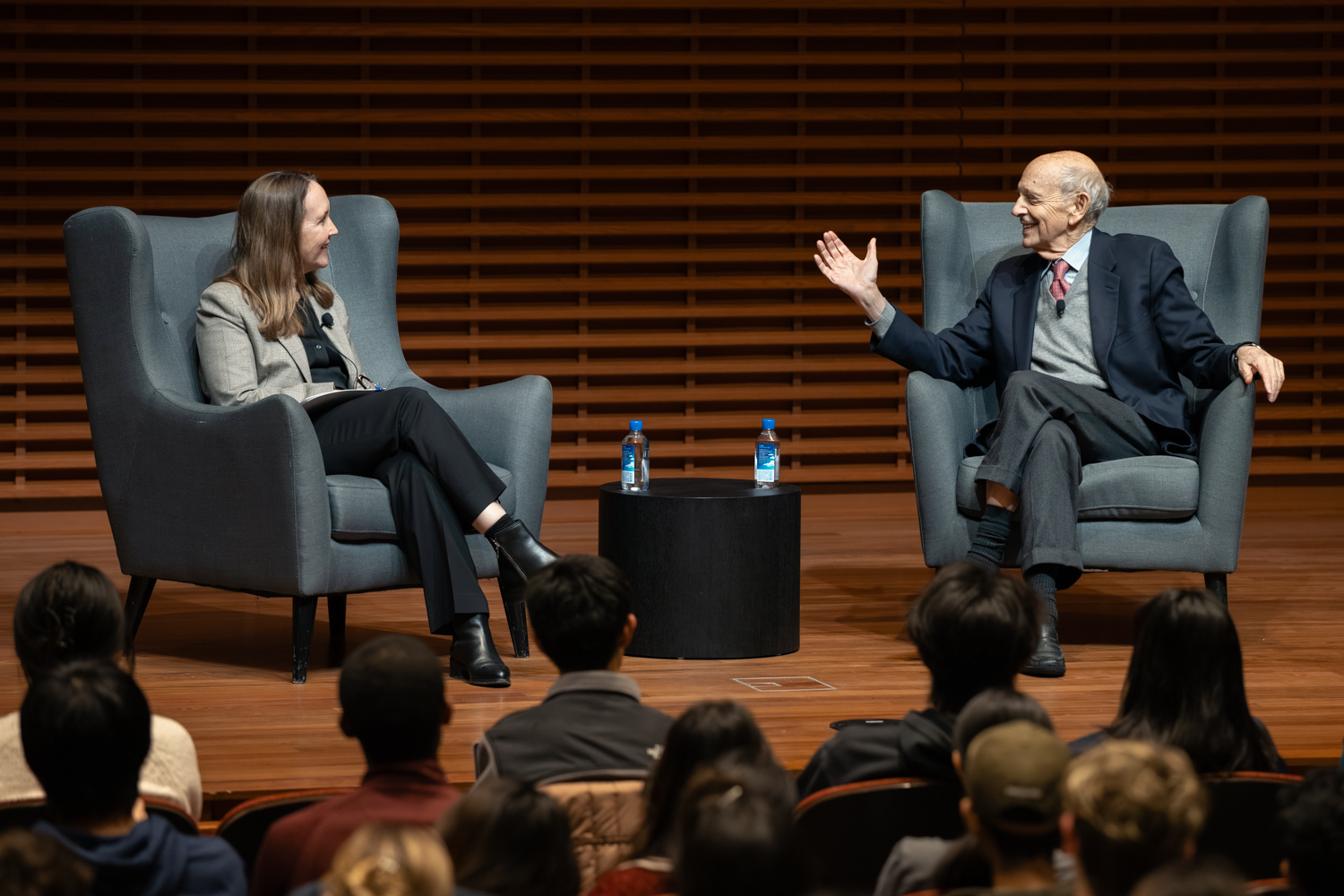
The event included a conversation between Kemp and Daniel Zimmer, a lecturer in the COLLEGE program and postdoctoral research fellow at Stanford’s Existential Risks Initiative. Zimmer suggested Kemp’s book for this year’s Three Books, seeing it as aligned with themes the COLLEGE program examines – particularly in spring quarter, which centers on “Global Perspectives,” when students reflect on their roles and responsibilities in the world.
“The book offers an important warning that rising economic inequality, authoritarianism, and technological solutionism might all belong to a broader syndrome that could end very badly if not challenged by more democratic alternatives,” Zimmer said in an interview.
During his conversation with Kemp, Zimmer noted that many students in the audience had just completed COLLEGE’s winter offering, Citizenship in the 21st Century, and asked Kemp to expand on citizenship’s role in preventing collapse.
As technologies like AI accelerate, so do their risks – making democratic oversight essential, Kemp argued. He offered a provocative suggestion: Rather than leaving existential decisions to private companies, citizen juries briefed by experts could also have a say.
“If we had a more democratic approach,” Kemp said, “I think we’d have a much better chance of solving some of the biggest problems we face.”
Zimmer also asked Kemp’s advice on living an examined life – a topic explored in the fall course Why College.
Citing William Deresiewicz’s essay Solitude and Leadership, Kemp urged students to clarify their own principles. In times of crisis, knowing what you stand for allows you to draw on your own values and convictions rather than defer to authority.
Kemp also advised students to ground themselves in history, choose careers that don’t deepen the risks they’re worried about, and help build democratic institutions and movements capable of keeping powerful technologies and elites in check.
Bringing Kemp’s book into the COLLEGE classroom
Another COLLEGE aim is creating a shared intellectual experience. While fall and winter are set courses, students can choose from 10 different options in spring. To build common ground, several COLLEGE courses this quarter incorporated the Three Books spring selection into their curricula – a first for the program.
“Thanks to the book’s wide range, many faculty were eager to incorporate Luke’s book into their syllabi,” said Dan Edelstein, the Nehal and Jenny Fan Raj Director of COLLEGE. That includes his own spring course, COLLEGE 118: Global Capitals: How Cities Shape Cultures, States, and People, which took up Kemp’s chapter on the fall of ancient Rome. “Many of my students were exhilarated by the sweep of the historical narrative in Goliath’s Curse and enjoyed the provocative nature of its conclusions,” Edelstein said.
Students also engaged with Goliath’s Curse in COLLEGE 119: Making of the Modern World. Instructor Byron Gray found that Kemp’s transhistorical claims invited students to question how we define the past. “Are what we identify as quintessentially modern problems really all that new?” Gray asked his students, noting how wealth concentration, political gridlock, and environmental degradation shadowed ancient societies before their collapse, too.
Previous collapses were isolated; empires, for all their reach, were contained. A crisis in North America wouldn’t reach Europe. In an interconnected world, that insulation is gone. “It raises a question of the extent to which it’s even possible to extract yourself from these global connections,” Gray said.
“I told students that this is the most interesting time to be looking at these kinds of questions.”
Why are things the way they are?
COLLEGE 107: Preventing Human Extinction, taught by Stephen Luby, the Lucy Becker Professor of Medicine, also brought Kemp’s book into its curriculum. Luby developed the course in 2018 to examine threats to human extinction – climate change, nuclear war, pathogens – and found Kemp’s analysis a natural fit.
Following Kemp’s plenary conversation with Zimmer, Kemp spoke in Luby’s lecture.
That week, students were exploring path dependency – the idea that early decisions constrain future ones even when better options emerge. Luby cited the QWERTY keyboard as an example.
But some paths carry graver consequences. The nuclear arms race, where stockpiling for deterrence triggers rival arsenals in response, creates what Kemp calls a “feedback loop.” Understanding these loops, he argued, is key to preventing collapse.
A destructive feedback loop doesn’t mean doom. Societies have disrupted them before – in ancient Athens, elite power concentration was limited through random lotteries that distributed civic responsibilities equally.
Kemp asked students to propose their own ideas for breaking feedback loops.
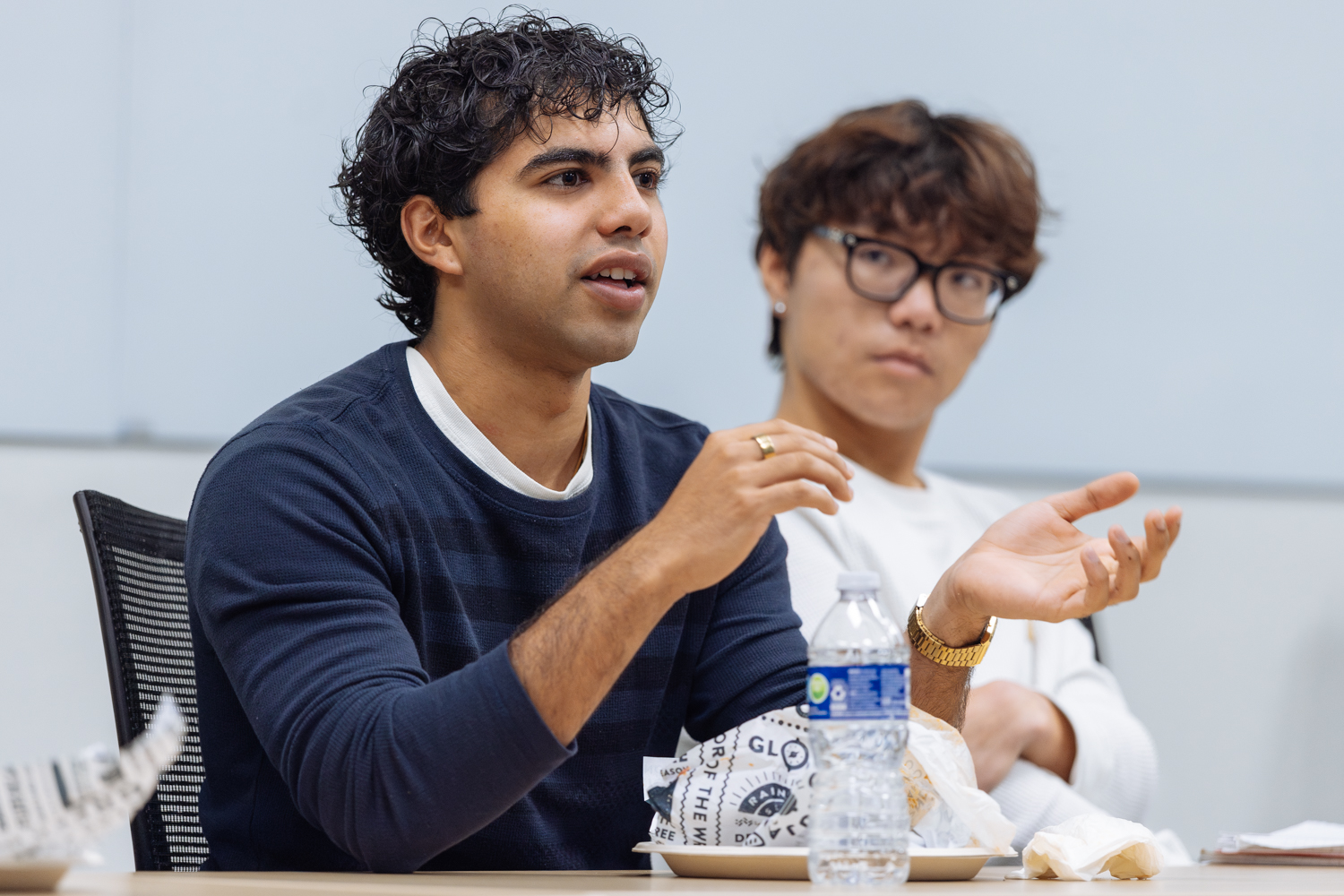
For frosh Josie Landreth, the discussion – and her fall experience in Why College – prompted her to question societal narratives shaping her choices, particularly around lifestyle habits that contribute to climate change. “It’s made me rethink a lot of things that maybe I’ve taken for granted as things that I need,” Landreth said. “Where can I do my little piece and rethink, why am I actually doing certain things?”
For more information
Edelstein is also the William H. Bonsall Professor in French in the School of Humanities and Sciences (H&S).
Luby is also a senior fellow at Stanford Woods Institute for the Environment and the Freeman Spogli Institute for International Studies.
The leads on COLLEGE 119 are Jovana Lazić, associate director of the Center for Russian, East European and Eurasian Studies in Global Studies in H&S, and Grant Parker, associate professor of classics in H&S.
Writer
Melissa De Witte