In the “Research Matters” series, we visit labs across campus to hear directly from Stanford scientists about what they’re working on, how it could advance human health and well-being, and why universities are critical players in the nation’s innovation ecosystem. The following are the researchers’ own words, edited and condensed for clarity.
We live in a chemical world. I want to understand all the chemical exposures in our daily life and how that connects to our health.
Scientists have characterized a lot of plasticizers, PFAS, pesticides, and other chemicals, but there are many more chemicals in the environment that we don’t know about.
I have always been interested in human-made chemicals, how they ended up in the environment, and whether they are toxic to people or wildlife. For example, during my PhD studies, we identified a single chemical out of thousands in tire rubber that was leaching from roadways and killing coho salmon.
During my postdoc, my research focus shifted more to human health. Using public mass spectrometry data collected by researchers around the world, our team and I characterized thousands of drug metabolites – the byproducts left over when your body breaks down a drug – at once.
“The drugs we use, the food we eat, the cosmetics we put on our bodies, the water we drink – they all contain chemicals, and we know very little about them.”
At Stanford, I am building a research program that uses such computational approaches to make the investigation into environmental chemicals faster and more systematic. The big problem that my lab seeks to address is how to map this largely hidden chemical world and explain why the same chemical exposure may affect one person or species very differently from another. I want to achieve better predictive power for the health outcome of each individual. Now, with the help of AI, what took months in the past probably takes me only days to weeks.
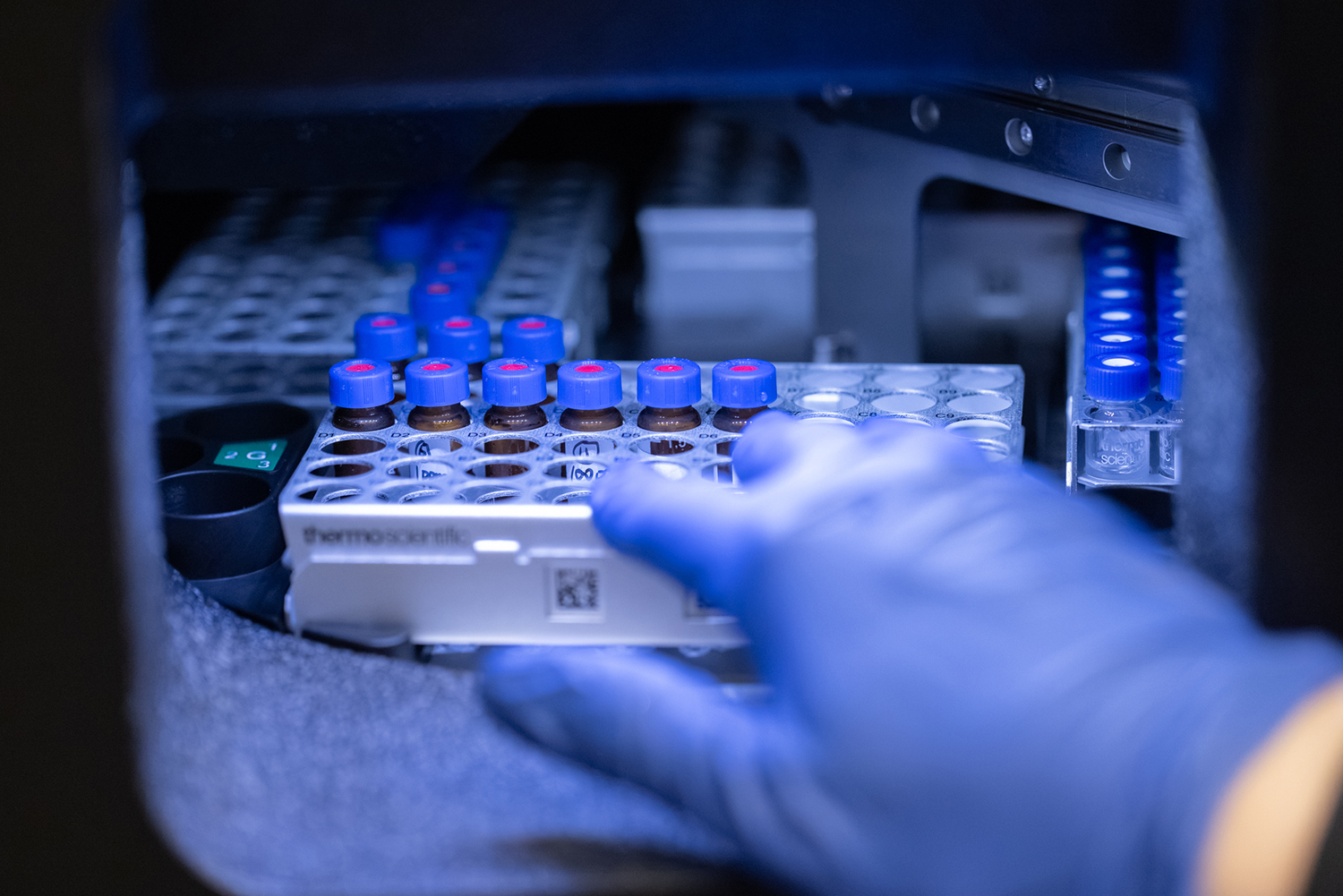
A project we are currently pursuing asks how gut microbes transform medicines. We are testing approximately 200 drugs with a defined community of human gut microbial species, then using mass spectrometry to detect the new molecules that the microbes produce. The goal is to create a systematic map of microbial drug metabolism rather than studying one drug or one microbe at a time.
We plan to publish our discoveries as an open-access library so other researchers can better understand drug metabolism in their own datasets. Although there is still a long way to go, we hope our data can contribute to the precise modulation of people’s gut microbiomes to make drugs more effective for – or less toxic to – each individual person.
Drugs have also been recognized as major contaminants in water bodies. In addition to supporting human health, our data will help researchers understand the environmental impacts of these metabolites and design chemicals that minimize risks to both people and ecosystems.
This work was made possible by federal funding. I was trained as an analytical chemist, which gave me the ability to figure out chemical questions. With an NIH Pathway to Independence Award, I was able to get exposure to the field of microbiology and specifically human gut microbiology, giving me the ability to answer biological questions. Federal funding has also allowed me to expand my research and collaborate with more people. So I see it as a necessary funding mechanism.
The role of the university is to educate the next generation and to bring together great and creative minds. Academia gives us the freedom to explore – to fire up ideas that industry can pick up, scale up, and bring to production. And Stanford is like Disneyland for a scientific researcher; I feel like whatever I want to work on, I can find a collaborator.
For more information
This story was originally published by Stanford Doerr School of Sustainability.
Photographer
Andrew Brodhead