In the “Research Matters” series, we visit labs across campus to hear directly from Stanford scientists about what they’re working on, how it could advance human health and well-being, and why universities are critical players in the nation’s innovation ecosystem. The following are the researchers’ own words, edited and condensed for clarity.
Food allergy impacts 8 to 10% of the U.S. population. So in any classroom, you’ll see multiple kids who are navigating food allergies. The reason we worry so much about food allergy is because with accidental exposure, a small percentage of kids have very severe symptoms that can actually lead to death. But outside of the risk of reactions, living with food allergy has a bigger quality-of-life toll than I think we realize. Anytime there’s food around, you have to be on alert, and that hyper vigilance can lead to chronic stress and anxiety. By offering treatment options, we can hopefully mitigate some of those tolls.
Our primary goal is to do better for kids with food allergies and their families. In my vision of the future, we’ll have much better guidelines on how to prevent food allergies from developing in the first place. Beyond that, I am hoping for treatment options we can do right away once a patient is diagnosed. Early intervention has been found to make a difference in the long-term outcomes of food allergy – the younger immune system is just much more malleable and responsive to treatment.
We have a clinical trial happening now with babies younger than two months with eczema or very severe dry skin. Early incidence of eczema has been linked with the subsequent development of food allergies, and we hope that treating the eczema and minimizing the skin damage early on will lead to a reduction of food allergy later.
The search for better ways to diagnose food allergy and monitor treatment underlies much of our research. Currently, skin prick testing and IgE (immunoglobulin E) testing with blood work are the mainstays of food allergy diagnosis, but these tests are almost useless. They can’t tell us the severity of symptoms. There’s also a high false positive rate, and they don’t allow us to monitor how well a treatment is working. So for a lot of our clinical trials, we have to just give a person the food they’re allergic to and watch to see if they react, so we can say, yes, you’re allergic, or yes, you’re responding to treatment!
“Our primary goal is to do better for kids with food allergies and their families.”
We’re also focused on finding better treatment options. For the longest time, the treatment for food allergy was avoiding the allergen. But accidental exposures can happen no matter how careful you are. Oral immunotherapy, which involves taking small amounts of the food you’re allergic to every day and it desensitizes your body over time, was FDA-approved in 2020. But there are downsides to that treatment. It doesn’t work for everybody. There’s a risk of reacting to the treatment. Some kids develop food aversion. And you have to modify your lifestyle around dosing – you can’t exercise, you have to do it on a full stomach, you have to account for things like being sick or getting your flu vaccine.
In a trial we just finished, we found that the injectable medication omalizumab actually reduces your risk of an allergic reaction. Omalizumab is now FDA-approved for children one year and older, either by itself or before starting oral immunotherapy.
The injection has to be given every two to four weeks – if you stop taking it, your body will revert to its allergic state. But for children with a severe food allergy, it’s been life changing. It’s so nice to hear patients telling us, “I went to an ice cream shop with my friend for the first time and I was not worried,” or, “we just traveled out of the country to see family because it finally felt safe for our food-allergic child.”
Omalizumab works for many people, but not for everyone, and many kids are needle-phobic, it’s just really scary for them. Some of the drugs and interventions currently in the pipeline take those concerns into account and try to reduce the burden on the patient. Sublingual immunotherapy is being explored, which has fewer side effects than oral immunotherapy. A peanut patch is being explored. So are less-frequent injection drugs.
In another study we’re very excited about, we’re doing food challenges with people who have been prescribed omalizumab, at the beginning of treatment and again six months later, taking blood along the way to look for biomarkers that could tell us how the person is doing on the medication. We’re also doing quality of life surveys and burden of treatment assessments. We’re hoping this study will help us learn more about how we can actually bring patients to a point where they can eat the food in a safe manner, so they’re not as stressed out when they’re leading their lives.
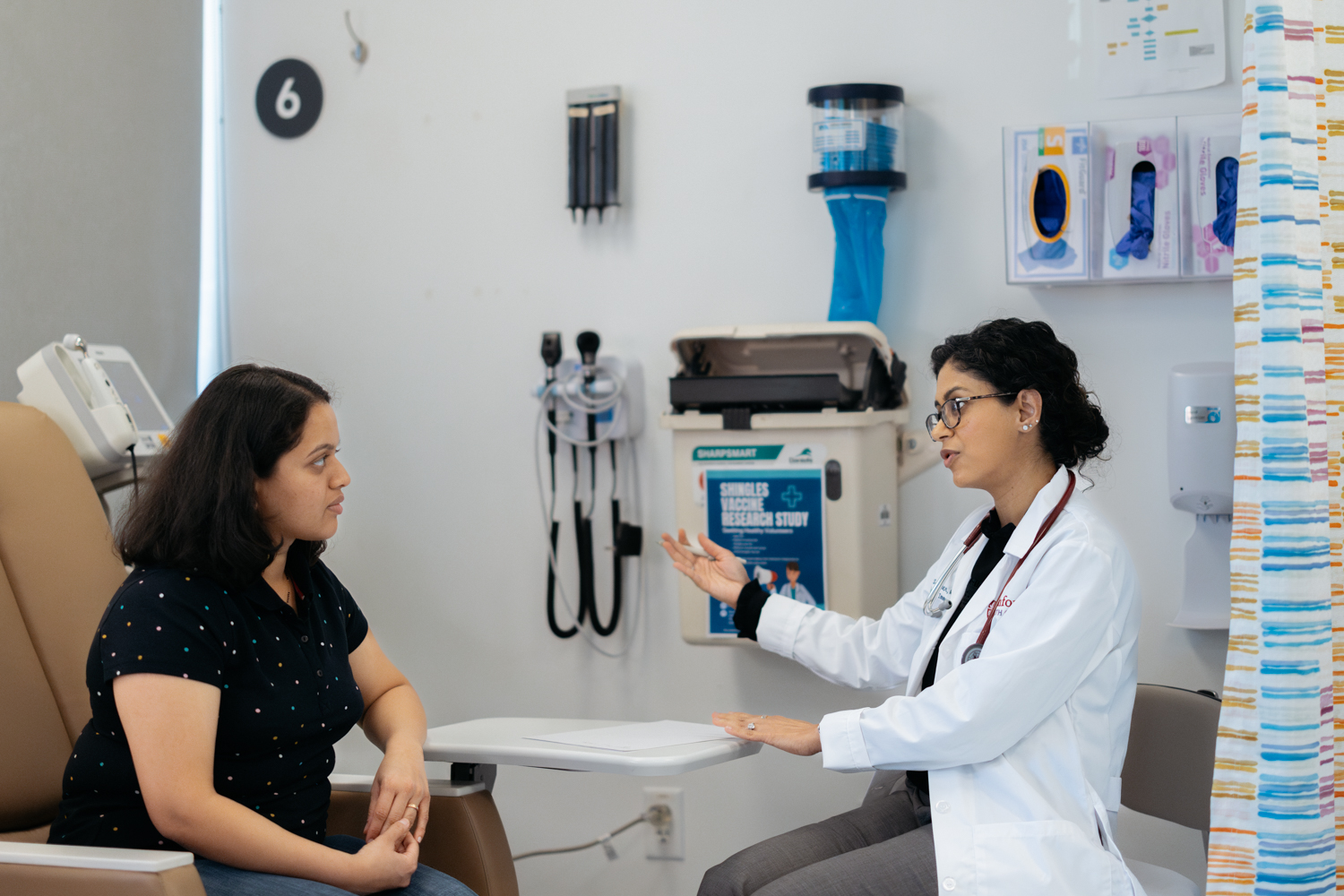
What I love about allergy immunology is that everyone in the family is my patient – the parent, the child, and their siblings. It’s a little bit like the old-timey doctor who knows everything about the family. You know where they go on vacation, what pets they have, their pets’ names, because it all ties into their allergic responses. And because of my research, I get to see them every two weeks, rather than just once a year for a 10-minute visit, which really allows for developing a deep bond. I feel lucky to be able to straddle both worlds – the research arena, where I get to ask questions informed by my work with patients, and the clinical setting, where I can use scientific data to have an informed decision-making process with families.
What I love about being at Stanford is the quest for knowledge, the passion, the ability to collaborate – it’s almost like a vibe. There’s just so much energy around novel findings, and when you’re exposed to it, you think of ways to apply it to your own work. We collaborate with the dermatology team, with the GI team, with psychology; I don’t think those relationships and multidisciplinary approaches would be feasible in a private or outpatient setting. That exposure and the excitement around it make a lot of this work possible.
For more information
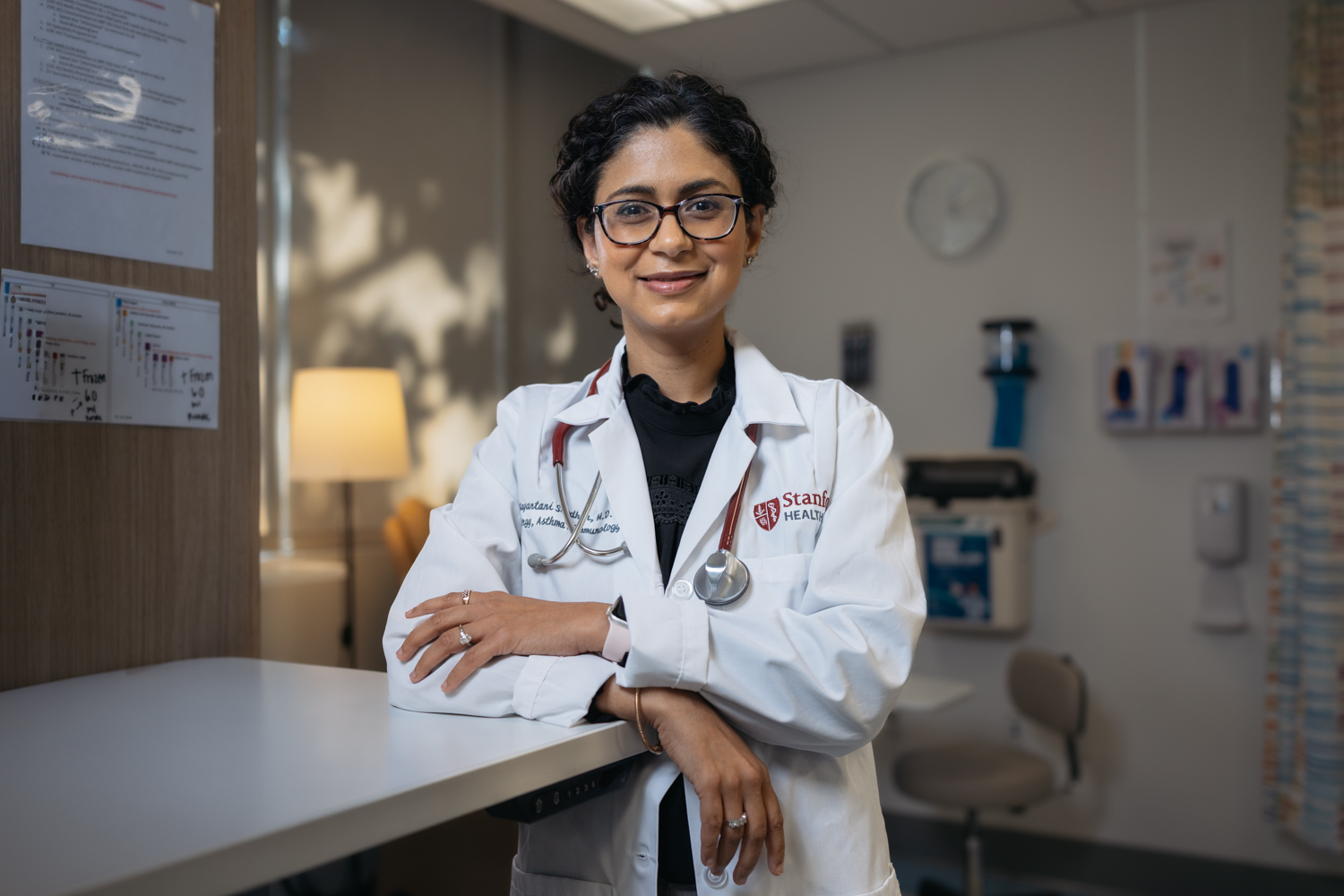
Sayantani Sindher is a clinical associate professor of medicine and of pediatrics (allergy and clinical immunology), and the director of the Clinical Translational Research Unit at the Sean N. Parker Center for Allergy and Asthma Research.
Photographer
Andrew Brodhead
Videographer
Harry Gregory