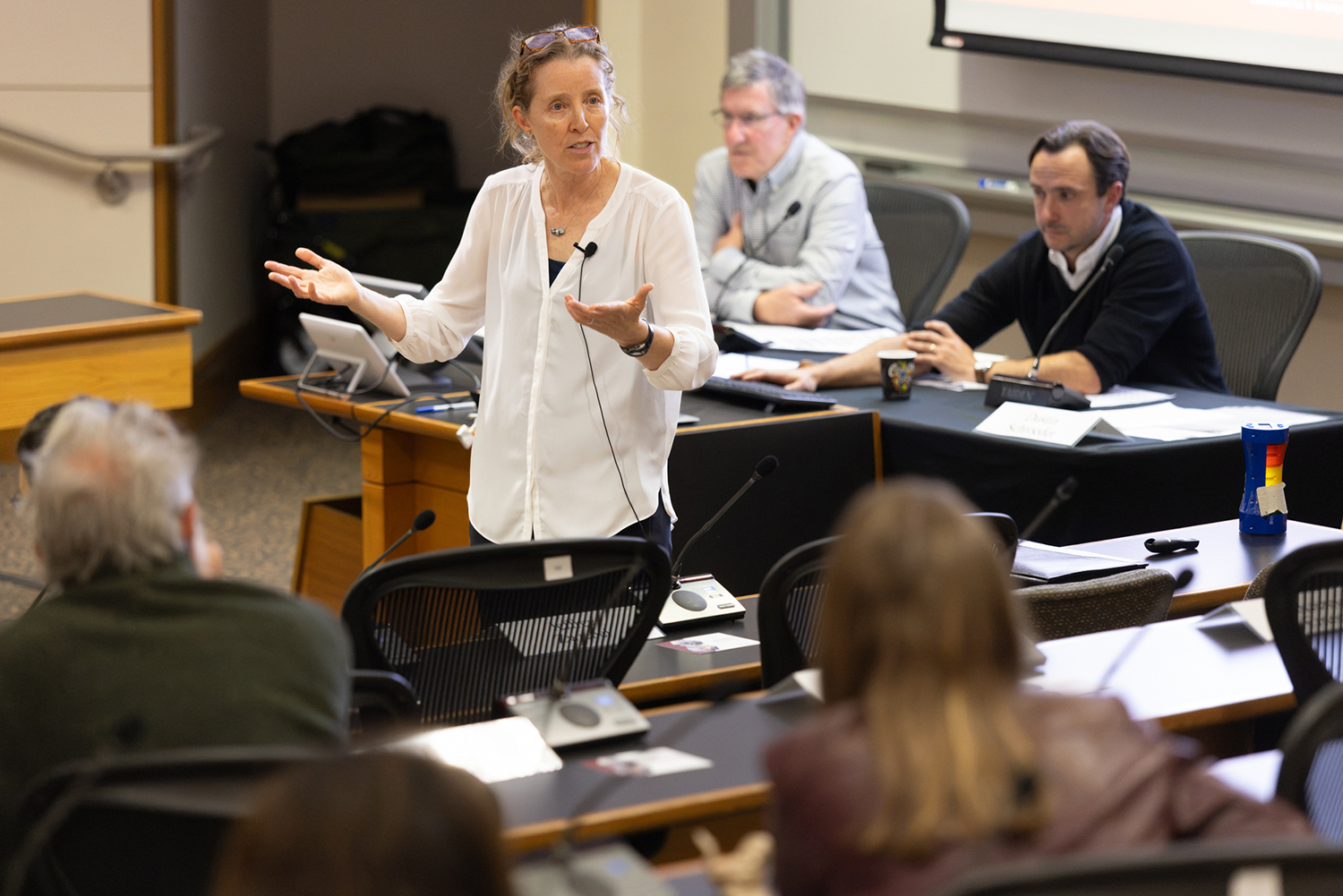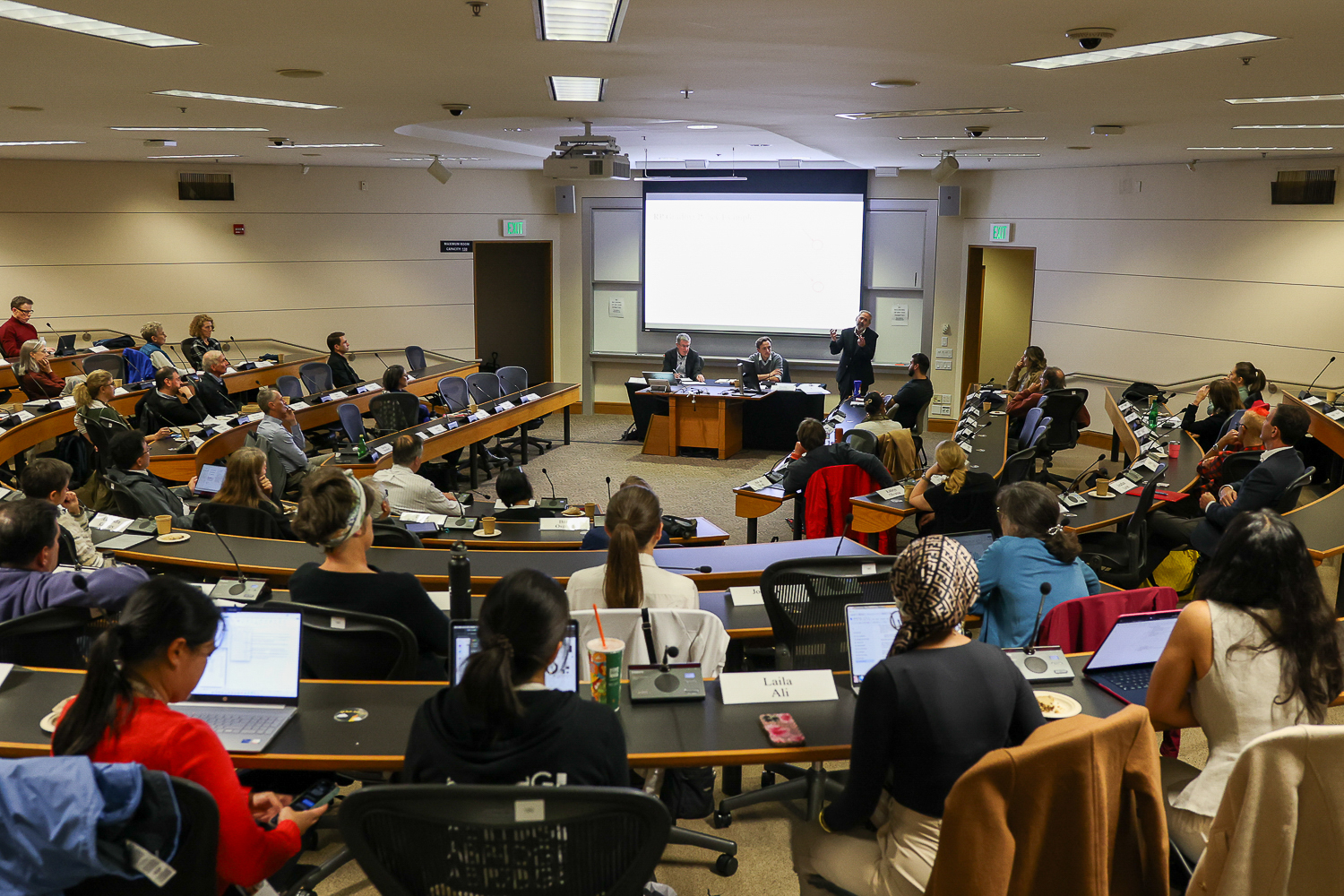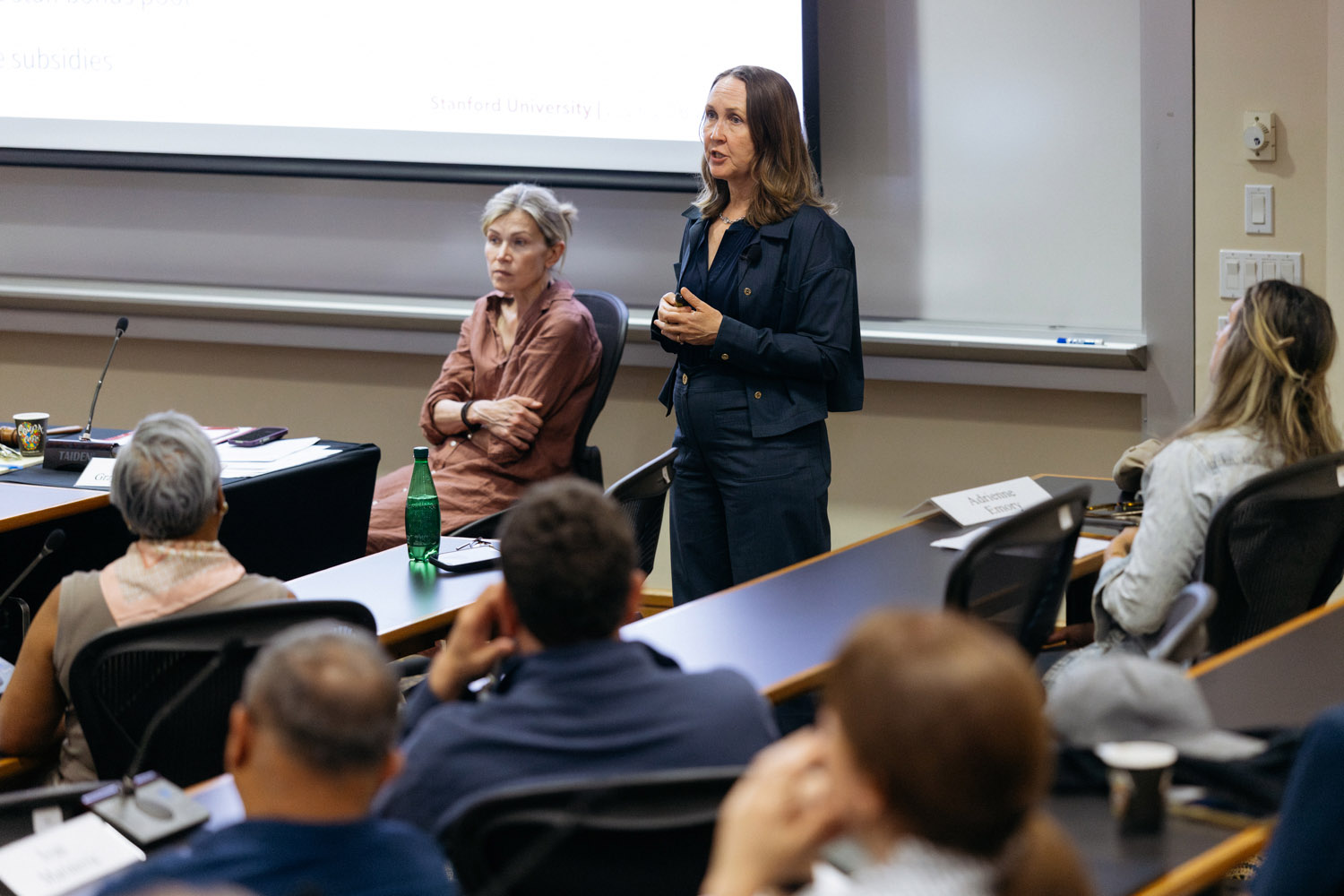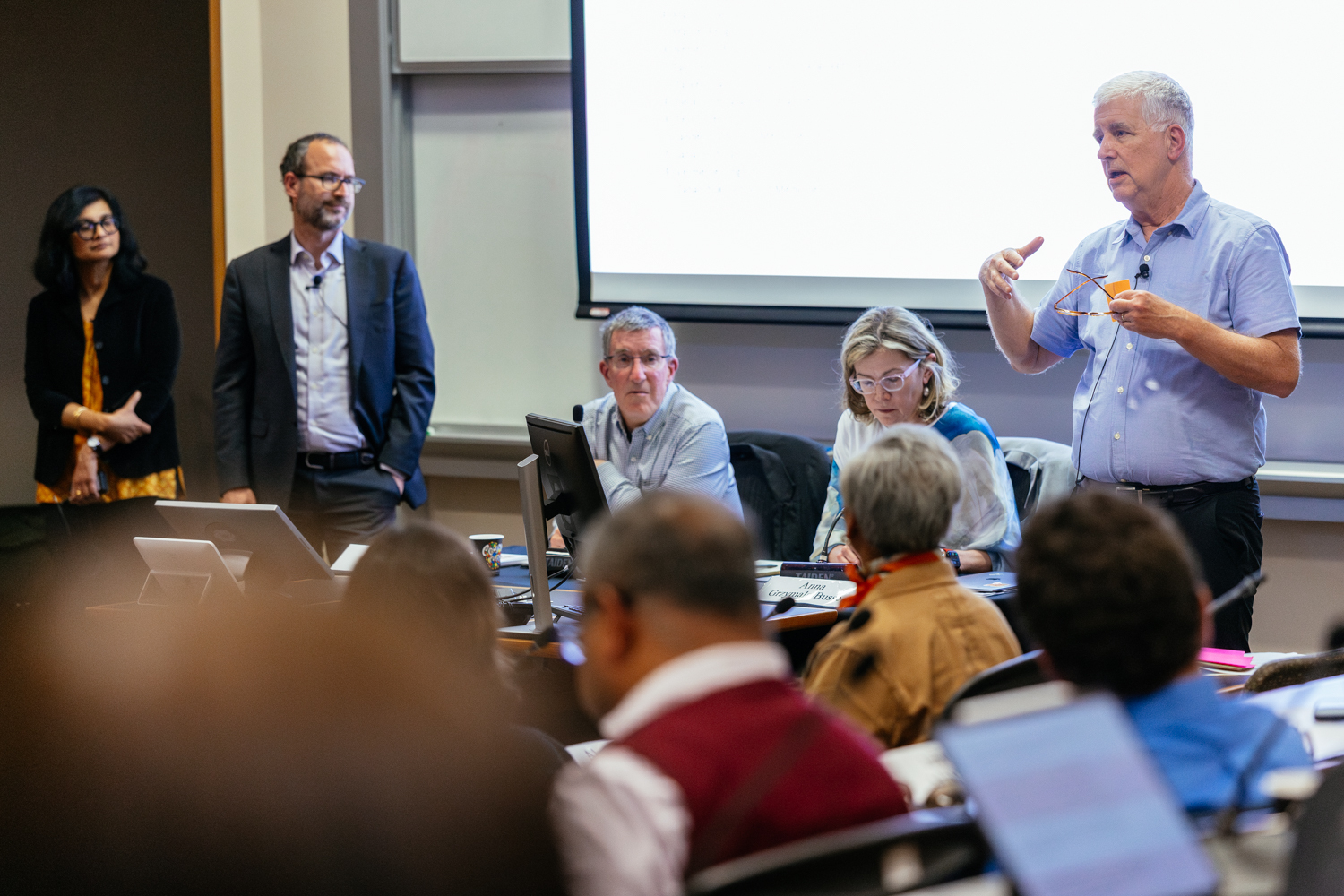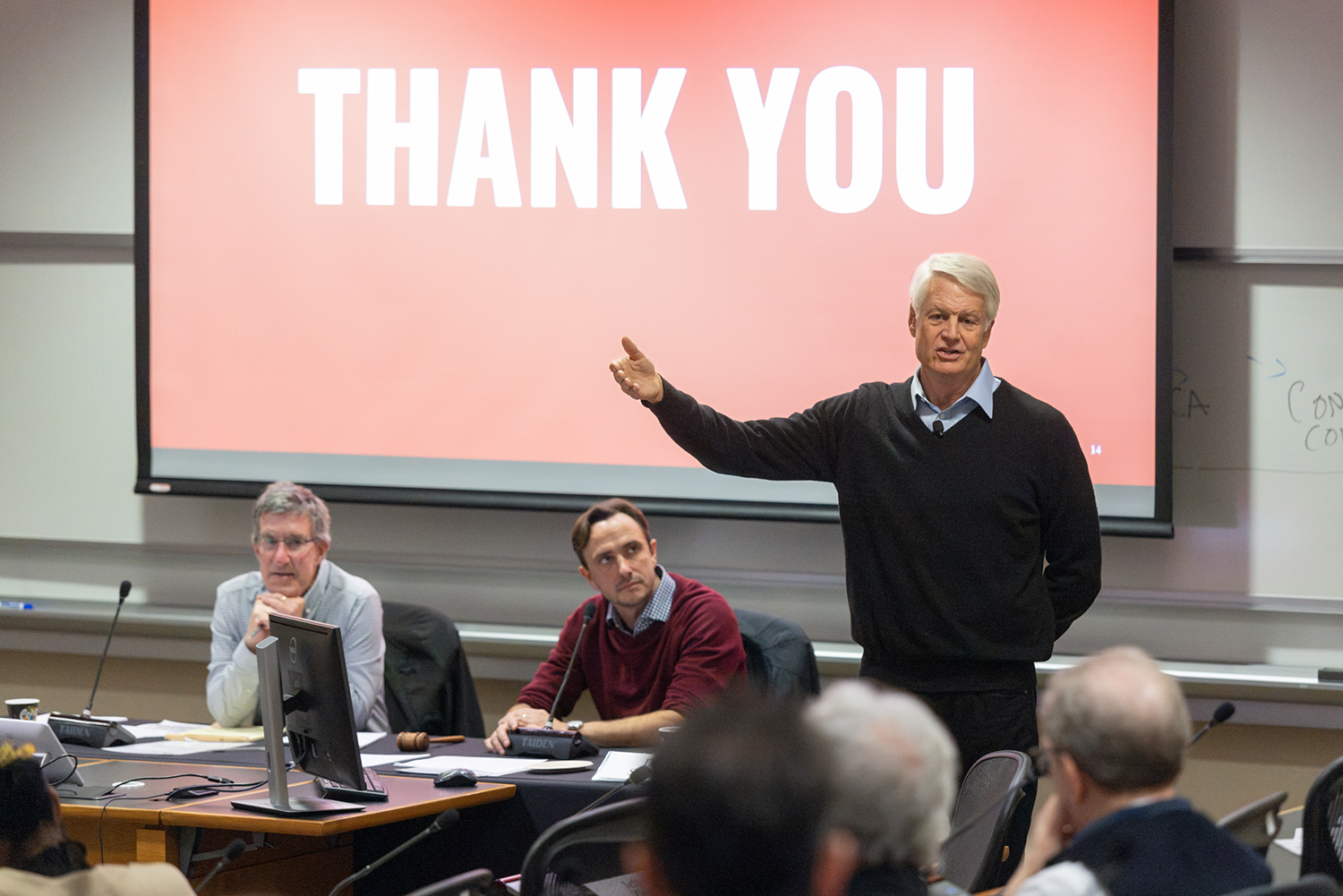
The Faculty Senate learned more about how the university is responding to the rapidly changing world of college athletics during its final meeting of the fall quarter on Thursday.
John Donahoe, the Jaquish & Kenninger Director and Chair of Athletics, noted how remarkable Stanford student-athletes are as they excel in both the classroom and competition. Last year, Stanford captured five national titles and celebrated 50 consecutive years of NCAA championships. “You all have spent your careers around these student-athletes, and it’s unlike anything I’ve experienced in my career, being part of Stanford and getting to see how amazingly creative and inspirational they are,” he said.
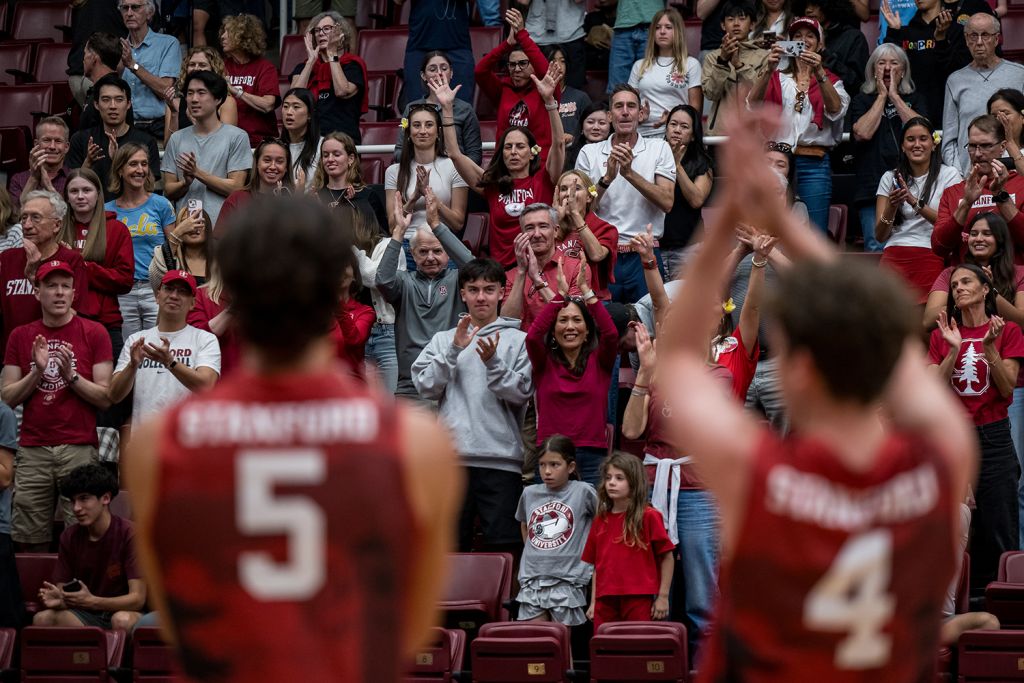
Donahoe discussed the student-athlete experience amid the evolving landscape and how changes in college sports funding pose a risk to Olympic sports.
As the university navigates what Donahoe called a “period of disruption” in college athletics, the Department of Athletics, Physical Education, and Recreation (DAPER) is focused on pursuing excellence in a way that reflects Stanford’s core values, Donahoe said.
DAPER’s support for student-athletes includes tailored academic advising, mental wellness resources, and help planning for life after Stanford.
Stanford has approximately 850 student-athletes who often face challenging travel schedules in the Atlantic Coast Conference (ACC), Donahoe said. Twenty-six of the university’s 36 sports are in the ACC, and student-athletes are sometimes traveling to the East Coast several times a quarter.
Among efforts to address this, DAPER is communicating with faculty about what classes student-athletes may miss, requiring students to reach out to faculty ahead of time to see how they can complete assignments, and helping coordinate exam proctoring during travel.
As new rules allow five years of eligibility for student-athletes, the university is also working with some of the graduate schools to provide different pathways for student-athletes.
The Academic Athletic Resource Center (AARC) now provides a centralized hub of resources for faculty on how best to support student-athletes, including guidance on proctoring and information on competition seasons and travel schedules.
Donahoe said that in response to changes in the college sports funding model, DAPER is exploring additional revenue streams through a thoughtful and gradual use of sponsorships, starting with companies founded by Stanford alumni, like Fortinet and DoorDash. The university is also bringing in revenue and drawing fans to campus by hosting sold-out concerts at Stanford Stadium, including acts like Coldplay and BTS.
Of note, as the college sports funding model changes, it poses a risk to Olympic sports, which historically do not sustain themselves and are instead supported through revenue-generating sports like football.
“Many of my colleagues around the country are talking about the need to cut back on Olympic sports because they no longer have the ability to fund them,” Donahoe said. “We’re trying to do what Stanford does – go in the reverse direction – and lean into our Olympic sports because they are so much of the crown jewel of what we represent.”
Approximately 80-90% of Stanford student-athletes play a sport on the Olympic program, and the university is seeking a more sustainable business model that taps into philanthropic support through endowments, Donahoe explained.
Senators asked several questions following the presentation, including how they can use the five-year eligibility window as an opportunity for student-athletes to further excel in their disciplines, how the endowed coaching positions would work, and how DAPER is responding to faculty concerns.
From the president and provost
In addressing the senate, President Jonathan Levin highlighted a series of conferences this year organized by the Task Force on Renewing Public Support for Universities, including a recent one on university research and public interest. The task force is next planning a winter convening focused on education, and faculty are welcome to reach out with suggestions, Levin said.
Provost Jenny Martinez welcomed Tomiko Brown-Nagin, the new dean of the Graduate School of Education, and provided updates on two rulings in immigration cases brought by higher education associations that include Stanford as a member.
The first preserved Duration of Status for international students and was a welcome ruling, Martinez said. In the second ruling, a court’s preliminary relief found a change to Curricular Training Rules to be unlawful, which was also welcome news, Martinez said.
There may be further legal proceedings in both cases, and the university is “working to provide more specific guidance, particularly for students who are planning for winter and summer internships,” Martinez said.
A representative of the Undergraduate Senate asked Martinez how the university is considering career support for students through CareerEd as it navigates a leadership transition.
Martinez said this is an important opportunity to hear student feedback regarding support for career education amid a changing job market and the full range of careers that Stanford students may want to pursue. “We look forward to involving students in the shape of the CareerEd office,” she said.
In memory
The Faculty Senate also heard three memorial resolutions.
Paul Berg, an emeritus professor of biochemistry and winner of the 1980 Nobel Prize in chemistry, died Feb. 15, 2023, at age 96. Berg is credited with sparking the field of genetic engineering and creating the first recombinant DNA molecule.
Ronald Howard, a professor emeritus of management science and engineering, died Oct. 6, 2024, at age 90. Howard was a pioneer in the field of decision analysis.
Nolan Williams, MD, professor of psychiatry and behavioral sciences, died Oct. 8, 2025, at age 43. Williams was an innovative neuroscientist who devised fast-acting treatments for severe mental health conditions.
Writer
Chelcey Adami