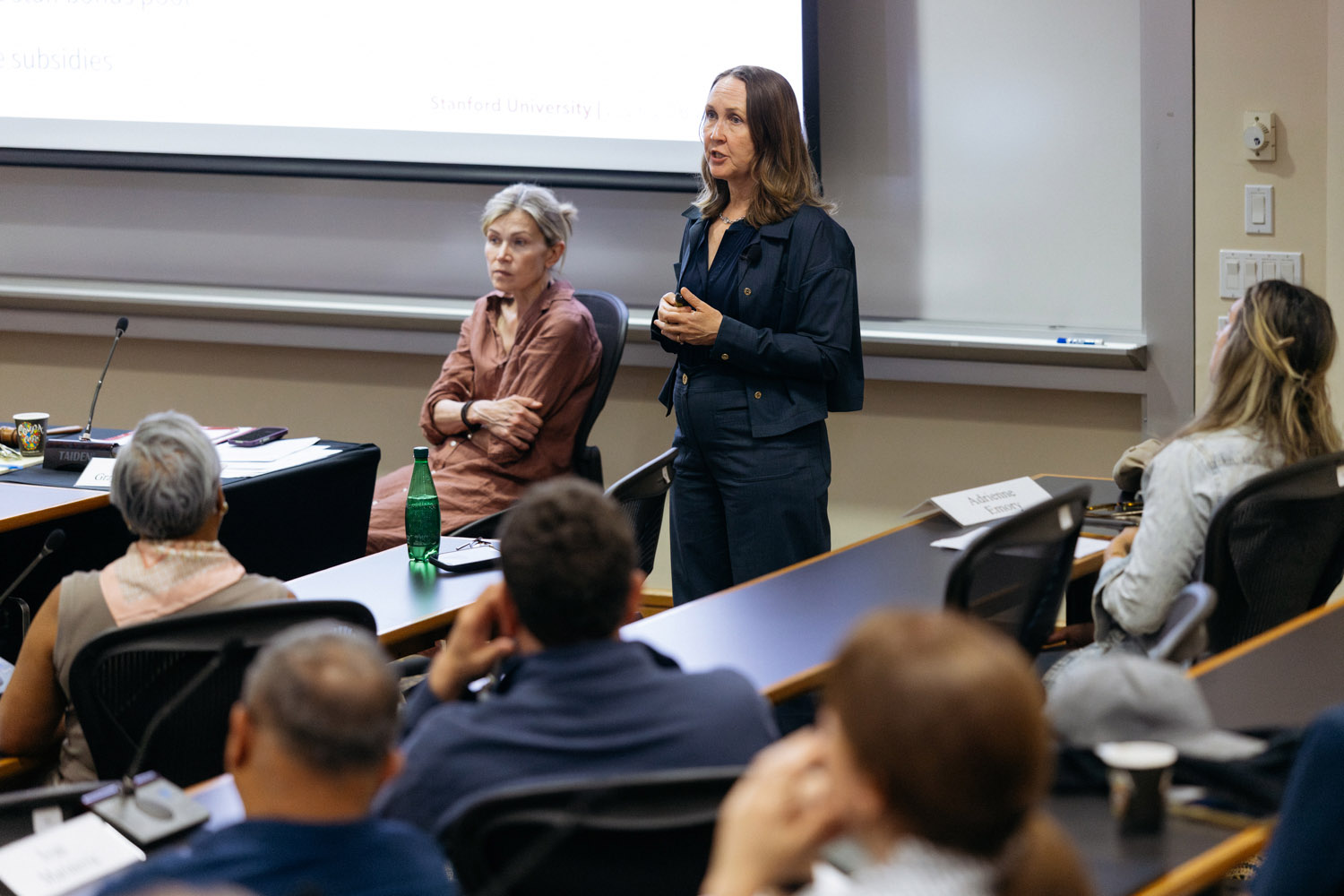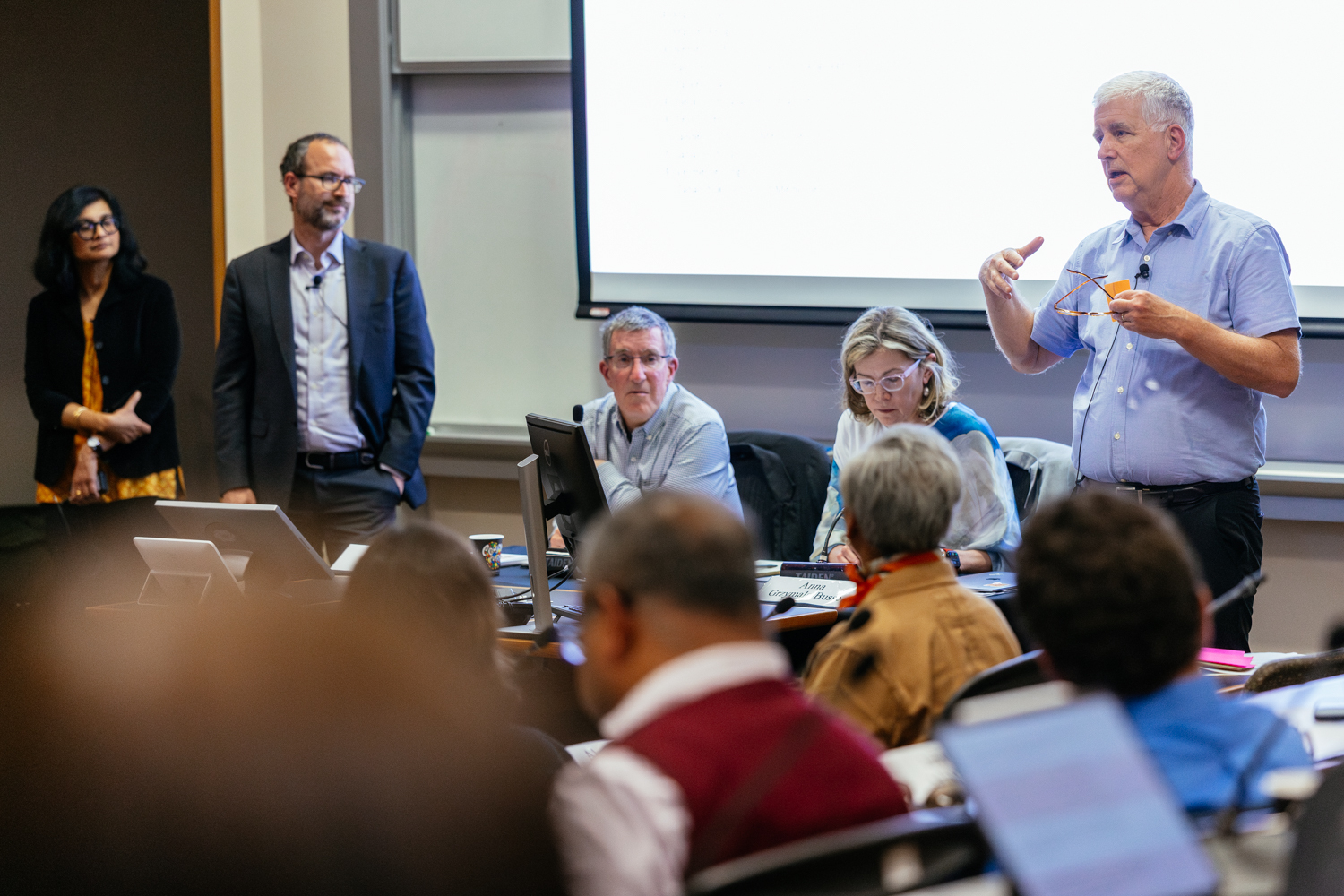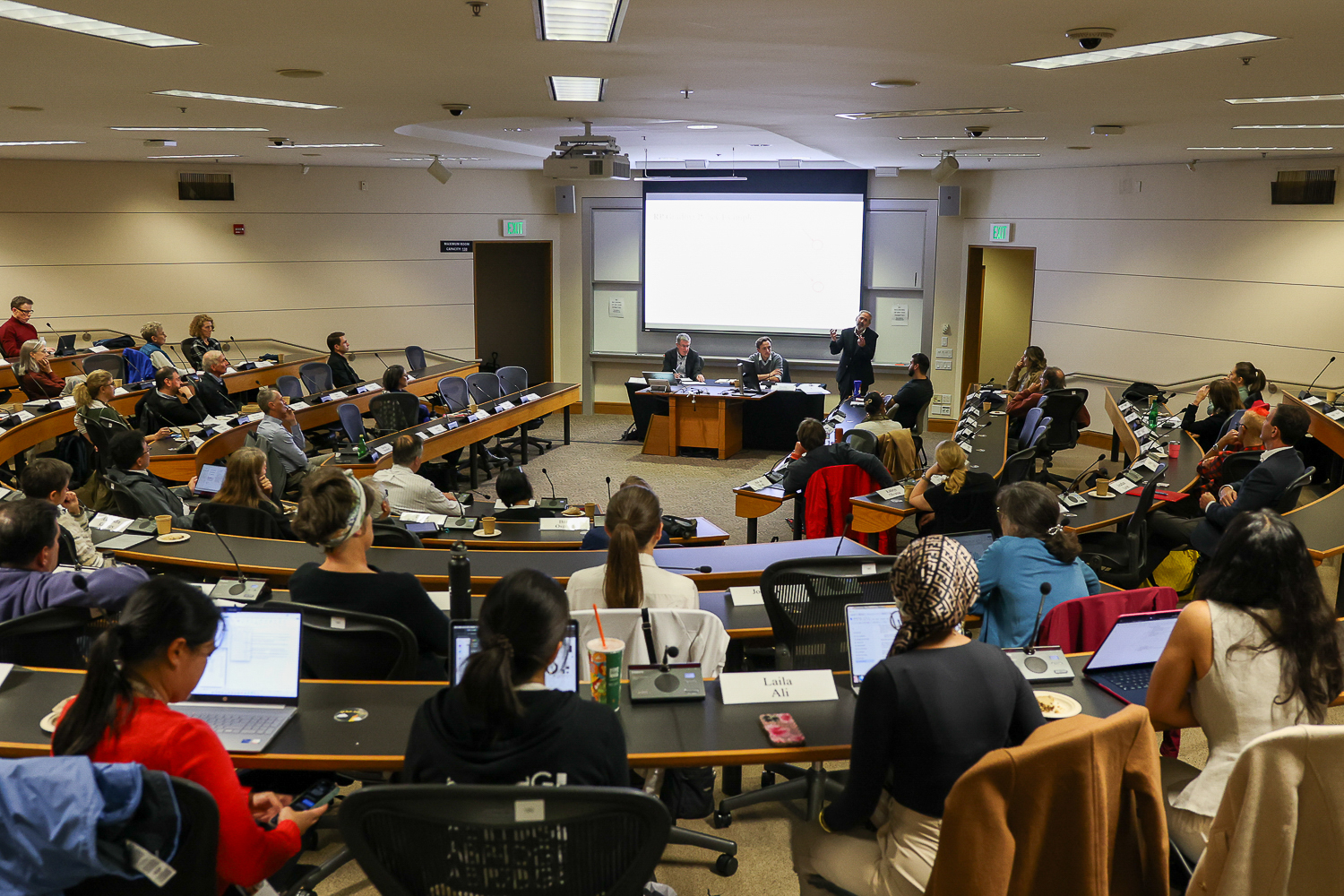
The Faculty Senate heard presentations Thursday from the Office of Community Standards on how it handles student misconduct cases and about StanfordNext, the university’s long-term plan to meet its future needs.
In addressing the senate, President Jonathan Levin congratulated Stanford’s most recent Nobel laureates, Karl Deisseroth and Robert E. Hall, noting that Stanford now has more faculty who have won Nobel Prizes in the 21st century than any other university.
Levin also shared his and Provost Jenny Martinez’s priorities for the academic year. The first is remaining at the frontier of discovery and innovation while serving as a home for serious discussion of AI’s implications. The second is finding more ways to ensure humanistic and civic thought remain central to the university amid technological advances, Levin said. The third is supporting students as they engage in the university’s traditions and create their own unique experiences on campus.
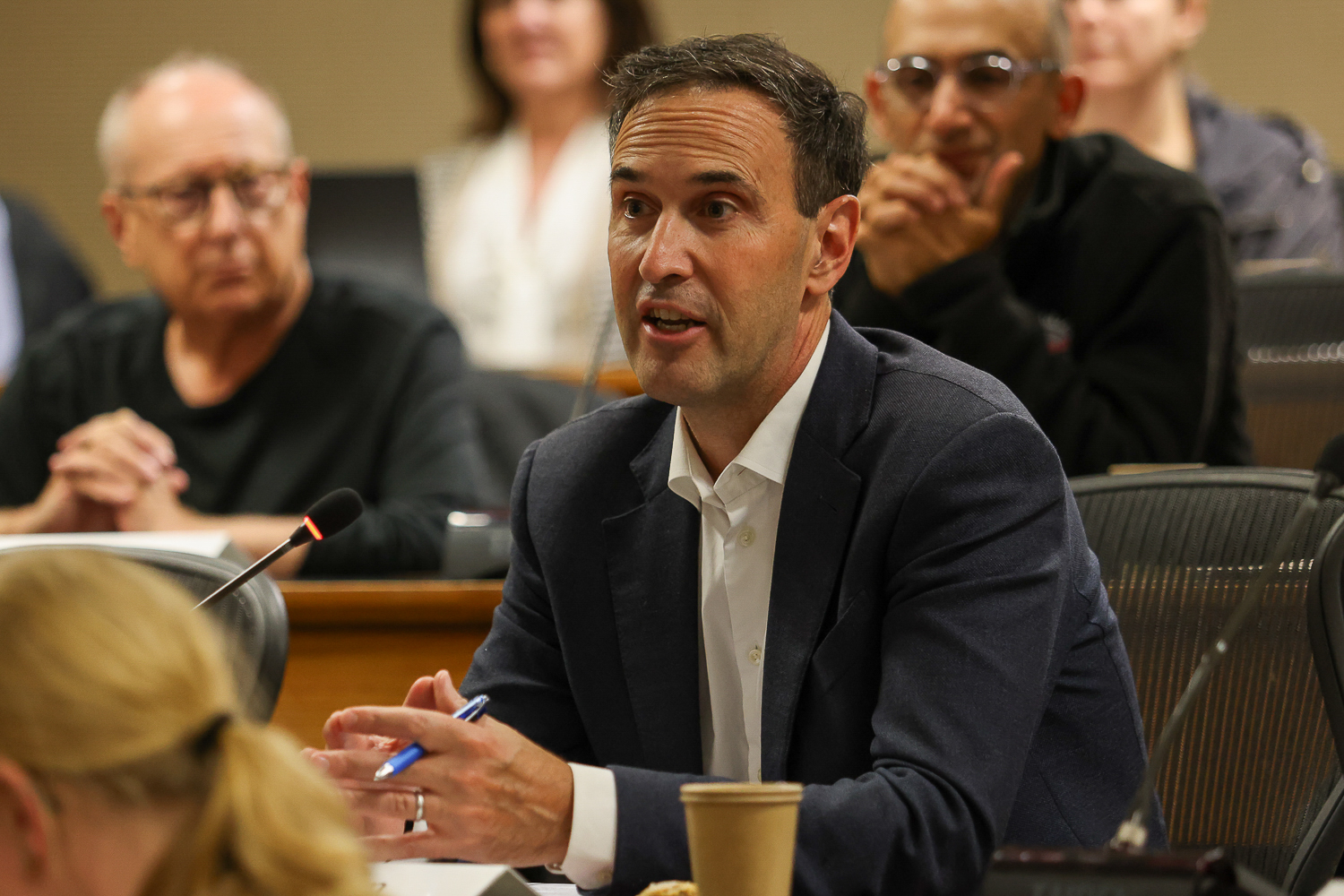
Stanford President Jonathan Levin outlined priorities for the new academic year. | Harry Gregory
Martinez highlighted the role of lecturers in the university, noting that she recently attended the award ceremony for this year’s recipients of the Lecturers Award for Teaching and Undergraduate Education: Lernik Asserian, a senior lecturer in mathematics; Todd Davies, a lecturer in the Symbolic Systems Program; and Katarina Guzman, a lecturer in chemical engineering.
“It was really inspiring to hear about the dedication, talent, knowledge, and skill that those individuals bring to their programs, the ways they have engaged in innovation and curricular reform, the ways that they mentor students and foster our teaching mission,” Martinez said.
Office of Community Standards
The Office of Community Standards (OCS), which enforces Stanford’s Honor Code and the Fundamental Standard, recently implemented a series of process-oriented reforms designed to both educate and support students, said Larry Marshall, interim director of OCS and professor of law.
“Education often requires discipline to be part of it, but it must always be worked with humane and caring hands,” Marshall said. “... We want (students) to understand that having stumbled does not define their world at Stanford, much less their worth as a human being.”
Changes have included updating the ways that the OCS communicates with students participating in a conduct process to include less legalistic language and more support-centered content. The OCS has also added two support and outreach coordinators to help students navigate the OCS process and connect to resources. The changes have been made with an understanding of how traumatic it can be for many students to deal with any student conduct office and a desire to avoid a “bureaucratic mindset,” Marshall said.
Educational institutions are also facing daunting problems related to cheating, which has become easier with artificial intelligence, Marshall said. Some students have told him that they hadn’t cheated before but would feel behind if they didn’t now.
While the university now allows proctoring of examinations, it doesn’t entirely solve the problem, and Stanford must find more ways to promote academic integrity and good citizenship so students choose to avoid academic misconduct, Marshall said.
Under the university’s current governing rules, Stanford students subject to their first Honor Code case may have the options of Alternative Resolution, which is nondisciplinary, and replacement-grading, in which students can retake a course with the new grade appearing on their transcript. The latter is not limited to first-time violations and isn’t common at other universities, Marshall said.
Marshall said Stanford should, in partnership with students, consider the impact of these options on deterrence. This involves balancing the goals of deterrence against the potential costs of intensified enforcement or enhanced sanctions to the campus environment and students.
The OCS presentation was followed by robust discussion and questions from senators about the role of AI in academic misconduct, the pervasiveness of the problem, what behavior faculty are modeling, the impact of different types of enforcement, and more.
Marshall explained that any potential changes to policy would require study and action by university bodies such as the senate and the Board of Conduct Affairs.
Senate Chair Dustin Schroeder noted that the senate will continue discussion of the matter this academic year with related presentations from the Office of the Vice Provost for Undergraduate Education and others.
In response to a question about sexual assault prevention programs, Marshall clarified that the OCS does not handle Title IX issues. Martinez said that there are a variety of educational programs offered through the university’s Title IX office, including a new one related to bystander training added to this year’s fall orientation. Stanford is also reinstituting the recently paused Flip the Script program with plans to improve student participation, Martinez said.
“We’re continually evolving all of our programs, and the staff from Student Affairs and from Title IX have been meeting with (Associated Students of Stanford University) and other student leaders to talk about what programs will be most beneficial to students going forward," Martinez added.
StanfordNext
StanfordNext is the university’s long-term land use plan to meet future academic, housing, transportation, sustainability, and infrastructure needs on existing campus lands, said Whitney McNair, senior associate vice president and StanfordNext project executive.
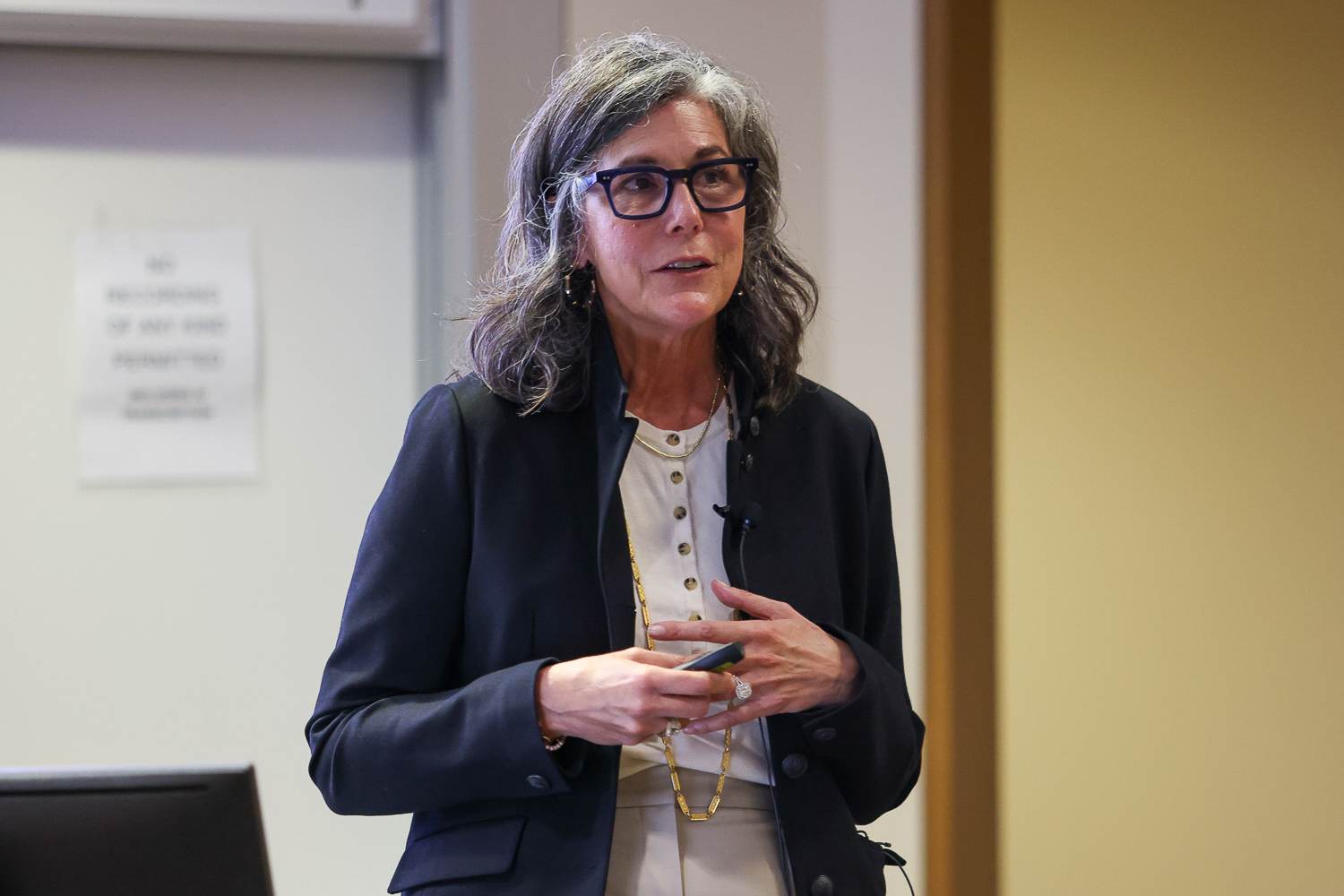
Whitney McNair, senior associate vice president and StanfordNext project executive, presented on the university’s long-term plan for campus development. | Harry Gregory
StanfordNext seeks to update Stanford’s General Use Permit, the county authorization that guides Stanford’s academic campus development. Stanford’s current permit was approved in 2000, and its allocation of academic and housing space has been nearly exhausted over the ensuing 26 years. In September, Stanford submitted an application to Santa Clara County to update the university’s General Use Permit.
The proposal doesn’t specify individual space allocations but rather “unlocks the opportunity for the senate, president and provost, and others to make decisions over the next 20 to 25 years,” McNair explained. It seeks to support the twin goals of supporting the university’s research and teaching mission and “succeeding together” with Stanford’s surrounding communities and the broader region, she said.
StanfordNext includes growth for academic and support space, student and workforce housing, transportation infrastructure, and community investment. The plan reflects the university’s long-term needs and extensive feedback from neighboring communities, local governments, civic and nonprofit leaders, and the Stanford community, McNair said.
The county will begin holding meetings about the project, and Stanford will also continue its outreach in the months ahead.
Several senators asked questions about the project, including about the allocation of additional student beds, how the housing needs assessment was conducted, and how faculty can become involved.
In answering questions, McNair also encouraged senators and other faculty to learn more about the project through its website, share their input, and become involved with StanfordNext.
In memoriam
Senators also heard memorial resolutions for three faculty members.
Clayton Bates Jr., professor emeritus of materials science and engineering and of electrical engineering, died Feb. 18, 2024, at age 91. Bates Jr. was a noted expert in photosensitive materials and a pioneering advocate for the inclusion of Black students in STEM fields.
Jonathan Bendor, the Walter and Elise Haas Professor of Political Economics and Organizations, Emeritus, used psychologically grounded models of human behavior to understand how organizations and institutions function. Bendor died Nov. 6, 2025, at age 75.
Gerald Gillespie, professor emeritus of German studies and of comparative literature in the Stanford School of Humanities and Sciences, died July 20, 2025, at age 92. Gillespie published extensively about Germanic influences on great writers.
For more information
Asserian is the director of the Stanford Undergraduate Research Institute in Mathematics. Davies is an associate director in the Symbolic Systems Program. Deisseroth, MD, PhD, is a professor of bioengineering and of psychiatry and behavioral sciences. Hall is a professor of economics and senior fellow at the Hoover Institution, emeritus. Schroeder is a professor of geophysics, of electrical engineering, and a senior fellow at the Woods Institute for the Environment.
Writer
Chelcey Adami