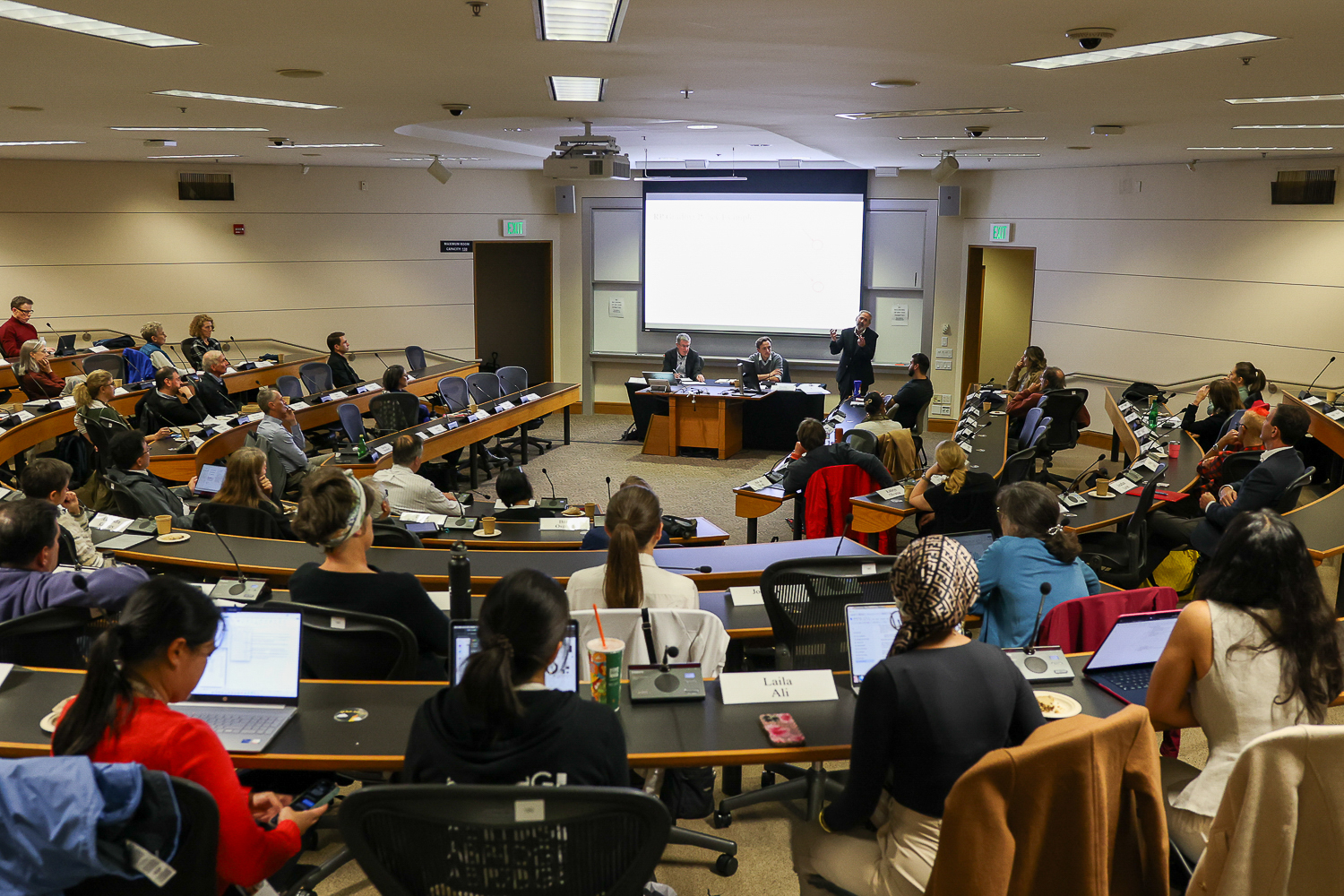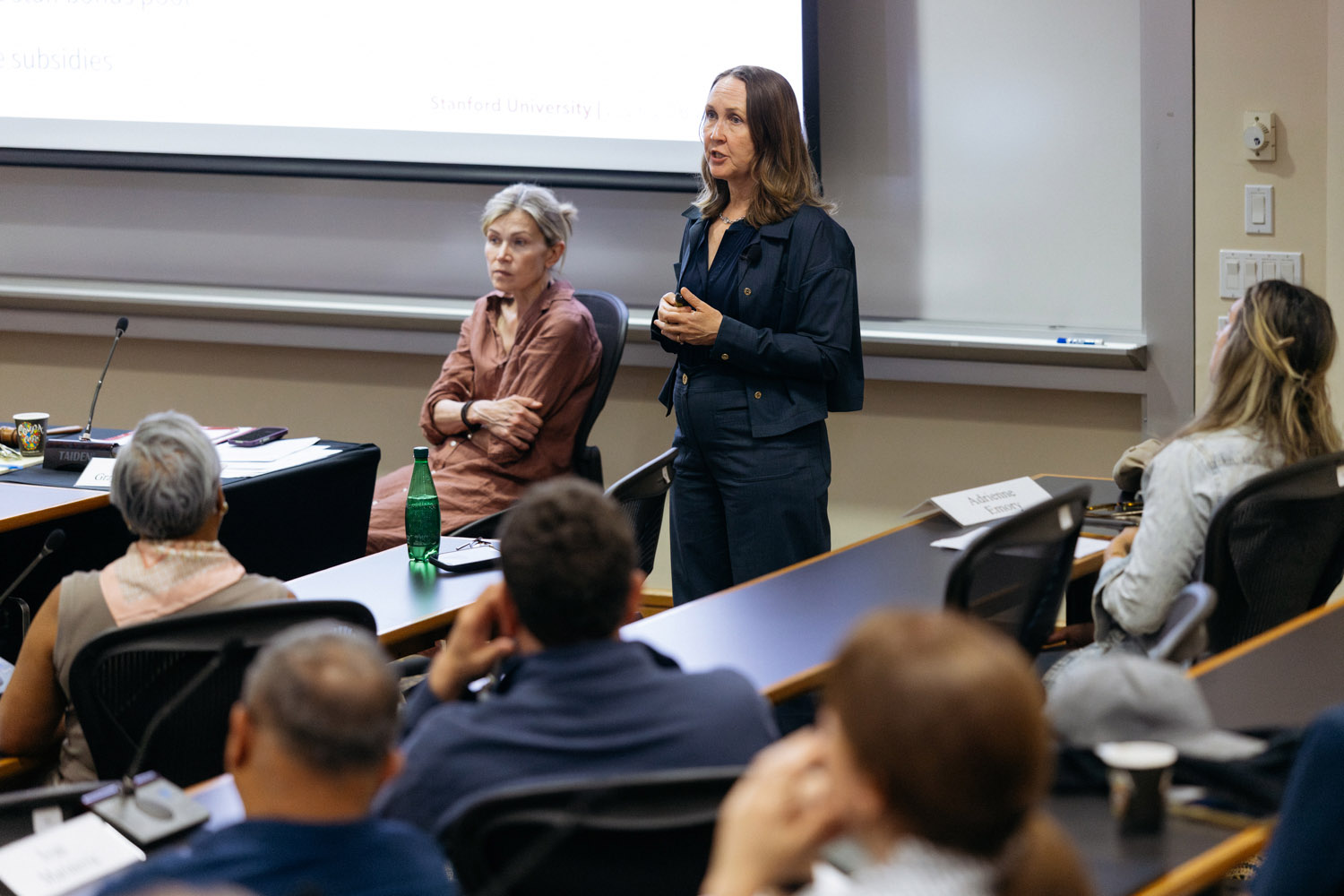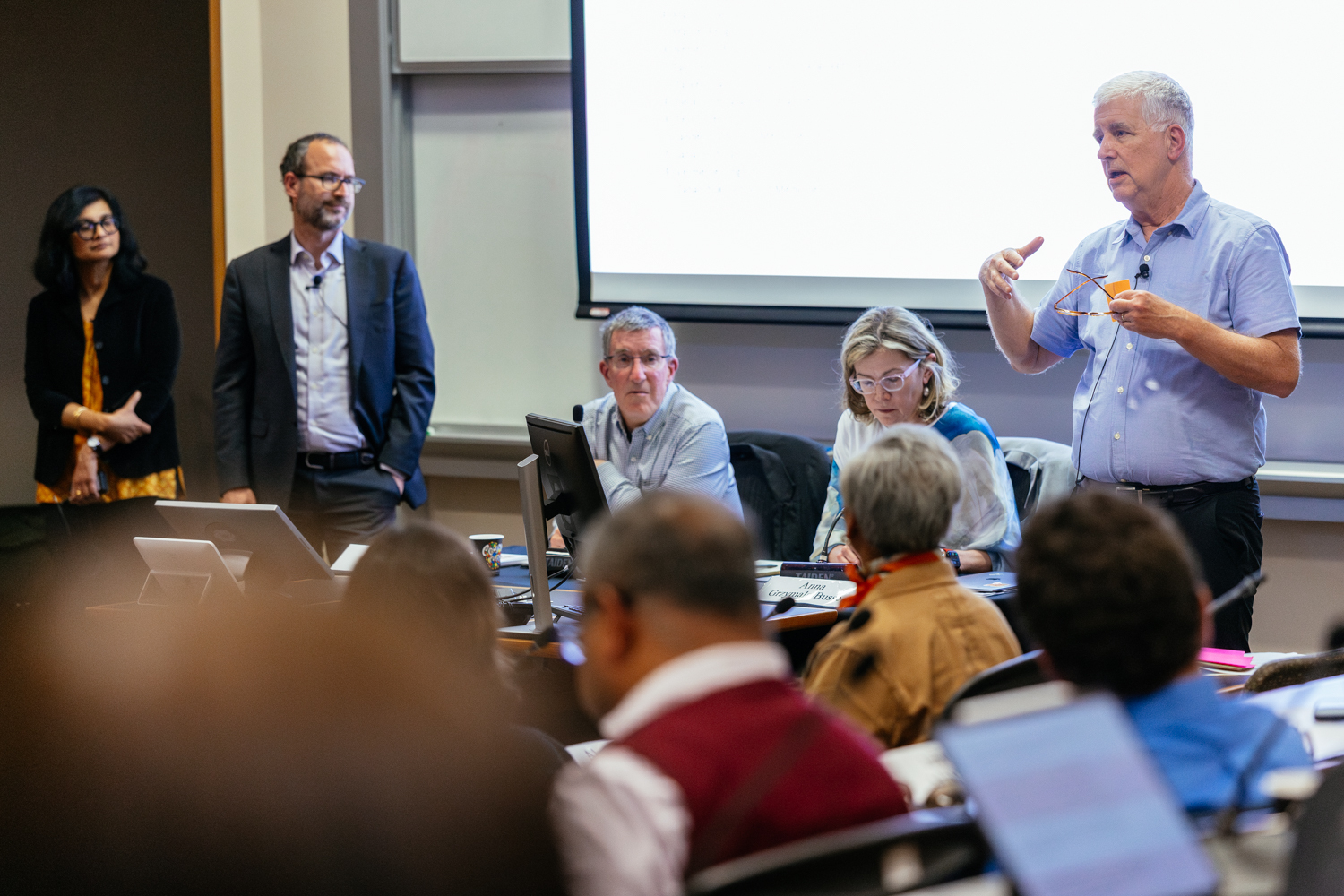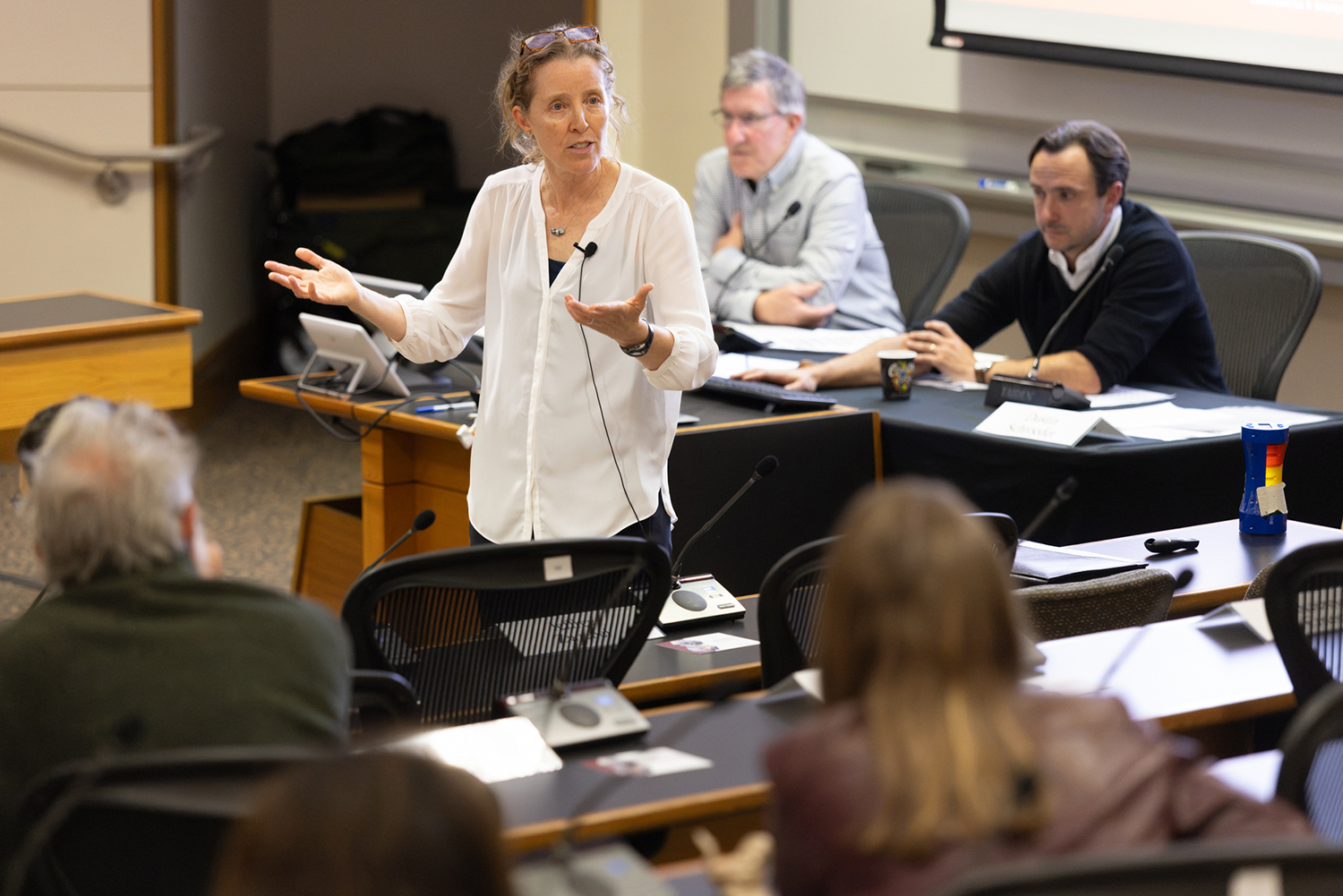
The Faculty Senate heard presentations on how the university is addressing critical issues for undergraduate education, including the use of AI, and approved a bylaw on remote proctoring during its regular meeting on Thursday.
Promoting Academic Communities and Engagement (PACE), which was launched earlier this year, is an Office of the Vice Provost for Undergraduate Education (VPUE) project to identify and remove roadblocks to classroom rigor and engagement, co-led by VPUE senior associate vice provosts Shari Palmer and Lianne Kurina.
Addressing the senate, Kurina discussed PACE’s work to tackle the growing disconnect between instructors and students on classroom expectations and norms.
In addition to challenging, well-taught classes, she said, clear policies and expectations applied consistently “lay the foundation for the kind of generative and dynamic classroom environments I think all of us want.”
In August, PACE launched its website, which contains guidance and strategies to set the conditions for better engagement, including required attendance, device-free classrooms, and structure with flexibility. PACE also recommends regular checks to ensure student understanding, clear AI policies, and proctoring.
Senators posed questions around several related issues, including how they should consider policies barring AI use, how to handle requests for makeup assignments from students with athletic commitments, and challenges related to requiring attendance or banning devices.
One senator remarked that the guidance and recommendations would be useful to the graduate teaching community as well.
There will be more resources added to the PACE website this winter, and PACE intends to build out guides for student subpopulations, such as student-athletes, Kurina said. PACE has also instituted a set of teaching cohorts to discuss departmental policy norms.
“My hope is for this to be a really vibrant conversation about undergraduate education that we lead here at Stanford,” Kurina said. “The more voices, the better here.”
Learning with AI
Last year, VPUE and the Center for Teaching and Learning (CTL) launched AI Meets Education at Stanford (AIMES), an effort to catalyze and support critical engagement with generative AI in Stanford teaching and learning.
AI poses multiple challenges for higher education, said AIMES co-lead Michele Elam, including pressure to move quickly, competing views on its use, and complexities around academic integrity.
In surveys, students have reported different AI policies between classes and sometimes no policy at all. Students also report being less likely to go to their instructors or teaching assistants for help, said Elam, the William Robertson Coe Professor of Humanities in the English Department, senior associate vice provost for undergraduate education, and senior fellow at the Stanford Institute for Human-Centered AI.
AIMES’ goal is to help faculty make informed choices about how and whether to use AI in their courses by drawing on the best available research and evidence, Elam said.
To that end, AIMES offers a number of resources online, including a library of examples of AI use in Stanford courses, an overview of AI teaching strategies, and a guide to AI course policies, said Cassandra Volpe Horii, AIMES co-lead, associate vice provost for education, and director of the CTL.
VPUE and AIMES will also facilitate and manage a new $10 million provost-funded initiative for departmental AI teaching grants to develop AI-aware curricula throughout undergraduate majors in collaboration with the Stanford Accelerator for Learning.
In opening remarks to the senate, Provost Jenny Martinez said that the university has seen substantial “interest and appetite in trying things out, sharing knowledge, and getting the resources to do that, but that in many instances it would be helpful to look at a departmental level at the progression of skills that we might hope that students would develop in this age of AI.”
This could include not using AI in classroom assignments or considering how AI might be used in a particular discipline, Martinez noted, and “really looking at the arc and progression of curricula throughout an undergraduate major.” Proposals for funding will be accepted quarterly beginning in January.
The departmental curriculum innovation grants build on a program of seed grants focused on the course and curriculum level launched by AIMES in the spring.
Senators voiced concerns such as how AI is impacting student interaction, carbon footprints, and clinical practice.
One senator expressed gratitude for the guidance on teaching in the era of AI, stating that it has felt like a rushing current at times as instructors grapple with how to use, or not use, AI in the classroom. Elam said it’s important to consider the pedagogical rationale around these choices, and AIMES is dedicated to providing resources so instructors “don’t have to feel like you’re either underwater or overwhelmed.”
Grades, schedules, and Ways
VPUE is also examining Stanford’s approach to grading, class scheduling, and the Ways of Thinking/Ways of Doing general education breadth requirement, said Jay Hamilton, the Freeman-Thornton Chair for the Vice Provost for Undergraduate Education.
Stanford’s commitment to excellence and rigorous education “means challenging coursework, people who work hard, people who give really critical feedback when necessary so we can all experience imperfection, growth, and resilience,” Hamilton said.
This year VPUE has been holding conversations across campus to consider how grading is working and what might need to change, Hamilton said. Discussions have touched on the significance of grade compression, which may cause students to lack information about their knowledge in a field or to avoid exploring new fields out of concern for their GPAs.
Hamilton said that in COLLEGE 102, the upcoming winter quarter course for first-year undergraduates, students will consider the question of what grades are for and what Stanford should do about grade inflation and compression.
VPUE has also been collecting information on course policies and scheduling challenges, including around the study list deadline, conflicting class times, and midterm conflicts with classes. This information will be presented to the Senate’s Committee on Undergraduate Standards and Policy next year. Some of the challenges may require senate legislation or could be solved by administrative action, Hamilton said.
Additionally, VPUE is assisting the Breadth Governance Board as it conducts its review of the Ways requirement, which is conducted every four years, considering issues like how it is fulfilled, how classes could be added, and how the course approval process could be simplified.
Remote proctoring
The senate approved a proposed bylaw to the Student Conduct Charter of 2023. It specifies that remote proctoring is only allowed if in accordance with Board of Conduct Affairs (BCA) guidance developed in consultation with Learning Technologies and Spaces, the Office of the General Counsel, and other campus stakeholders.
The senate voted earlier this year to allow proctoring, and the BCA was charged with formulating a bylaw with details. The bylaw also requires the approval of the Undergraduate Senate, the Graduate Student Council, and the president to go into effect.
In memorial
The senate also heard three memorial resolutions.
Charles Bonini, the William R. Timken Professor of Management Science, Emeritus, died June 6, 2025, at age 91. Bonini is most often associated with the “Bonini’s Paradox” observation, and he helped usher the Stanford Graduate School of Business into the computer age.
James Johnston, a professor of mechanical engineering, died July 13, 2019, at age 88. Johnston was a foremost authority on fluid dynamics and a respected teacher and mentor.
Philip Zimbardo, a professor emeritus of psychology, died Oct. 14, 2024, at age 91. Zimbardo was one of the world’s most renowned psychologists and best known for his controversial 1971 study, the “Stanford Prison Experiment.”
For more information
Elam is a professor, by courtesy, of African and African American studies; Hamilton is the Hearst Professor and a senior fellow at the Stanford Institute for Economic Policy Research; and Kurina is the David and Lucile Packard Foundation Professor of Human Biology and a professor (teaching), by courtesy, of epidemiology and population health.
Writer
Chelcey Adami