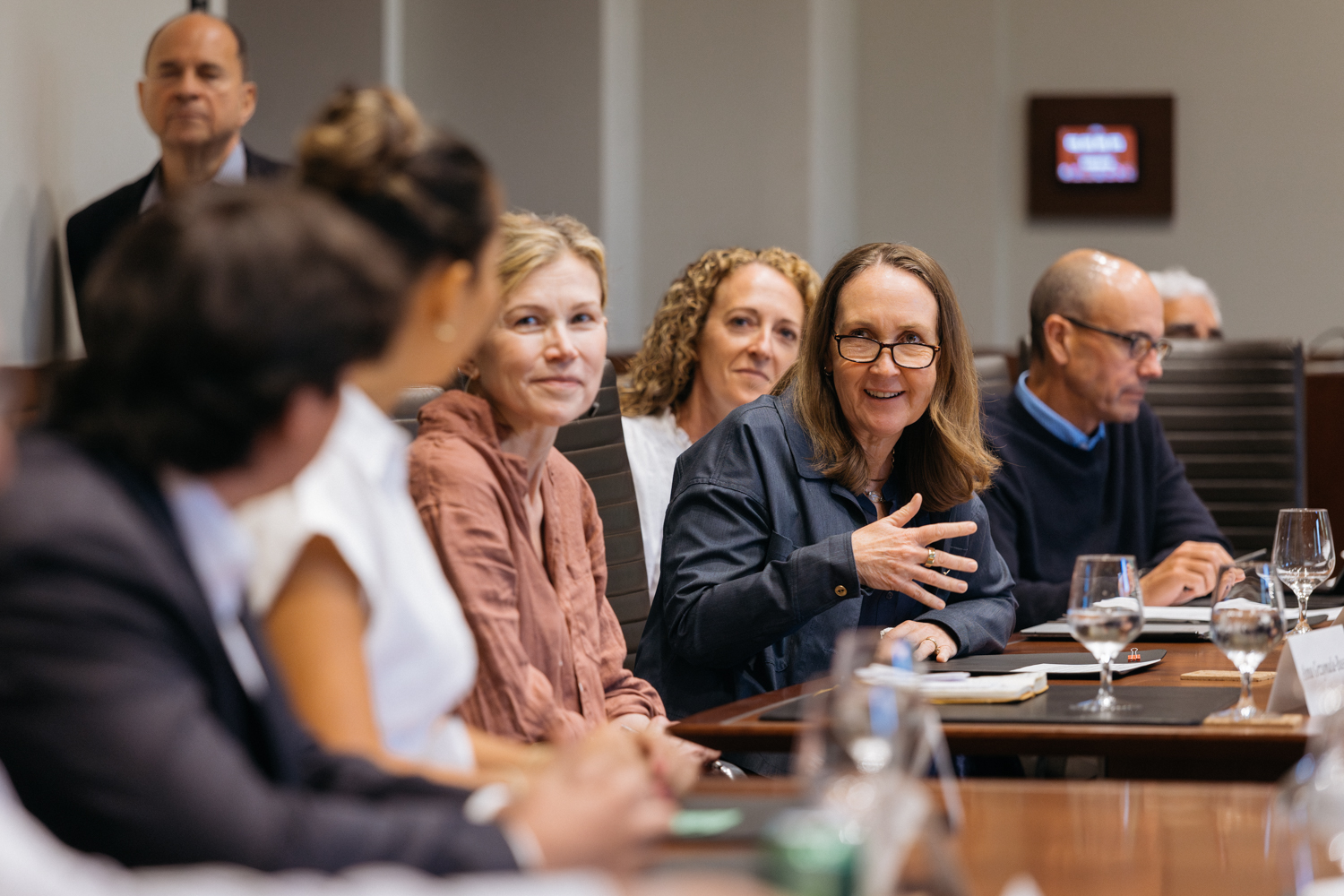
Graduating student government leaders and the chair of the Faculty Senate reflected on their experiences at Stanford as they discussed artificial intelligence, student life, and more with members of the Board of Trustees during their mid-June meeting.
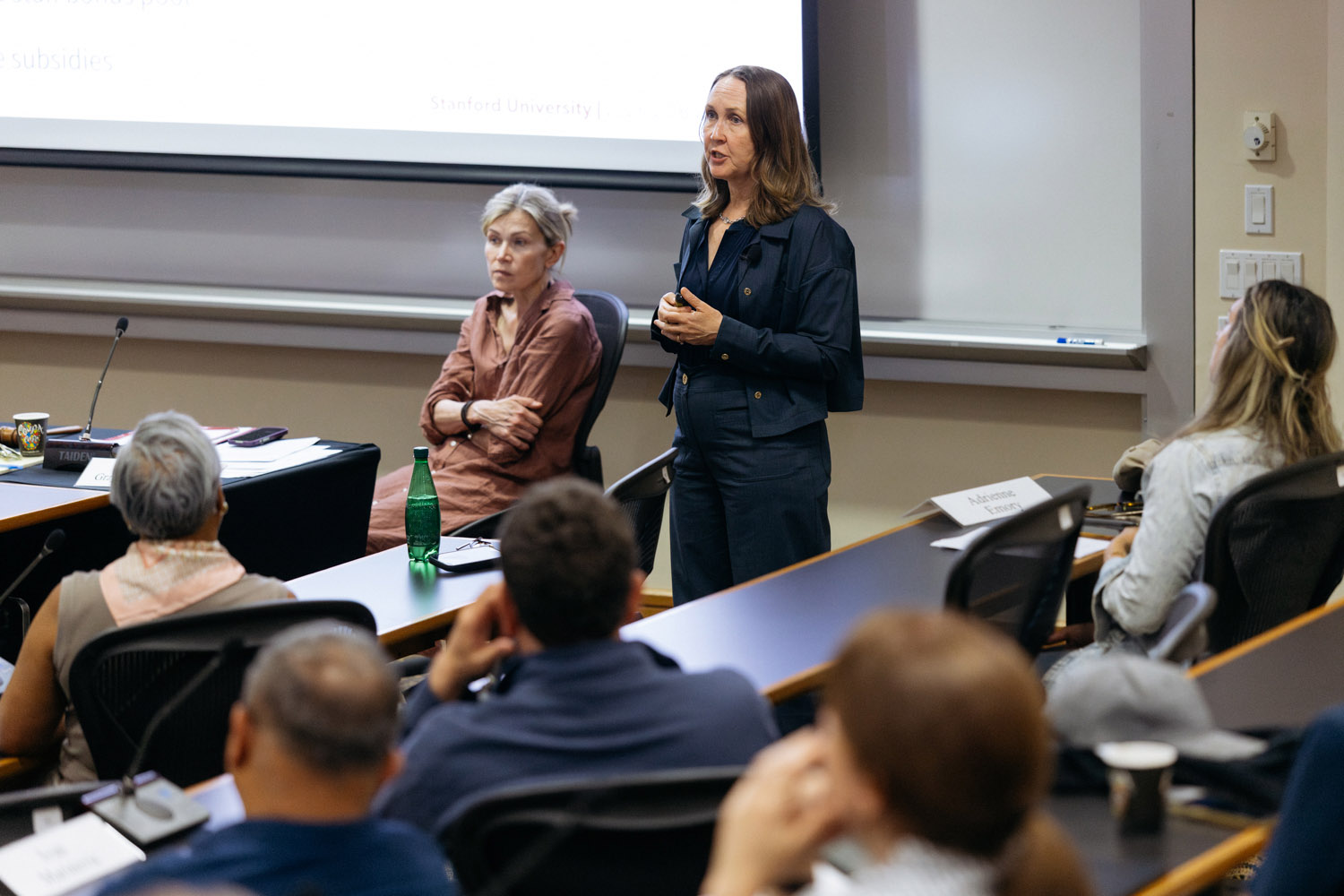
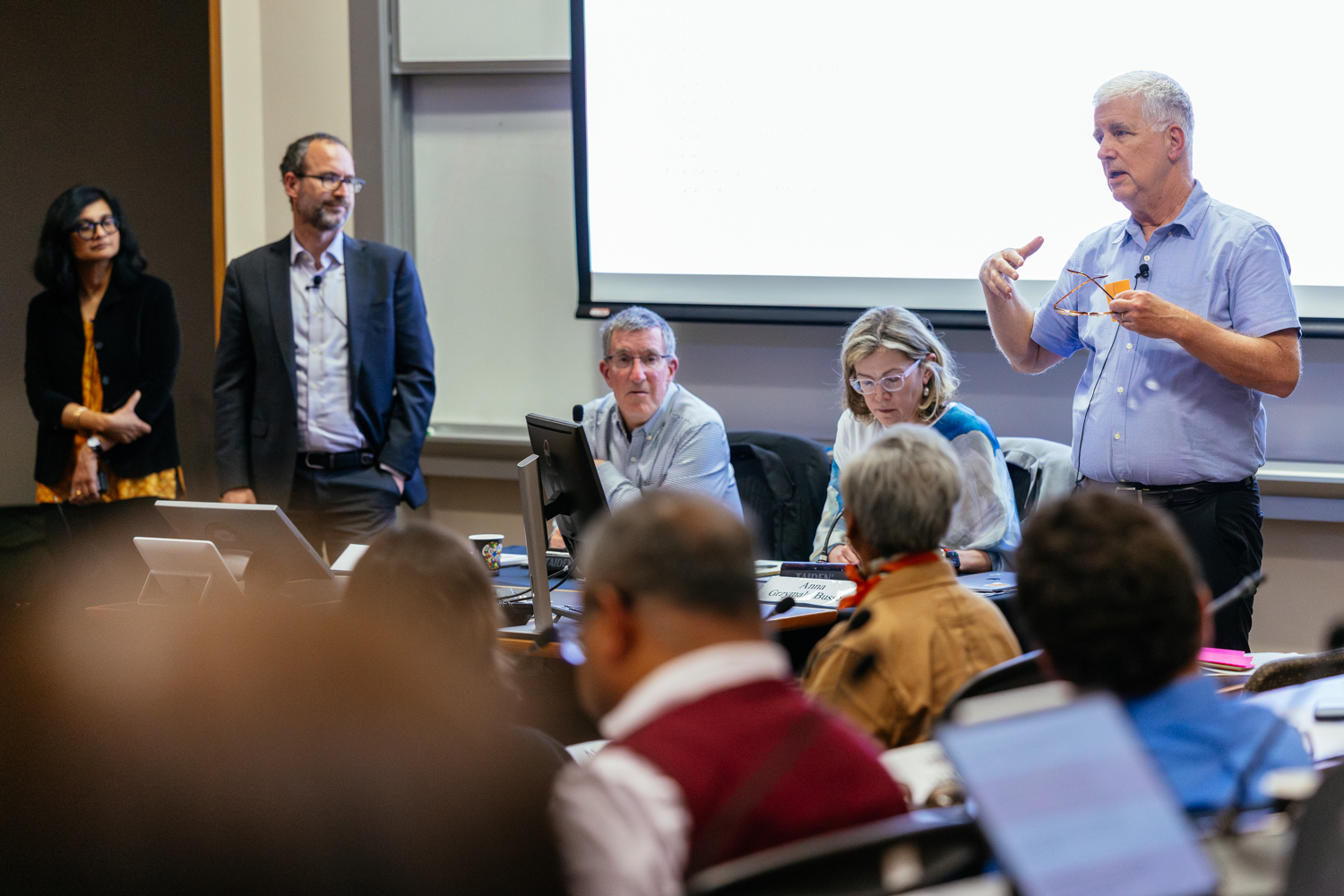
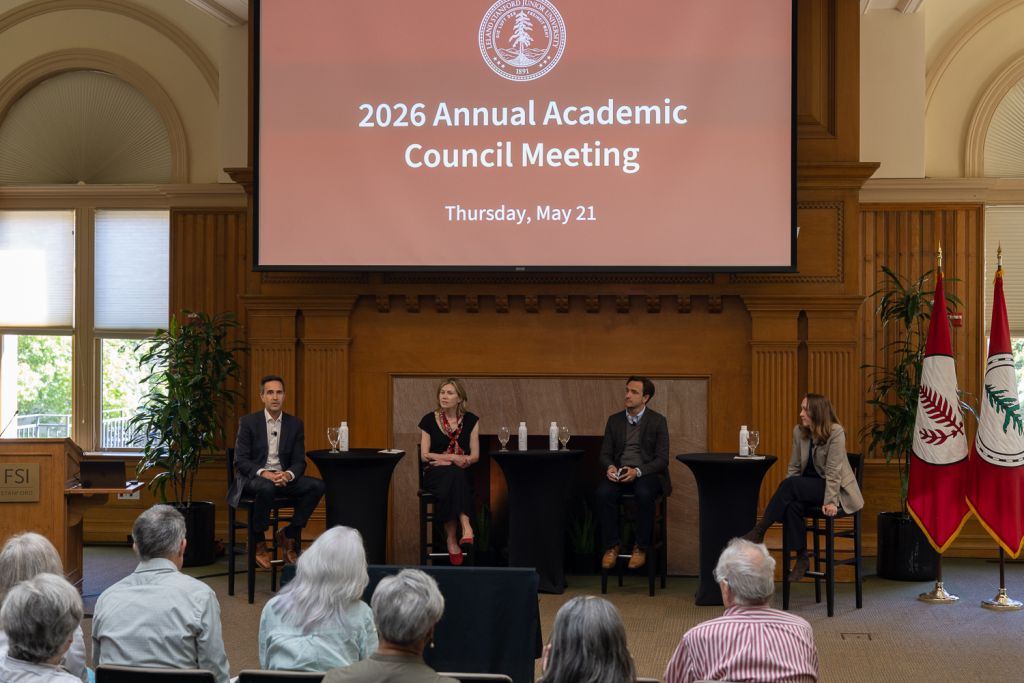
Provost Jenny Martinez moderated a panel discussion with outgoing Associated Students of Stanford University (ASSU) Executive President Ava Brown, ’26, ASSU Vice President Will Berriman, ’26, and Faculty Senate Chair Anna Grzymala-Busse, the Michelle and Kevin Douglas Professor in International Studies in the School of Humanities and Sciences and senior fellow at the Freeman Spogli Institute for International Studies. Board trustees asked them questions as well.
“This was a wonderful opportunity to hear from faculty and student leaders who are helping shape Stanford’s future,” said Board Chair Lily Sarafan. “Anna, Ava, and Will have been remarkably effective in their leadership roles, and I’ve been impressed by their thoughtfulness, judgment, and commitment to the Stanford community.”
As ASSU president, Brown spent a lot of time speaking with other students about their concerns and said some topics continually came up.
Students are navigating how to be a student in the age of AI, said Brown, a recent graduate in data science, and “how to learn effectively and set ourselves up for success is very important – both at Stanford and after we leave.”
Brown also heard a lot from students, faculty, and administrators about diversity of thought on campus and how to encourage open, honest discourse. The first-year requirement Civic, Liberal, and Global Education (COLLEGE) plays an important role here, Brown said, adding that it also depends on how well a professor facilitates conversations.
One trustee asked what could improve the student experience, and Brown said many students are thinking about how to build more community. She has encouraged students to attend games and other athletic events to do so.
“I feel strongly that athletics is a cultural center, and building excitement for it will help,” Brown said. “We broke student attendance records at big games, and having everyone together was a fantastic experience.”
Several trustees asked the student leaders about social life and housing. “I had a really fun four years at Stanford,” said Berriman, a recent graduate in economics and a coterminal student in management science and engineering. “Stanford has really embraced having students take the initiative on parties and dorm events. They’ve eased up restrictions, and I’m excited about the trajectory it’s on.”
Another trustee was interested in how students feel about job prospects at this time, and Berriman shared that AI has had a “chilling effect” for many students. He added that it’s important for students to not base all their educational decisions around their career. “In my mind, that’s not conducive to an enjoyable Stanford experience, and people are coming out of here with a good education,” he said.
The Faculty Senate took up a number of important issues this year, which included voting to allow proctoring. Martinez asked Grzymala-Busse about how faculty are thinking about AI in the classroom.
“Learning consists of friction and overcoming challenges. If you go straight to AI, you miss out on that critical learning opportunity,” Grzymala-Busse said. “We recognize AI is an incredibly powerful tool, but many faculty want more transparency around AI use, increasing integrity and accountability.”
Students also had the opportunity to share their research with trustees through the board’s Committee on Academic and Student Affairs. This included undergraduates Michelle Park, Christine Kang, and Alexia Bravo, who discussed their research presented at the Symposium of Undergraduate Research & Public Service (SURPS). Trustees also heard from Colette Benko, Orisa Coombs, and Tom Rutter, who were finalists in the second annual 3 Minute Thesis Competition, during which doctoral candidates distilled years of research into three-minute, easy-to-understand presentations.
“Trustees always value the opportunity to hear directly from students and faculty,” Sarafan said. “The research we saw reflects both the depth of scholarship at Stanford and the creativity and curiosity of our students.”
Writer
Chelcey Adami