


As AJ Phillips took the stage at Hauck Auditorium last Thursday, he asked the audience to imagine someone they love smiling.
“For millions of people around the world who are losing their vision, moments like that are fading away,” said Phillips, a PhD candidate in electrical engineering, before discussing his research on neural implants for vision restoration in people blinded by retinal degeneration.
“This means that we can move beyond crude flashes of light toward a more natural kind of vision built from the brain’s own signals,” Phillips told the crowd. “And for someone who has already lost their vision, that could one day mean the opportunity to see their loved ones’ big smile once again.”
Phillips took first place in Stanford’s second annual Three Minute Thesis (3MT) Competition. The competition’s 10 finalists were challenged to translate years of complicated research into an engaging, easy-to-understand, 3-minute presentation for a general audience – a task Phillips described as both “very challenging” and “very useful” for his career.
Photos by Andrew Brodhead
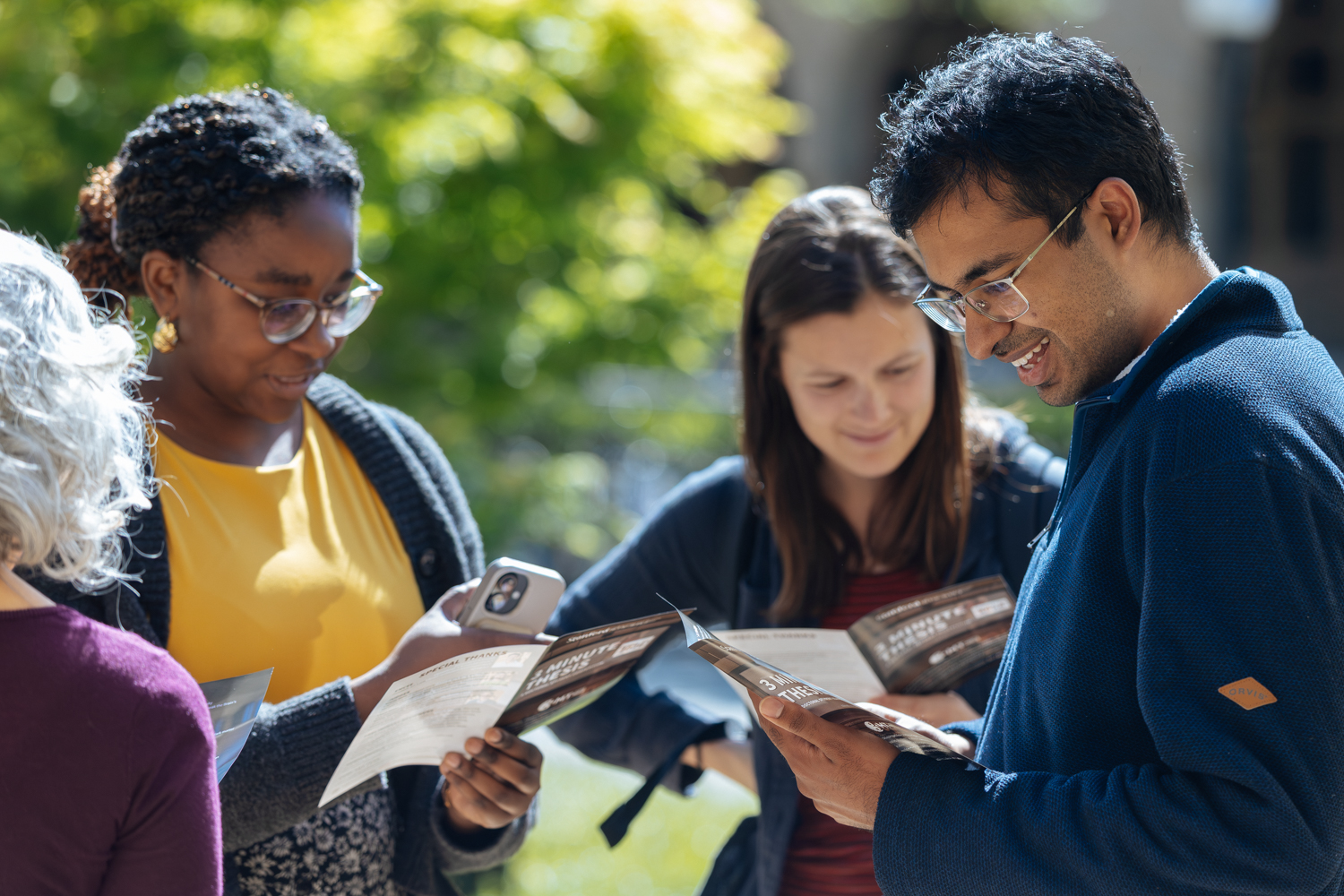
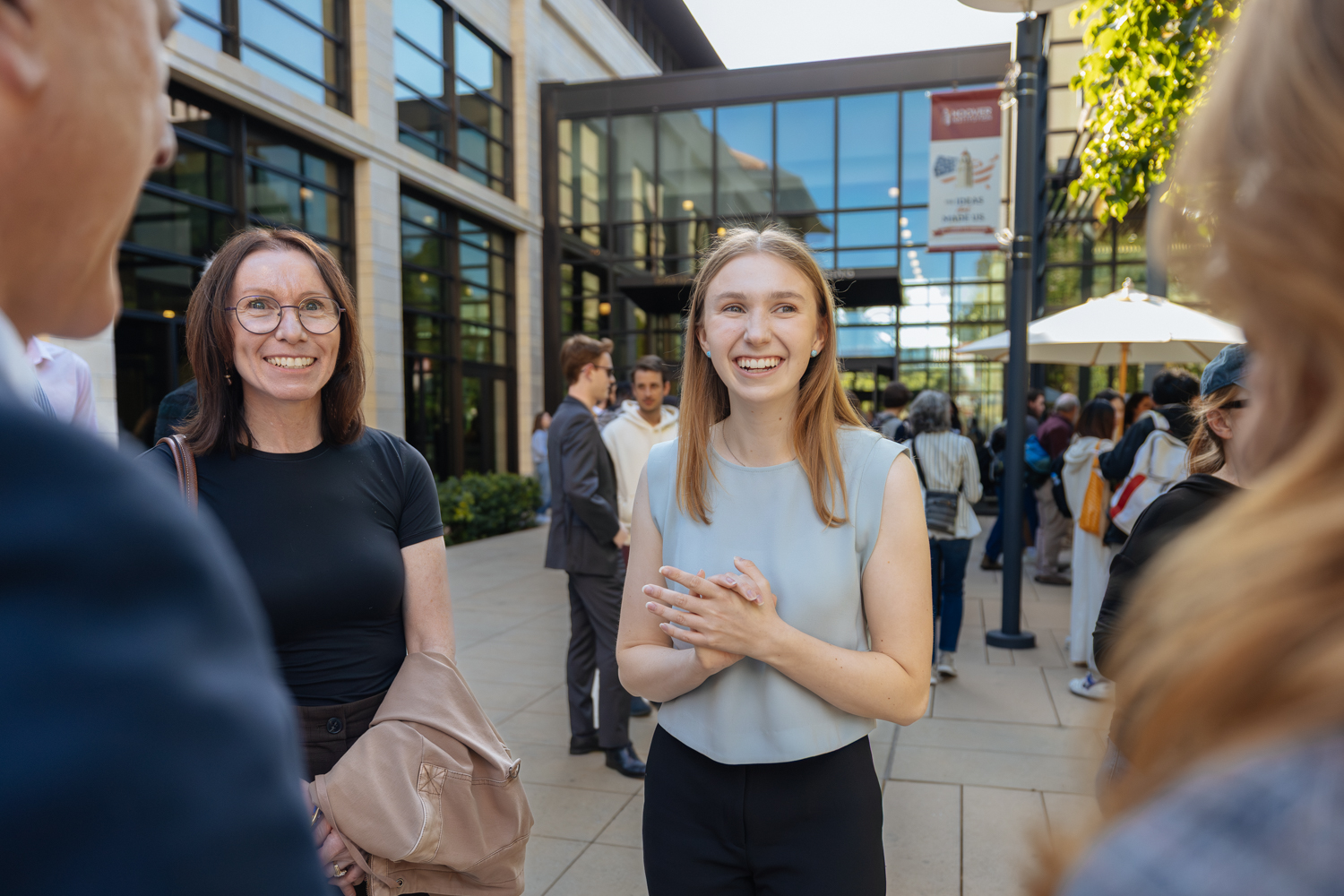
Three-Minute Thesis audience members explore the event program while waiting in line to enter the event.
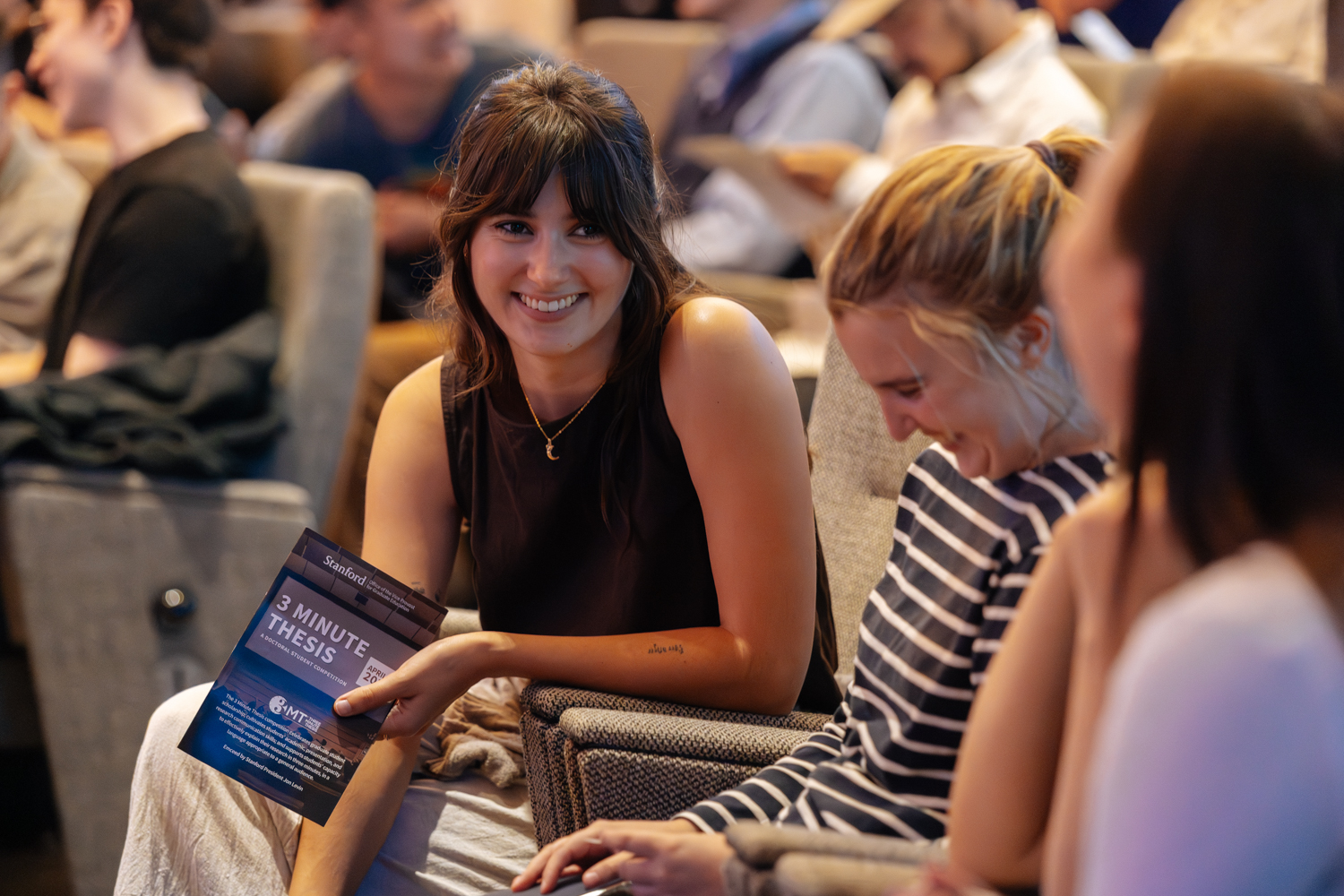
Attendees settle into their seats, ready to hear presentations from the 10 finalists.
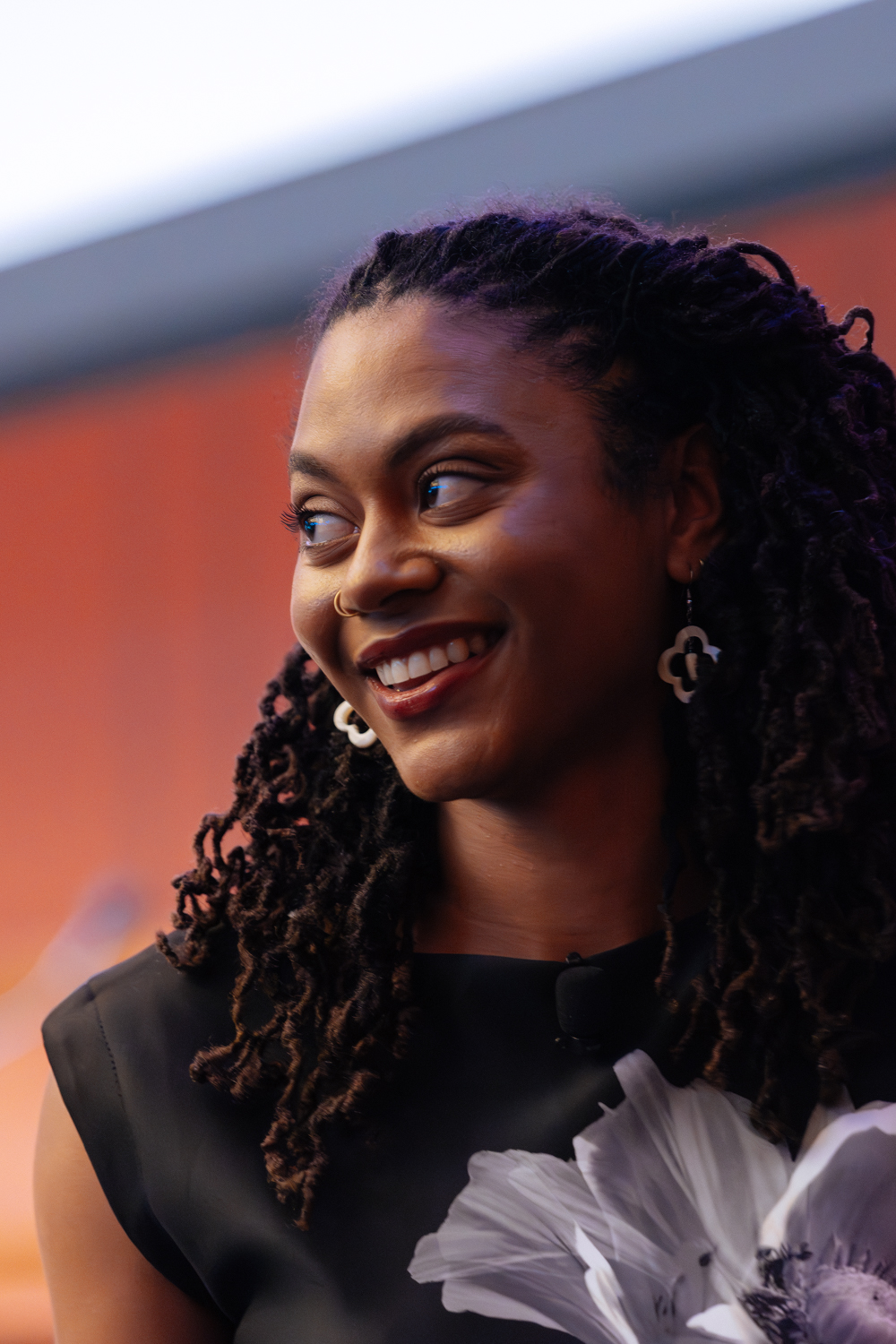
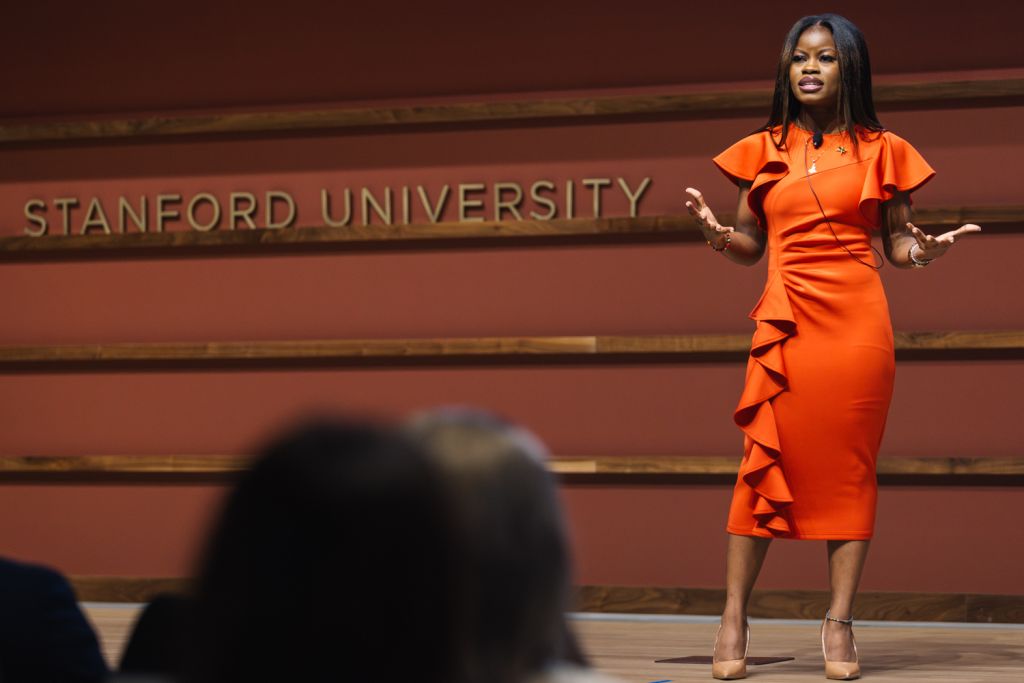
Orisa Coombs, a PhD candidate in mechanical engineering and 3MT finalist, discusses her research in the presentation, “Money Down the Toilet: Recovering Valuable Fertilizer from Urine.”
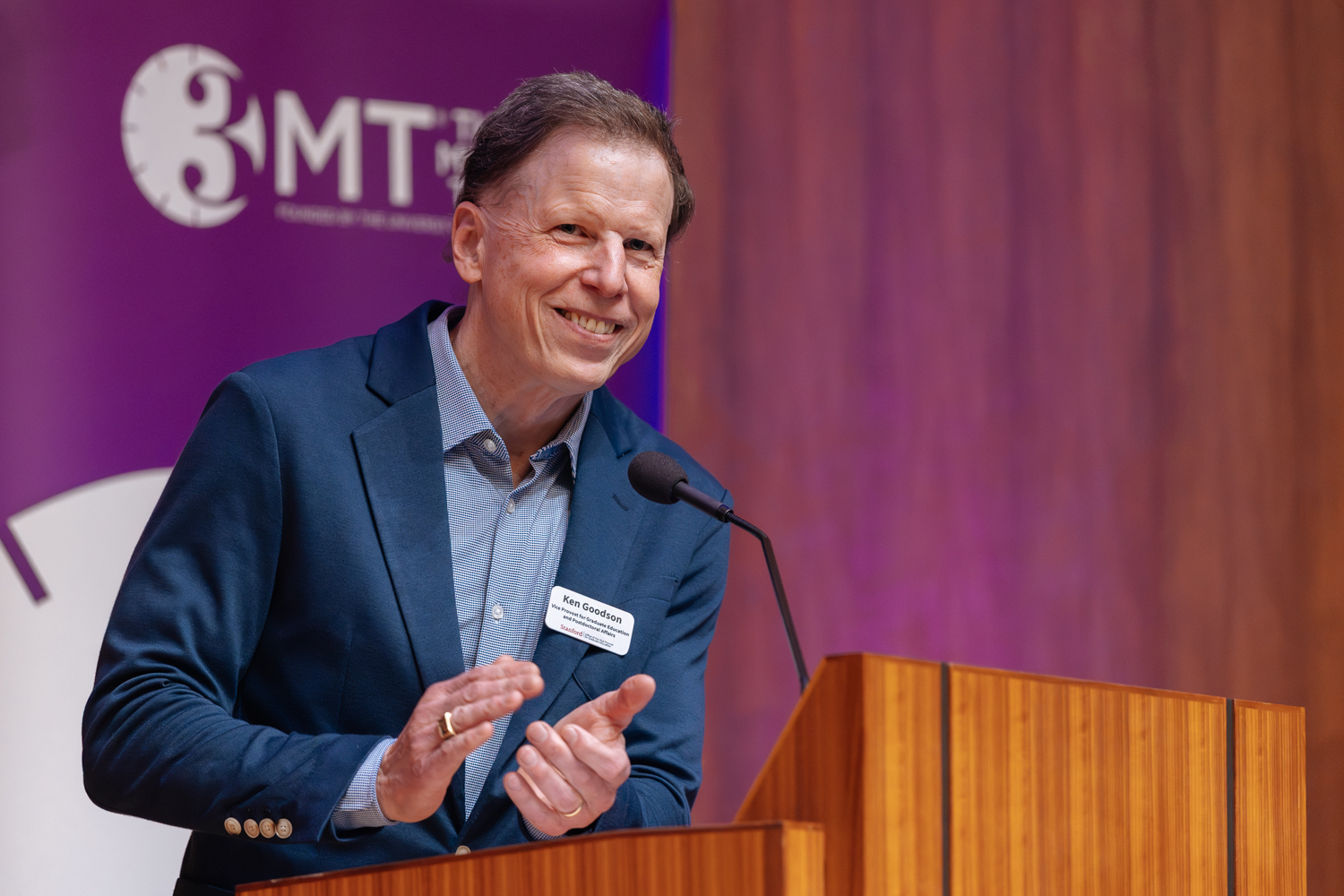
Vice Provost for Graduate Education and Postdoctoral Affairs Ken Goodson welcomes the audience.
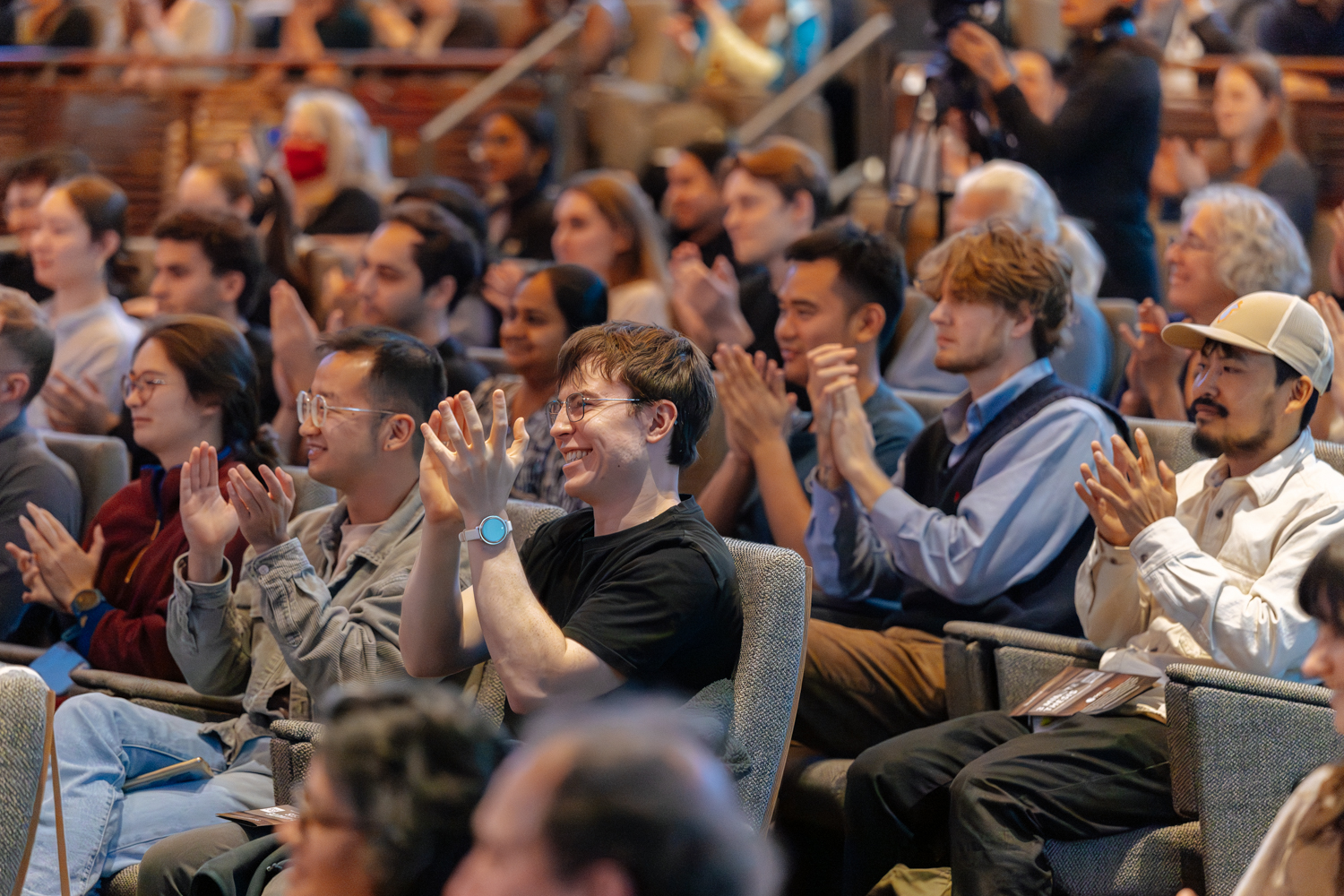
A packed crowd enthusiastically applauds presenters.
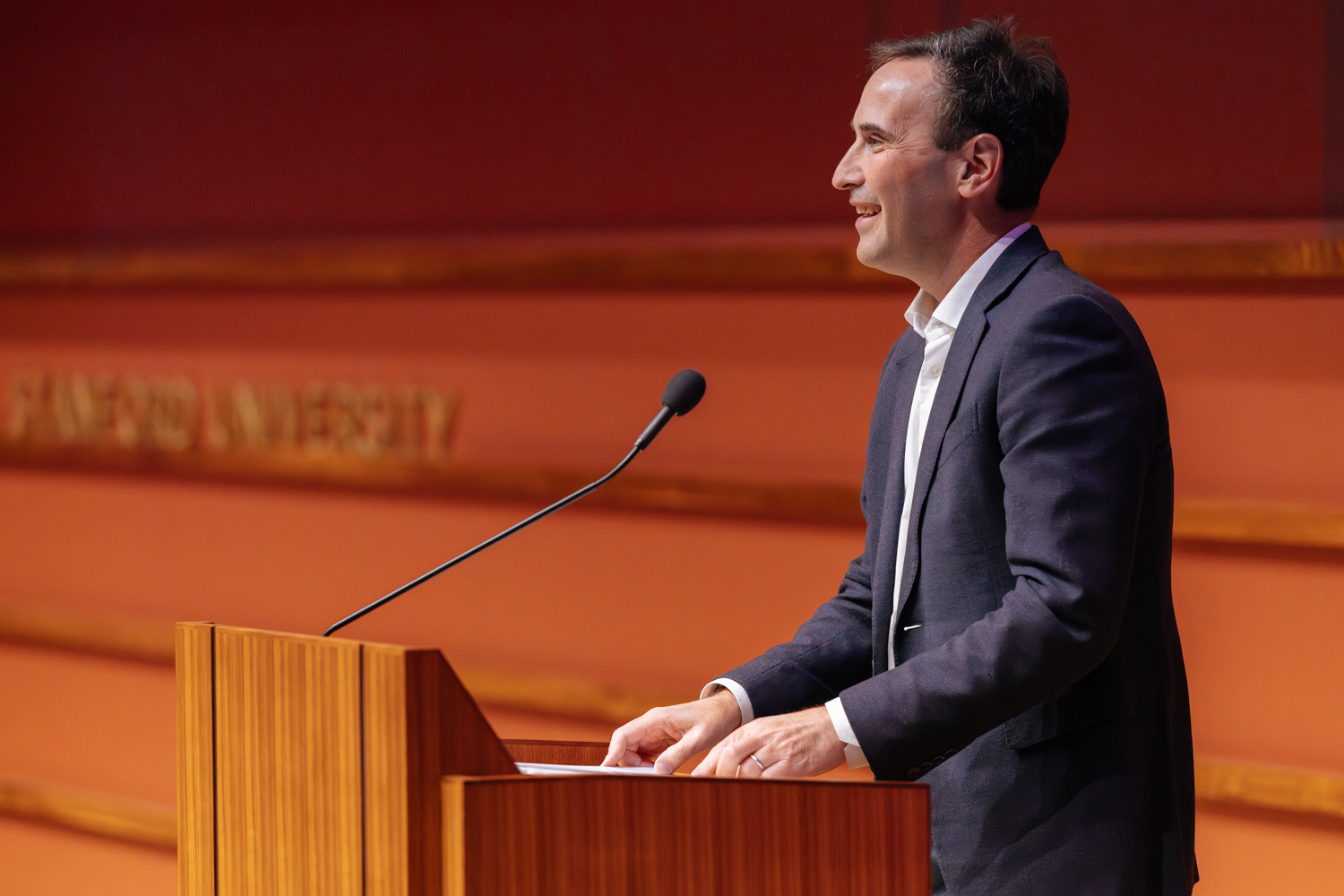
President Jonathan Levin emcees the event.
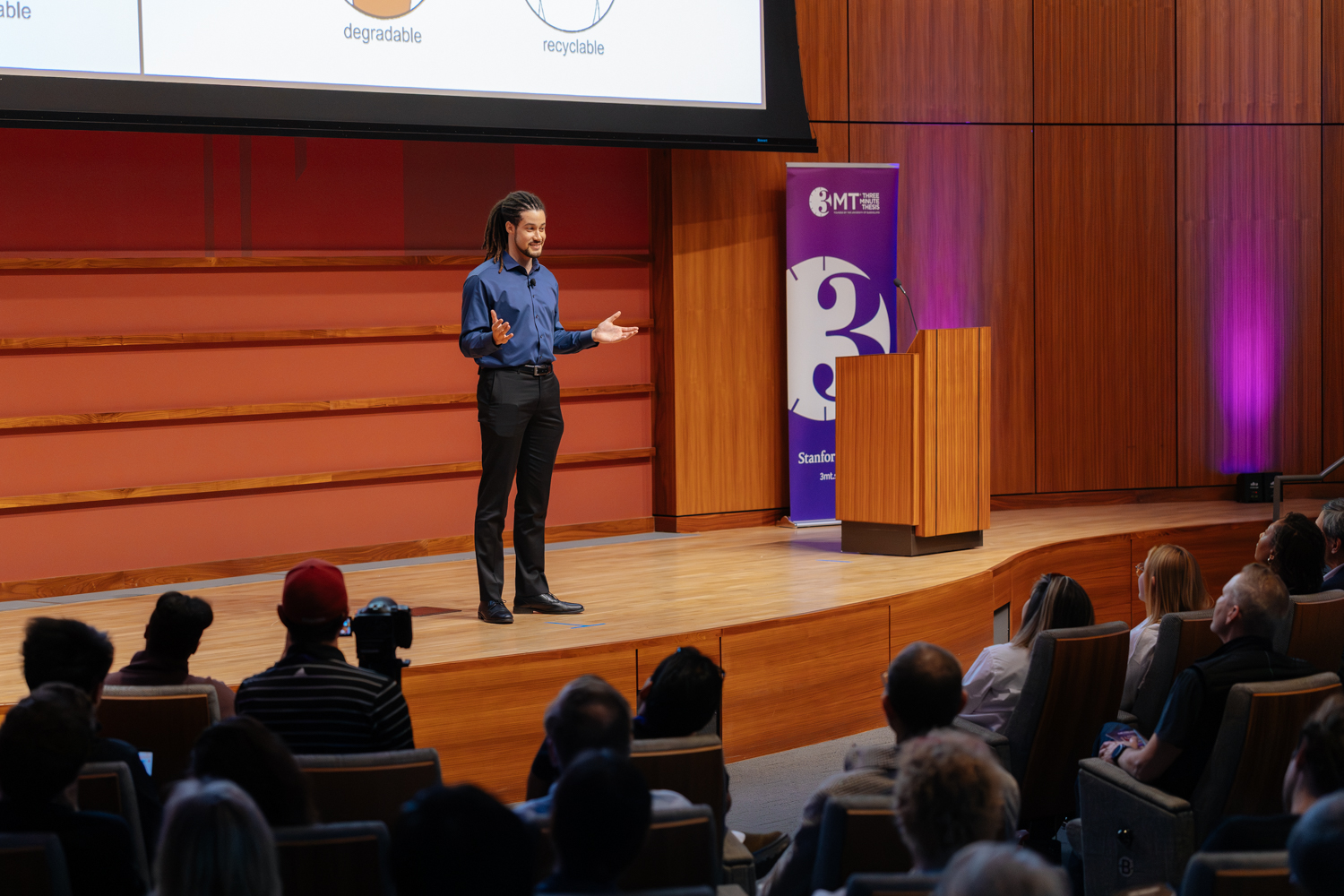
David Dumas, a PhD candidate in chemistry, discusses his work in his presentation, “Plastics As They Should Be.”
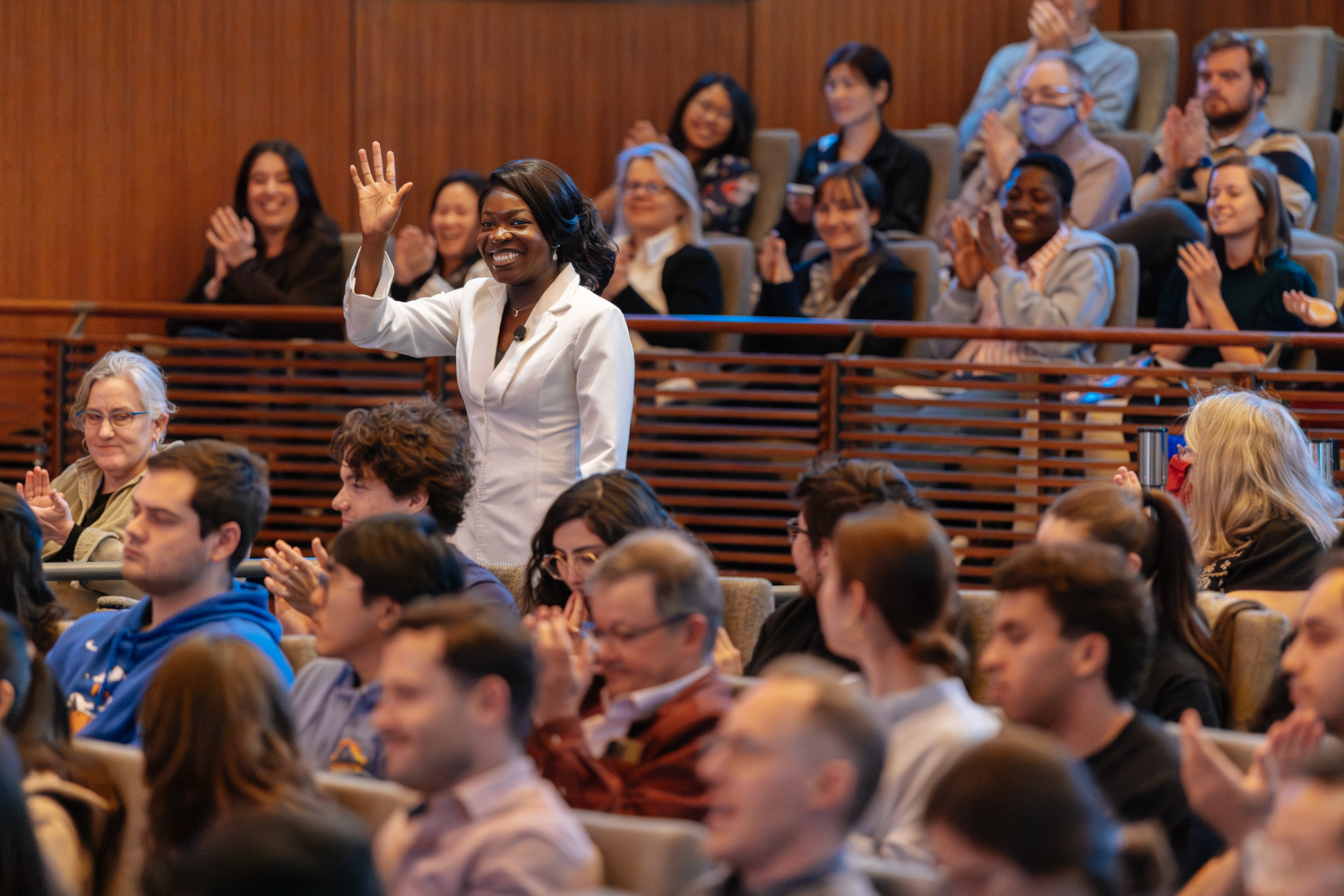
Ibukun Ajifolokun, a PhD candidate in materials science and engineering, won both second place and the People’s Choice Award for her presentation on how injectable hydrogels improve combination vaccine delivery.
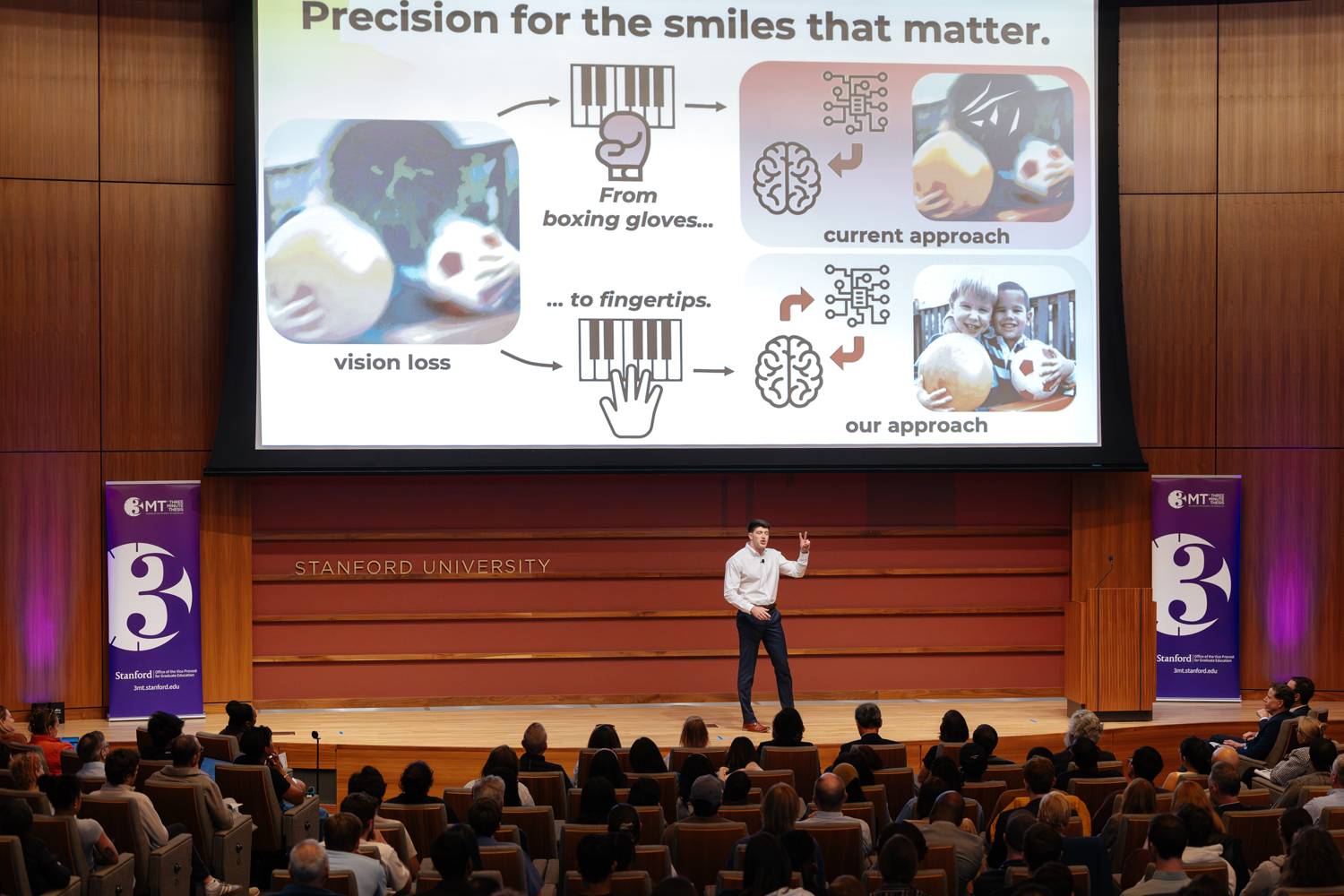
AJ Phillips delivers his winning presentation on neural implants for vision restoration in people blinded by retinal degeneration.
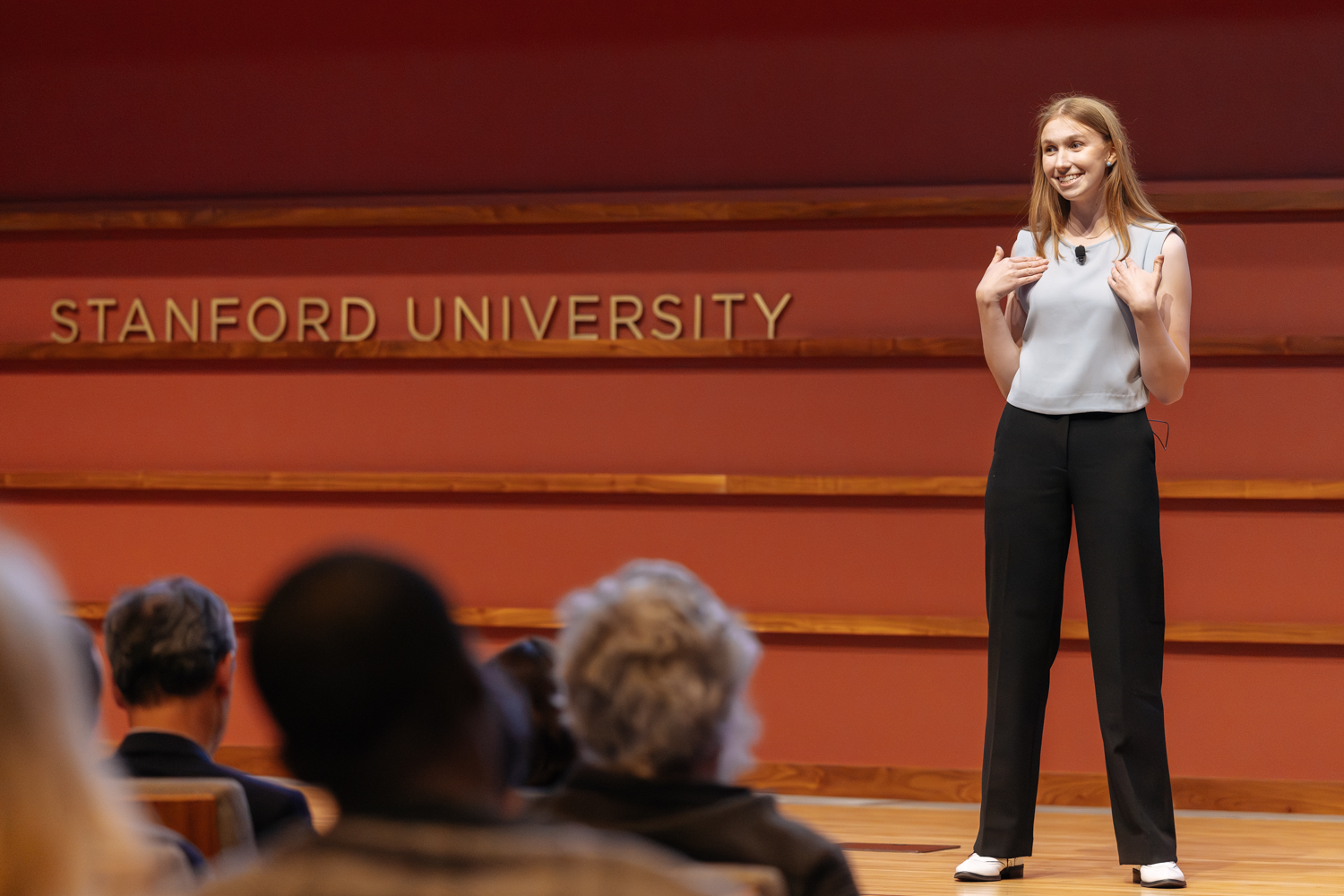
Colette Benko, a PhD candidate in developmental biology, took third place for her presentation on how cells communicate with the immune system.
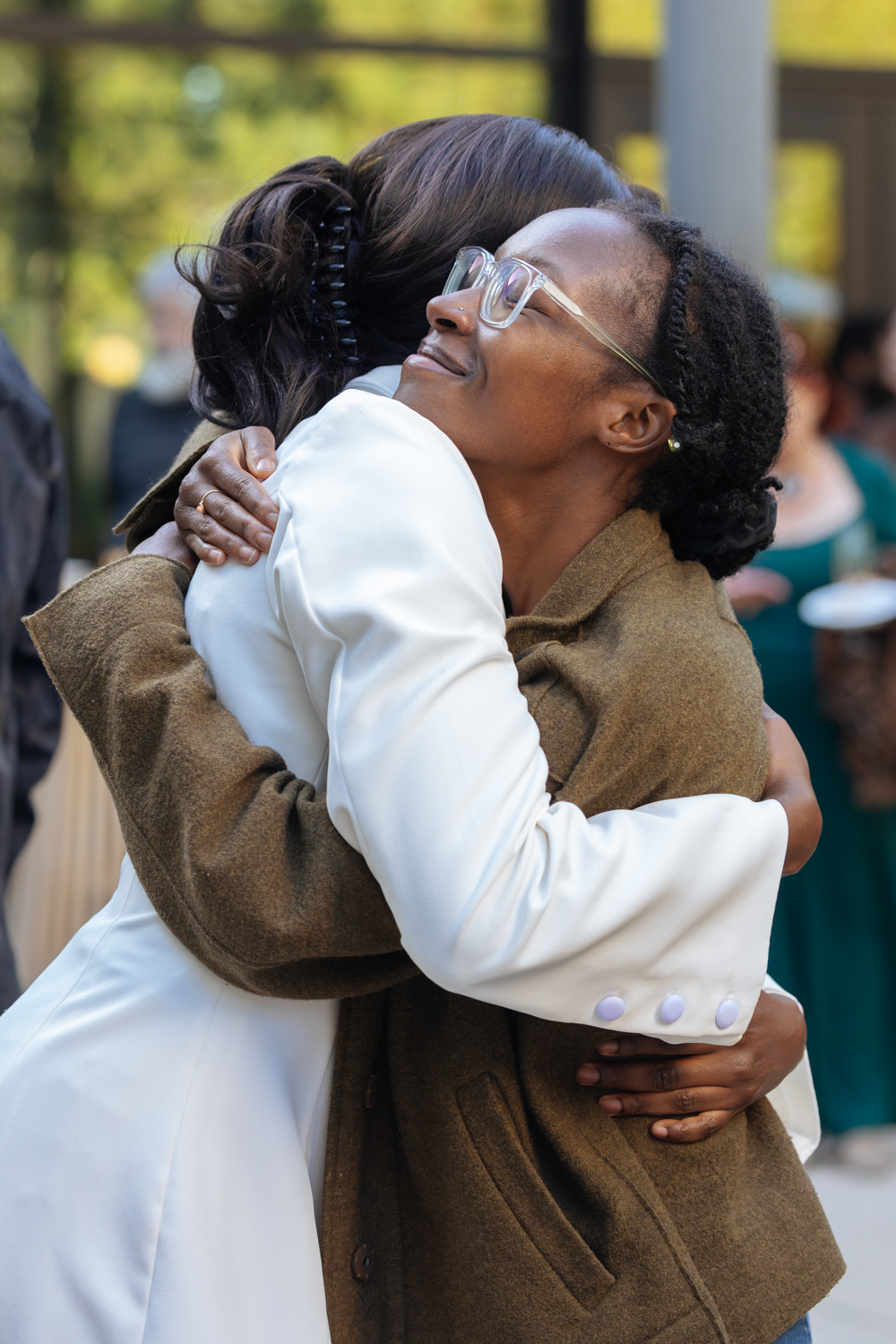
Ibukun Ajifolokun, this year’s second place and People’s Choice award winner, hugs a supporter following the competition.
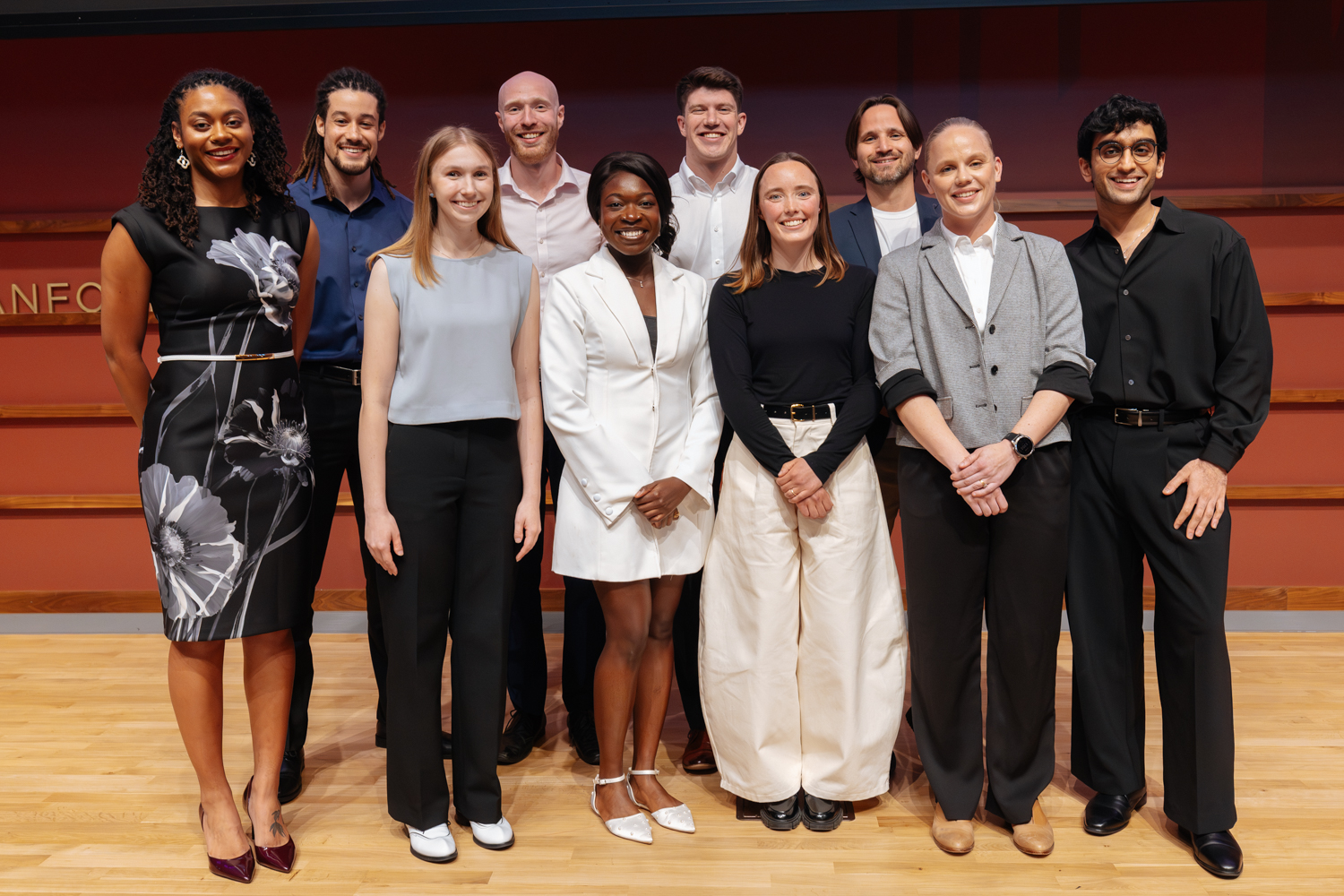
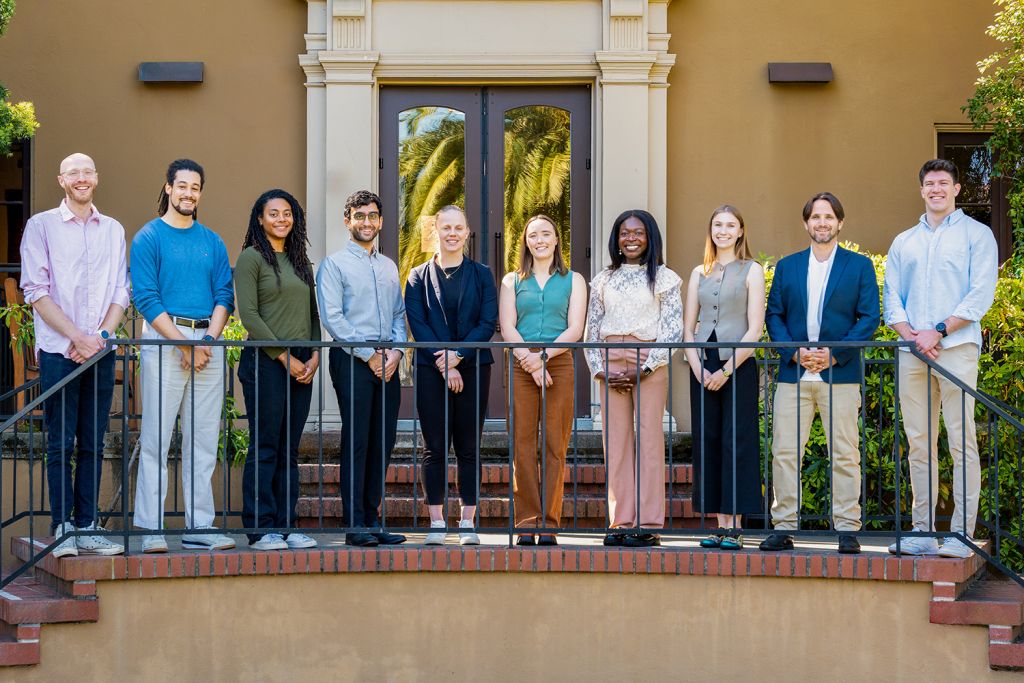
The 10 finalists in Stanford’s second annual 3MT competition. Finalists were chosen from dozens of self-submitted videos, and they prepared for months.
Colette Benko, this year’s third-place winner, celebrates with loved ones during the event reception.
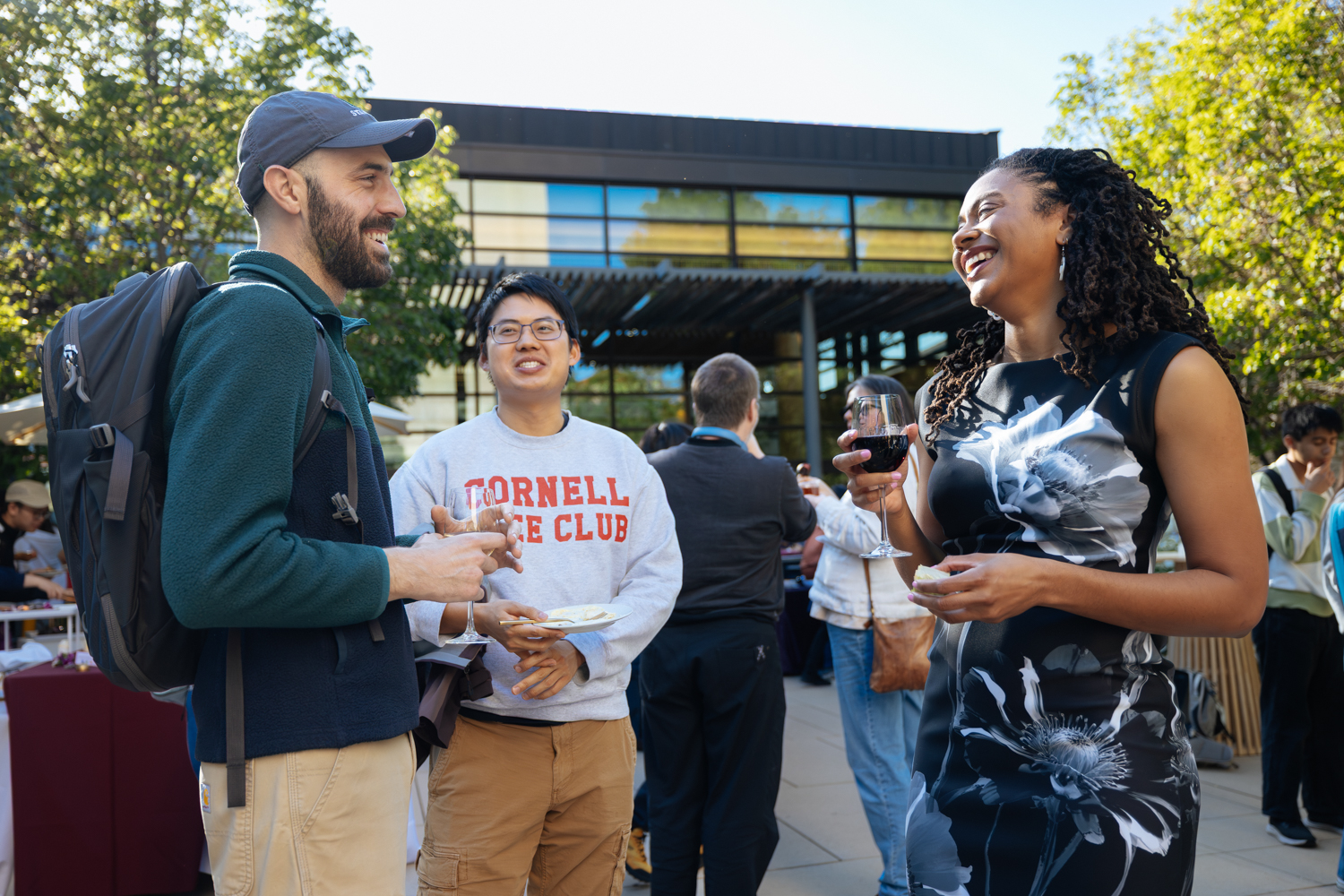
3MT finalist Orisa Coombs (right) talks with supporters following the event.
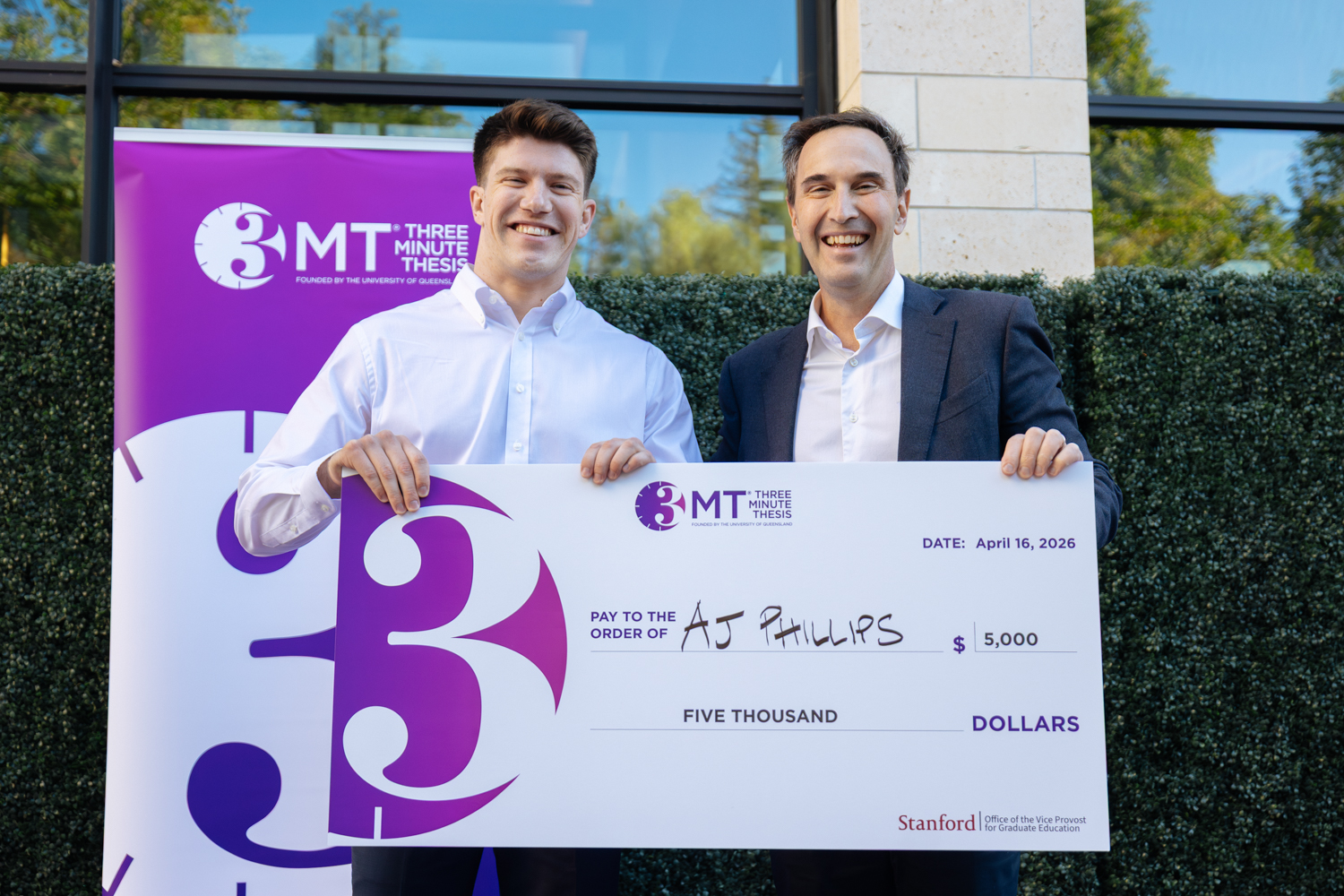
President Jonathan Levin announced AJ Phillips (left) as this year’s first-place winner.
Phillips combines his interest in the brain with his background in electrical engineering and computer science to do the research, which he said is made possible by the interdisciplinary Chichilnisky Lab. “Getting people to understand how blind persons have to move through the world, and what it might mean to restore a meaningful level of vision to them, is hopefully impactful,” he said.
3MT, hosted by the Office of the Vice Provost for Graduate Education, was the signature event of Stanford’s inaugural Grad Student Appreciation Week. Vice Provost for Graduate Education and Postdoctoral Affairs Ken Goodson, who opened the ceremony, called it “a spectacular celebration of doctoral thesis work.”
“I have so much admiration for what the 3MT finalists achieved this year,” Goodson said. “Delivering a compelling narrative about one’s work is a very important skill for researchers across all disciplines, and this experience has helped them develop in ways that will be a benefit throughout their careers.”
President Jonathan Levin, who emceed the event, said the competition reflects the extraordinary breadth of research happening across Stanford. “It’s kind of amazing to think of all the research that’s going on with 5,000 graduate students doing projects like this,” he told the audience.
Finalists were chosen from dozens of self-submitted videos, and they prepared for months, rehearsing and fine-tuning their presentations with the help of Stanford oral and technical communication coaches.
The event was adapted from a format that began at the University of Queensland, Australia, in 2008 and has since been adopted by more than 900 universities worldwide. Winners go on to compete in regional, national, and international events. This year’s Stanford competition featured an impressive panel of judges: Stacey Bent, professor of chemical engineering and of energy science and engineering; Lloyd Minor, the Carl and Elizabeth Naumann Dean of the School of Medicine and vice president for medical affairs; Condoleezza Rice, the Tad and Dianne Taube Director of the Hoover Institution; Blakey Vermeule, professor of English; and Howard Wolf, president of the Stanford Alumni Association.
A packed audience cheered on each finalist as they walked to the stage with music of their choice playing. After the competition, the judges convened for about 20 minutes, and the crowd voted for the People’s Choice Award via a QR code before heading into the event’s reception. There, Levin announced the winners, presenting Philips with a giant first-place check for $5,000. Second place received $3,000, third place received $1,000, and People’s Choice received $500.
2026 Three Minute Thesis Competition Winners
First Place: AJ Phillips, electrical engineering, “Teaching Neural Implants to Speak the Brain’s Language,” faculty advisor: E.J. Chichilnisky
Second Place: Ibukun Ajifolokun, materials science and engineering, “No Antigen Left Behind: How Injectable Hydrogels Improve Combination Vaccine Delivery,” faculty advisor: Eric Appel
Third Place: Colette Benko, developmental biology, “Cellfies: Understanding How Cells Communicate with the Immune System,” faculty advisory: Andrew Fire
Ibukun Ajifolokun, a PhD candidate in materials science and engineering, won both second place and the People’s Choice award for her presentation on how injectable hydrogels improve combination vaccine delivery.
“I have always been passionate about health and improving global health outcomes for people all over the world,” Ajifolokun said. “And in materials science … we draw from knowledge from a lot of different places in order to solve different problems.”
As she headed to the stage, Ajifolokun said her Apple Watch indicated her heart rate was at 150 beats per minute, so she took a deep breath right before her three minutes began. “Once I saw smiling faces, I was like, this is for me,” she said. “Then I got in the zone and I was able to have fun with it.”
Colette Benko, a PhD candidate in developmental biology, took third place for her presentation on how cells communicate with the immune system.
“Just like us, our cells like to take ‘cellfies,’ and they post these ‘cellfie’ updates on their form of social media I like to call the immunogram,” she told the audience. “A special type of immune cell then scrolls through the immunogram, looking for when your everyday self goes from posting happy and healthy updates to those indicating it may be infected with a virus or even becoming cancerous.”
Last year’s first-place and People’s Choice winner, Favour Nerrise, represented Stanford earlier this month at the Western Regional 3MT competition and made it to the final round.
VPGE will offer informational workshops in the fall on how to apply for next year’s competition.
Writer
Chelcey Adami