An extraordinarily large and well-preserved fossilized mastodon tooth, discovered this summer in a creek bed in the Midpeninsula Regional Open Space District (Midpen), has been donated to Stanford University. The enormous molar belonged to a Pacific mastodon, a species from the Pleistocene of western North America newly described and officially recognized in 2019.
Unlike the ground sloths, mammoths, camels, pronghorn antelopes, and bison, which grazed in grassy fields in this area, the Pacific mastodon browsed on the leaves of trees in shaded riparian environments. The fossil is being preserved for carbon dating, 3D imaging, and further study in the Geoscience Specimen Collection.
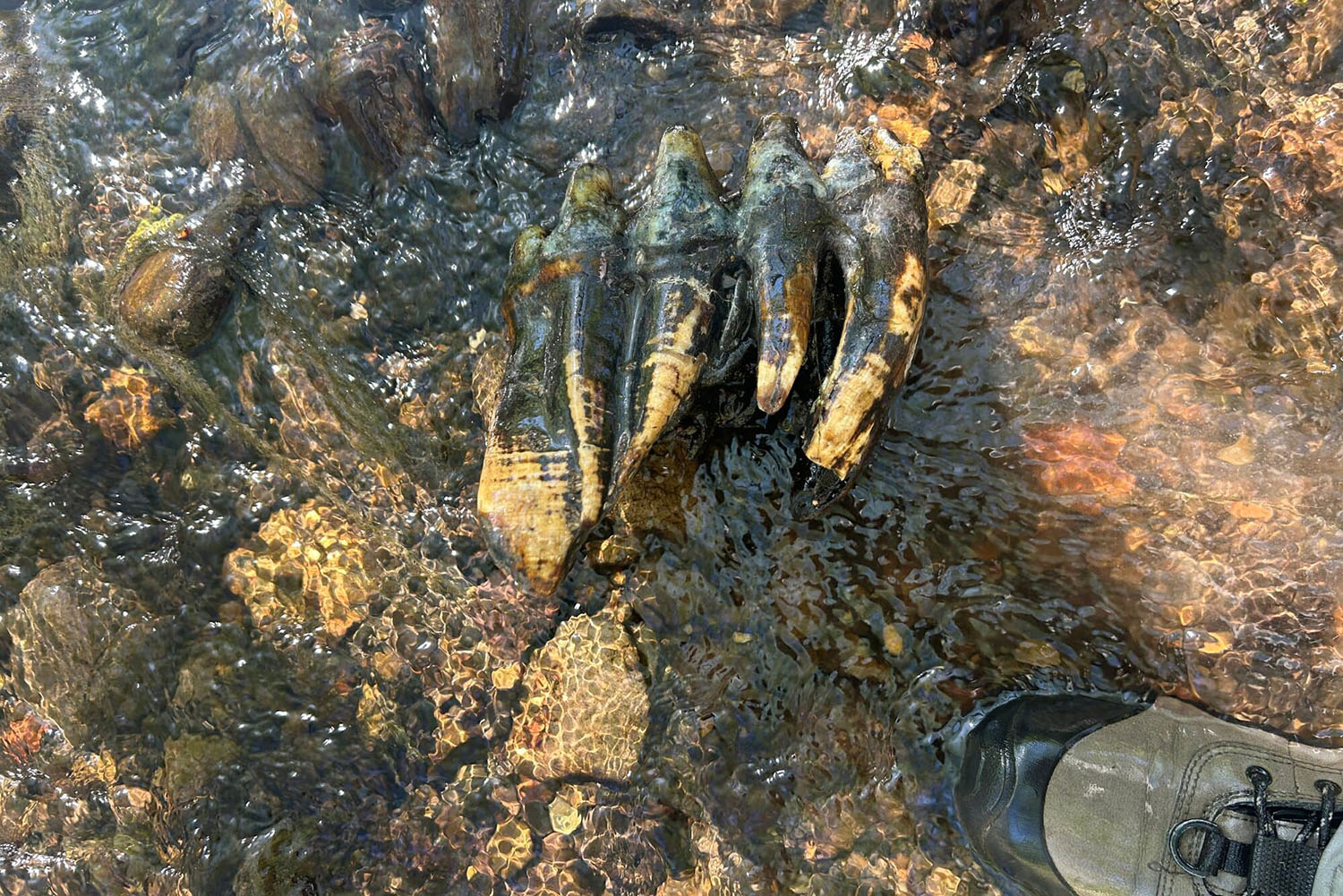
Geomorphologist Brigid Lynch discovered a mastodon tooth in a creek bed while working on a project to improve habitat for the threatened California red-legged frog. The unexpected find prompted a collaboration to identify and preserve the fossil. | Balance Hydrologics via Midpeninsula Regional Open Space District
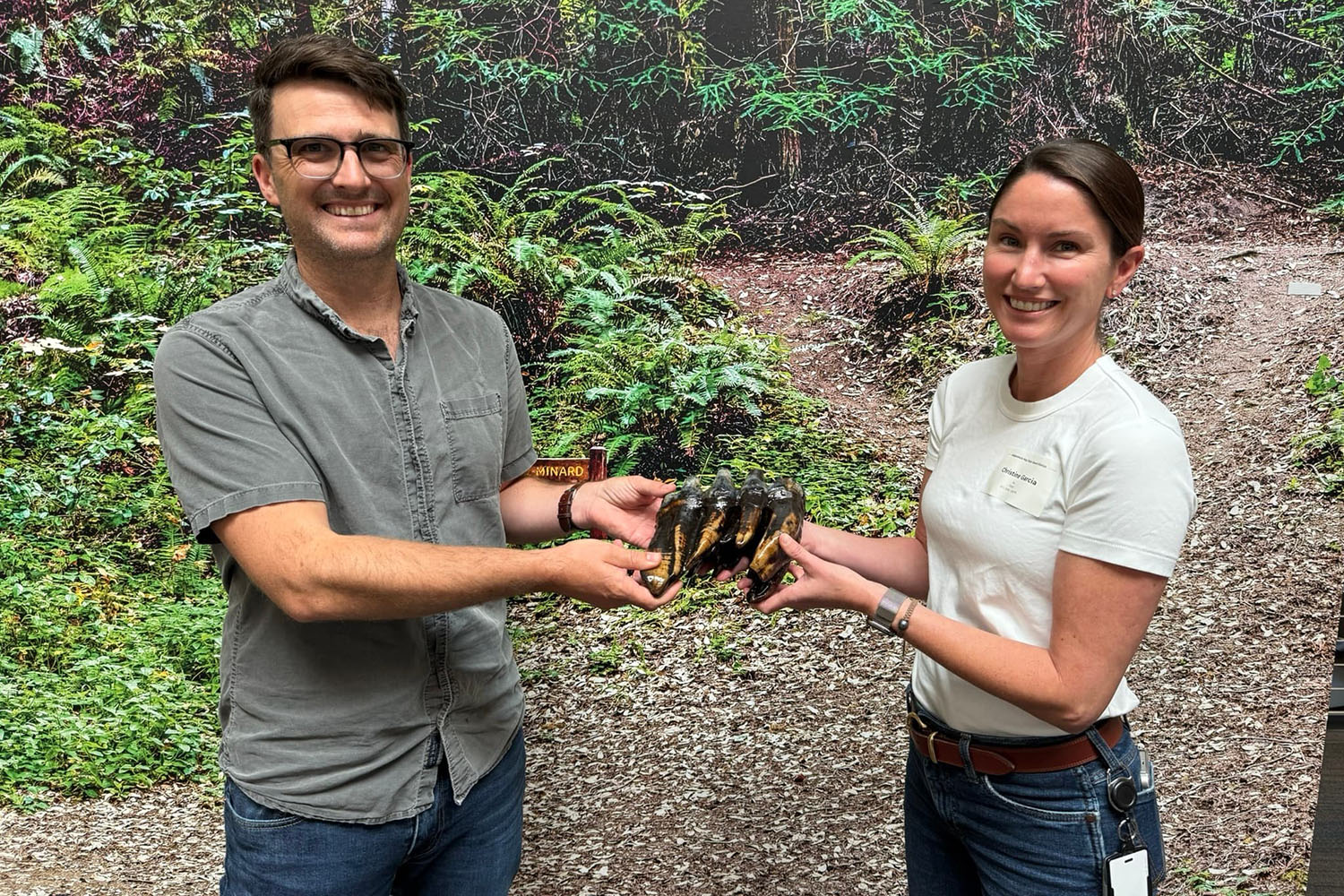
Matt Sharp Chaney of the Midpeninsula Regional Open Space District and Stanford Libraries curator Chrissy Garcia hold the fossil in front of artwork at the district’s offices. Now part of Stanford’s Geoscience Specimen Collection, the fossil supports research into Bay Area Ice Age animals and ecosystems. | Midpeninsula Regional Open Space District
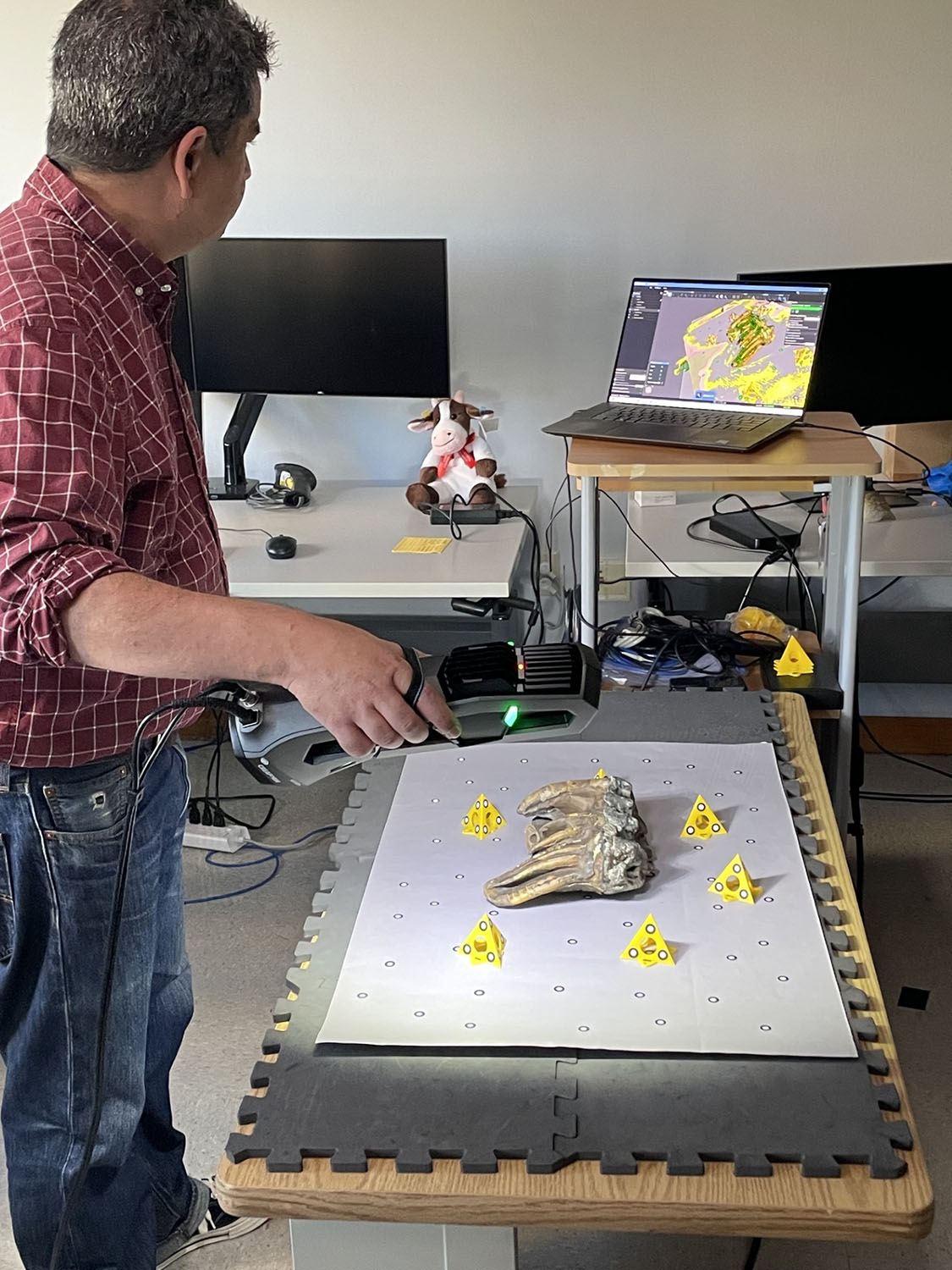
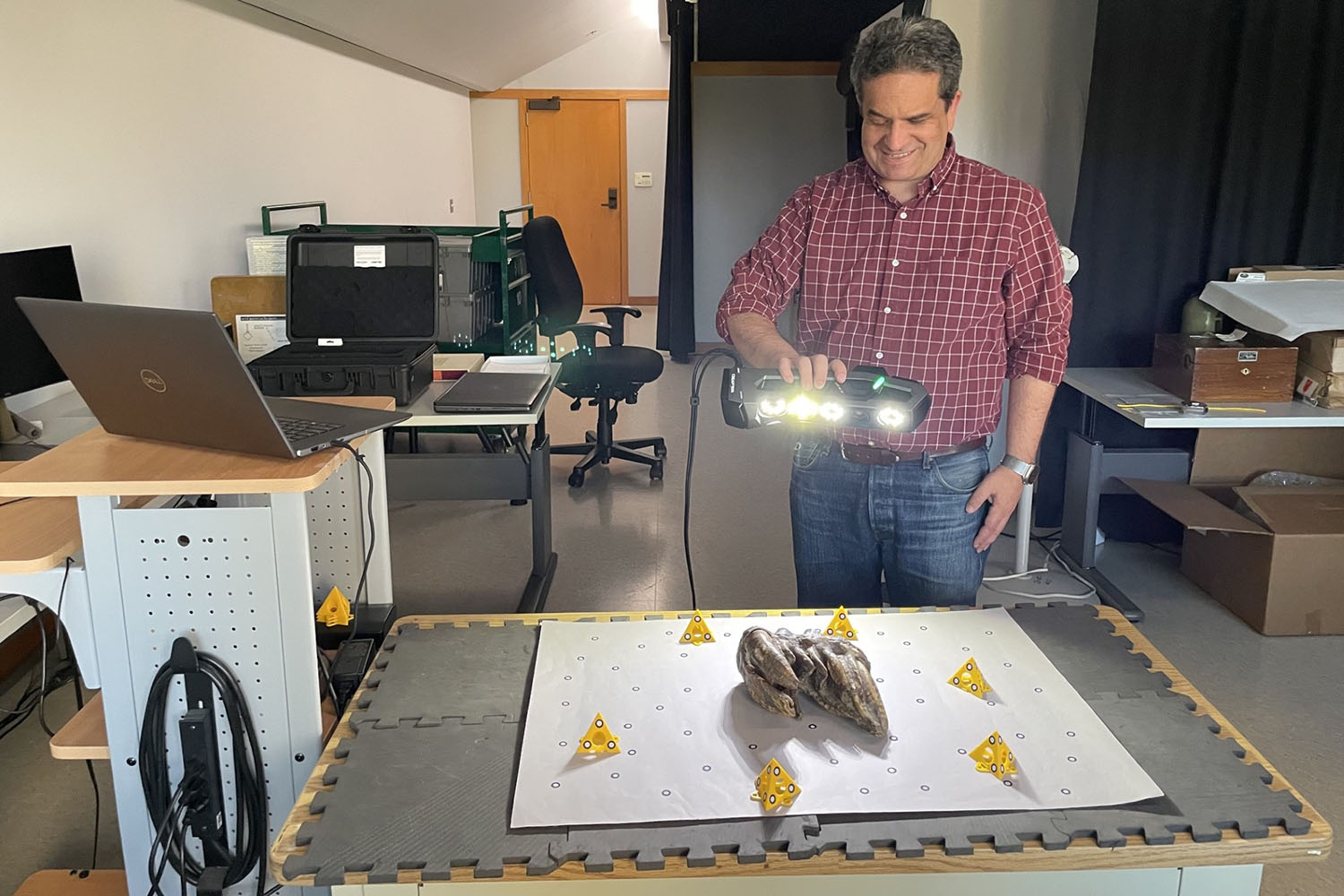
Tony Calavano of Stanford Libraries’ Digital Library Systems and Services department scans the mastodon tooth. Digitization allows students, researchers, and the public to explore the fossil beyond the collection’s walls. | Stanford University Libraries
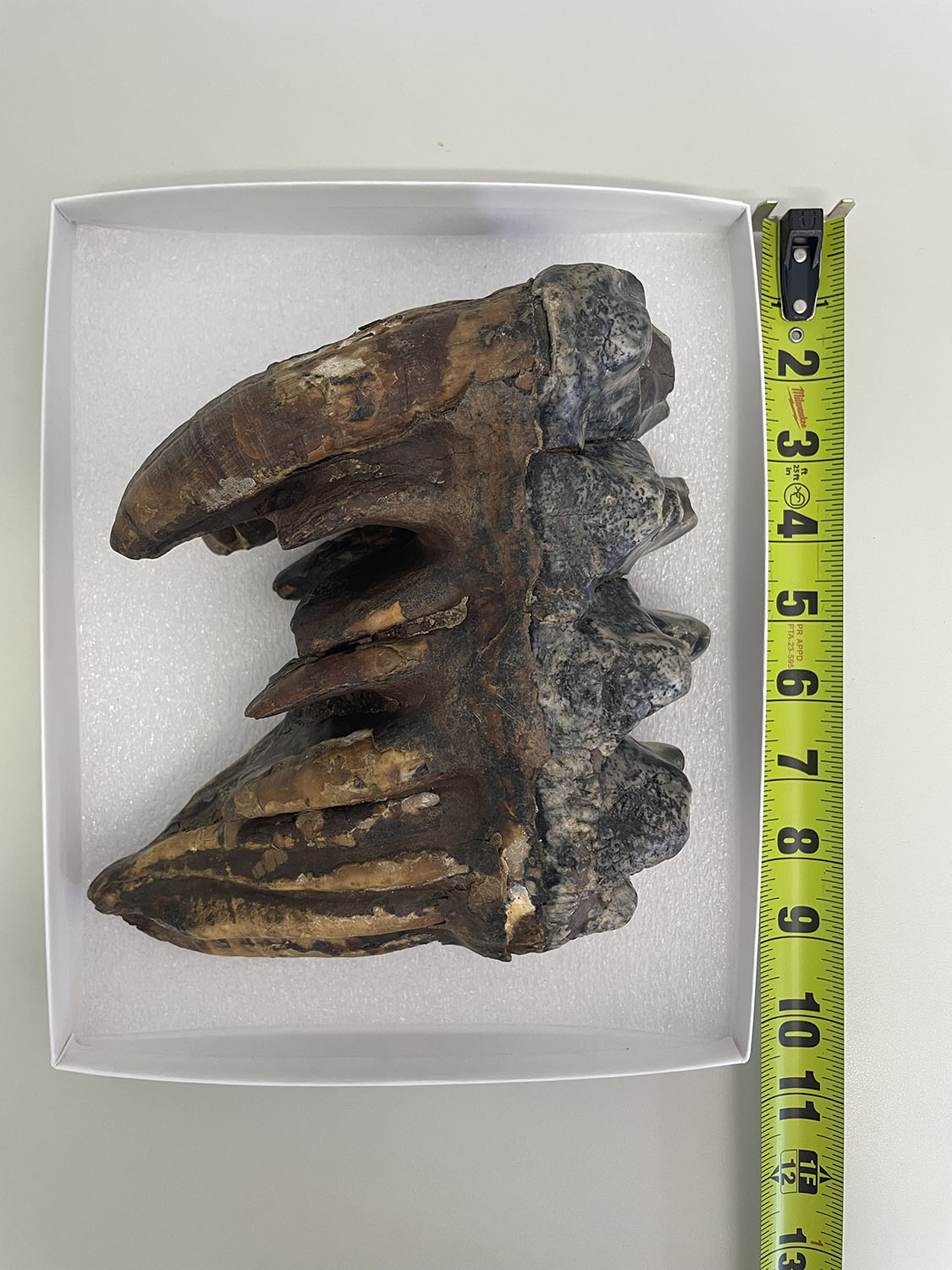
A measuring tape puts the enormous molar’s size in perspective. Further study, including planned carbon dating, could help researchers place this individual mastodon in the region’s ecological history. | Stanford University Libraries
“Fossils such as this tooth are critical for understanding what species lived in this area prior to and during early human occupation,” said Jonathan Payne, the Dorrell William Kirby Professor in the Department of Earth and Planetary Sciences. “They help us assess what a pre-human baseline ecosystem looked like and how we might restore aspects of it, if we wanted to. The fossils teach us more broadly the geography of ancient species and the timing of their extinction so that we can learn how species have responded to climate change in the past and might do so in the future.”
“But for thinking about this specific tooth” added Payne, “there’s also the key difference between the idea of a mastodon and the experience of holding the tooth of one particular mastodon that lived its life where I am now living mine. Mammoths and mastodons, like elephants, were undoubtedly smart and social animals that experienced love for their parents, offspring, siblings, and friends and that were curious about the world around them. They are also a reminder that the world was not always the way it is today and, by extension, we have the ability to make the future different from and better than today if we make wise choices.”
Brigid Lynch, a geomorphologist with Balance Hydrologics, discovered the fossil while working on a Midpen project to enhance habitat for the threatened California red-legged frog. She and her colleagues contacted Garret Trask, senior archaeologist for Stanford Heritage Services, for assistance in identifying and preserving the fossil while Midpen explored the best course of action for its long-term care. News of the remarkable find was also shared with Wayne Thompson, owner of Pacific Paleontology, and Chrissy Garcia, curator and manager of Stanford’s Geoscience Specimen Collection. Ultimately, Midpen donated it to Stanford and issued the first published report, “Rare Fossil Found in Midpen Preserve,” in its newsletter.
In the Midpen report, Garcia stated, “Fossils are our only opportunity to see into past biodiversity. We can study fossils to better understand Earth’s past … and to make better predictions and better decisions about how to help our ecosystems and biodiversity thrive into the future.”
Garcia collaborated with the Libraries’ Digitization Services Lab to create a 3D scan and print of the fossil for teaching and outreach purposes. A copy of the scan is now available via the Stanford Digital Repository. Her role exemplifies the broader efforts of Stanford’s librarians to contribute their conservation skills, subject knowledge, and expertise in cataloging and collection management to raise awareness of the special collections and archives assembled by academic departments and centers since the university’s founding, and to make them widely available.
For more information
This story was originally published by Stanford University Libraries.
Writer
David Jordan