In brief
- Stanford researchers have found that dunes on Earth and Mars are formed by winds that are just strong enough to move sand along the ground.
- Despite varying conditions between the planets and between dune fields on each planet, the correlation between wind speed and sand grain size remains consistent.
- This correlation can help scientists better understand the ancient and modern climates of Earth, Mars, and potentially several other planets and moons in our solar system.
Stanford University researchers have shown that the median sand grain size in dunes on Earth and Mars reveals the speed of the winds that formed those dunes. The finding enables scientists to use sand as a wind speedometer for both modern and ancient dunes found across the solar system.
Over the last few decades, scientists have discovered dunes and ripples formed by winds on celestial bodies including Venus, Mars, Saturn’s moon Titan, and a comet orbiting the sun. By observing the dunes’ shapes and patterns, they can determine the direction and persistence of the formative winds. However, estimating the speed of those winds has thus far proven challenging.
Now, in a study published in Proceedings of the National Academy of Sciences, Stanford researchers have demonstrated that dunes on Earth and Mars are built by winds that are just barely fast enough to move the sand in those dunes along the ground.
The researchers found that on both planets, the wind speed that contributes most to dune formation is determined largely by sand grain size. This means that scientists can extrapolate dune-forming wind speeds from a dune’s median grain size, both in modern dunes and in ancient dunes preserved in the rock record.
Dunes are a “great recorder of what happens on a planet’s surface, and particularly the interactions between what’s happening in the atmosphere of a planet and what’s happening on the surface,” said lead author Colin Marvin, who worked on the study as a PhD student in the lab of senior author Mathieu Lapôtre, associate professor of Earth and planetary sciences at the Stanford Doerr School of Sustainability.
Finding a standard formula for windblown dune formation
In 2010, University of Pennsylvania researchers hypothesized that windblown dunes form through winds slightly faster than the threshold for moving sand. “Since then, nobody’s really looked at this idea, even though it’s really powerful because it tells you something about the environmental conditions that formed the dune fields that we see on not just Earth and Mars, but on a variety of other planetary bodies,” said Marvin.
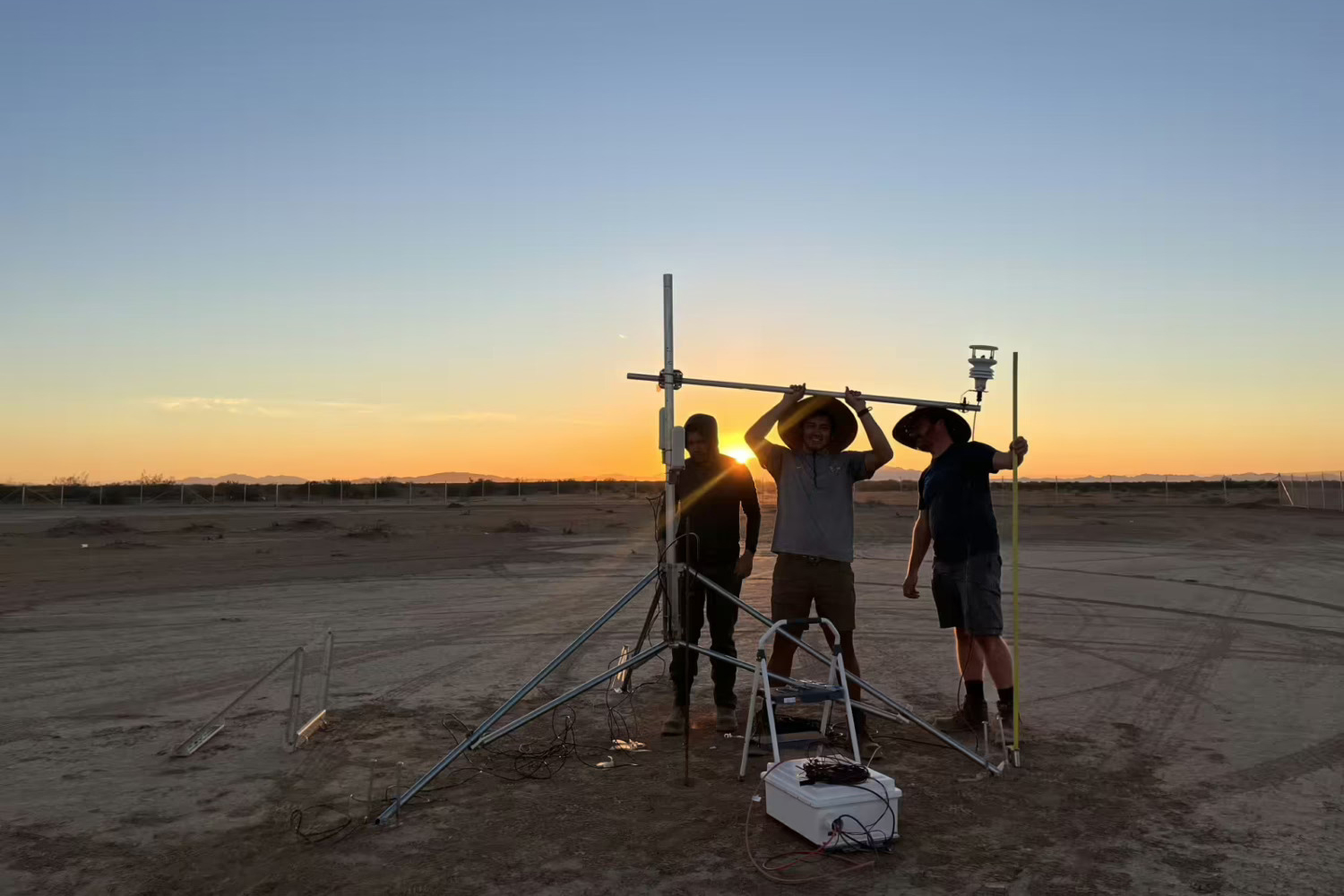
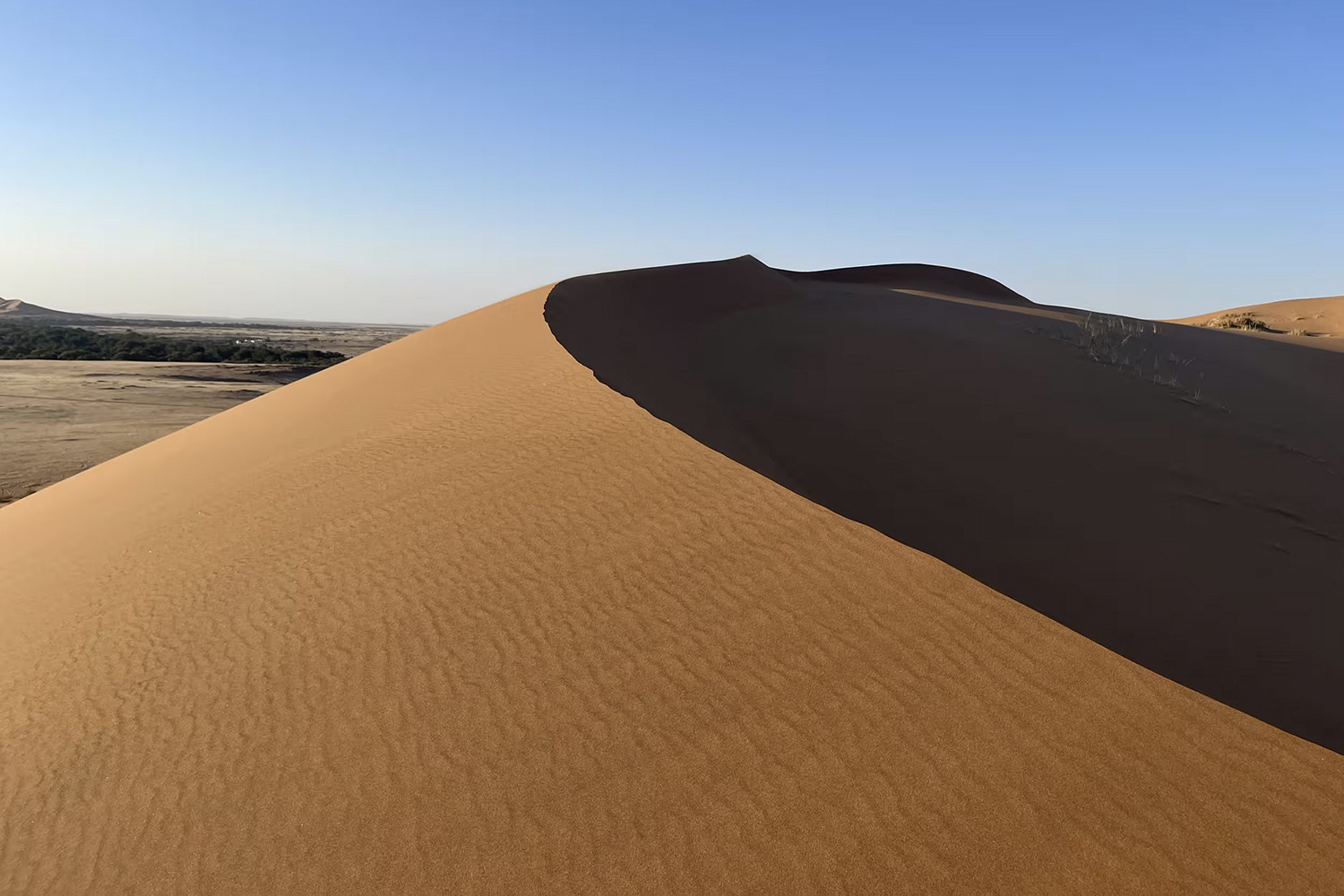
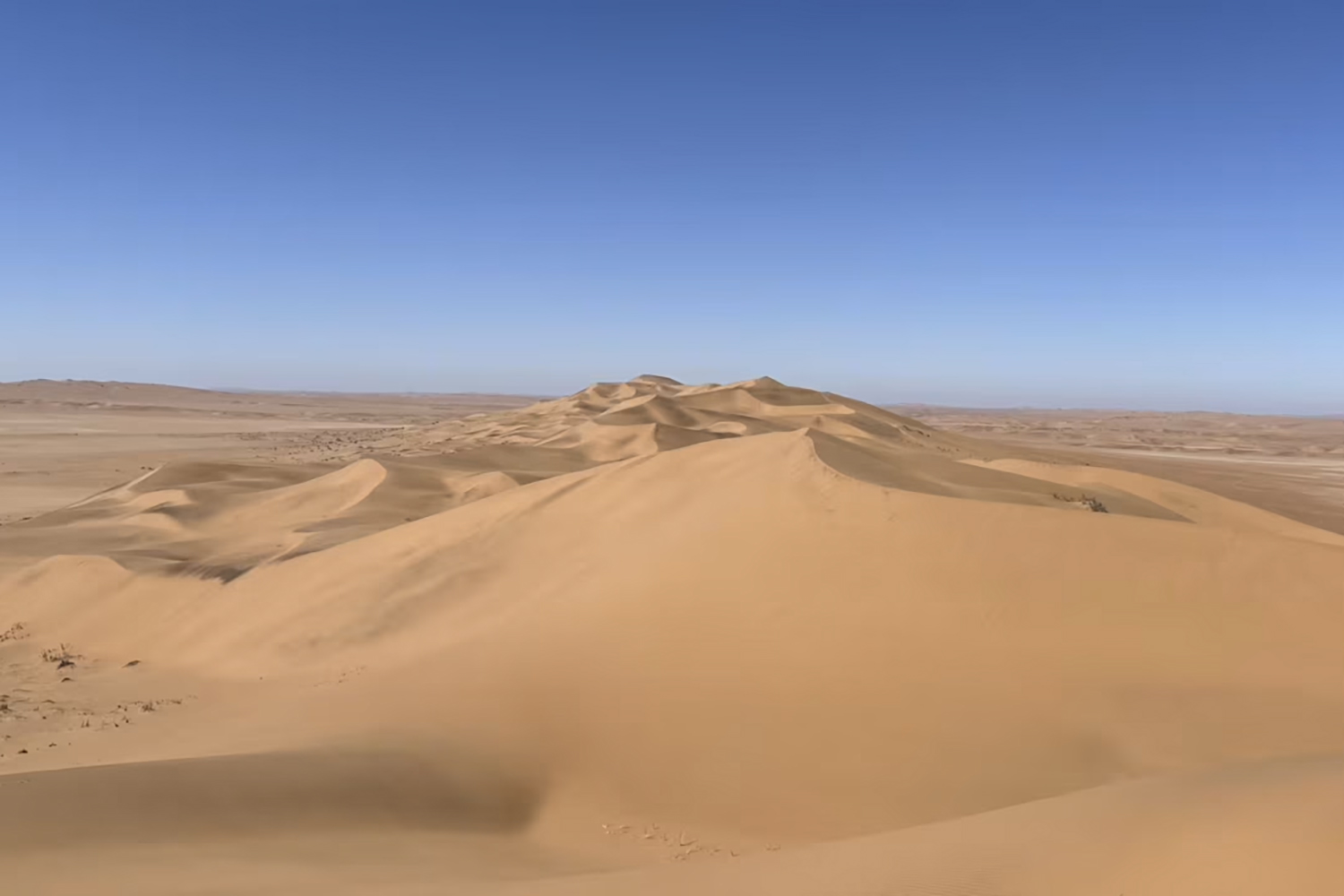
To test this hypothesis, the Stanford researchers analyzed 30 years of wind data and grain-size measurements from 24 dune fields of different shapes, sizes, and locations around the world. Using this data, the researchers calculated which wind speed moved the most sand over time at each field. They found that these winds were closely related to grain size and only modestly exceeded the sand transport threshold. Finally, they found that this correlation holds for all the dune fields they studied, from Coral Pink Sand Dunes State Park in Utah to the dunes in Earth’s oldest desert in Namibia.
Studying dunes on Mars and in Earth’s ancient history
The researchers then performed the same analysis using data from a dune field on Mars. Despite the vast differences in atmospheric pressure, gravity, and sediment density between Mars and Earth, a similar correlation emerged.
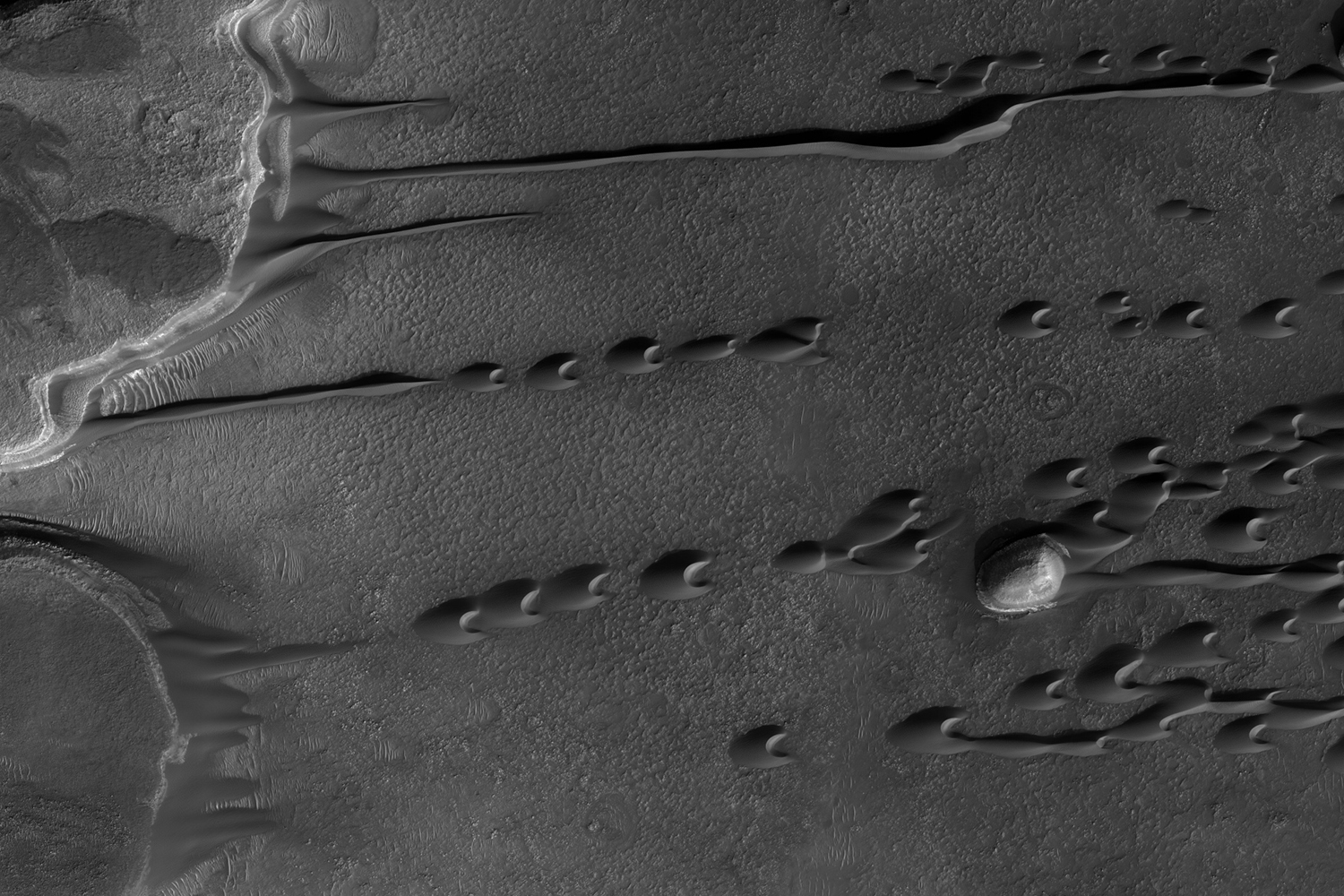
A satellite image of dunes in the Hellespontus region of Mars, taken by the HiRISE instrument on the Mars Reconnaissance Orbiter on March 16, 2008. | NASA / JPL-Caltech / UArizona
This suggests that windblown dunes form in essentially the same way across all planetary bodies with ample loose sediment and winds that rapidly become less common as they get stronger. It also implies that dunes formed similarly in Earth’s deep past, despite changes in atmospheric conditions over geological timescales.
The discovery will enable scientists to “better reconstruct winds and climates through time, on Earth and beyond,” said Lapôtre. “It works for modern dunes and for sandstones dating back three billion years.” Those reconstructions could in turn help scientists test models of ancient atmospheric circulation on Earth and Mars, Lapôtre continued. “Colin is actively working on that, actually. He’s already pushing on to the next steps.”
For more information
The study was supported by a National Science Foundation CAREER grant.
Marvin is now a postdoctoral scholar at Brown University. Lapôtre is also an associate professor, by courtesy, of geophysics and of civil and environmental engineering. Geophysics is a department of the Stanford Doerr School of Sustainability. Civil and environmental engineering is a joint department of the Doerr School of Sustainability and the School of Engineering.
This story was originally published by the Stanford Doerr School of Sustainability.
Media contacts
Mathieu Lapôtre, Stanford Doerr School of Sustainability: mlapotre@stanford.edu
Josie Garthwaite, Stanford Doerr School of Sustainability: josieg@stanford.edu
Writer
Jeff Gilliland