
In brief
- Gas and propane stoves release nitrogen dioxide and benzene indoors, where Americans spend 90% of their time. Induction stoves emit neither, yet only about 3% of U.S. households use them.
- Many income-qualified households in Bay Area counties can get induction stoves for free, yet numerous residents don’t know these programs exist.
- At an Oct. 23 summit, speakers said trusted messengers such as physicians and community leaders, alongside incentive programs, are what turn research into change.
Karen Williams, a community organizer and lifelong Menlo Park resident, spends a lot of time talking to her neighbors about the benefits of home electrification.
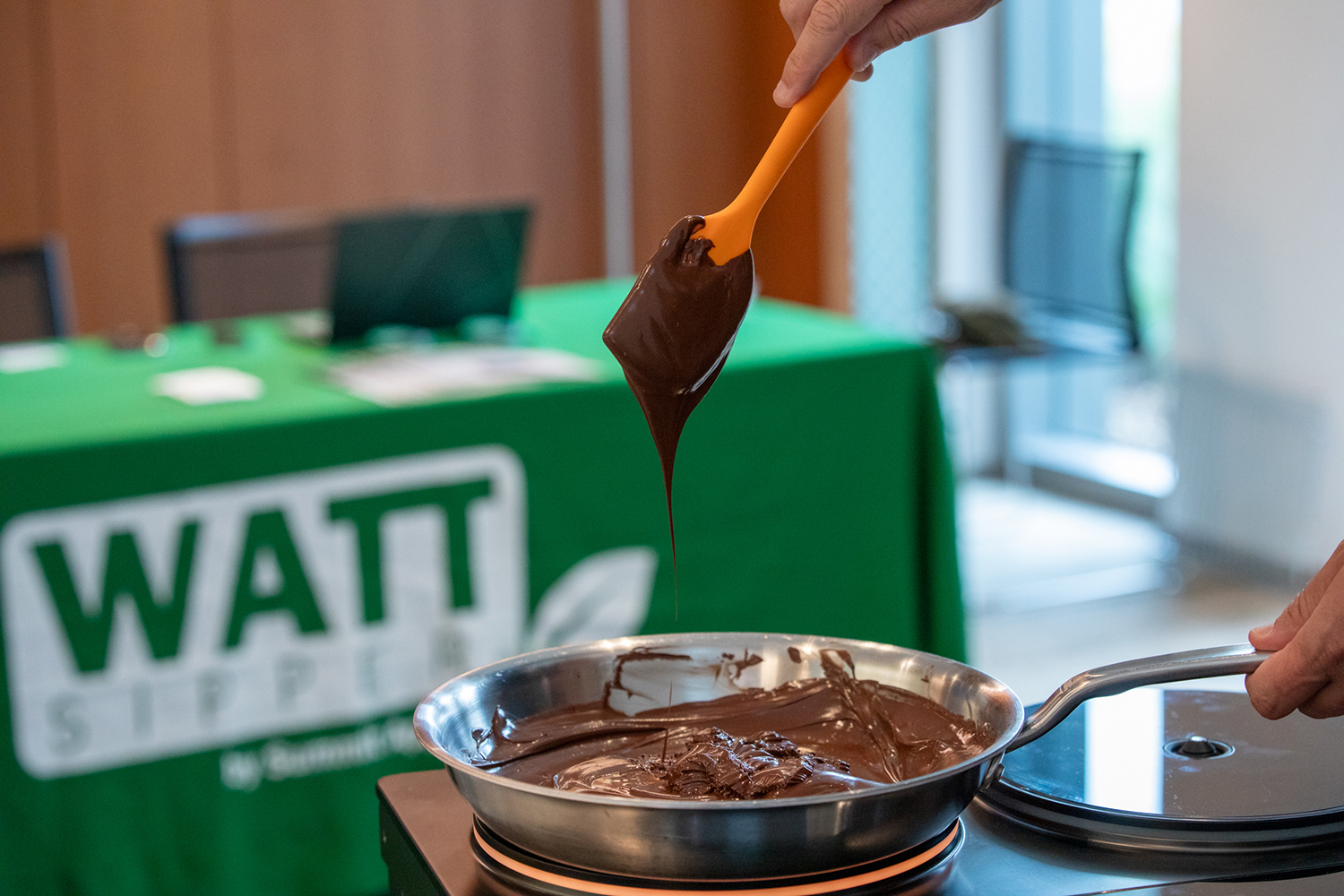
One of her best arguments sits in her own kitchen: an induction stove, which emits none of the harmful pollutants that gas and propane appliances release into homes. She frequently invites her fellow residents over for impromptu demonstrations, boiling a pot of water to show the speed of induction cooking.
“The proof is in the pudding,” Williams said. “You have to show it. You just can’t explain it.”
As research reveals more about the health impacts of natural gas appliances, the focus is shifting to helping communities make the switch. At an Oct. 23 Bay Area conference co-hosted by Stanford’s Electrification for Health program, WestLight Energy, and Induction Rocks, the consensus was clear. Trusted messengers, like Williams, along with practical solutions like rebates and free installations, matter just as much as the evidence.
“The deeper I go into this research, the more I realize that science and data alone … are not enough to catalyze this change,” said Rob Jackson, faculty director of Electrification for Health, whose lab measures pollution from gas stoves. “We need social movements to do that.”
Bay Area incentives make switching easier
Wildfires and tailpipes are the usual culprits behind hazy skies. But indoors, where Americans spend 90% of their time, gas and propane stoves release unhealthy levels of pollutants like nitrogen dioxide, an asthma trigger, and benzene, a carcinogen linked to leukemia.
Research by Jackson’s lab and others confirms induction stoves emit none of these pollutants. Yet only around 3% of U.S. households use them, compared with more than a third using gas or propane.
Bay Area officials and community organizers pointed to local programs residents can take advantage of, including induction stove installations. Redwood City Mayor Elmer Martínez Saballos, one of the opening speakers, said that more than 7,000 home electrification upgrades have been completed with support from public agency WestLight Energy, including heat pumps, heat pump water heaters, electrical panel upgrades, and induction stoves.
“The Bay Area is where the building electrification movement started,” said Brady Seals, director of Electrification for Health. “We have more rebates and more incentives for induction stoves and electric appliances here than anywhere else in the country.”
Bay Area programs can help qualifying residents replace gas stoves
Local programs
- WestLight Energy (San Mateo County): free replacement of gas appliances and additional rebates
- BayREN (Bay Area): discounts and rebates for induction stoves and other electric appliances
- Silicon Valley Clean Energy (Santa Clara County): free electric home upgrades and additional rebates
- City of Palo Alto: rebates for induction stoves, including portable cooktops and electrical wiring work
- El Concilio (San Mateo County): Equitable Building Decarbonization Program
- Palo Alto City Library, San Mateo Public Library, Sunnyvale Public Library, City of Burlingame, City of Milpitas, City of Morgan Hill, City of Piedmont, Marin County Free Library offer induction stove lending libraries
State programs
- BUILD: incentives for new all-electric, low-income housing
- RISE: $50 million for all-electric rebuilds of homes damaged by wildfires and other disasters
Still, lack of consumer awareness remains a challenge. Maninder Thind, an air resources engineer at the California Energy Commission, shared findings from a California Market Transformation Administrator (CalMTA) survey on induction stoves: 84% of respondents knew little or nothing about induction stoves and their benefits.
Messengers matter just as much as the message
Panelist Stella Hartono, MD, clinical assistant professor of medicine, said physicians have a critical role to play in communicating the risks to patients. Doctors already ask asthma patients about smoking habits, she noted, so why not stoves? “If we don’t really bring it into our practice, it’s all just knowledge,” Hartono said.
Speaker Lisa Patel, MD, clinical associate professor of pediatrics at the Stanford School of Medicine, urged framing the issue in terms of health, not politics.
Citing restaurant unions’ past opposition to electrification policies, Patel pointed to a recent study, which found that gas and propane stoves expose workers to unhealthy levels of pollution, as a way to “build alliances where there may have been opposition before.”
“I often think that a lot of people’s anger over this is that food is personal. This idea that you’ve been cooking on this device that might have been sickening everybody around you … that’s really visceral,” Patel said.
Hartono cautioned that some gas stove users aren’t sure how to make the switch, especially renters.
That’s where community organizers can help. Sonia Escobedo, human services fellow at the nonprofit organization El Concilio of San Mateo County, emphasized the importance of helping residents navigate services that often feel inaccessible and complex. She pointed to the work of promotoras, outreach workers who often share cultural and linguistic connections with the communities they serve.
In her closing remarks, Seals reminded the room of the roughly 9 million remaining gas stoves in California. “All of those households will go one by one, stove by stove, and this is the work,” she said. “This is why we’re here.”
For more information
“Breathing Room: A Regional Summit on Health, Indoor Air Quality, and Residential Stoves” took place Oct. 23, 2026. It was co-organized by Electrification for Health, a program of Stanford’s Center for Human and Planetary Health, with WestLight Energy and Induction Rocks, a student-led organization. Additional sponsors and partners included Silicon Valley Clean Energy, San Jose Clean Energy, CalMTA, and Physicians for Social Responsibility San Francisco Bay Area.
Jackson is the Michelle and Kevin Douglas Provostial Professor in Earth System Science in the Stanford Doerr School of Sustainability and a senior fellow at the Stanford Woods Institute for the Environment and the Precourt Institute for Energy. Seals is the founding director of Electrification for Health. Patel is also executive director of the Medical Society Consortium on Climate and Health. Hartono is an allergist-immunologist and clinical assistant professor of Medicine – Pulmonary, Allergy & Critical Care Medicine at Stanford Medicine.
This story was originally published by Stanford Woods Institute for the Environment, part of the Stanford Doerr School of Sustainability.
Writer
Belle Long
Photographer
Belle Long