In brief
- El Niño events are part of the natural variability of Earth’s climate, driven by complex and chaotic interactions between the atmosphere and ocean.
- Shifts in wind and rainfall patterns across the tropical Pacific during an El Niño event can affect atmospheric circulation and weather across the globe, adding to a cascade of hazards for shorelines and coastal infrastructure.
- Warmer seawater along the west coasts of North and South America associated with El Niño can shift the ranges of marine species, alter food webs, and contribute to harmful algae blooms.
An exceptionally strong El Niño now taking shape has already pushed parts of the Pacific beyond the highest sea surface temperatures on record for the region.
The phenomenon, which comes around roughly every two to seven years, is the warm phase of a natural climate cycle known as the El Niño-Southern Oscillation, or ENSO. It’s marked by weakening trade winds and unusually warm sea surface temperatures in the Pacific Ocean near the equator.
Like the cool phase of the ENSO cycle, known as La Niña, El Niño influences weather patterns around the world. It can bring powerful winter storms and heavy rainfall to regions including California, and warm, dry spells to others.
“This event is already one of the strongest on record, and we are still a few months away from its potential peak,” said Earle Wilson, an assistant professor in the Stanford Doerr School of Sustainability who studies ocean dynamics at high latitudes and their far-reaching impacts on the global climate.
Wilson and Stanford colleagues explain the science behind the 2026-27 super El Niño and its effects on marine life and coasts, how the phenomenon connects to climate change, and why future El Niños can be expected to trigger widespread disruption.
What makes the current El Niño event unusual?
Earle Wilson: An El Niño event occurs when relatively warm ocean waters in the western equatorial Pacific move eastward toward the Americas. This is accompanied by a weakening or reversal in equatorial trade winds that would normally push these warm waters toward a region between the Indian and Pacific Oceans that scientists commonly call the Maritime Continent.
El Niño events and their La Niña counterparts are manifestations of the climate’s internal variability, which is driven by complex and chaotic interactions between the atmosphere and ocean.
What makes this event exceptional is the large magnitude of the surface temperature anomalies across the central and eastern tropical Pacific, especially for this time of year. El Niño events often reach their maximum intensity during Northern Hemisphere winter (December-February).
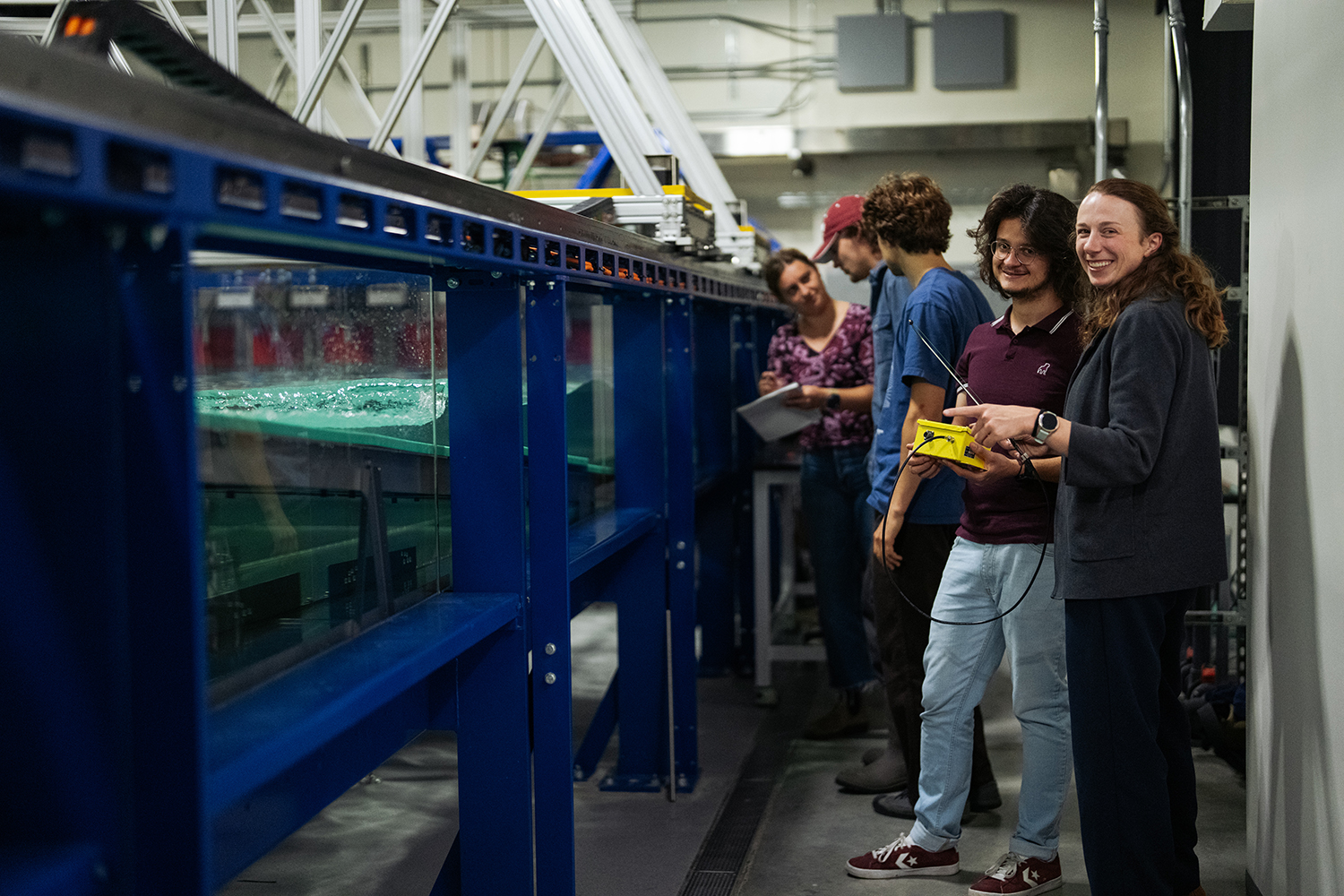
With lab members (left to right) Jess Fairlie, Simon Treillou, Alex Washburn, and Ashton Pihl, Assistant Professor Christine Baker (far right) uses a wave tank in her lab at Stanford to study fluid dynamics in coastal regions and the processes that shape our shorelines. | Stanford Doerr School of Sustainability and School of Engineering
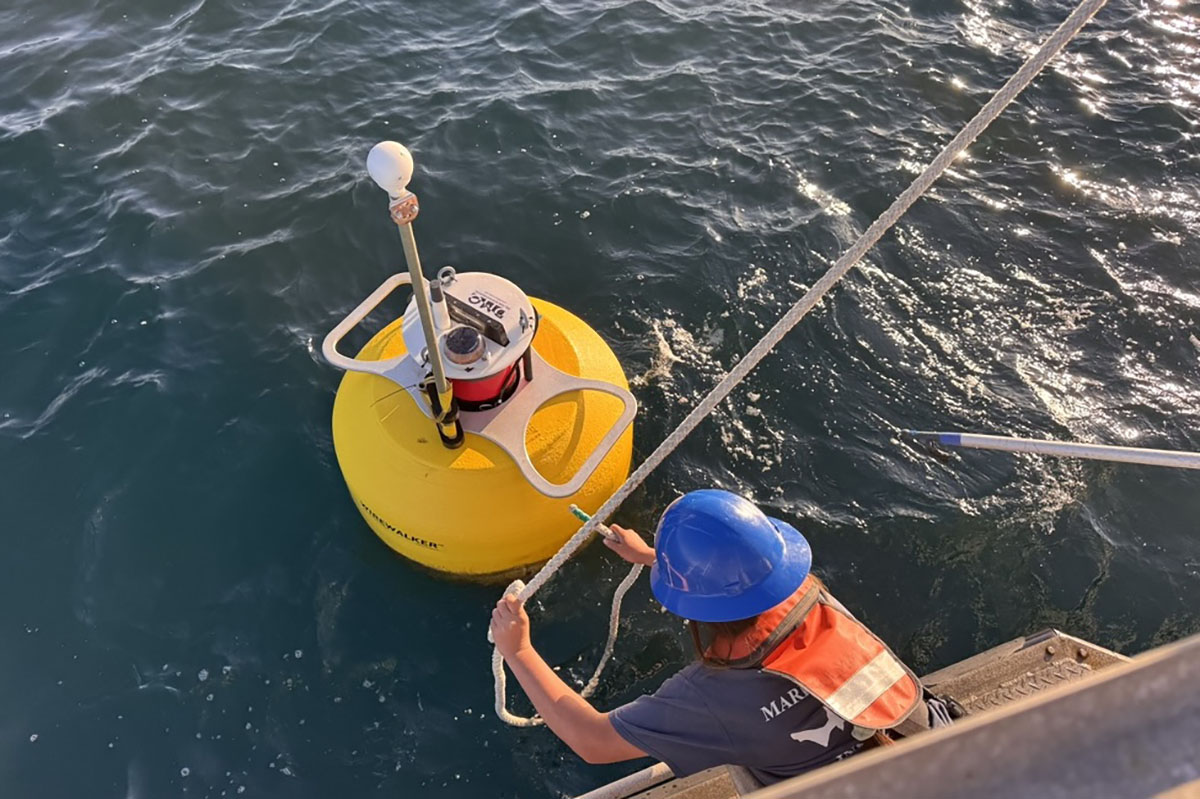
Davis and colleagues track changes in southern Monterey Bay with a package of instruments attached to a mooring. The package climbs up and down a cable using only wave power. | Kristen Davis
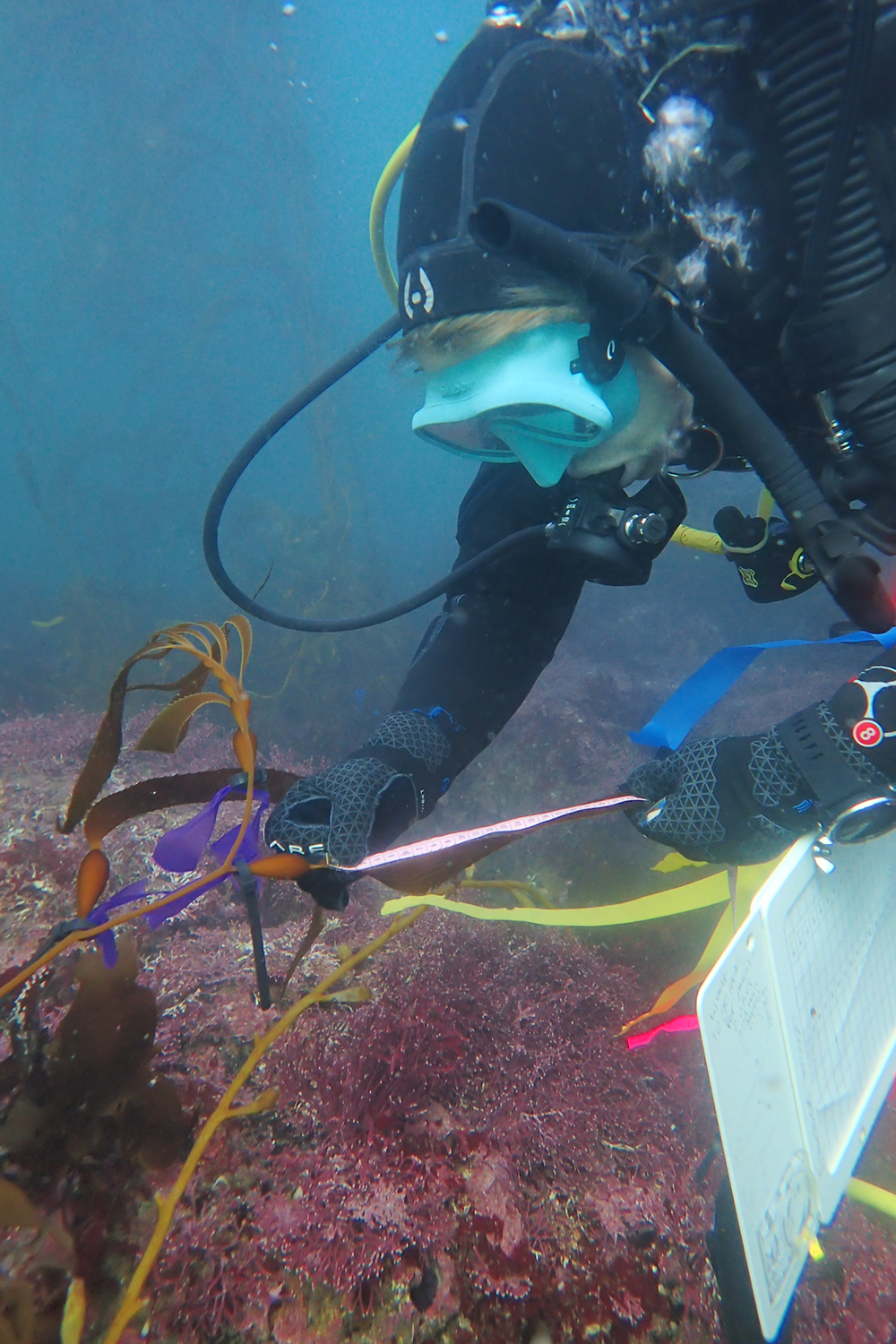
Research technician Hannah Ricioli from the Weigel Lab measures juvenile kelp in the giant kelp forests near Hopkins Marine Station. | Kindall Murie
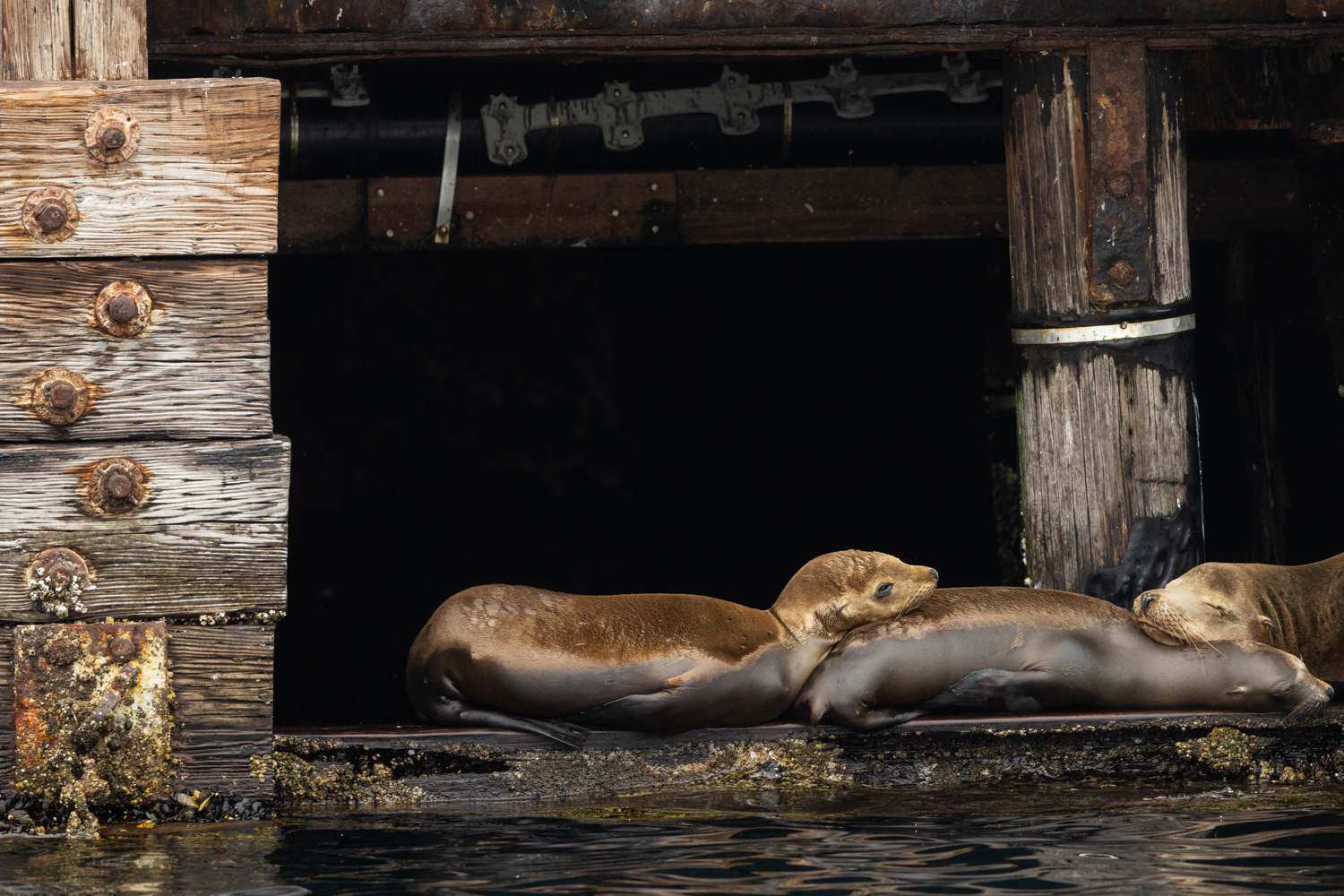
Sea lions rest at Stanford’s Hopkins Marine Station on the edge of Monterey Bay in July 2026. | Andrew Brodhead
Where does El Niño have the strongest effects on winter weather, and why?
Wilson: El Niño can impact distant regions via what are known as atmospheric teleconnections. Essentially, the shifts in wind and rainfall patterns across the tropical Pacific have a ripple effect on atmospheric circulation across the globe. For example, El Niño events strongly impact atmospheric circulation over the Gulf of Alaska, which tends to redirect the jet stream and midlatitude storm track farther south, bringing more rain to southwestern states. However, El Niño only increases the likelihood of certain weather patterns and does not guarantee a particular set of weather occurrences for any region.
What does El Niño mean for coastal communities, landscapes, and infrastructure?
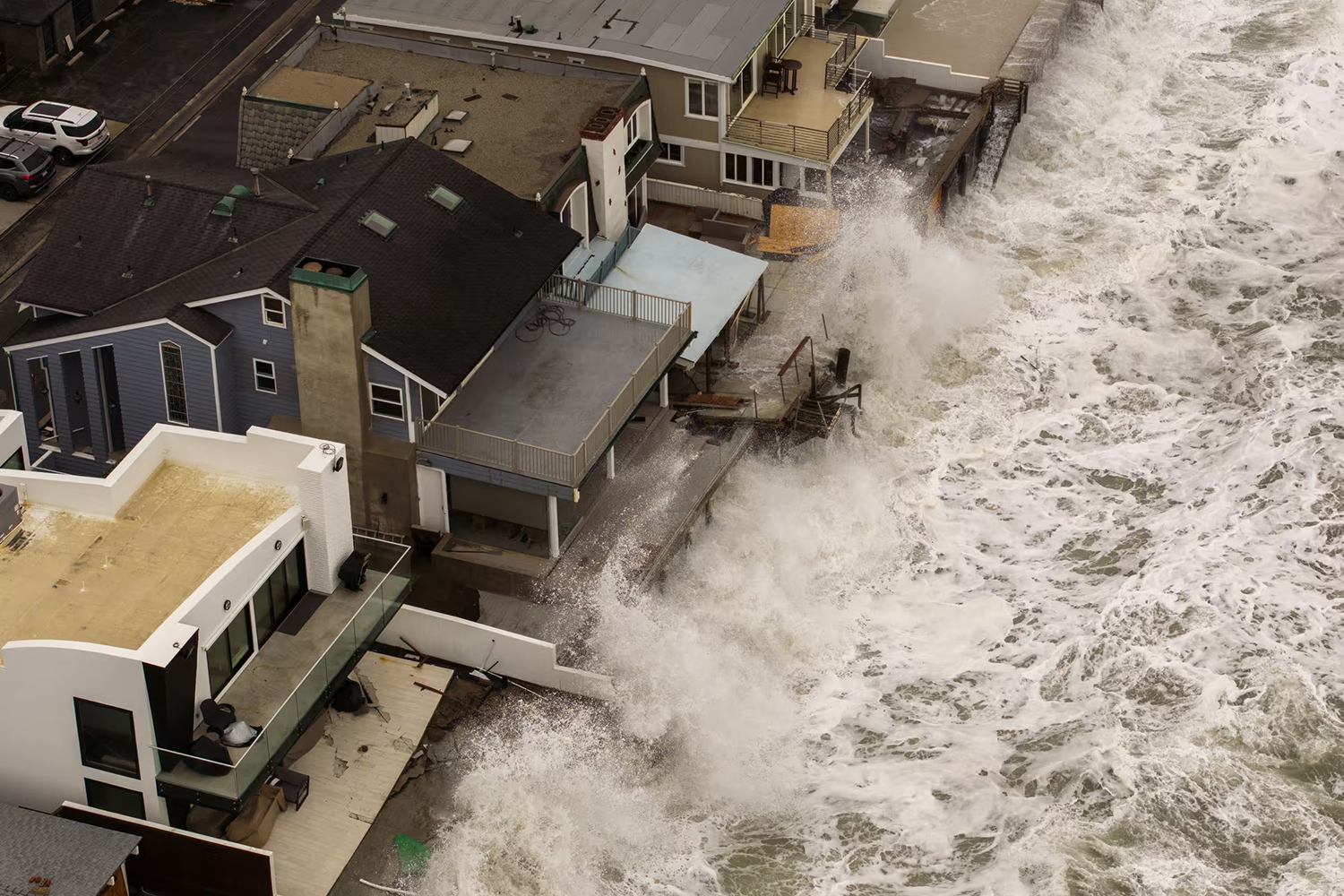
Christine Baker: Many of the coastal hazards associated with El Niño occur regularly. What makes El Niño impacts so significant is that those hazards compound. Heavier rainfall saturates coastal landscapes and destabilizes cliffs, which means more risk of collapse. When these conditions coincide with elevated water levels and storm waves, the result is a perfect recipe for erosion, flooding, and other storm-driven impacts along our coastlines.
Kristen Davis: El Niño raises the sea level, so high tide or wind waves reach farther onshore. The ocean waves coming up the coast from the equator can raise sea level along California by 6 to 12 inches. El Niño winters also tend to send stronger storms toward California, which means bigger waves. Higher water plus big waves at high tide is what drove the flooding and beach erosion in 1997-98 and 2015-16.
How does El Niño interact with climate change?
Davis: El Niños have always happened. What is different now is that they arrive on top of an ocean that is already warmer than it used to be, so the same event pushes temperatures and sea level higher than it would have in the past. Whether climate change is making El Niños themselves stronger or more frequent is still an active research question.
Wilson: There is no scientific consensus regarding how climate change and increases in atmospheric greenhouse gases will impact the intensity and frequency of El Niño events. What is clear is that these events will continue to occur in the future, triggering widespread disruptions to weather patterns across the globe.
How does El Niño affect marine life and coastal marine ecosystems?
Brooke Weigel: El Niño increases seawater temperatures along the west coasts of North and South America, and this can influence whole ecosystems by causing species range shifts, altering food webs, or coinciding with disease outbreaks. Warmer temperatures can also strongly influence biological processes, such as metabolic rates, leading to changes in survival or reproduction.
My research has shown that elevated ocean temperatures, like those associated with El Niño, can cause reproductive failure in young kelp and negatively impact adult kelp. During the last marine heat wave in 2014-2016, we lost up to 95% of kelp forests in Northern California, and kelp forests across California still have not recovered.
Given that this current El Niño is already elevating seawater temperatures off the coast of California, it will likely have negative impacts on our kelp forest ecosystems, which support biodiversity, sustain commercial and subsistence fisheries, and sequester vast amounts of carbon. Our lab is monitoring the impacts of the El Niño on the kelp forest in real time by measuring aspects of kelp forest health, including growth rates, carbon cycling, and reproduction, using scientific scuba diving.
William Gilly: We have been working on the response of Humboldt, or jumbo flying, squid to strong El Niño events and other subsurface warm anomalies in the Gulf of California for the last 15 years. This species responds to a strong El Niño by switching its phenotype from one in which squid live two years and reach enormous size (up to 40 kg or more) to one where they live only six months and reach less than 1 kg in weight.
This phenomenon occurred with the strongest El Niños in 1997-98, 2009-10, and 2015-16, which followed a 2014 marine heat wave. The squid only returned to large size in spring 2025 after being small since 2015.
These changes have profound ecological consequences in Pacific waters of Mexico and the U.S. In the Gulf of California, sperm whales – a major predator of large Humboldt squid – abandoned the region after the strong 2009-10 El Niño eliminated large squid. Sperm whales have remained scarce in the region ever since.
Commercial fishing for Humboldt squid also crashed after that El Niño event, and thousands of jobs were lost. Fishing only returned in spring 2025, and it may again fall victim to El Niño this year.
We are very interested in what the current El Niño will do and what else it can teach us about how creatures are adapted to this phenomenon, and how that might be related to coping with a warming climate.
Are El Niño effects already visible in your fieldwork?
Davis: El Niño reaches California through the ocean, as slow waves of warm water travel up the coast from the equator and raise sea level. That signal, known as a “Kelvin wave,” arrived around the first week of October.
To capture ongoing warming, we have deployed an array of temperature sensors all around Monterey Bay on some existing moorings of [Stanford marine biologist] Barbara Block’s. These measurements will show how El Niño changes upwelling (the cold, nutrient-rich water that normally comes up along the coast) and water temperatures inside the Bay through the winter.
The water off central California was already warm before the first Kelvin wave arrived, mostly because of a marine heat wave that has been off the coast since May 2025. But now we’re seeing a significant increase in temperatures from the surface to 50 meters below. We’ve also seen a drop in levels of chlorophyll-a, a proxy for the phytoplankton that form the base of the food chain in the ocean.
Our measurements in southern Monterey Bay have also documented a large bloom of Pseudo-nitzschia, a harmful alga that produces the neurotoxin domoic acid. The toxin moves up the food chain through anchovies and sardines, and it has been hard on local marine mammals, including California sea lions and humpback whales.
In early June, two juvenile humpback whales stranded within a few days of each other at Pacific Grove and near Watsonville. UC Santa Cruz researchers found domoic acid in both whales, with especially high levels in the Watsonville whale, and concluded the toxin likely contributed to their deaths.
This bloom is not caused by El Niño. But a long stretch of warm water makes events like this more likely, and that is the concern for this winter.
Are there reasons to feel hopeful about our ability to prepare for future El Niño events?
Baker: There are reasons for hope. For one, we are getting a much better understanding of these processes, which allows us to have better predictions of coastal hazards and better prepare for them. We can improve our projections, for example, of flooding risk. This allows us to understand where we need to focus efforts to mitigate these hazards, design resilient infrastructure, and adapt policy accordingly.
There’s a lot of smart people out there taking observations of these events and using them to inform models that we can use to inform mitigation strategies for future events. We are better off with more understanding.
Featured experts
Christine Baker
- Assistant Professor of Civil and Environmental Engineering, Stanford Doerr School of Sustainability and Stanford School of Engineering
- Assistant Professor, by courtesy, of Oceans, Stanford Doerr School of Sustainability
- Research group: Baker Coastal Lab
Kristen Davis
- Associate Professor of Oceans, Stanford Doerr School of Sustainability
- Professor, by courtesy, of Civil and Environmental Engineering, Stanford Doerr School of Sustainability and Stanford School of Engineering
- Research group: Coastal Dynamics Lab
William Gilly
- Professor of Oceans, Stanford Doerr School of Sustainability
- Research group: Gilly Lab
Brooke Weigel
- Assistant Professor of Oceans, Stanford Doerr School of Sustainability
- Research group: Weigel Lab – Phycology & Microbial Ecology
Earle Wilson
- Assistant Professor of Earth System Science, Stanford Doerr School of Sustainability
- Assistant Professor, by courtesy, of Oceans and of Geophysics, and Center Fellow, by courtesy, at the Woods Institute for the Environment
- Research group: Polar Ocean Dynamics
For more information
This story was originally published by Stanford Doerr School of Sustainability.
Writer
Josie Garthwaite