


In brief
- Researchers across Stanford are developing practical, low-cost strategies to help cities and buildings adapt quickly to increasingly frequent and severe heat waves.
- The work spans testing physical interventions like reflective surfaces, modeling natural ventilation, and assessing how buildings face overlapping hazards such as heat and earthquakes.
- This collaborative effort aims to give policymakers evidence that can guide them toward investments in heat resilience for vulnerable communities worldwide.
A sea of corrugated metal roofs stretches into the distance across an informal settlement in Makassar, Indonesia.
Around 40% of the industrial hub’s population dwells in these makeshift communities, where a lack of basic municipal services and air conditioning leaves residents routinely exposed to temperatures upward of 90 degrees Fahrenheit.
In the coming months, a couple dozen roofs in the settlement will stand out with bright new coats of highly reflective white paint. They are part of a Stanford Doerr School of Sustainability project testing one of the simplest, cheapest tools available for lowering sweltering temperatures inside homes by as much as 5 degrees Fahrenheit.
“Those few degrees can make a big difference,” said Rishee Jain, a leader of the Makassar project and an associate professor of civil and environmental engineering at Stanford.
Lowering the temperature by even a few degrees on the hottest days matters because of the limits of our physiology. When it’s too hot and humid for evaporating sweat to keep us cool and maintain our core temperature, the heart, kidneys, and other organs work harder to compensate.
The strain can exacerbate conditions such as cardiovascular disease, diabetes, and asthma, and prolonged exposure can prove deadly even for the young and healthy. Furthermore, during heat waves, people have trouble sleeping, leaving them susceptible to illness; in Makassar specifically, heat waves correlate with surges in work absenteeism and cases of dengue fever.
“Big interventions can take decades to bring into place, and we don’t have that time. People are suffering from events now,” said John Openshaw, a Stanford assistant professor of medicine who is leading the white-roofs project team with Jain. “We really need to start thinking about the interventions that we can implement quickly.”
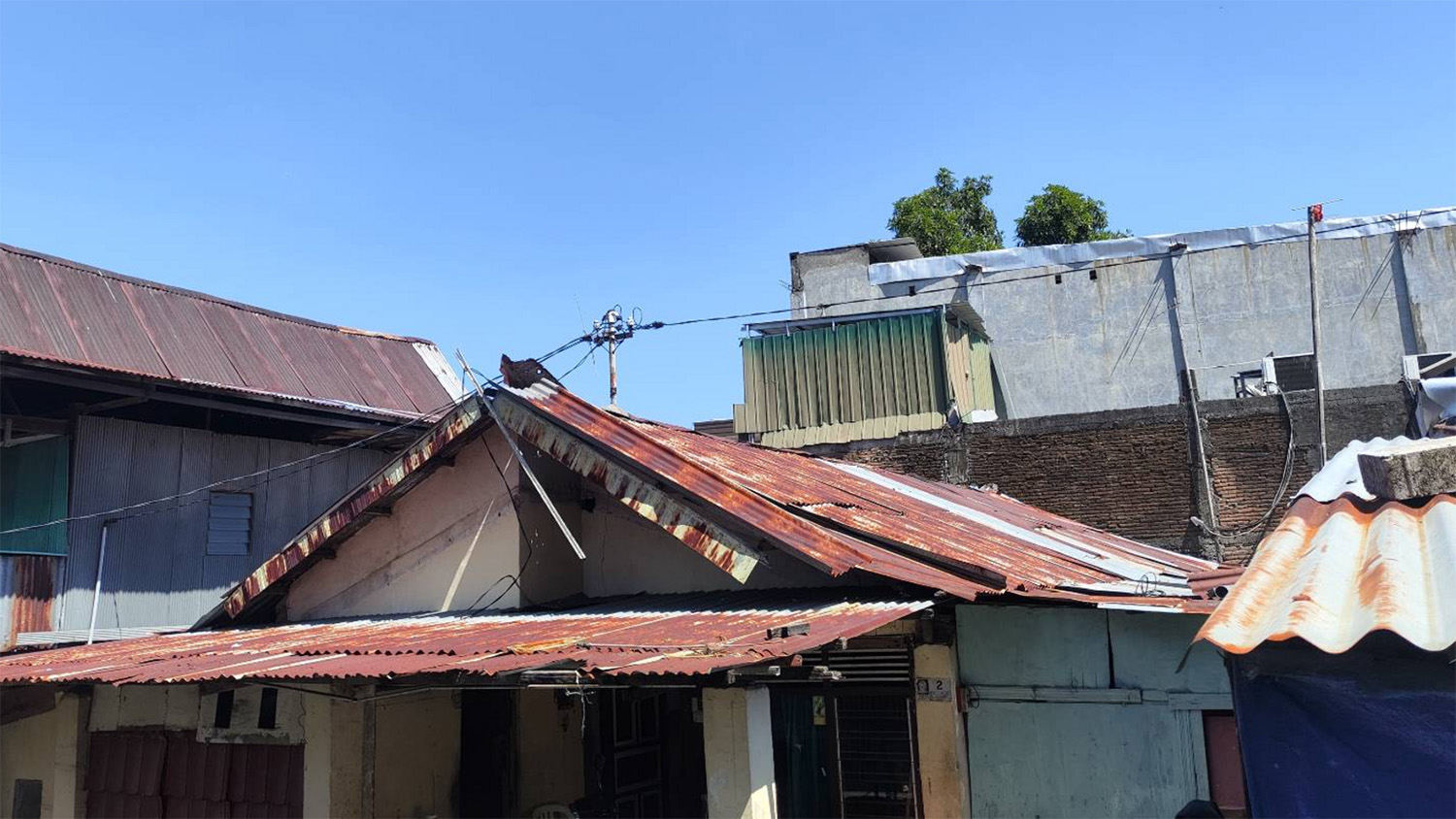
To quantify how much good a cool roof can do, Stanford researchers Rishee Jain, John Openshaw, and colleagues are comparing health outcomes in painted and unpainted structures. | Angelica Stewart

Rishee Jain, an associate professor of civil and environmental engineering, directs the Stanford Urban Informatics Lab, which develops data-driven solutions to sustainability challenges facing the urban built environment. | Stanford Engineering / Doerr School of Sustainability
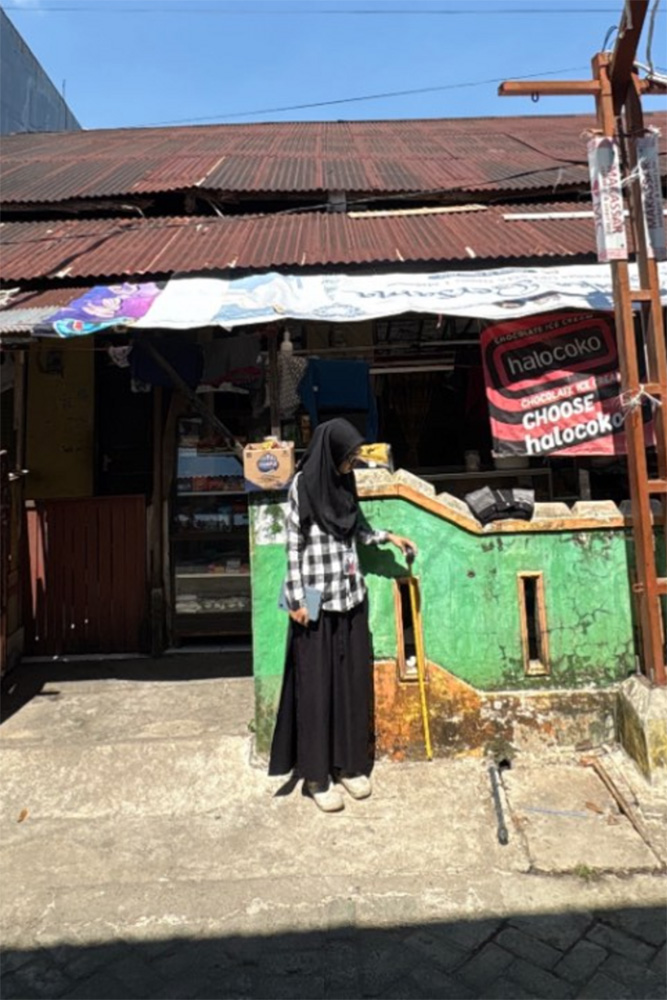
Researchers are working with people who live in informal settlements in Makassar, Indonesia, to quantify the health benefits of cooling indoor temperatures by painting metal roofs bright white. | Angelica Stewart
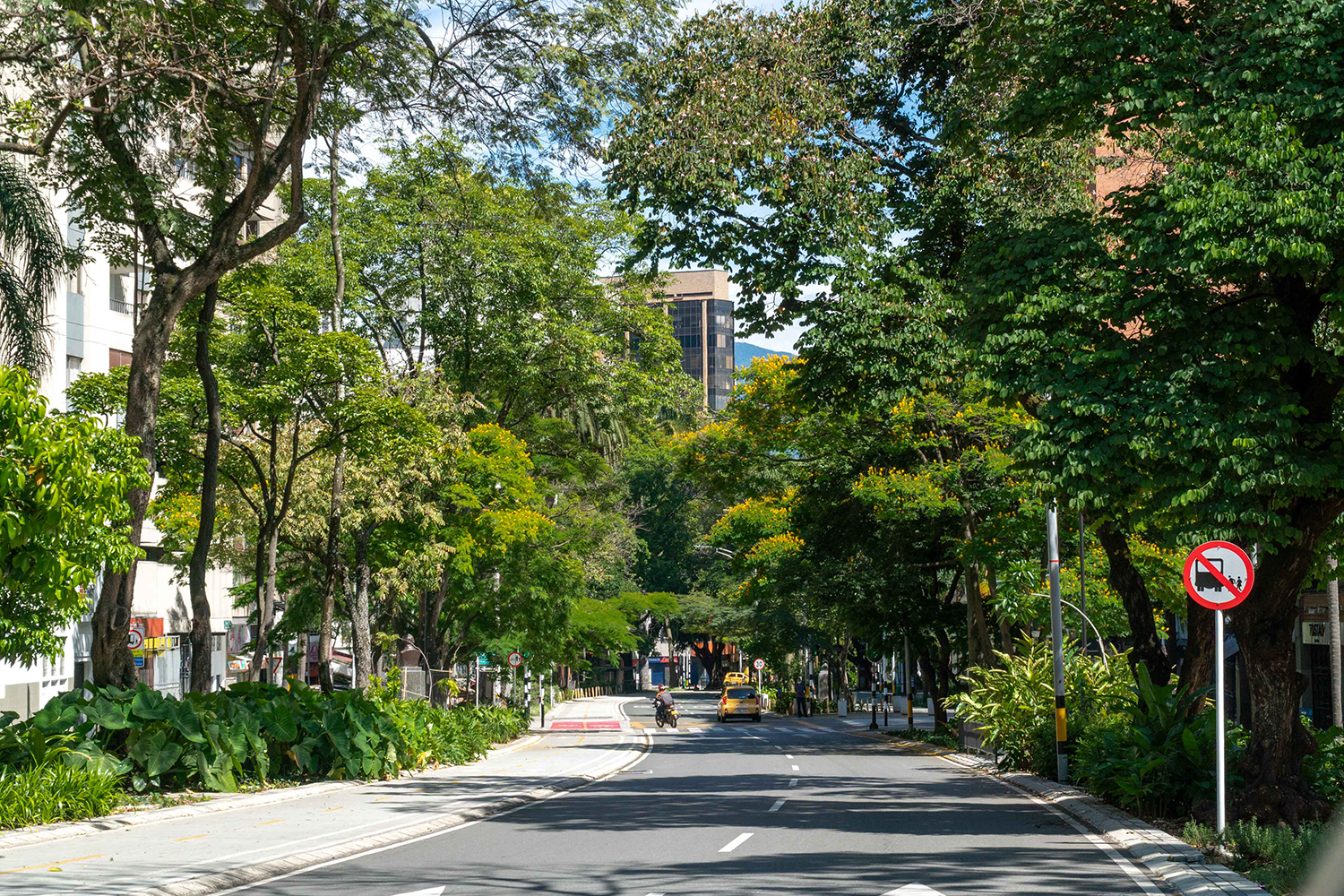
Parks and vegetation in urban areas, such as along this green corridor in Medellín, Colombia, can provide cool relief during extreme heat waves. | Getty Images
Driven largely by climate change, heat waves are rapidly growing in duration and frequency worldwide, with some regions now enduring 50 more heat-stress days annually than in 1950. In major U.S. cities, heat wave frequency has tripled from two events per year to six. The summer of 2026 has brought dangerous heat waves to broad swaths of India, South America, North America, and Europe, the world’s fastest-warming continent.
Jain and Openshaw are among a growing number of researchers seeking ways to better cool individual buildings and entire cities, where dark asphalt and impervious building materials trap heat and can drive temperatures far hotter than in nearby rural areas. The work is part of a broader push at the Doerr School of Sustainability to help people and communities adapt to growing extremes, from record wildfires and droughts to historic floods and hurricanes.
“As global warming continues to unfold, we can expect accelerating occurrence of the most extreme events, particularly for heat waves but also for extreme wet events and other extremes,” said climate scientist Noah Diffenbaugh, the William Wrigley Professor and Kimmelman Family Senior Fellow in the Doerr School of Sustainability.
Many human and natural systems buckle under those same extremes. “One of the real challenges is how we leapfrog ahead to be prepared for even more extreme conditions than we’re facing now, even if the world is successful at decarbonization and curbing global warming,” Diffenbaugh said.
As global warming continues to unfold, we can expect accelerating occurrence of the most extreme events, particularly for heat waves but also for extreme wet events and other extremes.Noah DiffenbaughThe William Wrigley Professor
Designing practical solutions for multiple hazards
The need to adapt extends to places with historically mild climates such as San Francisco, London, and Paris, where few homes have air conditioning and most buildings were designed to retain heat.
“These are not places you think about for urban heat, and they’re not equipped for it,” said Gregory Deierlein, the John A. Blume Professor in the School of Engineering.
Deierlein and colleagues are exploring ways to help cities better prepare for nature’s slings and arrows. Because most large cities face more than one serious threat at once, the researchers are looking for practical solutions to improve public health and safety in the face of multiple hazards.
“Many types of natural disasters are becoming more common and more extreme, causing greater damage, and becoming more unpredictable. Understanding where and how hazards happen will help us better prepare,” said Marshall Burke, a Stanford professor of environmental social sciences who studies air pollution and wildfire smoke, and economic impacts from climate change.
In San Francisco, Deierlein and colleagues are working with the city’s Office of Resilience and Capital Planning to develop tools that simulate how buildings and the people inside them would fare in earthquakes, heat waves, and other events across a range of plausible scenarios. From there, the team plans to model potential solutions, principally through updated building codes for new construction and retrofits for existing structures.
“We’re taking an assessment, looking at vulnerabilities, and quantifying those vulnerabilities to prioritize actions that the city can take in terms of policies or programs,” said Deierlein, who is a professor of civil and environmental engineering, a joint department of the Doerr School of Sustainability and the School of Engineering.
The team has conducted pilot studies in several San Francisco neighborhoods, including Chinatown, where small apartments in older, seismically vulnerable buildings house many residents over age 65, a group that’s also most at risk in a heat wave.
Wherever possible, the strategy is to bundle solutions rather than deal with vulnerabilities piecemeal. “By understanding a building’s multiple vulnerabilities, like seismic and heat, we can think about vulnerabilities collectively to see if there’s any intersection that makes it more feasible for the city to address them together,” said Deierlein.
Heat wave frequency in major U.S. cities has tripled from two events per year to six.
Using natural ventilation to cool buildings
In places where air conditioning is widely available, heat waves often drive a spike in electricity use, which contributes to power outages that can compound public health risks. Utilities often meet surging electricity demand by firing up additional power plants that produce unhealthy air pollution and emissions that further heat the planet.
Catherine Gorlé, an associate professor of civil and environmental engineering, is working to help architects, city planners, and policymakers harness natural ventilation to cool buildings efficiently. She studies how wind and heat flow through city blocks and buildings, grounding her computer models in measurements taken inside real buildings.
In practice, taking advantage of natural ventilation often comes down to letting cool air in at night and keeping hot air out during the day. “In buildings, we want to open and close windows at the most opportune times to help keep structures cool,” said Gorlé.
Buildings that chill overnight can stay more temperate through the next day because their walls, floors, and roofs cool down along with the indoor air. Potential energy savings from deferred air conditioning can reach 10%-30%, Gorlé said, depending on conditions.
Gorlé and collaborators, including Doerr School of Sustainability social scientist Gabrielle Wong-Parodi, are also researching the human side of the solution. The team has interviewed Bay Area residents without air conditioning about receiving alerts on their phones, for instance, about when to open and shut windows for maximum cooling, and whether automated window-opening systems would be welcomed. These results can help inform proactive approaches by architects and policymakers looking for ways to maximize freely available cooling through design and regulation.
“Can we take residential neighborhoods and predict in which conditions we could actually get away with purely using natural ventilation?” asked Gorlé. “That’s a question we want to answer.”
Many types of natural disasters are becoming more common and more extreme, causing greater damage and becoming more unpredictable. Understanding where and how hazards happen will help us better prepare.Marshall BurkeProfessor of Environmental Social Sciences
Data for decisions
In places that stay hot and humid much of the year, opening windows can only go so far. “As that heat wave goes on and on, your building becomes like a giant thermal battery,” said Jain. “It stores all that heat up, so even when the outside temperature drops, it takes a while for the heat to dissipate.”
Hence, the importance of the cool roofs project, supported by the Stanford Sustainability Accelerator, which is based at the Doerr School of Sustainability. Jain said the reflective white roofs, if shown to provide significant health benefits, could potentially help more than a billion people currently living in informal settlements globally, a figure that’s expected to double in 30 years.
To quantify how much good a cool roof can do, Jain and colleagues are supplying wearable sensors to about 30 volunteers in Makassar to measure heart rate, sleep patterns, daytime movement, and other variables, ultimately comparing outcomes in painted and unpainted structures. From those results, the team plans to extrapolate a broader model of health benefits across 100 homes, potentially making the case for the modest intervention of a coat of paint.
“We view this project as giving us the data to demonstrate why governments and policymakers and nonprofits should invest in this space,” Jain said.
Stanford labs and programs working on climate solutions
How green and blue spaces cool cities
Relief from extreme heat can also be found outside. Stanford researchers emphasized the need for more green and blue spaces, meaning vegetation in the form of parks and planted trees, and water features such as fountains and ponds. “By incorporating those in cities, you can really get significant cooling effects,” said Gorlé.
In a recent review study on urban fluid mechanics, Gorlé described how Medellín, Colombia, undertook a citywide effort to mitigate heat by “greening” infrastructure. Starting in 2016, the city planted nearly 900,000 trees and 2.5 million plants along city streets, walls, and roofs to create “green corridors.” Although long-term effects remain under study, the city reported average temperatures fell by 2 degrees Celsius after three years, and planners expect the impact to grow over time.
Water is central to this approach to cooling. It sustains the vegetation that shades asphalt and lowers temperatures from the ground up. “Everywhere you look, you will see the interplay between extreme heat and water, or the lack thereof,” said Newsha Ajami, founding director of the Doerr School of Sustainability’s Program on Governance for Risk, Resilience, and Recovery, a new effort focused on preparing communities for compounding risks.
Green and blue spaces often compete with housing and development for scarce urban land, and cities need evidence before committing public funds to programs or infrastructure intended to mitigate risks from extreme weather, Gorlé noted. Her lab and others are gathering the data that can turn a promising idea into actions that benefit people and society.
“There is a lot of opportunity to bring green spaces and blue spaces back into cities,” said Gorlé, “not only to make them in general nicer to live in, but also more comfortable during heat waves.”
For more information
Jain and Openshaw’s work on cool roofs in informal settlement communities is supported in part by the Stanford Sustainability Accelerator in the Doerr School of Sustainability. Their project team includes Joelle Rosser, Michael Snyder, Narges Baniasadi, and Eran Bendavid in the Stanford School of Medicine.
Deirlein’s project with the City of San Francisco is co-led with civil and environmental engineering professor Jack Baker and supported through the Doerr School of Sustainability’s Solution Areas - Integrative Projects grant program. Baker is the William Alden Campbell and Martha Campbell Professor and director of the Stanford Urban Resilience Initiative.
Gorlé’s work on performance-based co-design of natural ventilation systems has been supported in part through a Stanford Sustainability Accelerator project with Jain, Wong-Parodi, and Sarah Billington.
Billington is the Gary Retelny and Family Chair of the Department of Civil and Environmental Engineering, the UPS Foundation Professor, and a professor of civil and environmental engineering.
Billington, Burke, Diffenbaugh, and Wong-Parodi are senior fellows, and Ajami is a senior research scholar at the Stanford Woods Institute for the Environment, part of the Doerr School of Sustainability.
Wong-Parodi is an associate professor, and Diffenbaugh is a professor in the school’s Department of Earth System Science.
Burke is also a senior fellow at the Freeman Spogli Institute for International Studies and the Stanford Institute for Economic Policy Research.
This story was originally published by Stanford Doerr School of Sustainability.
Writer
Adam Hadhazy