


In brief
- Researchers are prototyping filters and sensors on firetrucks that provide real-time measurements of temperature, humidity, and toxic gases for first responders.
- The devices also estimate the risk of exposure to toxic metals, helping firefighters make decisions such as which protective gear to wear.
- With support from the Stanford Sustainability Accelerator, the team is collecting smoke samples and training a computer model to forecast the distribution of airborne metals.
- The researchers aim to distribute truck-mounted sensors and filters to firefighters across the U.S. and make a smoke toxicity forecast publicly available within two years.
In early July 2026, Stanford postdoctoral researcher Alex Honeyman and graduate student Mark Leone attached a box the size of a briefcase to a firetruck in Colorado that was about to be dispatched to a wildfire 300 miles away.
The box held a prototype array of air filters and satellite-linked sensors developed by Honeyman and Stanford colleagues to collect smoke samples and measure temperature, humidity, and toxic gases like carbon monoxide around the truck.
The devices provided the firetruck’s crew with real-time data through a smartphone app, helping them decide what gear to wear on scene, conveniently monitor data like humidity and temperature, and even calculate the probability that sparks could ignite another blaze. Developed at the Stanford Doerr School of Sustainability as part of a larger project called SmokeCast, the app also estimated the likelihood that soils within 10 miles of the fire could release toxic metals when exposed to extreme heat.
When the firetruck returned to their station 14 days later, the crew retrieved a cartridge of smoke samples from the box and sent them to Stanford soil scientist and biogeochemist Scott Fendorf’s lab, where Honeyman, Leone, and their team study how wildfires release metal particles from soil and distribute them over vast areas in smoke plumes.
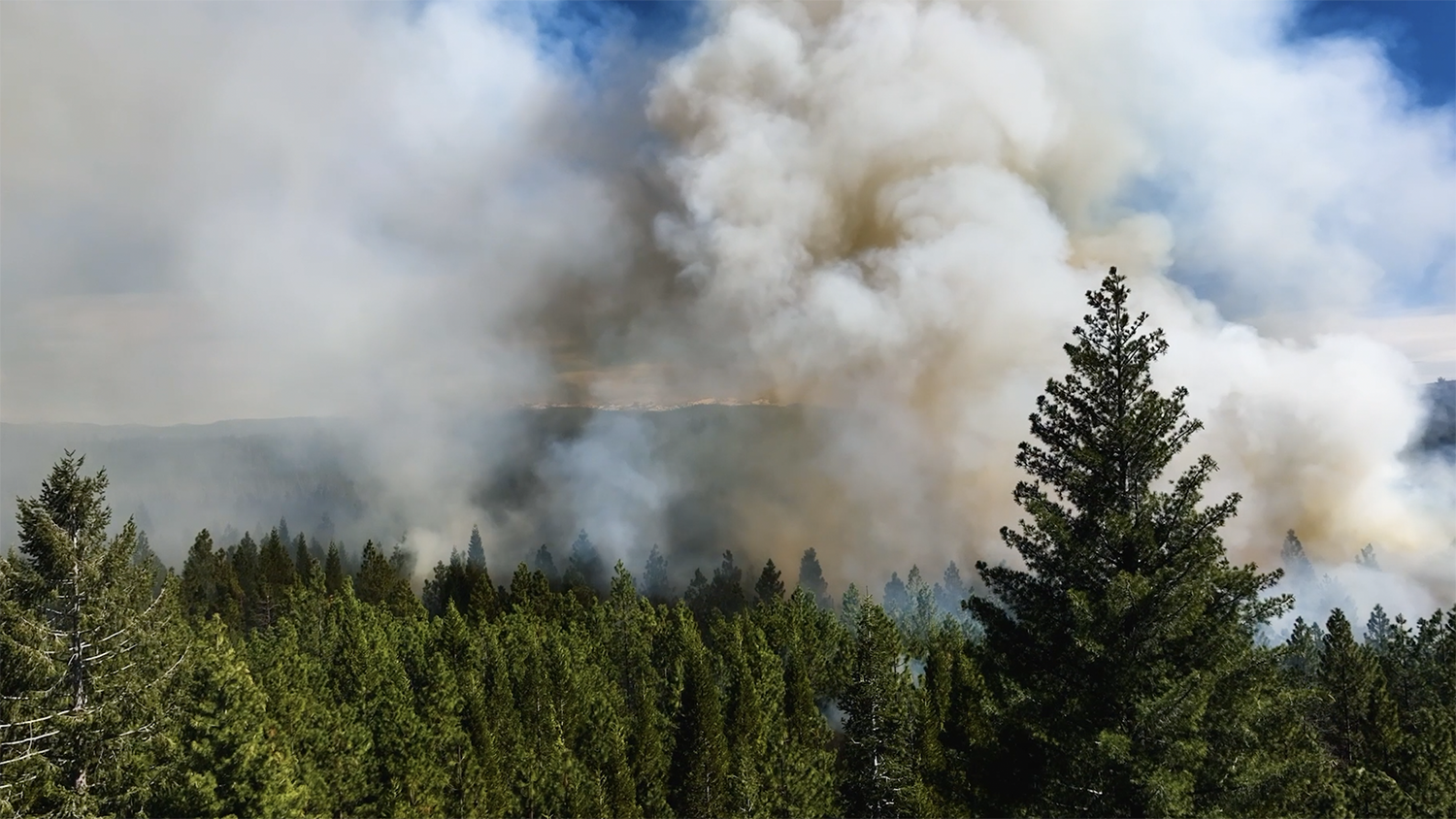
Researchers at the Stanford Doerr School of Sustainability are studying smoke variability through controlled burns. The team is tracking metal content in soil before and after ignition, following it through the resulting smoke, and training a computer model to forecast the distribution of airborne metals. | Harry Gregory
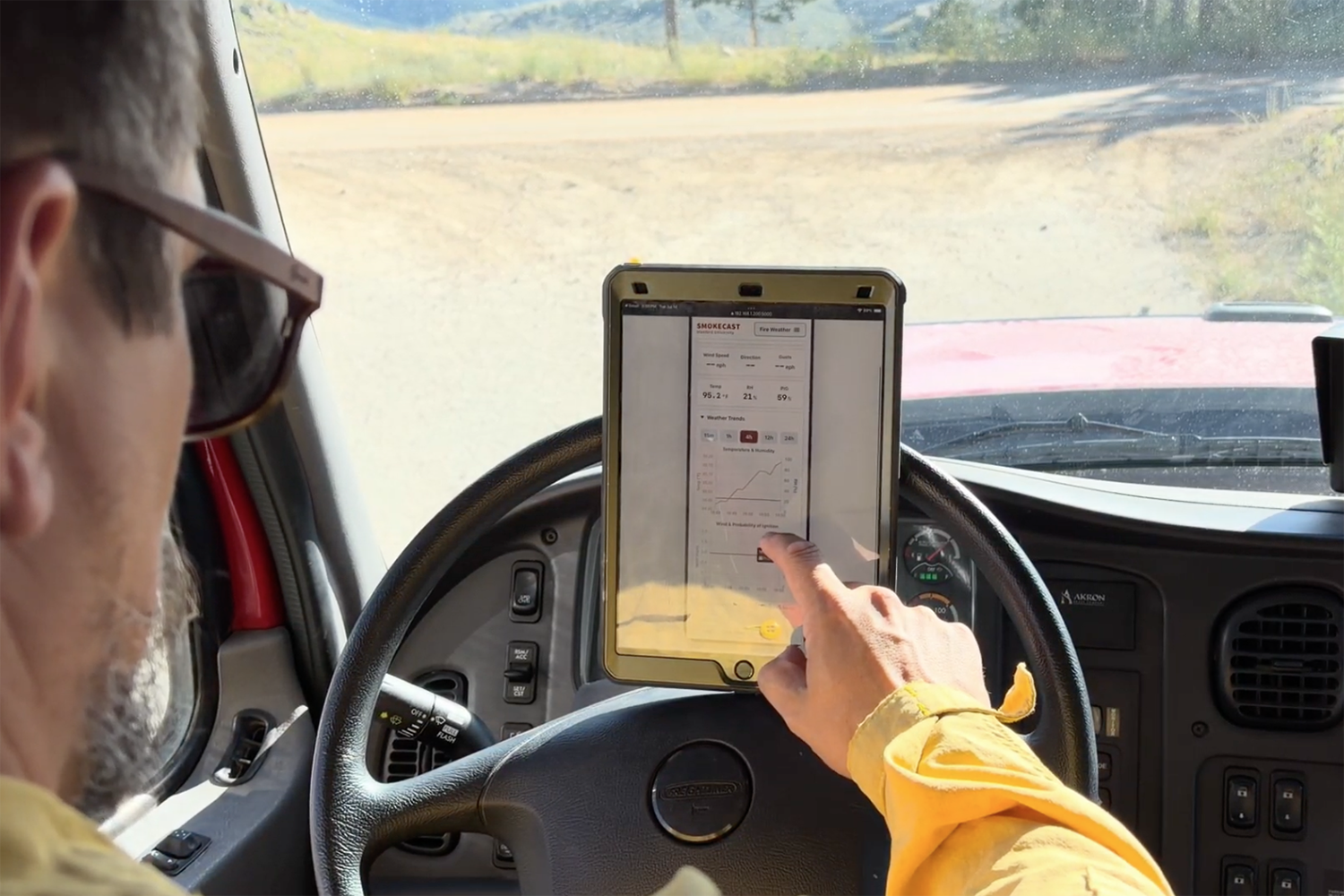
Firefighters receive real-time data via a smartphone app. | Mark Leone
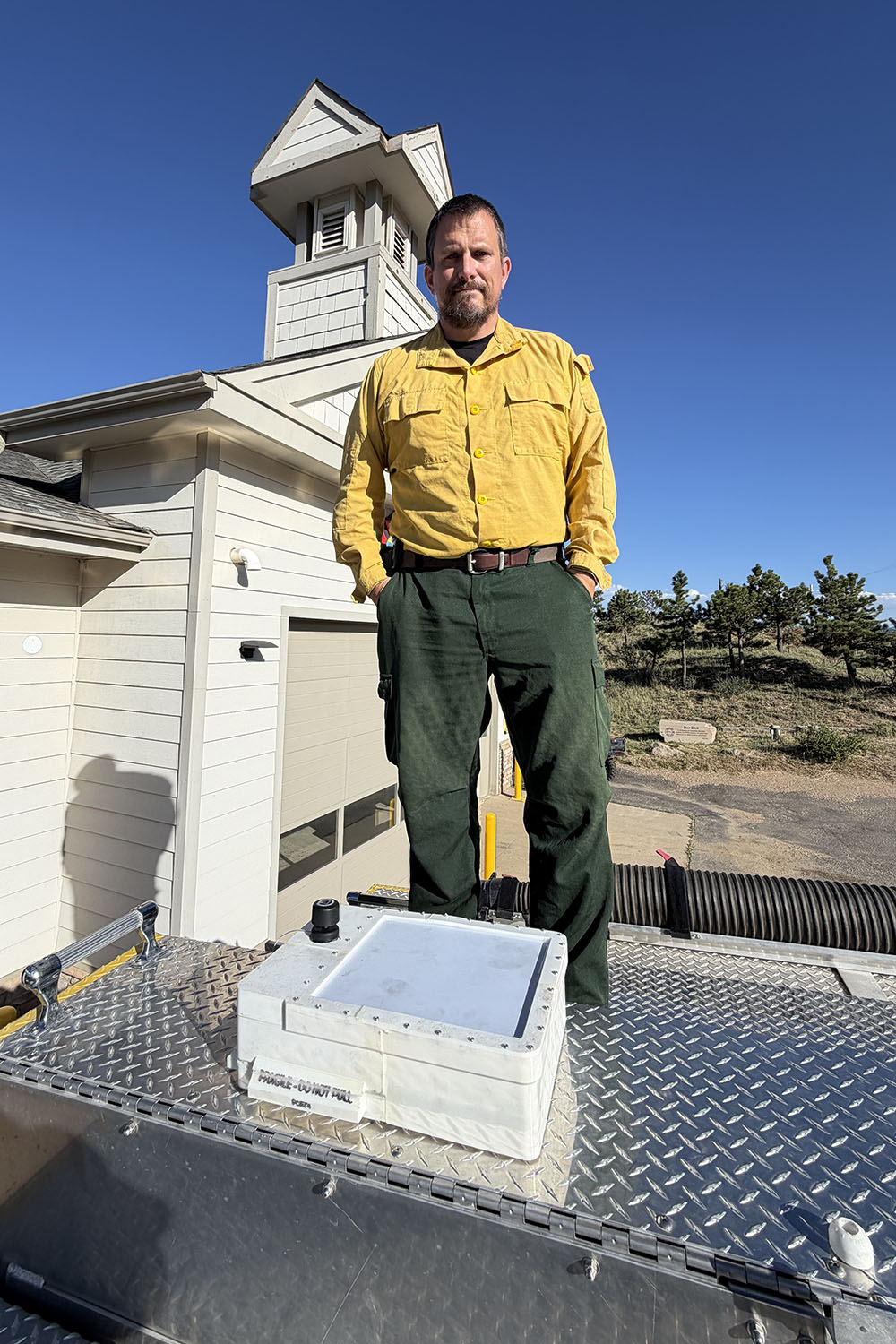
“SmokeCast is helping bridge the gap between technological innovation and practical health outcomes for firefighters and the public,” says Michael Schmitt, fire chief of Colorado’s Sunshine Fire Protection District. | Mark Leone
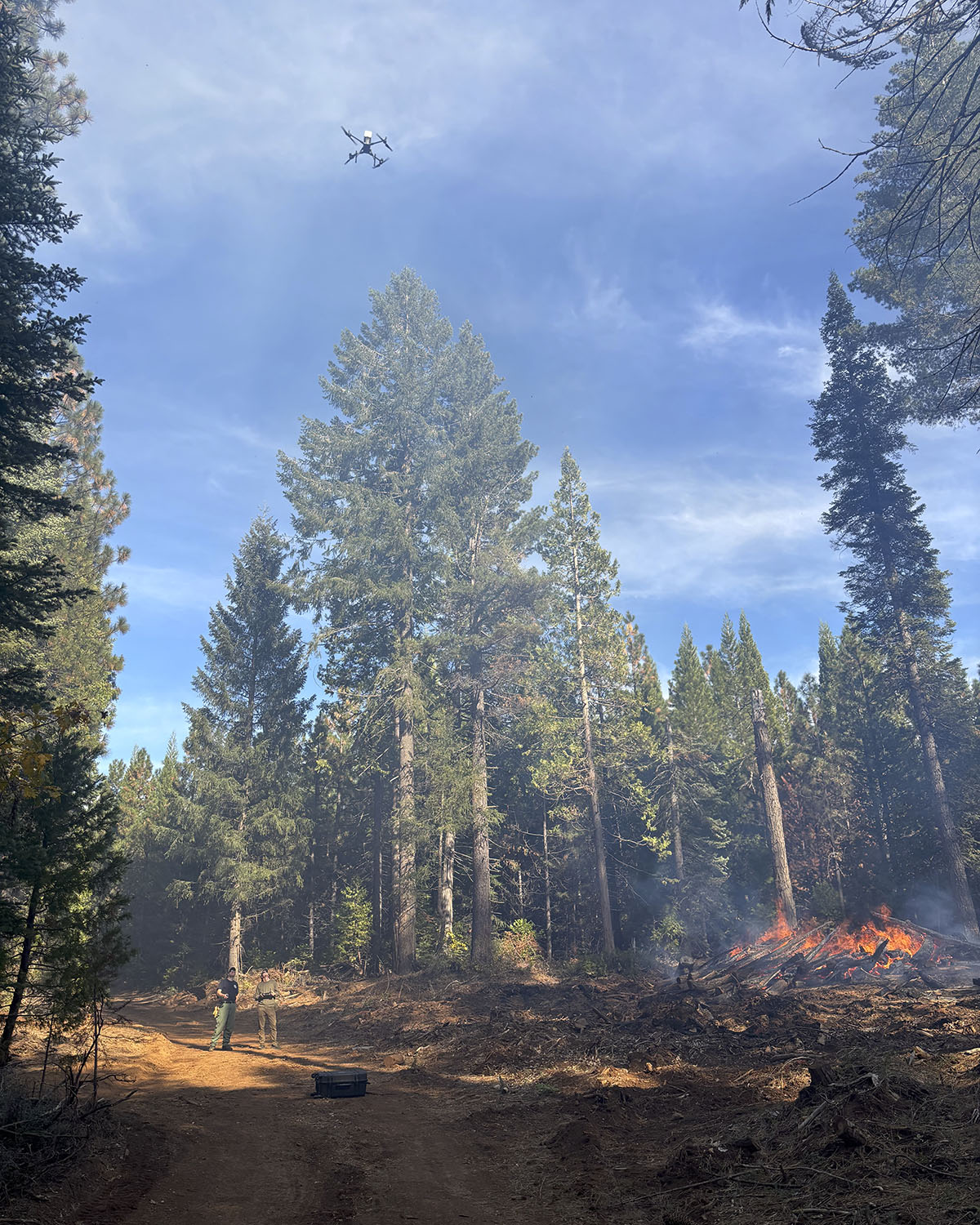
Alex Honeyman (left) and Mark Leone (right) monitor a drone outfitted with smoke sensors over a prescribed fire in El Dorado County, California, in October 2025. | Kristin Nesbit
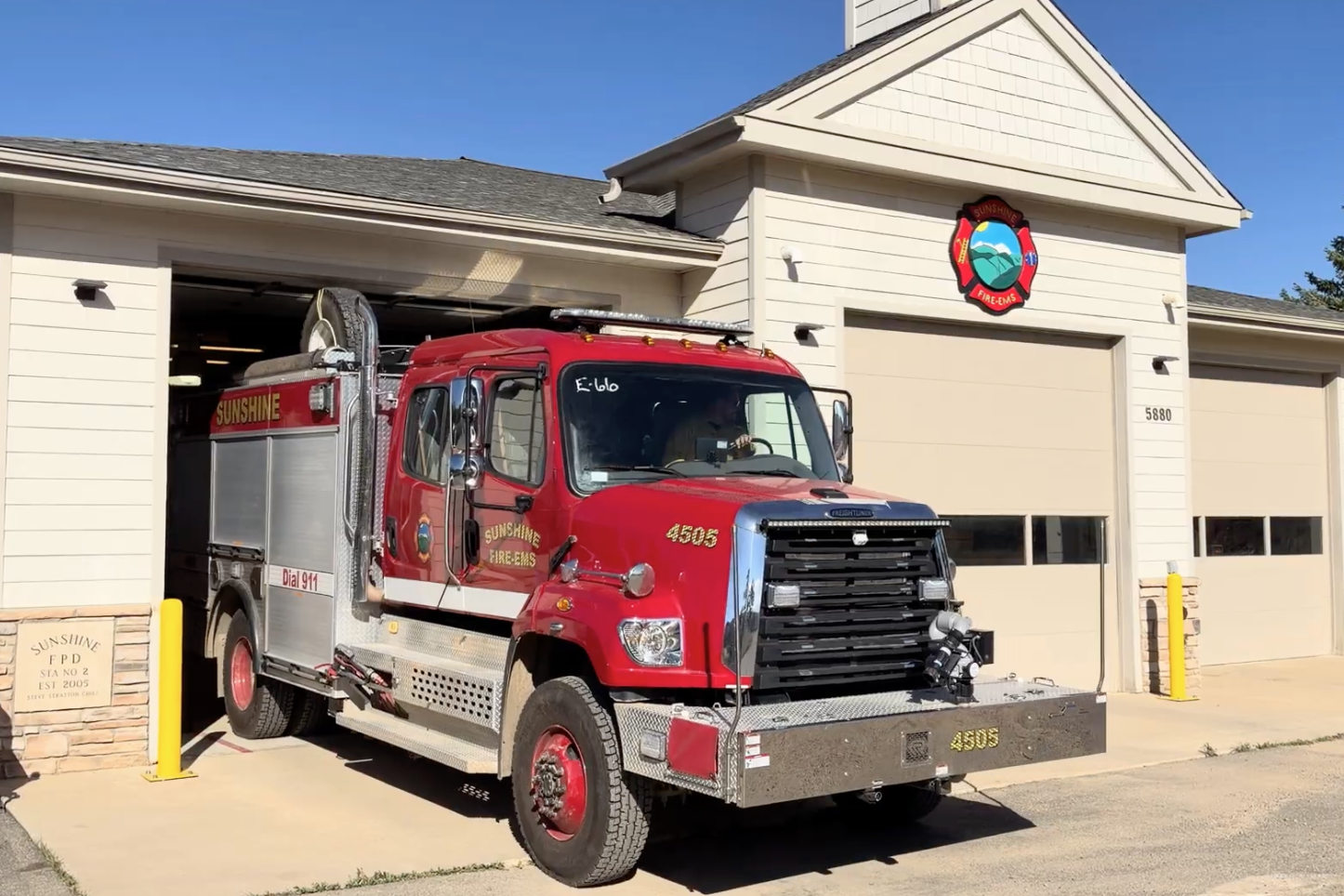
The researchers aim to distribute dozens to hundreds of truck-mounted sensors and filters to firefighters across the U.S. over the next few years. | Mark Leone
Evidence that the soil composition where a fire burns determines whether and how much metal particulate ends up in smoke is relatively new. After the 2019 Kincade Fire in Northern California’s Sonoma County, Fendorf and colleagues investigated how wildfires can transform naturally occurring metals that are harmless when locked away in soils into toxic, airborne particles linked to cancer and other health problems if people breathe them in.
There’s currently no way to monitor the metal content in smoke in real time or forecast where it will go as the plume travels, Fendorf said. Widely used air quality ratings, such as the U.S. Environmental Protection Agency’s (EPA) Air Quality Index, are typically based on the concentration of fine toxic particles in smoke known as PM2.5. “It doesn’t tell you anything about the chemistry, and that is a huge gap,” added Honeyman.
With climate change, decades of wildfire suppression, and other factors contributing to more frequent and extreme wildfires around the world, and smoke traveling hundreds or thousands of miles from its source, this information could help millions of people who now routinely experience unhealthy air from wildfire smoke.
The SmokeCast team is one of more than 110 active projects supported by the Stanford Sustainability Accelerator, which is based in the Doerr School of Sustainability. They applied to the program for support turning foundational science from Fendorf’s lab into a computer model that could someday provide a nationwide forecast of toxic metals in smoke.
Stanford Sustainability Accelerator
The Accelerator spins out sustainability solutions from Stanford to benefit people and the planet. View all spinouts.
Gemma Guilera Ferre, a managing director at the Accelerator who guides Stanford innovations in climate adaptation and large-scale data collection, pushed the team to consider how their research could be of immediate use to first responders. This inspired Honeyman, who spent 10 years as a volunteer firefighter, to prototype hardware – the box on the firetruck.
“What are my firefighter friends actually going to do differently on a daily basis based upon what we find?” Honeyman said. “The Accelerator team’s focus on impact brought us to realize, ‘I think what they need is information on the spot.’”
Current smoke and air quality forecasts say when the main plume is coming, “but the toxic metals are out front, or maybe already hitting you, before you’re taking any precautions,” said Fendorf, the Terry Huffington Professor in the Doerr School of Sustainability. In other words, toxic metals can enter our lungs before smoke can be seen or smelled.
To provide real-time estimates, Honeyman and the team are developing a computer model that combines data on how local geology and fire temperature affect whether and where metals are released, the distribution of smoke and how quickly it travels in different wind and weather conditions, and historical levels of smoke particle density occasionally measured by the EPA.
To fine-tune the model, the team needed more data directly from fires. Honeyman and Leone, MS ’23 and a PhD student in Earth system science, initially designed smoke sampling devices for drones that could be flown into plumes. They later realized that attaching these devices to first responders’ trucks could collect samples even closer to the flames without the need for a drone pilot to accompany fire crews.
In fall 2025, the Accelerator hosted a workshop for epidemiologists, firefighters, government officials, and others to learn about SmokeCast. Among the participants was Honeyman’s former fire chief, Michael Schmitt of the Sunshine Fire Protection District in Boulder County, Colorado. He suggested which data would be most helpful to firefighters, how to recruit crews to test sensors and filters in the field, and how to make the app easy to use.
When Honeyman and Leone brought their prototype to Colorado in July, they installed it on Schmitt’s truck.
Over the next few years, the SmokeCast team aims to outfit dozens to hundreds more firetrucks with filters and sensors to continue improving their forecast, first on a regional level and eventually “getting down to exposures for individual firefighters,” according to Honeyman.
Fendorf said their goal is to have a more accurate forecast within a year, and he hopes that anyone can check air toxicity on their phones within a few years.
“We’re starting with air quality and metals and smoke,” said Honeyman, “but this may be a way to rethink how we gather environmental data more broadly and come up with practical solutions where we can verify that we’ve made a difference in people’s lives.”
For more information
Fendorf is also a professor of Earth system science, the senior associate dean for research, and a senior fellow at the Stanford Woods Institute for the Environment, all in the Stanford Doerr School of Sustainability. Honeyman is a postdoctoral scholar in the Department of Earth System Science.
This story was originally published by Stanford Doerr School of Sustainability.
Media contacts
Gemma Guilera, Stanford Sustainability Accelerator: gemma99@stanford.edu
Monika Suhr, Stanford Sustainability Accelerator: msuhr@stanford.edu
Writer
Tara Roberts