In brief
- After two decades of research, methods for valuing ecosystem services have matured into practical tools that governments, banks, and NGOs increasingly use to guide development, with attention shifting toward cities and health.
- At the 2026 Natural Capital Symposium, participants warned that finance and policy still absorb nature too slowly, and called for regulation, standards, and fiscal tools to accelerate action across both sectors.
- Scaling proven approaches, not just chasing novel ones, is now seen as essential; NatCap and its partners plan to expand capacity to replicate demonstrated successes within and beyond their original settings.
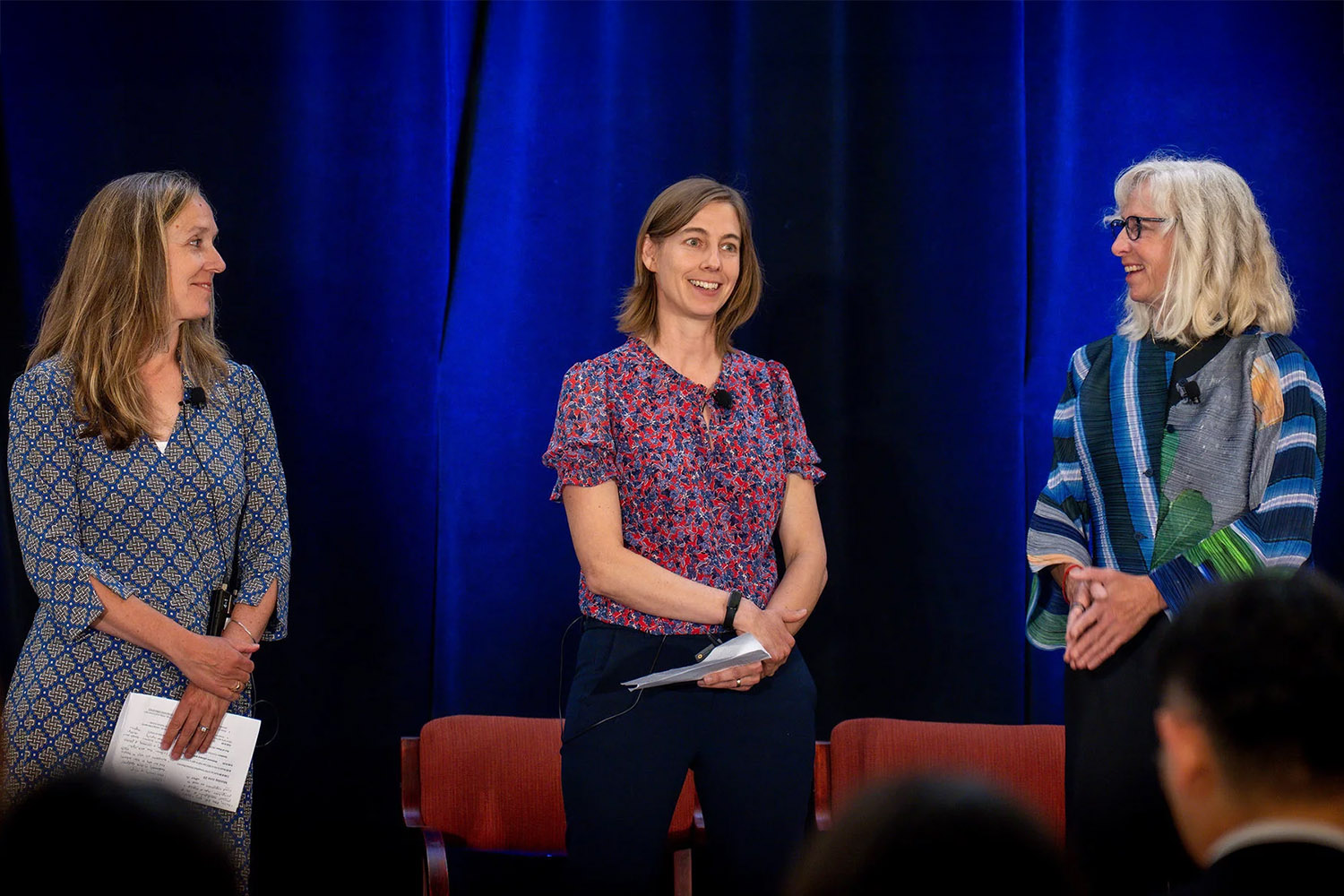
In early July, NatCap convened scientists, economists, policymakers, investors, and more at Stanford University for the Natural Capital Symposium, held every other year. This year’s gathering drew 350 participants from 32 countries and marked 20 years of progress in valuing nature in decisions – from mapping an ecosystem service for the first time to building them into policies and financial instruments around the world. Gretchen Daily, NatCap co-founder and faculty director, said her goal from NatCap’s start was to build a culture that would keep learning and changing.
NatCap continues to evolve to meet demand, with three new institutions formalizing their participation in the multi-institution coalition. “We need a big, bold, broad community to achieve our aims,” said Anne Guerry, NatCap co-executive director, on transforming systems to slow and reverse the loss of natural ecosystems that undermines human well-being and prosperity.
Announcements from the symposium
Below are highlights from conversations at the Symposium.
Nature’s importance to the economy now established
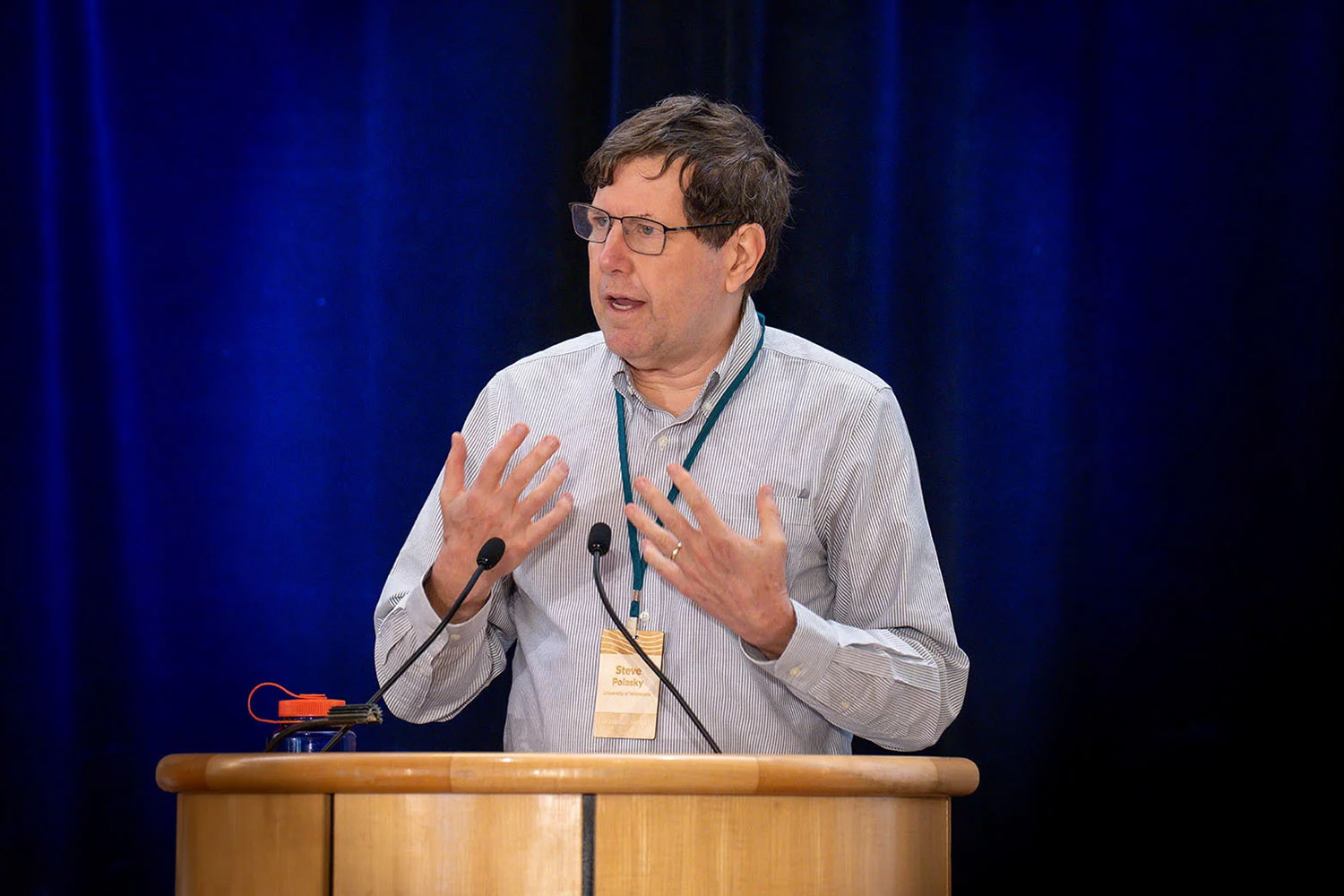
Twenty years ago, the central challenge was showing how changes in land use would change the many services ecosystems provide to people, recalled Stephen Polasky, professor of ecological and environmental economics and co-founder of the University of Minnesota’s NatCap TEEMs. That challenge drove the development of InVEST, NatCap’s open-source ecosystem services modeling platform, now used in nearly every country in the world.
Taylor Ricketts, director of the Gund Institute for Environment at the University of Vermont and a co-founder of NatCap while at WWF, described being at a workshop when two postdoctoral researchers, asked to map an ecosystem service for the first time, showed it was feasible. The idea was obviously scalable, Ricketts added, pointing to the room full of 2026 Symposium attendees as evidence. But scale has meant more than innovative science: It meant getting that information into the hands of banks, governments, and the private sector – in many cases co-developing it with them – and bridging divides between disciplines and expertise.
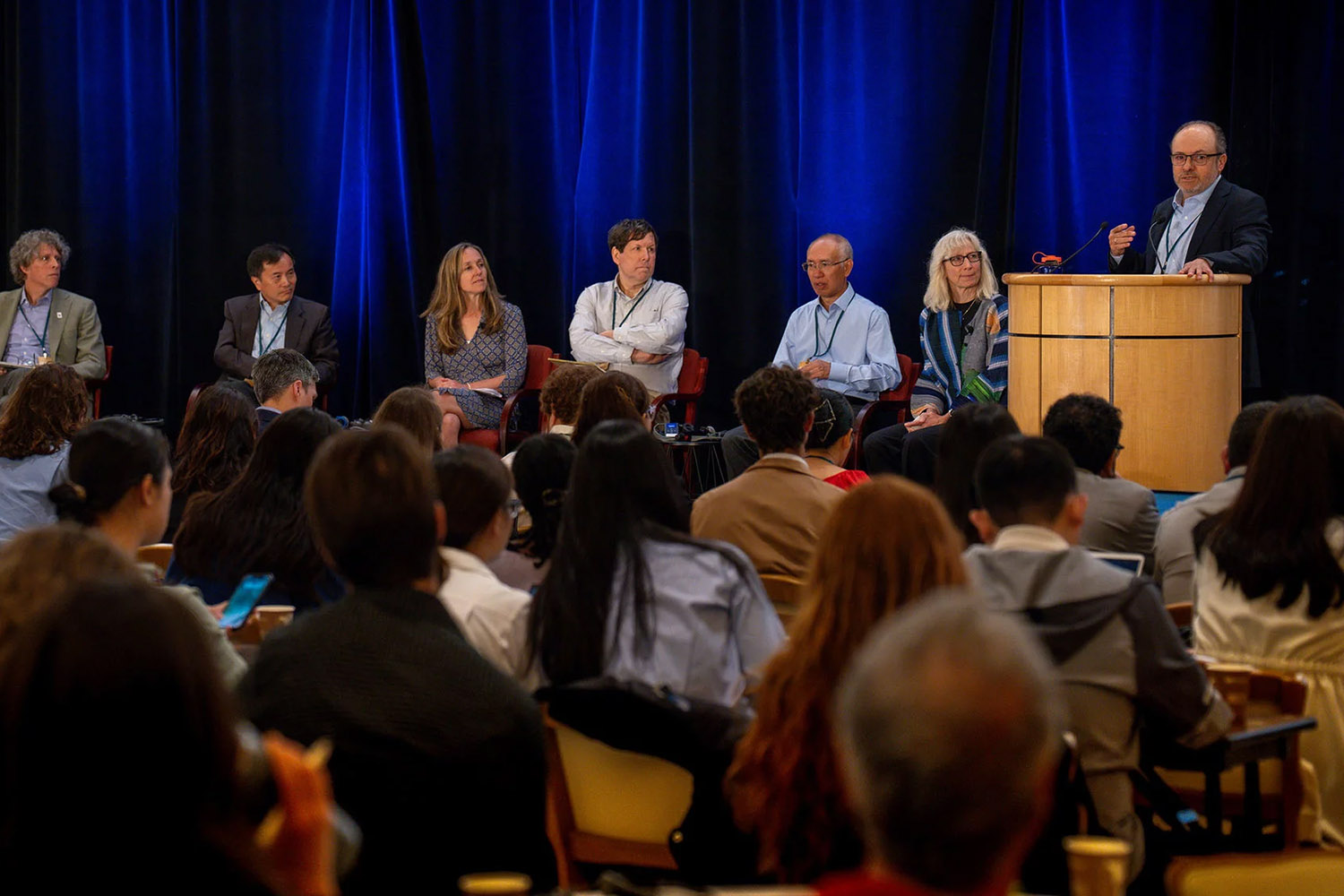
Juan Pablo Bonilla discussed the spread of natural capital-based approaches at the Inter-American Development Bank. | Ramin Karchagan
Now, after two decades of work by this community, Juan Pablo Bonilla, manager of the Climate Change and Sustainable Development Sector at the Inter-American Development Bank (IDB), celebrated that ministries of finance and environment are often in the same room, speaking a common language. His colleague Gregory Watson, chief of the Biodiversity and Natural Capital Unit, noted that even other sectors within the bank, like transportation, are coming to their team for nature-related expertise and financial products, because they see how this impacts their infrastructure investments.
Natural capital science influences lending priorities and supply chains, could support markets to sustain global rainfall
Innocent Onah, chief natural resources officer with the African Development Bank (AfDB), noted there is a high level of interest across the bank and the African continent in natural capital valuation, given Africa’s rich natural resource endowment. More than 30 African countries are currently part of the African Natural Capital Accounting Community of Practice (Africa NCA CoP) hosted by the bank. Natural capital is now part of the bank’s action plan for natural resources, with the potential to change how AfDB designs and evaluates projects, influencing infrastructure development to consider biodiversity, nature-based solutions, and the ecosystem services that development might affect.
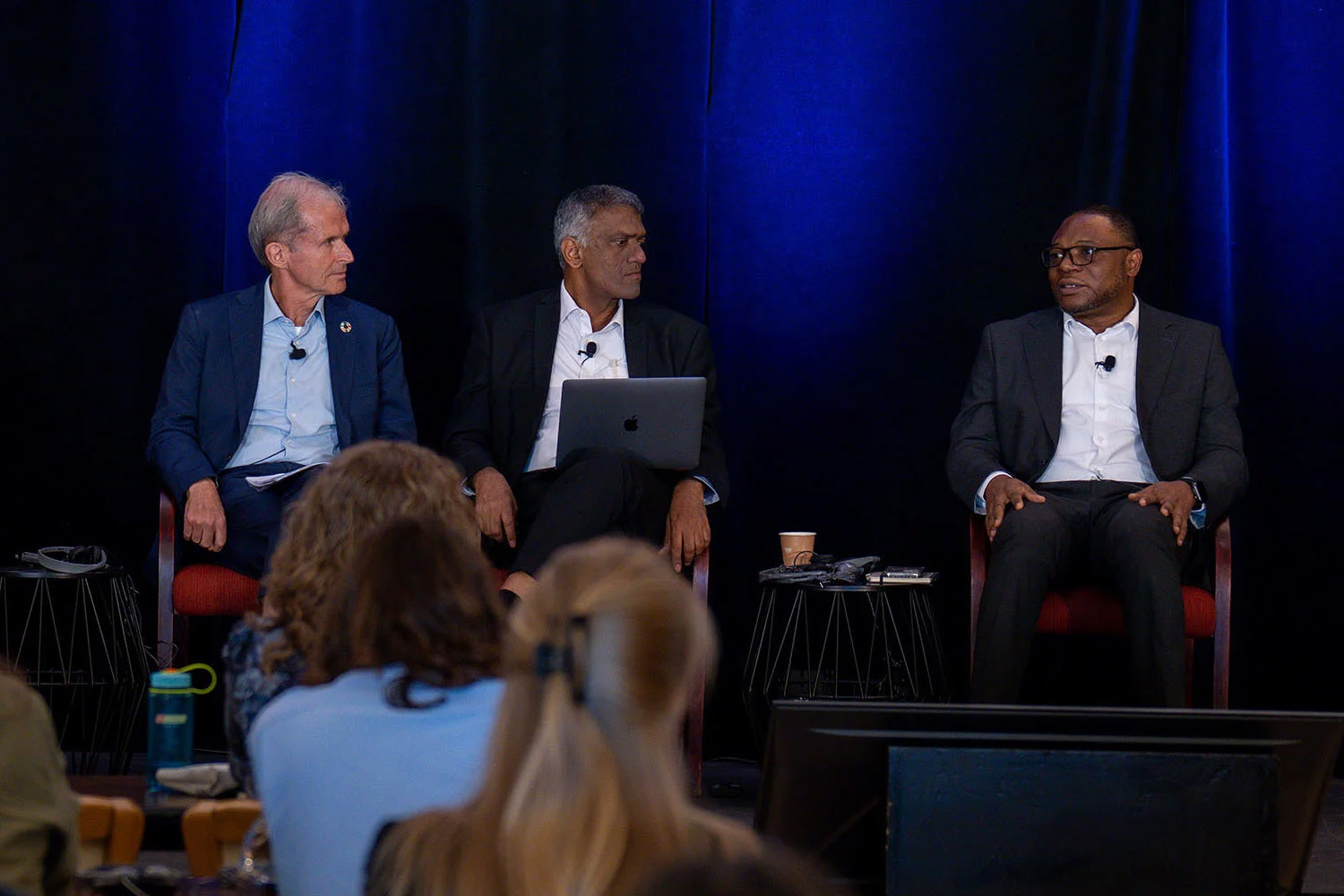
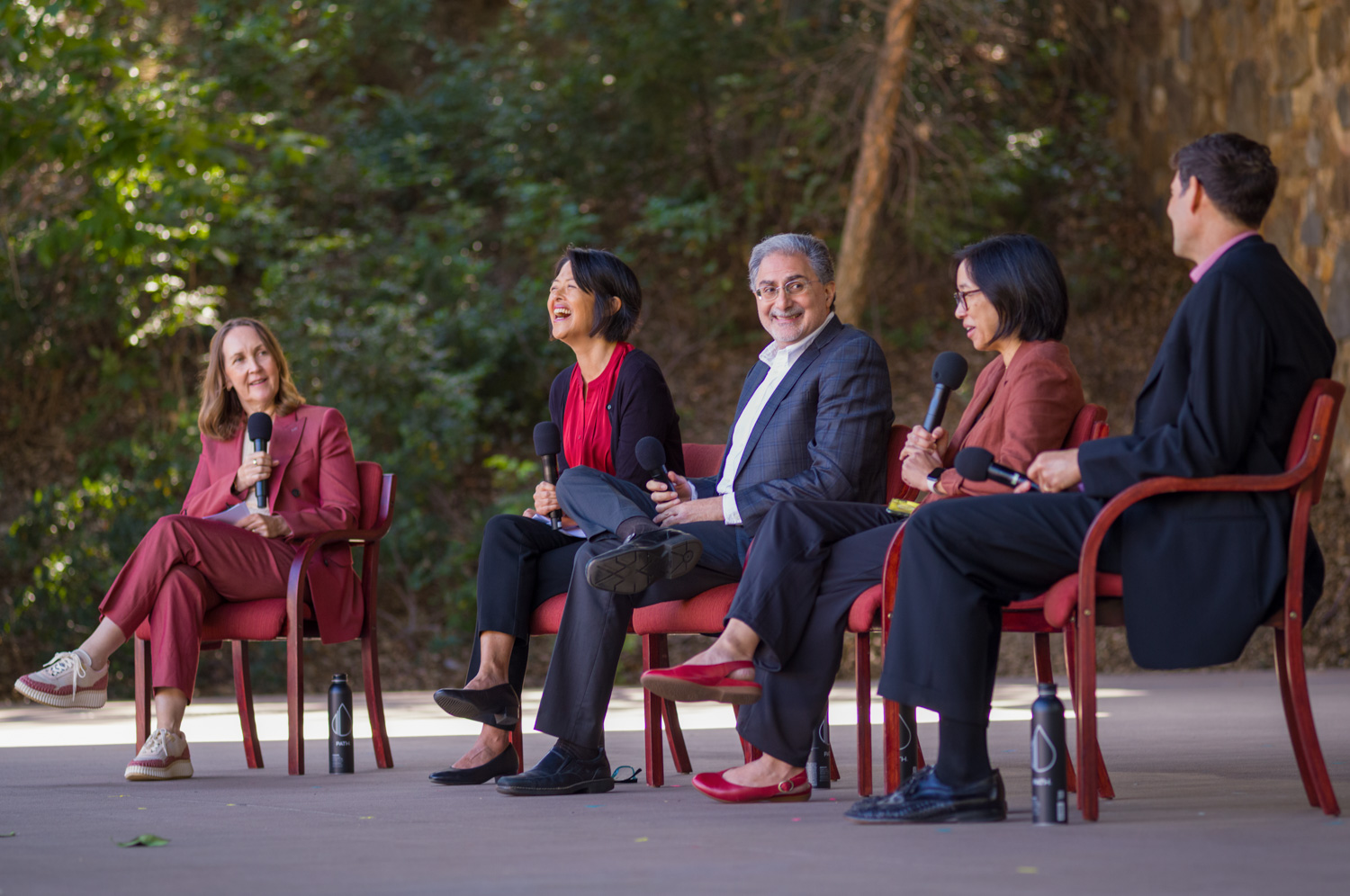
Innocent Onah (right) from the African Development Bank spoke on a panel with other development bank leaders. | Ramin Karchagani
In the private sector, companies are using natural capital approaches to assess nature-related risks to resilient supply chains. Elías Albagli, chief economist at the Central Bank of Chile, noted that by incorporating both climate and nature into their analyses, central banks can quantify and communicate to the public that this is not an ethical problem – it is a material problem that can affect their livelihoods, and not at some distant point in the future, but in the near-term.
Erik Berglöf, chief economist with the Asian Infrastructure Investment Bank, pointed to an example of a transboundary ecosystem service, “flying rivers,” referring to the atmospheric moisture from massive forests that provide significant proportions of rainfall globally (40% of economies receive more than a quarter of their rainfall from other countries). He noted there could be a huge opportunity for developing economies to leverage their natural resource endowments instead of decimating them if there were global markets for these services.
Paying for what works: Indigenous stewardship
Kāwika Riley, chief communications and engagement officer at Nia Tero, shared how their organization is working to counter the myth that Indigenous guardianship is a niche solution to the nature and climate crises, and is directing funding to the communities doing this work. Indigenous peoples steward a quarter of the planet, said Riley, and this includes roughly half of the world’s thriving, high-biodiversity natural places. Indigenous guardianship is working – and yet receives less than 1% of existing climate-related funding.
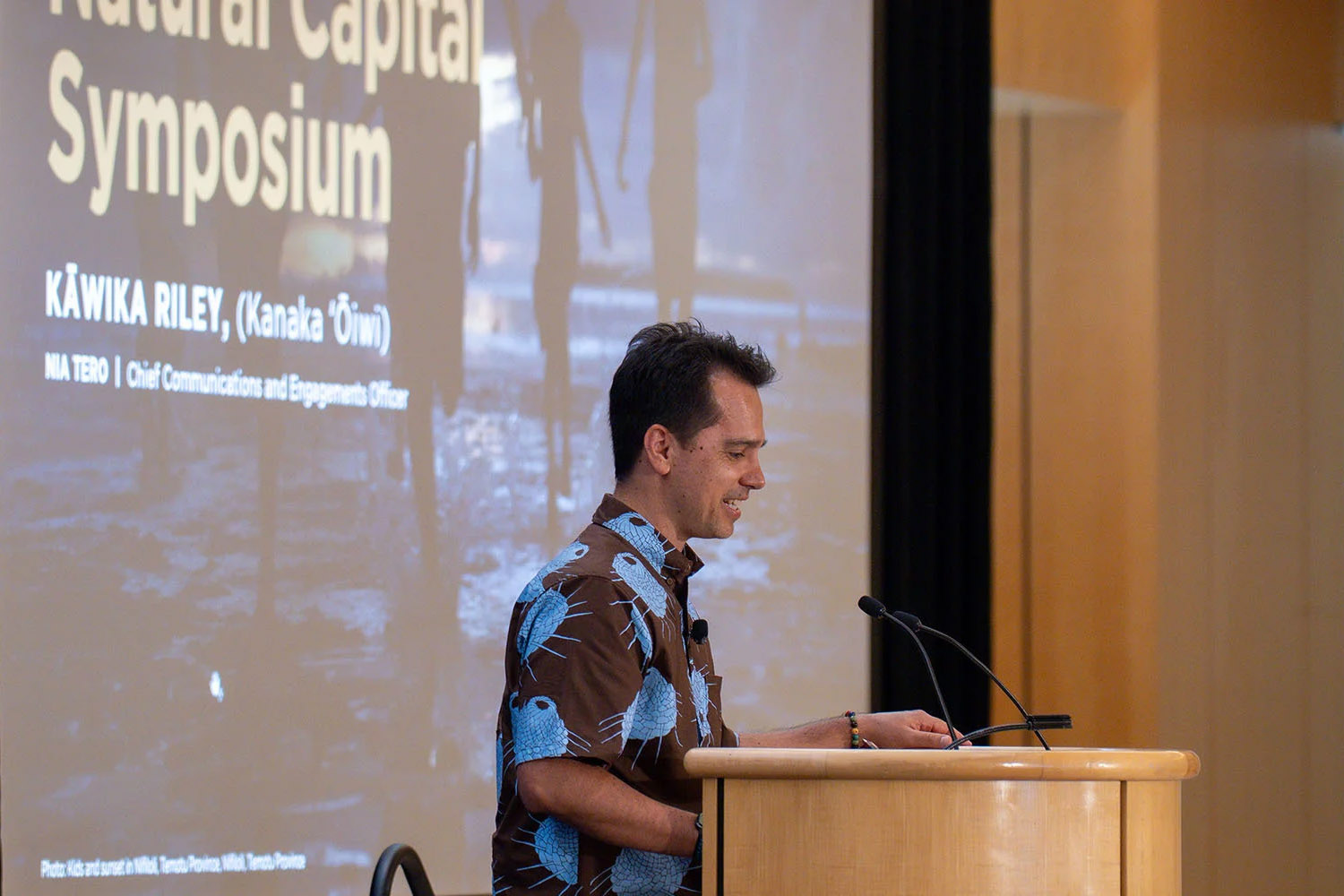
Kāwika Riley of Nia Tero shared perspectives on the overlap between natural capital and Indigenous approaches to nature stewardship. | Ramin Karchagani
Beth Rose Middleton Manning, professor of Native American studies at the University of California, Davis, also noted the idea of reciprocity, the deep and sacred relationship between people and other elements of the world, including in providing services to ecosystems, as with fire management.
Nature-related art shared at the 2026 Symposium
- A Map to the Next World: a poem by Joy Harjo, critically acclaimed poet and a member of the Muscogee (Creek) Nation.
When you emerge note the tracks of the monster slayers where they
entered the cities of artificial light and killed what was killing us.
[“We are the monster slayers.”] - Stanford Doerr School of Sustainability 2026 Photo Contest Winners
- Portraits of Water: Photos by Marcelle Hernández-Blanco
- Filipino song “Makaugnay”
Growing focus on nature and human health, and designing cities
“Your health is your wealth,” as Ricketts recalled his Uber driver telling him that very morning. And nature is closely intertwined with it. Preserving functioning ecosystems has a long list of human health benefits, including reducing risk of infectious disease, stress and mental illness, heat-related deaths, and asthma.
While these connections are of great importance in rural areas as well, quantifying nature’s health and other co-benefits to people in cities can help make the case for investing in nature as urban infrastructure: City parks, forests, and community farms can be relatively low-cost ways to gain a wide range of benefits. There was momentum at the meeting for collaborating on more city-based work, especially as nearly three-quarters of humanity will be congregated in cities by mid-century.
From understanding to implementation: Mobilizing capital
Aileen Lee, president of the Gordon and Betty Moore Foundation, prompted attendees to work toward “investable assets” that encourage wider public and private sector involvement, and she asked, “How can we make the full adoption of these natural capital approaches an irresistible competitive advantage for countries?”
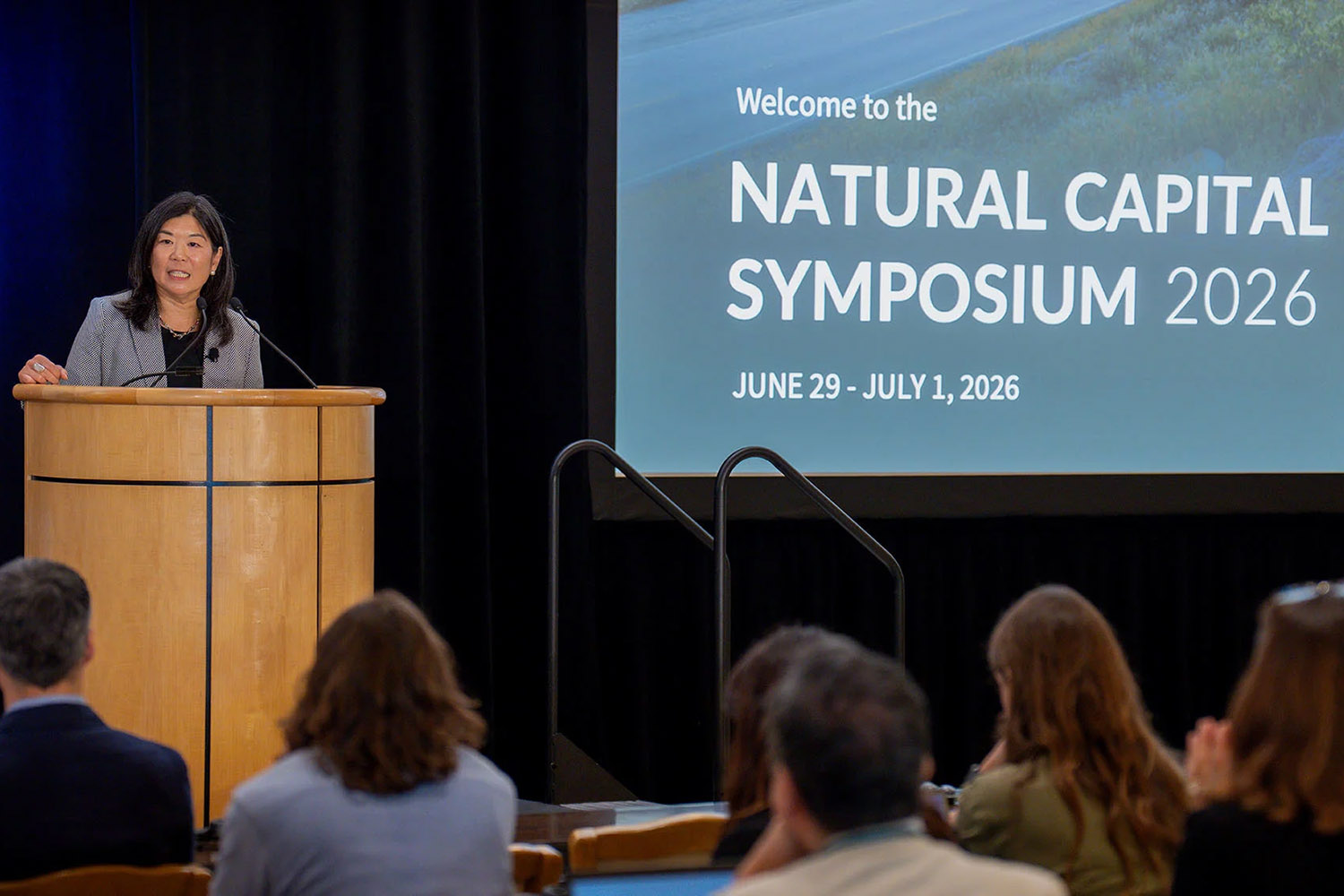
Aileen Lee of the Gordon and Betty Moore Foundation told attendees there is more momentum around natural capital approaches than ever before. | Ramin Karchagani
Teresa Kong, an independent board director and longtime investment manager, suggested that a lack of capital isn’t the problem: It’s about matching investor appetites for risk with the risks and demands of the asset (in this case, nature). Traditional risk mitigation instruments should be used to help make these assets bankable, attracting investment, said Berglöf. Albagli added that central banks and regulators also need to be clear about the limits of their mandates. Their tools can work as complements, but not as substitutes, for environmental public policy, such as regulation and fiscal instruments to correct externalities and incorporate nature’s value into the price system.
People tend to overemphasize novelty – innovative tools and markets – instead of what we already know works, like wetland mitigation banking, which despite its flaws is a highly successful market, said Lucas Black, vice president of climate finance and head of the GCF Accredited Entity Unit at WWF.
From individual champions to embedded policies and regulations
Lee asked the group to consider how to embed natural capital approaches into institutions in ways that withstand political turnover. She proposed that it may be time to move natural capital from the voluntary sphere into legal requirements and regulations.
Countries are working to institutionalize these approaches. Victor Caro, former chair of Chile’s Interministerial Natural Capital Committee and an academic at the University of Santiago of Chile, called natural capital a “governance agenda.” In the Philippines, the “PENCAS” law requires a national natural capital accounting system. The Philippine Department of Environment and Natural Resources and Stanford NatCap have set up advisory groups at different levels of government to get input and buy-in on their work.
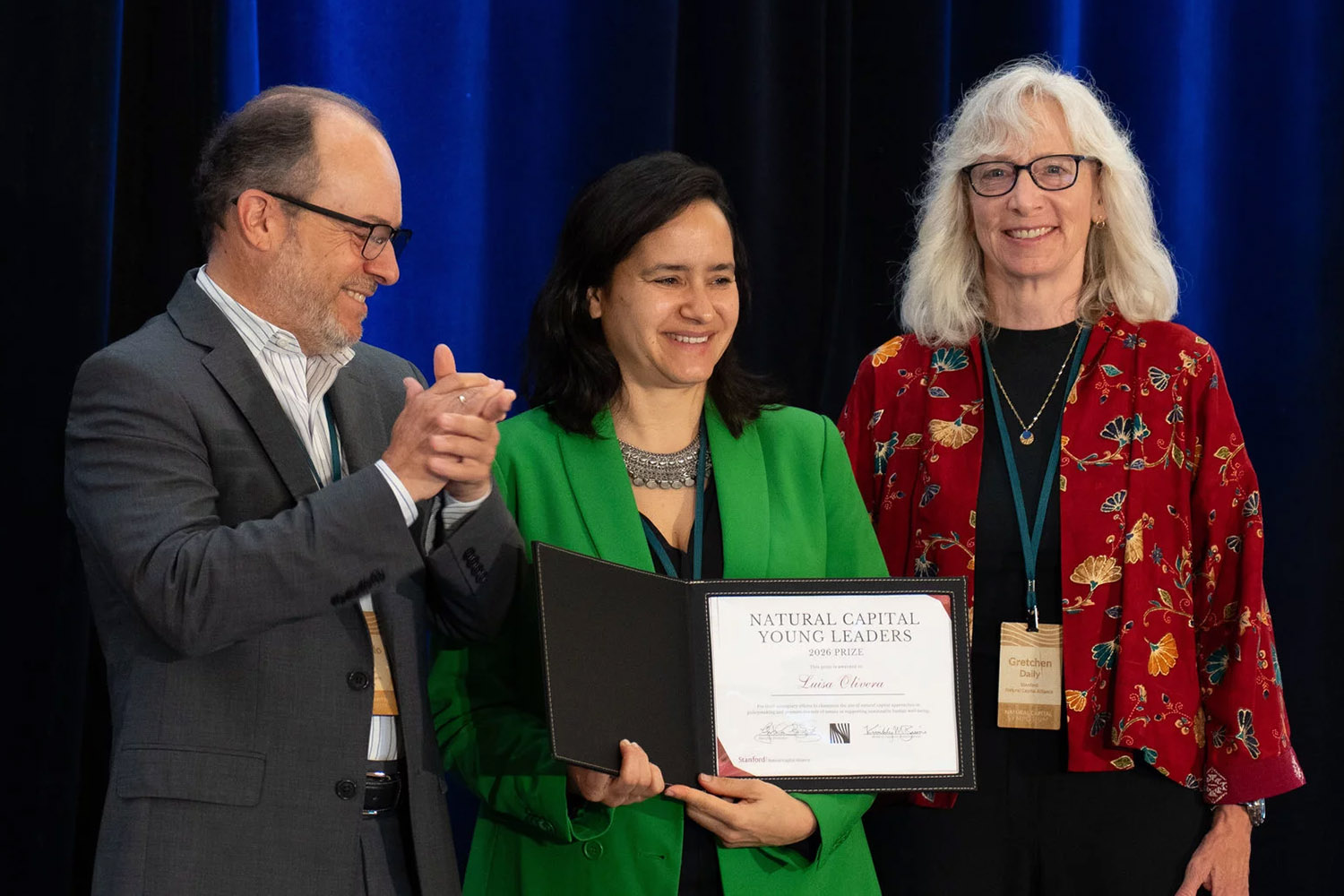
Luisa Olivera, one of the winners of the 2026 Natural Capital Young Leaders Prize, with Juan Pablo Bonilla and Gretchen Daily. Olivera, with the Uruguay Ministry of Finance, has been integral to a team that is assessing the value of Uruguay’s many wetlands. | Ramin Karchagani
Matthew Bardrick, senior economist at the UK’s Department for Environment, Food and Rural Affairs (DEFRA), said after years of working to integrate nature’s value, they’ve come to realize a whole suite of interventions are needed. The UK has national-level natural capital accounts; they also include natural capital in their treasury department’s Green Book, its guidance on appraisal (assessing the costs, benefits, and risks of different options for achieving government objectives). They recently published their first nature security report, assessing effects of global nature loss on the UK’s national security, and are requiring valuation and replacement of habitat lost – aiming to provide confidence and consistency across changes in government.
Accounting as a form of institutionalization
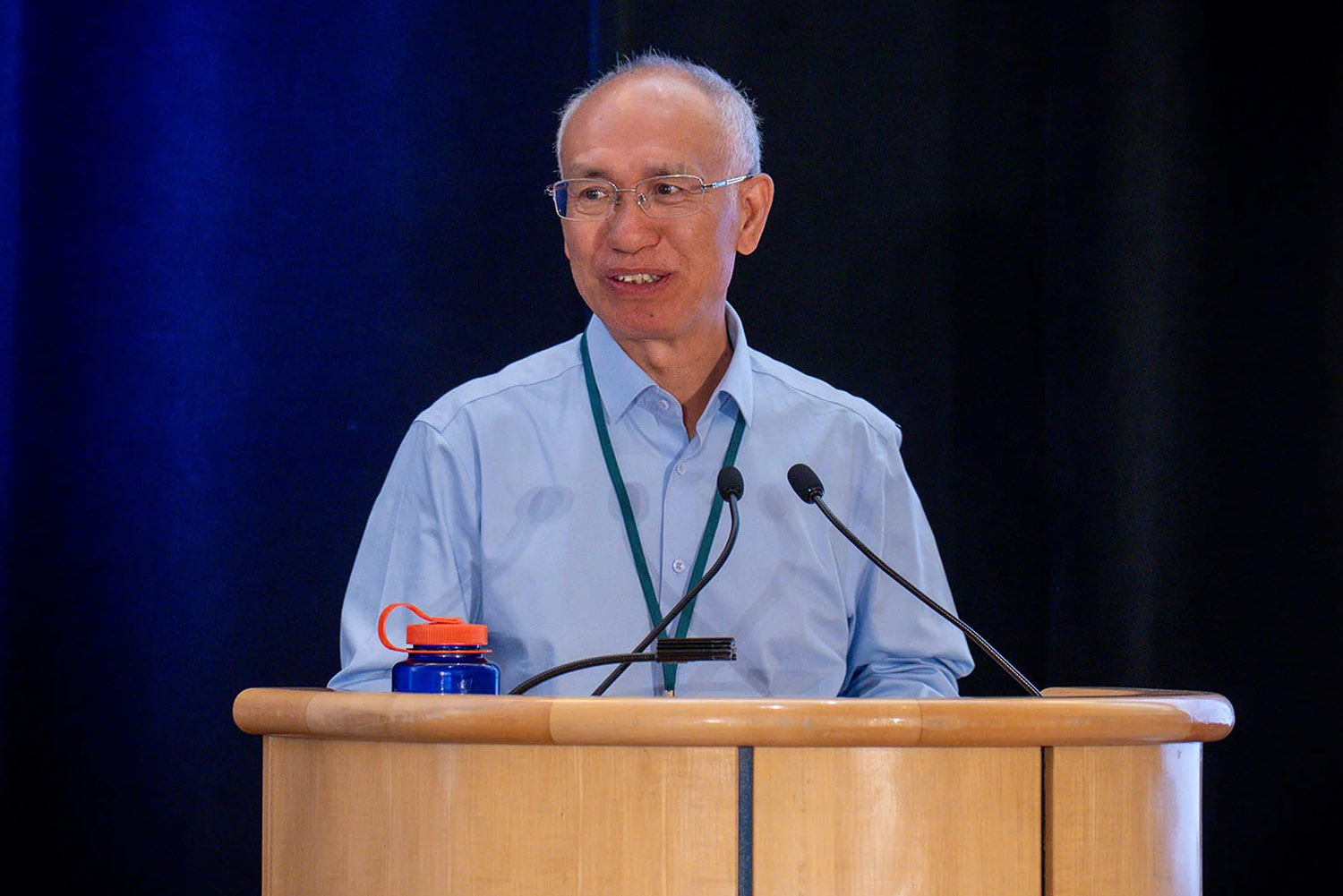
One approach that continues to gain popularity with policymakers is gross ecosystem product (or GEP), a form of natural capital accounting that aggregates the value of final ecosystem goods and services within a given area into a single monetary metric, comparable to GDP. Polasky shared early data from a NatCap-wide effort he’s leading to calculate country-level GEP for 250 countries and territories across 37 ecosystem services (preview: the total number will be trillions of dollars annually). Zhiyun Ouyang, Baolong Han, and others from the Chinese Academy of Sciences also shared China’s progress using GEP across the country, including as part of performance evaluations, calculating payments for ecosystem services, and designating massive areas for nature preservation and sustainable use.
One benefit of GEP is its compatibility with the United Nations System of Environmental Economic Accounting (UN SEEA) – one of many efforts to help standardize methodologies. Natural capital approaches are often viewed as niche or bespoke, and standardization is considered key to scaling their application.
The symposium closed with inspiration from the arts. As Riley said: “We are deficit-spending this one single planet we have. But it is not inevitable. It is not destiny.”
The Natural Capital Symposium will return to Stanford in 2028. Stay in touch:
For more information
At Stanford, NatCap is based out of the Woods Institute for the Environment within the Stanford Doerr School of Sustainability, and the Department of Biology within the Stanford School of Humanities and Sciences.
This story was originally published by Stanford Natural Capital Alliance.
Writer
Elana Kimbrell