


Suspended from the ceiling in the Wisch Family Gallery of the Anderson Collection is a 10-by-10-foot curtain of brass chains and pottery fragments.
Threshold, the largest installation in the exhibition Patty Chang: surfacing, gathers more than 300 sherds from ceramic and stoneware vessels that washed ashore on Monterey beaches at the site of the former Point Alones Chinese Fishing Village, now home to Stanford’s Hopkins Marine Station in Pacific Grove.
“In 1906, the village, which was then the center of Chinese cultural life on the coast, burned down,” said Marci Kwon, associate professor of art and art history at Stanford and a co-curator of the show. “The cause of the fire was never officially determined; however, the arson of Chinese villages was an established method of displacement and expulsion across the western United States.”
Patty Chang, the show’s artist, recently completed a residency as Stanford’s 2024-25 Denning Visiting Artist. During her residency, she was embedded at Hopkins Marine Station, where she worked with faculty to conduct research into the use of porcelain as a substrate for coral.
“This show has so many layers and components at the intersection of history and science and so many other things that are intertwined,” she said. “It’s also about collection and recollection. Collection as in archives, but also recollection as being a way to remember and reframe something.”
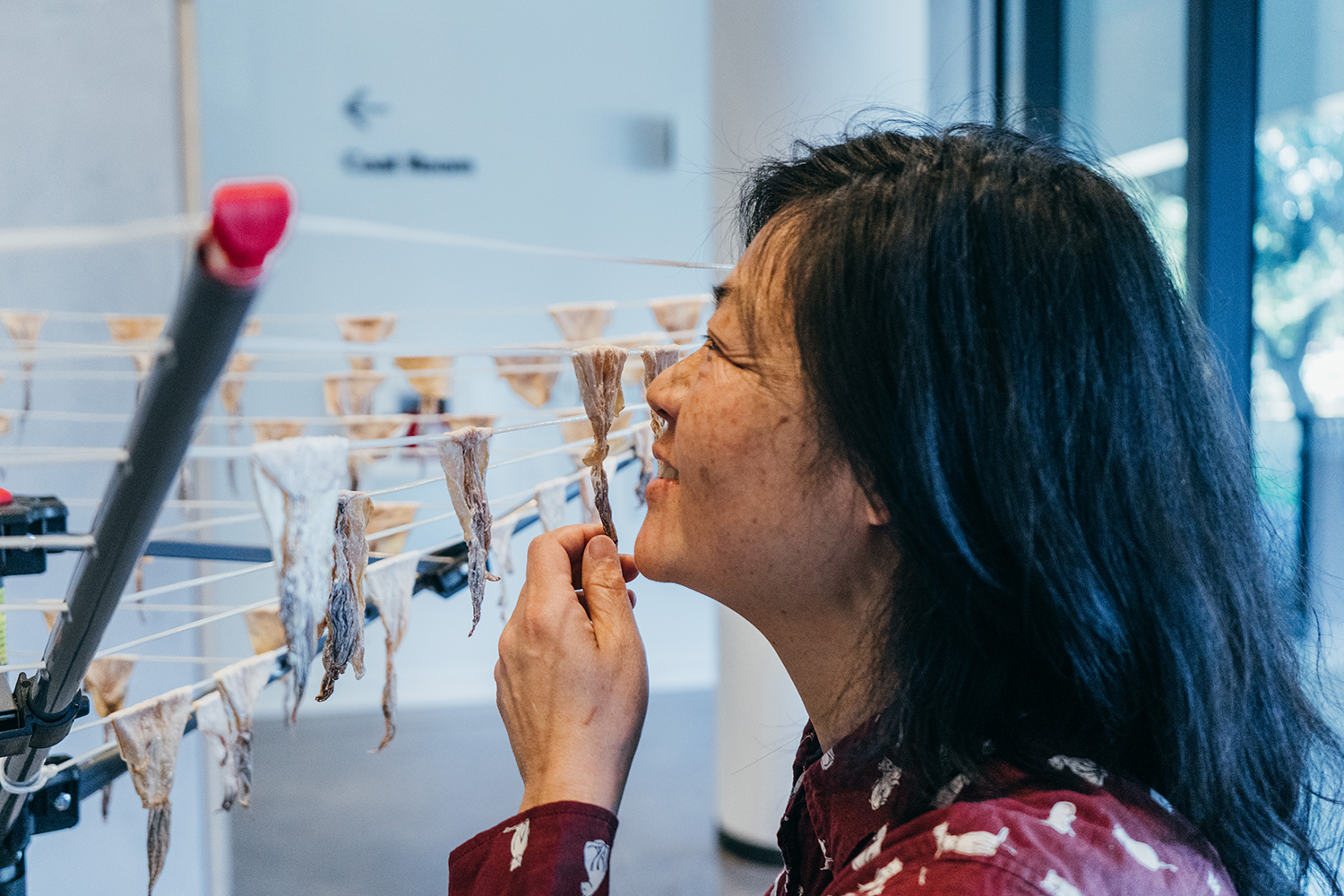
Artist Patty Chang takes a playful sniff of the dried squid, which has almost no odor. | Taylor Jones
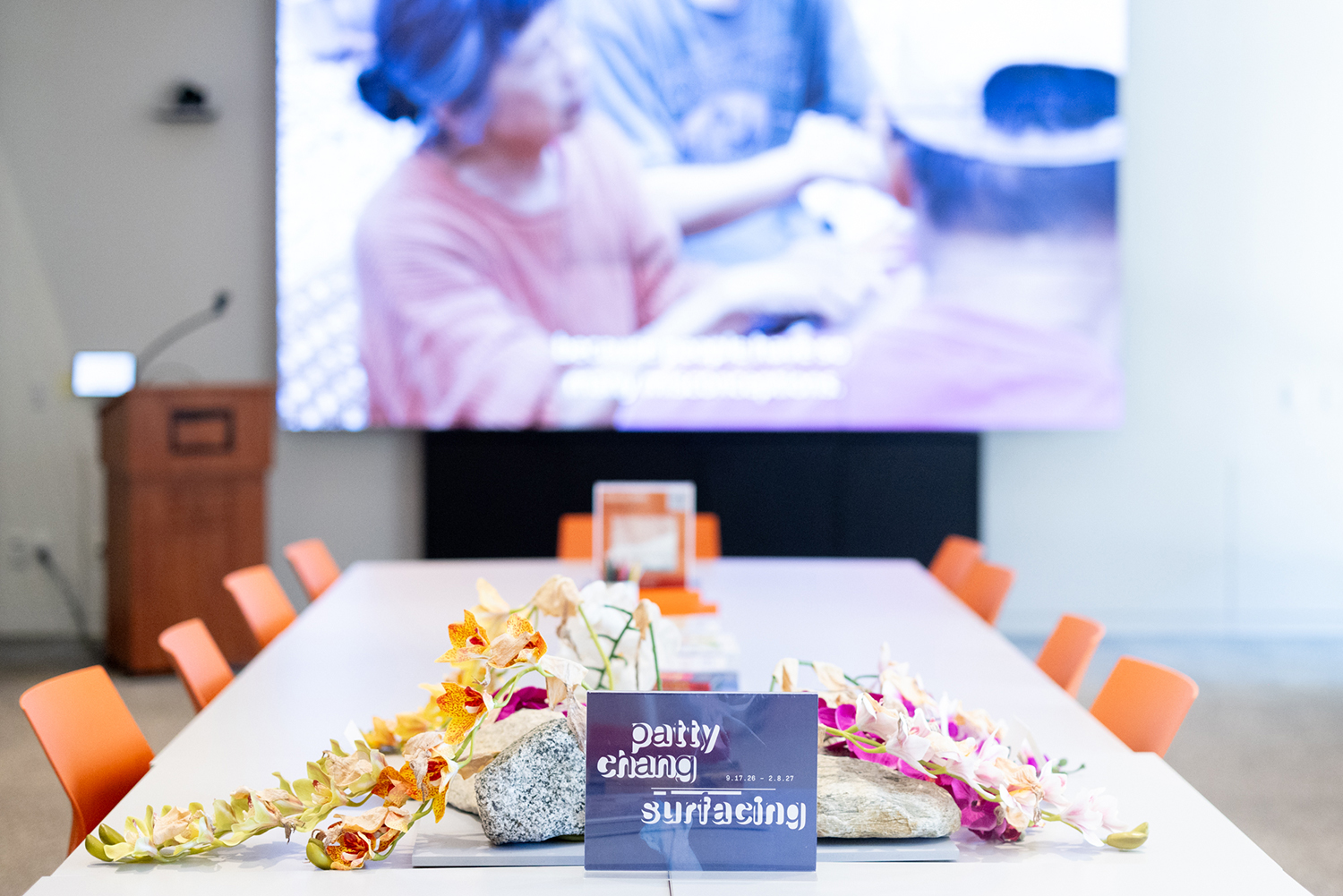
A short film on view in the Denning Family Resource Center of the Anderson Collection features descendants of those displaced from the Point Alones Chinese Fishing Village. | Andrew Brodhead
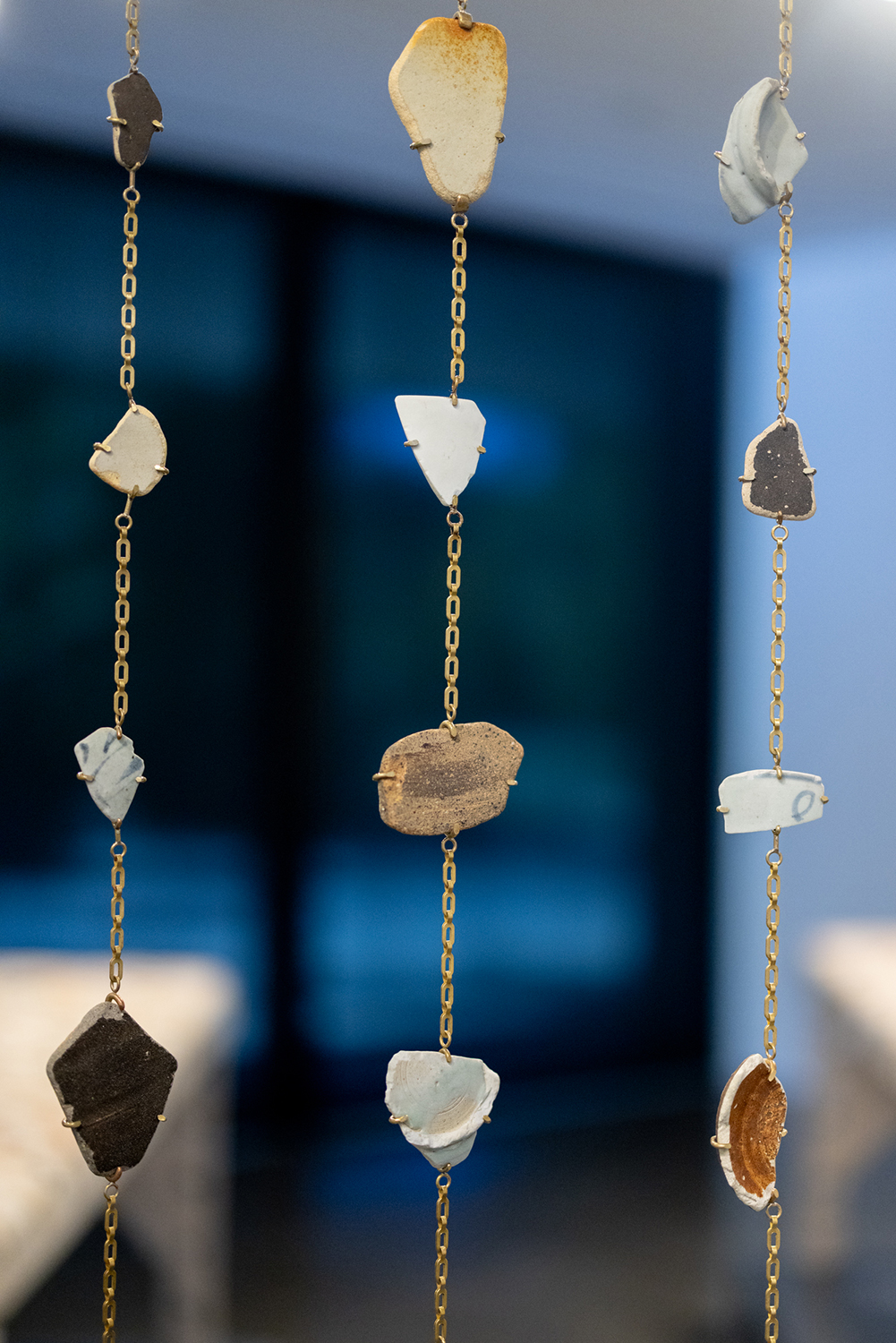
Some of the more than 300 sherds in “Threshold,” the show’s largest installation. The 10-by-10-foot curtain of brass chains and pottery fragments hangs from the ceiling of the Wisch Family Gallery. | Andrew Brodhead
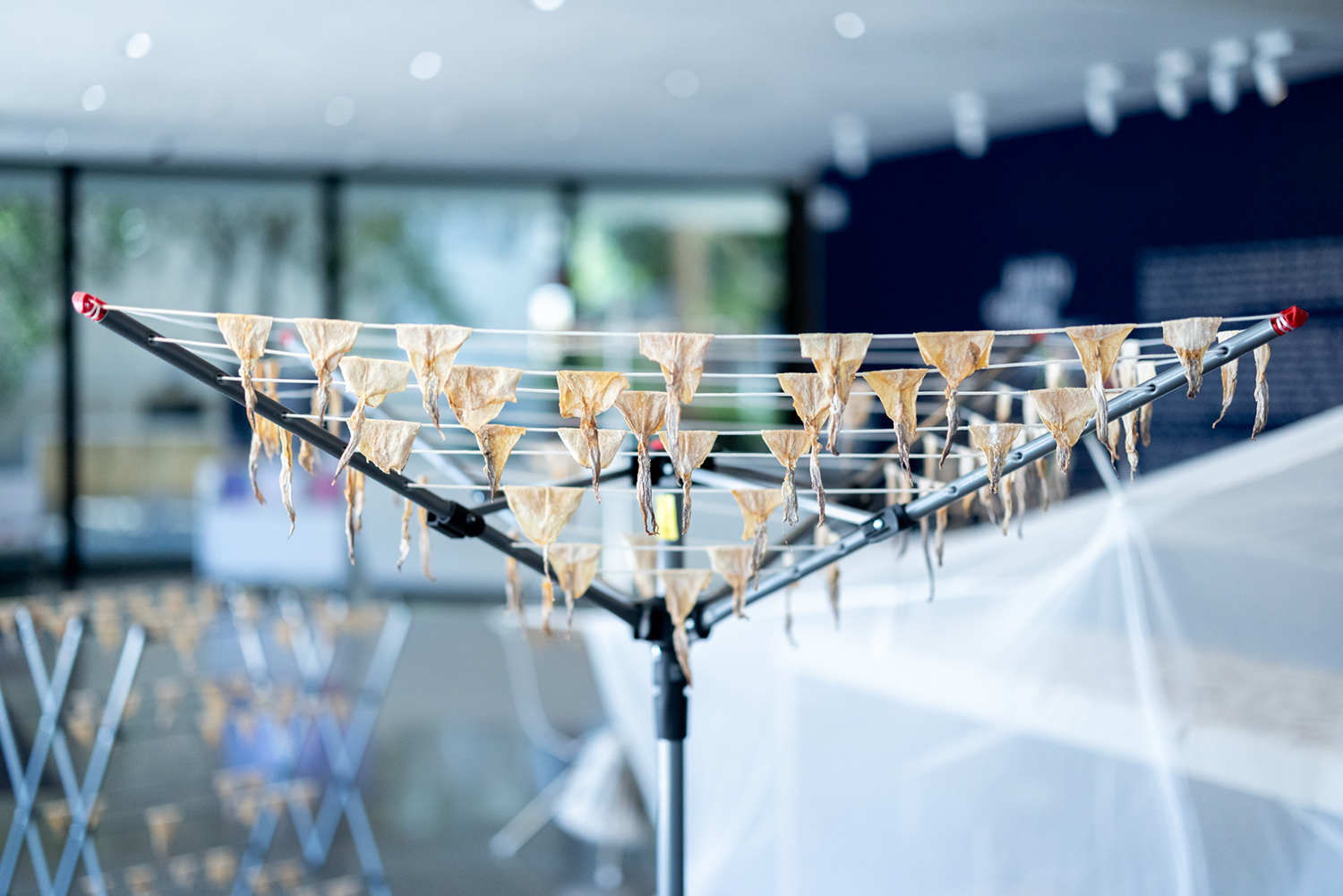
Dried squid and other marine life recall the livelihoods of Point Alones villagers. | Andrew Brodhead
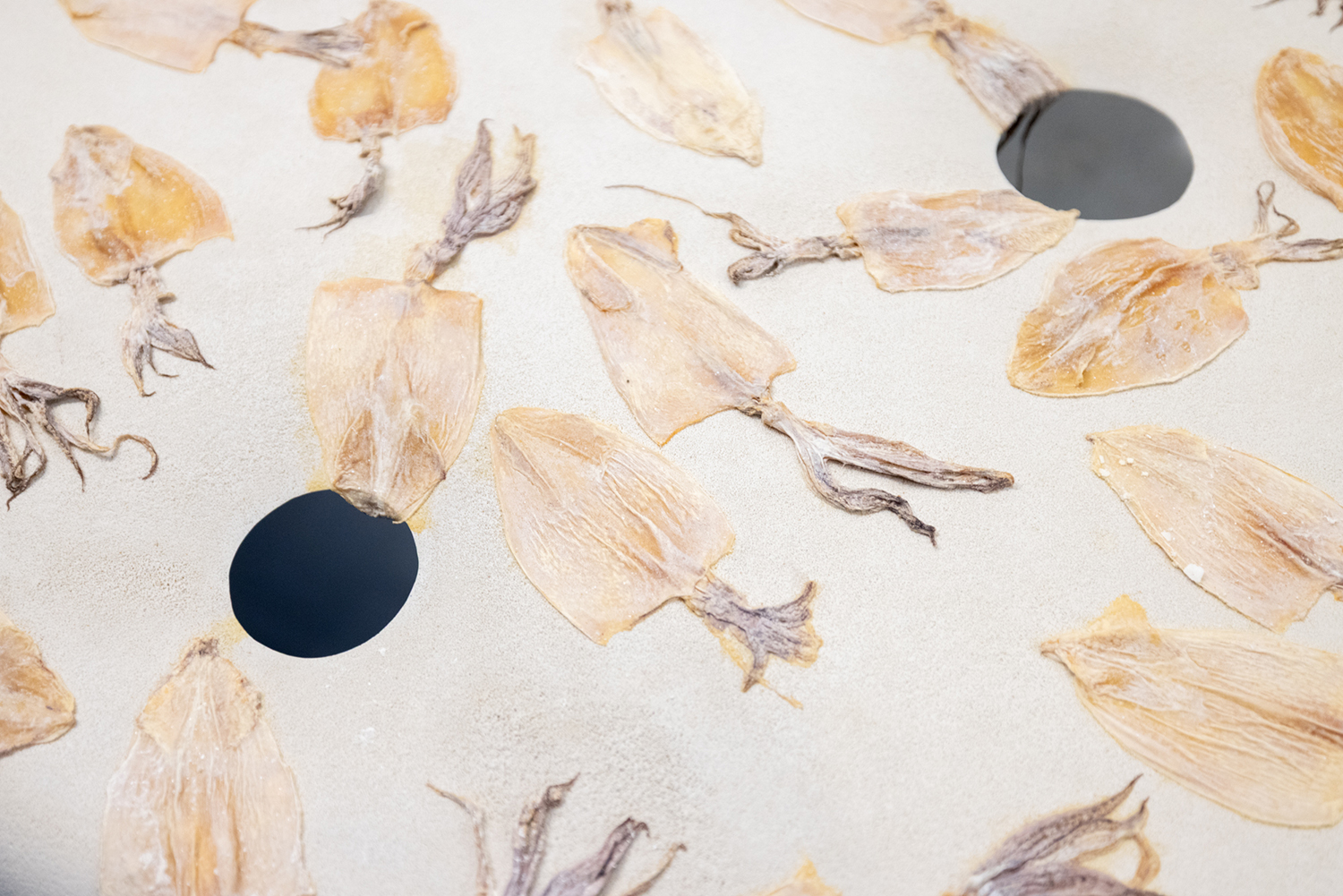
Dried squid covers two porcelain tables, originally created by Chang for the Metropolitan Museum of Art. | Andrew Brodhead
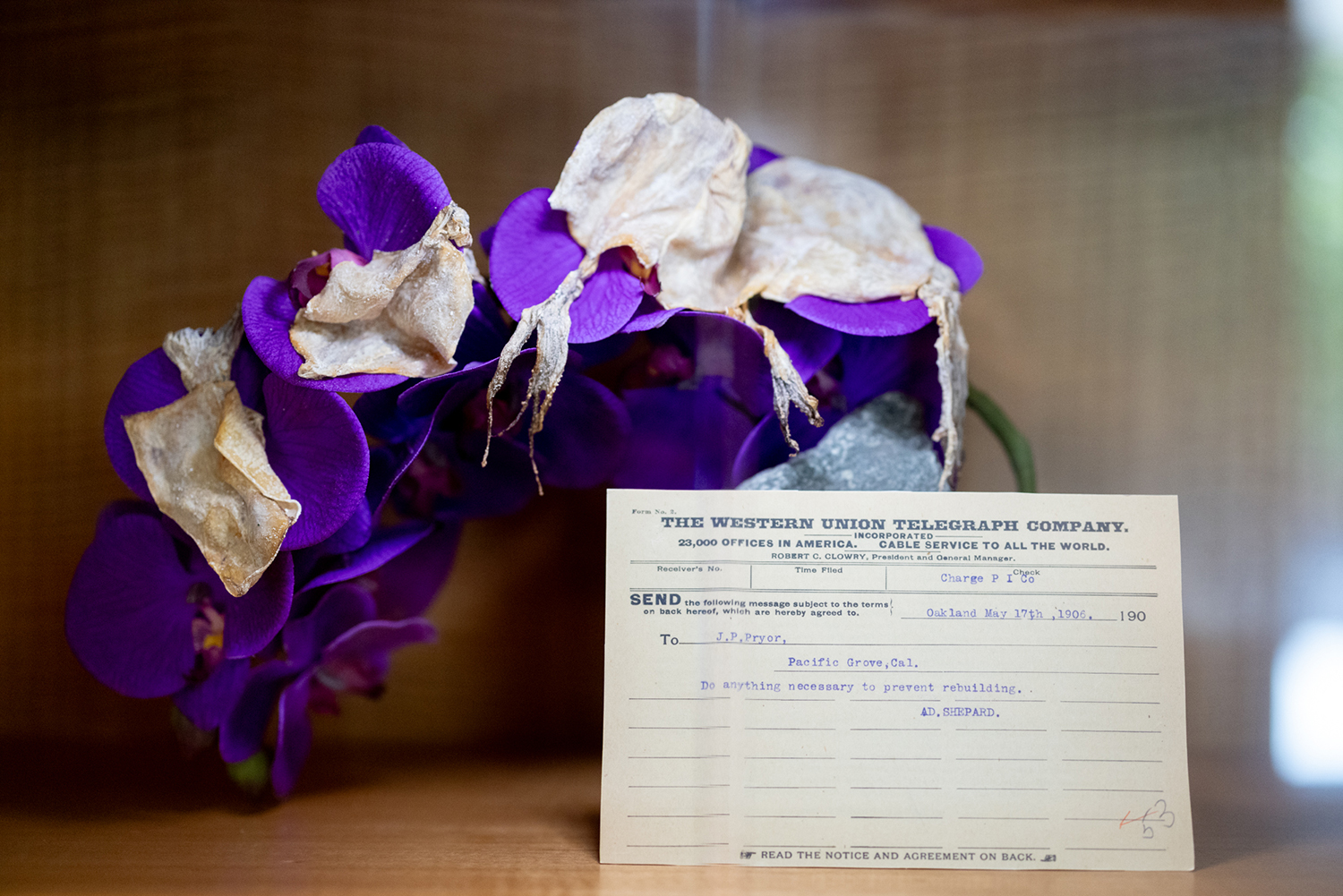
Photos, archival documents, and specimens are used throughout the exhibition. | Andrew Brodhead
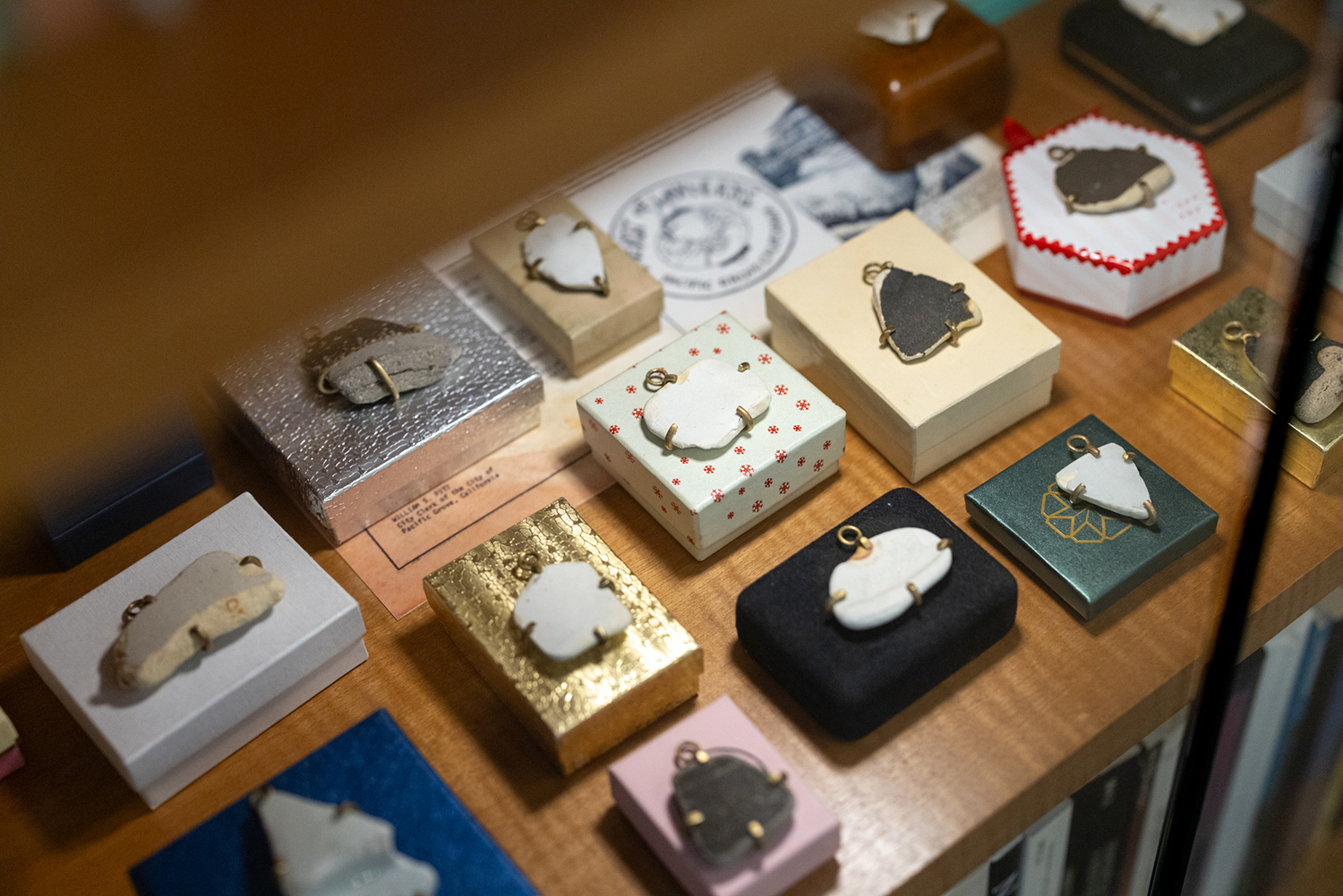
Ceramic and stoneware fragments washed ashore at the site of the former Point Alones Chinese Fishing Village, now home to Stanford’s Hopkins Marine Station in Pacific Grove. | Andrew Brodhead
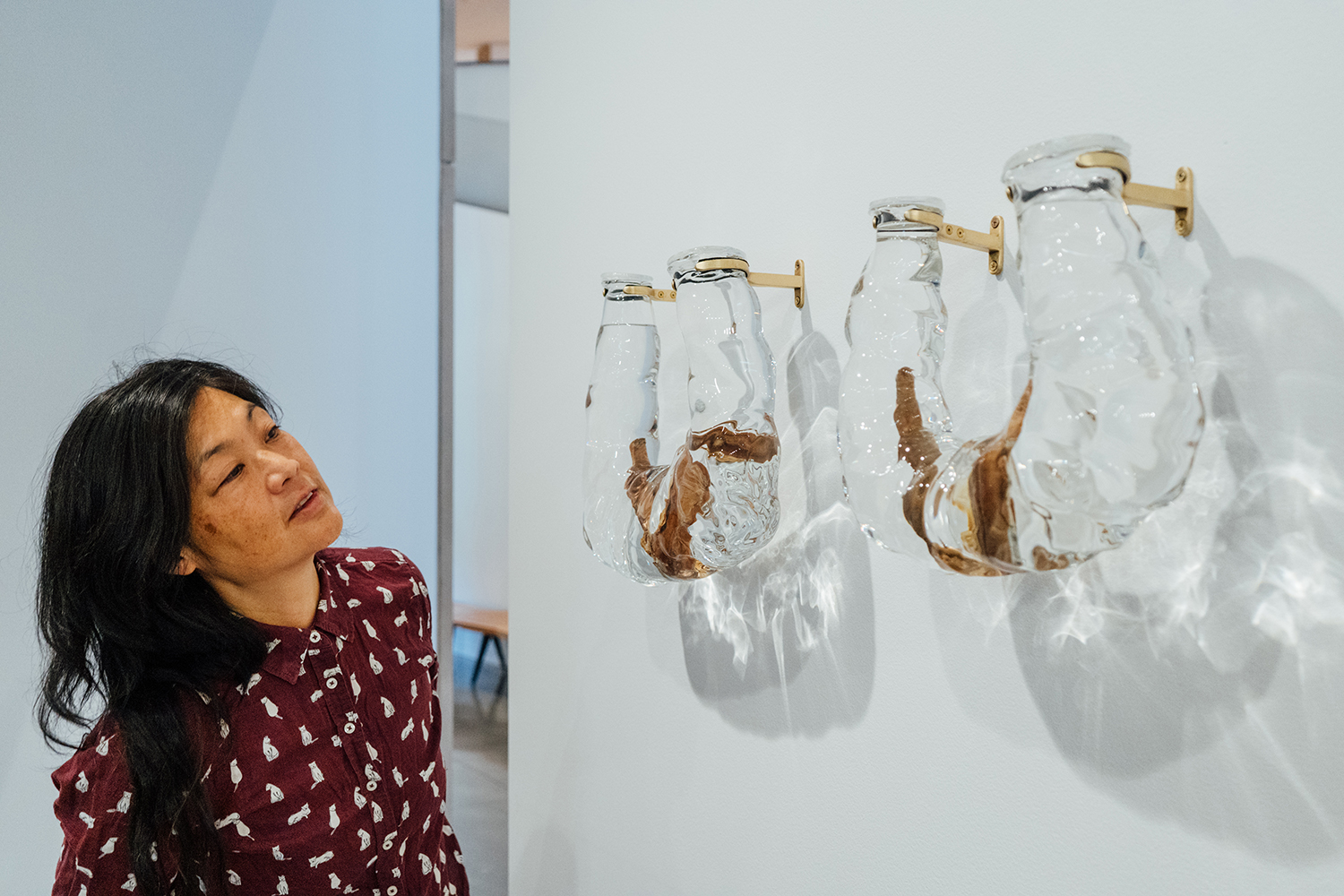
Artist Patty Chang with “UU,” made of borosilicate glass and hagfish. | Taylor Jones
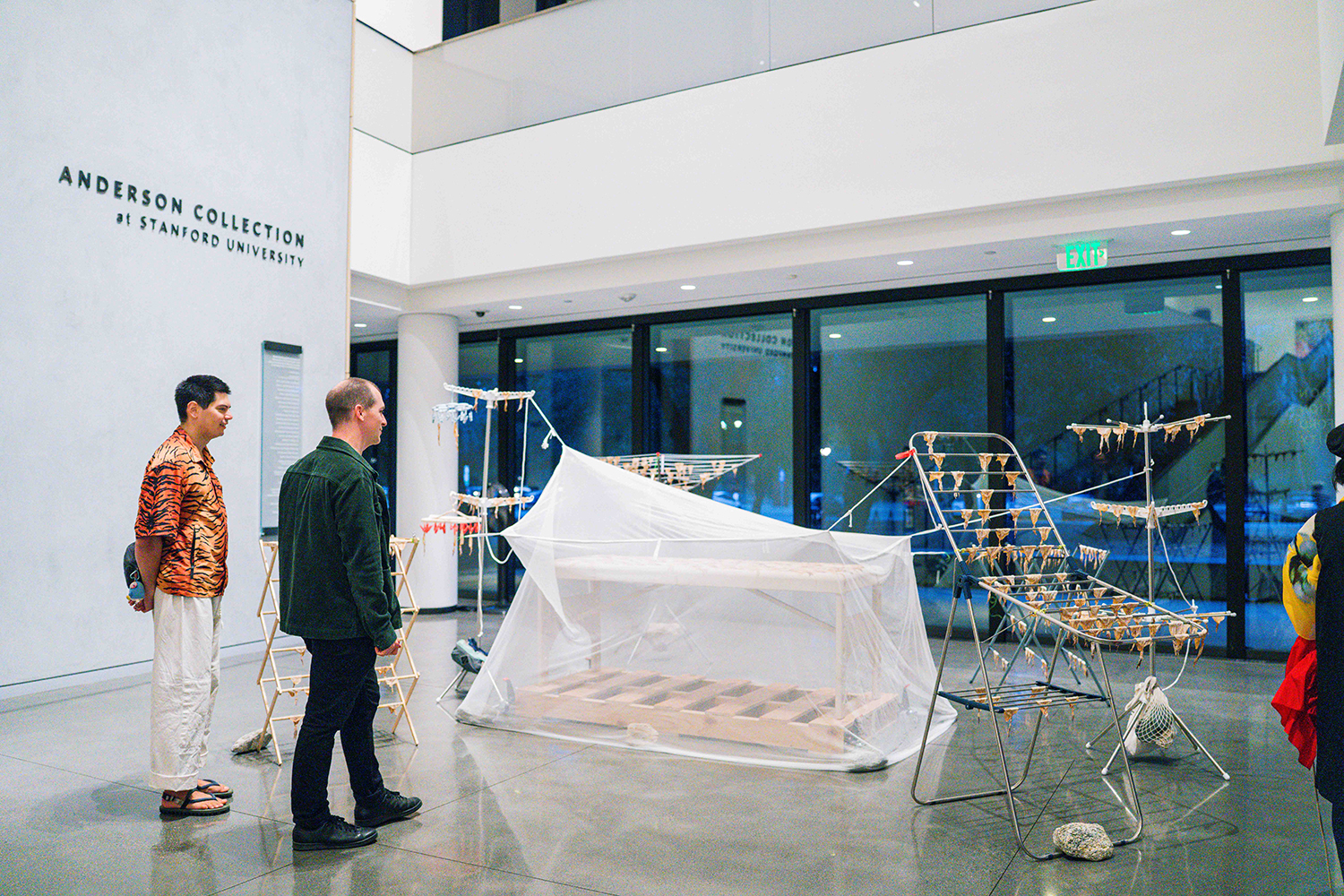
Visitors view “Patty Chang: surfacing” at the Anderson Collection on opening night. The exhibition is the first solo artist commissioned by the Asian American Art Initiative and runs through Feb. 8, 2027. | Harrison Truong
Who gets remembered
Photos, archival documents, and specimens highlight that members of the Point Alones fishing village caught hagfish that were used by ichthyologists, including Stanford scientists George Clinton Price and David Starr Jordan, to study vertebrate evolution.
“Quock Tuck Lee, a resident of the Point Alones fishing village, caught hagfish specimens that became the basis for important studies in evolutionary biology,” said Kwon, who is also the co-director of the Asian American Art Initiative at the Cantor Arts Center. “By bringing the specimens he caught to Stanford, the show asks questions about who is remembered, and who does the work that is considered scientific research.”
In the center of the Wisch Family Gallery is Abyssal/surfacing: two porcelain massage tables created by Chang and originally commissioned for the Metropolitan Museum of Art. For this show, Chang covered the tables with dried squid as a nod to the village’s role in Monterey Bay’s squid industry.
A short film on view in the Denning Family Resource Center of the Anderson Collection features descendants of those displaced from the Point Alones Chinese Fishing Village sharing stories passed down from their families.
“The entire show is a really powerful attempt at memory work in an interconnected, more-than-human world, where memory is always imperfect, and it’s an attempt to grieve what may be ungrievable,” said Kelsey Chen, PhD candidate in modern thought and literature and a co-curator of the show.
The show is the first solo artist commission by the Asian American Art Initiative and is the culmination of Chang’s artist residency at Stanford.
“People should have their own experiences with works of art, but I hope that they will leave thinking more critically about the labor that has gone into building California,” Kwon said. “And question who gets remembered and who is forgotten.”
For more information
Patty Chang: surfacing will be on view from Sept. 17, 2026, to Feb. 8, 2027, in the Anderson Collection.
Writer
Olivia Peterkin