


At Stanford’s 136th Convocation ceremony Tuesday evening, President Jonathan Levin said new students are arriving on campus at a particularly momentous time, when rapid technological change promises to transform discovery, education, and many aspects of our lives.
“I can’t tell you what the future will hold. But what I can tell you with confidence is that you are in the right place,” he said.
Thousands of new undergraduates and their families gathered at Frost Amphitheater for Convocation, Stanford’s annual celebration inaugurating the new academic year. It is one of the signature events of New Student Orientation, the five-day series of events for first-year and transfer students marking the beginning of their lives on the Farm.
The ceremony included performances by the Stanford Brass Ensemble and student soloists Anna Klein, ’28, and Kent Hippler, PhD ’28, who sang the Stanford Hymn, “Hail Stanford, Hail.”
Rev. Dr. Tiffany Steinwert, dean for religious and spiritual life; Professor Jay Hamilton, vice provost for undergraduate education; and Richard Shaw, dean of undergraduate admissions and financial aid, each delivered remarks welcoming students to the campus community.
Images by Andrew Brodhead
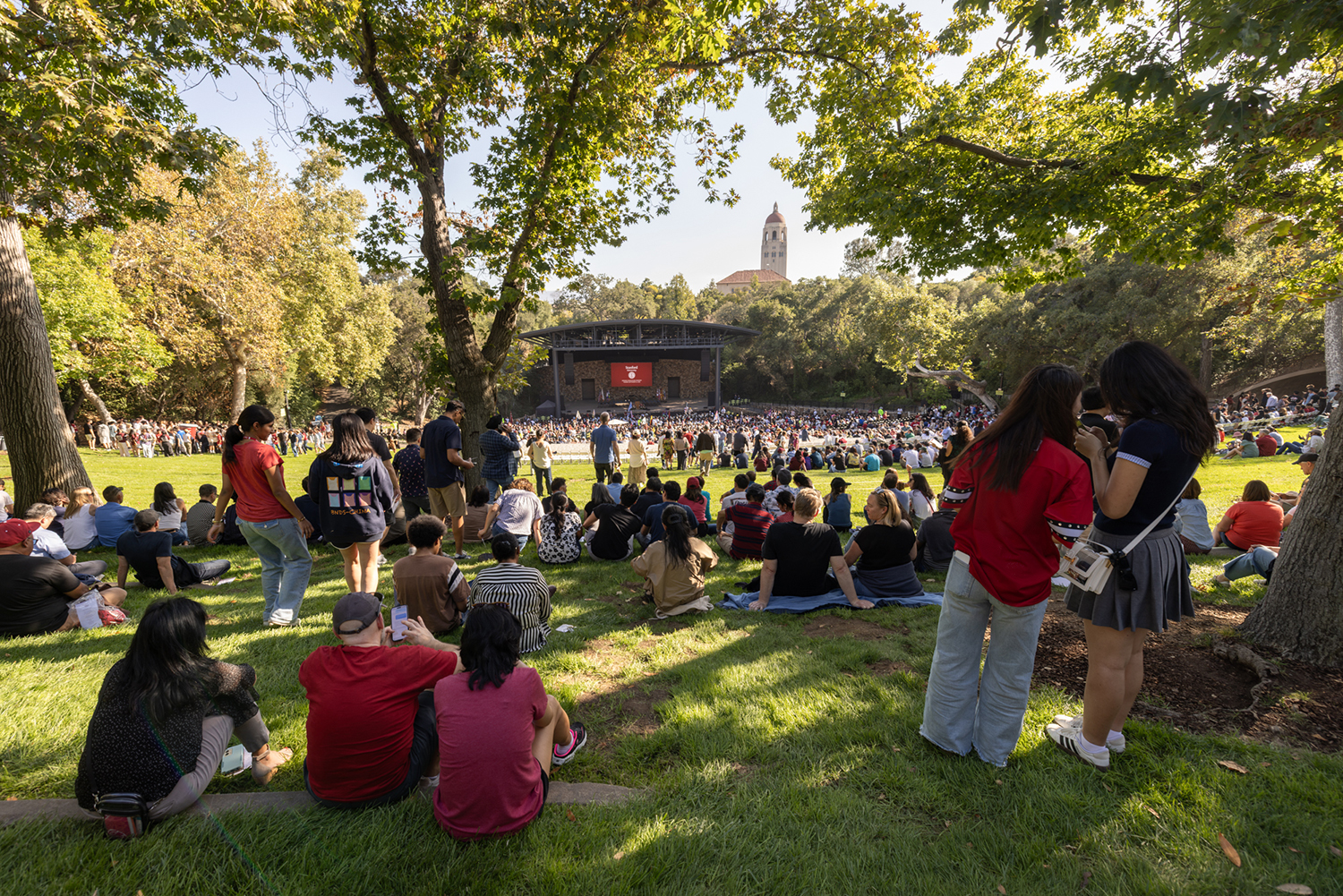
Stanford’s 136th annual Convocation at Frost Amphitheater formally inaugurated the new academic year.
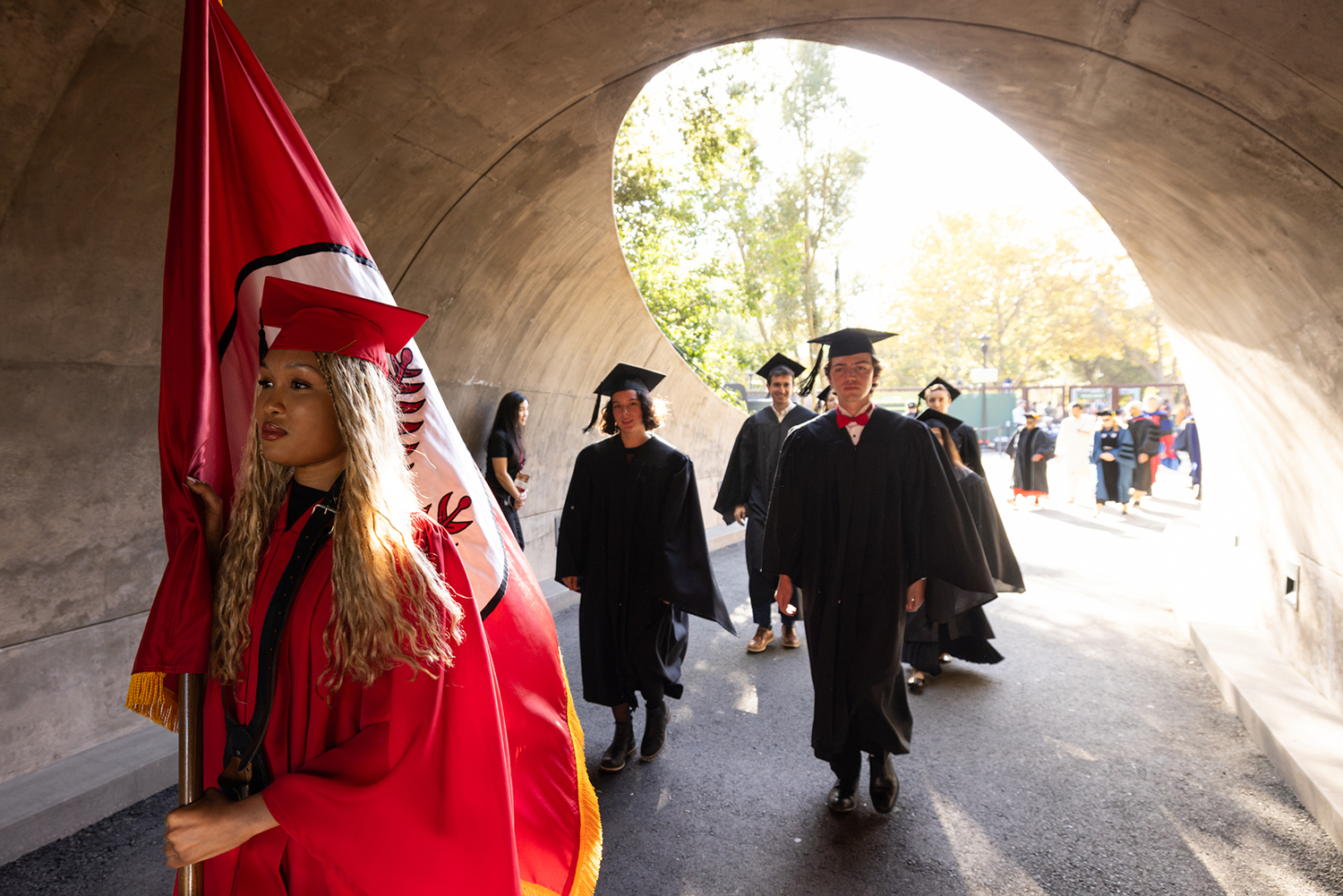
The ceremony begins with a formal procession.
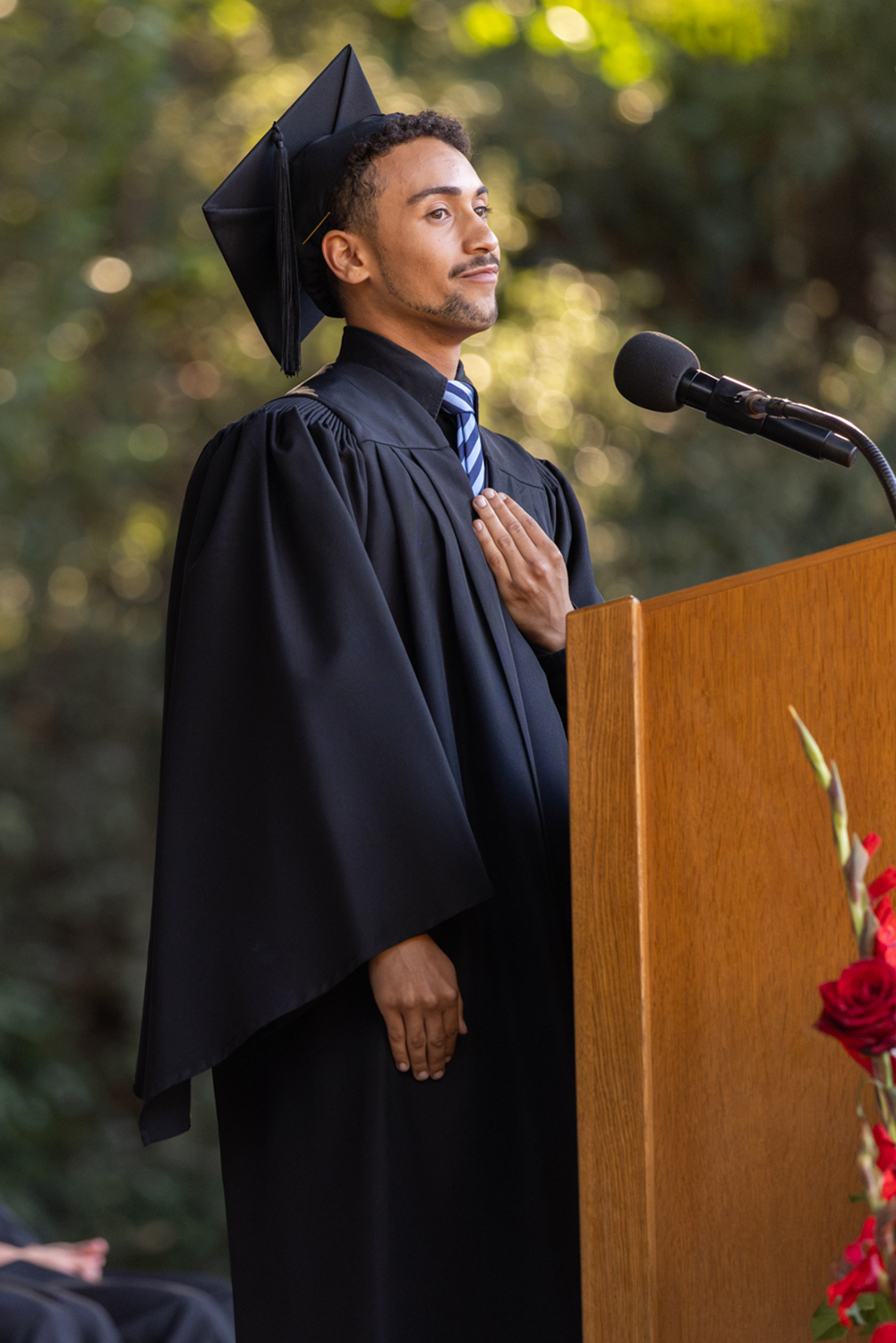
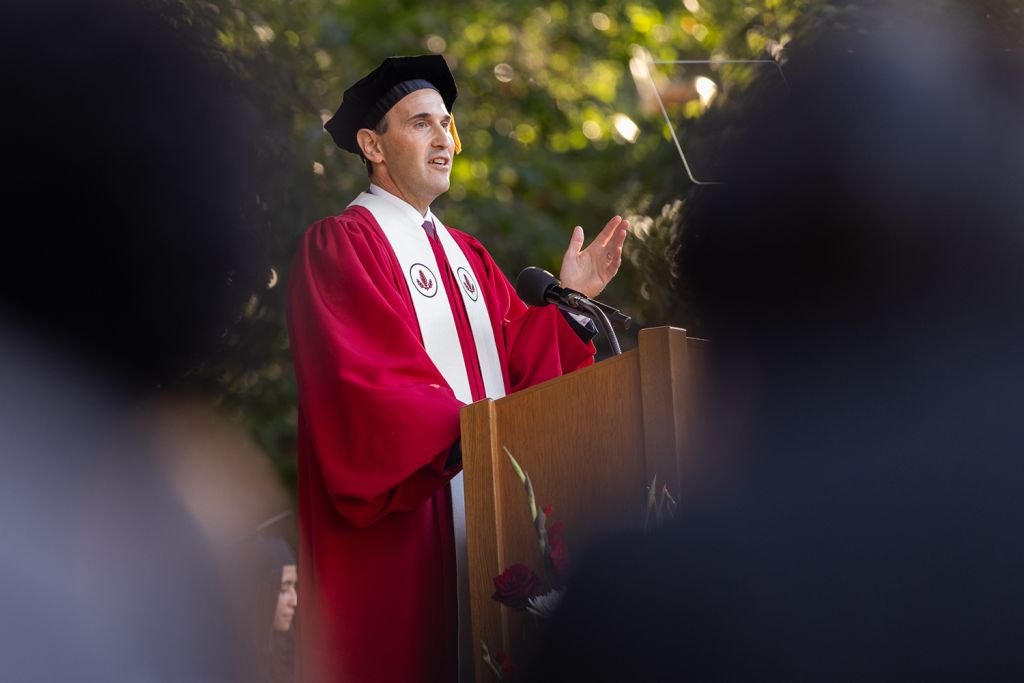
While delivering the student address, senior Bryan Gonzalez shares how he found a community on campus.
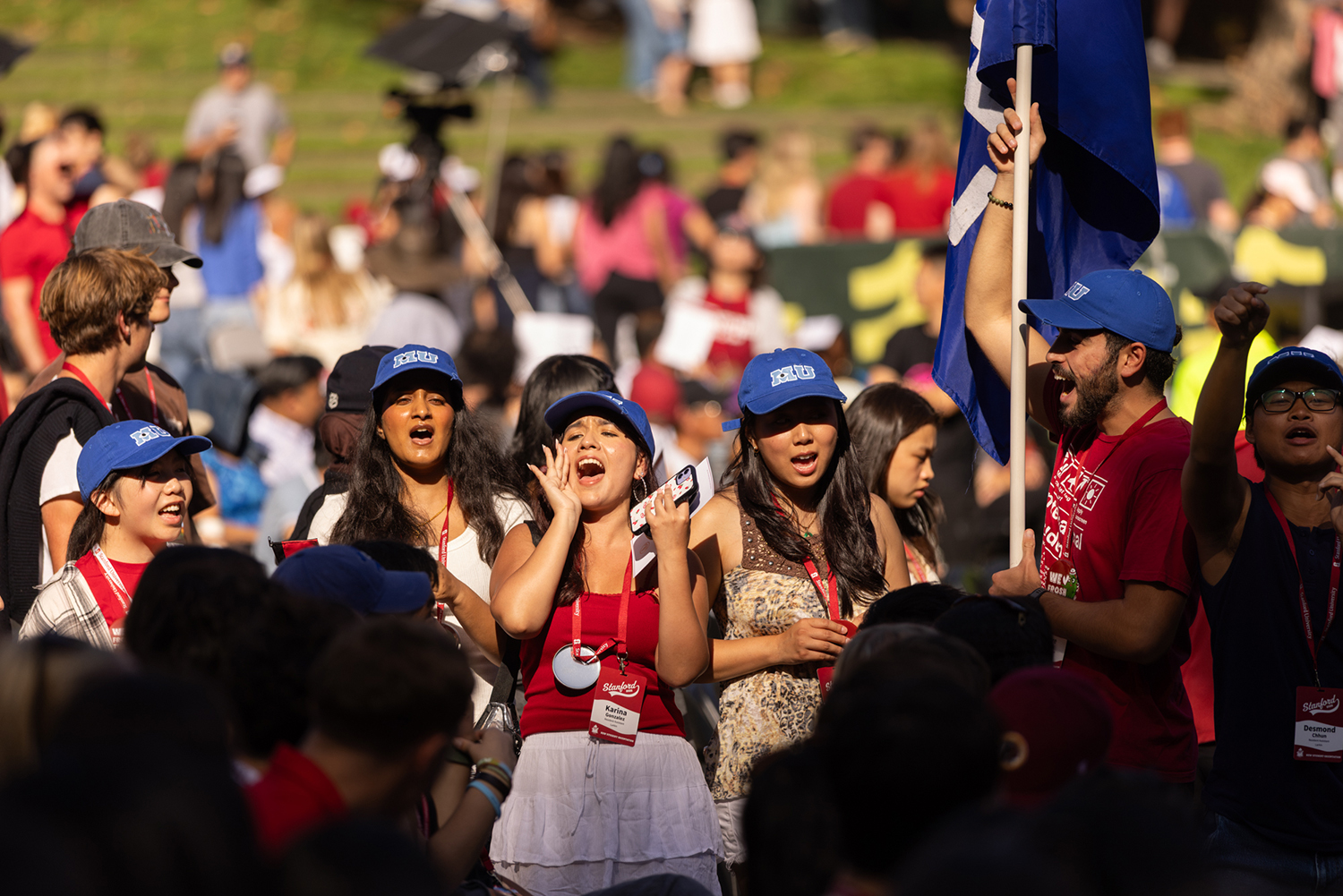
Resident assistants cheer for the new first-year and transfer students.
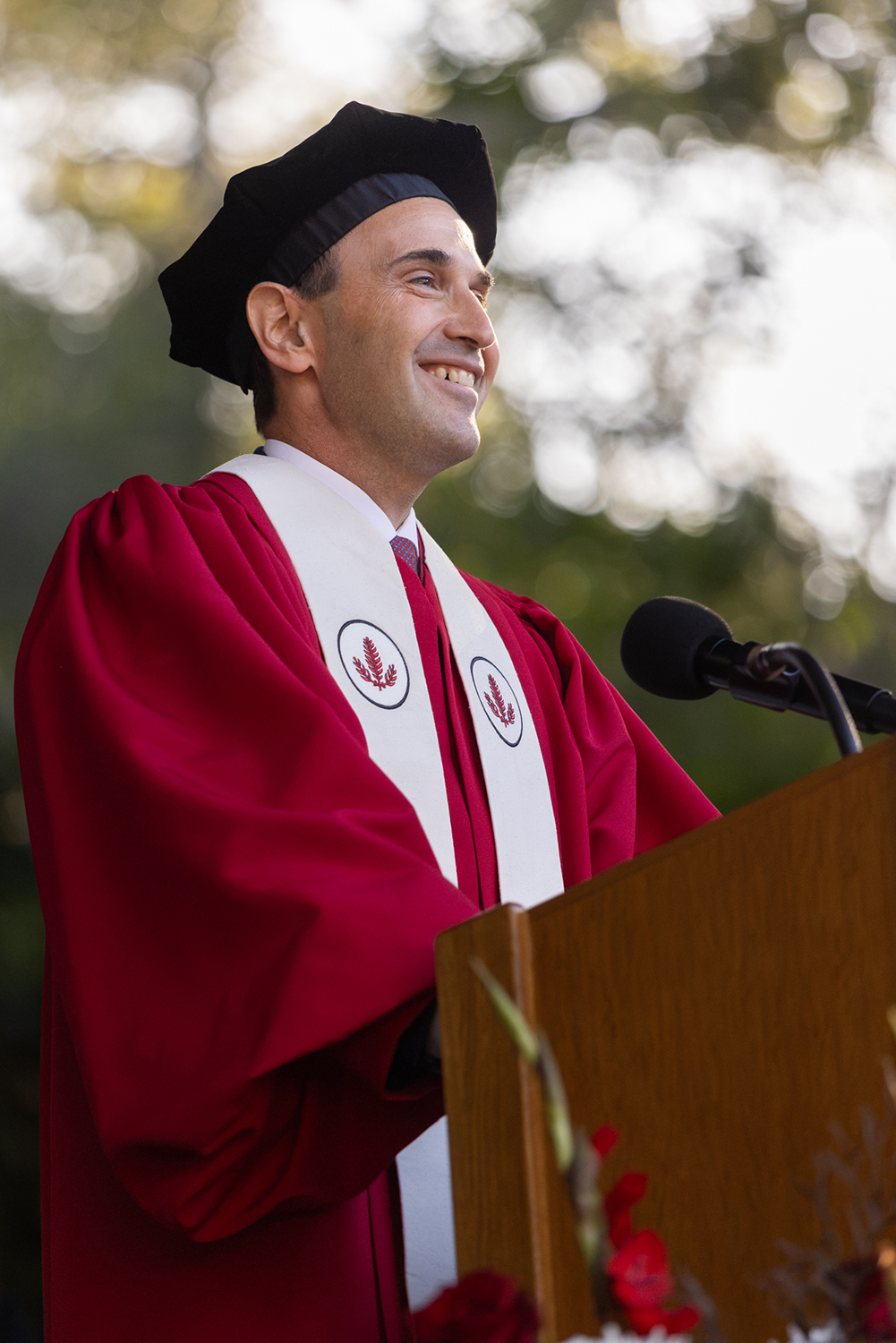
President Jonathan Levin shares what makes Stanford a unique educational experience.
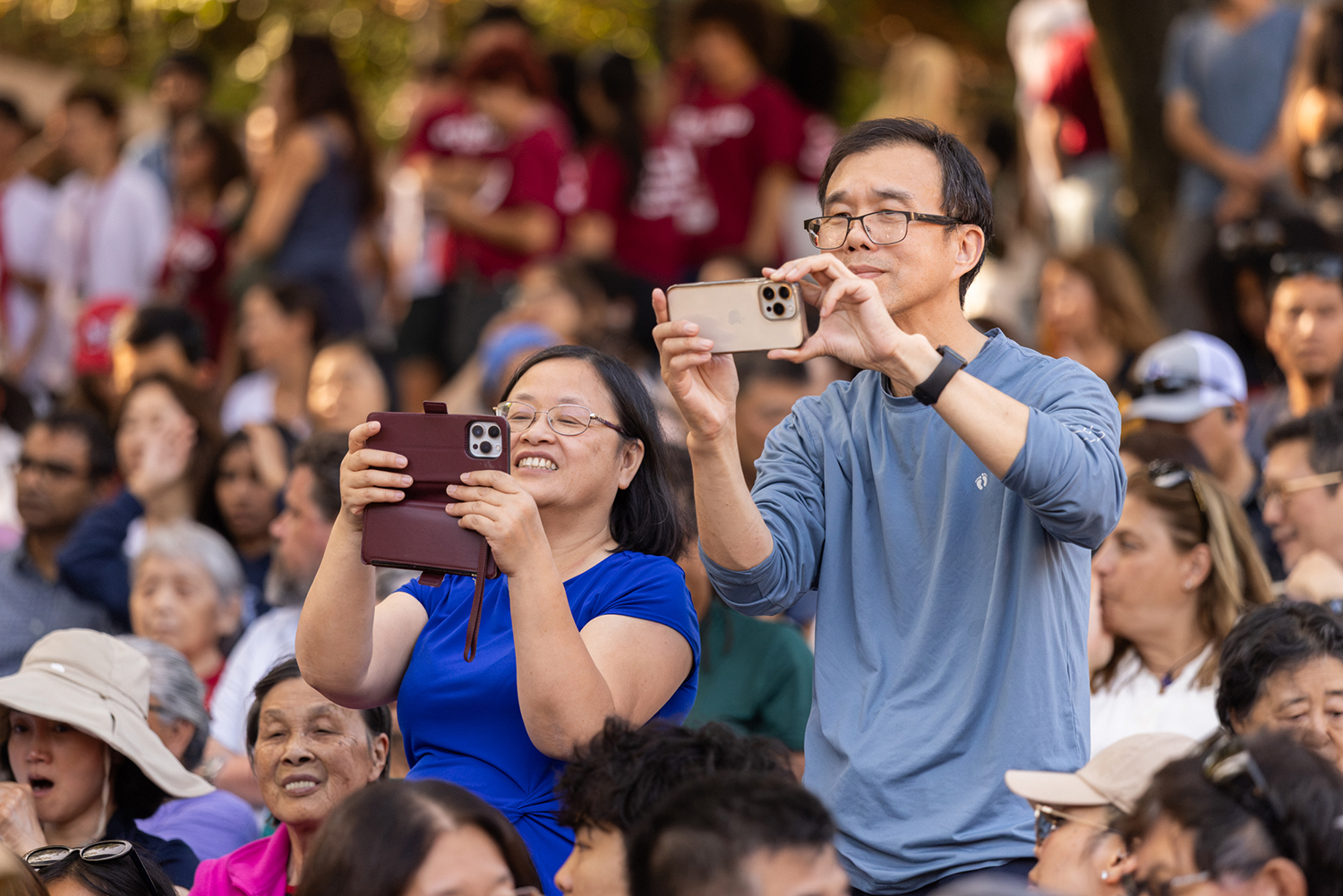
Proud parents photograph their students as they begin their Stanford journeys.
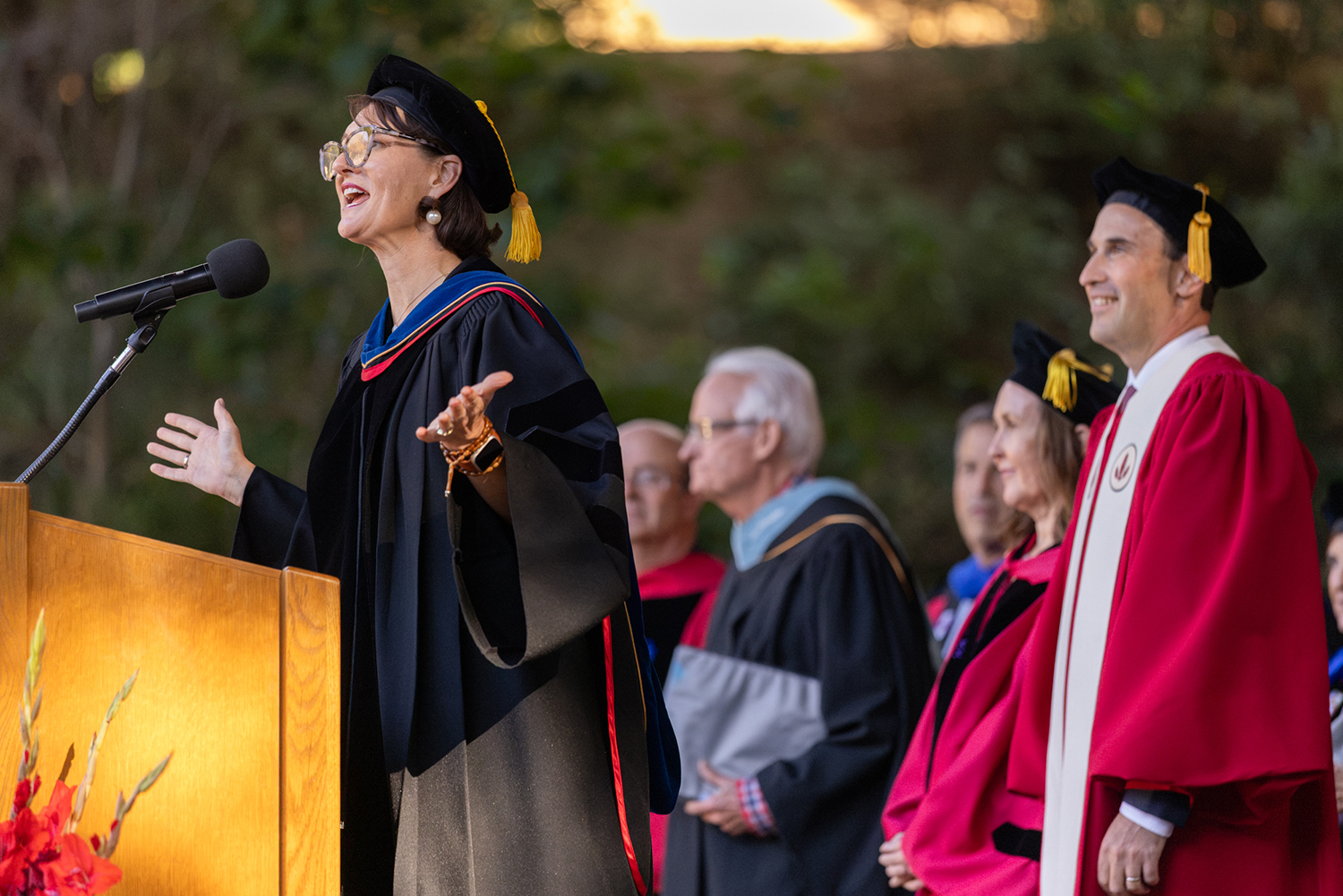
Rev. Dr. Tiffany Steinwert, dean for religious and spiritual life, delivers the benediction.
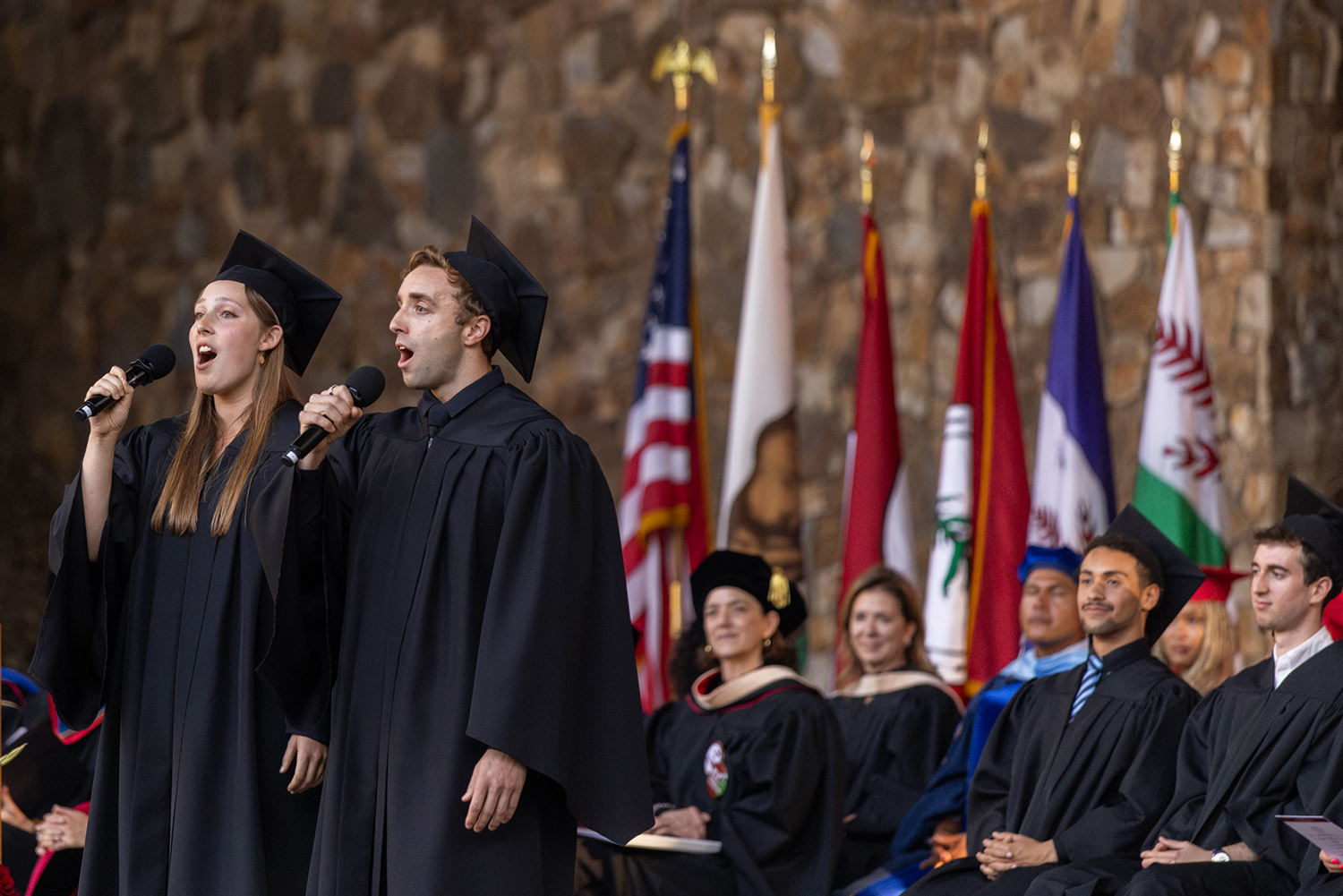
Student soloists Anna Klein, ’28, and Kent Hippler, PhD ’28, perform the Stanford Hymn, “Hail Stanford, Hail!”
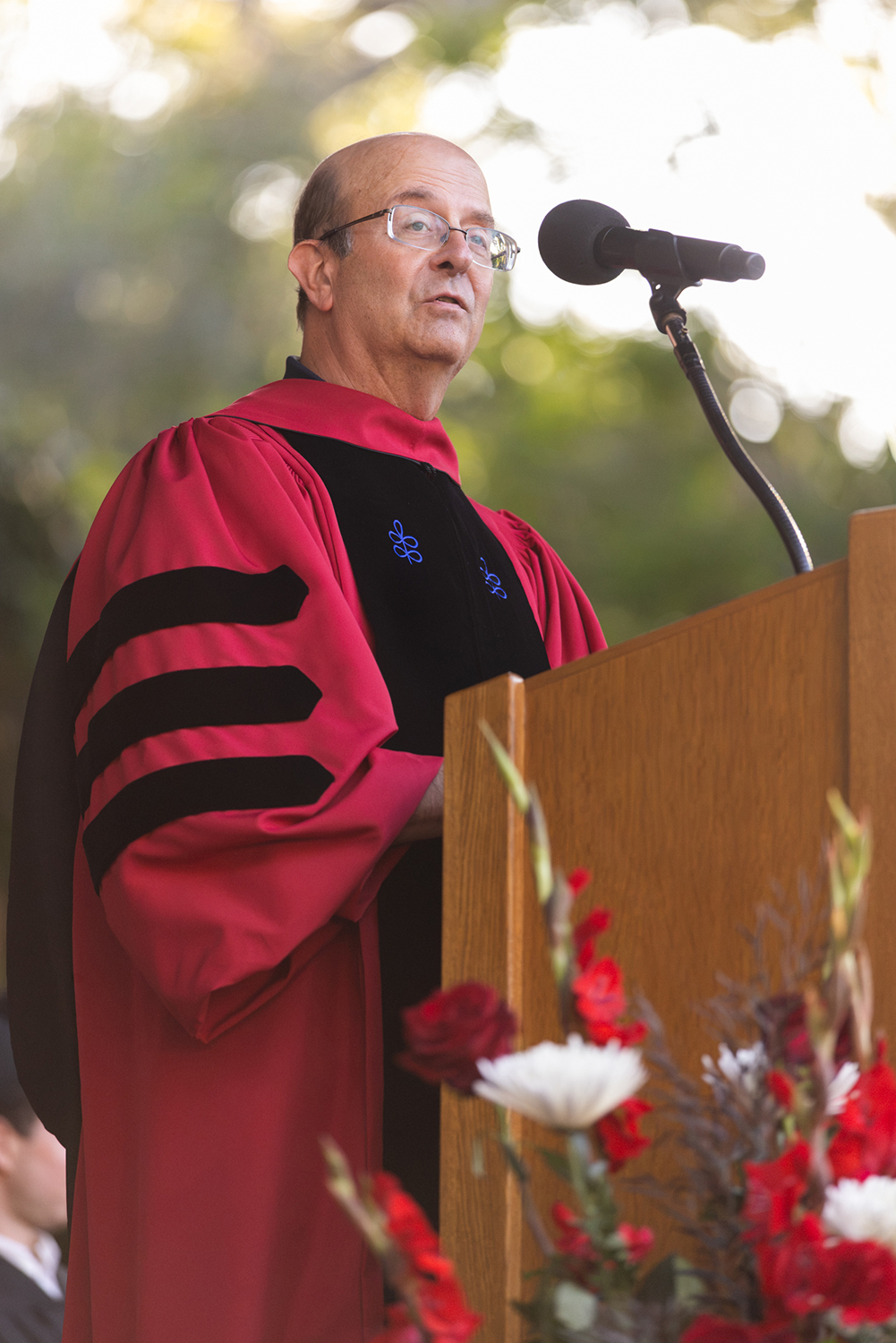
Jay Hamilton, vice provost for undergraduate education, calls on new students to find their fellow “travelers” – those who will help shape their Stanford experience.
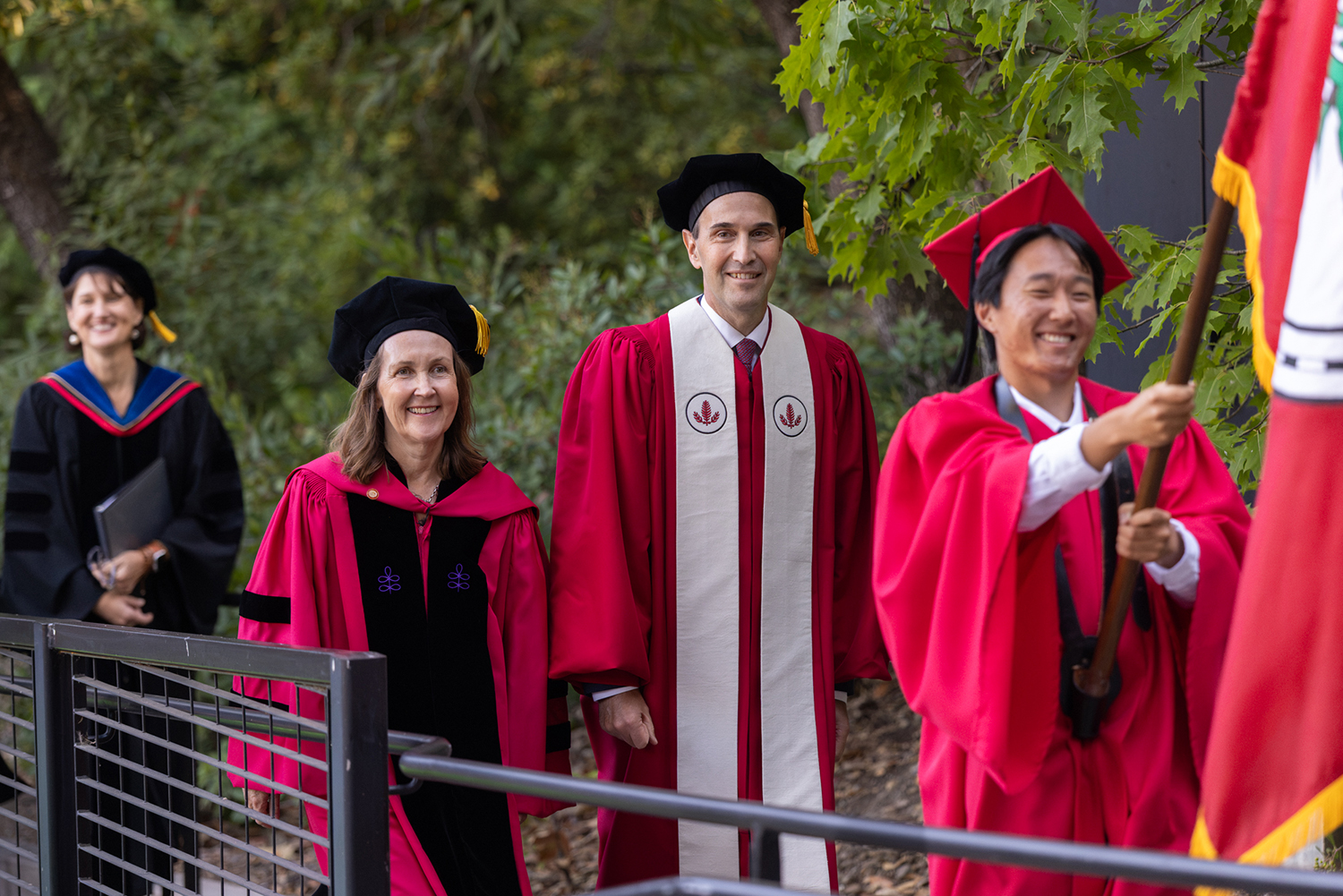
President Jonathan Levin and Provost Jenny Martinez.
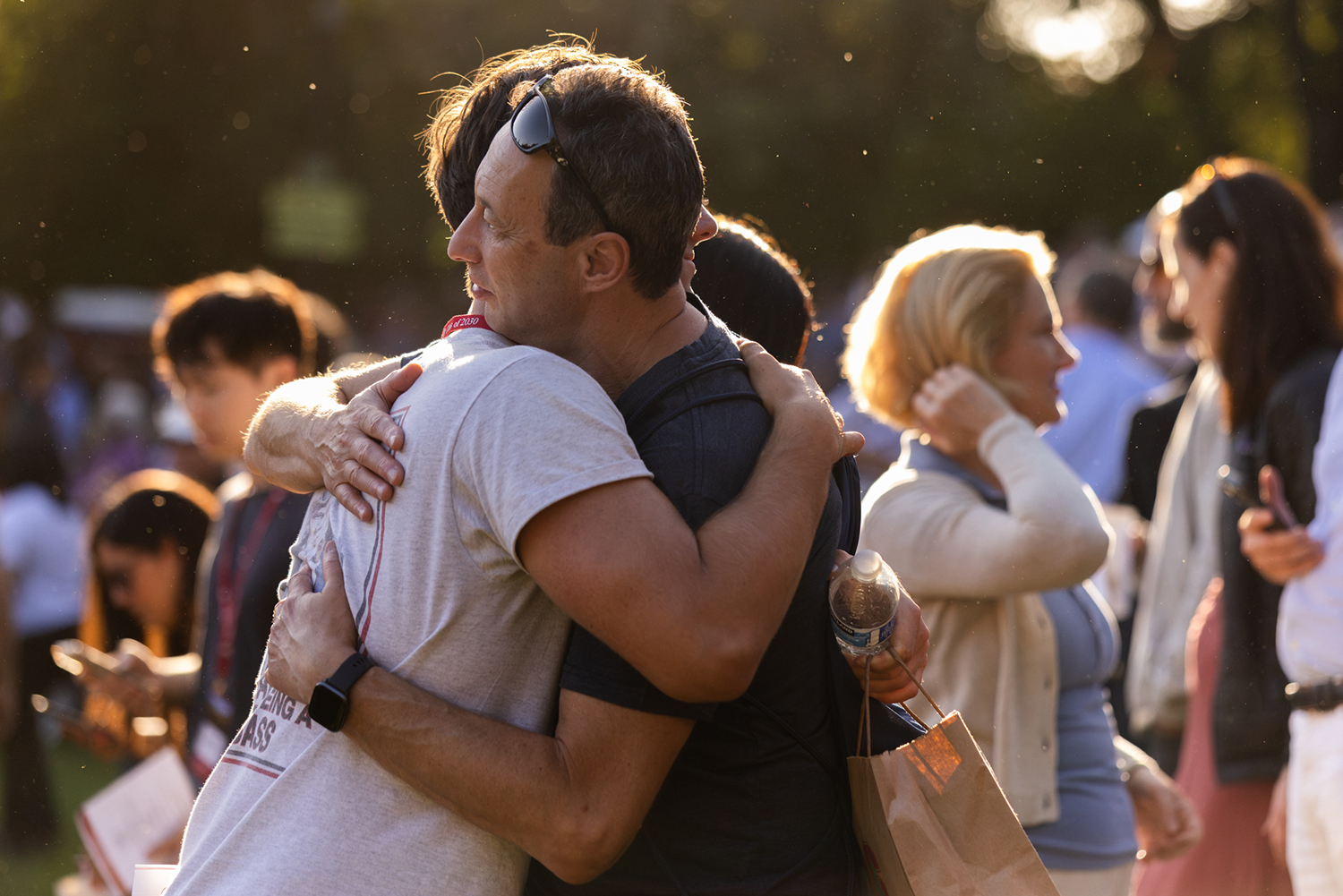
After the ceremony, students say goodbye to their families.
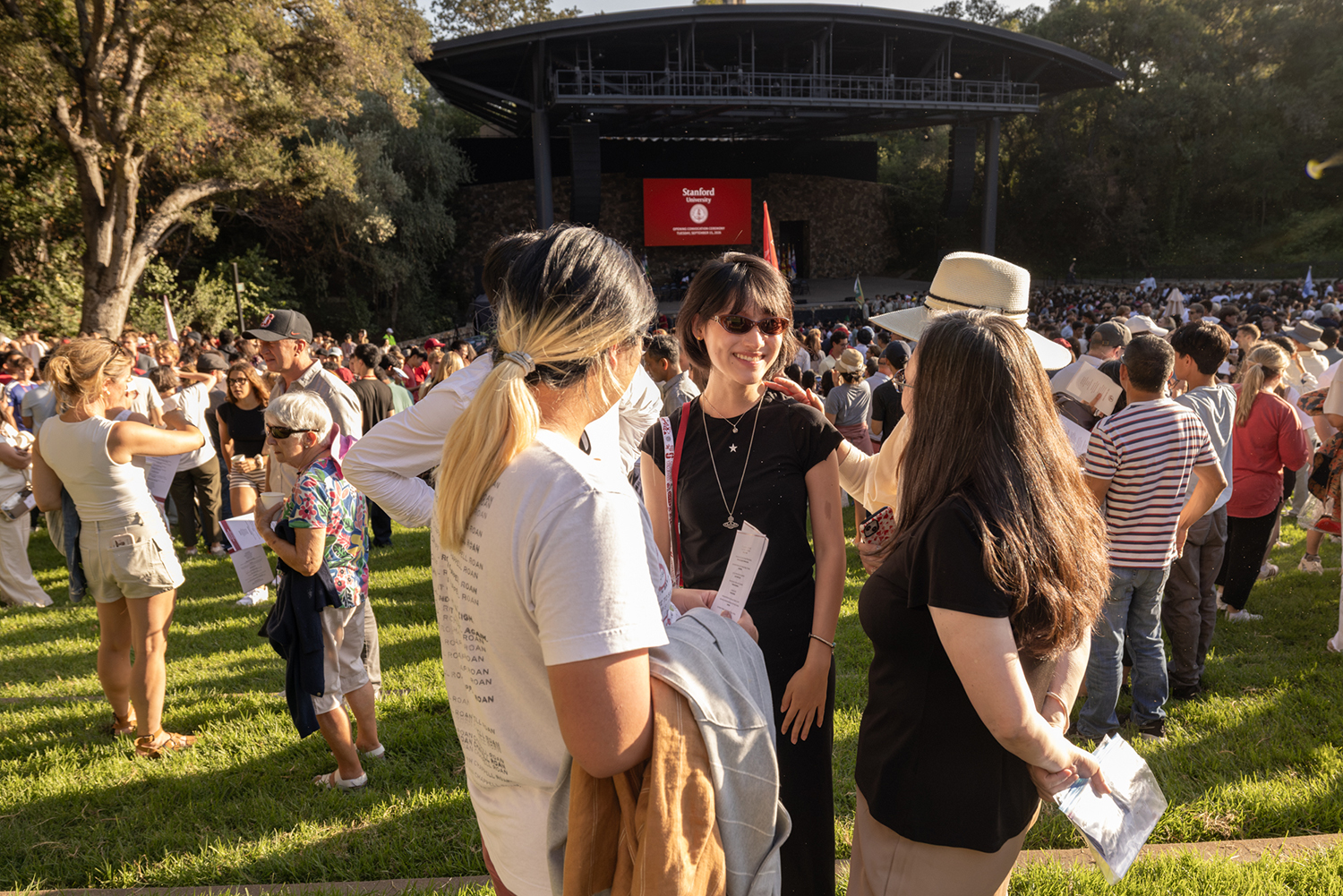
The ceremony brought together thousands of new students, their families, and campus community members to inaugurate the new academic year.
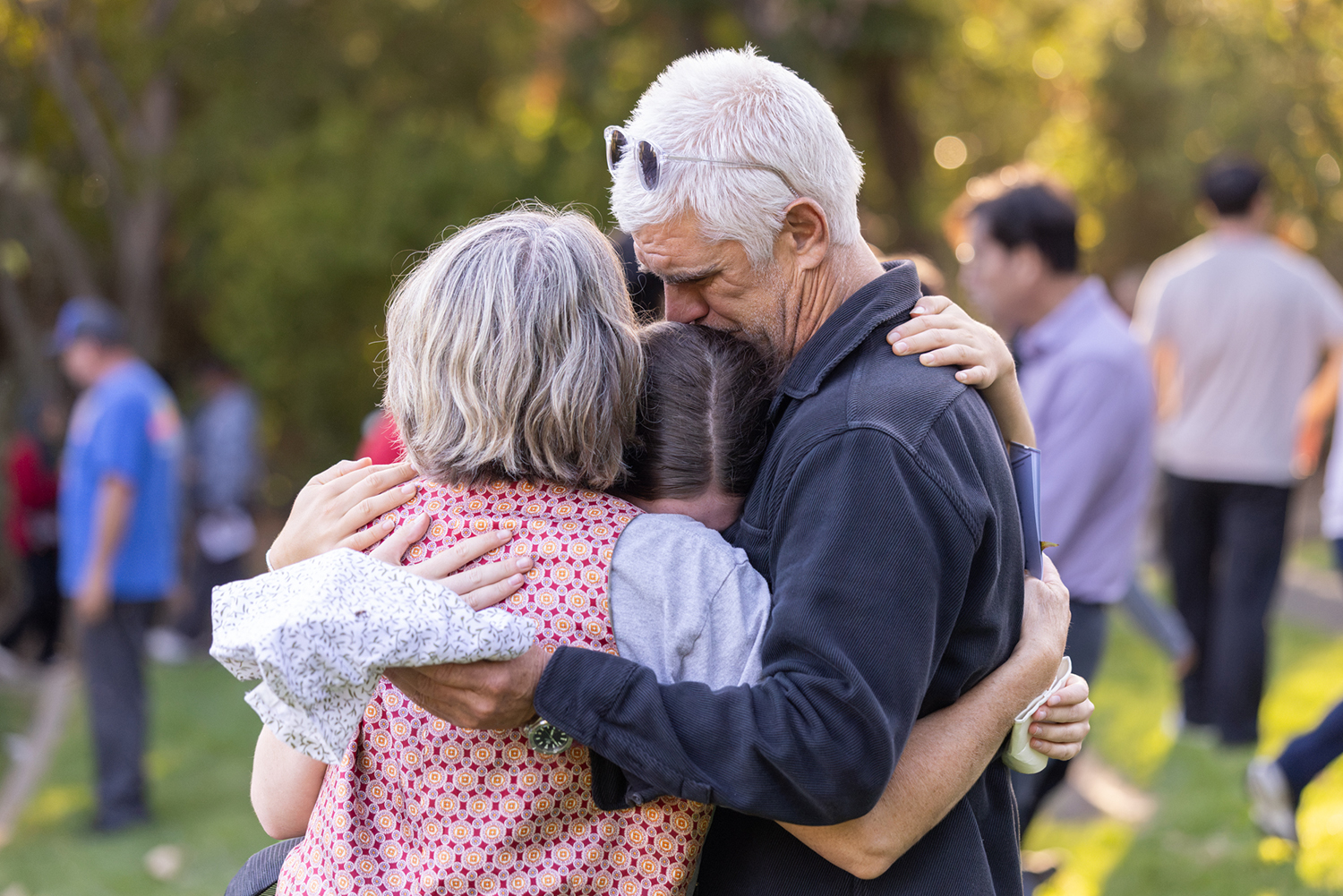
It’s not ‘goodbye.’ It’s ‘see you later’ 🥲.
Embarking on a distinctive education
In his address, President Levin reflected on what distinguishes a Stanford education and how it prepares students for a good life. A key feature is the spirit of exploration, exemplified by the path of alumna Jessica Watkins, one of 27 NASA astronauts who have graduated from Stanford. Watkins arrived at Stanford in 2006 intending to study engineering, but changed her major to geological and environmental sciences. She interned at the NASA Ames Research Center and studied how to grow plants in Martian soil, eventually pursuing a PhD. Today, she is commander of the Crew 13 mission to the International Space Station.
Levin pointed out that while many educational traditions are narrow by design, Stanford is different. “You’re embarking on a true journey of discovery,” he said. “You’ll have the opportunity to take classes and encounter new ideas across many fields, and as you just heard, to change your mind. Changing your mind is a big part of education.”
Another feature he noted is expertise. Studying at a research university means that undergraduates learn from scholars who are experts in their fields, asking questions that push them to explain their work and why it matters. “The exchange runs in both directions,” he said.
He also noted the campus experience and the opportunities presented by shared moments in dorms, dining halls, and rehearsal rooms. “You are a very impressive and wide-ranging class. But that’s not why you’re here. You’re here for who you are going to become, and much of that will be shaped by each other,” he said. “What I hope you will share and embrace is the distinctive culture of Stanford’s campus – the pursuit of excellence, the openness to ideas, and the sense of optimism. At the heart of Stanford’s culture is a belief in our ability to work together and solve problems, a belief that the future is something you build rather than something that happens to you.”
Freedom, dignity, and service
Levin closed by offering new students three pieces of advice. First, he encouraged them to explore fearlessly and with intention. Second, as students encounter people with beliefs different from theirs and ideas they don’t agree with, he urged them to ask questions and be curious rather than judgmental. “The culture of the campus is, in some ways, defined by these moments,” he said.
Finally, he encouraged students to embrace their new roles as Stanford students “with humility and with a desire to serve others.”
“Be expansive in your curiosity, in your exploration, and in your contributions,” he said. “I can’t wait to see what you do with your time here, and where in the stars it will take you.”
Space to grow
While delivering the student address, senior Bryan Gonzalez recalled arriving at Stanford from West Frankfort, Illinois. It was the farthest he’d ever been from his hometown and his family. But once he found out Stanford’s nickname is the Farm, he said, he knew he belonged.
“As a small-town boy, I know farms. On a farm, things are planted, they’re nurtured, and they’re given space to grow, and I was able to find Stanford as a place where we could all grow together.”
He recalled finding a community through off-campus adventures with friends and late-night talks with roommates. After changing his major six times, he also found an academic community while taking Professor Judith Richardson’s course on American literature, which inspired him to major in English and education. “I not only found my academic home, but a mentor for my honors thesis and a trusted friend,” he said.
“The Farm has nurtured me and helped me thrive,” he added. “As I enter my senior year, I am still in awe at the community that surrounds me and takes the time to get to know me for who I really am.”
Class snapshot
On Tuesday, Stanford welcomed 1,950 new students, 1,872 of whom are first-year students in the Class of 2030 representing all 50 states and 72 countries, while another 78 are transfer students from 65 colleges and universities, 26 of which are community colleges.
The new students arrive from small towns, big cities, and suburbs, with 13 percent from outside the United States. They speak 80 unique languages other than English in their households.
Sixty-five percent of the domestic first-year class attended public schools, and the remainder attended private, parochial, and home schools. Among all new first-year and transfer students, 19 percent are the first in their family to attend a four-year university, and 10 students are military veterans.
A livestream recording of Tuesday’s Convocation ceremony is available to watch online.
Writer
Alex Kekauoha
Videographer
Kurt Hickman