In brief
- Increasing mountain lion presence in a small preserve led to reduced deer activity, potentially allowing plant species, including oaks, to thrive.
- The research also showed mountain lions influenced the behavior of smaller predators such as coyotes and bobcats.
- The evidence of this “ecology of fear” effect illustrates the ecological value of apex predators as well as small preserves.
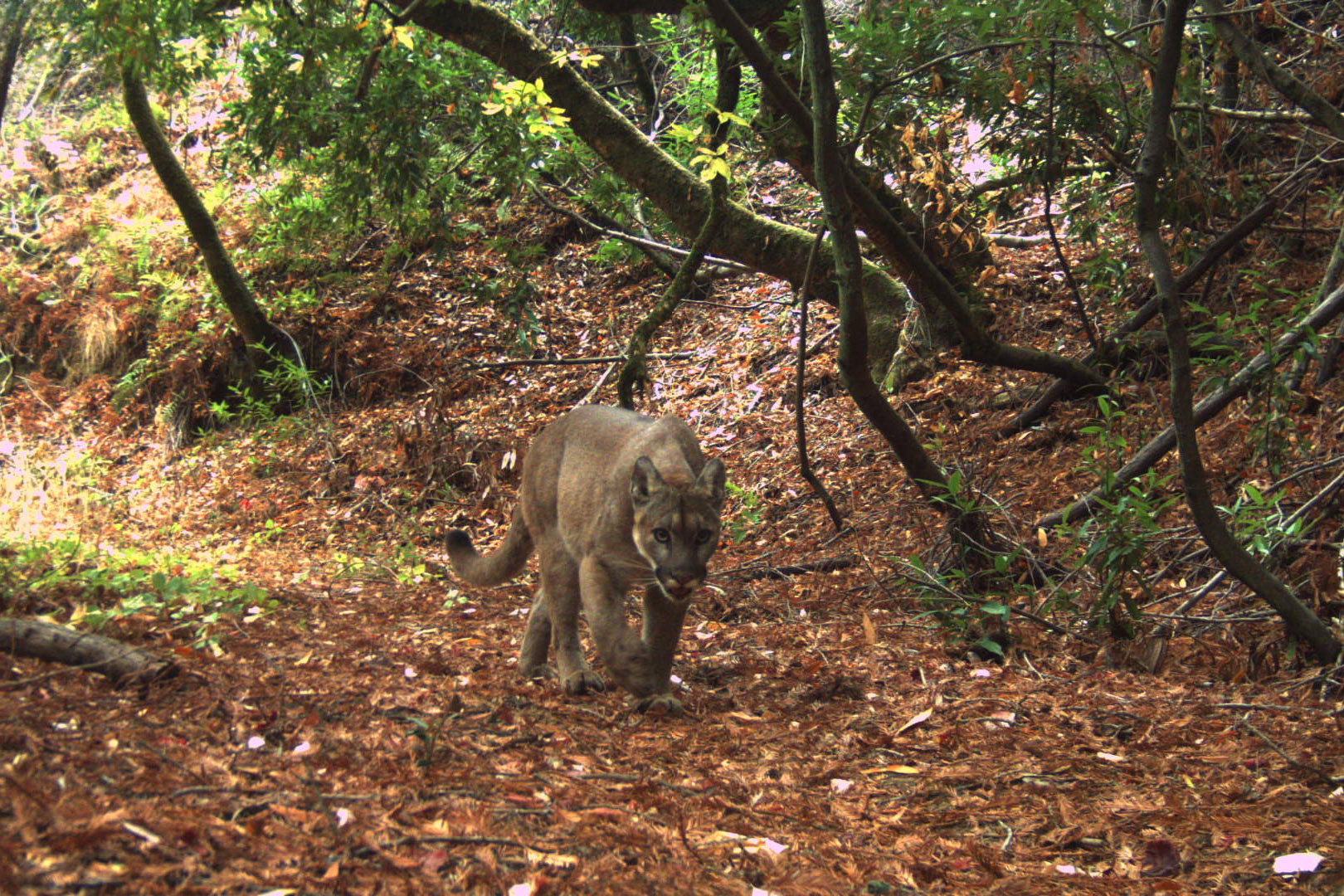
Big cats have a big impact. A long-term study showed that when mountain lions began regular visits to a small, suburban preserve about 45 miles south of San Francisco, it changed the behavior of many other animals.
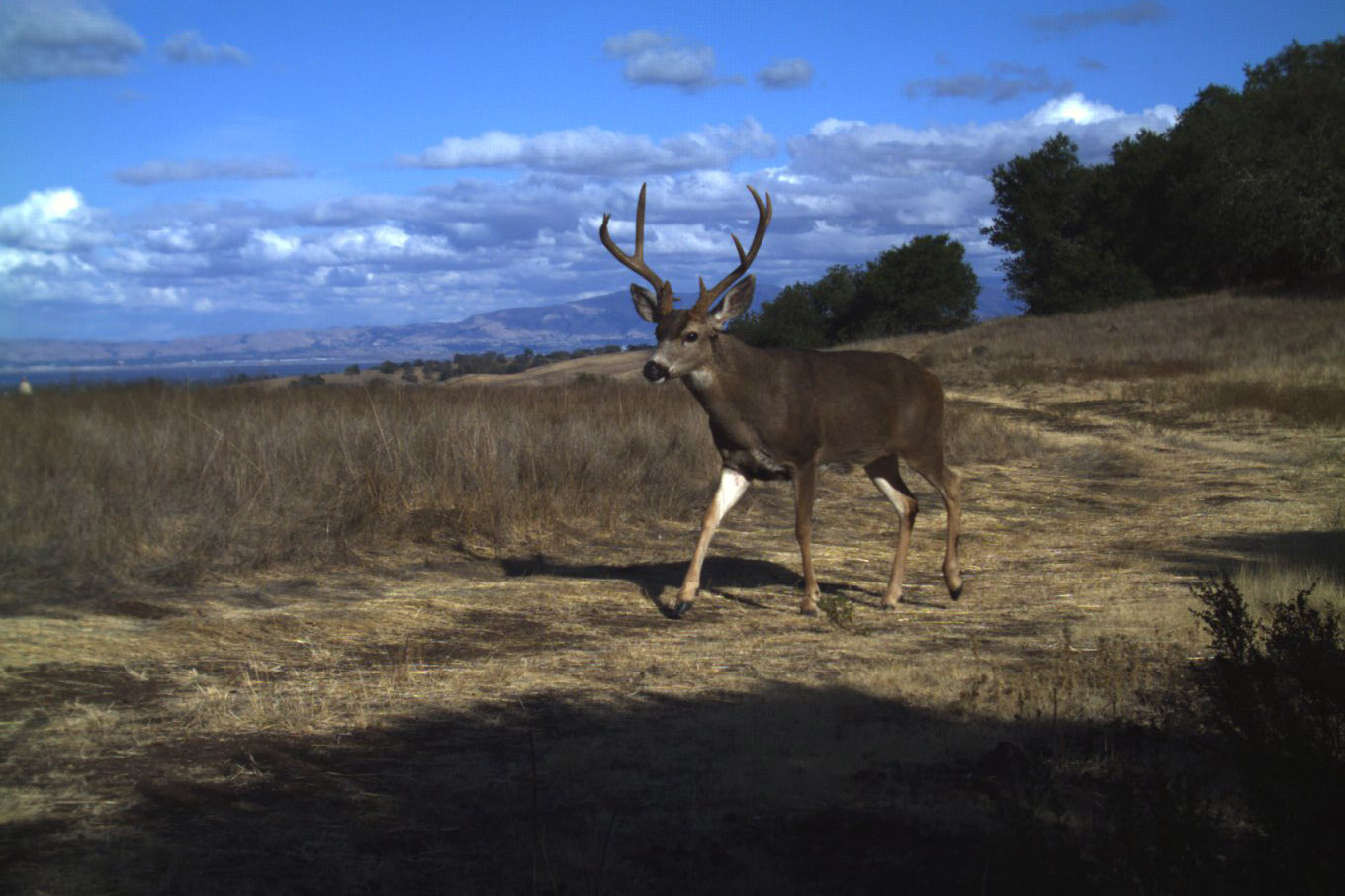
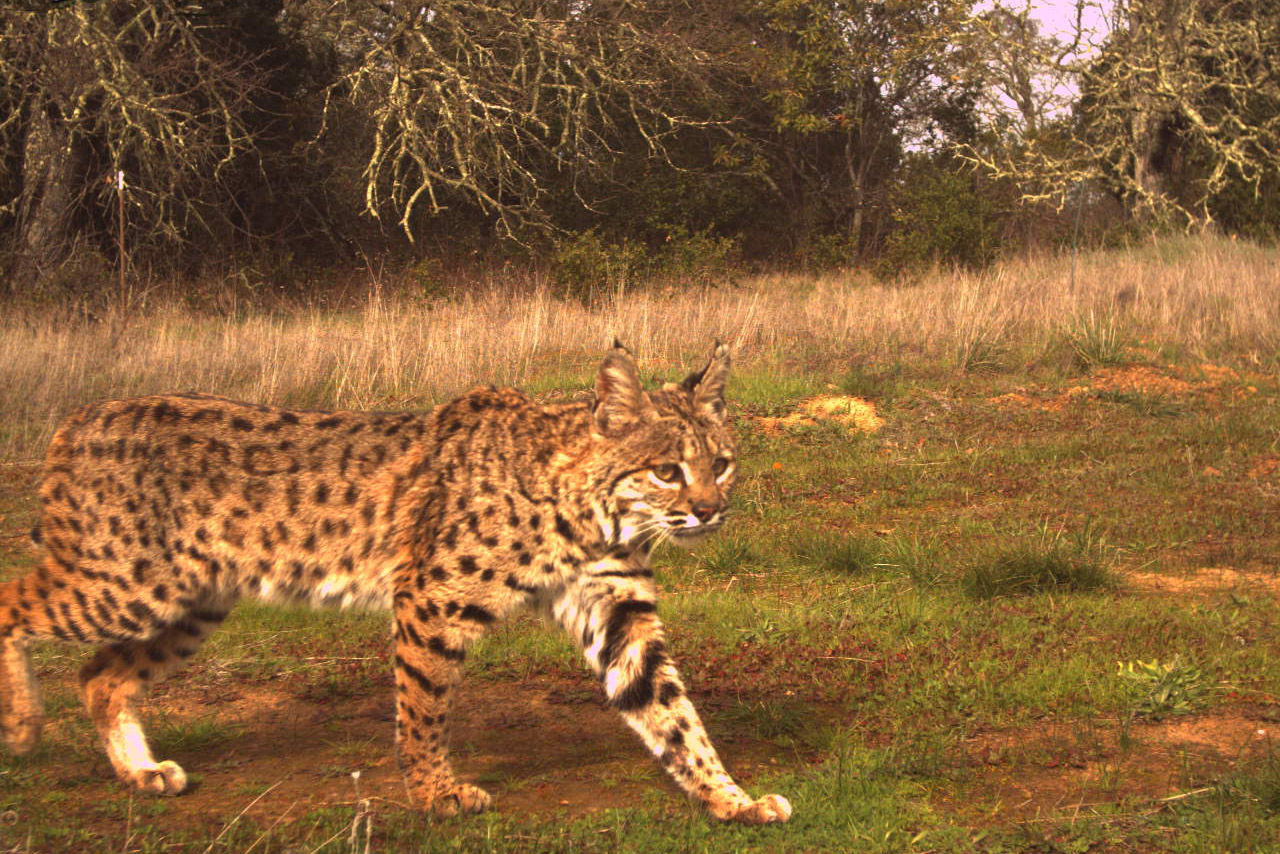
Mountain lions (Puma concolor) started appearing with increasing frequency on trail cameras at Stanford’s Jasper Ridge Biological Preserve ('Ootchamin 'Ooyakma) from 2015 to 2020. Researchers documented a corresponding drop in deer activity compared to the prior years of lower or absent puma activity. Vegetation surveys also showed that many woody plants deer like to eat or tend to trample, including young oak trees, began to thrive.
These types of multi-level effects, called trophic cascades, have been studied primarily in large wilderness areas, particularly cascades caused by apex predators such as wolves reintroduced into Yellowstone National Park. This research, published in Ecology and Evolution, indicates the effect can be found in smaller preserves as well.
“In the past, small preserves like Jasper Ridge have often been dismissed for holding very little ecological value, but this study shows that when these small preserves are connected to large wilderness like the Santa Cruz Mountains, you can still see magnificent ecological phenomena like trophic cascades,” said Chinmay Sonawane, the study’s first author and doctoral student in biology in Stanford’s School of Humanities and Sciences (H&S). “They are not just things that happen in places like Yellowstone far away from the city and people. They can happen in these places that are quite small and more urban as well.”
The ecology of fear
The researchers analyzed data from motion-activated cameras and vegetation surveys and found two types of trophic cascades: a tri-trophic cascade linking mountain lions, deer, and vegetation, and another involving smaller predators at Jasper Ridge. For the second, increased puma presence was associated with decreases in the activity of coyotes and bobcats, which were perhaps leaving the area or changing the time they are active to avoid the much larger pumas.
With fewer coyotes and bobcats on the landscape, foxes appear to have seized an opening and were seen more often, which then may have suppressed the activity of their primary prey: rabbits.
These patterns involving an apex predator have been called the “ecology of fear,” since the mere perception of a large predator can cause other animals to change their behavior, which then affects the other organisms that they rely on for food.
In this study, the findings at the lower level of the cascades – the indirect influence of mountain lions on vegetation, foxes, and rabbits – are considered provisional, as other influences such as changes in fog and temperature could not be ruled out.
Yet the mountain lion presence had a clear impact on deer, coyotes, and bobcats – and therefore, on the ecology of Jasper Ridge, underscoring the role both of apex predators and small preserves. In the U.S., 82% of protected areas are under 5 square kilometers (about 2 square miles), so they will likely be critical spaces for wildlife and plants as rapid urbanization continues, said Rodolfo Dirzo, study co-author and Stanford professor of biology in H&S.
“Maintaining sites where there is an entire community of animals, from predators to prey to the prey’s resource base, is very important,” he said. “When one piece is missing – and it’s typically the top predators that require larger areas and are more sensitive to human impact – we will no longer have fully functioning ecosystems.”
Mystery of mountain lion motivations
Why the mountain lions started to frequent Jasper Ridge is unknown. One theory is that the female mountain lions found the preserve to be a safe place to raise their young, as a mom with kittens has been spotted on camera during the study. Whatever the reason, they are only visitors. Mountain lions have a huge range in the Santa Cruz Mountains from 20 to 170 square kilometers (about 8 to 66 square miles). Jasper Ridge is far too small to have its own puma population.
Despite the occasional high-profile sighting of a mountain lion in San Francisco or in the suburbs, they tend to stay far away from humans, said Elizabeth Hadly, the study’s senior author and Stanford professor emerita of biology in H&S. They are also nocturnal, so they are not often on the landscape when people are active.
“Pumas are afraid of our smell and our sounds; they don’t like to see us moving,” said Hadly, who is also the former faculty director at Jasper Ridge. “Pumas use all of their senses to avoid humans.”
Humans are the No. 1 cause of mountain lion deaths, either through hunting or car accidents, Hadly pointed out.
“Clearly, we exert our own ecology of fear,” she said. “Humans are the ultimate predator on almost every landscape.”
For more information
Dirzo is also the Bing Professor in Environmental Science at Stanford’s Department of Biology in H&S, a professor of Earth system science in the Stanford Doerr School of Sustainability, and a senior fellow at the Stanford Woods Institute for the Environment.
Hadly is also the Paul S. and Billie Achilles Professor in Environmental Biology, Emerita, in H&S; professor emerita of Earth system science in the Doerr School of Sustainability; member of Stanford Bio-X; and senior fellow at the Woods Institute.
Additional Stanford co-authors include Trevor Hébert, academic technology specialist at Jasper Ridge; Kevin Leempoel, a former postdoctoral scholar in biology; Nicole Nova and Jordana Meyer, both former biology doctoral students; and Amelia Zuckerwise, a former undergraduate student in biology.
This research received support from the National Science Foundation.
Media contact
Sara Zaske, Stanford School of Humanities and Sciences: 510-872-0340, szaske@stanford.edu
Writer
Sara Zaske