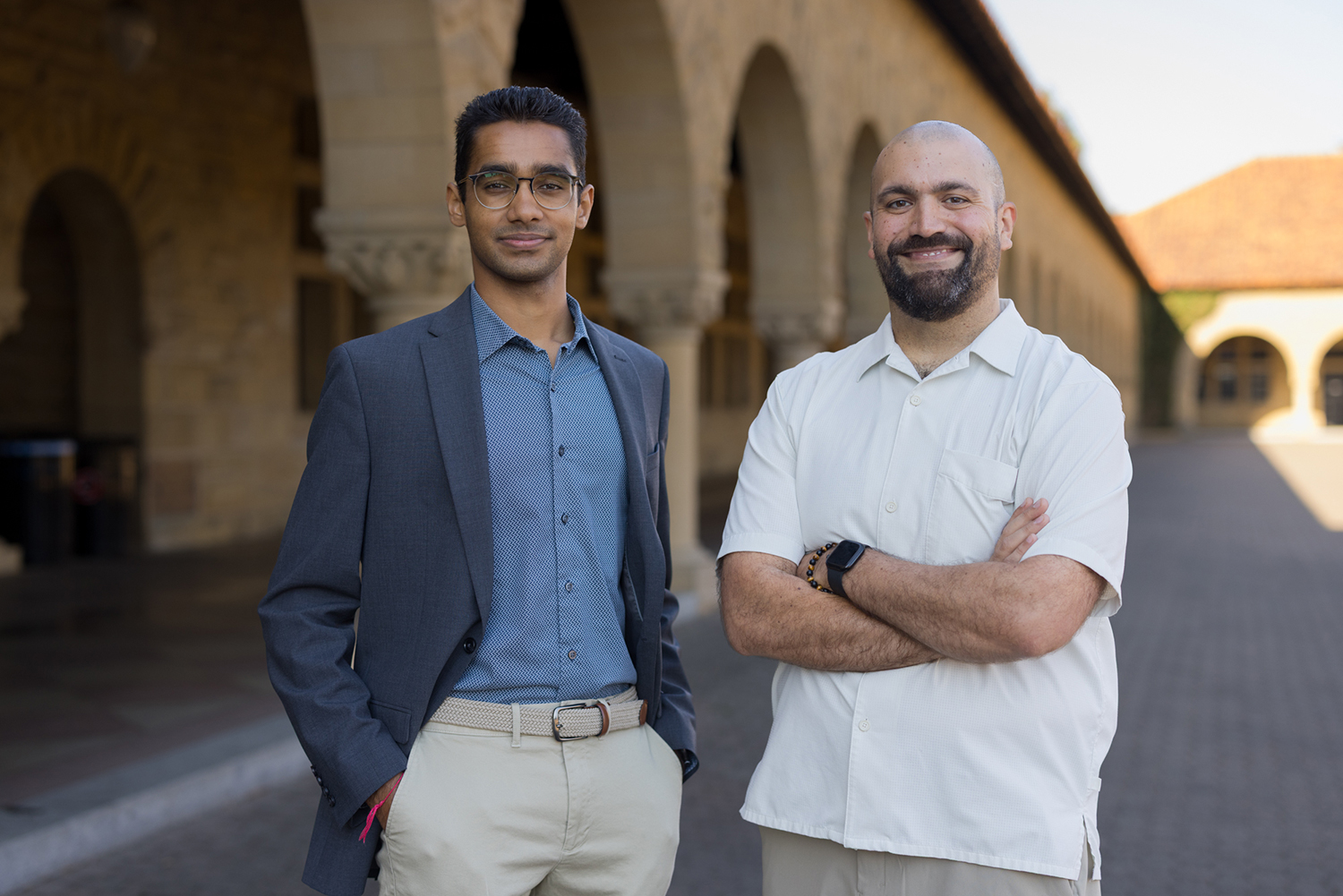
Physics Professor Sarah Church, shown here in a file photograph, talked about proposed changes to policies governing coterminal degrees at Thursday’s Faculty Senate meeting. (Image credit: L.A. Cicero)
The Faculty Senate on Thursday approved new policies governing coterminal master’s degrees, including provisions regarding eligibility requirements, leaves of absence, degree progress and advising, and rights and responsibilities of departments.
The senate also adopted a policy to allow the director of the SLAC National Accelerator Laboratory to approve SLAC distinguished and senior staff scientists to be principal investigators on non-Department of Energy-funded research proposals.
Coterminal master’s degrees
Stanford allows undergraduate students who are accepted to master’s programs to pursue both degrees simultaneously for some or all of their studies.
About 25 percent of each class elects to pursue coterminal master’s degrees.
Physics Professor Sarah Church, chair of the Committee on Undergraduate Standards and Policies, told the senate that most coterminal students earn master’s degrees in five years, though some complete the degrees in four.
The senate approved proposed changes that establish new policies, affirm some existing policies and clarify others. They also approved an amendment to the proposal that said:
“Individual departments have the discretion to relax the quarters back rule and set their own policy regarding counting of courses, provided that no student counts a course taken earlier than the fall quarter of sophomore year. The departmental policy must be clearly stated in the appropriate section of the Stanford Bulletin.”
Under the “quarters back” policy, coterminal students are permitted to count coursework taken prior to their first graduate quarter toward their graduate degree, subject to certain conditions.
Among the new coterminal policies:
- An undergraduate applying for a coterminal master’s degree program must have completed six non-summer academic quarters – or two quarters for transfer students – and 120 units. The student must have declared an undergraduate major.
- Coterminal students are permitted to request a leave for the first quarter of a graduate program with the approval of both the graduate and undergraduate departments.
The new policies will take effect Sept. 1, 2015. Students admitted to master’s programs before then will be governed by existing rules, but may petition the Committee on Graduate Studies Subcommittee on Exceptions to be considered under the new rules for situations in which that would be advantageous.
Principal investigators at SLAC
The senate approved a policy to allow the director of SLAC to approve SLAC distinguished and senior staff scientists to be principal investigators (PIs) on non-Department of Energy-funded research proposals.
SLAC is a national laboratory of the U.S. Department of Energy, which is operated by Stanford under contract with the federal agency.
“It has been a tremendous benefit to the academic research programs of this university,” physics Professor Peter Michelson told the senate during his presentation on the proposal. “It’s a synergy nurtured by people on campus and by the director of SLAC.”
SLAC distinguished and senior staff scientist positions are reserved for individuals who have achieved recognition of research leadership nationally or internationally.
The policy was approved on a trial basis in 2010, and the Committee on Research annually reviewed the implementation of the program and assessed its impact.
Michelson said the committee unanimously endorsed the proposal.
The new policy will be added to Stanford’s Research Policy Handbook, a collection of policies, guidelines and general information related to its research enterprise.
The amendment says requests to allow SLAC distinguished and senior staff scientists to be principal investigators are subject to the following conditions:
- The proposed research must be judged by the SLAC director to be programmatically relevant to SLAC’s mission.
- The proposed research must be carried out on the SLAC site and not require utilization of space on the Stanford campus.
- A member of the Academic Council must serve as mentor for any Stanford graduate students or postdoctoral scholars involved in the proposed research.
- The research must be conducted in accord with the university’s policies concerning the conduct of research and approved PIs must receive PI training.
The full minutes of the Feb. 19 meeting will be posted on the Faculty Senate website as they are available. The minutes will include the question-and-answer session that followed the presentations. The last senate meeting of winter quarter will be held March 5.
Author
Kathleen J. Sullivan