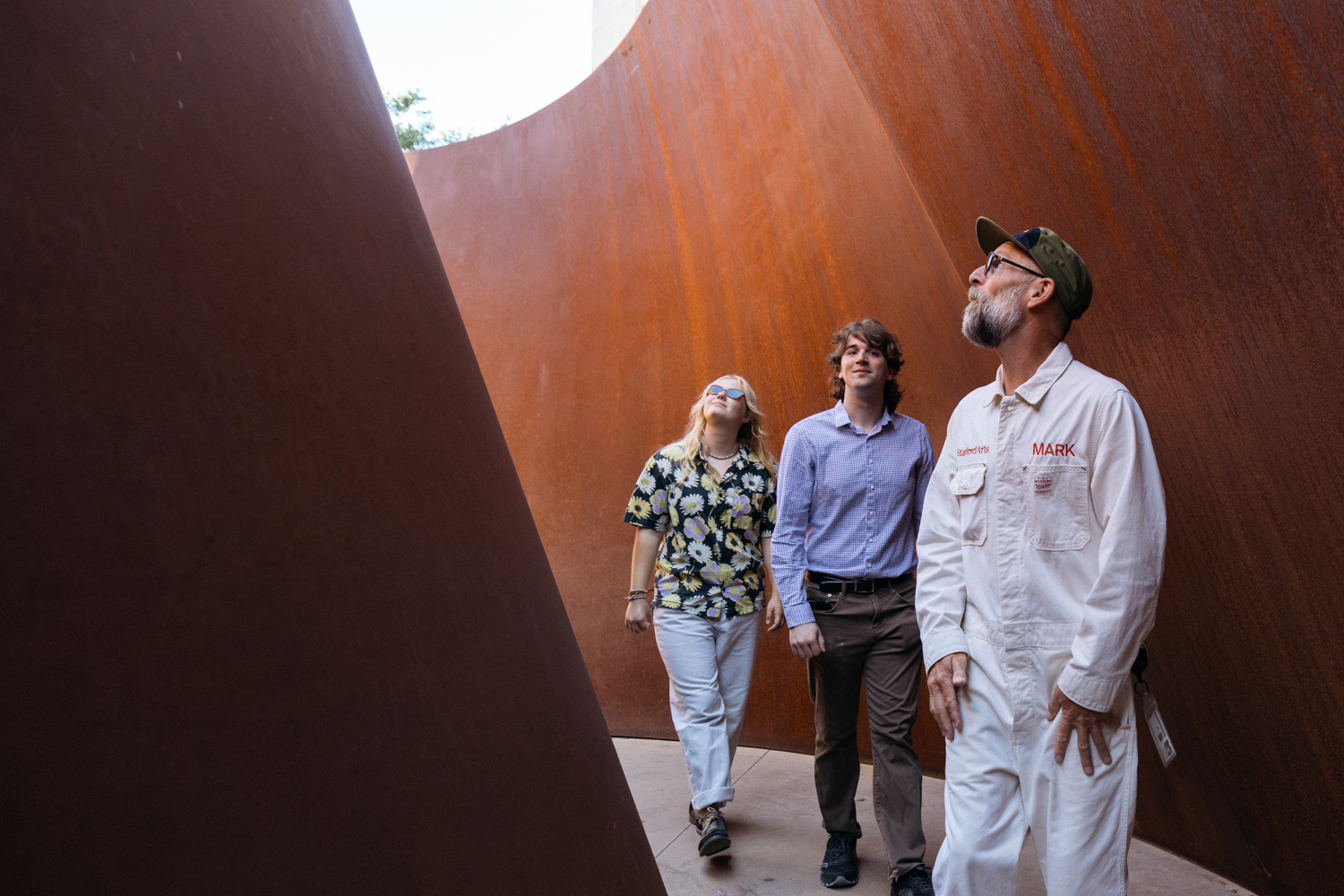
Once a month, at around 7:30 in the morning, Mark Shunney pressure-washes Richard Serra’s Sequence. The 235-ton steel sculpture needs to be sprayed regularly with plain water to encourage the growth of the specialized alloy’s protective orange patina. Standing at the center of the colossal work with the light cutting through the mist, Shunney said, is “like being inside of a sundial.”
More than 80 works of art spanning three centuries are accessible to the public on the Stanford campus. Shunney, a sculptor and conceptual artist, was the Anderson Collection’s exhibition designer and museum preparator for six years before being appointed public art program manager in 2024.
The role is part of a new phase of the university’s public art program focused on preserving and helping the community engage with the existing collection, and collaborating across campus on new commissions. “Stanford’s public art is decentralized over different parts of campus and in different schools, and we wanted to get a handle on all of it together and make sure we’re investing in its care,” said Anne Shulock, assistant vice president for the arts. “When you accept a work of art, it’s a long-term commitment.”
On the job, Shunney wears a uniform of his own design: white twill coveralls with the Stanford Arts wordmark embroidered above the breast pocket, a ranger’s cap, work boots. The costume’s main purpose is practical – it lets him inspect and clean installations with ease. But there’s also a theatrical aspect, a playful persona meant to engage the viewer.
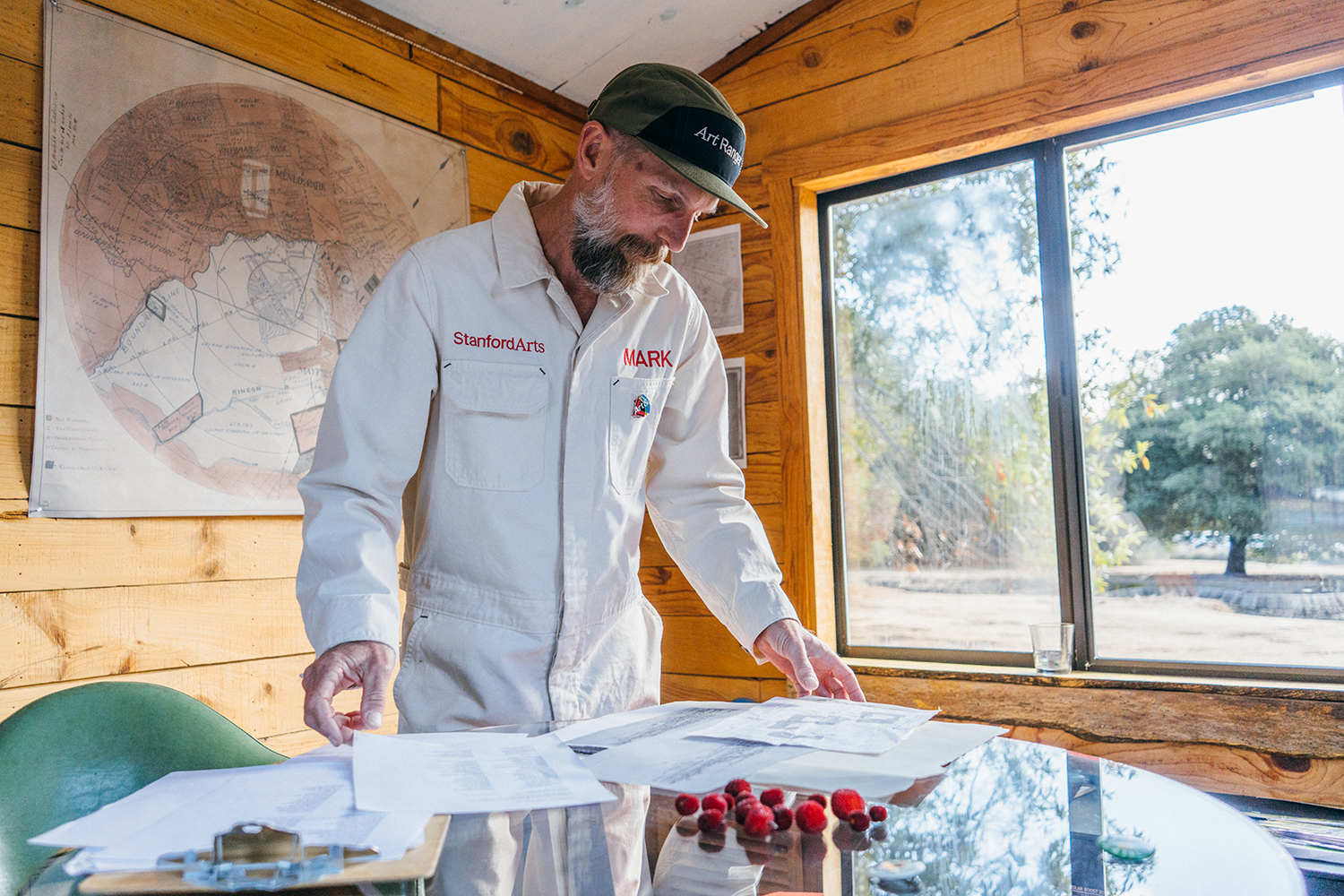
Mark Shunney manages the care and maintenance of the many works of public art across campus. | Taylor Jones
As public art program manager, Shunney helps students, faculty, and the public engage with the works on campus. | Taylor Jones
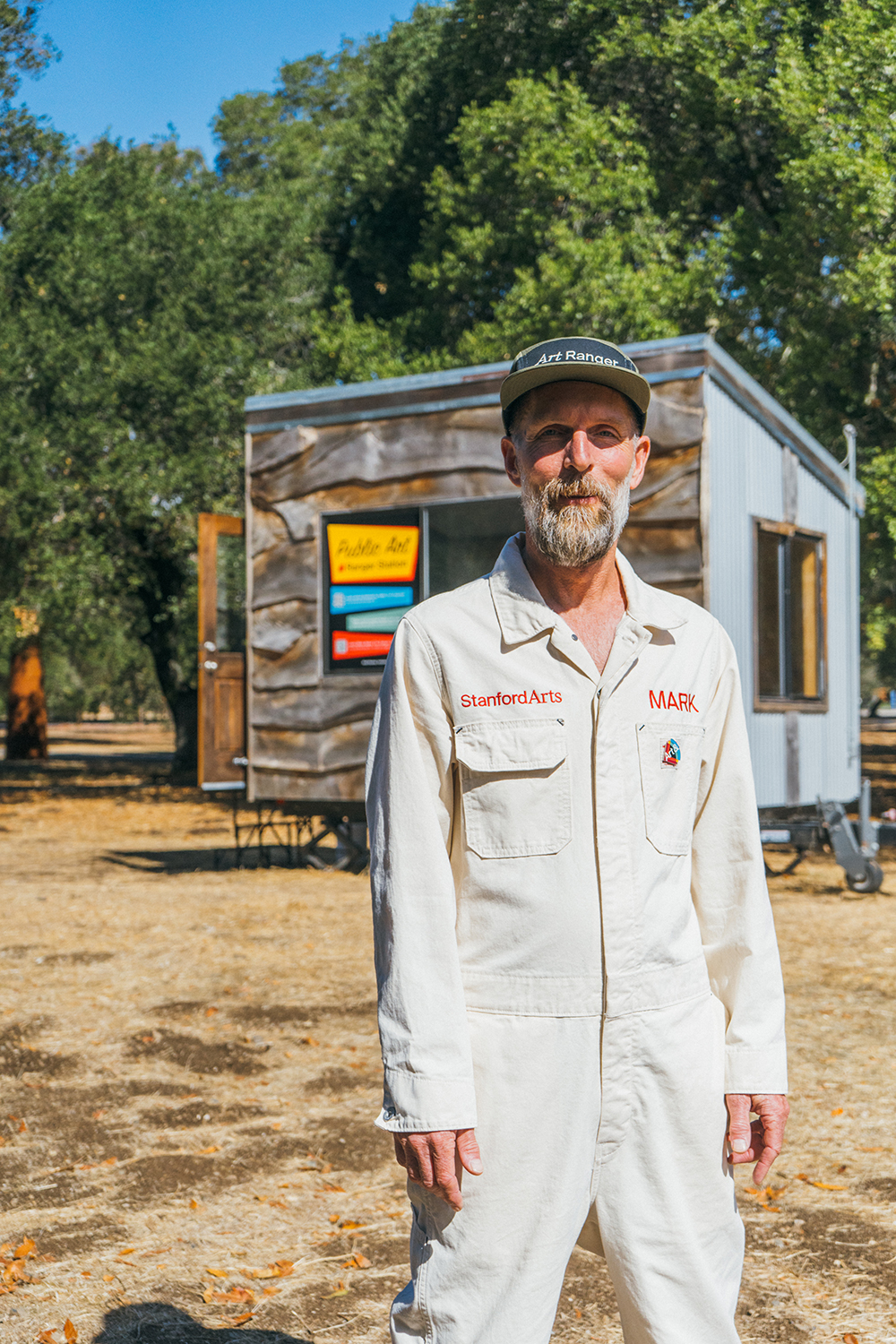
The ranger station was originally a mobile art studio, built in 2015 by students in an Arts Intensive course using salvaged materials from Jasper Ridge. Today it stands in a shaded grove next to Meyer Green. | Taylor Jones
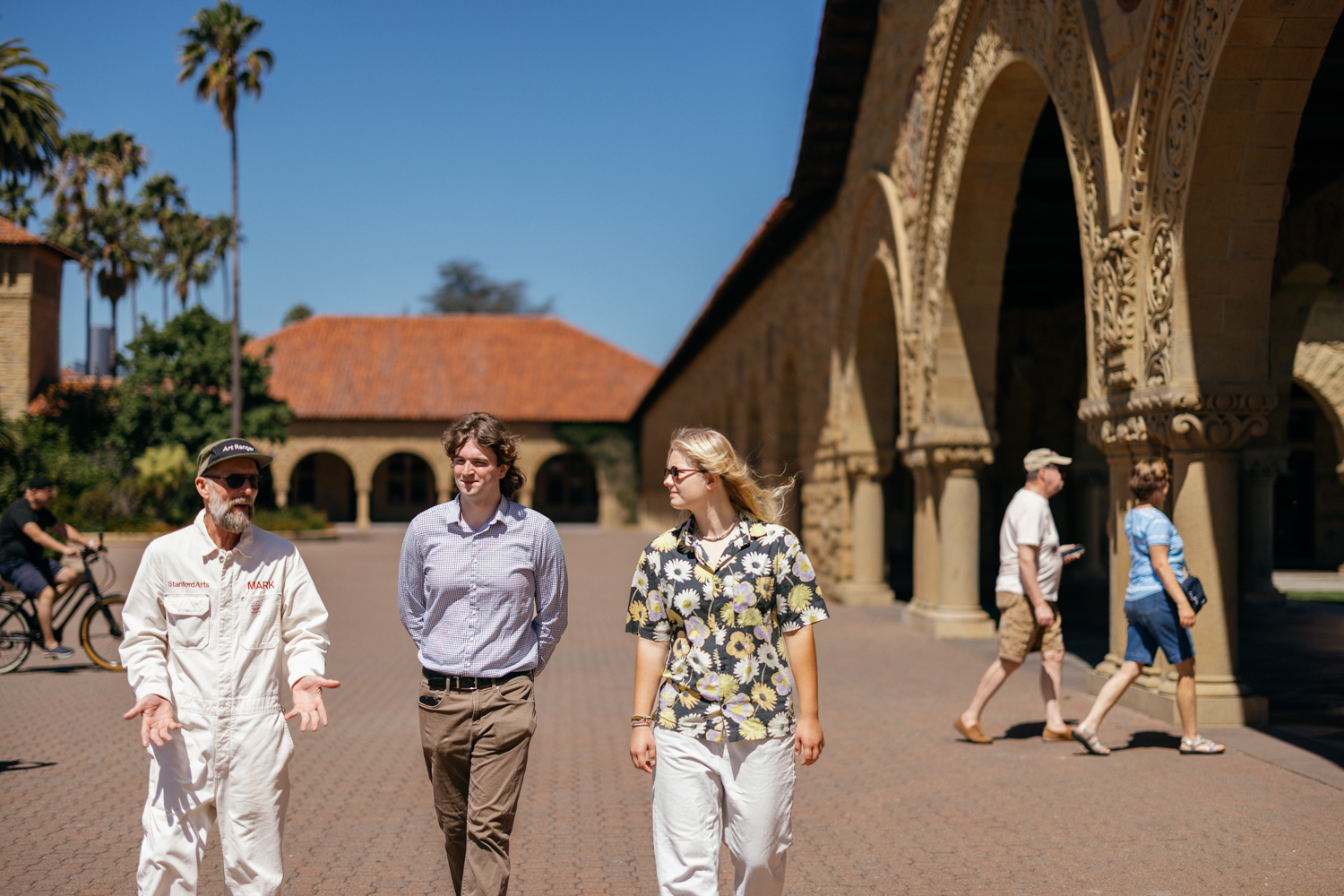
The Stanford campus has more than 80 sculptures, murals, installations, and other works of art accessible to the public 365 days a year. | Andrew Brodhead
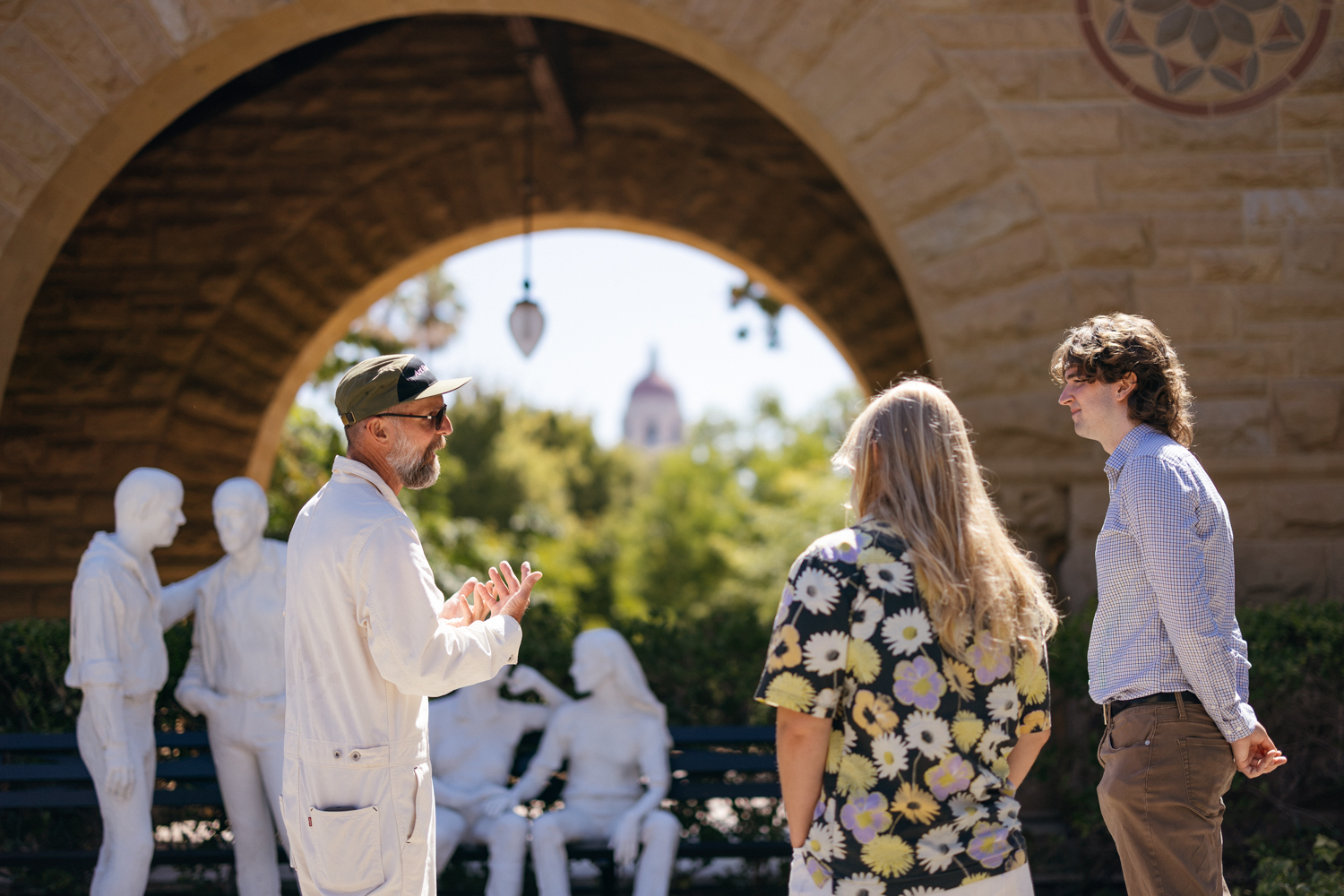
George Segal’s Gay Liberation (1979), depicting two couples in relaxed, everyday poses, was cast in bronze with a matte white finish using the artist’s signature technique of wrapping live models in plaster bandages. | Andrew Brodhead
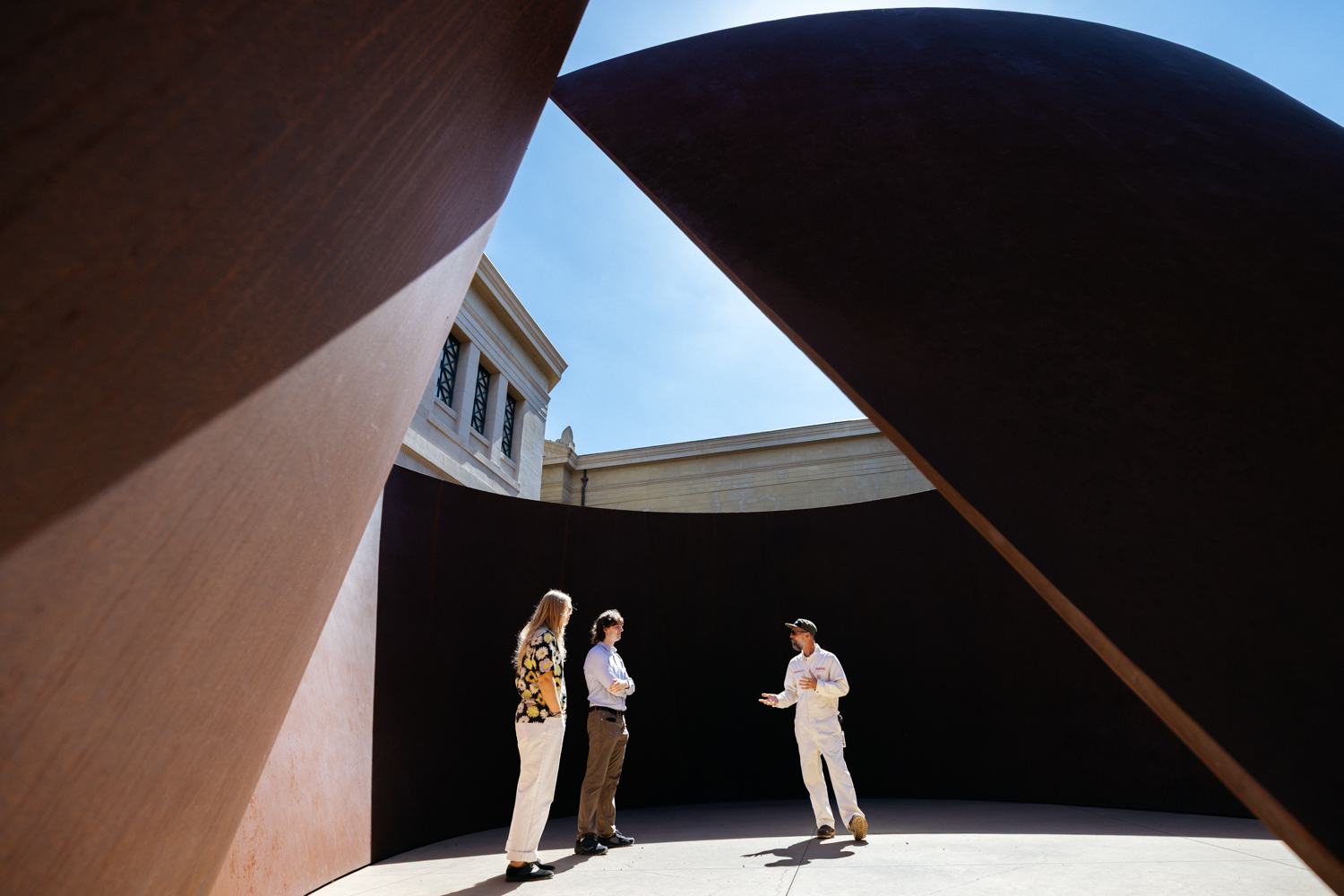
Sequence by Richard Serra is made up of 12 massive, curved steel plates. The material, known as weathering or Corten steel, is designed to rust naturally over time, forming a dense, protective patina. | Andrew Brodhead
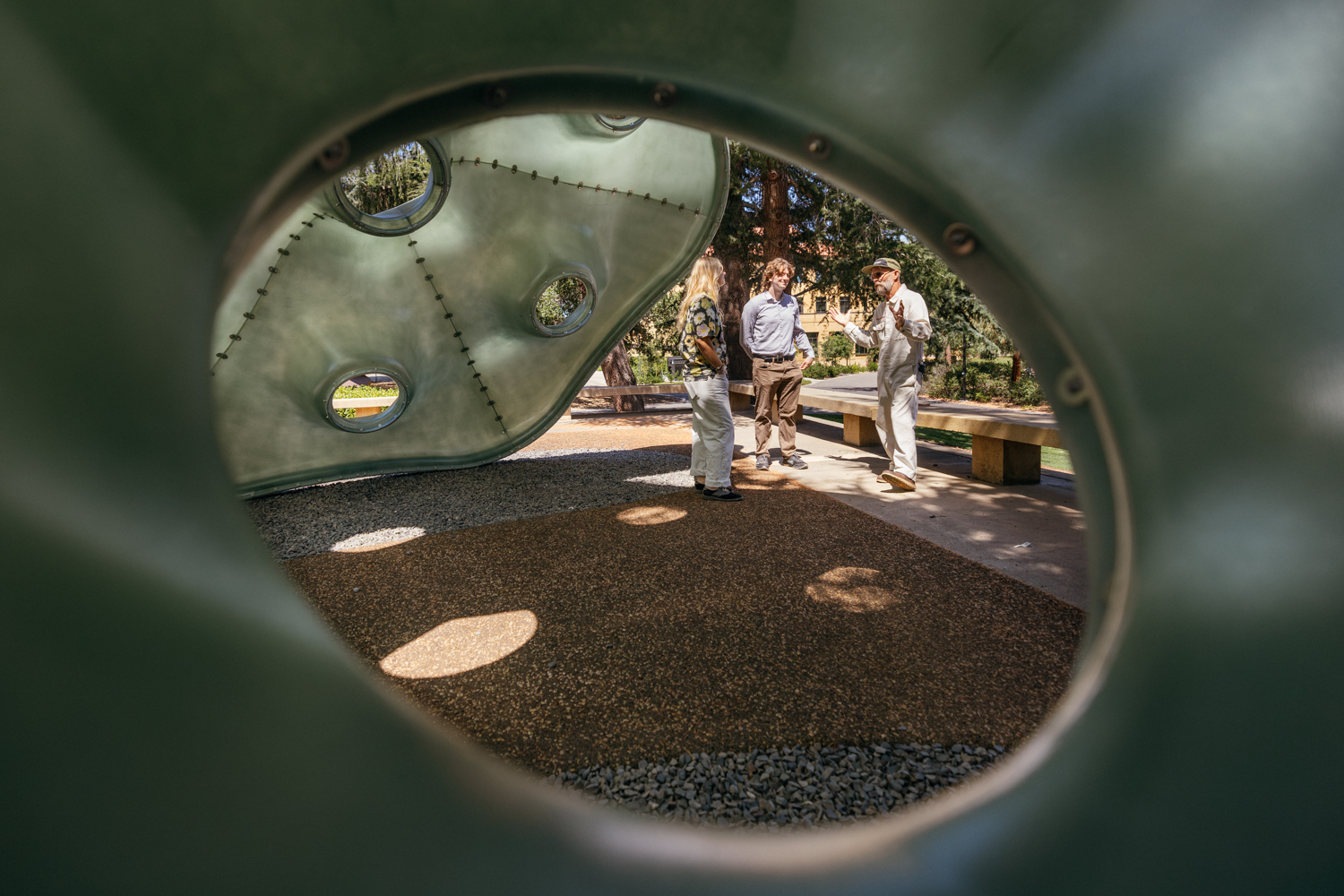
Amulets by Alia Farid, installed on the elevated plinth on Meyer Green between Green Library and Stanford Law School, will be on view until fall 2027. | Andrew Brodhead
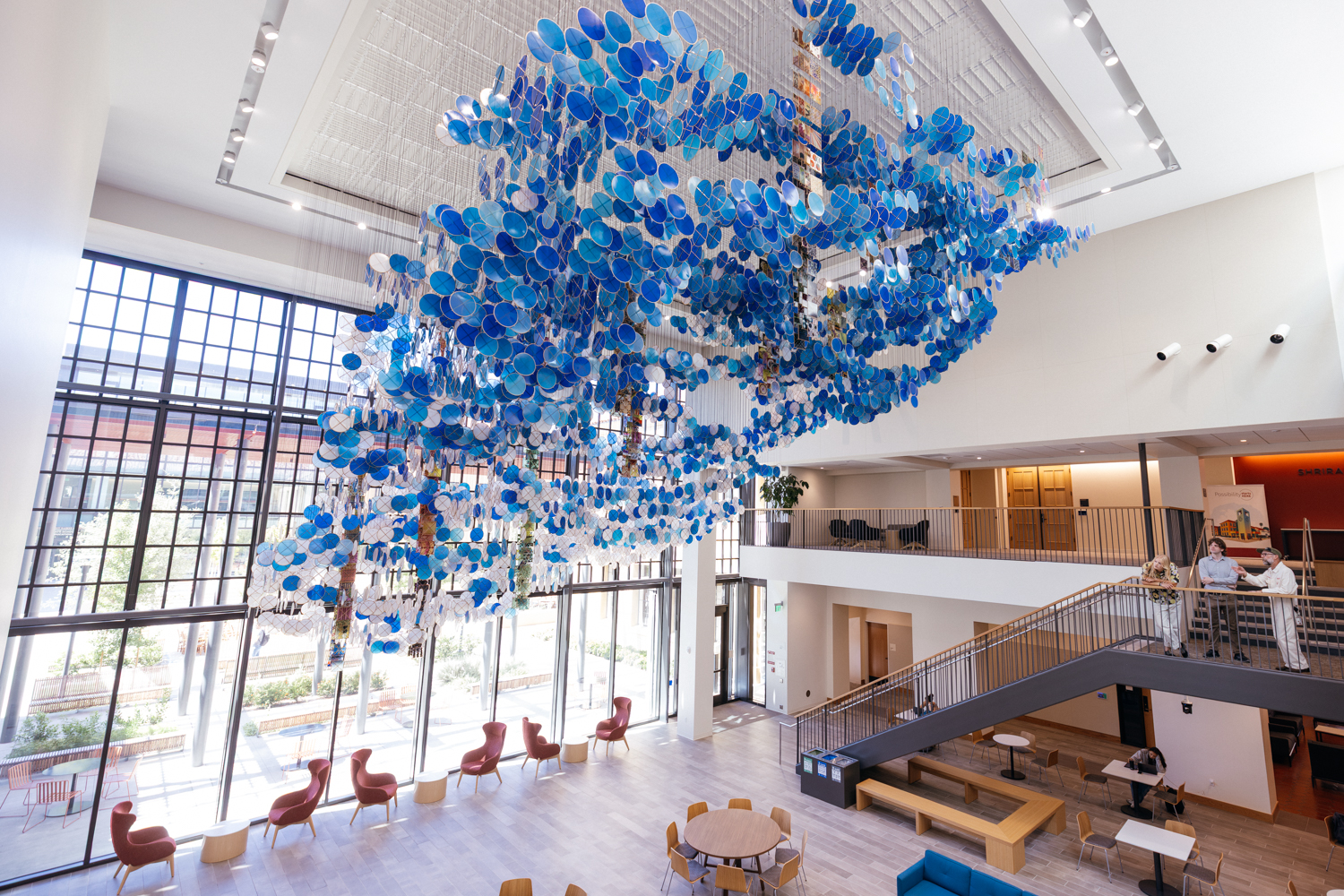
At the newly remodeled Graduate School of Education, artist Jacob Hashimoto’s The Gravity of the Sun consists of 6,500 handmade kites with colorful designs that connect to teaching and learning, suspended by 17 miles of thread. | Andrew Brodhead
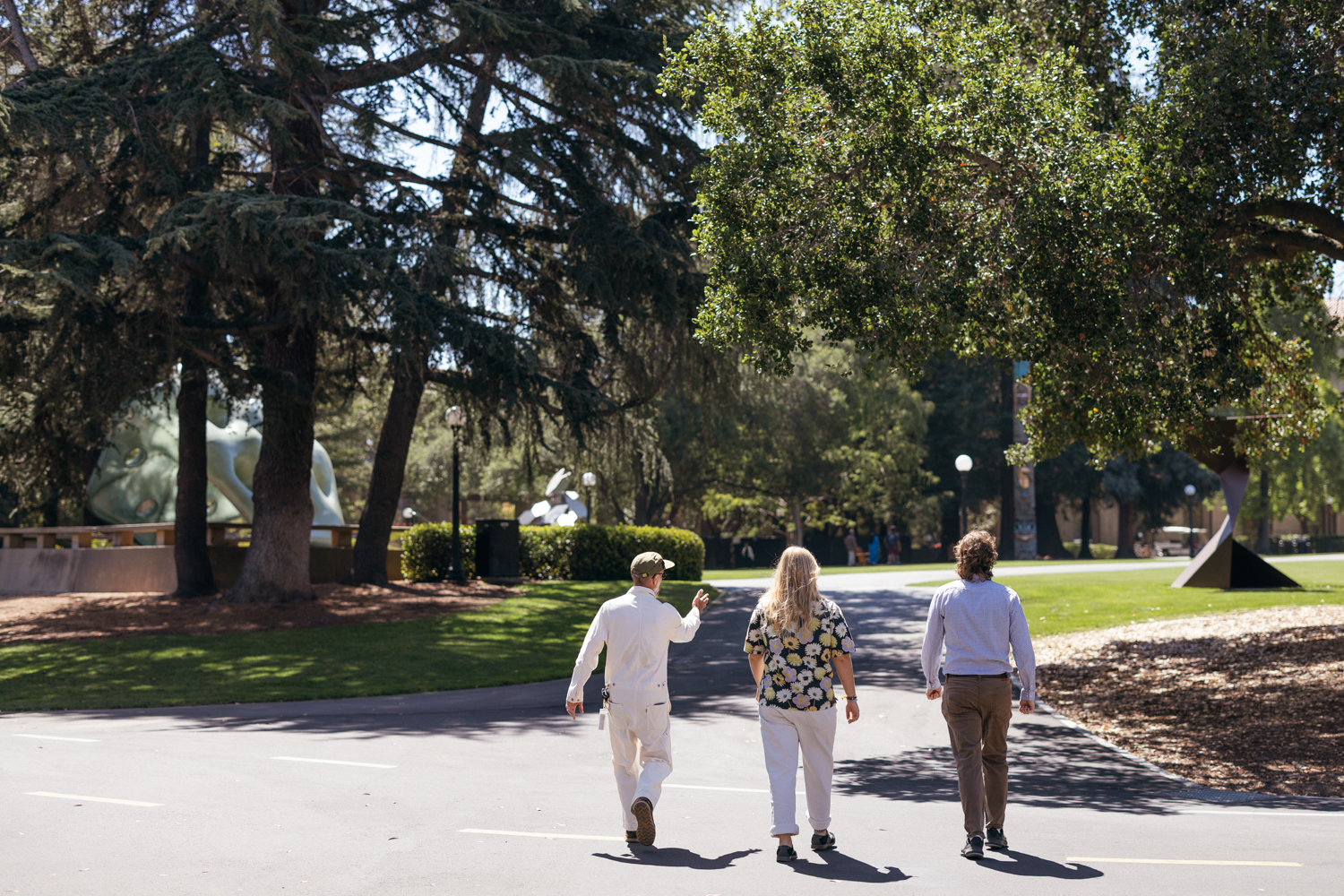
Shunney leads campus public art tours by appointment. | Andrew Brodhead
“‘Ranger’ has a certain beautiful symbolism – it’s code for safety and care and conservation, and there’s a lot of overlap with the responsibility I task myself with in caring for these artworks and the experience of the public,” he said. “So I thought, how could I make that part of my role? The hat, the jumpsuit, a few things just collided at once. This is the way artists work – what if I take this and this and bring them together?”
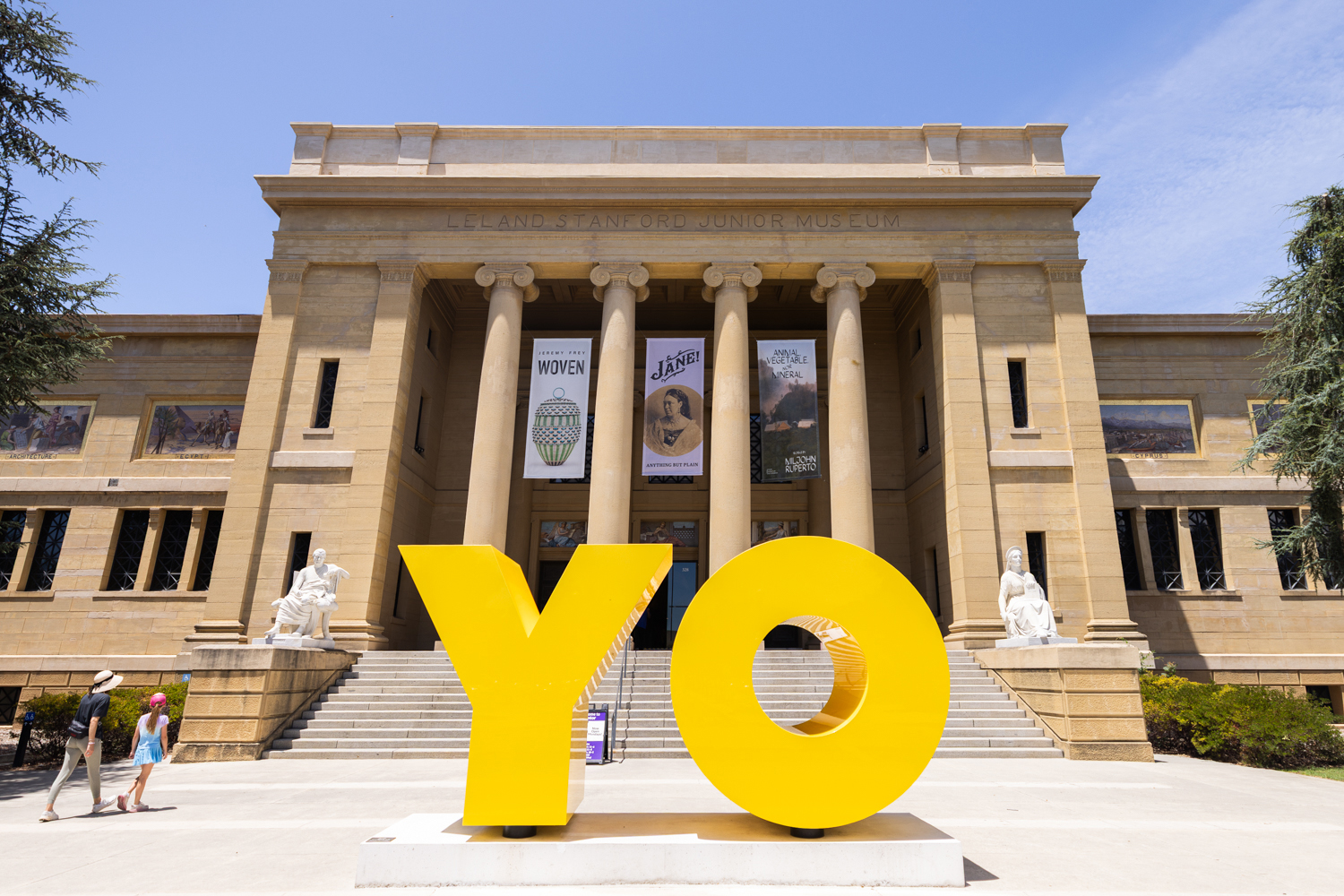
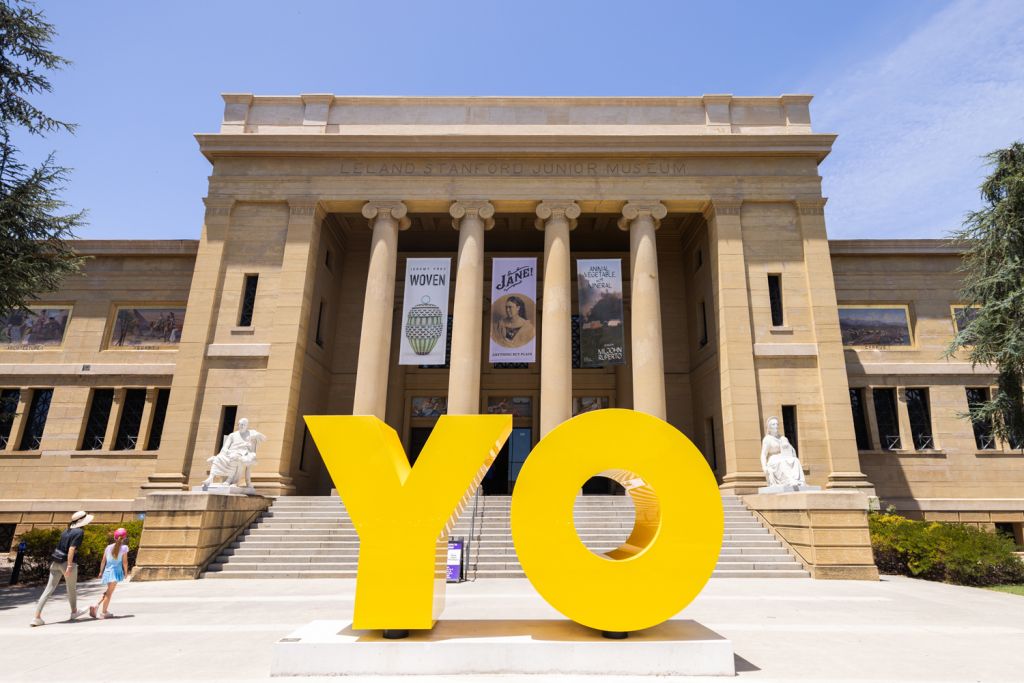
Sequence (2006) is one of many pieces that take regular upkeep. Shunney works with conservation teams to clean, paint, seal, wax, buff, or oil dozens of others on a rotating schedule. A glossy ceramic coating, the kind used on high-end cars, is applied to Deborah Kass’ Lamborghini yellow OY/YO (2019) so that everything from tree sap to bird poop to handprints “washes right off with a garden hose.” Alexander Calder’s The Falcon (1963) is refurbished annually in a process that takes three days and uses a black paint so matte it’s almost invisible – the original shade was developed by the military for use on stealth bombers. That paint’s manufacturer no longer exists, and when the Calder Foundation approved a substitute, Shunney said, “we gobbled up a bunch of inventory.”
When pointing out an artwork, Shunney almost always draws attention to its base. The concrete slab under Linda Fleming’s Space Lace (1997) was poured to replace the original blocks that had given way; the rubberized pad under Alia Farid’s Amulets (2024) is a precaution against climbing; the gravel border around Mark di Suvero’s The Sieve of Eratosthenes (1999) is a tactile boundary that allows visually impaired visitors using a cane to detect the work before they reach it. “Sculpture needs to communicate with the ground and its surroundings,” Shunney said. “Putting it on a pedestal is too easy an answer.”
Shunney holds office hours and conducts tours from a trailer-turned-ranger station originally designed by students as an eco mobile art space, which stood for a year across from the Anderson Collection and is now parked next to Meyer Green, where students are more likely to encounter it on the way to class. Inside are various artifacts, including two resin-dipped bamboo and washi paper kites from the installation of Jacob Hashimoto’s The Gravity of the Sun (2025) in the Graduate School of Education building; the artist’s new exhibition at SFMOMA is made from nearly 75,000 of them. Shunney keeps one in a drawer and leaves the other exposed to the light so he can watch how it ages.
Hours of operation
The ranger station is open from 1 to 3 p.m. on Thursdays, beginning Sept. 10; campus tours are by appointment.
He also designs tours for classes on request; stops on a tour for the creative writing and Earth systems class Sustainable Narratives included Sam Van Aken’s Tree of 40 Fruit (2019) and Andy Goldsworthy’s Stone River (2001), a winding sculpture assembled without mortar using sandstone from a campus building felled by the 1906 earthquake. Last fall, Shunney took a group of sustainable architecture and engineering students from the seminar CEE 134F: Making Buckminster Fuller on a tour for context on the work of the pioneering architect and designer, whose archives are housed at Stanford and who is known for the geodesic dome and the structural design principle tensegrity, in which tension and compression exist simultaneously. At one stop, students sat underneath Amulets and looked up at how the polyester resin shapes are bolted together. “We were thinking about Fuller’s interest in prefabrication and kind of rapidly deployable structures,” said Emmett Zeifman, a former lecturer in the program. “So we talked about how you either reveal or conceal the fasteners that make the assembly possible – whether you’re expressing the part-ness of them versus the total whole.”
Shunney won’t admit to having favorites among his charges, but when pressed said he’s drawn to the ones that are “challenging to get your head around,” like land artist Meg Webster’s California Garden (2003), a raised, bowl-like hollow with two sculpted seating areas surrounded by native plants. He is currently working on its restoration with Stanford’s landscape architect, horticulturalists, and the artist, now in her 80s.
“I always reach out, in cases where we’re fortunate enough that the artist is still with us, and let them know about our plans for repairing or resiting a work,” said Shunney. “Most of the time they’re super responsive and supportive.”
Writer
Charity Ferreira