Jane Stanford lived a well-recorded life marked by tragic loss, deep curiosity, and an unsolved murder. What more can we learn from the objects she left behind?
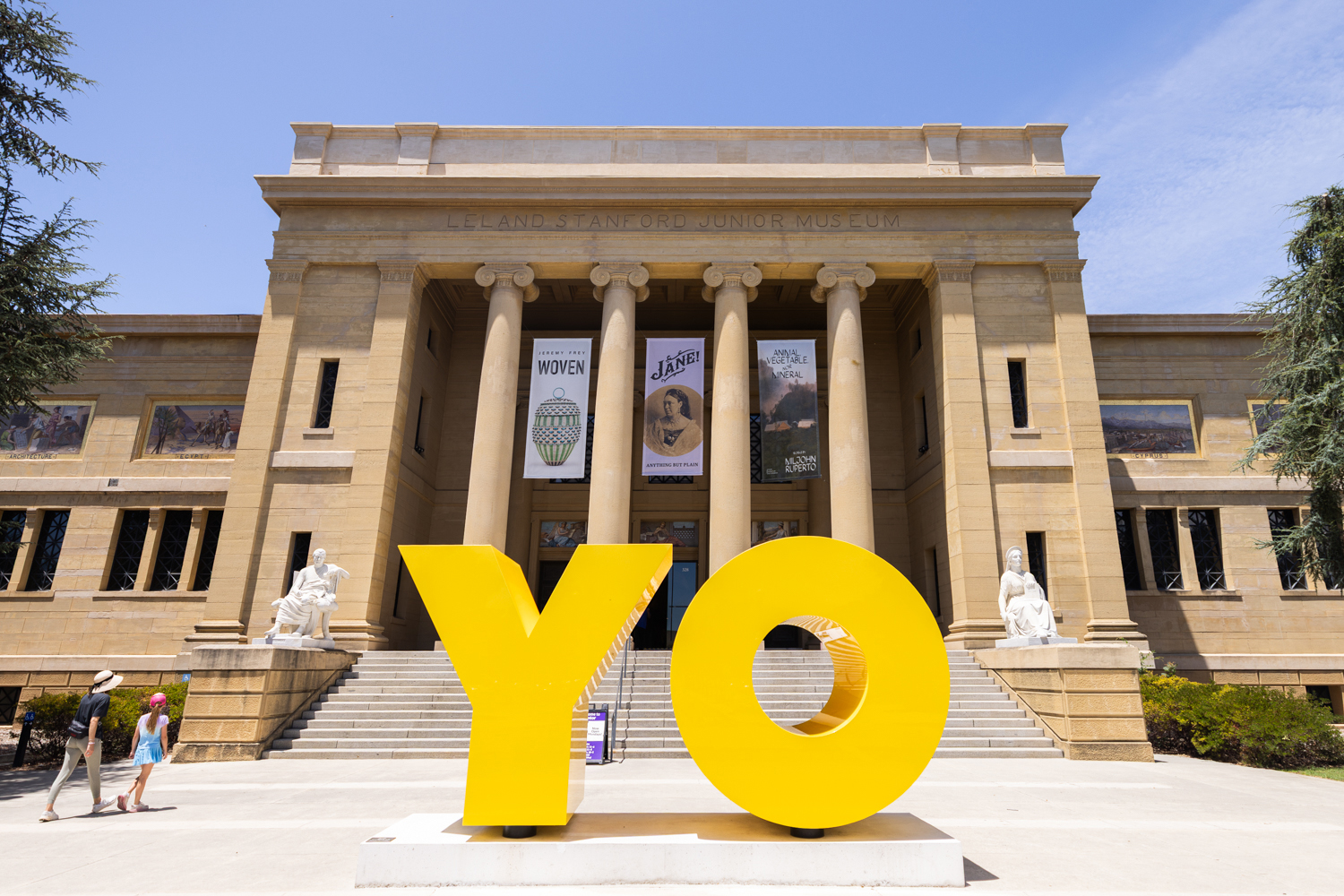
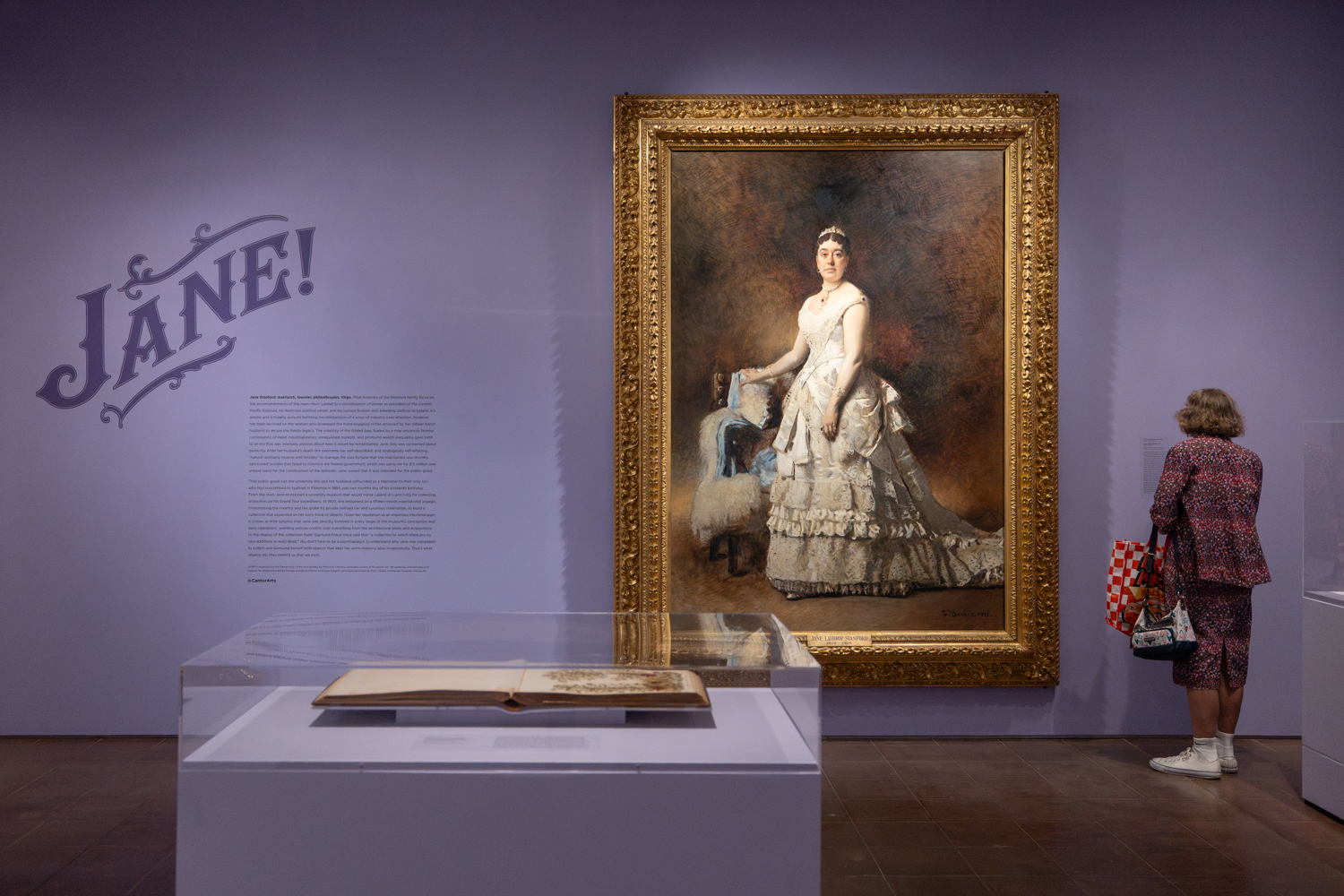
JANE!, the newest art exhibition at the Cantor Arts Center, explores the legacy of Stanford University’s founding mother with whimsy and intrigue. It replaces The Melancholy Museum: Love, Death, and Mourning at Stanford, which featured artifacts collected by Leland Stanford Jr., tracing how his death at age 15 led to the creation of the university and Silicon Valley.
“I really wanted to do a show in the Stanford Family galleries that was focused on Jane, especially given the importance that she had as the champion of the museum from the beginning,” said Patrick Crowley, associate curator of European art at the Cantor, who curated the show.
JANE! opened July 2 in the Sarah Love Miedel and Stanford Family Room galleries at the Cantor and runs until May 18, 2028.
“The show begins not with her early life, but at this moment in the 1890s when she’s the sole person in charge of this mind-boggling wealth and of this entire university, trying to secure a legacy for herself and her family,” Crowley said. “I wanted to convey the texture, strangeness, and theatricality of the Gilded Age while also revealing something new about this figure who was so formidable, peculiar, and unexpectedly human.”
Family heirlooms and keepsakes
The exhibition features 41 objects and art pieces from collections across campus, some never before shown in a museum setting.
“There are some objects in there that are works by well-known artists, but then there are also some really strange, bizarre family heirlooms and keepsakes,” Crowley said.
Images: Andrew Brodhead
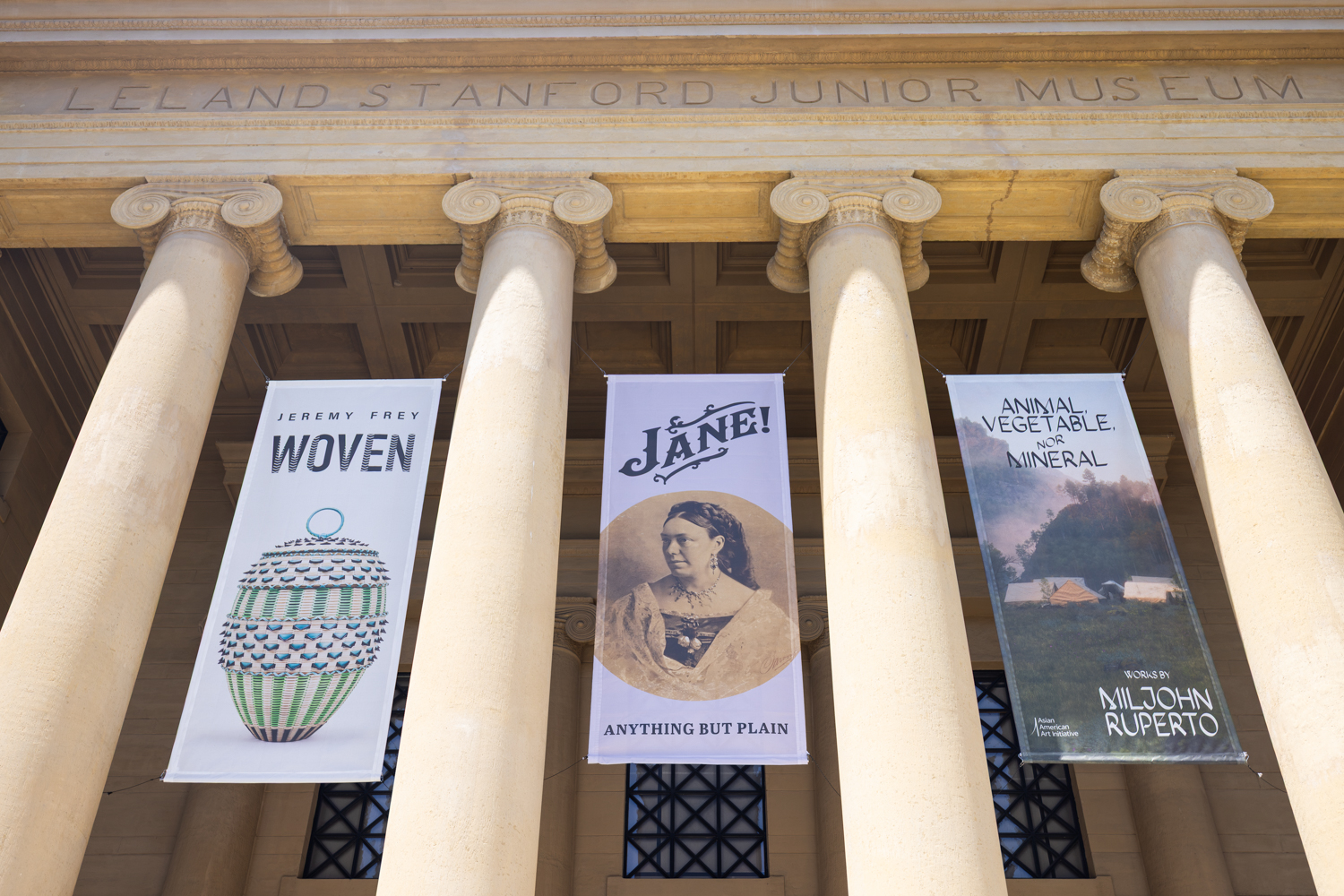
JANE! opened July 2 in the Sarah Love Miedel and Stanford Family Room galleries at the Cantor Arts Center and runs until May 18, 2028.
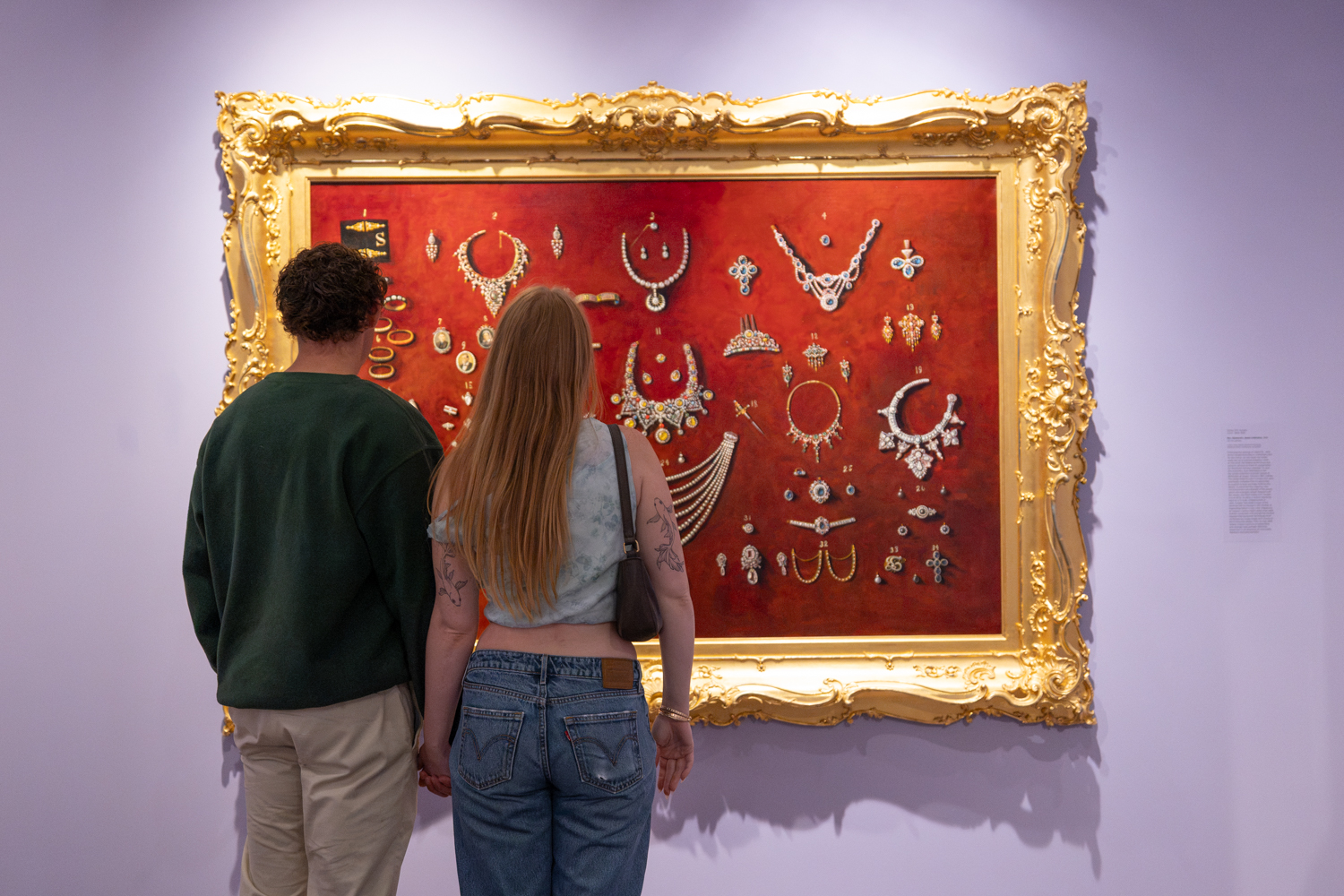
One of the show’s largest pieces is “Mrs. Stanford’s Jewel Collection,” an 1898 painting by American artist Astley D. M. Cooper that depicts jewels Jane Stanford later sold piecemeal to support a book purchase fund for the library.
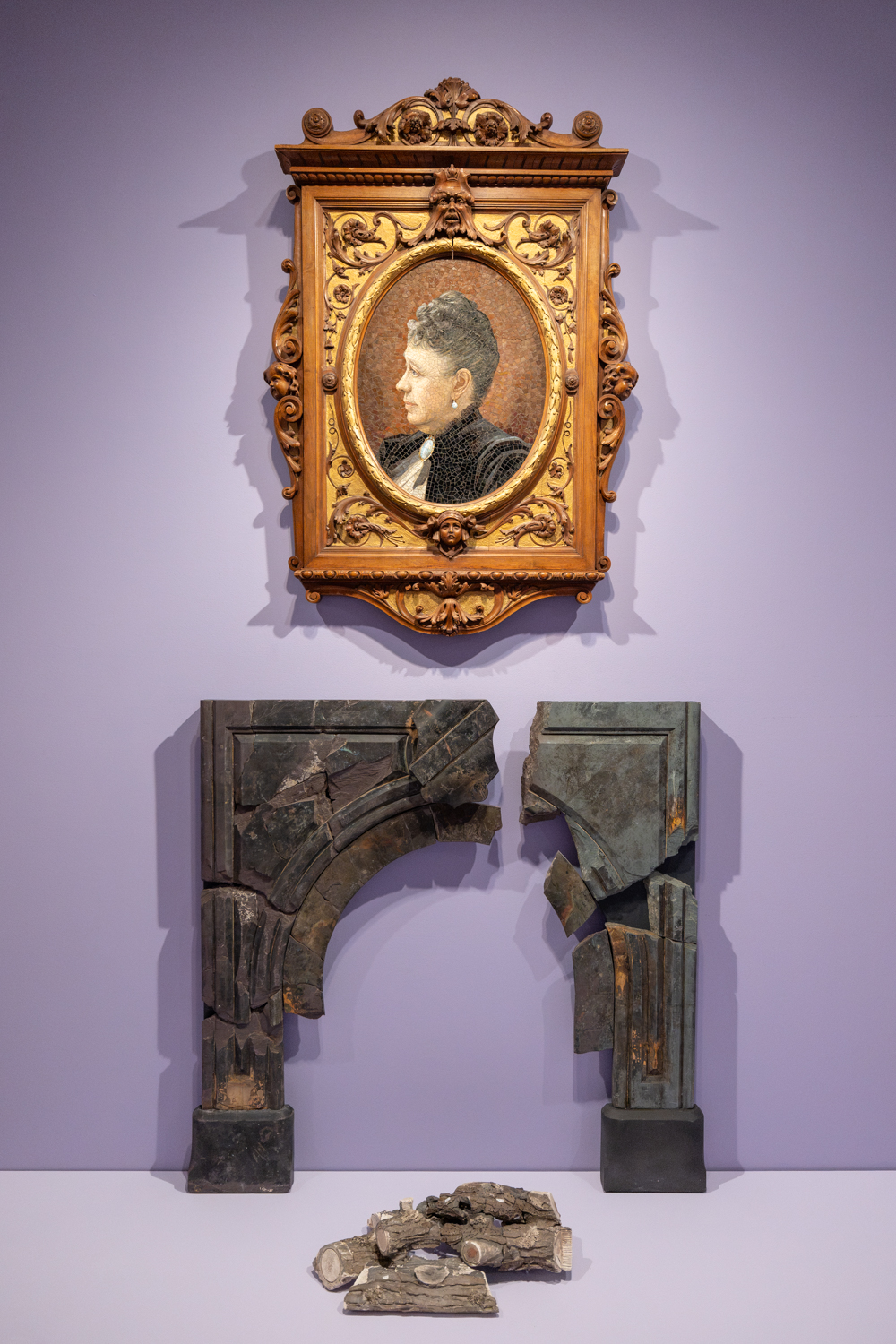
A fireplace surround made of imported Welsh slate painted to resemble trompe l’oeil marble once graced the Stanford family’s Palo Alto mansion, before the 1906 earthquake reduced most of the estate to rubble. Between 1996 and 2002, nearly 100 Stanford archaeology students helped excavate the site and piece the fragments together.
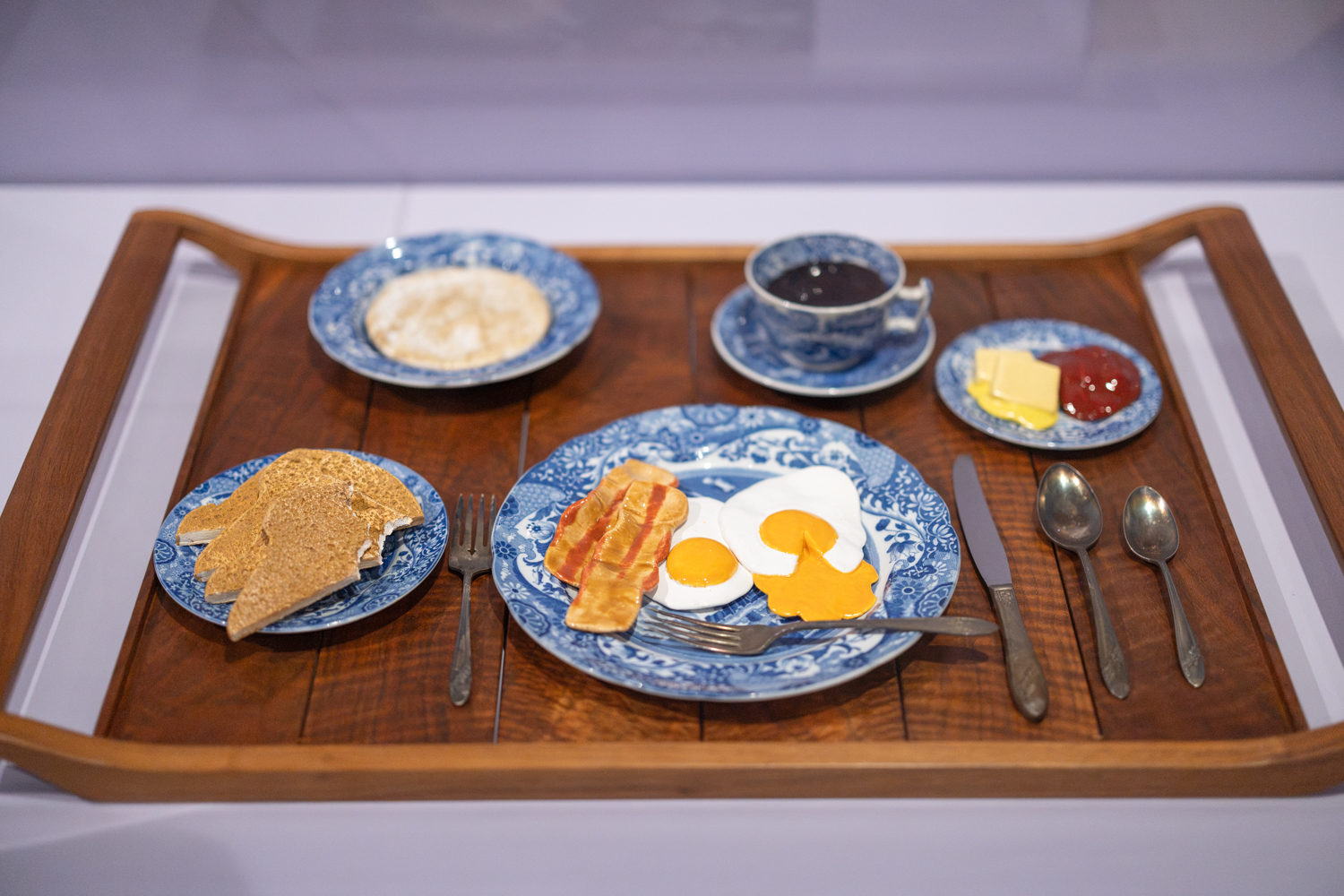
One of the newest items in the collection is a 1991 piece made by American artist David Gilhooly titled “Little Leland’s Last Breakfast.”
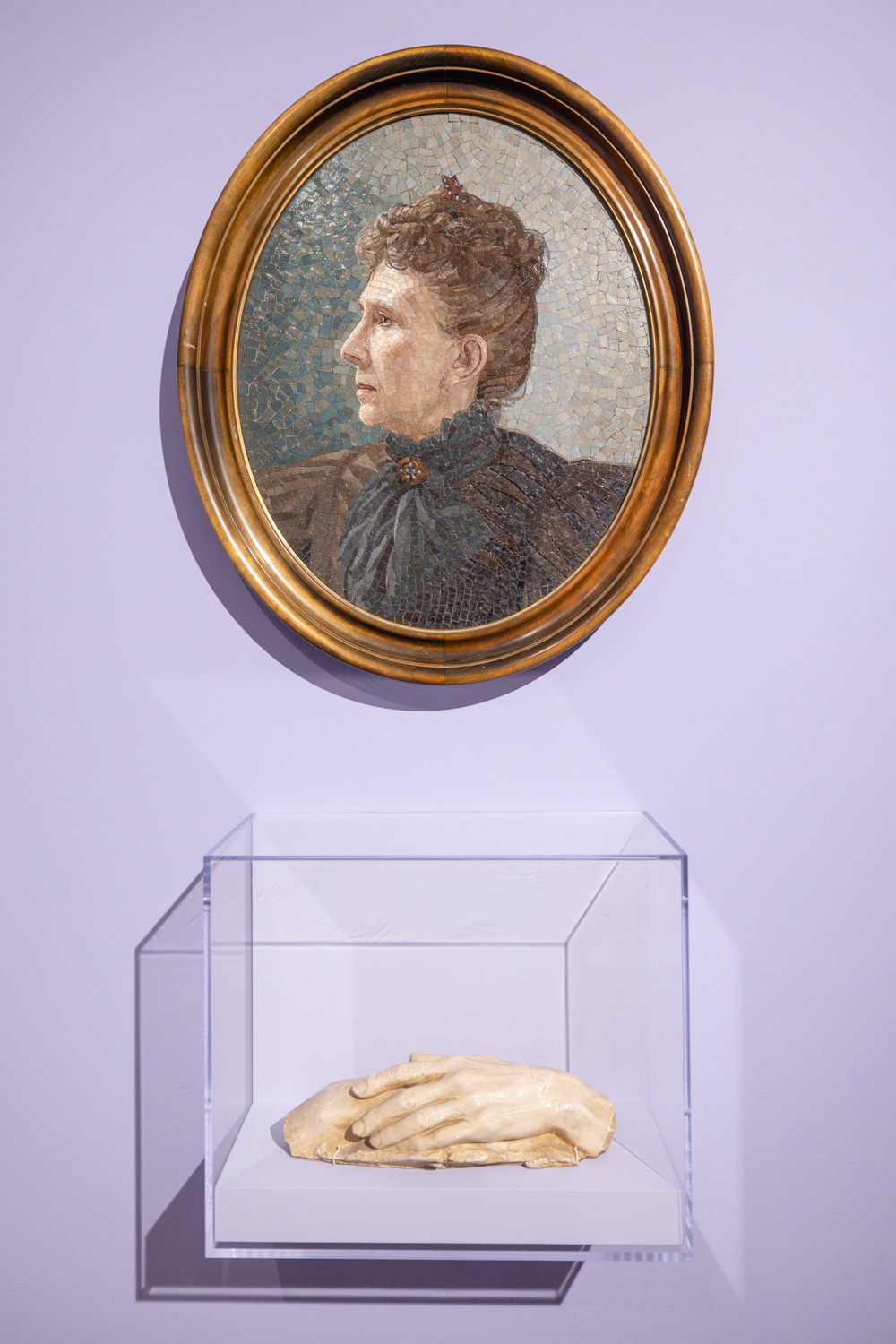
The show touches on the mysterious circumstances surrounding Jane Stanford’s death, and includes items representing the two main suspects in her murder: a portrait of Bertha Berner, her personal secretary, and a cast of the hands of David Starr Jordan, the first president of Stanford University.
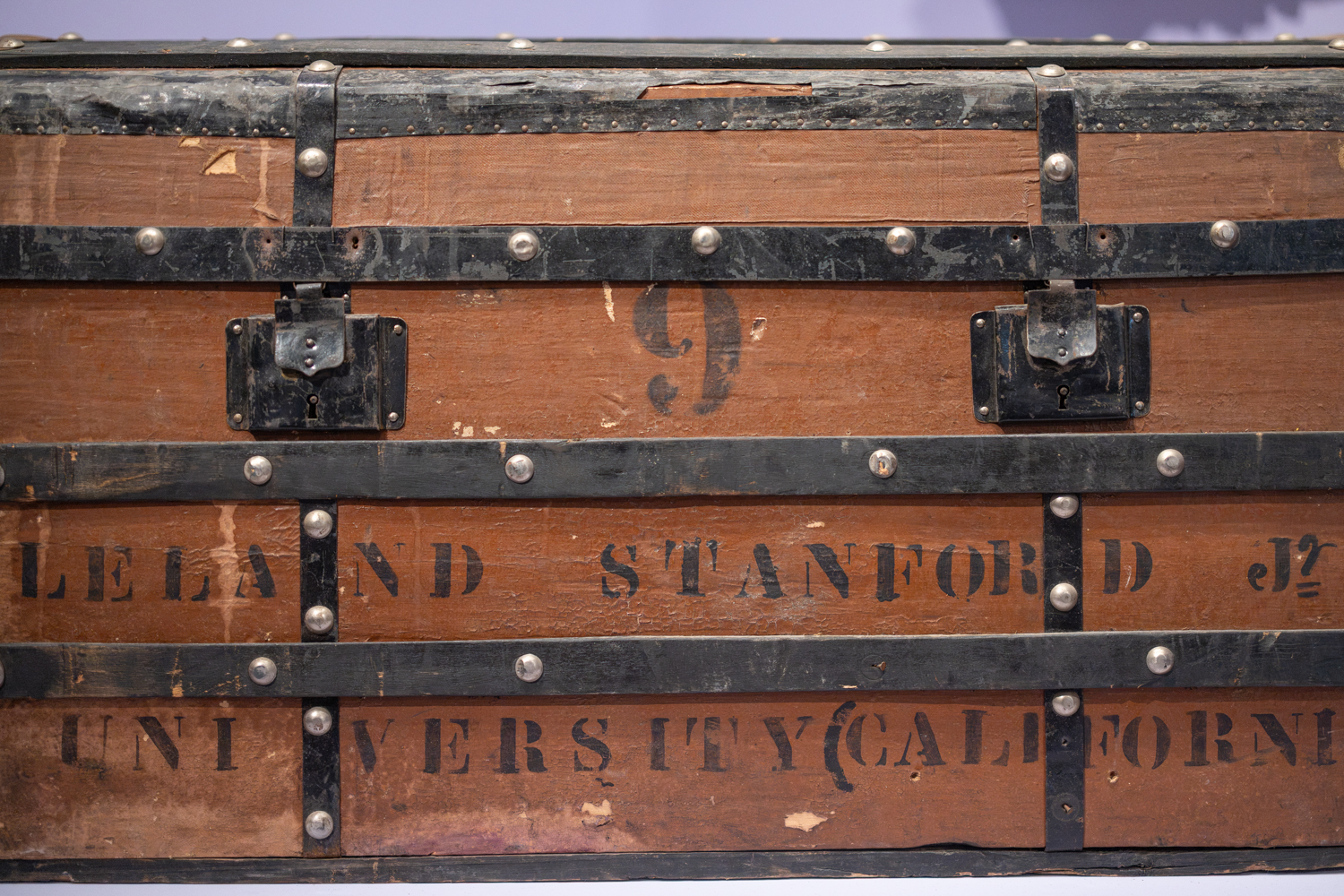
A 19th-century traveling trunk used by the Stanfords made of wood, canvas, and steel.
Some of those keepsakes include fans made of ostrich feathers, paranormal paraphernalia, and death masks of both Jane and Leland Jr., whose relationship the exhibition also explores.
“I find their relationship emotionally interesting, because Leland Jr. was really the catalyst, not only for the founding of the university but for the art museum,” he said. “The museum was not an afterthought for Jane, it was integral to her vision of the broader university and what it meant for the intellectual and social life of its students.”
Travel trinkets and a poisonous past
The collection also features souvenirs from Jane’s travels in the 15 months after her son’s death, including trips to Northern Africa and Asia. Some of the oldest objects in JANE! are a small Egyptian funeral boat from between 1981 BCE and 1802 BCE and a Hokusai Katsushika print of a woodcutter gazing at a waterfall from Japan.
One of the newest items in the collection is a 1991 piece by David Gilhooly (1943-2013), a pioneer of the funk art movement, who challenged the seriousness of the art world through pieces that center food and everyday items. Little Leland’s Last Breakfast depicts what is believed to be Leland Stanford Jr.’s final meal – including coffee, bacon, eggs, and toast – made of glazed earthenware, silverplate, and wood.
“Approaching some of these objects, histories, and stories with this touch of humor felt to me like an interesting way to explore some of that really complicated legacy in a way that didn’t feel like a bummer,” Crowley said. “It’s also really about trying to tap into this period of the Gilded Age, where technology was transforming so rapidly, businesses were modernizing, and there was profound wealth inequality. It’s uncannily contemporary to a lot of concerns that we have right now.”
The show also touches on the mysterious circumstances around Jane’s passing, including a newspaper print announcing her death and items representing the two main suspects in her murder.
“What I like about Jane’s story is that so much of it is about hope,” Crowley said. “The galleries are painted this very vivid lilac, because different shades of lavender in this period represented transition – somewhere between the black of full mourning and a return to what, for Jane, was a normal, ordinary life.”
Writer
Olivia Peterkin