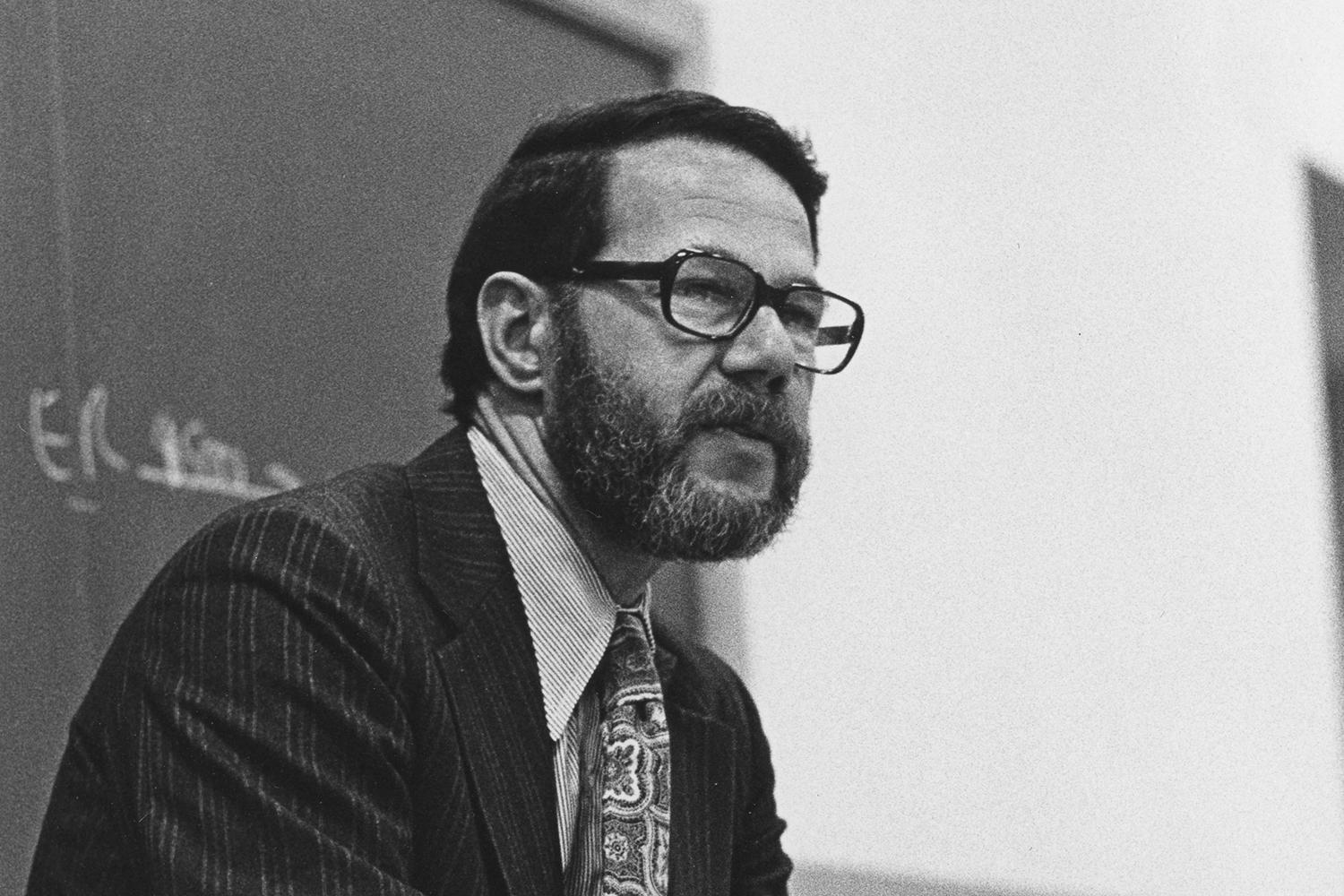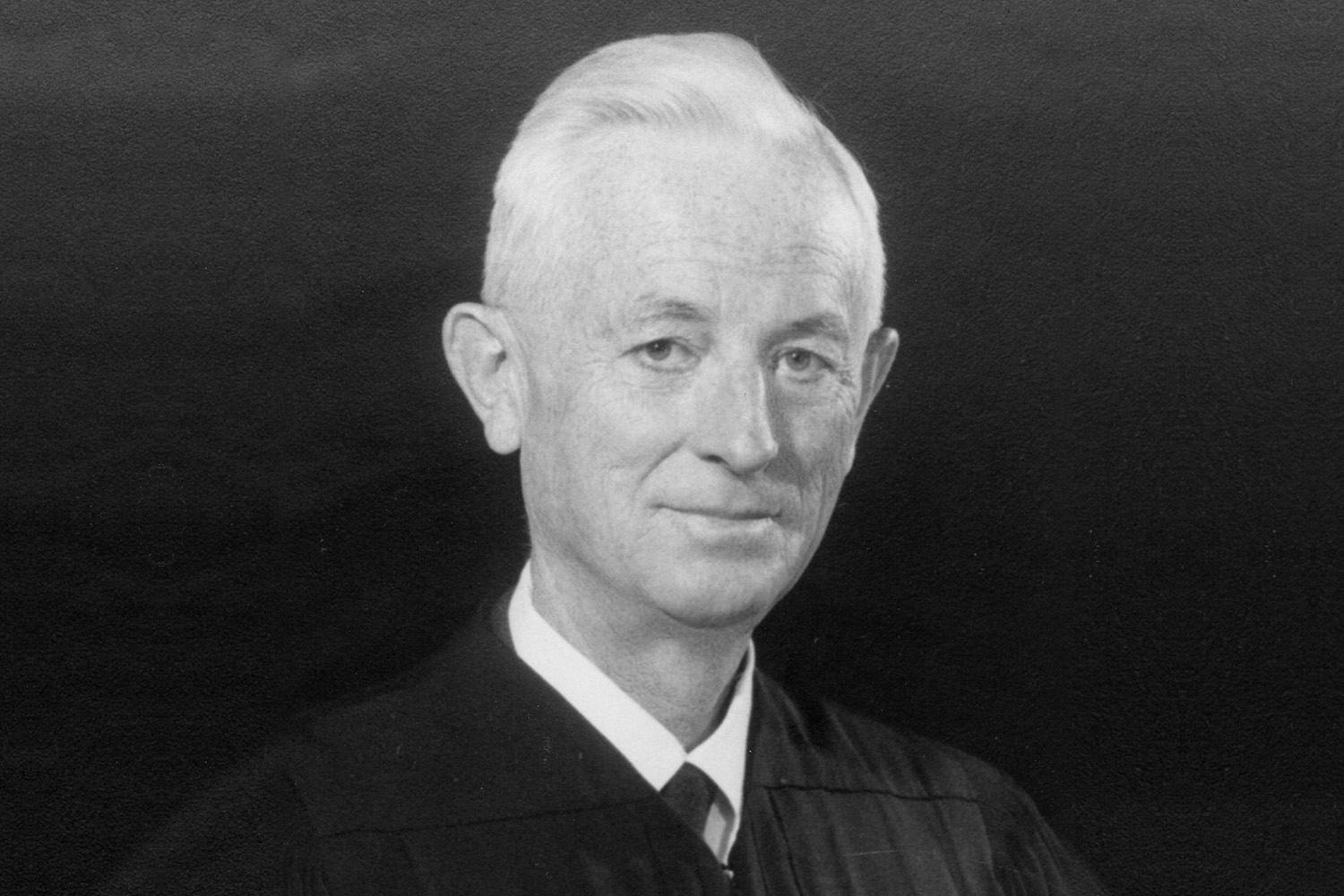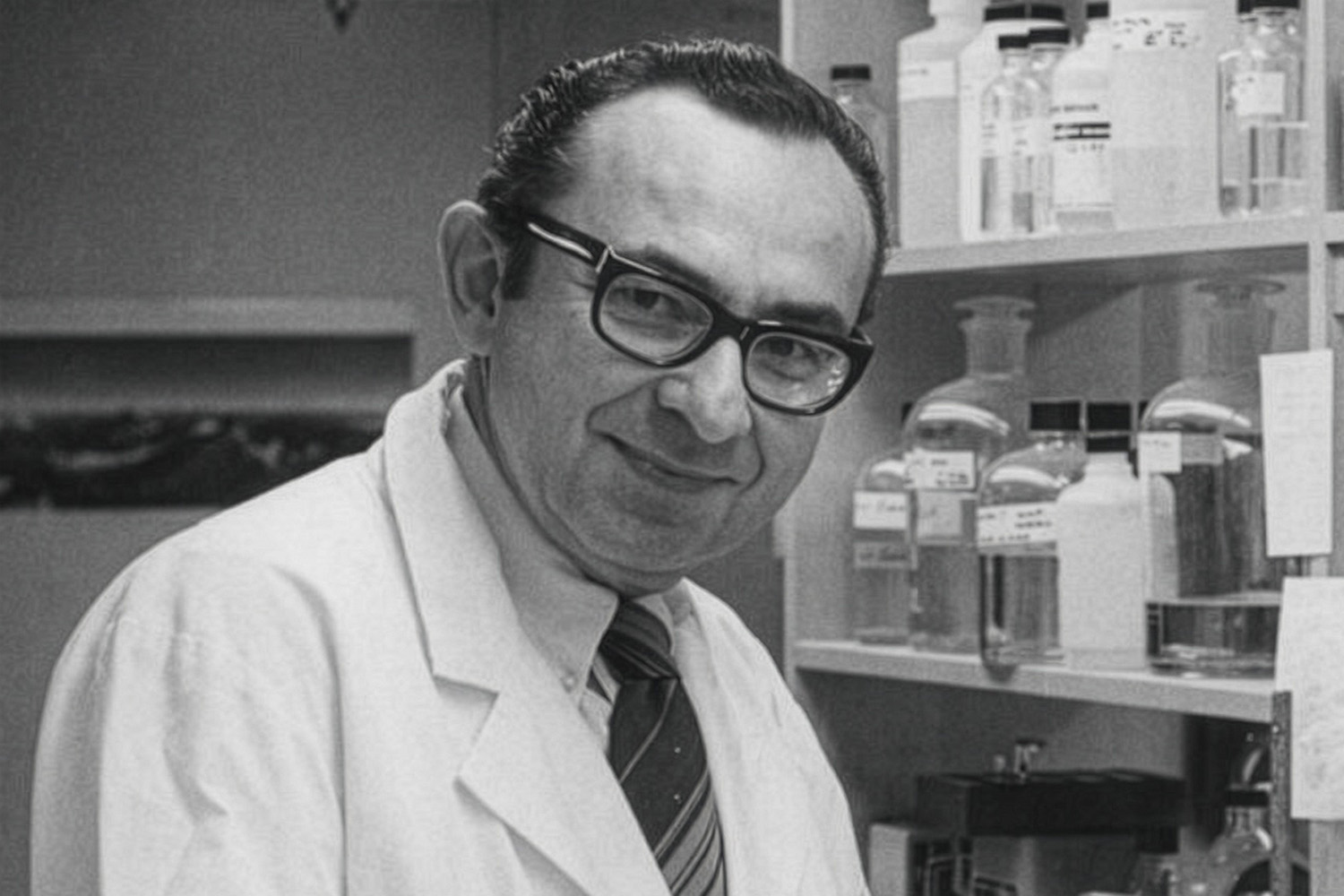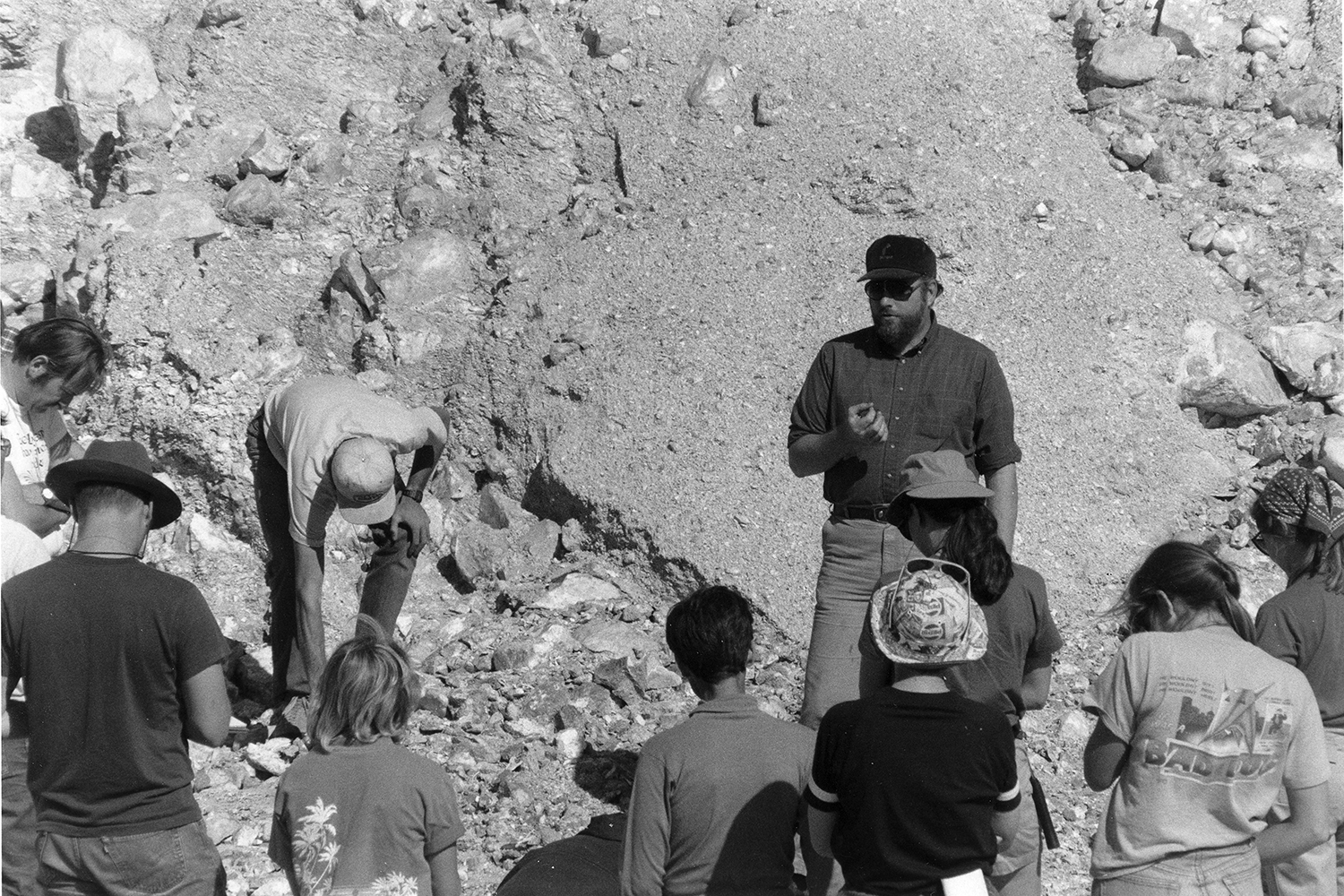
Gordon E. Brown Jr., the Dorrell William Kirby Professor, Emeritus, a professor of Earth and planetary sciences in the Stanford Doerr School of Sustainability, and a professor of photon science at SLAC National Accelerator Laboratory, died Aug. 8 in Palo Alto, California. He was 82.
Brown was widely regarded as a leading expert on the use of X-ray diffraction to peer into the structures of the minerals that make up planet Earth and the moon. His expertise in X-ray crystallography proved fundamental to the study of lunar geology in rocks brought back to Earth by the Apollo missions.
Brown established himself as a leader in that emergent field during a postdoctoral fellowship at the State University of New York, Stony Brook, followed quickly by a tenure-track faculty position at Princeton University. He came to Stanford in 1973 and never left.
It was at Stanford that Brown gained renown for his use of synchrotron X-rays to study the interactions of environmental contaminants and pollutants with minerals, soils, and water. This innovative work helped establish the field of molecular environmental science.
“Every experiment I did at SSRL at that time was the first of its type ever done on Earth materials,” Brown explained, referring to the Stanford Synchrotron Radiation Lightsource in Menlo Park. “I became the Pied Piper of synchrotron light sources in the Earth sciences for many years.”
Wanderer
Though he was a mineralogist by training, Brown joked that his many interests led him “astray” of his field into broader explorations of minerals’ role in biology, chemistry, and physics.
“Gordon always had a hundred ideas, a thousand ideas, just bouncing all over the place, and it was really hard to keep up with,” recalls Mike Hochella, a one-time graduate advisee who later became a faculty colleague at Stanford, and a University Distinguished Professor at Virginia Tech. “His superpower – and, sometimes, his weakness – was his interest in everything.”
Brown liked to call his early Stanford research facility “The Bomb Lab,” because he would subject minerals to intense pressures and heat to mimic the geologic forces that create magmas that would then cool and condense into minerals. In effect, he was creating synthetic versions of minerals with specific and valuable physical and chemical properties.
Brown later focused on environmental geochemistry and chemical and microbiological interactions at the interface where minerals, water, and gases meet. In the late 1970s, he pioneered the use of the then-new SSRL to explore these relationships, expanding his crystallographic toolbox.
“Gordon revolutionized how we examine the fate of metals in soils and sediments, bringing arguably the most powerful tool yet to probe their chemical state in natural systems,” said Scott Fendorf, the Terry Huffington Professor and a longtime colleague of Brown’s at Stanford.
On the trail of toxins
In one groundbreaking interdisciplinary study from the 1980s, Brown demonstrated how one species of selenium – an element necessary for life but toxic in anything more than trace amounts – was making its way into the Kesterson Reservoir in California’s Central Valley. With synchrotron X-rays, Brown proved how that particular ion of selenium (VI) is only loosely bound in the soil and leaches more easily than other forms into the water supply.
The resulting paper is among the top 1 percent of most-referenced research in the geosciences literature since the late 1980s, Hochella noted. More importantly, the work gave rise to the discipline of molecular environmental science and jump-started decades of productivity in the field.
“I consider Gordon’s contributions to be among the greatest achievements in the mineral sciences in the last half-century,” Hochella said. “Just 10 years older, almost to the day, he was like a big brother to me. I will miss him tremendously.”
Boundlessly curious
With his typical humor, Brown wrote in a 2013 biographical sketch that he had invested his “academic career to date learning more and more about less and less,” referring to the intellectual niches that academia can curate.
“Gordon was especially important for a number of female faculty and students who have gone on to distinguished careers. He profoundly shaped the way I approach science and my career. He challenged me to think harder, to stand up for my ideas, and to look beyond for new opportunities,” recalled Kate Maher, a Stanford professor of Earth system science and early career faculty mentee of Brown’s. “Even today, I sometimes think: ‘How would Gordon approach this?’ The answer is almost always the same: Anchor in the fundamentals, step back and see the bigger picture, and never compromise – for the science and the people. That was Gordon.”
Of minerals and microbes
A “tall and powerfully built man” and bearded to boot, Brown had a bearlike mien, but that outward gruffness belied his generous mind and his endless curiosity.
“Gordon really defined Stanford’s unique combination of academic brilliance and absolute humanity,” recalled civil and environmental engineering professor emeritus Alfred Spormann, a friend and colleague of Brown’s. “He was rigorous, demanding, and precise, but he was also curious and had a healthy level of empathy for students and colleagues. His curiosity, going along with a fantastic sense of humor, was boundless.”
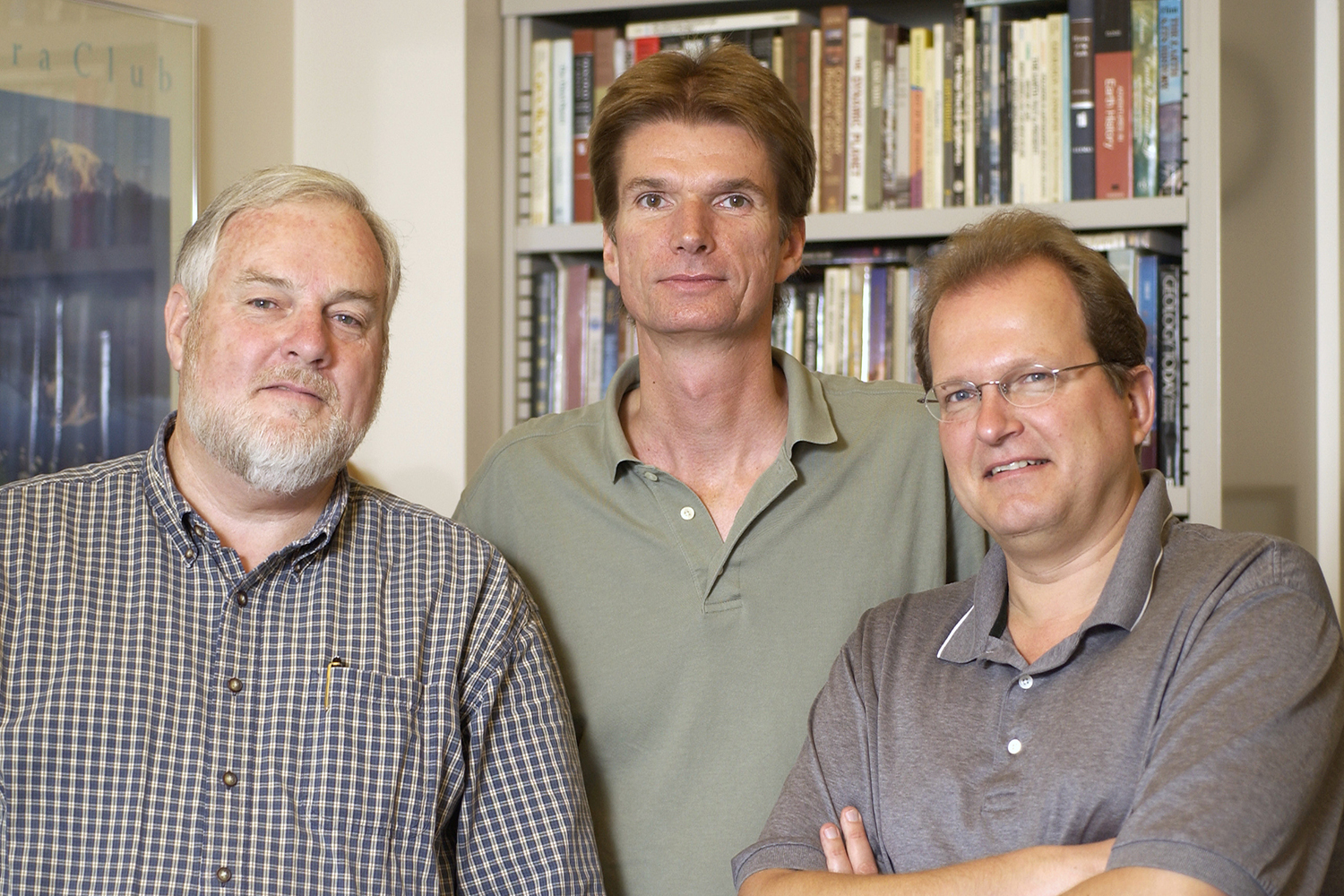
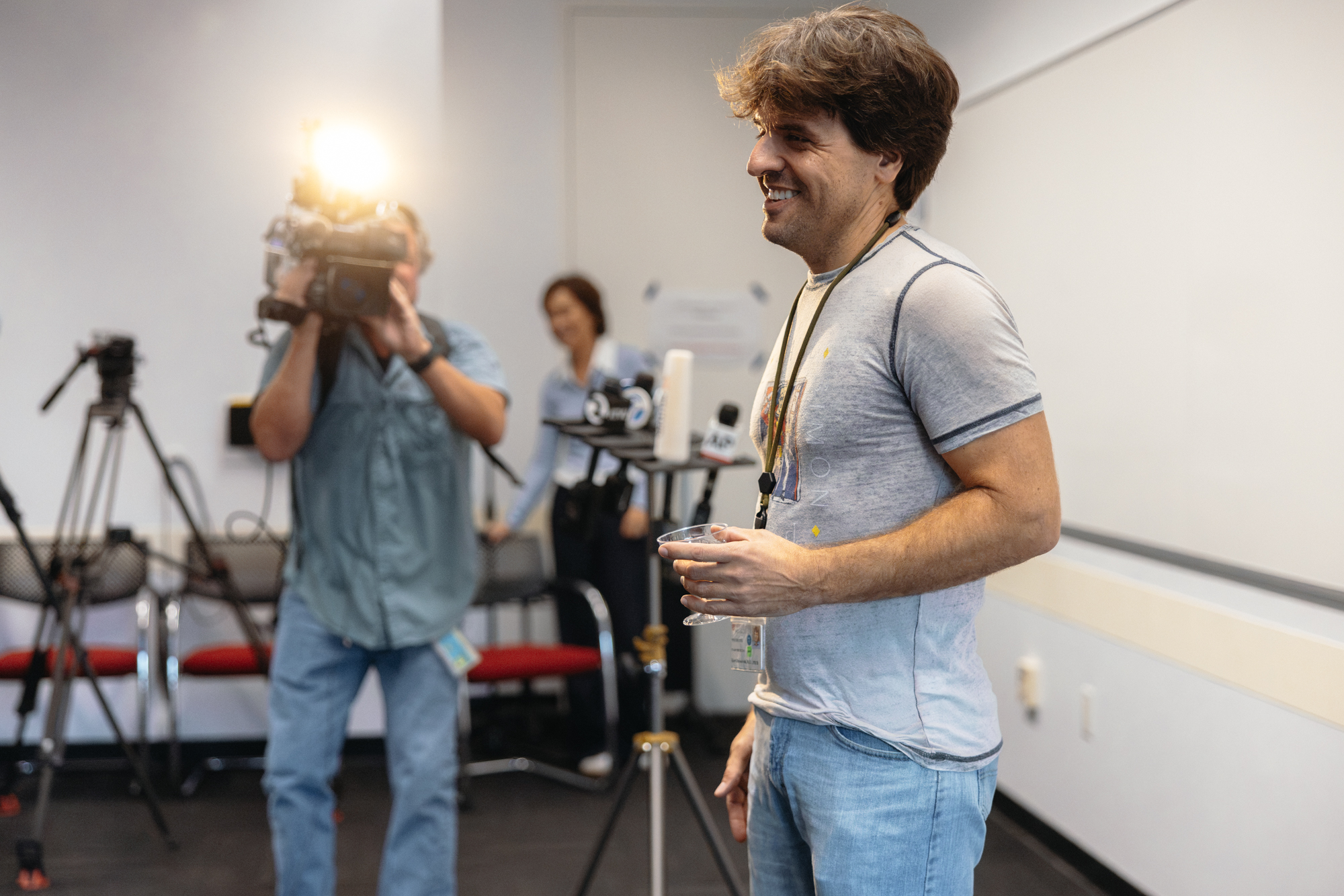
Brown, Spormann, and Anders Nilsson meet in 2004 after founding the Stanford Environmental Molecular Science Institute. | L.A. Cicero
In the 1990s, Brown began a collaboration with Spormann. Brown described how “sparks flew” in their initial meeting. They founded the Stanford Biofilm Research Center to study microbe-solid phase interactions and, together with SSRL’s Anders Nilsson, the NSF-funded Environmental Molecular Science Institute at Stanford. He was also instrumental in the establishment of Stanford’s biogeochemistry program. In this era, he and his collaborators worked to understand the metabolic interactions between microorganisms and minerals and the dynamics of microbial biofilms to understand how pollutants move through soil, among other explorations.
“He was an intellectual soulmate. He was a menschenfreund,” Spormann said, turning to his native German for the perfect term: “I’m going to miss him very much.”
Global recognition
Brown’s curriculum vitae is adorned with all the field’s top professional awards – the Roebling Medal, given for lifetime achievement by the Mineralogical Society of America; the Campbell Award for superlative contributions to the geosciences from the American Geosciences Institute; and the Patterson Medal, the Geochemical Society’s top environmental prize. He won the Roebling and the Patterson in the same year, 2007. The Campbell Award came in 2012.
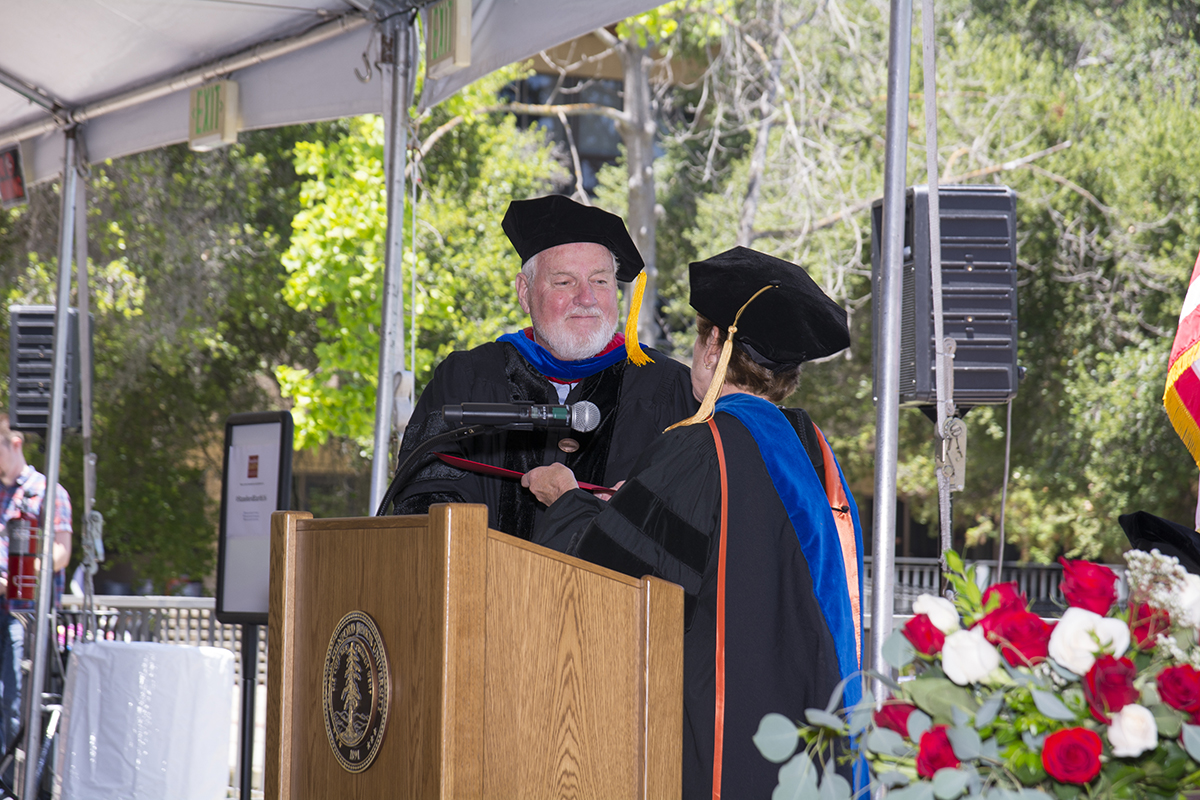
Brown receives the Excellence in Teaching Award at the School of Earth Science’s 2016 diploma ceremony. | Stacy Geiken
Brown was a sought-after expert who served on boards, advisory committees (including the Department of Energy), and professional organizations too numerous to mention. He was also known as “a dynamic and stimulating teacher,” winning the Stanford School of Earth Science’s Excellence in Teaching Award in 2016.
“In our first year co-teaching mineralogy, Gordon developed a large stone in one of his salivary glands. Despite intense pain and difficulty speaking, he continued to lecture and missed only one class … for the surgery,” remembered Wendy Mao, a fellow Stanford professor of Earth and planetary sciences. “Ever the scientist, he made sure the surgeon saved the stone as an example of a man-made biomineral for class. That was Gordon: dedicated, curious, and always thinking about his students. He was an extraordinary mentor and friend, and the reason I am at Stanford today.”
His more than 400 peer-reviewed scientific papers have been cited over 52,000 times. His h-index, a rating of a scientist’s lifetime productivity and influence, is an “extraordinarily high” 128. His final paper was published in 2025.
Early life
Gordon Edgar Brown Jr. was born on Sept. 24, 1943, in San Diego, California, and moved at age 2 to his mother’s home state of Mississippi. From age 7 on, he lived in Jackson, Mississippi. He earned undergraduate degrees in geology and chemistry at Millsaps College in Mississippi, and began graduate school at Penn State before transferring to follow mentor Gerald Gibbs to Virginia Tech. In Blacksburg, he completed his master’s degree (1968) and PhD (1970). A few years later, he joined the Stanford faculty at the urging of his former Penn State department head, Richard Jahns, who had become dean of the Stanford School of Earth Sciences. Brown remained a stalwart in the school until his retirement in 2018.
Brown is survived by his wife, Sharon A. Hunt of Palo Alto, California; son Michael Brown and daughter-in-law Jenny Brown of Bend, Oregon; daughter Tracey Trimeloni and son-in-law Vincent Trimeloni of San Jose, California; grandchildren: Sam Berdichevskiy of San Jose, Sarafina Trimeloni of Spokane, Washington, Ian Brown of Durango, Colorado, Chloë Trimeloni of Santa Cruz, California, and Evelyn Brown of Eugene, Oregon; and his sister, Mary Diane Orr of Melbourne, Florida. He was preceded in death by his first wife of 45 years, Nancy Brown, in 2010.
In lieu of flowers, the family requests donations in the name of Gordon E. Brown Jr. be made to the Alzheimer’s Association. A celebration of life on the Stanford campus is being planned for February 2027; details forthcoming.
For more information
This story was originally published by Stanford Doerr School of Sustainability.
Author
Andrew Myers
Writer
Andrew Myers