Twenty years ago, a group of Stanford scholars, alumni, and philanthropists recognized that as private wealth and philanthropy grew in scale and influence, the field needed greater scholarly attention and a dedicated space for rigorous inquiry and constructive dialogue across disciplines and sectors.
Universities have many scholars who study the marketplace, often organized in schools of business and economics departments, and who study public institutions, organized in Schools of Public Policy and government departments. This has created a deep well of scholarship about the private and public sectors, yet few universities have units whose main focus is philanthropy and civil society, or what is often called the third sector. PACS was envisioned to fill this gap and to generate scholarship to inform and improve third-sector organizations.
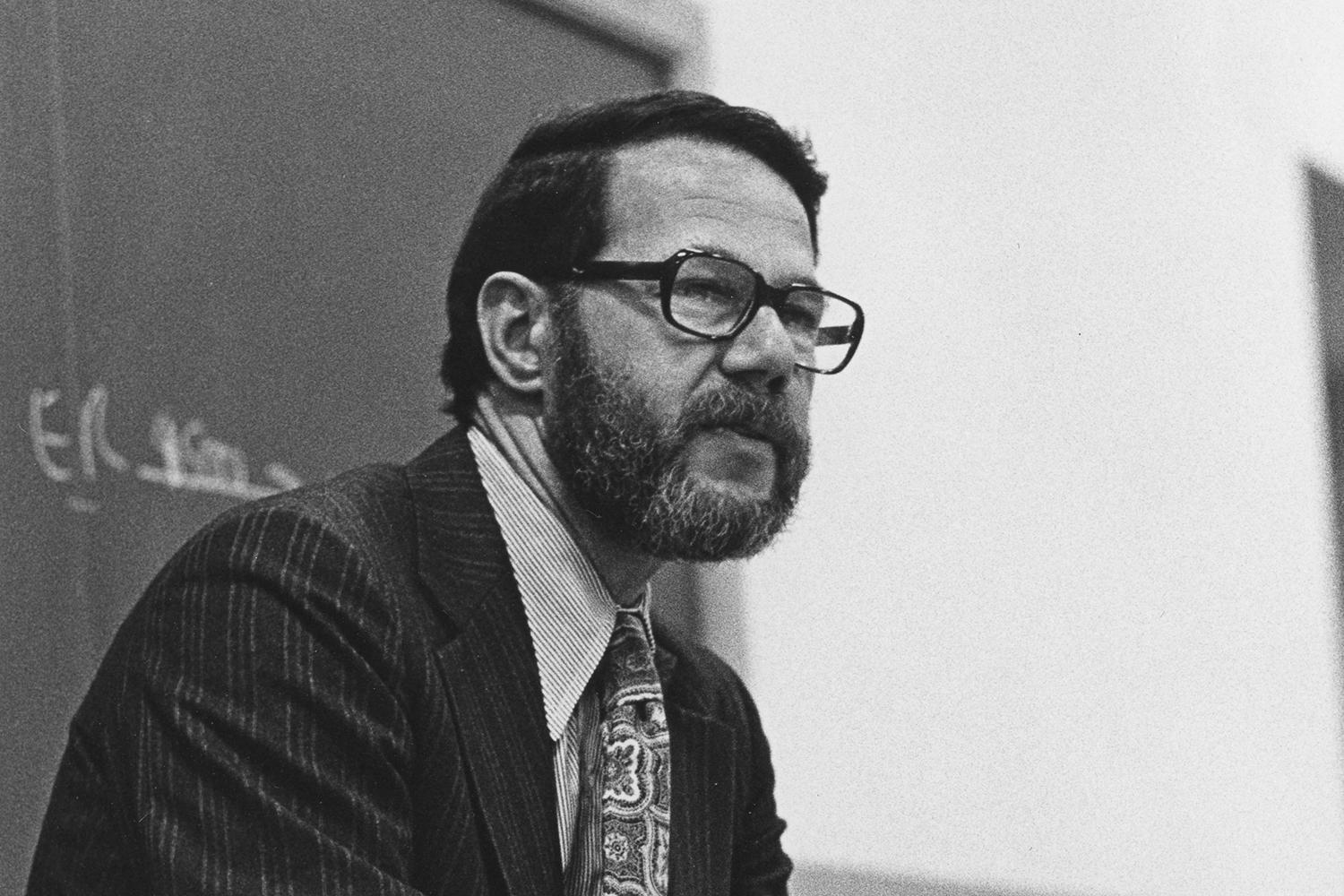
The philanthropic landscape looked very different when PACS was founded, said founding faculty co-director Woody Powell, who led the center alongside Debra Meyerson. “When we began building PACS, consider that the Gates Foundation was only five years old, social media was a twinkle in Mark Zuckerberg’s eyes, and big philanthropy was represented by people like Michael Bloomberg and the Hewlett Foundation, and the traditional New York-based foundations such as Ford and Rockefeller.”
Since then, the sector has been transformed. The rise of extraordinary new fortunes, many of them created on the West Coast, has shifted the epicenter of philanthropy, with new donors, organizations, and approaches to giving accompanying the dramatically larger scale of private resources that can be directed towards public purposes. “The founding mission of PACS was to shine a light on the activities of philanthropy and how it was influencing civil society and the nonprofit sector,” Powell said. “Today, that light is needed more than ever.”
Seeding ideas and building a field
PACS has helped build the intellectual foundations of a field that was just taking shape 20 years ago. Landmark books by PACS faculty have influenced how scholars, philanthropists, and practitioners think about the role and responsibilities of philanthropy and civil society. Rob Reich’s Philanthropy in Democratic Societies (2016) and Just Giving (2018) examine the ethical and political dimensions of philanthropy and its relationship to democracy and justice. Paul Brest's Money Well Spent (2008, second edition 2018) offers a practical framework for strategic philanthropy, while Woody Powell and Patricia Bromley's The Nonprofit Sector: A Research Handbook (2020) sets a research agenda for nonprofits increasingly intertwined with the public and business spheres.
PACS has been committed to field-building by investing in scholars who study the sector, creating space for interdisciplinary conversations spanning the social sciences, humanities, engineering, law, education, and business. For example, since 2014, PACS has convened the Junior Scholars Forum to highlight young scholars and contribute to the development of their scholarship in the general areas of civil society and philanthropy, to increase the sense of intellectual community, and to enhance the overall quality of research in the field. Over 90 graduate students and nearly 50 postdoctoral scholars researching philanthropy and civil society have been part of the PACS community, carrying those ideas to institutions and communities beyond Stanford.
One alumna, Priya Fielding-Singh, PhD ’18, reflected on how PACS gave her a home for questions that didn’t fit neatly within a single academic discipline – questions about inequality, institutions, and how people and communities navigate and collectively bring about social change. “Just as importantly, PACS was a place where rigorous scholarship and real-world impact were treated as deeply connected rather than separate pursuits. That orientation has stayed with me throughout my career and continues to shape how I approach my work today: starting with people’s lived experiences, understanding the systems that shape them, and asking what it would take to change those systems for the better.”
Women and the future of philanthropy
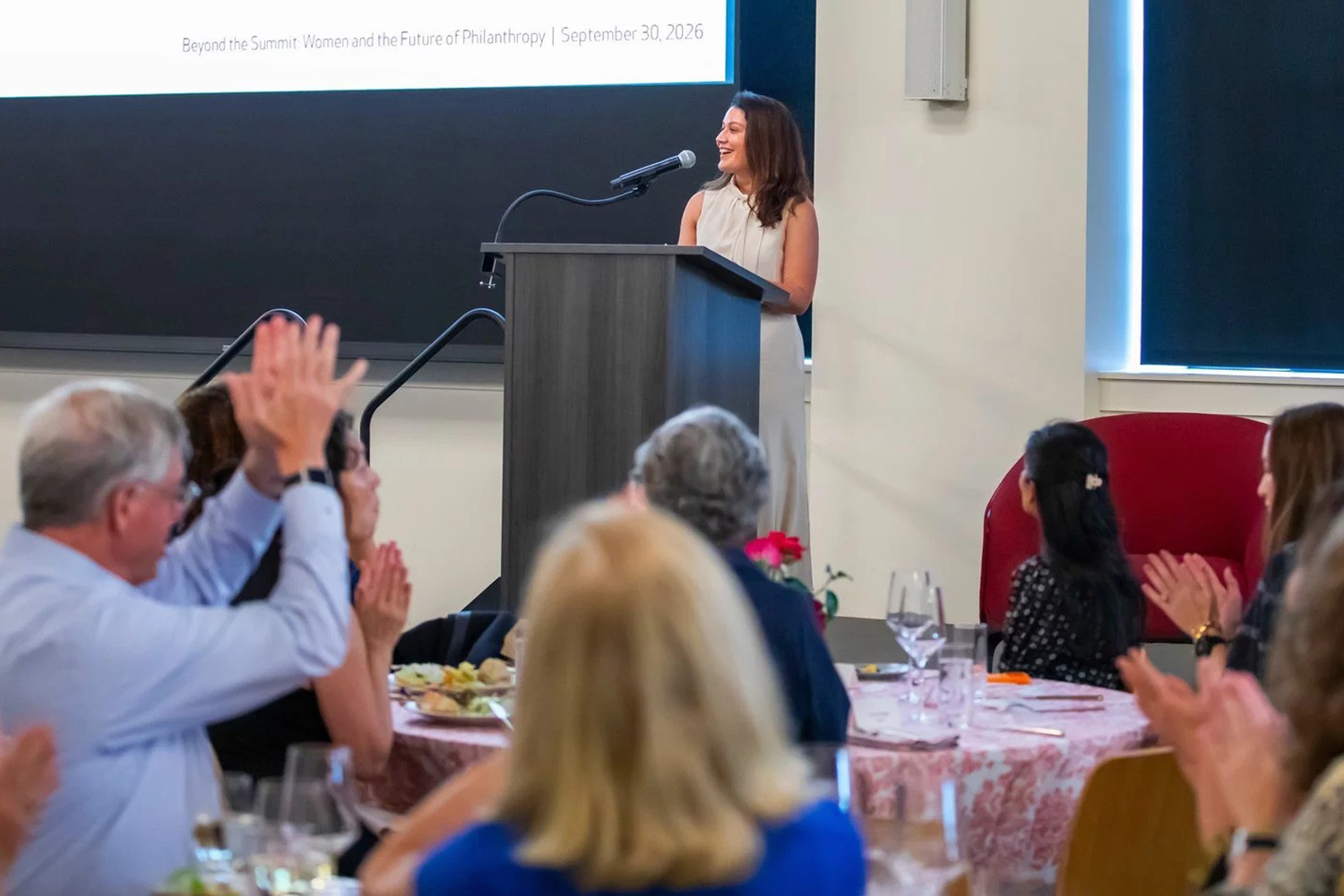
The Stanford Center on Philanthropy and Civil Society (Stanford PACS) celebrated its 20th anniversary this year with a series of events, including the standing-room-only Women and the Future of Philanthropy convening on Oct. 1. The convening featured a fireside chat between President Jonathan Levin and Melinda French Gates, several breakouts and attendee-led unconferences, and a closing with Jeff Raikes and Lily Sarafan, chair of the Stanford University Board of Trustees. More than 150 faculty, philanthropists, and nonprofit leaders gathered to reflect on the critical role women have played in building and shaping PACS over the past two decades, and on their growing leadership across philanthropy and civic life. The program explored how women are investing philanthropic capital, building coalitions, partnering with government and business, and strengthening communities through leadership in the arts, business, and sports.
These shifts underscore why the center matters today, said executive director Priya Shanker, who has been part of PACS for the past 10 years. “Wealth is being created and transferred at extraordinary scale. New generations of donors are emerging. And women are increasingly shaping not only where philanthropic capital goes, but how decisions about wealth, leadership, and social impact are made.”
Bringing critical inquiry to philanthropic practice
That deep connection between scholarship and impact is inherently designed in the events at PACS. One philanthropist commented on how “incorporating Stanford scholars and academic research in conversations made the [events] unique.” By creating a space for reflection, critical dialogue, and even disagreement, Stanford faculty have engaged hundreds of philanthropists in examining both the problems they seek to address, and the assumptions underlying their approaches. Faculty bring evidence and research to these questions, inquiring about what has worked and lessons learned, and encouraging possible new theories of change.
Faculty affiliates including Brandice Canes-Wrone and Larry Diamond (Hoover Institution), Katherine Casey (King Center on Global Development), and Nicole Ardoin (Doerr School of Sustainability) have posed timely questions to donors on democracy, global aid, and climate. Through the convening power of PACS, faculty bring their research to philanthropists and leaders making critical decisions about how philanthropic dollars are directed. Faculty also reach a global audience through the center’s Stanford Social Innovation Review, which serves millions of social change leaders across the world.
Educating the next generation of leaders
PACS has also brought the study of philanthropy and civil society into Stanford classrooms. More than 330 students have learned to engage directly with the ethics and practice of grantmaking. Through the Philanthropy for Sustainable Development course offered every spring quarter, students explore different approaches to philanthropy, questions of impact and effectiveness, and the ethical considerations involved in deciding how limited resources can best be used to promote sustainable development.
The course puts these lessons into practice by giving students the opportunity and real-world responsibility to evaluate nonprofit organizations and recommend recipients for a substantial class grant. Since 2012, students have helped direct over $1.3 million to nonprofit organizations.
The course has also shifted how some students think about giving. Alina Sandra Santander Vinokurova, MS in aeronautics and astronautics ’26, said: “I now know it’s not necessary for me to be wealthy or to wait for the right moment before engaging in philanthropy; there are causes which I already care about and for which I am already able to contribute either my time or my money. I found this to be a huge realization, and I intend to keep it in mind for the rest of my life."
Navigating a new era of philanthropy
Today, the questions at the heart of PACS’ work have become even more critical. Rob Reich reminded attendees at the Women and the Future of Philanthropy convening about how important it is to get the new era of philanthropy right. In a democratic society, he said, philanthropy can play at least two distinctive roles – supporting pluralism and enabling discovery – but “neither role gives philanthropy a blank check. The freedom philanthropy enjoys also creates obligations: to listen, to learn, to be transparent about its purposes, and to recognize the difference between contributing to our common life and determining it.”
PACS faculty scholarship has pushed the field to ask harder questions: not only about how philanthropy can be more effective, but what responsibility comes with wielding philanthropic dollars, what partnership large challenges require, and how to learn alongside communities and social change leaders.
To continue leading the field in this new era, the center is embarking on a year of discovery to define the next twenty years of PACS. The center’s new faculty director, GSE professor Mitchell Stevens, says, “We are asking fundamental questions about what is changing in philanthropy and civil society, what needs to be reimagined, and what role PACS can play in helping the field navigate what comes next.”
As the center enters its third decade, a new generation of Stanford scholars will take up these questions alongside Stevens and PACS’ inaugural cohort of faculty affiliates from all seven schools across the university.
For more information
This story was originally published by Stanford PACS.