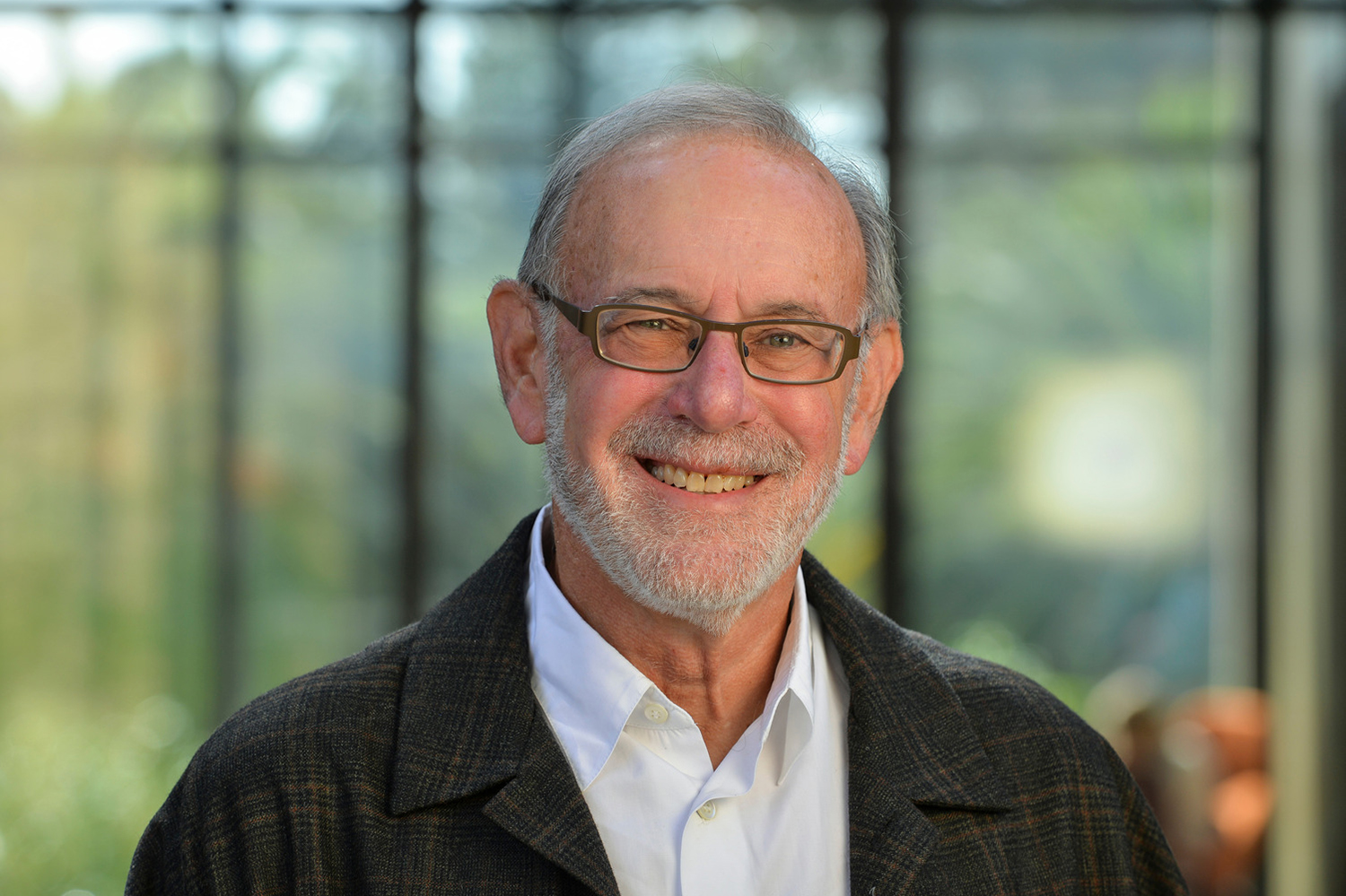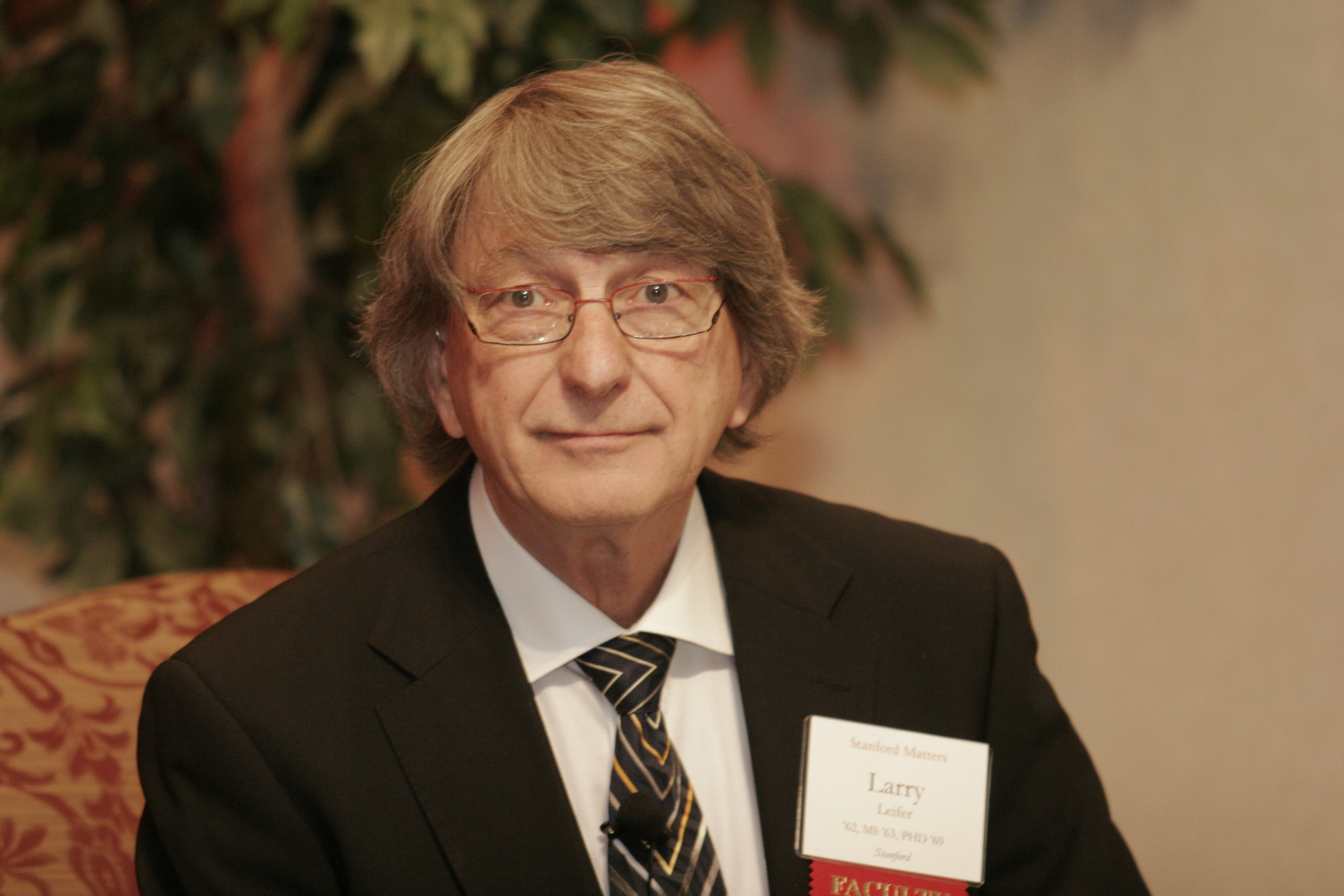
Larry John Leifer, a professor emeritus of mechanical engineering at Stanford University whose research helped advance the study of design teams as an engineering discipline, died at his Stanford home on Aug. 29, 2026. He was 86.
Over 46 years on the faculty, Leifer connected engineering with art, anthropology, neuroscience, computer science, and the social sciences. He developed assistive technologies, founded Stanford’s Center for Design Research (CDR), and helped build an international community around a question that became central to his work: What do designers do when they design?
Described by colleagues as warm and playful, Leifer challenged assumptions, sidestepped bureaucratic obstacles, and gave students room to pursue uncertain ideas.
“I never met a teacher who was better at getting students to think ‘outside the box’ than Larry Leifer,” said Mark Cutkosky, the Fletcher Jones Professor in the School of Engineering. “He was enormously creative on his own, and he inspired students to go beyond what they were comfortable with.”
Instantly recognizable in a yellow jacket or colorful tie, he treated researchers, students, and administrative staff with equal respect and congeniality.
“I really enjoyed working with Larry. He treated everyone fairly, and every interaction felt uplifting,” said Gosia Wojciechowska, CDR administrator. Despite profound hearing loss later in life, he drew people into focused conversations with a handheld microphone linked to his hearing aid.
“He was tremendously empowering,” said Jan Auernhammer, a research engineer in mechanical engineering who worked with Leifer at CDR. “He put us front and center.”
David L. Jaffe, an adjunct lecturer in Stanford’s Mechanical Engineering Design Group, described Leifer as an anti-manager who gave people the freedom to find their own way. “He always gave people a chance to prove themselves,” Jaffe said.
From neuroscience to human-centered engineering
Born July 2, 1940, in Ely, Nevada, Leifer grew up in Santa Barbara, California. He came to Stanford as an undergraduate, earning a bachelor’s degree in engineering science in 1962, a master’s in product design in 1963, and a doctorate in biomedical engineering, focused on neuroscience, in 1969.
After graduation, he studied human information processing for two years as a postdoctoral fellow at NASA Ames Research Center. He then spent two years as a NASA research exchange fellow at the Massachusetts Institute of Technology’s Man-Vehicle Laboratory. He took a position as an assistant professor of biomedical systems analysis at the Swiss Federal Institute of Technology in Zurich in 1973.
Leifer returned to Stanford’s mechanical engineering department as a faculty member in 1976. His early work applied his knowledge of the nervous system to helping people with disabilities live independently.
A new federal initiative was establishing rehabilitation research and development centers to address challenges faced by veterans with disabilities. Leifer saw the potential to adapt industrial robots for that purpose and persuaded Margaret Giannini, who led the Veterans Administration’s (VA) Rehabilitation R&D Service, to support his research and a center in Palo Alto. In 1978, he became founding director of the Stanford Rehabilitation Engineering Research and Development Center at the Palo Alto VA hospital, serving until 1989.
At the center, Leifer led the Human-Machine Integration section, which developed assistive devices and tested them with users from the nearby spinal cord injury service. Projects included a wheelchair controlled by head movement and robotic arms that helped people handle objects and prepare food.
“He was really a person who said yes to everybody,” said Jaffe, whom Leifer recruited to the VA in 1979. “Larry was responsible for my career and all my success. He’s done the same for lots of others, too.”
A classroom for discovery
Alongside his rehabilitation research in the late 1970s, Leifer established the Smart Product Design Lab and course that challenged students to integrate microprocessor technology into product designs through hands-on experiments and multidisciplinary expertise.
“The vision that products – beyond personal computers – would have microprocessors was visionary at the time,” said Auernhammer, who researches Stanford design history. “I am confident that we call them ‘smartphones’ and ‘smart cities’ because many product designers who took Larry’s classes brought the term into industry over the decades.”
Bill Burnett, BS ’79, MS ’82, an adjunct professor of mechanical engineering and executive director of Stanford’s Life Design Lab, recalled all-nighters in 1978 trying to program a robot arm to bake a cake – a project well ahead of its time. While his team successfully programmed it to dance with an egg, it still sometimes tried to move through the table.
“You don’t remember the tests. You don’t remember the problem sets,” Burnett said. “I probably did a hundred projects at Stanford. That one I remember.”
Later, Leifer helped transform the graduate sequence now known as ME310: Global Engineering Design Innovation into an international collaboration. An early teaching assistant in the course, he was its lead instructor by 1988, when he also became a full professor. One of his major changes to the course was connecting student teams with corporate sponsors and peers overseas.
This stems from Leifer’s hunting metaphor on the value of collaboration: Designers should venture into unfamiliar territory with people whose different backgrounds and abilities helped them see possibilities they would miss alone.
Building those partnerships meant navigating funding arrangements and university rules designed for more conventional projects. Burnett, who later helped lead Stanford’s design programs, recalled that Leifer often pressed ahead with the collaborations despite these institutional obstacles.
Over an academic year, teams learned from users, explored solutions, and built prototypes while negotiating languages, time zones, and different ways of working.
Leifer called this dancing with ambiguity: moving forward without knowing every variable, learning through experiments, and remaining willing to change direction.
“Larry believed that ambiguity isn’t something to be afraid of, but in fact is an opportunity,” said Sheri Sheppard, the Richard W. Weiland Professor in the School of Engineering, Emerita, and a longtime collaborator. “It means things haven’t been defined yet.”
Another Larry-ism, “All design is redesign,” encouraged students to recognize possibilities in ideas borrowed and adapted from other settings.
Even his choice of words nudged students toward discovery. Coursework became missions rather than assignments. George Toye (PhD ’89), an adjunct professor of mechanical engineering and former doctoral student, kept sheets of paper on which Leifer had challenged his students to “Show me the magic,” then more magic, in letters large enough to fill the page.
“He was very clever with words and understanding how words transform what you think and how you think,” Toye said. “This is something that he was artful at doing – to inspire students to question, explore, and do more.”
Studying how designers design
Leifer’s interest in how students approached design problems informed his research goals. In 1984, he founded Stanford’s Center for Design Research to investigate how engineers develop ideas and how their interactions shape the results. His classrooms became settings for studying design teams at work.
At CDR, Leifer and his graduate students recorded teams talking, sketching, and building prototypes. They studied how questions opened new lines of inquiry and how teammates developed a shared language. Their work helped establish collaboration as something researchers could observe and measure.
From 1997 to 2001, Leifer was founding director of the Stanford Learning Laboratory, an initiative of Stanford President Gerhard Casper. With drama professor Larry Friedlander and assistant director Sheppard, he explored how technology and collaboration could improve learning.
Ade Mabogunje, MS ’90, PhD ’97, a senior research engineer in mechanical engineering and former doctoral student, recalled bringing Leifer a page of ideas while gesturing beyond its edges. Leifer suggested using a much larger sheet. Mabogunje returned with an 8-foot-long map of his thinking.
“Then he understood what I was trying to say,” Mabogunje said. “That was something I saw him do and it influenced me in even the way I do interact with students these days – just to make sure they’re expressing themselves in whatever medium allows them to get their ideas out.”
Leifer was also a founding member of the Hasso Plattner Institute of Design at Stanford, informally known as the d.school, which opened in 2005. The institute brings students from different fields together to tackle problems through design thinking.
Leifer received the American Society of Mechanical Engineers’ Teaching Innovation Award in 1997 and an honorary doctorate from the Royal Institute of Technology in Stockholm in 2009. He retired in 2022.
A life beyond the laboratory
Leifer surfed while growing up in Santa Barbara, built surfboards as a Stanford student, and later took up windsurfing. He also enjoyed playing squash and badminton, painting, and spending time with family in Switzerland. He met his wife, Ines, during his time in Zurich.
Family photographs filled his office, and students gathered at his home for barbecues. At commencement, he tucked champagne bottles into his academic robe’s sleeves to give to his newly hooded doctoral graduates.
Leifer is survived by his wife, Ines Jenal Leifer; his children, Simeon Leifer, Tjarko Leifer, Sascha Leifer King, Kalani Leifer, and Chiara Leifer; five grandchildren; and his brother, Vincent Leifer.
A celebration of Leifer’s life will be held on Tuesday, Nov. 10, 2026, from 4:30 to 5:30 p.m. at Stanford Memorial Church, followed by a reception in the Peterson Building Atrium. If you’d like to attend, RSVP.
For more information
This story was originally published by Stanford Engineering.
Author
Jennifer Welsh
Writer
Jennifer Welsh