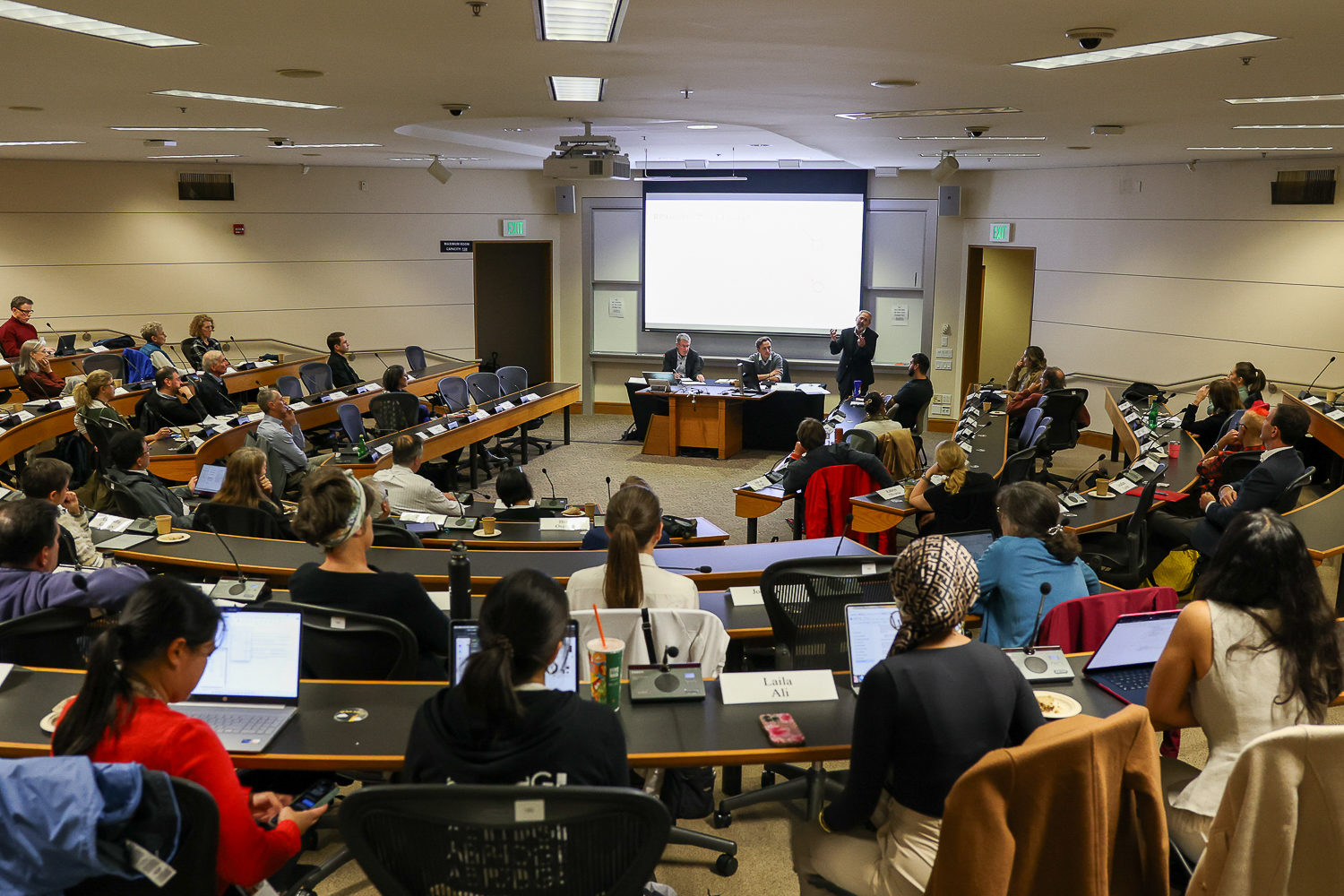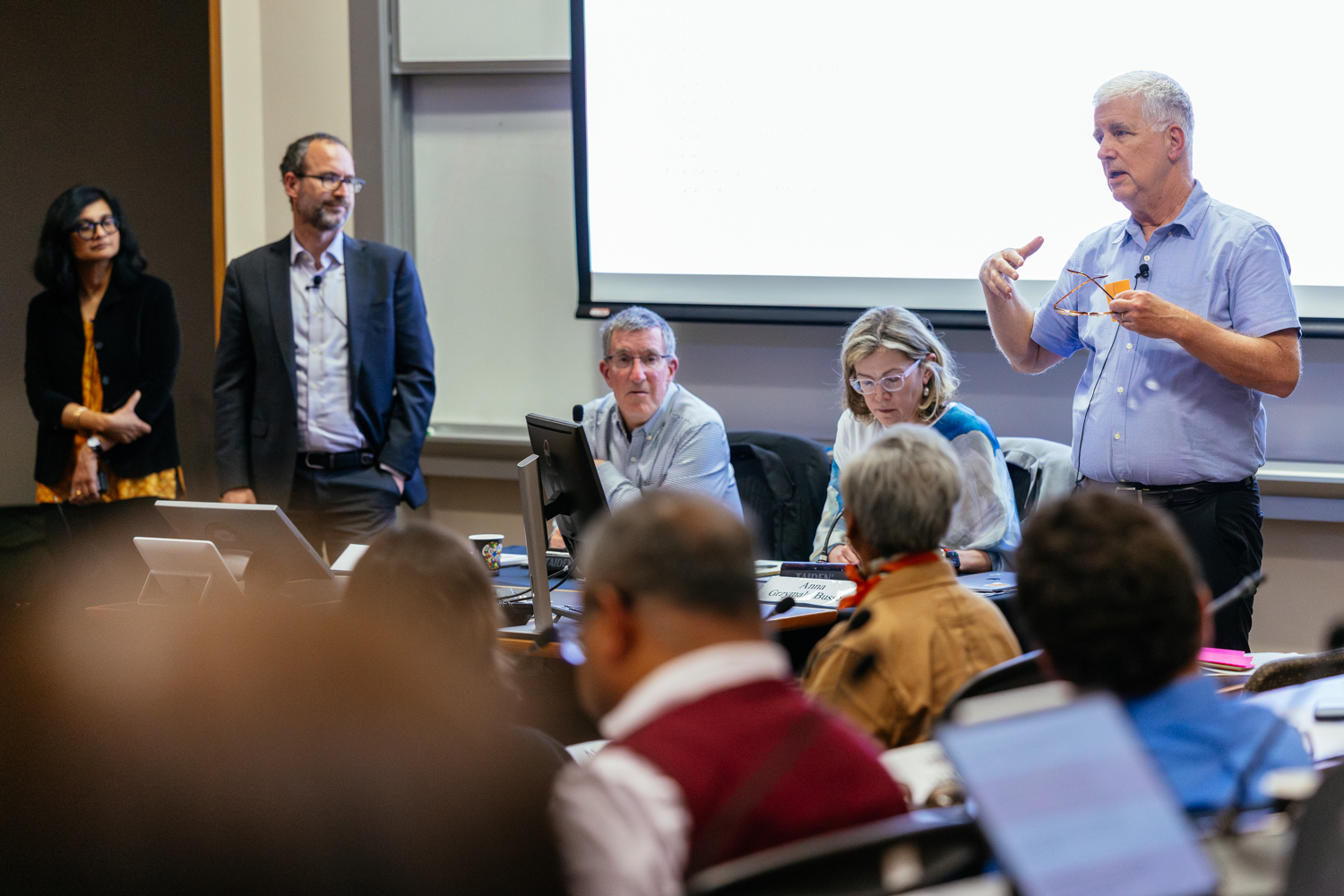
The Faculty Senate voted against proposed changes to the authorship policy in the Research Policy Handbook following spirited discussion Thursday.
The proposed updates would have replaced a 1985 statement from then-university president Donald Kennedy that currently serves as guidelines on authorship. However, senators expressed concerns about how the proposed changes would apply across different disciplines.
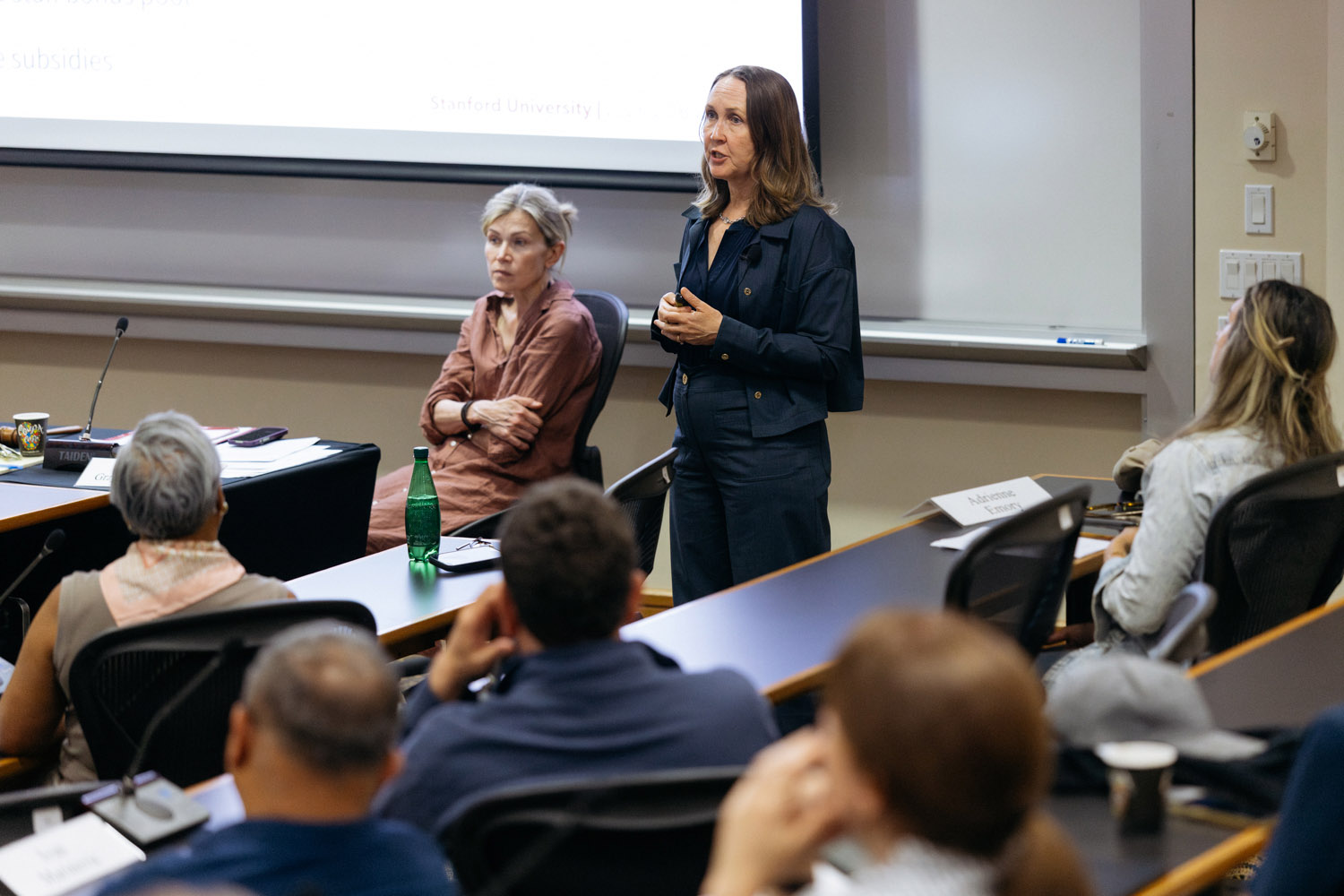
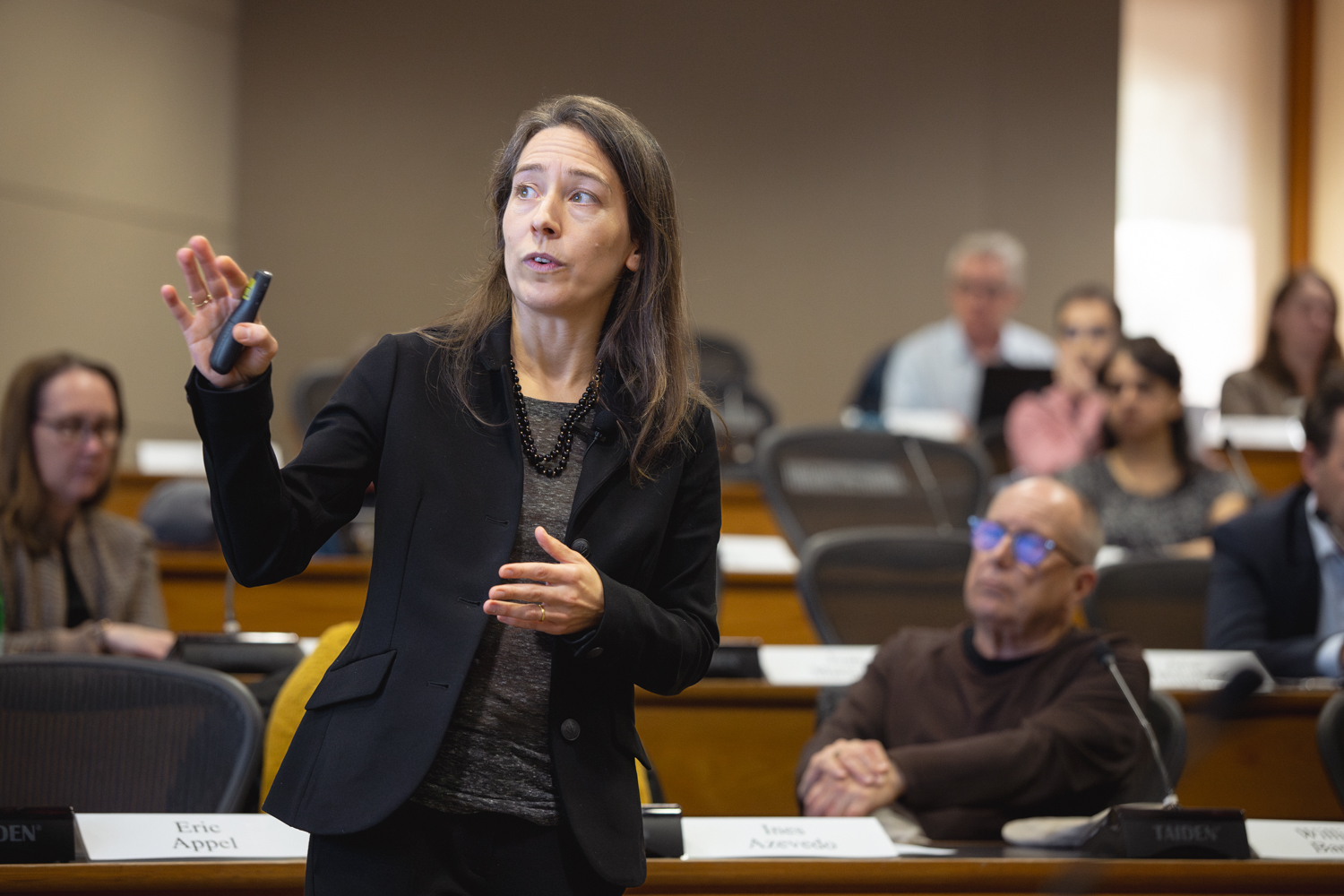
The proposed changes from the Committee on Research (C-Res) were intended to clarify authorship criteria, address present-day complexities of authorship, and preserve consistency with historic guidance while recognizing Stanford’s diverse disciplinary environment, said C-Res Chair Meagan Mauter, an associate professor of civil and environmental engineering and of photon science.
Several senators said they were concerned about how the proposed policy, particularly criteria around revising or reviewing work, would apply to papers with hundreds of authors from various institutions.
Keith Winstein, associate professor of computer science and, by courtesy, of electrical engineering, said parts of the proposed policy, such as a requirement to seek written permission to acknowledge people in a paper, would be a significant departure from his field’s current practice.
“I’m in a conference-based field, so we’re usually submitting up to a deadline, and if I had to get written permission from everyone, I acknowledge that would be a big change. That is not how we do it in computer science,” Winstein said.
Mauter emphasized that the proposed policy was meant to set a university standard of behavior. “There are journal-specific authorship policies and dispute resolution processes that we do not attempt to replace with this policy,” she said. “What this policy is aiming to do is set a standard of behavior for us as a community [that] encourages us to properly represent people’s intellectual contributions without usurping the intellectual contributions of others.”
Some senators expressed concerns about how the proposed authorship criteria would be defined or applied and said they would prefer to revisit the matter at another time.
The senate approved amendments to the proposed updates, but a motion to approve the amended policy proposal failed.
Remarks from leadership
President Jonathan Levin expressed gratitude for the work of University General Counsel Debra Zumwalt, who will be retiring in August after 26 years at Stanford in her current role. Levin announced that a search committee has been formed to find her successor, and that it will be chaired by Provost Jenny Martinez and Jay Mitchell, professor emeritus of law.
In the provost’s remarks to the senate, Martinez highlighted the announcement that Yvonne “Bonnie” Maldonado, the Taube Professor in Global Health and Infectious Diseases in the School of Medicine, has been appointed vice provost for faculty advancement (VPFA) starting this year. Martinez said she was very grateful for the work of C. Matthew Snipp, the Burnet C. and Mildred Finley Wohlford Professor in the School of Humanities and Sciences, who held the position since 2019.
“Matt has been one of those generous university citizens who’s continually taken on tasks, including serving as interim Vice Provost for Student Affairs in the ’23-24 academic year, as well as shepherding the Office of Faculty Advancement to develop a number of important programs,” Martinez said. “I’m just extremely grateful to Matt for having served in that role, and grateful to Bonnie for stepping into that role.”
Debra Satz, dean of the School of Humanities and Sciences, announced that H&S has rescinded its decision to not have student speakers at its approximately 50 graduation ceremonies. H&S had made the change to address concerns that some speeches in recent years were unrelated to the student’s field of study, their experiences in the major, or the occasion, Satz explained.
However, H&S reconsidered the matter after university community members expressed concerns, and the school will return to its previous practice of having departments and programs decide how to structure their own graduation ceremonies.
Other matters
The Senate’s Steering Committee reported that it received a petition on protecting academic and political freedom from members of the Senate of the Academic Council of Stanford, and a joint resolution from the Associated Students of Stanford University to reinstate the university’s land acknowledgement.
Senators also heard a memorial resolution for Peter Duus, the William H. Bonsall Professor in History, Emeritus, in the School of Humanities and Sciences. Duus, a widely published expert on the history of Japan and East Asia, died Nov. 5, 2022, at the age of 88.
The senate adjourned to executive session following the vote.
For more information
Mauter is a senior fellow at the Stanford Woods Institute for the Environment and at the Precourt Institute for Energy, and associate professor, by courtesy, of chemical engineering.
Writer
Chelcey Adami