Colorectal cancer has long been considered a disease of older adults. Your risk of developing a tumor in your lower digestive tract increases with age, so for decades, doctors didn’t recommend regular screening until age 50.
But something is changing: The rates of colorectal cancer in younger adults, in their 30s and 40s, have been rising steadily.
Today, colorectal cancer is the No. 1 cause of cancer deaths among people under age 50, and 45% of new diagnoses occur in individuals younger than 65 years, up from just 27% in 1995. In 2021, the U.S. Preventive Services Task Force lowered the recommended age to begin colorectal cancer screening to 45.
Data suggest that some of the most recent increase in cases among people aged 45 to 50 could be due to this change in screening age, but it doesn’t explain the full rise in incidence, the fact that numbers were already changing before 2021, or the jump in diagnoses in people under 45.
“I’m confident this is not something we’re picking up just because we have better technology or are screening more people,” said Shruti Patel, MD, a gastrointestinal medical oncologist at Stanford Medicine and the VA Palo Alto Health Care System. “The increase in colorectal cancer is real, and it is something that everybody in this field finds deeply concerning.”
In 2025, Patel and Curtis Chong, MD, formed a dedicated early-onset gastrointestinal cancer clinic, one of a growing number of specialized programs at major cancer centers dedicated exclusively to patients diagnosed before the age of 50. The clinic is designed to address the unique challenges that younger patients face, from fertility preservation to navigating parenthood or early-career job loss during treatment.
We spoke with Patel and other colorectal cancer experts at Stanford Medicine about what makes early-onset colorectal cancer unique, how it’s typically treated, and what you should know about prevention and early detection.
I’m confident this is not something we’re picking up just because we have better technology or are screening more people. The increase in colorectal cancer is real, and it is something that everybody in this field finds deeply concerning.Shruti PatelClinical Assistant Professor of Oncology
What is early-onset colorectal cancer?
Colorectal cancer is an umbrella term for cancers that develop in the colon or the rectum, two sections of the lower digestive tract. Early-onset colorectal cancer refers to cases diagnosed in adults under the age of 45 or 50; different clinics and organizations define it differently.
While both colon and rectal cancers are on the rise in younger adults, rectal cancer in particular is increasing at a notable rate in this age group. According to the American Cancer Society, rectal cancers now account for about a third of all colorectal cancer diagnoses, up from a quarter in the mid-2000s.
Why are more adults in their 30s and 40s getting colorectal cancer?
Patel and other experts don’t know why there’s an increase in early-onset disease.
“There are risk factors, but there isn’t a single culprit,” Patel said. “Everyone in this space wants a villain. But I think the honest answer right now is that we don’t know, and that’s a really uncomfortable thing to hear.”
Genes don’t evolve quickly enough to explain how rates of colorectal cancer have leapt in just a few decades, so researchers suspect that the change is driven by environmental exposures. That means that something – or multiple things – in our environment or habits changed around the middle of the 20th century. An increase in obesity and processed food consumption, which are both known risk factors for colorectal cancer, likely contribute to the increase, but they can’t explain all of it.
“Many studies suggest sedentary lifestyle and diets high in ultra-processed foods are associated with modest increases in colorectal cancer risk,” Patel said. “But those numbers don’t add up to the full change we’re seeing. There’s something else going on that we don’t yet understand.”
There is also some evidence showing that, in the U.S., early-onset colorectal cancer rates are higher among minorities. That observation is, in part, driving the efforts of Chong, MD, PhD, a gastrointestinal oncologist at Stanford Medicine’s Redwood City campus, which serves a primarily Hispanic population. He is collaborating with Patel to develop what may be the first early-onset colorectal cancer support program conducted in Spanish.
Chong also notes that the gut microbiome – the community of bacteria living in your digestive tract – is an open question when it comes to drivers of colorectal cancer. Research is underway to determine whether the microbial environment of the colon differs meaningfully between younger and older patients, or between people who develop cancer and those who don’t. Those differences, some scientists speculate, might help explain why some people develop cancer earlier.
What experts do agree on: This is not happening because younger people are doing something obviously wrong.
Arden Morris, MD, a professor of surgery and health policy at Stanford Medicine who has studied colorectal cancer disparities for decades, points out that risk factors exceed the choices a person makes in their daily life.
“There’s a lot that’s invisible to us with something like diet,” she said as an example. “Even if you’re making healthy food choices, is this related to fertilizers, pesticides or some kind of exposure in the food chain? Right now, we don’t have very good answers.”
Patel agrees.
“Most of my patients are genuinely healthier than I am,” she said. “They go to the gym, they cook at home, they have more muscle than I do. When I look at them, I can’t explain their cancer from the known risk factors. Which tells me there is something else there.”
What are the symptoms of early-onset colorectal cancer?
The symptoms of colorectal cancer are the same regardless of age: rectal bleeding, changes in bowel habits, abdominal pain, unexplained weight loss, fatigue, nausea and anemia. The problem isn’t that younger patients experience different symptoms; it’s that those symptoms are less likely to be taken seriously.
Morris says that in younger patients, bleeding is frequently dismissed as hemorrhoids and can go undiagnosed for many months before anyone considers cancer. Similarly, stomach cramps might be attributed to diet, food intolerances, irritable bowel syndrome or even anxiety. Sometimes the first sign taken seriously is obstruction: A tumor that has grown large enough to block the intestine, causing severe abdominal pain that gets written off as a stomach ache.
One Stanford Medicine study concluded that younger patients take 40% longer to be diagnosed with colorectal cancer than older patients and, by the time they are diagnosed, nearly three in four patients under 50 have advanced disease.
“If you’re having weight loss, fatigue, anemia or changes in your bowel habits, ask your doctor directly: Could this be a young-onset colorectal cancer?” recommended Chong. “Primary care physicians may see only a handful of these cases in their entire career, so it’s OK to raise it yourself.”
Patel says that knowing your own body – and your own bowel habits – can go a long way in catching colon cancer early. She recommends keeping track of how often you poop and what it looks like. If it suddenly changes and stays that way for more than a few weeks, get it checked out.
“I tell my patients: Check your poop once a week,” Patel said. “Know what’s normal for you. If something changes – color, consistency, frequency – write it down and bring it to your doctor.”
When should colorectal cancer screening be considered?
For adults at average risk, current guidelines recommend beginning colorectal cancer screening at age 45. For anyone under that threshold who has no symptoms and no family history – even if you’re nervous about cancer – clinicians advise waiting.
“Screening is designed as a population-level tool,” Morris said. “We weigh the harms and costs against the benefits and do what’s best for the population at large. Right now, that comes down to screening at 45. But if someone has multiple family members with cancer, we’re going to take a different approach.”
If a parent or sibling was diagnosed with colorectal cancer, most guidelines recommend beginning screening earlier, typically 10 years before the age at which that relative was diagnosed. Anyone with a strong family history should discuss a personalized screening timeline with their doctor.
For standard screening in average-risk individuals without symptoms, there are several options that can detect abnormal cells in your colon and rectum:
- Colonoscopy, in which a doctor uses a thin scope to visually examine the entire colon and remove suspicious growths. A colonoscopy is typically recommended every 10 years.
- Stool-based tests like Cologuard, which detects abnormal DNA in stool samples, or FIT, which looks for blood in the stool, are noninvasive options that can be done at home every one to three years.
- Shield is a newer blood-based test that can be used every three years to look for circulating tumor DNA in a blood sample.
How do people choose between screening methods?
For anyone with symptoms, regardless of age, the testing advice changes entirely. A colonoscopy is associated with an improvement in long-term survival and is recommended over a stool or blood test.
“Colonoscopy is preferred because it’s not only diagnostic; it’s also therapeutic,” Chong said. “If there’s an early-stage polyp, removing it right then and there can cure the cancer.”
If you start with an at-home stool or blood test and it comes back positive, he added, you’ll be referred to a colonoscopy next, so going straight for the colonoscopy can save time.
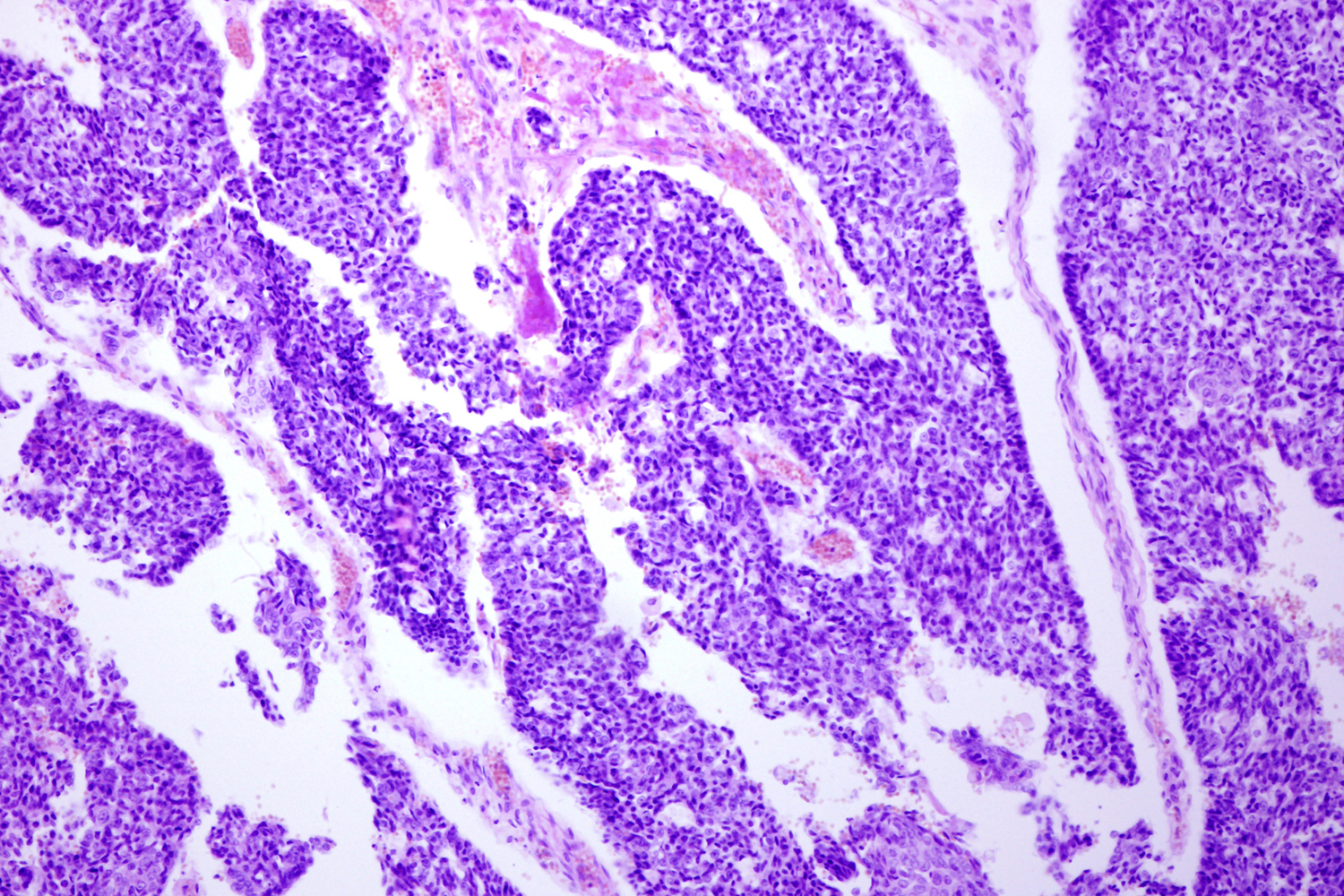
If the colonoscopy reveals a suspicious growth, a biopsy will be taken during the procedure and sent to a pathologist to confirm whether cancer is present and what type it is. Follow-up imaging tests will be used to determine the extent of the disease and check whether the cancer has spread to nearby lymph nodes or distant organs like the liver or lungs.
What are the treatment options for early-onset colorectal cancer?
Colorectal cancer, when caught early, is highly treatable. Even at more advanced stages, there are effective options, and research is quickly moving toward new therapies.
Which treatment is recommended depends on the stage and location of the cancer, as well as which DNA mutations are found in the tumor. Based on these characteristics, treatment protocols are generally similar regardless of age.
“The mutations we see in younger patients tend to be the same ones we see in older patients,” Chong said. “So, the targeted therapies we use follow the same logic.”
- Surgery is often the first step for colorectal cancer that hasn’t spread. Minimally invasive approaches are used when possible, which Morris says leads to significantly faster recovery and lower rates of complications.
- Chemotherapy and radiation are typically used in conjunction with surgery for more advanced disease. Younger patients, because they are generally physically stronger, often receive more aggressive chemotherapy regimens, but Patel cautions that more aggressive treatment doesn’t always translate to better outcomes. “Throwing the kitchen sink at someone upfront doesn’t necessarily extend survival,” she said. “And it can deplete your options on the back end. Treatment must be tailored, not just maximized because someone is young.”
- Immunotherapy is emerging as an exciting treatment. These drugs, which harness your immune system to attack tumor cells, work best in colorectal cancers with certain genetic mutations. Morris points to a small study in rectal cancer patients where this approach produced dramatic results. “Every single patient in that study had the cancer completely melt away,” she said. “One of the open questions now is whether this type of cancer – the kind that responds so well to immunotherapy – is more common in younger patients. We don’t know yet, but it would be very encouraging if it were.”
Chong sees the treatment pipeline for colorectal cancer expanding significantly in the next few years. RAS inhibitors, a class of targeted drugs currently in late-stage clinical trials for pancreatic cancer, are likely to find their way into colorectal cancer treatment next.
“There’s nothing yet that’s specific to young-onset colorectal cancer,” he said. “But the field is moving fast, and we want to make sure that younger patients are included in the clinical trials that will define what comes next.”
The unique challenges of a young adult diagnosis
A colorectal cancer diagnosis is hard at any age. But for adults in their 30s and 40s, it may interrupt lives at a particularly difficult time – in the middle of careers, young families and mortgages.
“It really feels odd to be sitting in the waiting room as a young person with cancer, surrounded by people who are much older,” Chong said. “That sense of isolation is real, and it’s one of the reasons having a community – of other patients and social workers who understand your unique situation – matters so much.”
Career and financial planning
Treatment often makes it impossible to work full time, but stopping work means losing income and potentially losing health insurance precisely when it is needed most. A study by Morris and colleagues, published in Journal of the American Medical Association, found that only 55% of colorectal cancer patients kept their job throughout treatment.
“I have patients who have had to move back in with their parents,” Patel said. “I have patients who have lost their homes. The financial toxicity of cancer at this age is something that doesn’t get talked about enough, and it must be part of the conversation from day one.”
Fertility
For younger people still thinking about starting a family or having more kids, one of the most time-sensitive decisions after a colorectal cancer diagnosis involves fertility. Chemotherapy leads to only about a 5% risk of ovarian or testicular failure, but radiation for rectal cancer raises the risk of ovarian failure dramatically – 70% to 80%. Both Patel and Morris emphasize that fertility needs to be discussed upfront, not as an afterthought.
“For young women who are going to need radiation, we can sometimes surgically move the ovaries out of the radiation field,” Morris said. “And we advise both men and women to bank eggs or sperm. These are options, but they must be discussed at the very start.”
Survivorship
For colorectal cancer survivors who still have many decades of life ahead of them, the aftermath of cancer can hit differently. Patients must deal with long-term repercussions of their treatment, including bowel dysfunction, sexual dysfunction and pelvic floor complications. Ostomies – surgical openings in the abdomen used to divert waste when part of the colon or rectum has been removed – can affect body image and the ability to return to regular life and work.
Beyond these immediate effects, young survivors also face an increased risk of future cancers. One in six people treated for early-onset colorectal cancer go on to develop a second, unrelated primary cancer – sometimes as many as 10 to 15 years after their original diagnosis. Long-term follow-up care and regular cancer screening are recommended.
What can you do to lower your risk of developing colorectal cancer?
While no single cause has been implicated in the rise in early-onset cases of colorectal cancer, researchers have identified a range of factors that increase an individual’s risk of developing the cancer at any age. These fall into two broad categories: factors you can modify and factors you cannot.
Modifiable risk factors
- Diet: Diets high in processed meats (like hot dogs and some lunch meats) and red meats (like beef and lamb) are associated with increased colorectal cancer risk. Leafy green vegetables and sufficient fiber are associated with a lower risk.
- Sedentary lifestyle: Physical inactivity is consistently linked to higher cancer risk. Morris recommends being active at least three days a week and building in breaks from prolonged sitting. Chong notes that exercise also reduces the risk of cancer recurrence in survivors.
- Alcohol use: Associated with increased risk, particularly for cancers of the upper digestive tract but with growing evidence in colorectal cancer as well.
- Obesity and metabolic health: Obesity is linked to 13 cancer types, according to the U.S. Centers for Disease Control and Prevention.
- Smoking: An established risk factor for multiple gastrointestinal cancers.
Nonmodifiable risk factors
- Age: Risk increases with age.
- Family history: Having a first-degree relative with colorectal cancer significantly increases risk and may mean you should start screening at a younger age.
- Genes: There are several known genetic syndromes, including Lynch syndrome and familial adenomatous polyposis, that substantially raise your risk of colorectal cancer. These hereditary syndromes account for only about 20% of early-onset colorectal cancer cases; most young adults diagnosed have no known genetic explanation for their disease.
Emerging and uncertain risk factors
Researchers are actively investigating several additional exposures, none of which have been conclusively linked to colorectal cancer in young adults:
- Microplastics: Patel flags this as an emerging area of concern, with a growing body of laboratory and observational research suggesting that microplastics may contribute to intestinal inflammation.
- Childhood antibiotic exposure: Some studies suggest an association, though the evidence is not yet robust.
- Fertilizers and pesticides: Morris raises this as an open question, particularly given the timing of when early-onset colorectal cancer cases began to increase.
For more information
Patel and Chong are clinical assistant professors of oncology.
This story was originally published by Stanford Medicine.
Writer
Sarah Williams