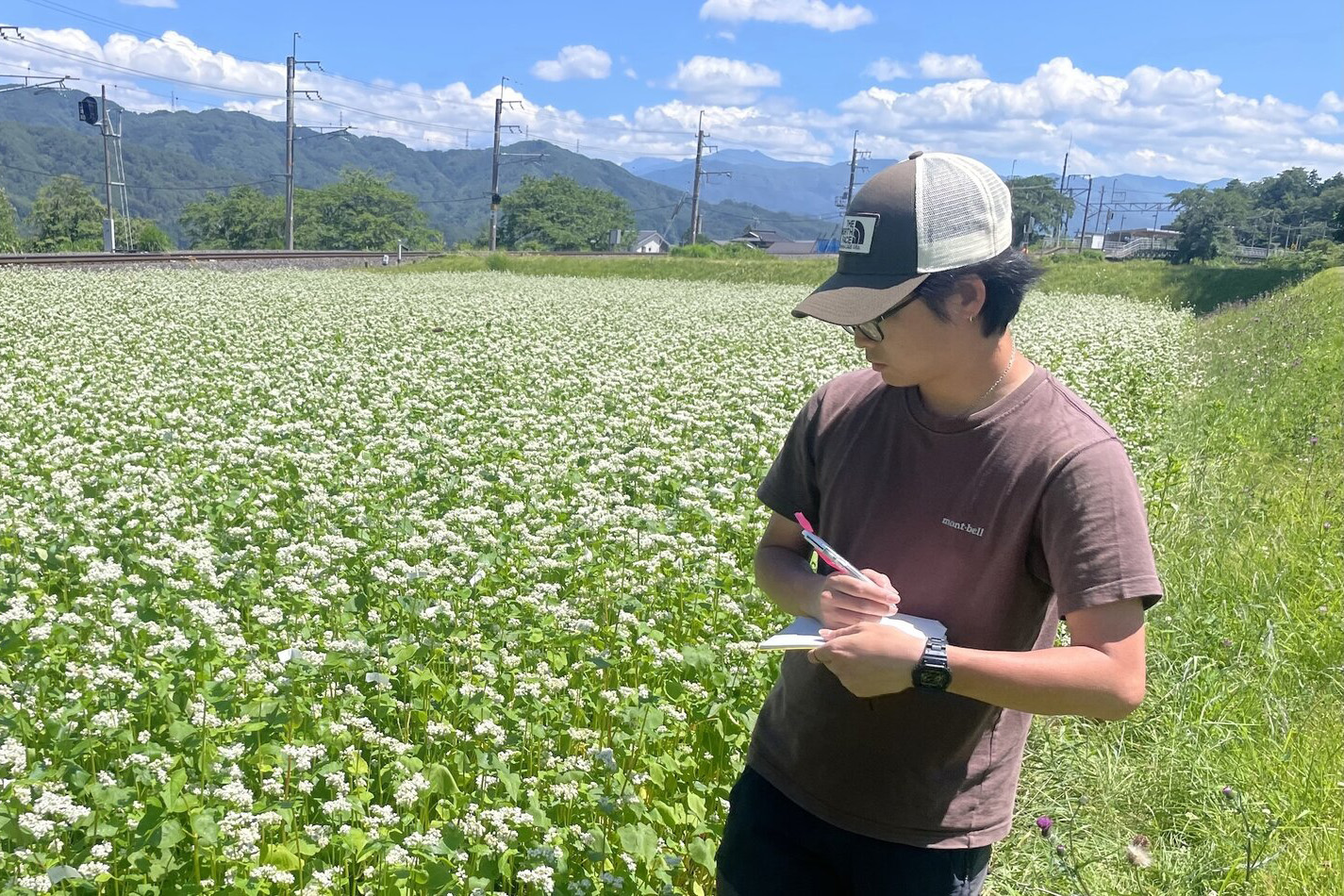
Beside a field of buckwheat in Japan’s Nagano Prefecture, Stanford biologist Tadashi Fukami and a team of researchers swabbed nectar from dusky pink wildflower blossoms.
They hoped microbes deposited in the nectar by bees, butterflies, and other pollinators could hold a key to reversing declining buckwheat yields and potentially protecting yields of other crops without the need for additional land, fertilizer, pesticides, or antibiotics.
The team took bacteria and yeast from the blossoms, cultured them in a lab, then sprayed them on buckwheat as a kind of microbial perfume to attract pollinators, whose visits are needed for flowers to develop into seeds. “If we can produce scents that are attractive to insects, based on what we learn about microbial ecology, that could be one technique that can be developed to increase pollination,” said Fukami, who is a professor of biology in the School of Humanities and Sciences and of Earth system science in the Stanford Doerr School of Sustainability.
The experiment in Japan is part of expanding efforts at Stanford and beyond to understand interactions between food systems, nature, and Earth’s changing climate – and to develop solutions so people worldwide have reliable access to food as the global population surpasses 8 billion.
“We can make sure that everyone in the world has access to a nutritious diet,” said agricultural ecologist David Lobell, a professor of Earth system science. “And we can do that without destroying the environment.”
David Lobell applies data science and AI to address longstanding challenges with food insecurity and agricultural production. He is the Benjamin M. Page Professor in the Stanford Doerr School of Sustainability and the Gloria and Richard Kushel Director of the Center on Food Security and the Environment. | Video by Stanford Doerr School of Sustainability
The challenge is intensifying as rainfall patterns shift, droughts grow more extreme, and many families find groceries becoming unaffordable or out of reach. As many as 800 million people globally at times go a day or more without food because of inadequate access.
“There’s nobody in the world who is going to choose climate or environmental goals over feeding their own family. So, ultimately, if you’re not feeding people, they are going to prioritize that over any other goal that feels far in the future or in some distant place,” said Lobell, who applies data science and artificial intelligence to address longstanding challenges with food insecurity and agricultural production. “We’re not going to solve the climate problem if we don’t solve the food problem.”
Climate and food are deeply intertwined, with nearly 30% of humanity’s annual greenhouse gas emissions linked to growing, processing, distributing, and disposing of food. Those greenhouse gases trap heat in Earth’s atmosphere, leading to heat waves, droughts, and other extremes that hurt crop yields. Land-use changes such as clearing wild plants and trees for agriculture drive additional emissions, simultaneously unlocking carbon stored in trees and soil and taking away natural carbon sinks.
“In many regions, climate is a real threat to the productivity of the system, so understanding how to deal with that threat, how to change how we grow food is important,” said Lobell. “These are really big problems, and to solve them, we’re going to have to leverage every tool. The most likely tools to give us quick wins are going to be the ones that have not been around for very long – the ones that we haven’t tried yet,” he said.
Faculty spotlight
Jennifer Burney combines physics, economics, and on-the-ground data to understand how practical, local solutions and better policies can help improve access to food, support farmers, and drive down planet-warming emissions. Read more about Burney's research in her own words.
Fundamental knowledge
Fukami and collaborators Scott Fendorf and Giulio De Leo chose the rural town of Iijima in Japan to study how microbial-ecological relationships affect seed production in an agricultural landscape because it has hundreds of small fields where farmers grow buckwheat the same way. “These fields provide a unique opportunity to study ecological interactions among agricultural flowers, nectar microbes, and insect pollinators,” Fukami explained.
Supported by the Doerr School of Sustainability’s Discovery Grant program, the team is focusing on buckwheat because many different types of insects pollinate it. “Bees, flies, beetles, wasps, ants, and even nocturnal moths have been shown to contribute to buckwheat pollination. This diversity allows us to look at the response of a range of pollinating insects to microbial application and the consequences for crop yield,” said Fukami.
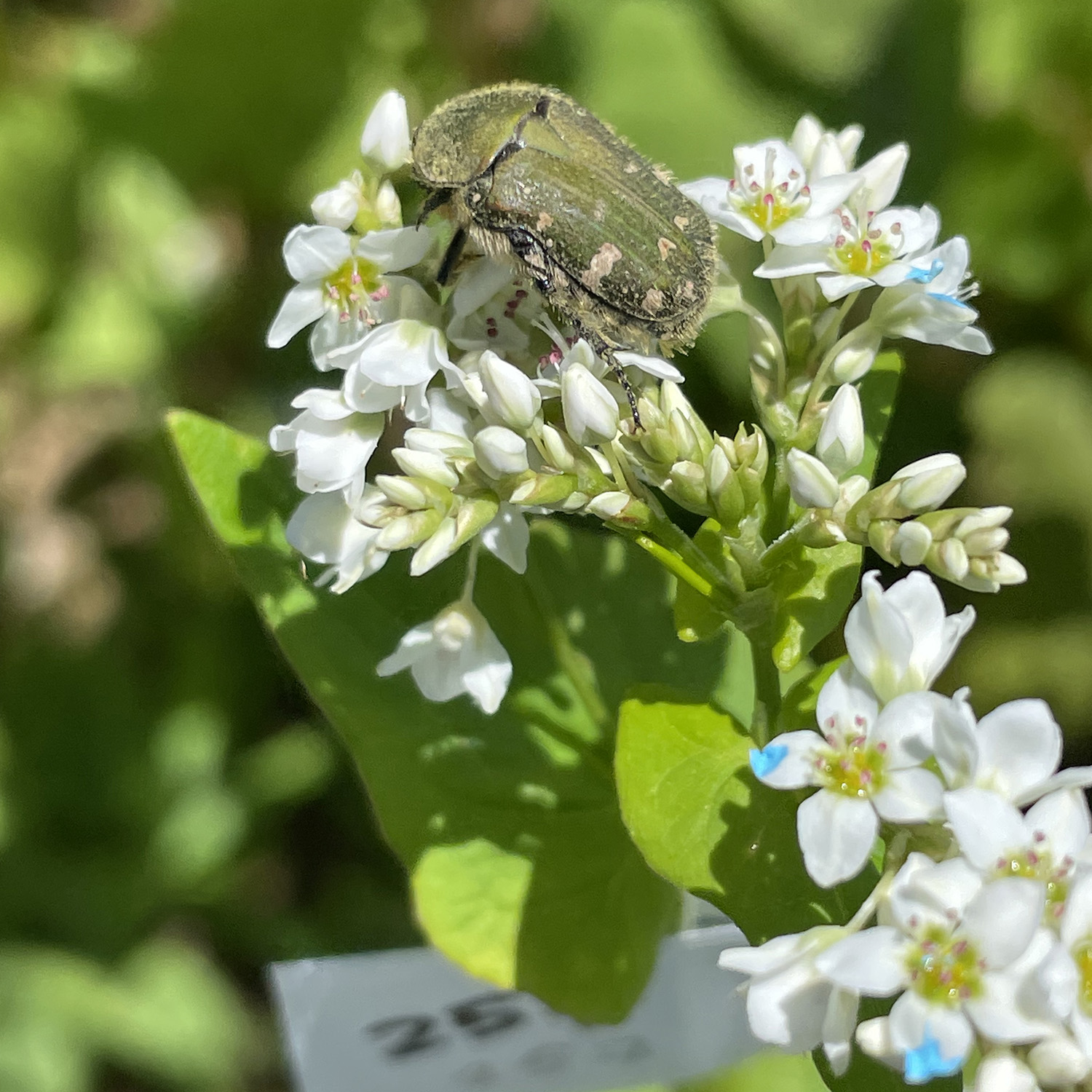
A pollinator alights on a buckwheat plant. | Courtesy Tadashi Fukami
The team’s experiment spraying cultured microbes onto buckwheat has yielded some encouraging results. Treated plots attracted more insects than untreated areas, and the buckwheat plants then produced more seeds. In some of the treated plots, nearly three out of every ten flowers developed into seeds – about 50% higher than the rate for untreated plots.
In Iijima, buckwheat farmers generally don’t use antibiotics or pesticides because they’re not needed, Fukami said. So, the current experiments are focused squarely on understanding the fundamental relationships at play.
In future work, the researchers aim to gather more evidence about whether microbial perfumes could attract pollinators across different types of insect-pollinated crops, potentially helping to boost yields without requiring heavy use of chemicals to keep pests, fungi, and bacteria away. “I think that the insects respond to this scent regardless of what crops we have, so it can be apple, pear, plum, or almond,” Fukami said.
Diving deep on food research
As part of its mission to create a thriving, enduring future for humanity and the planet, the Stanford Doerr School of Sustainability nurtures and funds research in seven focus areas. Learn more about the school’s food-related work.
Seafood in acidic oceans
Beyond the land’s edge, fish and other aquatic foods that nourish billions of people around the world are under threat from overfishing and warming seas. But it remains unknown how the nutritional value of these critical “blue foods” may be affected by ocean acidification caused by rising concentrations of carbon dioxide in Earth’s atmosphere.
In a first-of-its-kind study supported by the Discovery Grant program, scientists including Stanford marine ecologist Fiorenza Micheli and PhD student Christopher Knight are working to find answers by combining marine and nutrition sciences in a natural laboratory.
Off the coast of Ischia, Italy, Micheli explained, underwater volcanic vents release carbon dioxide and create conditions similar to future acidified oceans. From these vents and nearby control sites, the team has collected the herbivorous fish Sarpa salpa, also known as dreamfish, along with samples of the seagrass and algae the fish like to eat.
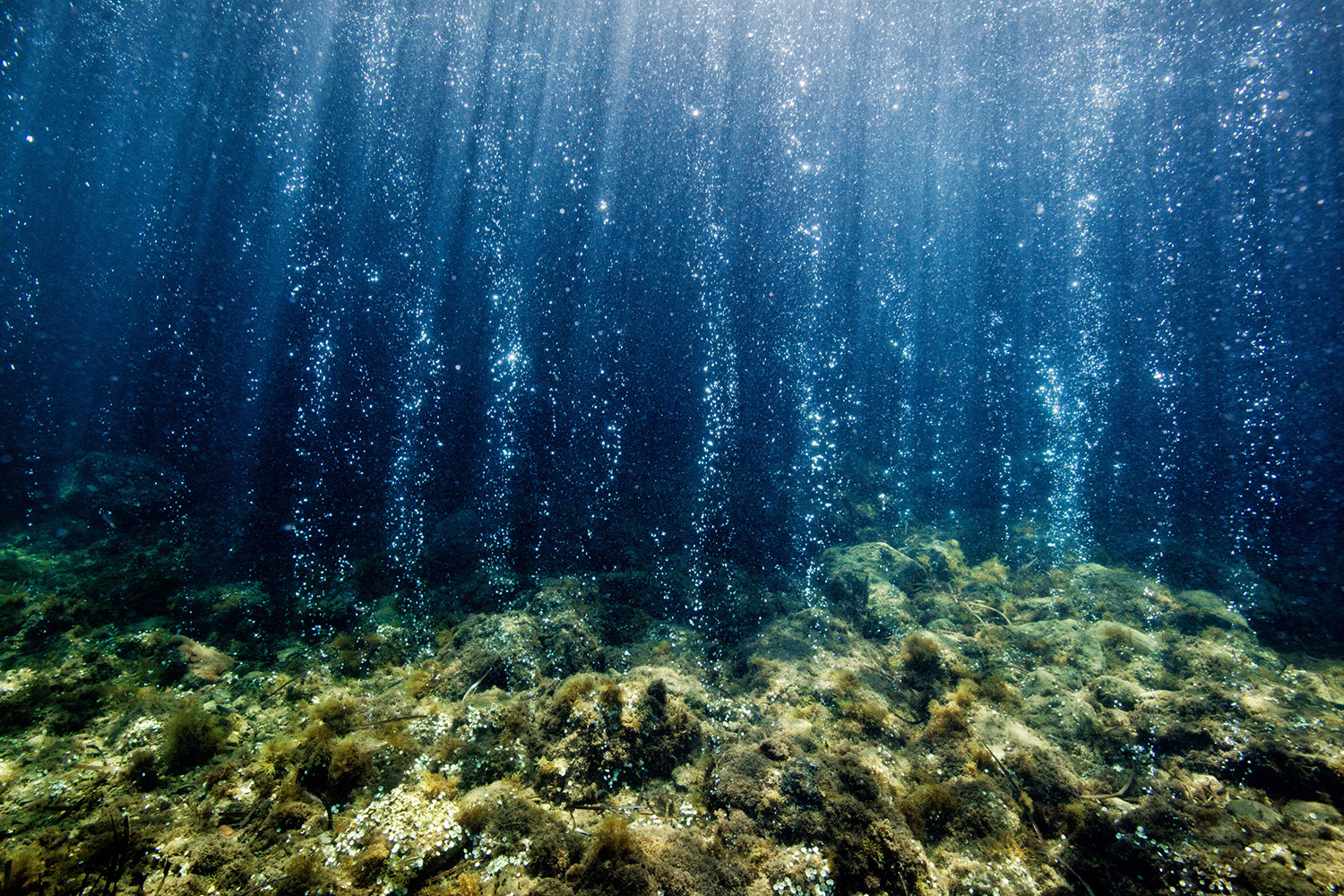
Carbon dioxide seeps from the ocean floor near Ischia, Italy. | Pasquale Vassallo, Stazione Zoologica Anton Dohrn
Now the team is analyzing how levels of protein, fatty acids, and micronutrients like minerals compare in samples from the different sites to understand how nutrient content may change across the food web in an acidified ocean.
Previous research has shown that nutrient levels of food crops grown in high-CO2 field conditions on land can fall by as much as 17%, but scientists understand less about this issue in aquatic foods. “Understanding how the nutritional values of seafood will be impacted by ocean acidification is an important, yet missing, first step to predicting the future capacity of the ocean to provide nutritious seafood,” said Micheli, a professor of oceans and co-director of the Stanford Center for Ocean Solutions.
Integrating blue foods into climate strategies
The Stanford Center for Ocean Solutions catalyzes research, innovation, and action to improve the health of the oceans for the people who depend on them most. Learn more about the Center for Ocean Solutions.
Hidden food costs
The factors that shape food prices and affordability range from production and labor costs to geopolitical conflicts, supply chain disruptions, water shortages, severe weather events, and policies from the local to the national level.
Beyond the straightforward dollar value of tax breaks and government subsidies, the full cost of public policy decisions around food and agriculture is often opaque to consumers and even lawmakers themselves, said Stanford environmental law expert Deborah Sivas. Largely unaccounted for in these decisions are potential damages to human health and well-being caused by air, water, and climate pollution from industrialized agriculture.
For example, agriculture and livestock are among the world’s largest sources of methane, a short-lived but potent greenhouse gas, and nitrates from cow manure can contaminate groundwater needed for irrigation or drinking. “This industry is allowed to really externalize those costs in a way that you couldn’t if you’re a local sewage treatment plant,” Sivas said.
With support from the Doerr School of Sustainability, Sivas and colleagues are now working to calculate how much government subsidies for the meat and agriculture industry in California cost society as a whole, accounting not only for direct costs to taxpayers but also harm to public health and the environment.
She hopes the efforts lead to greater accountability for pollution in animal agriculture, and perhaps level the playing field for plant-based alternatives. “The goal of this first phase of work is to come up with the full costs of these concentrated animal feeding operations and then use that as the basis for thinking about policy reforms,” she said.
Scaling a meat alternative from lab to market
The Stanford Ecopreneurship Podcast talks with Impossible Foods founder Pat Brown and its first employee, Nick Halla, now CEO of GigaClimate. Visit the Stanford Ecopreneurship Podcast.
Power of fermentation
In Stanford’s bioengineering labs, assistant professor Vayu Hill-Maini and collaborators are inventing new ways to make food with fewer natural resources through fermentation.
As part of a project supported by the Stanford Sustainability Accelerator, which is based at the Doerr School of Sustainability, Hill-Maini’s team aims to create nutritious and appealing foods from a common fungus that grows on discarded parts of produce, grains, and nuts. “We’re taking local waste streams, fermenting and experimenting, and creating things that are delicious,” he said.
It’s hardly a new technology. Fermentation is the process that gives us beer, yogurt, sourdough, sauerkraut, and more. But Hill-Maini and Accelerator project collaborators including Earth system science professor Steve Davis think it could be applied in new ways to reduce the amount of food waste that ends up in landfills, where it produces methane as it decomposes.
Food waste and loss explained
A recent edition of the Energy Spotlight from Stanford University’s Understand Energy Learning Hub explores energy and food wastage. Learn more at the Energy Spotlight.
The team is working with a fungus called Neurospora intermedia, which has long been cultured in Java, Indonesia, to transform soy pulp or other castoff parts of food into a dish known as oncom.
At Stanford, following recent research showing that the fungus can grow on regularly discarded bits of dozens of kinds of fruits, vegetables, grains, and nuts, the group is working to optimize the fermentation process and genetically modify the fungus for nutritional value, color, and taste. So far, Hill-Maini’s lab has produced parmesan-like “cheese” from fermented waste and two other ingredients, and a fungus-based burger and “salami” using wastes such as soybean pulp and spent brewery grain.
In early November, groups of Stanford students had a chance to try their hand at transforming fresh-picked produce through fermentation on the Doerr School of Sustainability’s educational farm, guided by chef Ramón Perisé, a culinary master of the form.
Images by Harrison Truong
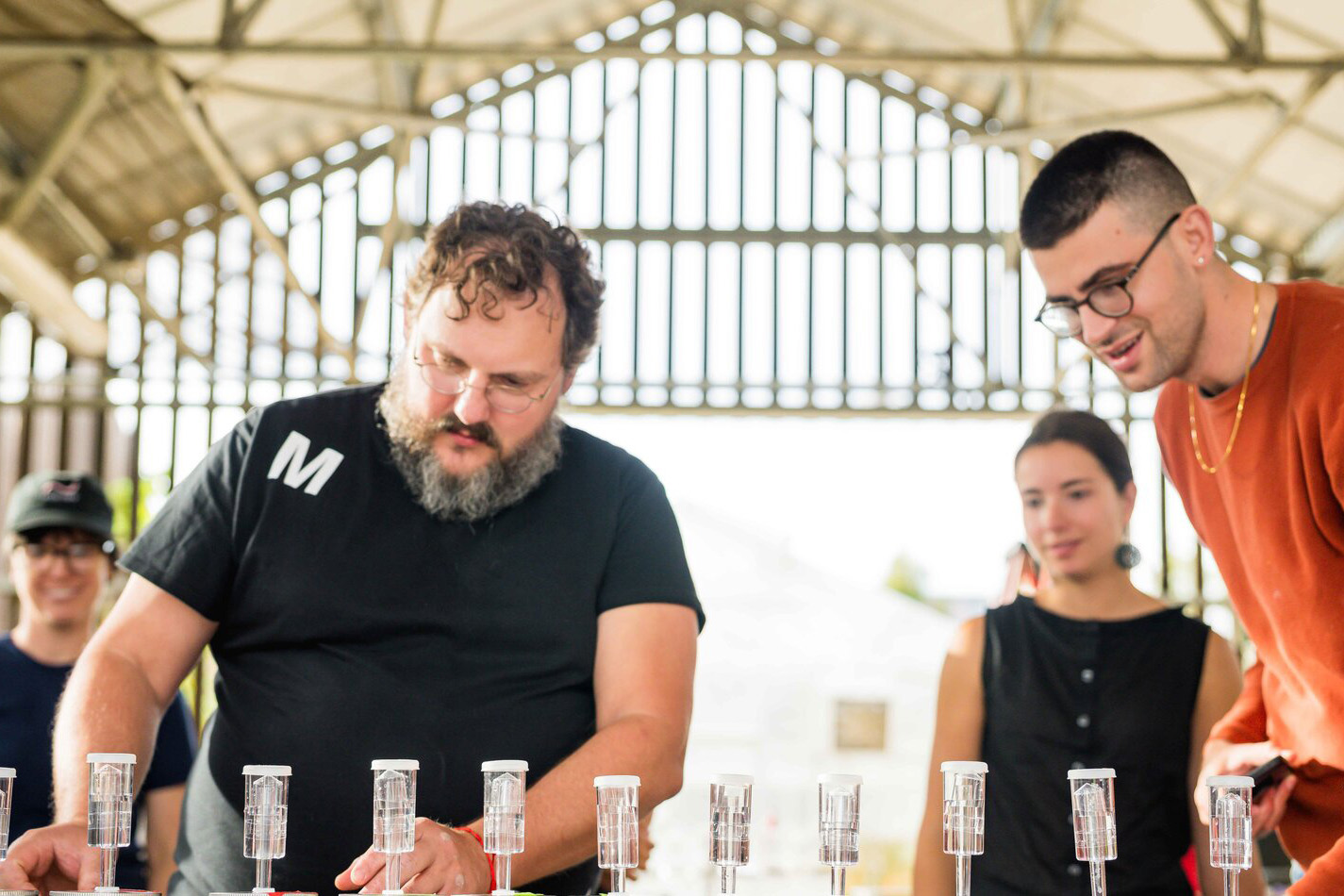
Doerr Visiting Artist Ramón Perisé of the restaurant Mugaritz leads a fermentation workshop in the Terry Huffington Barn at the O’Donohue Family Stanford Educational Farm.
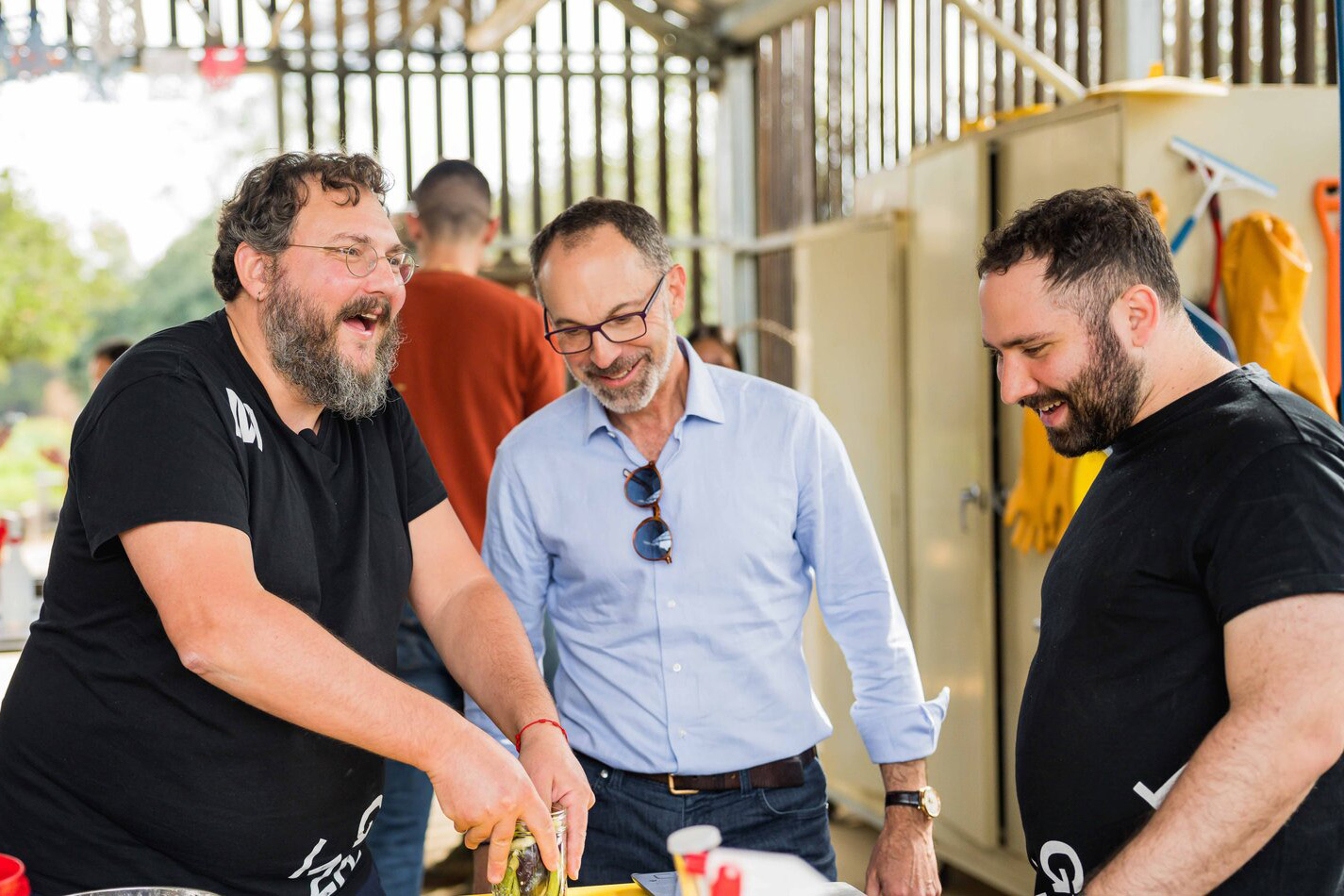
Perisé demonstrates fermentation techniques during the workshop for Stanford students, faculty, and staff.
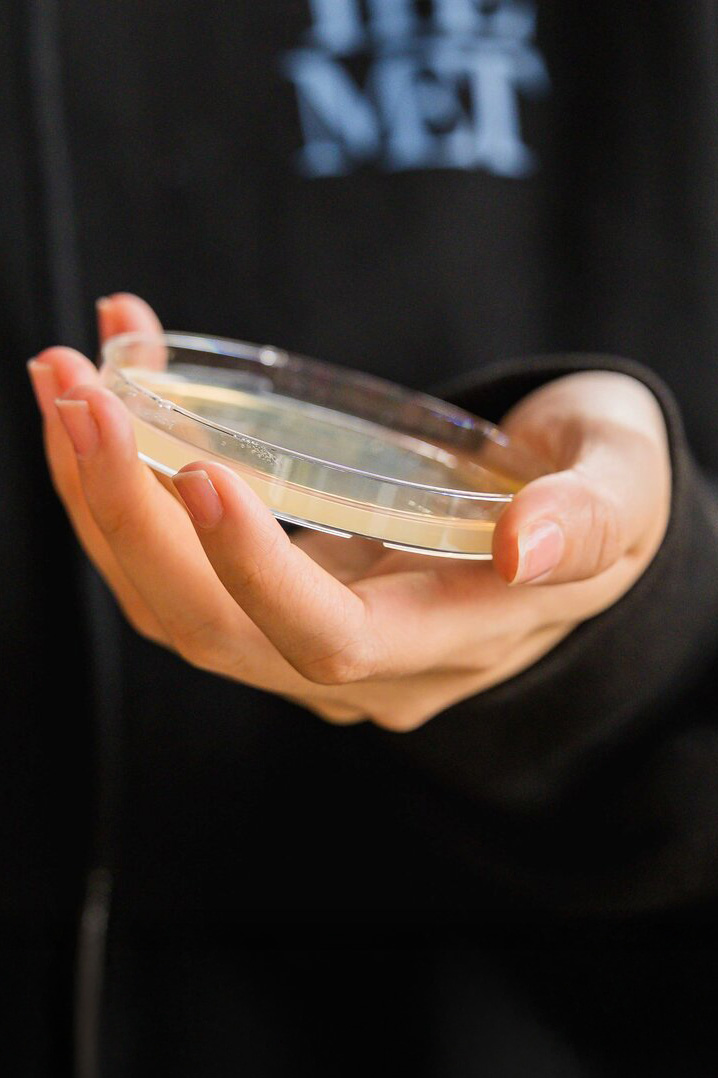
A student examines a Petri dish during the workshop.
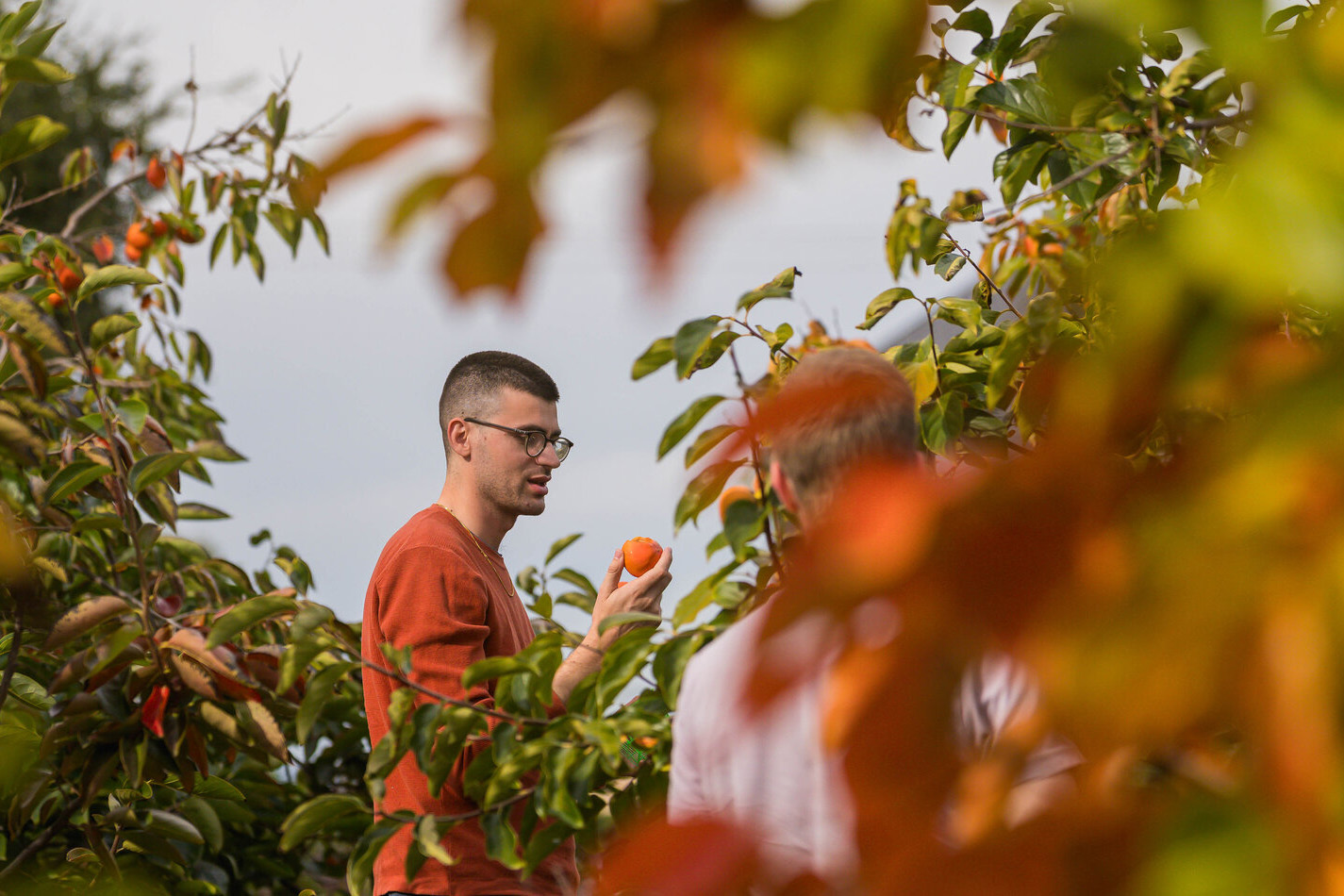
Bioengineering assistant professor Vayu Hill-Maini at the O’Donohue Family Stanford Educational Farm during the fermentation workshop led by Perisé.
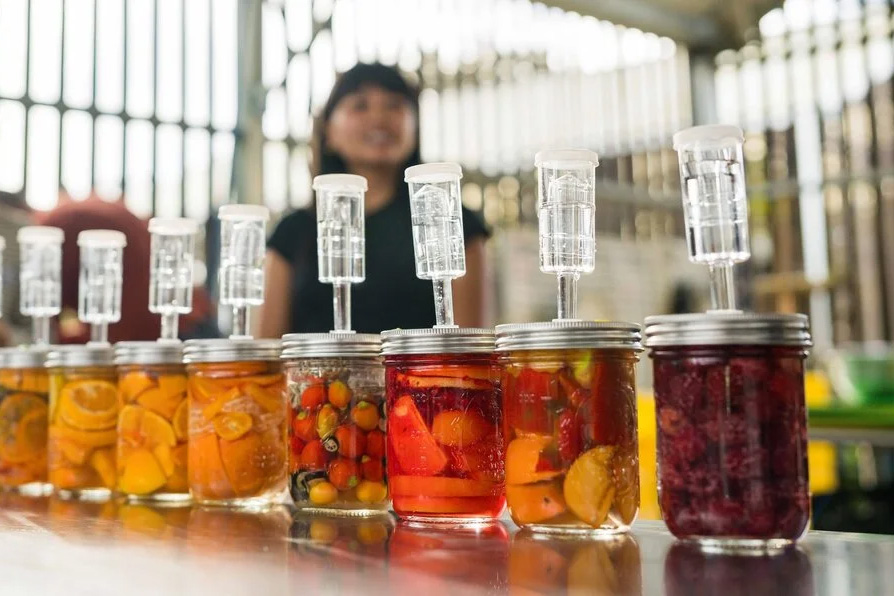
Students prepared fruits and vegetables for fermentation as part of the workshop.
Perisé, who leads food research and innovation for a celebrated restaurant in Spain’s Basque region called Mugaritz, is working with Hill-Maini’s lab this academic year through the Doerr Visiting Artist Program with Stanford Arts. “We need to bring in the perspective of chefs,” said Hill-Maini. “The goal here is not just to demonstrate technological feasibility, but to make sure that whatever we make is delicious and nutritious so that humans want to eat it.”
More on the collaboration with Ramón Perisé
The Art & podcast holds a conversation with Mugaritz chef Perisé and bioengineer Vayu Hill-Maini. Visit the Art & podcast.
For more information
Fukami is a professor of biology in the School of Humanities and Sciences and of Earth system science in the Doerr School of Sustainability. He is faculty director of the Jasper Ridge Biological Preserve ('Ootchamin 'Ooyakma), part of the School of Humanities and Sciences.
Hill-Maini is an assistant professor of bioengineering, a department jointly supported by the School of Engineering and the School of Medicine. Perisé’s visiting artist residency is hosted by the Department of Bioengineering with support from the Doerr School of Sustainability’s arts and sustainability programming and the Office of the Vice President for the Arts.
Lobell is the Benjamin M. Page Professor in the Doerr School of Sustainability; the Gloria and Richard Kushel Director of the Center on Food Security and the Environment, a joint effort of the Freeman Spogli Institute for International Studies (FSI) and the Stanford Woods Institute for the Environment; and the William Wrigley Senior Fellow at FSI and at the Woods Institute.
Micheli is the David and Lucile Packard Professor in Marine Science and a professor of oceans in the Doerr School of Sustainability. She is also a senior fellow at the Woods Institute for the Environment and a professor (by courtesy) of biology in the School of Humanities and Sciences. Christopher Knight, a PhD student in the School of Humanities and Sciences’ Department of Biology, is co-advised by Micheli and oceans professor Larry Crowder.
Sivas is the Luke W. Cole Professor of Environmental Law and director of the Stanford Environmental Law Clinic at Stanford Law School. She is a professor (teaching) of environmental social sciences in the Doerr School of Sustainability and a senior fellow at the Woods Institute for the Environment. Her research on the cost of meat and dairy industry subsidies in California is supported in part by a grant from the Doerr School of Sustainability’s Solution Area - Integrative Projects grant program.
This story was originally published by the Stanford Doerr School of Sustainability.
Media contact
Josie Garthwaite, Stanford Doerr School of Sustainability: (650) 497-0947, josieg@stanford.edu
Writer
Ula Chrobak