Long before software, looms and printing presses were encoding patterns so they could be repeated and circulated. A new exhibition explores those technologies’ digital descendants and the role of the human hand in making art.
Tangling the Digital: Weaving, Printmaking, Computing, on view until Dec. 4 in the Coulter Gallery at Stanford’s McMurtry Building, is the product of a spring 2026 course taught by Hideo Mabuchi, professor of applied physics, and Camille Utterback, associate professor of art and art history, which explored what can be made at the intersection of different forms of art and computational science.
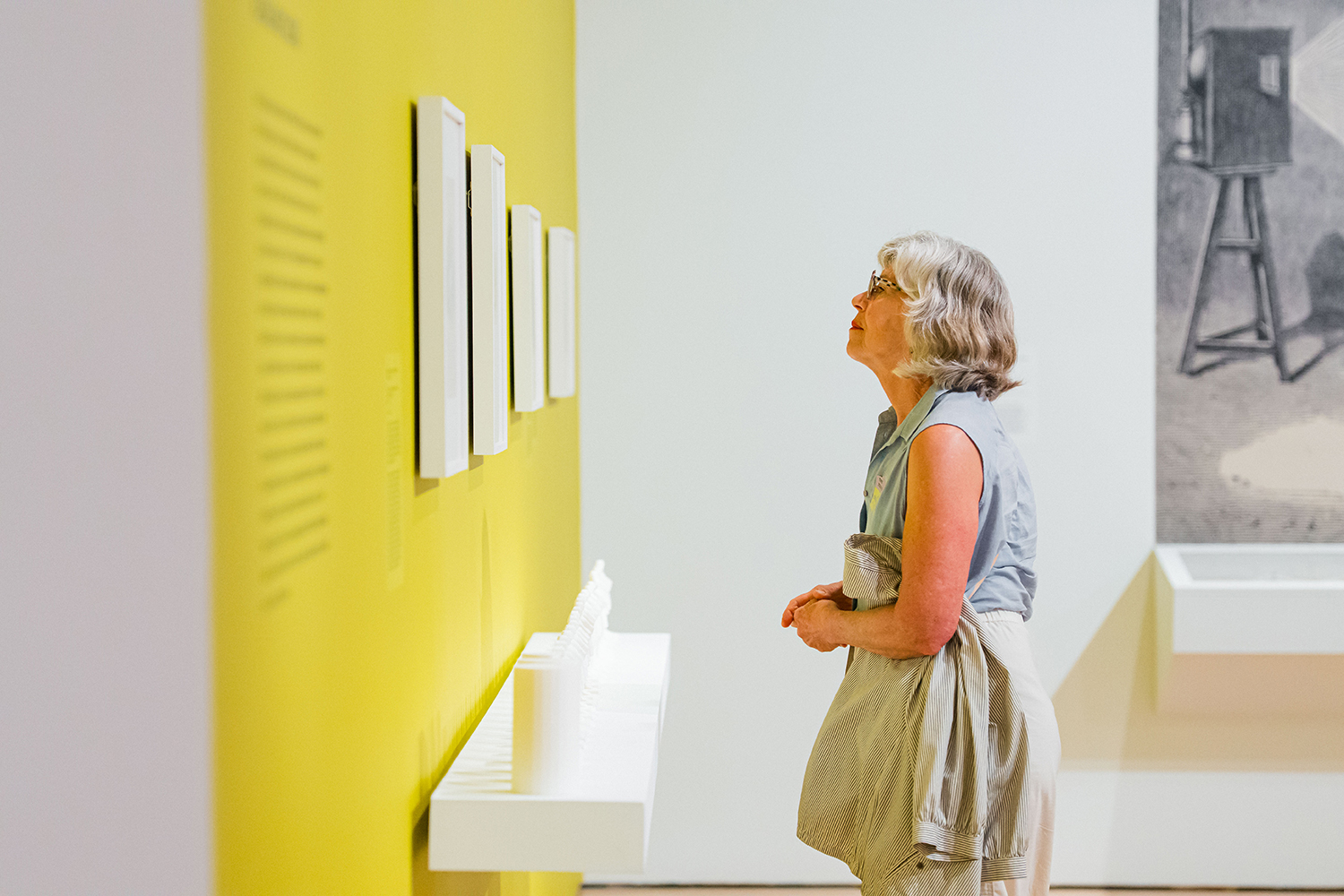
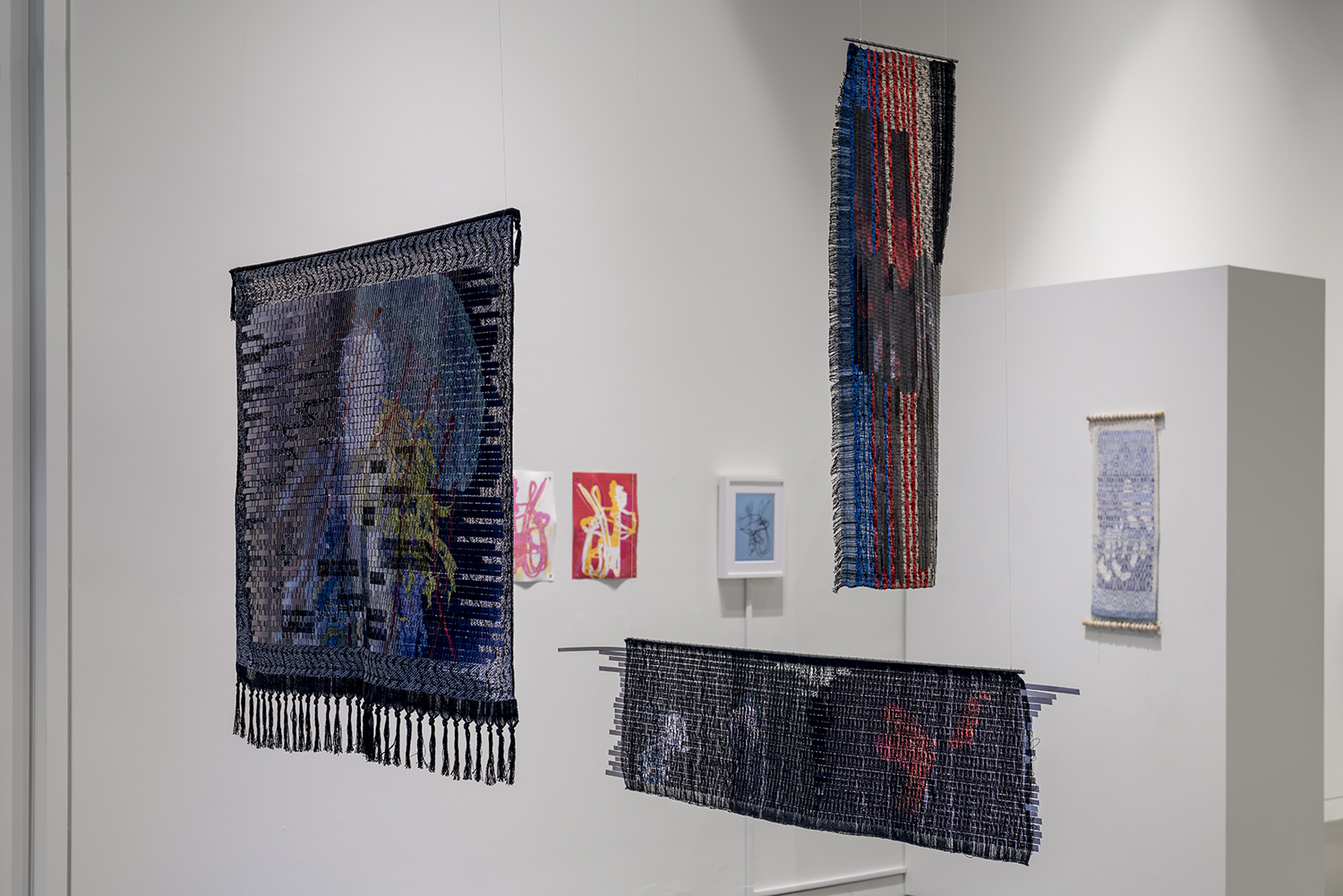
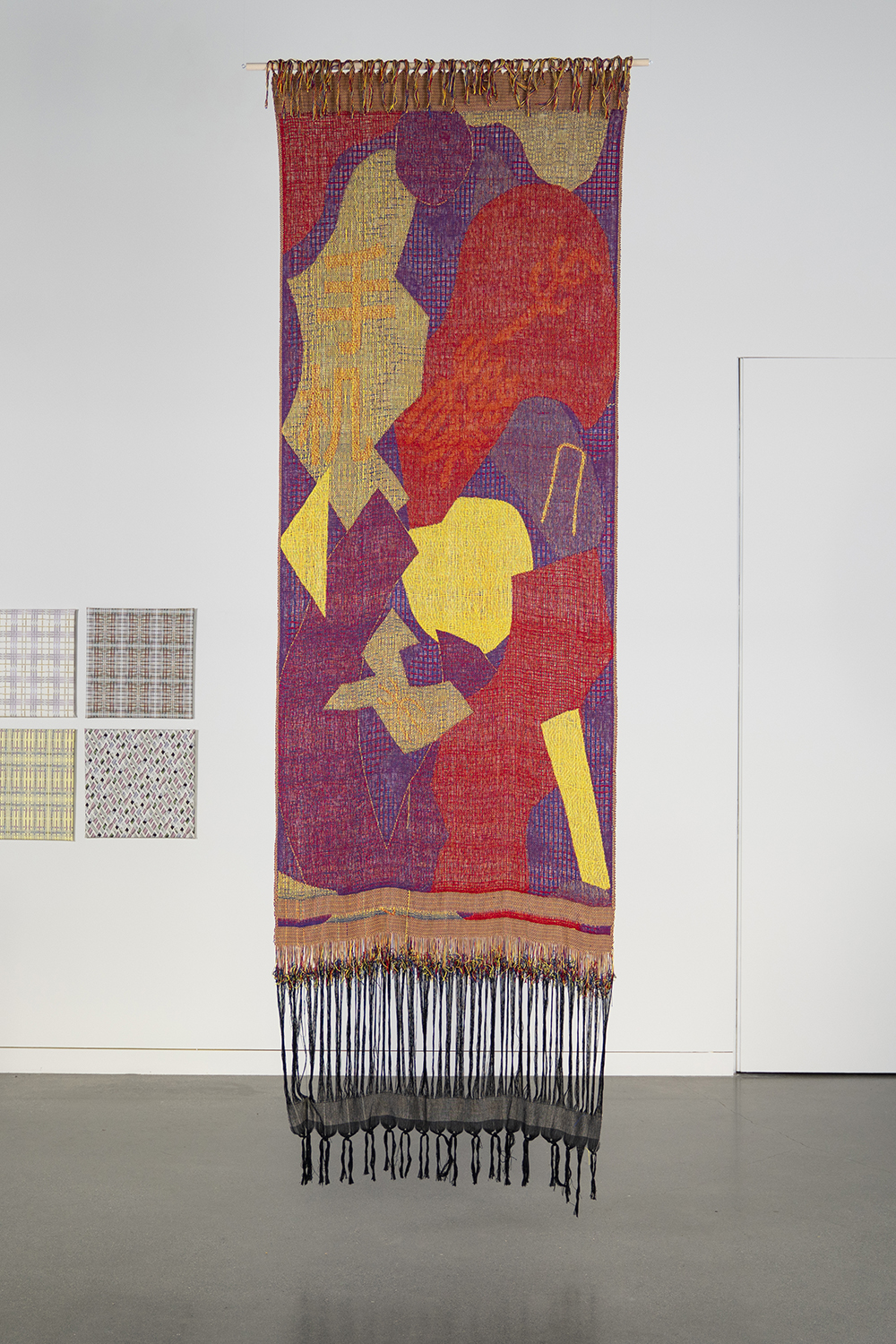
The 20 pieces in the show include analog and digital prints, cyanotypes on paper and fabric, weavings made on fully manual and computer-assisted looms, and ceramic works that incorporate 3D-printed PLA components (a prototype made from polylactic acid). A working loom in the gallery nods to the evolution of the craft.
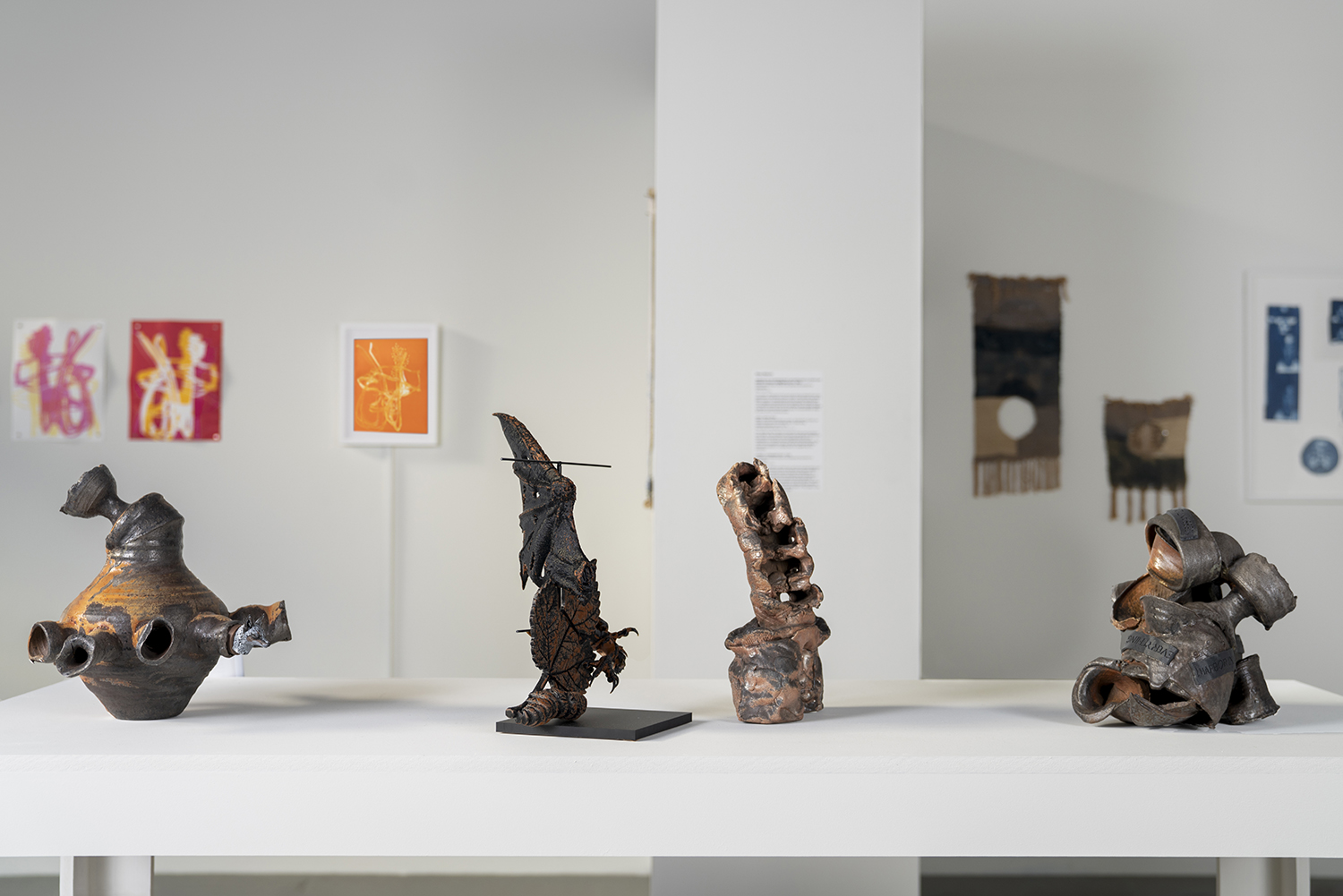
“Tangling the Digital” features work by course instructors Hideo Mabuchi, professor of applied physics, and Camille Utterback, associate professor of art and art history, alongside student artists from across disciplines. | Claire Haughey
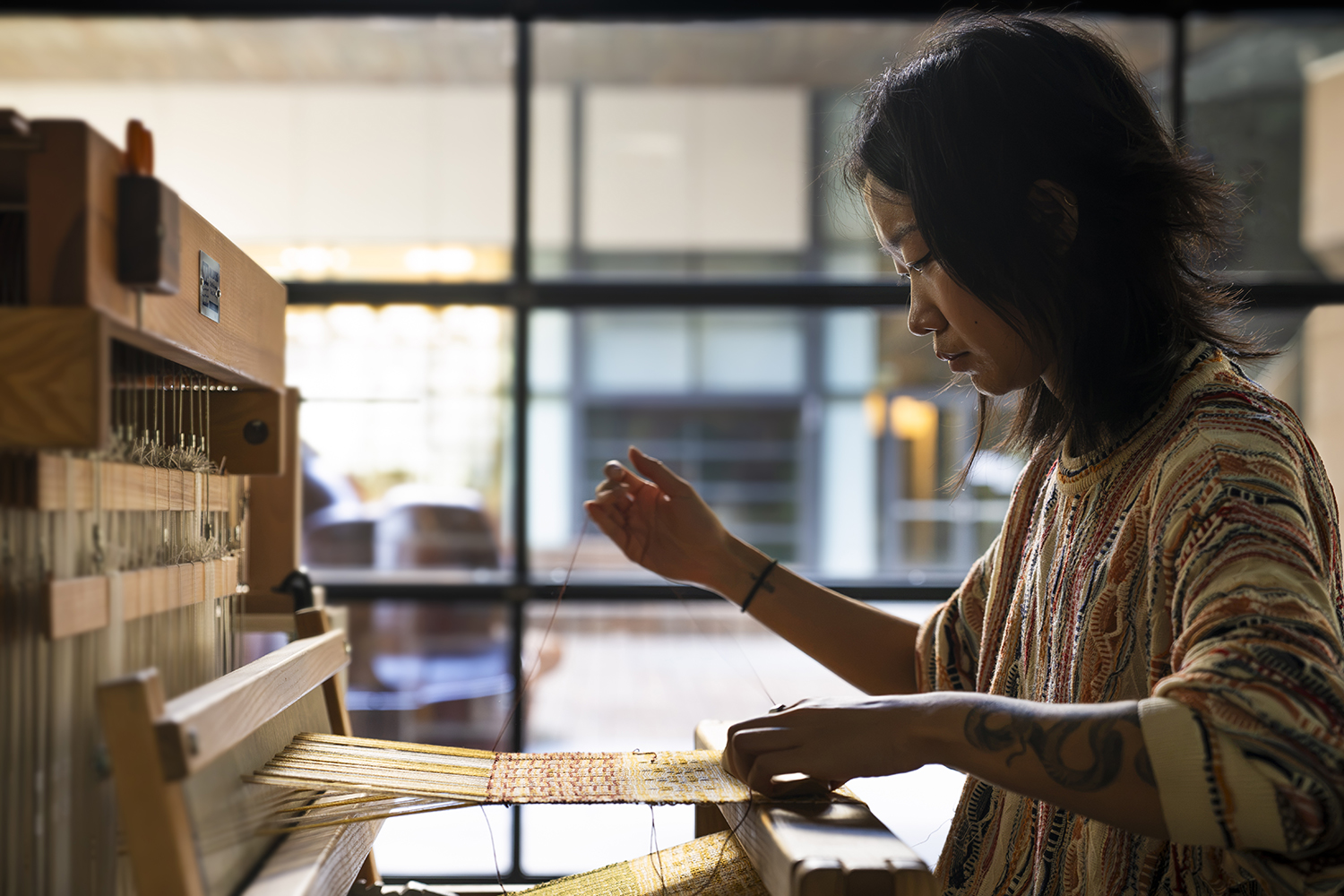
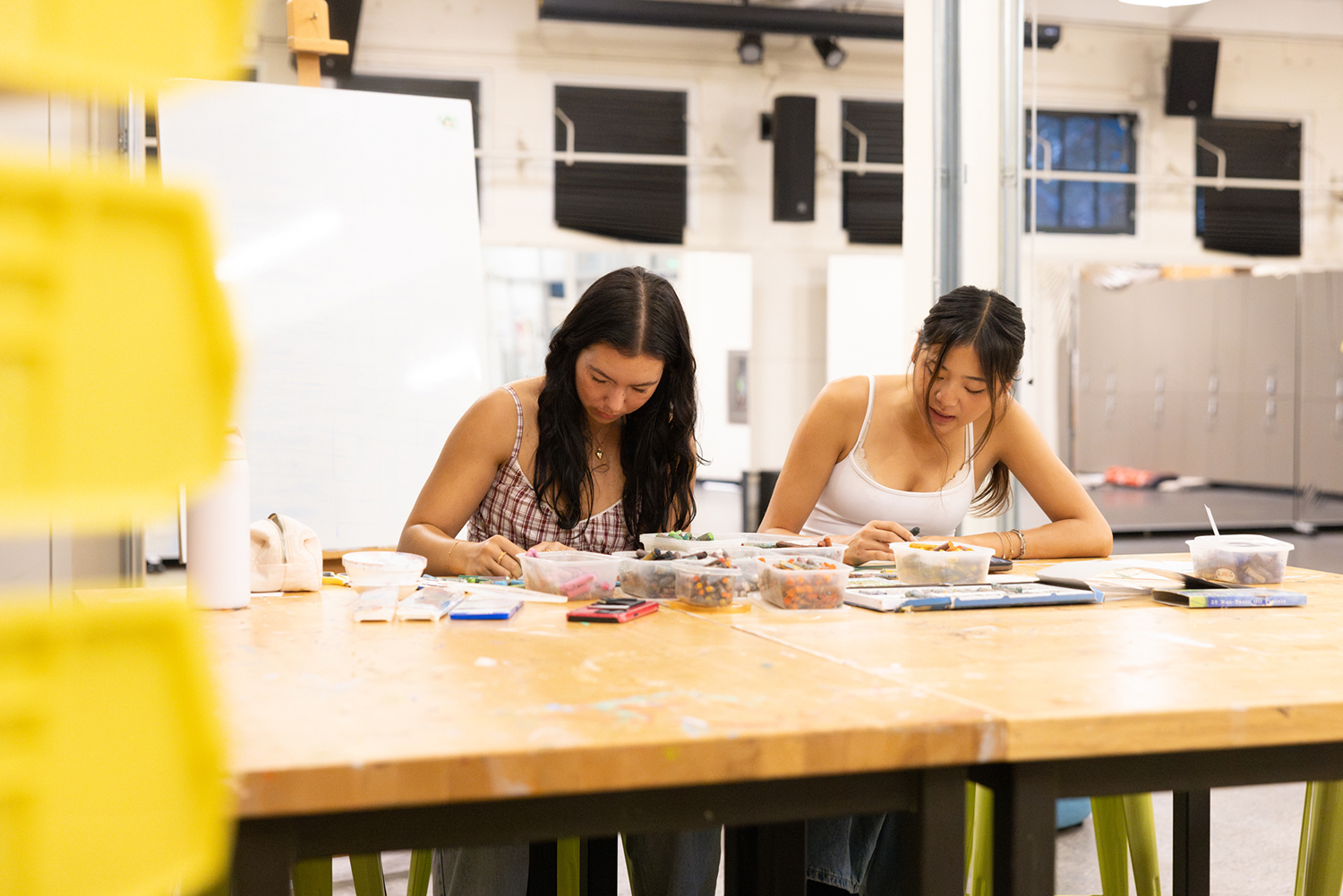
One of the goals of the course, according to Mabuchi and Utterback, was to encourage students to “feel” their way through a problem, working with their hands as well as their heads to come up with new innovations. | Claire Haughey
“By bringing together traditional craft and digital technology – two worlds we often think of as totally distinct – this project allowed students to think and literally make their way through the complex ways the two are intertwined,” said Jessi Pipert, associate director of the Stanford Arts Institute (SAI). | Claire Haughey
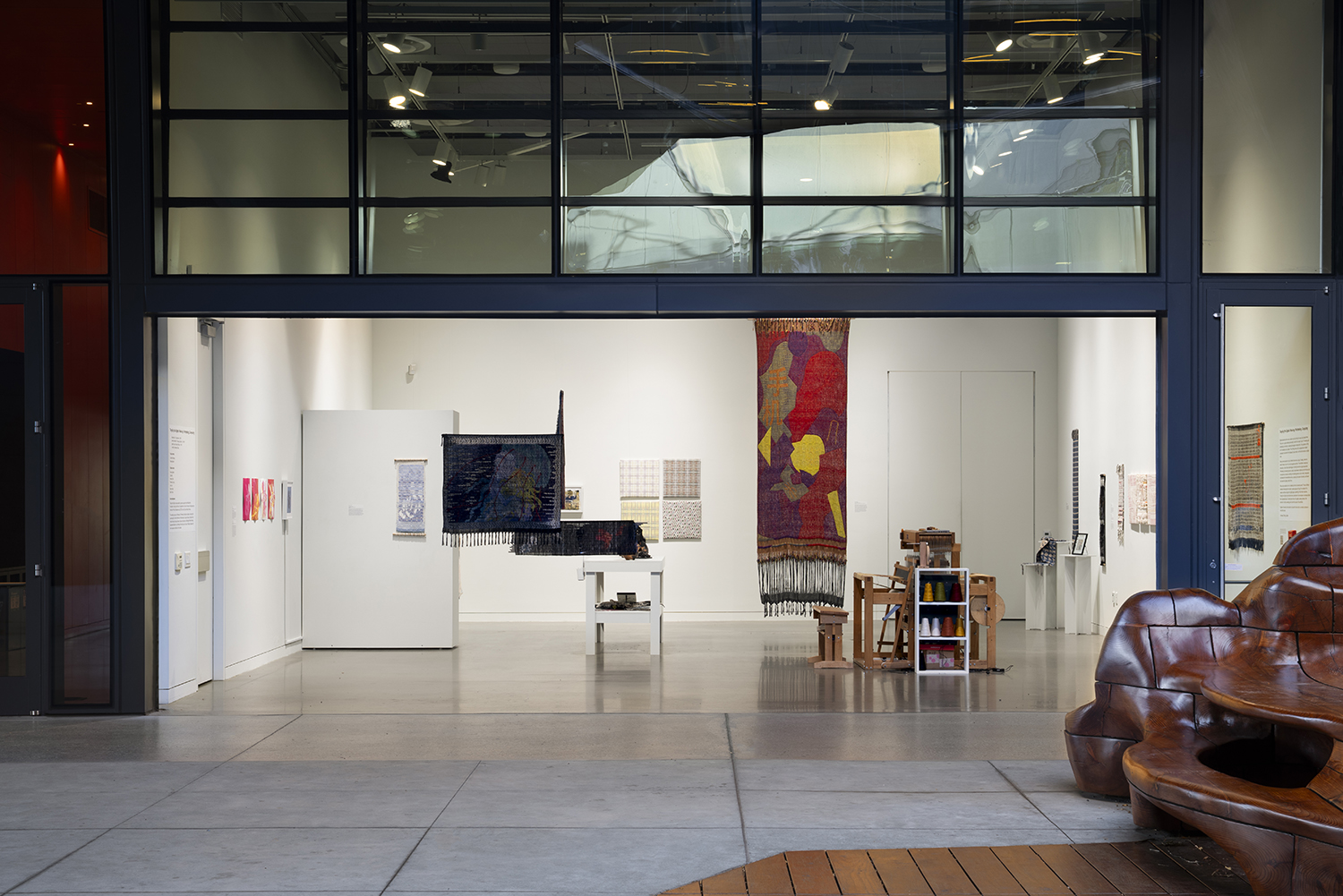
There are about 20 pieces in the show, including analog and digital prints, cyanotypes on paper and fabric, weavings made on fully manual and computer-assisted looms, and ceramic works that incorporate 3D-printed PLA components (a prototype made from polylactic acid). | Claire Haughey
Works were created by Mabuchi, Utterback, and student artists Navya Agarwal, BA ’26; Calla Bai, a PhD candidate in art and art history; Kelsey Chen, PhD candidate in modern thought and literature; Rosemary Jiang, BA ’25 and MS ’26; Jiayi Luo, BA ’26; engineering student Skylar Sledd; and Sarah Teaw, BS ’26.
“By bringing together traditional craft and digital technology – two worlds we often think of as totally distinct – this project allowed students to think and literally make their way through the complex ways the two are intertwined,” said Jessi Pipert, associate director of the Stanford Arts Institute (SAI).
Making is key to learning, Pipert said. “What kinds of new, more robust, more intricate perspectives open up when students get to develop these physical ways of knowing? This kind of discovery is hard to do within the confines of a single discipline.”
The show was made possible by SAI, along with the MacArthur Foundation, Funding Good Chaos, the Department of Art and Art History, the Product Realization Lab, the Center for Spatial and Textual Analysis (CESTA), and the Silicon Valley Archives. SAI Visiting Artist Jaya Griscom, Studio and Sculpture Lab Manager Richard Haley, Experimental Media Arts Lab Manager Defne Beyce, and course TA Bailey Scieszka also contributed to the project.
One of the goals of the course, according to Mabuchi and Utterback, was to encourage students to “feel” their way through a problem, tangling with it using their hands as well as their heads, and come up with new innovations.
“Hideo and I are interested in exploring in our own work, and through the work of the students in our class, what happens when you take an idea and work with it across both analog and digital tools,” Utterback said. “Ultimately I think our goal is to explore what happens when you break down the assumptions about how you’re supposed to use specific artistic processes – be they digital- or craft-based.”
For her final project in the course, engineering student Skylar Sledd created a four-piece series titled Proof of Life, which is on display in the show. She described it as a visual catalog of her trash collected over the course of three weeks, which she printed, scanned, and wove into plaid-patterned fabric. “I hope to provoke thoughts about our relationship with waste, our habits of consumption, what happens when we don’t have to look at something,” she said.
“I hope visitors of the show find some of the work surprising, in a way that motivates them to seek new approaches to using and combining familiar tools and materials in all kinds of contexts beyond art,” Mabuchi said.
For more information
Tangling the Digital is on view in the McMurtry Building until Dec. 4.
Writer
Olivia Peterkin